"What’s blanching, though, is the car’s ride and handling. If anybody was expecting a typical boring electric sedan here, nope. The ride is Alfa Giulia (maybe even Quadrifoglio)–firm, and quickly, I’m carving Stunt Road like a Sochi Olympics giant slalomer, micrometering my swipes at the apexes. I glance at Franz—this OK? “Go for it,” he nods. The Model 3 is so unexpected scalpel-like, I’m sputtering for adjectives. The steering ratio is quick, the effort is light (for me), but there’s enough light tremble against your fingers to hear the cornering negotiations between Stunt Road and these 235/40R19 tires (Continental ProContact RX m+s’s). And to mention body roll is to have already said too much about it."
http://www.motortrend.com/cars/tesla/model-3/2018/exclusive-...
Surely, you're joking? Virtually every carmaker has announced a whole bunch of electric cars for 2020-2021 (without giving nearly as many details or demoing the cars already). And that's discounting their "concept cars".
This. If you're buying a supercar to actually drive on a track, this is key. Any specs relating to what happens below 100 mph are worthless. If you spend any significant percentage of time going so slow, you need to spend ~$8k on a BMW E36 M3 instead, and learn how to drive.
But if you buy a supercar mainly to park in front of Harrods, 0-60 time is... still worthless.
A lot of the appeal is in the perception of performance and that initial acceleration. It's putting your foot down with a passenger, or breezing someone at the lights whilst putting a smile on your face. 0-60 is probably one of the more relevant performance statistics for road use (even if 1.9s renders it all but pointless!)
I drive a 2004 330i; I track it. I get better times than most drivers who have much better 100-140 high speeds in the straights - despite me only getting to ~100.
Of course, somehome a pro driver in a lowered 140hp toyota pickup truck can get better times than all of us.
I thought the instant torque was able to get great acceleration at all speeds?
And delivery will be in 2025.
Knowing how bad Tesla is with keeping their schedule
> The 2016 F1 cars have a power-to-weight ratio of 1,400 hp/t (1.05 kW/kg). Theoretically this would allow the car to reach 100 km/h (62 mph) in less than 1 second. However the massive power cannot be converted to motion at low speeds due to traction loss and the usual figure is 2.5 seconds to reach 100 km/h (62 mph)
Even adjusting for 60 mph = 2.4s, I don't see how the traction of the Tesla is better.
Formula-E cars are doing 0-62 it in 3s [1]:
> An average Formula E car has a power of at least 250 horsepower (190 kW). The car is able to accelerate from 0–100 km/h (0–62 mph) in 3 seconds, with a maximum speed of 225 km/h (140 mph)
[0]: https://en.wikipedia.org/wiki/Formula_One_car#Acceleration
F1 tires are nothing like road tires. They're not even vaguely comparable - at normal operating temperatures (over 100C, and they're preheated before starting - although not to quite this hot) they have the consistency of chewing gum. They are also huge - far bigger than a road car could ever hope to accommodate. This car also looks to weigh around double what an F1 car will weigh, and with far, far, FAR less grip, so it simply doesn't seem possible that it can accelerate faster.
To address some of the other replies. Traction control: F1 cars are driven by some of the best drivers on the planet. I think it's straining credulity to believe that an electronic traction control system is going to outperform them to such a huge degree. Gear changes: F1 gear changes take about 8 milliseconds. A road-going automatic gearbox is definitely not going to beat this.
In short - it doesn't matter HOW much power you have, if you can't get it down on the road. Given the limitations of the weight of the car, the limited grip from road tires, and a gearbox that needs to survive everyday use, it seems frankly totally impossible that a sub-2s 0-60mph is correct.
Agreed, but they don't need to be. Remember, the magic number here is ~1.4G, for a 1.9s 0-60. The Pilot Sport Cup 2 – a track-friendly R-compound tire used in the webcast car and in the videos – can pull close to that on a skidpad (i.e. less than optimal conditions), meaning the grip is there.
> I think it's straining credulity to believe that an electronic traction control system is going to outperform them to such a huge degree.
Launch control and traction control can make several tenths of seconds of difference, which is critical when you're talking about sub-2s times. Also, traction control can keep the car on the cusp of slip the entire run to 60MPH, which is critical in a car that has a completely flat torque curve and probably enough torque to break the wheels loose at any speed (which is not true for F1 cars).
I also suspect that the Roadster has active damping – another technology disallowed in F1 – meaning that the duration of contact with the road can be maximized. This is important if the road surface isn't glassy-smooth.
> This car also looks to weigh around double what an F1 car will weigh
That doesn't help it at all in cornering, but in a straight line, the increased weight of the car will help it launch even better since it'll increase the traction on the drive wheels (equivalent to downforce at speed).
> Gear changes: F1 gear changes take about 8 milliseconds. A road-going automatic gearbox is definitely not going to beat this.
There's no gearbox to speak of; the wheels are direct-drive. To be fair, this won't contribute significantly to faster 0-60 times, but the gearbox exists to compensate for some less-than-ideal characteristics of an ICE, namely uneven power delivery and physical limitations on peak RPMs. An electric motor has none of these problems.
That's lateral grip, which isn't the same at all. Longitudinal grip, which is what's important here, is very different. There's a lot of clever things you can do to increase lateral grip, such as wheel camber, that don't really apply to purely longitudinal grip, so I'm not sure this is valid.
> I also suspect that the Roadster has active damping – another technology disallowed in F1 – meaning that the duration of contact with the road can be maximized. This is important if the road surface isn't glassy-smooth.
But it has to have (comparatively) extremely soft road-going suspension. I really doubt that no matter how smart the active damping is that it will compare with race springs and dampers. Le Mans cars have all these active damping tricks, traction control, along with slick tires, low weight, very high power:weight ratios, skilled drivers, etc, etc, etc and they still don't get to 60 that quick.
That's an excellent example actually - the Porsche 919 Hybrid LMP1 car has a 0-60 of 2.2 seconds, despite electric power, FAR less weight, FAR better tires and drivetrain [0]. There is just no way you can make a road car that's faster than an LMP1 hybrid. If you can, maybe you can put a roll-cage in and take it to Le Mans.... but I doubt it.
> That doesn't help it at all in cornering, but in a straight line, the increased weight of the car will help it launch even better since it'll increase the traction on the drive wheels (equivalent to downforce at speed).
Weight increases the grip, but it also increases the amount of grip you need - you need more power to maintain the same acceleration, and this power needs to be transferred to the road. I'm not an expert, but AIUI, increased grip due to weight scales linearly, whereas the increase in power required (and thus the increase in grip required) scales geometrically, thus weight is counterproductive in getting you to 60mph faster. I could be wrong about this though - as always I'd be happy to be corrected by someone with more knowledge!
0: https://www.porsche.com/usa/eventsandracing/motorsport/works...
Camber isn't a magical trick to get more grip; it's a way to restore grip that would otherwise have been lost because of uneven tire loading in a corner. In a straight-line drive situation, the load is already ideal; the contact patch is the maximum size and fairly evenly distributed across the width of the tire.
> There is just no way you can make a road car that's faster than an LMP1 hybrid.
Indeed, it's currently impossible to make an all-electric race car that can compete with an ICE or hybrid race car in general race conditions, mostly because of the limitations of the energy storage. If the goal is just for a road car to beat a hybrid LMP1 (or even F1) car in a drag race though, as is the case here, I think that's much more doable. The ICE is really the weak link there.
Mostly. But only mostly. Tire grip is actually really, really, really complex however, and this is one of the places where a simplistic model breaks down really badly. If we were able to model tires with simple newtonian physics, then no car would be able to hold more than 1g in a corner, as at that point the force sideways would be more than the force of gravity holding it to the road. Manifestly this is not actually the case.
Tire grip through a corner is more than just coefficient of friction against a surface. There's a lot of complicated things that happen, but the one I'm going to very lightly cover here is that when you go around a corner your tires deform slightly. The sidewall of the tire is pulled out of place, and at the maximum cornering speed of a tire, it will actually be slipping slightly (which can be heard as tire squeal). Cambering the tire corrects for uneven loading, but it also changes the sidewall stress profile, and thus affects the way the tire deforms under lateral load.
I found a mathematical explanation of some the bits mentioned above here: https://physics.stackexchange.com/questions/5838/why-does-a-... but I haven't checked carefully through it to ensure it's actually correct.
The high-school physics model of grip has them both linear, but more sophisticated models may show a difference.
(Interestingly, more mass on a vehicle does help when it is towing something heavy.)
Electric motors do actually have an uneven response at different RPMs (in the form of back-emf losses). I worked for a while with an electric car team in university, and we used a mechanical system to adjust the stator position and tune the motor for different RPMs. I’m not sure what Tesla is doing to address this (could be mechanical or solid state), but you definitely can’t just keep dumping more power into a motor and expect it to get correspondingly faster, not even as a reasonable approximation.
Edit: the shortest 60-to-0 braking distance I find claimed is for a Dodge Viper ACR (Mk 5) at 87 feet. Assuming constant acceleration, that works out to 1.98 seconds.
[1] http://fastestlaps.com/lists/top-quickest-stoppers-60mph
https://www.youtube.com/watch?v=nAvIVGGhEis
They estimate 2.0s is roughly the limit on standard tires, F1 cars can do it faster due to stickier tires.
He also has a video about Tesla acceleration:
https://www.youtube.com/watch?v=iVGsWvRa1XA
Which talks about whether the Model S has an advantage over the (old) Roadster due to the heavier vehicle gripping better.
Interestingly the number he calculates for a theoretical roadster car is very close to Tesla's new number.
They also have a video about "rollout" which can alter 0-60 times and needs to be taken into account for comparisons.
I'm pretty sure they aren't making it up.
I'm with you for the rest of the post, but this is not straining credulity. Look at the F1 season where traction control/launch control was not yet banned. You can see how the cars with that technology gained a massive advantage. Look no further than some starts featuring Schumacher vs Senna. The former wasn't a better driver, but Senna couldn't do anything but watch him pull away on the starts. And that's 1993 technology.
Now there are minor effects that do come into play, so 100x the weight would be meaningful. But, weight within the range of normal cars is not really important.
Telsa is 4wd and has all it's torque and power from standing with no gears
But yeah its the real wheel drive that stops F1 cars going faster 0 to 60. (limited by the friction instead of the power the engine can deliver)
The whole startup trickery with the two clutch paddles is interesting too. Basically they use one of the paddle to find the bite point and leave it there and then use the other to fully disengage the clutch. Then once the lights go out they drop the other clutch so the clutch goes instantly to the bite point and then use the other paddle to modulate the launch (they are pretty much flatout while standing still and use the clutch to control wheel spin). A launch control computer probably could do this better but such things are banned in F1.
The very long range also suggests that this car will weigh considerably more than the old Roadster. Maybe there is an improvement to traction with all that extra weight? Or maybe the weight just helps with keeping the wheels on the ground at 250mph?
Did you fact check that? Actually, Bugatti is pretty close and partially outperforms, although at a way higher price point. https://en.wikipedia.org/wiki/Bugatti_Chiron
" The Chiron can accelerate from 0–97 km/h (60 mph) in 2.4 seconds according to the manufacturer,[4] 0–200 km/h (120 mph) in 6.5 seconds and 0–300 km/h (190 mph) in 13.6 seconds. In a world-record-setting test, Chiron reached 400 km/h (250 mph) in 32.6 seconds, after which it needed 9.4 seconds to brake to standstill.[14]
The Chiron's top speed is electronically limited to 420 km/h (261 mph) for safety reasons.[2] The anticipated full top speed of the Bugatti Chiron is believed to be around 463 km/h (288 mph)."
The 2nd picture on this page is interesting: https://electronics.stackexchange.com/questions/271674/tesla...
See https://www.quora.com/Why-don%E2%80%99t-Tesla-cars-need-a-ge...
Electric cars do not have a gearbox and just have one rotor. This does place them in a disadvantage when starting though as there acceleration is affected. Formula E cars, have started using a 3 gearbox for their cars in order to have a faster start.
So it is possible that the Roadster does have a gearbox.
Most high performance cars only shift once before 60, and with modern dual clutch transmissions it only costs a fraction of a second.
The only way Tesla are going to get below 2 seconds is either with non-street legal tyres (cheating!) or some new tyres that nobody else has.
The Roadster is significantly faster than other supercars from 0-60 on the same tires, so the advantage must come from much more efficient anti-wheel slipping from the three electric motors coupled to AWD. This dramatic speed advantage is probably a result of the ability to quickly alter the power output per wheel to minimize efficiency losses from breaking traction.
> it only costs a fraction of a second
In other words: exactly the scale of the differences we are talking about. In addition to the short interruption itself I guess that it also takes a few millis until traction control has settled after a shift.
This sounds very dubious, unless it has negative aerodynamic downforce. Even then, the times for each successive mph drop off too fast for it to be traction limited. Even F1 cars are not traction limited for more than a brief spell of straight-line acceleration. Aero drag dominates very quickly.
Cornering or braking, on the other hand...
[My caveat on this, I'm not a road-car enthusiast, so I'm just deducing. But I used to work in motor racing, mostly bikes. Based on the standard of reporting I saw about stuff I did know well, I don't trust the motor press on tech claims.]
I'm also curious as to how much it will weigh given the batteries (given the weight of other Teslas).
See: Hennessy Supercars
"Venom GT "World's Fastest Edition" (2014)[edit] Is a limited (3 units) version of the Venom GT coupe commemorating the Venom GT coupe's 0–300 km/h Guinness World Record.
The vehicle went on sale for US$1.25 million.[14] All three units were sold to customers shortly after their production was announced by the manufacturer."
They can't waste a large portion of battery capacity, because the heat from that much energy getting wasted would blow up the car.
Wikipedia has a nice graph to illustrate: https://en.wikipedia.org/wiki/File:Chart_MPG_to_L-100km_v200...

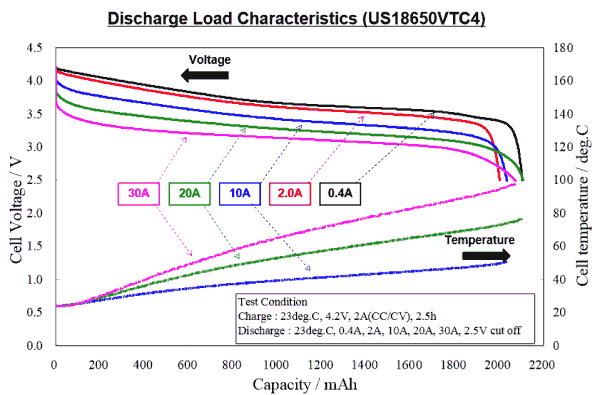
I’m sure in another 5 or 10 years they’ll get there but these figures are for headlines not the track.
An actual race is one thing: you wouldn't expect most "supercars" to finish an actual race without being torn down and rebuilt for the race. I have no idea how you'd prepare something like a Bugatti for an endurance race, but I know the end result wouldn't be worth the expense. GT3 cars are a pretty good example of something bridging the gap. (On the other hand, the Bugatti is said to be a pleasant car to drive on the street, which I wouldn't necessarily expect out of a GT3 car.)
One lap at Nurburgring? I imagine Tesla can swing that. It seems like it would just be function of keeping the battery cool enough. If they found a way to air cool the battery effectively at speed, Nurburgring is a pretty friendly track for that.
I'm pretty sure they aren't making it up.
Don't get me wrong it's a deeply impressive vehicle. I'm just not an Elon fanboy and the precise milisecond that what Porsche, McLaren et. al. customers want something like that is when they will start making it. It's not like one company is the future and the rest of them are dinosaurs. One company is small and loosing money and the others are making it, enough of it to buy Tesla any time they feel like it, which being realistic is what's going to happen eventually.
After gearing, you'll have the same order of magnitude torque at the wheels as the Tesla.
Randomly picked example: Porsche G97/01 (997 Carrera 2 2005-08) First gear total reduction 13.45 (gear 3.91, rack&pinion 3.44)
So, ignoring efficiencies, you'd have a first-gear torque of 400Nm * 13.45 = 5380Nm at the wheels. Still "only" half of the Tesla, but not an earth-shattering difference anymore.
I was wondering, because I seemed to connect the expression with steering as well :-) At least I have the excuse of not being a native speaker.
Of course, they weren't trying all that hard to alleviate any confusion, and it worked even on the fairly tech-savvy HN crowd.
Ed: improved both facts and wording.
Tires only rotate at ~1000 RPM on the freeway where the electric motor in a Tesla might be at 10k rpm. That 10x reduction still needs to be factored in.
Motor RPM will go higher than 10000 RPM at really high speeds.
How big is the difference?
It must be pretty substantial to offset both friction losses and gearing efficiency.
Consider that at ~0mph and ~0rpm, producing any kind of torque at all is done with ~0% efficiency, all just resistive losses as the back-EMF is effectively zero. (Note this is no different for an internal combustion engine, although the heat generated is in the clutch or similar such device...)
Friction losses don't change much as a proportion of power as you increase speed. For aerodynamic drag, however, your losses do proportionally increase with speed, so "windage" (i.e. drag from spinning parts of the motor) needs to be cleverly reduced by making the rotor aerodynamic if you're planning on operating at high rpm.
EDIT: for properly designed electric motors (i.e. thin wire windings, iron core optimized for low eddy current losses), coil resistance usually dominates even at high rpms.
10,000nm in comparison is 7,375lb-ft, which sounds like Harry Potter land in comparison, if all of my conversions and memories serve me.
I'm kinda speechless, TBH.
700lb-ft is apparently 950Nm. So assuming the same gearing as in the sibling post (very likely a false assumption -- I guess these cars had longer gears), you'd end up with 12.7kNm of torque at the wheels.
BTW, if such traditional hot rods had automatic transmissions (they did, didn't they?), the torque converter would have amplified the torque even beyond the numbers I just gave you.
Building fast cars that are a little rougher in finish but can hold their own on the track compared to cars that cost a few times as much is kind of their thing. The teams that work on the Bolt are probably crossing their fingers for this.
Mclaren, Porsche, Lamborghini, Aston Martin, BMW M division are all in the process of producing electric sports cars. I don't think Tesla is holding any technology that makes other makers with a lot more racing experience unable to match their performance.
None of them will? Why? Has Tesla got some trade secret?
this guy is just collecting money on Kickstarter. Nobody needs this car and nobody really wants to make it. Will they have to?
For S and X and 3, it's not beefy enough to handle an extended period of time. Also, the engine has to radiate heat.
So, you're boldly predicting that Tesla, which understands basic physics well enough that their existing cars accelerate well and don't burst into flames because of heat issues, is going to be unable to do any better cooling the battery and motors of a future car?
I just see how the thinking goes. "No way this issue that crossed my mind in the first 40 seconds I heard about the product was addressed by the bunch of hacks behind it".
I'm not saying either of you are wrong. I'm saying either of you know equally little about the engineers' decisions, and are making equally unreasonable demands.
Also guessing that a 300k P4-AWDD will be announced at some point.
Not necessarily applicable to this particular vehicle.
I'm not saying that Tesla has invented a sufficiently efficient battery, but to vaguely claim "physics" makes it impossible is wrong.
Yes, power is lower when efficiency is greater all other things equal, but you work around that by not making all other things equal.
It’s not a track car...what do people expect?
If they gave a shit about developing actual performance EVs, I'd expect them to be in Formula E, but they're not. BMW, Audi, Mercedes and Porsche are.
Plus 620 miles of range, and it is a 4 seater. Expensive as hell, but this is exotic car territory.
Base Specs
Acceleration 0-60 mph1.9 sec
Acceleration 0-100 mph4.2 sec
Acceleration 1/4 mile8.8 sec
Top SpeedOver 250 mph
Wheel Torque 10,000 Nm
Mile Range 620 miles
Seating 4
Drive All-Wheel Drive
Base Price $200,000
Base Reservation $50,000
Founders Series Price $250,000
Founders Series Reservation
(1,000 reservations available)$250,000