At no point was any surveillance detected on any kit.
Removing it all (as opposed to just the "smart" kit) is extremely costly and if security was the real concern, not worth it.
They did bug the african congress but they were invited to set everything up in that building and nobody paid attention to anything they installed.
I suspect it's an attempt to wage "economic" warfare. Under WTO rules national security is a virtual get out of jail free card for protectionism. Huawei had just recently proven that China can overtake western technological capabilities in a key industry. That's the point when America flinched.
It also explains why they bullied all their allies into taking out all the tech all at the same time after years of seeminglh not being concerned about their own networks (let alone their allies) and without any evidence of a breach or anything.
It's a question of eye watering costs of ripping out ALL of the very expensive hardware vs. simply vetting it & ripping out some of the more complex stuff that cant be vetted.
Nope. Scorched earth.
I have no doubt that they would have already bugged the west if they thought we wouldnt catch them in the act.
Which we likely would have.
Hence, probably economic, not national security (unless its about america wanting to install its own bugs in which case lord help us).
I think ripping them out is likely much cheaper.
likewise anything that can address anything else on a network.
If it's, say, a radio antenna? yeah, you can.
The core was the cheapest and easiest thing to replace. It's the rest - the stuff it would be implausibly difficult to hack while we are watching which is eyewateringly expensive to rip out.
We hear that the device was sending uploads to China in the middle of the night. But what type of uploads? And was it firmware based, or OS based? That whole Hussein(-Addis affair just seems very suspect to me.
Having spoken to someone involved in the investigation, it really did happen but like anything this politically sensitive it was quickly hushed up to avoid making it more of a diplomatic incident. The AU had tried to prevent the news from leaking in the first place.
That's quite typical for espionage, where unless there's a desire to publicly burn a few bridges countries would rather have it handled quietly through regular diplomatic channels.
Generally, trusting Western media on Africa reporting is never a good idea. But at the end of the day, this, and Snowden's revelations show - if you don't make it, then you don't own it.
[0] https://www.lemonde.fr/afrique/article/2018/01/26/a-addis-ab...
According to the person I spoke to on the team that responded, and helped set up the new replacement system and network, there had been warnings for years about the adoption of the system and the lack of any real monitoring, but those were ignored because it was considered politically sensitive to double-check on what the Chinese had provided.
It was a new member of staff who did their own experimentation without authorisation who found it and sent it up the chain, to point where it couldn’t be ignored or hidden anymore. Mostly because that made the delegations aware of how terrible security was, whereas before it seems they’d assumed the organisation had that covered.
There are 1000 different ways they could have done it.
I too would be interested in hearing more though.
Free software might be an exception, but free hardware equipment really sounds suspicious.
You say that as if there haven't been clever spy techniques using crazy things that took ages to detect:
https://www.mentalfloss.com/article/584493/soviet-spies-bugg...
If the US implements all Huawei equipment, and China sanctions the US from receiving support/updates/parts from Huawei (or worse, go to war and use it as a weapon), then the US telecommunication infrastructure is at risk.
Most major corporations deal with this by just registering IP in multiple jurisdictions simultaneously and litigating internationally, which can also be done in China just as you would do it in France or the UK. Redundancy is easier to manage than cross-border cooperation with foreign court orders.
That may be true in the strictest legal sense when a Chinese company is the one doing the stealing from a Western corporation. But in reality, that's so laughably incorrect that it makes me question why you said it.
Put simply, American courts have no authority over Chinese in China, Chinese courts have no authority over Americans in the US, and our courts do not cooperate reciprocally as they do in other countries with alternative diplomatic and legal relations.
Fortunately, this is of no significant barrier.
It is not a barrier because we, in the US, can ban their hardware anyways, and cause serious economic damage to them anyway.
So it doesn't particularly matter if we use IP law itself, in the courts, against china, when we have other options, such as simply banning their products in this other way.
No we wouldn't. Literally we are commenting in an article, about what I am suggesting is happening.
So the stuff that the article says is already happening, is what I suggested.
Could it go faster? Maybe. But like I said, we are literally commenting on an article, about how US telecoms are being required to replace certain equipment.
To my knowledge this has not previously been used as punishment for theft of trade secrets (Hwawei was sanctioned for doing business in Iran), but the legal mechanism is there.
So for example, in France, there are many acts which are trademark infringement in France that are not trademark infringement in the US. A Frenchman can accuse an American of trademark infringement for an act that is not trademark infringement in the United States, but is infringement in France. They can bring a lawsuit in France, win, and potentially enforce that judgment on assets in the US with the cooperation of an American court despite the fact that the American did not, by the definitions of American law, infringe on anyone's intellectual property.
There are no such cooperative arrangements between the US and China despite recent attempts to set them up. There are also only limited agreements on what is and what isn't permitted.
Mass population is moved by fear, but is that how concordance is manufactured across the executives of a set of countries: a few terrifying top-secret presentations, and IC has successfully reputation-assassinated a foreign company? Why would these countries agree if there was no breach and a cheaper price? What offer or threat besides a more expensive but more secure infra? I suppose if you view telcoinfra as defense assets then it's a no-brainer, but was this the calculus? Blackmail/Mafioso-tactics would be a good one, maybe: You have to buy from us, or we will reveal/do such-and-such horrible thing.
But if it's true this is economic, not security, and also that Huawei has superior value for money, then is it not just these countries accelerating their already decaying infrastructure, for the sake of pride?
"The phones are down." "Yeah, whaddayagonnado? At least we're not paying the Chinese to make them work."
Replace phones with other critical things China makes better for a better price, and the future of these countries may look like the past of the former-Soviet ones: a whole bunch of weird anachronistic tech resulting from an (in this case self-imposed) embargo. But at least it will be 100% built by subjects of approved countries. I suppose that is one strategy to fight back against the dominance of Chinese industry: just outlaw it.
The hilarious thing is, probably all these "approved suppliers" will have to purchase significant inventory from what is essentially Huawei's supply chain anyway. Seems much more like the tail wagging the dog, with corporate dishonesty dictating so-called natsec policy. Could it really be so twisted?
It should be noted that up until early 2020, US campaign against Huawei had spanned 10+ years long, and only secured a few committments to ban Huawei, not even all of FVEYS. It was a spectacular failure. It wasn't until successive US sanctions against Huawei access to semiconductors that countries relented, not due to security concerns but Huawei's ability to supply hardware long term due to sanctions.
Governments don't operate exclusively through sticks. The US has plenty of carrots to give out.
All it takes is one firmware update.
[1] https://www.washingtonpost.com/context/huawei-cybersecurity-...
All it takes is one tiny bit of proprietary software in the build chain that behaves non-deterministically (and they probably have several) and that's it. No equivalence until you rip it out and replace it. That's an expensive ask.
I'd be surprised if any vendors have achieved this. Hell, Cisco source code is probably riddled with spyware that they could spot at a glance, but "American IP considerations" 100% trump UK national security so I doubt they'd even get to see the source code.
I would love it if all of the vendors were made to have source code reviews and reproducible builds, but being realistic it's a standard that's only be demanded of Huawei. Even if they passed this high bar they'd only find some other excuse to rip them out.
Even so, unless you're talking about firmware for complex devices attached to the internet (what BT calls "the core", e.g. routers that they ripped out without much protest) you can still develop reasonable confidence that the firmware isn't exfiltrating sensitive data.
If it is simple and it is tightly scoped (e.g. firmware for an aerial) the spyware would have to be very clever and probably pretty obvious, assuming it was even possible. These kinds of devices are where the costs to rip out and replace every bit of hardware also became eye watering.
It's not like the US has to care too much about the WTO as the WTO has effectively been out of business for these past years due to the US blocking the appointment of new appeal judges [0]
So even if the WTO rules in favor of China, which it actually did on the steel tariffs [1], all the US needs to do is to appeal the decision and the WTO ruling will be stuck for all eternity in the appeals court, as that can't rule on the appeal without at least three judges.
[0] https://www.dw.com/en/wto-judge-blockage-could-prove-the-beg...
[1] https://www.washingtonpost.com/business/2020/09/15/wto-trump...
That's not proof of absence...
> I suspect it's an attempt to wage "economic" warfare. Under WTO rules national security is a virtual get out of jail free card for protectionism. Huawei had just recently proven that China can overtake western technological capabilities in a key industry. That's the point when America flinched.
That is a legitimate national security concern.
Here I was thinking it was because Tony Podesta et al were involved with keeping them clean in the first place!
The reason the press focusses on it so much is that it is, thus far, the only real step that the west is taking against Chinese hegemony. It's expensive and it's real. The rest of Cold War 2.0 hasn't really started yet. A couple of Mikes, a couple of tariffs, sure, but realistically if we really snap into a true standoff with China it's going to absolutely devastate the world's total economic output and stability.
That said, helping Iran shouldn't be a crime until they actually pose a tangible threat, and at my little level, I think the US is being way too strict on them, and I dont dislike Huawei trying to help them... as long as we're able to control the risk and focus them rather than have it blow up in our face "US in Afghanistan"-style.
What's incredible is how submissive Trudeau was.
The charges were completely made-up yet he couldn't secure their release for three years. That's weak.
It's like your daddy wants you to take the neighbourhood bully's toy, so you stole his toy, and now the bully came and took two of yours. What are you supposed to do?
I suspect it has been raging for some time now, online, by bots and so called shills in the form of information warfare.
For example:
[1]: https://en.wikipedia.org/wiki/BYD_e2
This car looks like a decent entry level car, 190-250 Miles. starting at around ~16k. Even if it sells for 25k in the US, it seems like good value.
$16k is great though. The base Nissan Leaf is $27k for 150 miles. At the same time, I'm not sure how much importing it would raise that. If, like you said, it sells for $25k in the US, that's a decent value if it's other features are comparable to a base Leaf, but I don't think it would decimate the competition.
Surely they will then become national security threats?
The issue is that China is beginning to aggressively take out interest in Democracies in their sphere: first Hong Kong, and everyone knows that Taiwan is in their crosshairs now.
We didn't (and wouldn't) go to war over Hong Kong. Taiwan however... that's different and is truly a serious threat.
---------
If anything: additional trade and cultural exchanges are needed to foster a spirit of competition / cooperation even in the face of our nuclear weapons being trained upon each other. We don't really know if the Moscow Circus prevented a US / Soviet nuclear exchange... but maybe it did??
It's sad, but this is one of the only avenues I can imagine that will bring real benefits and change for a lot of Americans.
Post-WWII, the ownership class had to offer a good deal compared to the Soviets, lest they risk communism coming for them, too. They had to provide working people opportunity and had to help build a thriving middle class in order to stave off sympathy and collaboration with the USSR.
Today, if owners don't want Americans to be bribed by the CCP into spying for them and handing over the IP they own, they're going to have to offer Americans another good deal in comparison. That's my optimistic take, but I can also see jackboot tactics being implemented instead of raising Americans' standards of living.
Didn't Nortel go under because of accounting fraud?
Huawei only started releasing competing products years after Nortel went bankrupt.
Of course Chinese hegemony is no better. Any hegemony is no better than another...
You didn't explain that.
And please, stop using communists to refer to anything on earth. There is no such thing as communist nowadays. If you think there is a communist in China, that person probably will be shunned as one would be in USA...
So what system do you have to propose, and how is it better? Remember that your explanation must explain how International Democracy avoids interacts with conflict between nations, how it maintains the global economy, in particular the safety of the shipping lanes and banking systems / currency exchanges. You must be able to adjudicate border disputes and prevent large nations from claiming large swaths of sea as territory. You must be able to explain how your system avoids becoming a tyranny of the richest, strongest, or most cunning states, as well as how it remains stable and doesn't become anarchy.
Good luck.
As the first step, let's make sure everyone goes through UN for any cross national conflict. Like if US unilaterally invade Iraq, US should be sanctioned according to some agreed upon rules. Etc etc.
When you say UN works because of US support, that's a problem. UN needs to hold actual power, not at the mercy of a few super powers.
One step to allow UN actual power, is to grant UN the ability to draft financial resources from member nations, and let UN invest on the behalf of all people on earth.
Simple fact is that there's no Chinese hegemony now and there won't be one in foreseeable future because there's existing hegemon that won't just give up.
btw one man's whataboutism is another man's uncovering of hypocrisy.
They didn't say anything about the USA hegemony being bad just that they didn't want a Chinese one. How is that hypocrisy?
The alternative being Russian (or rather, USSR) bases.
Yeah, pretty sure citizens of the countries with bases would rather have the US as a partner rather than the alternative.
> There is a reason China and Russia both have their own GPS alternative.
As does the EU (ie Galileo).
> There is probably no good reason to distrust Huawei.
Here I disagree. Chinese companies are extensions of the state and tools for domestic and foreign policy to a degree that Western companies simply aren't. China's massive censorship policy doesn't exactly instill confidence in the principles of openness or independence either for either the Chinese government or the companies that enable these policies.
NSA paid RSA Security $10 million in a secret deal to use Dual_EC_DRBG as the default in the RSA BSAFE cryptography library[1]
Juniper routers had an apparently deliberate Dual EC backdoor allowing VPN traffic to be decrypted.[2]
I'd say that there is probably more evidence of the west putting state-level backdoors in things than there is of China doing so. (although there may be sampling bias in this!)
[1]: https://www.reuters.com/article/us-usa-security-rsa-idUSBRE9... [2]: https://eprint.iacr.org/2016/376.pdf
https://upload.wikimedia.org/wikipedia/commons/8/89/Room_641...
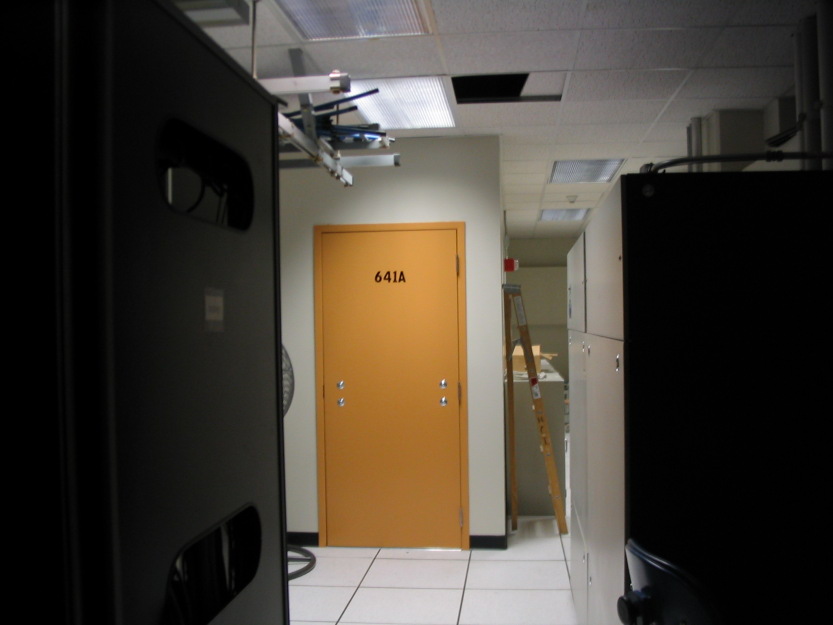
I don't believe this. Nearly anything complex and networked, after a few months investigation by a good security professional, will have a good number of exploits found.
These could be plain old bugs, or they could be planted backdoors. (usually indistinguishable)
Even after months of effort, there is a high probability there remain undiscovered security issues (either deliberate or accidental) that more effort would have found.
For that reason, I don't believe any claim when they say "nah, we couldn't find anything". They either didn't look, or don't want to reveal what they found.
Further, when America's anti-Huawei panic started HMG were looking for an excuse to ban Huawei kit. If problems had been found it's likely they would have been mentioned.
That's not true. GCHQ looked at source that was provided and found many unpatched vulns, and then found that the firmware binaries were not matching the source that was provided (with a single exception), so only Hwawei really knows what their devices do.
Unless you have access to secret information and are for some reason burning your life down on HN, you have no idea what they found or didn’t find.
The data you show isn't proof of anything other than ineptitude of western agencies and the freedom of the press in the west. Go look for ICMB and warhead leaks, you'll always find better and more extensive documentation for NATO weapon systems. Does this mean the former communist block had no such weapons? No. It has to do with freedom of press and the legal system in the west making plans and docs public knowledge compared to a pretty locked down system in Russia and china.
1) Huawei had a tech / competitive lead vis a vis western firms, so those firms have been pushing / lobbying / this narrative of distrust around Huawei.
2) Huawei has done itself NO favors by just ridiculous actions - I think not realizing they are trying to sell into a western market where some of these stunts don't come across so well. In China helping N. Korea not a big deal and makes sense, China doesn't want N Koreans flooding over border. But then I thought the claims that no assistance etc offered was silly, just say yes, for x reasons we helped y country with their telecom.
I can understand why they remove network equipment and have no problem with that, but as a happy Huawei smartphone user from a non-US country, I'm still pissed that I need to change to another brand (and I don't see anything on the market that is as attractive, by far) because a foreign government decided to cripple this one.
I know, in theory I could go without Google, no one is banning Huawei from selling their phones to me. In practice, that's not feasible when e.g. your everyday banking apps rely on Google services. For all intents and purposes, a foreign government has banned me from using the phones I like. Imagine how many Americans would feel if new iPhones stopped being useful due to some foreign political offensive. This is similar (Huawei was the top-selling phone brand in my country). Thus, many people are interested in this kind of news about Huawei, even if they don't understand what network hardware is.
I know what you mean about bank apps working only on unrooted Android devices and only with Google Play Services. It's an OS- and device specific restriction, because the desktop website does not have these limitations (besides 2FA, which is understandable).
The solution for me was to wait until I have my laptop on me to do banking. But I understand that not everyone will have this ability due to the nature of their business or workflow.
I think it's the opposite. Without all of the anti-Chinese bluster, this would be seen as a simple government giveaway to privately-owned telecoms and domestic telecom equipment manufacturers. These press releases are being written by their lobbyists, not Huawei.
This isn't 'anti-chinese bluster' it's just critical thinking.
Have you thought through the consequences of what you are advocating? If EU starts removing US equipment, or Brazil or India?
US is not seen as a 'trusted ally' outside of English-speaking nations, certainly India, etc.
Not GP, but that's a good thing. Every country should secure their own telecoms. Resilience against spying from all sides.
We are a civilization based on sanctified violence: nowadays that sanctification comes from the news media.
Just to be clear: I am not blaming the media for war. I am also not definitively "anti-war" as I don't know precisely what that means.
For one, it's now quite clear that all network infrastructure has backdoors controlled by the respective producing governments. I know for fact that alcatel do, for example. Why else the strict purge against huawei; a spy can spot a spy.
And I think there are quite serious implications for free and open markets in certain sectors.
We literally do not know who owns Huawei, legally. We know that the CCP wants to monitor all communications, everywhere, do the extent they can. We know that de facto, the CCP has the final say, and can bend Huawei at will to do as they please and interdict without consequence (see: Jack Ma).
While it's obviously a much more complicated question, there are other issues for sure, but in the end, it's as easy as that.
The same should be held for any bit of critical software, and legislation should be introduced to protect citizens from CCP oversight in consumer apps like TikTok.
The 'smart play' would be to play into the financial incentive of the companies - most of them are 'profit first' and adhere to CCP policy mostly 'because they have to' but with maybe some degree of national loyalty in some parties. But just like Hollywood can be very easily manipulated with the threat of China-blackout into making films the way the CCP wants ... Zoom and TikTok will act reasonably with the right regulation and oversight i.e. 'All US data has to be kept in the US, in certain terms, with some regulatory process etc'.. If they are forced to keep a firewall between non-China and China users by host nations, it makes it easier for them to rebuff CCP demands for interjection i.e. "Sorry Xi, but the data is kept on servers in the US on a different business unit, if we pass data across borders they will shut us down"
Can we first protect citizens from Facebook, or if our companies commit crimes it's ok?
What is Facebook doing wrong? They're allowing people to share content. Some of that content, some people want censored, because they believe it has a negative influence, many (most) others would disagree. That's mostly it.
If Facebook, Google, Snap, Insta were all actively sharing all of their data with the Government, so that the Government could censor any and all criticism, throw people in jail arbitrarily, use FB to track down an ethnic group of citizens and throw them in brainwashing camps with no oversight, control the entire media, and stop people from accessing information outside the USA - then I would agree with your point.
I don't have a dog in that fight, I am reffering to them spying on people who have enevr even signed up tp facebook, enabling electoral fraud in Uk and conspiring with Google to manipulate the ad market. All of those activities are illegal and well documented.
Speaking of which, Huawei ads have been all over the NYT app for the last week or so.
Huawei pays for "sponsored" pieces in major media outlets. Politico, Reuters, Wired and others are paid by Huawei to run puff pieces, clearly labeled as "sponsored" content. Should a sudden spasm of inner dialog cause you to wonder whether the checks getting cashed have any influence on editorial decisions related to non-sponsored news you're expected to suppress that as much as possible and also keep it to yourself. Thanks!
Backdoors? Being caught red handed doing espionage? Cozying up to bad actors like North Korea and Iran?
It simply isn't possible - any more than you could get an audit guaranteeing the Linux kernel is bug-free.
Are we talking about Huawei here or any number of US companies?
You'll probably feel a need to shit on a flag when you realise that an allied Swiss company (ABB) sold North Korea a two nuclear power plants when Rumsfeld was on the board of directors.
https://www.swissinfo.ch/eng/rumsfeld-was-on-abb-board-durin...
So is the media.
Perhaps it is not on account of the tremendous PR efforts of Huawei that American media outlets appear to be on the same team as the Chinese communist party, on many fronts.
https://thediplomat.com/2019/02/the-huawei-dilemma-insecurit...
> The findings to these lines of inquiry proved troubling to the Intelligence Committee. The probe examined Huawei’s and ZTE’s ties to the Chinese state, including support by the Chinese government and connections to the Communist Party of China, and their work done on behalf of the Chinese military and intelligence services. For instance, Congressional investigators were concerned with the background of Mr. Ren, Huawei’s founder, who had links to the 3PLA – China’s signals intelligence division – and the Communist Party, such as serving as a member to the 12th National Congress. They did not find credible claims or evidence that the company was, in fact, an employee-owned and controlled enterprise or had an independent board of directors.
> Instead, the Intelligence Committee found that the Chinese government and Communist Party exerted influence over and supported Huawei as a “national champion.” For example, Huawei admitted that an internal Party Committee existing within the company, consistent with Chinese law, but refused to discuss or describe the role, membership, or impact of this group on corporate decision-making. Huawei’s failure to provide further detailed information explaining how it is formally regulated, controlled, or otherwise managed by the Chinese government undermined, in the view of Congressional investigators, the company’s repeated assertions that it is not inappropriately influenced by the Chinese government.
> Huawei also refused to provide answers to direct questions about its financing and connections with Chinese state banks, nor did it provide internal documentation or auditable financial records to evaluate its claims that any financing arrangements comply with standard practice and international trade agreements. In support, Congressional investigators cited the earlier finding of the U.S.-China Economic and Security Review Commission that enterprises like Huawei rely on generous state-backed financing to make an investment project in a new market viable. To the detriment of U.S. competitors, financial subsidies from the Chinese government can enable its national champions to penetrate markets by offering products below the costs of production.
> Additionally, the Intelligence Committee found that Huawei exhibited a “pattern of reckless disregard” for the intellectual property rights of U.S. companies. Congressional investigators cited Huawei’s settlement in civil litigation with Cisco, in which Huawei agreed to remove certain products from the marketplace due to violations of Cisco’s intellectual property rights. Whistleblowers – former employees of Huawei – also offered testimony that the company deliberately used the patented material of other firms. In the judgment of the Intelligence Committee, these issues with intellectual property rights raised broader concerns of Huawei’s compliance with U.S. laws in general.
The US government supports Cisco, and its diplomats are used to sell Cisco products. The forced replacement of Huawei equipment is an example of that.
If China were doing diplomacy and passing legislation that made US products illegal internationally, it would be worse than any of the accusations made here against China.
Only if you're already convinced that China and its people are evil, and that their winning an economic war against the US is a sign of the end times, will this reasoning convince you. China has triple the population of the US; it should be doing better.
I have been living in Asia and for the past several years have lived approximately 100 miles away from the Chinese shores in a free and democratic country that is in grave danger because a man who can't stand being compared to a cartoon character and his sycophants believe that it belongs to them.
The US is not the land of saints, but to anyone who feels the urge to engage in whataboutism regarding China, I encourage you to read about the history of the CCP, what it has done and continues to do to the Chinese and Tibetan people, its ongoing genocide of the Uyghurs and what its goals are for the Indo-Pacific.
> China has triple the population of the US; it should be doing better.
Doing better by what metric? Look at China's GDP per capita. The country is desperately trying to escape the middle income trap and a lot of the growing tensions in the region are related to the fact that the real picture of what's happening in China is not as pretty as the one the CCP projects.
>This can be summarized as "The Chinese Government Supports Huawei" + a lot of appeals to authority and claims of refusals to answer arbitrary questions that US companies certainly wouldn't answer if China asked.
how can you make this statement while ignoring the difference is basic relationship fundamentals between US corporations and the US government, and Chinese corporations and the Chinese government? the two are nowhere near equivalent.
Not just US companies. Huawei has stolen a ton of Nortel IP. This is largely the reason for their 5G tech edge[0]
https://nationalpost.com/news/exclusive-did-huawei-bring-dow...
There are certain things that a country, or group of allies, absolutely should retain control over. Communications infrastructure is absolutely one of those things.
There is a reason China and Russia both have their own GPS alternative.
There is probably no good reason to distrust Huawei. But equally there is no good reason to trust Huawei.