I hate this terminology. If the US has, in fact, "finished" developing, then the future of the S&P will be bleak. I don't think that's the case at all, though. I think development has just started and we'll see fantastic advances in bio-informatics, solar power, 3D printing and a number of other fields in the upcoming decades.
When I was a teenager, I pirated music. I seriously hope my children pirate gourmet cheeses and burritos as teenagers. I download apps that organize my notes. May they download the bio-app that lets them dunk from the free throw line.
Most of S&P are global corporations. They're considered American simply by virtue of having headquarters in the US.
And that's despite disagreeing with Gordon fairly strongly in a number of other areas.
Vaclav Smil and Manfred Weissenbacher both have excellent books describing the impacts of technolgy, and especially energy, on history. I strongly suspect that's the most significant component.
Gordon's book is part of a larger series much of which addresses the question of why concerning the Industrial Revolution and the absolutely unprecedented growth of the past 250 years or so, much of that occurring only in the 20th century. It's hardly the only treatment of that phenomenon, but I do agree with Gordon, and others, that it's perhaps the most pressing question, still unanswered, of economics.
I'm not seeing the end is nigh unemployment rate. But it will definitely get worse...
With the dropping off potential buyers you reduce the possibility for increased profit.
Sure you can just increase the margin ( and I think that is what we will see more ave more I future) but that growth is also limited.
New markets will emerge and make profits. But economics as a whole will shrink.
http://4.bp.blogspot.com/_LKZQT6pv_oU/TBqKqQaCcaI/AAAAAAAAA6...
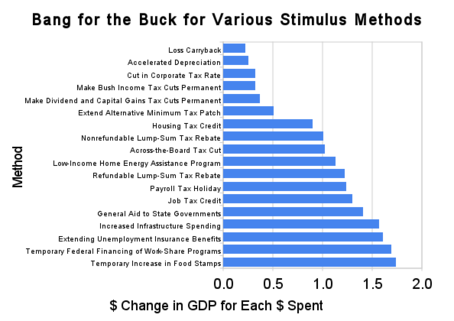
http://www.mckinsey.com/industries/infrastructure/our-insigh...
If the US had a similar political climate the east coast would already have high speed rail from New York to Miami.
That remains to be seen
> Argentina used to be richest country in the world.
That is not true. In the early 20th century they were top 10, but never surpassed Britain or the US in GDP per capita.
The fact that it remains to be seen is kind of the point. It is possible that it is at peak, and if it is true, then it is likely that historical data is not very useful in understanding market returns.
It assumes that the future will look like the past, even though there are some plausible reasons to think that it won't.
Some of those reasons would push you harder in the direction of investing in stocks (e.g. increasing automation, globalization) and some would push you in the opposite (e.g. declining gdp growth, rising inequality, political instability).
What would a more powerful USA look like? It doesn't appear that the country is after an empire the same way the British had one 100 years ago, so raw aggression is out. I can't imagine a realistic scenario that doesn't require the implosion of other nations to embiggen America.
Not saying it would happen but I think that's one scenario that would be even "more powerful".
Passenger rail; durable houses; less unemployment and more labor-force participation; a population not balkanized along political/cultural lines.
I mean, there is "always" going to be jobs for plumbers and spots for artisan made stuff... but those jobs aren't going to replace the amount of jobs that will be lost when $15 becomes more expensive than iRobot...
I don't know where it would come from (perhaps the same magical unicorn tooth fairy who would remove balkanization, inspire durable construction, and give us more passenger rail), but the US would look a lot stronger if it had it.
This includes politically stronger; poverty, disengagement from the labor force, and high inequality are not good for a country's political stability.
Not fast enough to replace the abolished ones, and most of those new jobs are knowledge work, which can't scale as there's a IQ floor that will stop most people from being able to work them. The more we shift to knowledge work, the higher unemployment will climb. You're making the mistake of thinking the past predicts the future, but today's automation is unprecedented, it will not follow the same pattern because it has different effects.
50 years ago there was 'America', the 'Soviets' and 'Europe'. Everything else was a footnote.
What we've seen with China 'coming out of nowhere' in the last 25 years is about to happen 4x with the rest of the world.
America and Europe's share of global economy is falling fast, and it simply has to do with electricity, plumbing, democracy, knowledge and productivity gains in the rest of the world.
India is coming on a little slowly, but surely.
Pakistan is 180 Million people. Nigeria almost that - and they have oil.
Africa is a billion people.
There are a lot of Asians outside of China, India and Japan.
As they start to become connected to the global economy, relative power shift will happen.
I don't see the emergence of any new 'superpower' and America will likely remain the only 'superpower' in the classical sense, but it won't be as powerful as it is today - relatively speaking.
If you look at the growth of Japan after WW2 - a period of fast growth, then slowing down as it approaches parity with the west - this is what the underdeveloped world will look like, but a little slower.
Also - a very important point - a lot of real growth is not measured in the GDP.
For example, the value that is created by governments is measured simply in 'government spending'. But $1 of gov. spending hopefully creates more value than $1!
For example, if the US Gov spent $50B and created this amazing national public transport system that everyone used, and cost next to nothing - the 'economic surplus' would be massive, but the GDP would directly be down. Why? Because the only thing that would count towards the GDP would be the $50B spent by the gov, not the $Trillion in value derived from it. Obviously, there would be indirect business benefits ... point being - the GDP is not necessarily the best way to measure things for many obvious reasons.
Maybe. But the trend towards privatising military force could end up accelerating USA's slide down in terms of military power. If we are indeed moving back to the "normal" (historically speaking) "neo medieval" world were military force is generally mercenary and not national standing armies - coupled with the commodization of advanced military technology - the world could radically change quite quickly.
Maybe the USA won't be able to pay its contractors - and China and/or Russia can? Maybe China will restructure the PLA as the world's biggest military contractor?
I don't really think you are wrong - but it can be tricky to predict the future. Perhaps especially the sudden stumbles we seem to make every so often as a species back into new dark ages and decent into chaos.
+ This is a very marginal thing.
" If we are indeed moving back to the "normal" (historically speaking) "neo medieval" world were military force is generally mercenary and not national standing armies"
+ This is not happening. Don't worry about it.
Listen - war is too expensive. It is only economically advantageous when the parties are not interconnected.
Some American businesses can economically from a war in Iraq by getting big contracts ... but a war with any real nation would cause massive upheaval in markets.
The moment Brexit happened - it was a big shock to markets - and that was a small thing.
90% of people and businesses 'lose' in a big war, so it's very, very unlikely that China, Russia, USA get involved directly in a war - it's just too costly for everyone. USA is China's #1 customer.
The only 'rising military power' that will make a difference is China.
Everyone else - won't matter.
It's also very, very expensive to challenge the Americans in any way, even regionally, so the only actors that will do it are non-state entities, i.e. insurgents like Al Qeda etc..
The 'big shift' over the next 50 years is that 4 billion people who are not even on the radar today are going from $2 a day, to $50 a day in terms of GDP.
Don't forget that "the end of war" as proclaimed after world war one - because a new world war would be too costly, and too horrible for anyone to contemplate. Of course no one will start a war they think they will lose. You start wars you are "certain" you will win. And then they escalate. And escalate.
> The 'big shift' over the next 50 years is that 4 billion people who are not even on the radar today are going from $2 a day, to $50 a day in terms of GDP.
I absolutely agree that this is going to be the biggest change. With accompanying logistics, new (political and economical) battles over water rights and so on. If there's a new "private" war, I'm guessing it will start with a large contractor being hired by some regime to "calm down" "unreasonable unrest" over stealing natural resources and handing them over to corporations, like for example privatizing water (or as one can see in Niger, privatizing oil).
I certainly hope we won't see a third world war, but I'm also afraid of people that seem to think that large scale war is "unlikely". Nothing in history suggests that it is.
[ed: And "insurgents" are likely to always be proxy wars. The US created the modern resistance in Afghanistan to fight Sovjet power, and then end up fighting that same insurgency, now supported by Saudis, which are allies on paper.]
US empire is defined more by squashing incipient threats to its global hegemony than by UK-style colony management.
The US empire is doing precisely that, through a mixture of soft and hard power.
Both have imperial dynamics, but for the U.S. the important part is being the "world's policeman" as it comes with the authority to destabilize regions and install puppets where their sovereign governments may act against U.S. interests. With this more limited administrative footprint, they're free to focus on use of violence and propaganda, while taking up domestic market policies that benefit net importer businesses and thus justify maintaining the empire.
Where people say that the Pax Americana is ending it is in part because the dynamic has grown more multipolar since the end of the Cold War, with a diverse group of nations asserting their interests without being overthrown.
"Superpower" is better.
It also influences other countries to an extent which is similar to other empires like the British did. It invades countries to keep trade going, and it's companies dominate the world much like the companies of the British empire did.
The only difference is that the US has finished expanding.
So what really constitutes an empire? Does it need an emperor? Does it need to constantly be questing to expand in lands?
War: True, the US engages in war, and the British Empire engaged in war. But so have many countries that were no empires. When the US engages in war, it leaves and tries to set up a gov't as the new authority. This has worked well (Japan, Germany, etc.) and not so well (Iraq, South Korea initially).
Companies: Imperial British companies literally captured their markets -- they had their own armies! The British East India Company for example came to rule much of the subcontinent, with their own soldiers! Subjects of British imperial rule were told what to trade. They might have done well for themselves sometimes (or been devastated at other times), but in any case the relationship was clear.
Global leadership: The US took the mantle as global leader from the British. This wasn't desired. Indeed after WWI the US refused to play leader. Some historians believe that WWII could have been avoided if the US would have fulfilled its duty as most powerful to provide leadership.
After WWII the US became serious about being a leader, by which I mean taking the initiative on issues of global coordination, both security-wise and financial. This is another reason the US is so easily confused with an empire. The UN, IMF, World Bank, NATO, Bretton Woods, these were largely American initiatives, but they were not imperial dictats.
Again, the importance in my way of thinking is that countries with relationships with the US are not subjects of the US. That is the key distinction that must never be forgotten.
A question: In your way of thinking, is the EU an empire?
All other uses of the term are metaphorical. We can talk about the McDonald's hamburger empire.
When we talk about the American Empire, we're also using the term metaphorically, because think what you will of the US, but it doesn't rule as a supreme authority over anything but a few islands. It may have friends, allies, interests, influence, bargaining power, but it has no subjects, no subjugated peoples. It may have largely founded what is now the world's economic and security order after WWII, but those are all voluntary.
The problem is that the overlap between superpower and empire makes the term empire confusing in the American case. "Powerful like an empire" and "an empire" are very different.
When we talk or think about the "American Empire", we seek similarities and ignore differences with the Roman Empire, European colonial empires, even the Athenian Empire or Soviet Empire. It makes it sound like the US can tell other countries what to do as it pleases, that the US rules over others. That's a very important mistake, even a dangerous mistake. Allies are not subjects. When a country asks the US military to leave, it leaves. See the Philippines as a good example (and further back as an example of the bad old days, when the US was briefly interested in having a real empire).
Today's US is an empire in the sense that Microsoft is an empire -- it is an empire of the willing who can leave whenever they like.
And if you can leave whenever you'd like, it's not a real empire.
This has happened! In the past 30 years, no less.
We haven't experienced Total War in our lifetime (thankfully), but when referencing the imperial dynasties in history as being more noticeable, it's usually because the wars they held were total.
Of course, the more active a fund is, the farther it gets from zero sum, but it would never be fully zero sum.
Additionally, financial services overall are far from zero sum. There is a great deal of efficiency and market lubrication created by financial services and if you exclude the high frequency traders, you leave a huge majority that is still quite beneficial to people on both sides of the transaction.
Once again, that depends on the trade, short term trades don't make their money from dividends, but from timing the market.
> Additionally, financial services overall are far from zero sum.
Beside the point, plenty of them are zero-sum-never said they were all zero-sum; that exception exist doesn't change the point that zero-sum vs non-zero-sum is a false dichotomy, the real world is both zero-sum and non-zero-sum, depending on the way the wealth is being generated. It's tiresome watching people continually repeat the incorrect mantra that wealth isn't a zero-sum game when quite often, it is.
Point #3 is wrong.
PS: Now if this is for 401k accounts or something that's another story.
Granted, IRA/401k etc exist and in years with 0-3% it's not that big a deal, but over 20 years it's often a significant cost.
Only if you never withdraw them.
http://avondaleam.com/sp-500-dividend-vs-10-year-treasury-yi...
I'm not sure why you are being downvoted, as the dividend component of the S&P 500 is a substantial component of the total return.
If your choices are go on a 'cruse' today, or invest your money wait 15 years and then pay for a cruse waiting seems pointless. If you wait 15 years and can't pay for a cruse your clearly worse off. If you wait 15 years and can pay for a cruse and have money left over then that's an advantage to investing.
Sure, you can consider several investment strategy's. But, you can't see the future when your deciding what to do today. So, you can't say ahead of time what the best strategy is.
And if you'd just put the money in a mattress you're down 10%, far more than the loss of paying taxes on 10%.
[1]: https://www.amazon.com/Fooled-Randomness-Hidden-Markets-Ince...
Also, just as some risky "foreign" markets did awesome a hundred years ago-- that's what the US was to the investing world in 1900, and it did great-- some will do great over the next 100 years. Some will have wipe outs as Russia, Germany and Argentina did. The future is hard to know.
Really though, owning some vanguard funds is a good idea. I'd just hold on to a little real estate as well.
Of course, "buy and hold" would have been very wrong in that era (two of your superpowers would permanently tank), as it might be in this one.
Seriously now, this is like asking: What methods do you propose for building a perpetuum mobile? This Universe does not allow for the future to be predicted, like it doesn't allow for the laws of TD to be broken. All the predictions of growth/decline you read/hear from people are just educated guesses, nothing else. Some of them might get lucky with their predictions, some of them might not, but let's not foul ourselves into thinking that we can predict the future only because we can make nice-looking charts about what happened in the past
You're saying we can't understand the world through science?
Physical laws like the laws of thermodynamics are methods for predicting the future that we obtain by inferring them from what we've observed in the past.
You can argue that particular domains (like the global economy) are nearly impossible to predict with much accuracy because we are unable to observe many of the driving variables and the underlying causal structure is too complicated for us to comprehend the laws of the system's behavior. But to say that, in general, the universe does not allow forecasting the future seems really weird.
We're having a hard enough time as it is understanding the physical, inanimate world, when it comes to applying "science" to human endeavors the results are much less certain, approaching crystal-ball-reasoning. People did try in the past to do just that, i.e. to make scientific "sense" about what happened in the past with us, humans, with the hidden aim of trying to predict what will happen in the future. Karl Popper had a really good book explaining why that was a terrible idea (https://en.wikipedia.org/wiki/The_Poverty_of_Historicism):
> The book is a treatise on scientific method in the social sciences.[2] Popper defines historicism as: “an approach to the social sciences which assumes that historical prediction is their principal aim…”.[3] “The belief… that it is the task of the social sciences to lay bare the law of evolution of society in order to foretell its future… might be described as the central Historicist doctrine.”.[4]
> Popper’s criticisms of the poverty of the idea of historical prediction can broadly be split into three areas: fundamental problems with the idea itself, common inconsistencies in the arguments of historicists, and the negative practical effects of implementing Historicist ideas.
> iii) Individual human action or reaction can never be predicted with certainty, therefore neither can the future: “the human factor is the ultimately uncertain and wayward element in social life and in all social institutions. Indeed this is the element which ultimately cannot be completely controlled by institutions (as Spinoza first saw); for every attempt at controlling it completely must lead to tyranny; which means, to the omnipotence of the human factor – the whims of a few men, or even one.”.
And, to put it more generally, we do know that the Sun will probably die in the next 4-5 billion years, that is science based on induction, i.e. we saw that other stars similar to the Sun have lived that long in the past and so we expect the Sun to have the same lifespan. But this is not prediction nor forecasting the future, is really a very good guess. Science itself is a really nice and educated guess. The problem is that we're much better at guessing what will happen to the Sun, let's say, compared to what will happen to the stock exchange in the next 10 years or to who the president of Rwanda will be in 15 to 20 years.
David Hume has put down in writing the issue with induction better than a guy like me could ever do. From here (https://en.wikipedia.org/wiki/Problem_of_induction#David_Hum...):
> Only through previous observation can it be predicted, inductively, what will actually happen with the balls. In general, it is not necessary that causal relation in the future resemble causal relations in the past, as it is always conceivable otherwise
E.g. Dow Jones: http://www.macrotrends.net/1319/dow-jones-100-year-historica...
Also from other nations.
Yes. China and India (and Pakistan and Brazil and...) are disasters in progress. Yet there are encouraging signs.
I choose to hope that Nigeria and others will improve their lots as they climb the economic ladder. Their people certainly deserve it.
not just HFT, buy algo shops like PDT and Renaissance Technologies being more and more frequent players
Anyway the point is much like some agriculture analogies you plop down a steel mill next to a metal shop specializing in tuyere construction and repair, and they both thrive. Take away either, and the other eventually disappears. Going back in history there is no spontaneous generation of either blast furnaces or tuyere metalworking shops separately. They always and only develop, grow, and survive together, simultaneously.
Now lets talk about another pair of technologies that can only thrive in the presence of each other... the capitalist stock market, and early industrialization. Unlike the tuyere example, for both of these, without the other, they can exist, barely, but only a thousandth the size in the long run if required to operate alone. You can kinda industrialize without a stock market, communist style, but it doesn't work nearly as well.
The USA is in a post industrial era. Therefore soon we'll be in a post stock market era. Stock trading will still exist, just maybe a thousandth the size, volume, and importance.
Even today the decline is evident. I'd estimate a century ago "everyone" in my family and maybe in the country worked for a stock market financed industrial company, or indirectly in that all their revenue came from stock market financed industrial companies. The value of the DJIA directly influenced if the railroad expanded and therefore promoted my g-grandfather. Today? Half the population does not work (young, old, sick, unemployable, etc), my wife works for the .gov so the market means nothing to her, my sister and I work at (different) megacorporations that are so large the market cannot handle them anymore (like our employers influence the market, not the market influences our employers LOL). Many of my friends work for non-profits or privately owned/financed firms. My dad's last day at his career position in a stock market financed company was in the early 80s, and it was mostly contracting at privately owned companies for the next 20 years. I've only worked at two companies financed by the stock market and I've never had a career and probably never will. I could do pretty well without the market.
once they are a money spigot they don't need the capital market.
when they are money burning they are too risky for what we consider acceptable for a stock listing (though biotech seems to be an exception for some odd reason)
there are no 'safe' way to deploy capital that returns 6%
The percentage of investors who lost their shirt in the Industrial Revolution dwarfs those who lost their shirt in the dot-com boom. It's just that everybody who went broke investing in a refinery or mining scheme that was just snake oil dropped out of the history books, and we only hear about the people who got fabulous wealthy.
That is not true at all of my family - they were all farmers until my parent's generation. To pull out some real statistics: in 1870, over 50% of Americans were farmers. A century ago it looks like about 30%.
1. GDP growth is not as high as it used to be anywhere in developed world: http://www.oecd.org/std/productivity-stats/oecd-compendium-o...
2. USA is superpower at the peak. Plenty of other stock market economies hasn't been so successful. E.g. Argentina used to be one of the richest country in the world. Investing in history is easy, e.g. you can also say about Apple stock that it will always recover based on past data, but plenty of other companies hasn't.
3. Most of the 100 years we have inflation: http://inflationdata.com/Inflation/Inflation_Rate/Long_Term_...
Right now interests rate are close to zero, which is rare. Long term trends may change if we continue to operate in those climate.
Edit: Inflation was factored in the graphs. Sorry I was wrong about that.