Most of S&P are global corporations. They're considered American simply by virtue of having headquarters in the US.
And that's despite disagreeing with Gordon fairly strongly in a number of other areas.
Vaclav Smil and Manfred Weissenbacher both have excellent books describing the impacts of technolgy, and especially energy, on history. I strongly suspect that's the most significant component.
Gordon's book is part of a larger series much of which addresses the question of why concerning the Industrial Revolution and the absolutely unprecedented growth of the past 250 years or so, much of that occurring only in the 20th century. It's hardly the only treatment of that phenomenon, but I do agree with Gordon, and others, that it's perhaps the most pressing question, still unanswered, of economics.
I'm not seeing the end is nigh unemployment rate. But it will definitely get worse...
With the dropping off potential buyers you reduce the possibility for increased profit.
Sure you can just increase the margin ( and I think that is what we will see more ave more I future) but that growth is also limited.
New markets will emerge and make profits. But economics as a whole will shrink.
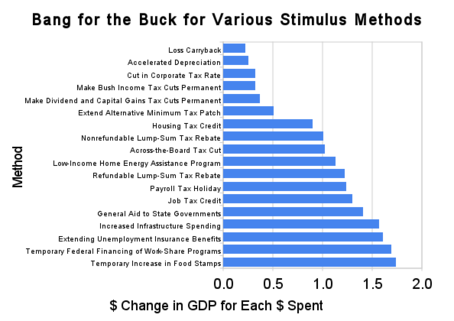
http://4.bp.blogspot.com/_LKZQT6pv_oU/TBqKqQaCcaI/AAAAAAAAA6...
http://www.mckinsey.com/industries/infrastructure/our-insigh...
If the US had a similar political climate the east coast would already have high speed rail from New York to Miami.
I hate this terminology. If the US has, in fact, "finished" developing, then the future of the S&P will be bleak. I don't think that's the case at all, though. I think development has just started and we'll see fantastic advances in bio-informatics, solar power, 3D printing and a number of other fields in the upcoming decades.
When I was a teenager, I pirated music. I seriously hope my children pirate gourmet cheeses and burritos as teenagers. I download apps that organize my notes. May they download the bio-app that lets them dunk from the free throw line.