It doesn't really matter what the academic plan is, the policy isn't going to follow it. Much like how interest rates were supposed to rise after being dropped to emergency levels a decade or so ago and instead a 25 bps rise is front page news.
All the politicians/relevant voters are looking for is a green light to hand out money and some buzz to say that it'll make everyone better so ignore the doubters. If they cared about good economic policy the last few decades would look very different. The dominant ideology is that centrally planned interest rates are a good idea, and that is questionable.
Makes sense in theory, but the second half doesn't always happen b/c politicians like buying votes with govt spending (either via under-taxation or over-spending, to the extent those aren't the same thing).
The belief was that the Federal Government had grown too large in the economy and needed to be "starved". To what extent government austerity vs. new monetary policy moved the needle for the US economy is unknowable. However many Americans of that generation feel that the starve the beast approach was correct.
If you talk to Americans opposed to new taxes, their opposition is usually based on the idea that the government will waste the money in one way or another. Even those on the left in favor of taxes are often in favor of taxes for redistribution purposes. It's rare that anyone pitches the government as competent outside of military spending, and even then there are many asterisks on 10k light bulbs in submarines.
If you want Americans to agree to taxes you'll need to change the perception of government competence.
AFAIK the "90%" rate is highly misleading because at the time there were a lot of deductions that bring the effective rate much closer to today's levels. We can see this in the federal tax receipts as % of GDP, which remained mostly flat despite the top bracket dropping from "90%" to 37%
This is incorrect.
The 90% tax rate (and other notably high tax rates from that period) were temporary measures explicitly enacted to discourage war profiteering:
"The crisis of World War II led Congress to pass four excess profits statutes between 1940 and 1943. The 1940 rates ranged from 25 to 50 percent and the 1941 ones from 35 to 60 percent. In 1942, a flat rate of 90 percent was adopted, with a postwar refund of 10 percent; in 1943 the rate was increased to 95 percent, with a 10 percent refund." [1]
These were not tax rates analogous to any of our normal, peacetime rates and they were not enacted as progressive policy measures.
It is misleading and disingenuous to make any comparison between the tax rates we choose in modern peacetime which arise from political decisions about relatively progressive vs. regressive rates, etc., and these administrative rates designed to combat war profiteering and other behaviors related to a wartime economy.
Genuine question - do people see military as competent when it comes to spending?
This is why the fuels division I was in, we often bought new desk chairs every year and $500 pocket knives and parts we would never need. Literally had to throw parts away to make room for the new parts.
I can't speak to dealing with insurgencies but it's clear to me that a mix of various administrations policies was to blame more than military effectiveness.
I mean was it the military or Paul Bremmer and co who disbanded the Iraqi military and unleashed a lot of chaos?
The first is that other Western countries could pick up the slack instead of having it fall disproportionately on the US. It only got the way it is because the others were mostly bombed out after WWII and that's no longer the case.
The second is that if the US spent less and did less military interventionism, adversarial countries might not feel the need to spend as much either, and then the balance of power stays the same while everyone spends less money on bombs and warships.
The US is the only one who can initiate this because they're the only ones who can reduce military spending without being threatened even if others don't.
The Kochs, leaders of the "small government" movement are the heirs of a billionaire whoade his fortune building oil refinery for communist USSR government. They only dislike government when it helps the people instead of the oligarchs.
The media always dumps on the Kochs because, atypically, part of their agenda is anti-graft. Make the government smaller by reducing corrupt spending programs and regulatory capture. Most of the bureaucracies fight each other for resources but they're not trying to turn off the spigot. The one who does becomes a target for attack. So they're the ones you've heard of.
The uproar about this change from Team Blue was palpable; this was clearly a targeted attack on liberal, high-tax areas. The cutoffs for the changes were well above an income level of $150K, which meant it went after the 'rich' that Team Blue always positions as the enemy, but none of that mattered.
Nobody wants more taxation when it actually hits their pocketbook. If there's anything the constituents of the two major political parties can agree on, it's that.
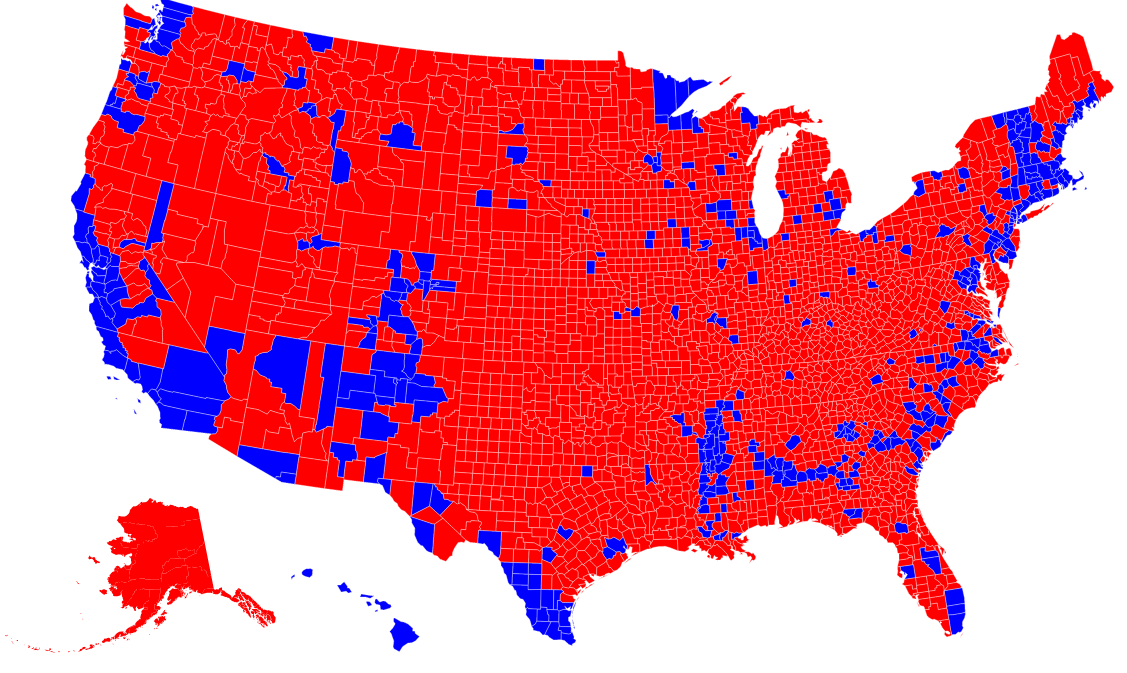
https://miro.medium.com/max/1127/1*86sURhsiwekHqCuqjbFnkQ.pn...
https://worldpopulationreview.com/state-rankings/donor-state...
California is a net recipient of federal money (though not by a lot). The biggest donors are the blue states in the northeast. But plenty of blue states are recipients and the biggest recipients are the swing states, because politicians shamelessly buy their votes.
And the reason the states in the northeast pay the most isn't because of state-level benefits reducing the need for federal programs (which rarely if ever happens). It's because those states are disproportionately the wealthy people who pay the most taxes.
But getting rid of the SALT deduction didn't care about that. Wealthy people in California lost more than equally wealthy people in New Hampshire, even though California is a net recipient and New Hampshire is a net donor, because New Hampshire has lower state and local taxes.
But then they weirdly push for the opposite to the financial detriment of their own constituents, including the lower income ones who could have higher state benefits than existing federal benefits if the feds weren't taking so much of their state's money.
Best guess for why this happens is that the blue team is more captured by government sector lobbyists at the federal level, who don't want to lose jobs to state level government workers.
Oh, I know which party he's talking about!
> "...and pay down that debt"
Huh, nevermind.
https://www.cato.org/commentary/no-bill-clinton-didnt-balanc...
At one point a quota increase leads a factory to sabotage it's old equipment, so that they may get a new machine to hit the quota. The administrator in charge of approval determines as much - and arranges for a new machine. Unfortunately a pricing reform introduced by the same plan leads to an inability to build the new piece of equipment as equipment was priced by the ton. Requiring the intervention of "well connected" individuals to solve the problem...
Systems adapt - any reform will introduce exploits, and pathologies. To pretend that MMT based central planning yields a different outcome in the long hall is folly.
It’s the austerity people that have never cared about anything but their ideology. Austerity for austerity’s sake has caused unfathomable human misery in the globalization era.
Right now the labor market is good for workers. That is good. Getting there has always opposed by the ruling class interests though which is why we haven’t pursued it.
MMT at it’s heart is just an increasingly large number of voices screaming out “fucking STOP” and actually try to get to a relatively tight labor market, because on the whole doing so is better for most people.
Yeah sure inflation is an issue but as we are seeing now it’s always been something that can be addressed by putting on the brakes a little.
And for the record I have a degree in economics. I get the other side of the argument. My point of view is that the other side of the argument and elite economists have been fundamentally corrupt in their analysis for decades.
Well, let’s see:
1. I got maybe $3k from the government due to all that printing.
2. The price level is easily up 25% for things I need to buy, like food, fuel, computing equipment, and vehicles.
3. And I still got Covid, as did literally everyone else I know. My brother still can’t taste anything and a guy I work with died.
If that’s what you guys with economics degrees call a win, I will update my priors from “you guys are idiots” to “you guys are a cult that uses math to further the work of Satan.”
Funny, I was thinking the same thing about the above comment I was replying to.
>They are pointing out this outcome did not happen.
Flattening the curve absolutely does not mean preventing people from getting COVID; it's about lengthening the time horizon in which the population gets infected to reduce strain on the health care system.
Moreover, a personal anecdote about getting COVID doesn't imply an overall policy failure. Just because someone let sick people cough in their face doesn't mean they should wax intellectual about macroeconomics.
Yeah, Helped transfer wealth to the wealthy!
I mean, did it? What evidence do you have for this claim?
Vaccines absolutely helped. But now everyone's wages are going down -- it was basically ~$3k stimulus checks that were actually loans with a 400% interest rate.
Real workers wages are falling. Inflation fundamentally increases inequality, i.e. people who own assets watch the value of those assets increase while people who work for income watch their income fall.
A tight job market
> now everyone's wages are going down
Not the people that just got jobs
> Inflation fundamentally increases inequality
Not nearly as much as unemployment does
It is good _nominally_. Real wages are basically flat. Meanwhile, for everyone who didn't get a raise or can't currently find a new job for whatever reason, they're losing purchasing power. On top of that, the housing market has been completely destroyed by the Fed printing money and shoving it into mortgage backed securities. In many nicer areas of Southern California you used to be able to get a starter home for $600k (manageable for someone in a working class profession like a nurse or mechanic), now nothing on the market is less than $1.2M.
Also you forget that a big reason the labor market is so tight is because a couple million Boomers retired early during the pandemic.
I personally know a lot of people that just dumped their stimulus checks on memecoins or wasted it buying spurious goods. I'm sure the used car and electronics market also was greatly affected by stimulus as well.
The Fed also should have limited its stimulus to buying Treasuries rather than MBS. It makes no sense for the government to buy mortgage backed securities (basically a freebie to homeowners/homebuyers who are already wealthy).
It's pretty predictable IMO.
Either we'd have to drop the economy during the demand slackening during COVID (which would have caused a severe recession, because it WAS a recession in activity, and then there would be a bunch of panicked people in the middle of a pandemic who also lost all their income running around and maybe setting even MORE things on fire), or inflate our way out of it.
Hopefully we don't see some crazy 25% inflation like the 80's, but I wouldn't rule it out.
I'd expect that in a few years it'll flatten out though.
By contrast, when the Bush tax cuts were passed all that money was used for tasteful, ethical spending
Why
I'm not advocating for a basic income (or supply side economics), but simply emphasizing that what you said is completely true and one of the many risks of MMT. Even if MMT might be theoretically viable, in practice it's going to be interpreted as something not far from a pseudo-intellectual justification for arbitrary levels of debt/monetary inflation.
So if that is the result of such a monetary theory or not, maybe it does not have beneficial goals?
It is not “Congress can spend willy-nilly” but “Congress needs to stop thinking about fiscal balance and start thinking like the Fed.” (Or, perhaps, “Congress needs to define fiscal policy with movable levers which it gives control of to the Fed or a Fed-like body.”)
MMT is an understanding of factual nature of the environment in which government operates. Reduced to one sentence it is “the entire concept of fiscal balance is play-acting as if the government was using commodity or externally-controlled fiat currency, rather than it's own fiat and a distraction from the real constraints on government finance, rather than something which reflects, or even loosely guides policy makers towards, the real constraints.”
MMT is an old lie, oft repeated, and only discovered as a lie after it is far too late.
No, it's not.
> What proves MMT is in any way ‘factual’.
Factual is class of statements, opposed to normative statements.
> MMT is an old lie
It can't be that old, since it only describes the constraints on sovereign finance of entities functioning in their own pure-fiat currencies, which isn't a subject that has been of interest for very long.
The old lie is that sovereign entities (note the deep and old roots of that term in feudal societies) can debase their currencies with zero consequences.
Usually this works well for a long time, until all of a sudden it doesn't.
They're asking for supporting evidence for MMT.
dragonwriter seems to have meant "factual" in the sense of "concerned with questions of fact", "is" rather than "ought", and was not intending to claim (at least in that statement) that the answers MMT provides are correct.
gray-area seems to have interpreted "factual" as "accurate" or "truthful", and was objecting that defining a theory as "concerned with things which are actually fr-reals true" is cheating.
To be fair to gray-area, "true" is probably much more common a use of "factual". On the other hand, the broader context was that dragonwriter raised the point in objecting to argument about what MMT purportedly says we "should" do.
Factual is entirely off base as a descriptor and has been picked here in an attempt to make it seem grounded in reality and without challenge.
My point here is not to defend MMT but the quality of the conversation.
If someone comes along and says Modern Moo-netary Theory says we should to build too many catapults, and another someone points out that the theory doesn't address questions of "should", pointing out that the theory talks about spherical cows in space doesn't rescue the original objection.
That a theory makes unrealistic assumptions is absolutely an appropriate objection to raise, but it belongs upthread. Otherwise it won't be seen by people who've already decided what they think of the narrower topic of this subthread, and we'll get more repetition of worse arguments.
My objection is to people talking past each other rather than engaging (whether intentionally or unintentionally) and remains as relevant as ever.
That might be true in the academic sense.
But in reality, the only people who talk about MMT are people who just want to spend money infinitely and claim that there is no negative consequences to doing so.
Which of course, doesn't make any sense if you know anything about MMT in the academic sense, which absolutely admits that there is negative consequences to spending/money printing.
Mainstream economists don't really think MMT has much to say, TBH, and few professionals care about it.
It turns out that the real world is complicated, and thats why we have experts in the world.
Thats the important part here. Whatever your opinion is on any of this, basically all the actual people who know what they are talking about, disagree and think that MMT is basically valueless.
All other theories feel like yeah... but how does it explain this phenomenon or that
Congress: 535 ants on a leaf, floating down a river towards a waterfall, with each ant thinking they’re steering.
I share your lack of confidence.
I’ve got my popcorn already.
If inflation is accelerating and we need to cut spending to fix things it may be difficult or inefficient to cut the budget of a 10 year infrastructure project. If we need to spend more one year, do we just flood the healthcare system or military with money temporarily?
Changing tax policy frequently creates uncertainty for people investing in long term projects, which increases risk and cost associated with funding them.
I like that there is an academic debate going on about MMT, but there are practical challenges in implementing it. While far from perfect, the current monetary policy approach is easier to implement and change, while outsourcing capital allocation decisions to the banking system.
You missed the "mail everyone a cheque" era?
> Modern Monetary Theory or Modern Money Theory (MMT) is a heterodox[1] macroeconomic theory that describes currency as a public monopoly and unemployment as evidence that a currency monopolist is overly restricting the supply of the financial assets needed to pay taxes and satisfy savings desires.[2][3] MMT is opposed to the mainstream understanding of macroeconomic theory, and has been criticized by many mainstream economists.[4][5][6]
> MMT says that governments create new money by using fiscal policy and that the primary risk once the economy reaches full employment is inflation, which can be addressed by gathering taxes to reduce the spending capacity of the private sector.[7] MMT is debated with active dialogues about its theoretical integrity,[8] the implications of the policy recommendations of its proponents, and the extent to which it is actually divergent from orthodox macroeconomics.[9]
Regarding this being a "test" of MMT, I don't see why. The first part of the first sentence of that second paragraph, MMT says that governments create new money by using fiscal policy and that the primary risk once the economy reaches full employment is inflation, which seems to be precisely what has happened, no?
Certainly, there is inflation. There isn't full employment.
In France, you were counted as "unemployed" if you were registered with the national employment agency and actively looking for employment according to their criteria.
If you didn't find anything (for example because the opportunities on offer were too far away, or various other reasonably human reasons) after a certain time, the agency dropped you, and you were no longer part of the "unemployed" statistic. Unemployment went down!
I've also seen the government there change their criteria for unemployment (for example dropping you after 9 months instead of 12), to make it seem like unemployment went down.
(I'm a big believer in statistics-driven policies, but statistics, like anything involving humans, can be corrupted)
Even regardless, the current U-6 rate is very close to the record low: https://fred.stlouisfed.org/series/U6RATE
Using even the broadest measure of unemployment[1], numbers are back down where they were before Covid. The labor force participation rate is still down though[2] which means that about 2% of US adults aren't looking to go back to work at all- many of them are likely now retired, students, or stay-at-home parents.
[1] https://fred.stlouisfed.org/series/U6RATE [2] https://fred.stlouisfed.org/series/CIVPART
Plus there are a record number of unfilled job openings.
If, as you were implying, U3 was hiding extra unemployment right now but U6 was more accurate, then it wouldn't be so closely tracking U3.
> Plus there are a record number of unfilled job openings.
Yes, which would basically imply that it's incredibly easy for anyone who wants a job to get one.
For something to be a non sequitur, it must be a non sequitur to everyone, not just to one. This is not a non sequitur for two reasons.
  1) The sentence you quoted was not intended to be a
     consequence of the earlier statement.  Unemployment rate
     and number of job openings are connected, but not as you
     believe.  Correlation is not causation.  You are drawing
     inferences without cause.
  2) Full employment depends upon the number of job openings as
     well as the unemployment rate, which you ignored from
     my comment.
No. That is your inference but is clearly not implied.
Additionally, MMT states that it needs to use taxes to manage inflation, which the US federal gov't is clearly not doing, which undermines the testability of the theory.
3.8% is near historic lows.
More importantly: "full employment" doesn't mean unemployment is literally 0% - in fact, an unemployment rate of 0% would be actively bad, because it indicates that people are unable to leave their jobs (even temporarily) to seek better opportunities or life changes - usually because inflation is too high.
[1] https://www.bls.gov/opub/mlr/2017/article/full-employment-an...
I know "full employment" is a loaded term here, but at least in a general sense all who want a job could at least find something right?
One thing I'd be interested in seeing a discussion on as it relates to this topic is what happens when there is a legitimate labor shortage.
The remaining part of the MMT puzzle as I see it is: raise corporate taxes, and see if it helps bring inflation under control. If raising rates slowly doesn't quite do it, this should be the next go to for policy makers.
I don't understand this. Increasing taxes reduces the spending power of the individuals who pay the taxes. But that taxed money doesn't evaporate. The government spends it or redistributes it. It ultimately makes its way back into the private sector.
From that POV, destroying money (or, if you prefer, reducing the rate of increase in the money supply) is exactly what taxation does.
As explanations change, value changes, so anything can be a currency at the level of the individual--in this way, at least for conscious minds, a public monopoly on money is, while possible, morally wrong. It's a form of Marxism.
There's already been a solution the problem of state monopoly on symbolic abstractions for value (money), that started with Bitcoin and has been growing a new global economy since 2009.
In USA, sales taxes are paid to government by the vendor. As just a typical person in USA who does not work for federal government nor reside in D.C., sales taxes and property taxes are all that I (implicitly) pay. The vendor and I determine amount and type of my payment.
Your comment had a threatening tone implying something bad may happen. What is the lurking threat?
Definitely possible to not have what is known as wage income. Many do it. The super rich structure their affairs to avoid being in that system of voluntary contributions.
Govt spending is already 45% of GDP, so there's not much room to increase it more.
As for MMT, I think what the MMT crowd doesn't realize is that there's a lot of latent inflation coming. Asset prices and CPI do not go up in tandem. First Asset prices are inflated, then later for the next decade or so, as people slowly make withdrawals from those inflated asset prices, it begins to affect the CPI. And that's where we are right now, at the beginning of the CPI impact.
> Govt spending is already 45% of GDP, so there's not much room to increase it more.
Taxes (government income) is not all that related to government spending, as we've seen recently.
A better indicator would be the price of labor and commodities since they better reflect the constraints of the real economy. Unfortunately for the mmt people, the prices are going nuts because we are actually dealing with real resource constraints now.
It seems that the logical thing to do would be to put money into the economy through directly giving it to citizens, and then take money out of the economy through interest rates, by making it more expensive to borrow and reducing business investment. Typically you want to put money into the economy in a hurry, in response to a crisis, but you want to take it out gradually, so that businesses can plan ahead. MMT's framing of this still seems backwards, even if they've realized that fiscal and monetary policy are two sides of the same coin. You'd also get a lot less political resistance to the fiscal policy side if it involved giving people money rather taking money away from them.
Has this been put into practice in large countries before?
Frances’s GDP is 15% smaller than the single US state of California, and its population is only about 1.67x that of California.
Several European countries are well over 50%. There is plenty of room.
The economic imbalances between EU states are nothing, compared to the ones between US states. Do you see the US "disintegrating" anytime soon?
I could see Illinois imploding due to retiree obligations and pieces of Illinois being absorbed by neighbor States. More likely for federal government to take over State pensions because federal government can emit unbacked money.
BEA says 2021 US GDP is nearly $23T, CBO says total 2021 budget is $6.8T.
https://fred.stlouisfed.org/graph/?g=8fX https://en.wikipedia.org/wiki/Government_spending_in_the_Uni....
In other words, it's 37% and not 45% of GDP.
I see this sentiment any time MMT is brought up. I think it shows a misunderstanding of what MMT is saying.
While I’ve got my own issues with MMT, it’s always been made clear by MMTers that inflation is an important signal to respect and that you can’t infinitely ‘print’ money due to the constraint of real resources.
It's not unique to MMT, the same thing happens with plenty of other subjects too.
Any place where the no-taxes-ever party doesn't have a permanent stranglehold on at least one branch of a deadlocked government.
The United States is an outlier in this.
> Imagine you have a rent or mortgage payment, but inflation hits 10% so your taxes go up 10% month over month to counter it.
If inflation is that high, the real cost of making your mortgage payment is shrinking in real dollars.
"Any place where..." Noted that you couldn't conjure a single example.
> If inflation is that high, the real cost of making your mortgage payment is shrinking in real dollars.
This assumes that inflation is evenly distributed in all sectors. It isn't. Your CPI inflation rate is a proxy, a rough index, an average, and a dubious one at that prone to all sorts of bad signals.
Tax rates are evenly distributed (even if a higher tax bracket results in a higher rate, it's still evenly applied across the population).
Inflation isn't. Wages don't move in lockstep with inflation, particularly across all sectors and across all jobs. It moves in fits and bouts, and a raise may only come once a quarter or once a year for many (since businesses need their expenses to be predictable).
This idea that taxes could be unpredictable based on some rough, government sponsored index of inflation is quite silly on deep inspection. It completely upends the predictability of doing business.
And the cost of that unpredictability would be a contraction in the economy from less spending to hedge against the uncertainty of income.
I’ve found the main MMTers to be mostly consistent amongst themselves in their theories. Now, I think some ideas are wrong, but they do seem mostly on the same page. I agree MMT does an excellent job convincing laymen of some pretty wacky ideas and that’s one of my bigger complaints with it.
Also, I find the focus on mathematical models problematic in mainstream economics. It obfuscates a lot of erroneous assumptions. Models are great for testing, but words are useful for communicating ideas too and can sometimes be a better format, especially for wider audiences. To be clear, I’m not saying models are bad or that MMT shouldn’t use them, in fact I saw one MMTer post this paper recently: http://www.levyinstitute.org/pubs/wp_992.pdf
- an economist is someone who can tell you today why he was wrong yesterday.
- the central bank of Sweden made up an award in the honor of Nobel. Twice the recipient made a point to remind people economic theory is not an exact science.
Which puts them near the bottom as a hard science, but near the top of the social sciences. (I'm agreeing with you, but the valence of your observation depends on what reference class you have in mind for economics)
Now, if congress immediately votes in a bunch of new taxes, it'll be a wonderful test. :D
And no one is going to notice this? The people who are used to enjoying some quantity of goods and services are not going to notice that they now enjoy less, because someone else is enjoying them?
Or, is this somehow supposed to "stimulate" the economy, so that more goods and services are actually produced, because of the extra money?
This is alchemy. Production comes before consumption.
Huh, why is that the answer? Why wouldn't the conceptual answer be "do the opposite", i.e. sop up the excess liquidity by removing money from the money supply, by doing things like raising interest rates, increasing bank reserve ratios, and selling some of the trillions of dollars of securities already on the Fed's balance sheet? The last thing anyone should want is the government to take a lot more in taxes so it can be squandered on foolish projects. Also, once government programs start up and build/lease buildings and hire a bunch of people, they are almost impossible to get rid of (the process of terminating a Federal employee is a Kafkaesque nightmare).
I get your sentiment, but the government could be using that money in positive ways that don't involve spinning up whole new organizations
The money the government spends is then unrelated to that which it taxes
Ah yes, surely central planning is the solution.
Also, from my understanding, EURUSD goes up/down mostly based on their difference in interest rates.
Does printing always actually equate to devaluation?
This didn't happen in a vacuum, though. It was simultaneous (and, obviously, co-causal) with a very rapid economic contraction and a subsequent supply shock across a ton of industries. Any analysis of this situation that starts end ends with "the government printed money" is, IMHO, basically pushing an agenda.
What actually happened is that the device under control (the economy) had an excursion (picture a car blowing a tire and veering) and the government corrected rapidly (prevented it from entering another travel lane, say), but it was something of an overcorrection (the car ran off the shoulder).
Should we have "printed less money"? Probably yes, in hindsight. Was the alternative worse? Of course it was; we were looking at a huge jump in poverty. Was anyone unaware of the inflation risk? No, not really. Was anyone dead-on correct about the right amount of stimulus? Not that I can see.
We'll be fine.
It isn't until recently that money was printed, sent out, and actually got out into the economy... (at the same time that China shuts down, etc).
That is a puzzler, until one realizes it did cause inflation, which was offset by the deflation from the banking collapse.
[1]:https://scholar.harvard.edu/files/mankiw/files/skeptics_guid...
Congress got scared and passed a bunch of pre-written laws.
MMT proponents will argue that no one has ever properly implemented it.
However, an economic theory that is not effective in practice, given the realistic constraints of human nature and politics, is useless.
In theory the only way MMT works is to arbitrarily raise taxes to counter inflation. The Fed does not have the power to raise taxes, Congress does. But such a floating, variable tax rate is ripe for abuse of power and I don't know anyone who would not revolt under such a system.
its more american monetary beliefs
Someone owns every asset. By making it impractical to save using the fiat money, savings goes to non-fiat items like land, stocks, energy, and BTC. This harms the poor who are rarely able to escape into those non-money items.
Conceptually the answer in the theory is to suck up the excess money with taxes, which of course is not going to fly in the US. But maybe this inflation will make that more viable in the future: "Ms. Kelton and her colleagues make clear that the pandemic relief packages did not follow one of M.M.T.’s key tenets — they did not try to account for resource constraints ahead of time. In an M.M.T. world, the Congressional Budget Office would have carefully analyzed possible inflation ahead of time, and lawmakers would have tried to offset any strain on available workers and widgets with stabilizing measures and tax increases."