Makes sense in theory, but the second half doesn't always happen b/c politicians like buying votes with govt spending (either via under-taxation or over-spending, to the extent those aren't the same thing).
The belief was that the Federal Government had grown too large in the economy and needed to be "starved". To what extent government austerity vs. new monetary policy moved the needle for the US economy is unknowable. However many Americans of that generation feel that the starve the beast approach was correct.
If you talk to Americans opposed to new taxes, their opposition is usually based on the idea that the government will waste the money in one way or another. Even those on the left in favor of taxes are often in favor of taxes for redistribution purposes. It's rare that anyone pitches the government as competent outside of military spending, and even then there are many asterisks on 10k light bulbs in submarines.
If you want Americans to agree to taxes you'll need to change the perception of government competence.
AFAIK the "90%" rate is highly misleading because at the time there were a lot of deductions that bring the effective rate much closer to today's levels. We can see this in the federal tax receipts as % of GDP, which remained mostly flat despite the top bracket dropping from "90%" to 37%
This is incorrect.
The 90% tax rate (and other notably high tax rates from that period) were temporary measures explicitly enacted to discourage war profiteering:
"The crisis of World War II led Congress to pass four excess profits statutes between 1940 and 1943. The 1940 rates ranged from 25 to 50 percent and the 1941 ones from 35 to 60 percent. In 1942, a flat rate of 90 percent was adopted, with a postwar refund of 10 percent; in 1943 the rate was increased to 95 percent, with a 10 percent refund." [1]
These were not tax rates analogous to any of our normal, peacetime rates and they were not enacted as progressive policy measures.
It is misleading and disingenuous to make any comparison between the tax rates we choose in modern peacetime which arise from political decisions about relatively progressive vs. regressive rates, etc., and these administrative rates designed to combat war profiteering and other behaviors related to a wartime economy.
Genuine question - do people see military as competent when it comes to spending?
This is why the fuels division I was in, we often bought new desk chairs every year and $500 pocket knives and parts we would never need. Literally had to throw parts away to make room for the new parts.
I can't speak to dealing with insurgencies but it's clear to me that a mix of various administrations policies was to blame more than military effectiveness.
I mean was it the military or Paul Bremmer and co who disbanded the Iraqi military and unleashed a lot of chaos?
The first is that other Western countries could pick up the slack instead of having it fall disproportionately on the US. It only got the way it is because the others were mostly bombed out after WWII and that's no longer the case.
The second is that if the US spent less and did less military interventionism, adversarial countries might not feel the need to spend as much either, and then the balance of power stays the same while everyone spends less money on bombs and warships.
The US is the only one who can initiate this because they're the only ones who can reduce military spending without being threatened even if others don't.
The Kochs, leaders of the "small government" movement are the heirs of a billionaire whoade his fortune building oil refinery for communist USSR government. They only dislike government when it helps the people instead of the oligarchs.
The media always dumps on the Kochs because, atypically, part of their agenda is anti-graft. Make the government smaller by reducing corrupt spending programs and regulatory capture. Most of the bureaucracies fight each other for resources but they're not trying to turn off the spigot. The one who does becomes a target for attack. So they're the ones you've heard of.
The uproar about this change from Team Blue was palpable; this was clearly a targeted attack on liberal, high-tax areas. The cutoffs for the changes were well above an income level of $150K, which meant it went after the 'rich' that Team Blue always positions as the enemy, but none of that mattered.
Nobody wants more taxation when it actually hits their pocketbook. If there's anything the constituents of the two major political parties can agree on, it's that.
https://miro.medium.com/max/1127/1*86sURhsiwekHqCuqjbFnkQ.pn...
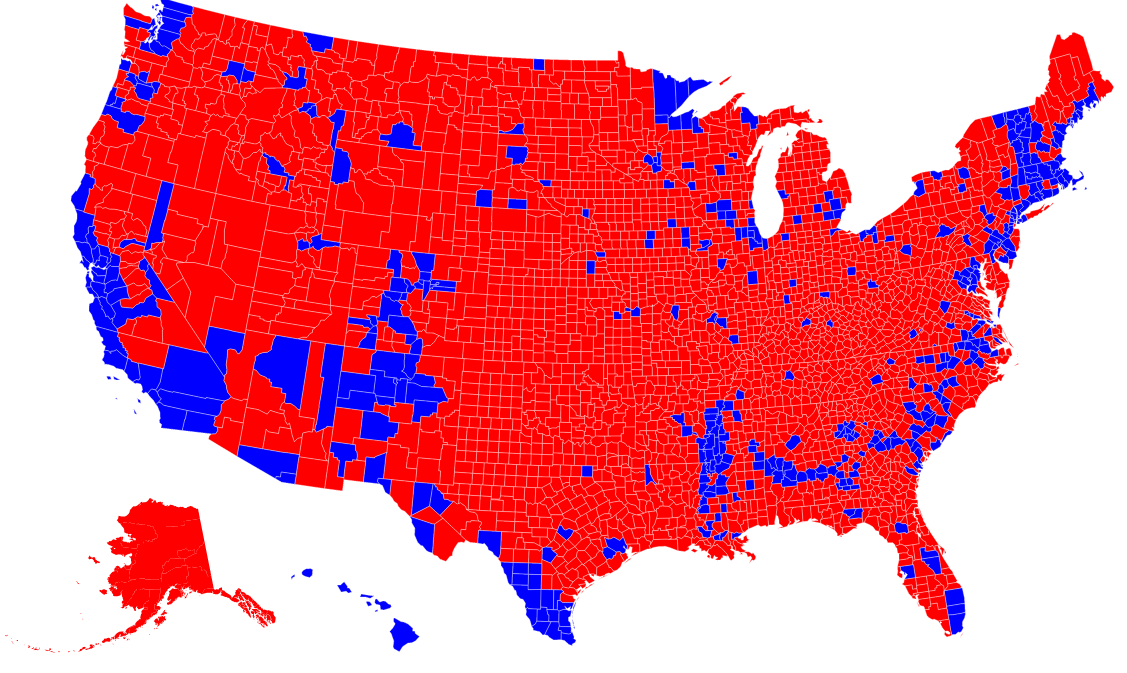
https://worldpopulationreview.com/state-rankings/donor-state...
California is a net recipient of federal money (though not by a lot). The biggest donors are the blue states in the northeast. But plenty of blue states are recipients and the biggest recipients are the swing states, because politicians shamelessly buy their votes.
And the reason the states in the northeast pay the most isn't because of state-level benefits reducing the need for federal programs (which rarely if ever happens). It's because those states are disproportionately the wealthy people who pay the most taxes.
But getting rid of the SALT deduction didn't care about that. Wealthy people in California lost more than equally wealthy people in New Hampshire, even though California is a net recipient and New Hampshire is a net donor, because New Hampshire has lower state and local taxes.
But then they weirdly push for the opposite to the financial detriment of their own constituents, including the lower income ones who could have higher state benefits than existing federal benefits if the feds weren't taking so much of their state's money.
Best guess for why this happens is that the blue team is more captured by government sector lobbyists at the federal level, who don't want to lose jobs to state level government workers.
Oh, I know which party he's talking about!
> "...and pay down that debt"
Huh, nevermind.
https://www.cato.org/commentary/no-bill-clinton-didnt-balanc...
At one point a quota increase leads a factory to sabotage it's old equipment, so that they may get a new machine to hit the quota. The administrator in charge of approval determines as much - and arranges for a new machine. Unfortunately a pricing reform introduced by the same plan leads to an inability to build the new piece of equipment as equipment was priced by the ton. Requiring the intervention of "well connected" individuals to solve the problem...
Systems adapt - any reform will introduce exploits, and pathologies. To pretend that MMT based central planning yields a different outcome in the long hall is folly.
It’s the austerity people that have never cared about anything but their ideology. Austerity for austerity’s sake has caused unfathomable human misery in the globalization era.
Right now the labor market is good for workers. That is good. Getting there has always opposed by the ruling class interests though which is why we haven’t pursued it.
MMT at it’s heart is just an increasingly large number of voices screaming out “fucking STOP” and actually try to get to a relatively tight labor market, because on the whole doing so is better for most people.
Yeah sure inflation is an issue but as we are seeing now it’s always been something that can be addressed by putting on the brakes a little.
And for the record I have a degree in economics. I get the other side of the argument. My point of view is that the other side of the argument and elite economists have been fundamentally corrupt in their analysis for decades.
Well, let’s see:
1. I got maybe $3k from the government due to all that printing.
2. The price level is easily up 25% for things I need to buy, like food, fuel, computing equipment, and vehicles.
3. And I still got Covid, as did literally everyone else I know. My brother still can’t taste anything and a guy I work with died.
If that’s what you guys with economics degrees call a win, I will update my priors from “you guys are idiots” to “you guys are a cult that uses math to further the work of Satan.”
Funny, I was thinking the same thing about the above comment I was replying to.
>They are pointing out this outcome did not happen.
Flattening the curve absolutely does not mean preventing people from getting COVID; it's about lengthening the time horizon in which the population gets infected to reduce strain on the health care system.
Moreover, a personal anecdote about getting COVID doesn't imply an overall policy failure. Just because someone let sick people cough in their face doesn't mean they should wax intellectual about macroeconomics.
Yeah, Helped transfer wealth to the wealthy!
I mean, did it? What evidence do you have for this claim?
Vaccines absolutely helped. But now everyone's wages are going down -- it was basically ~$3k stimulus checks that were actually loans with a 400% interest rate.
Real workers wages are falling. Inflation fundamentally increases inequality, i.e. people who own assets watch the value of those assets increase while people who work for income watch their income fall.
A tight job market
> now everyone's wages are going down
Not the people that just got jobs
> Inflation fundamentally increases inequality
Not nearly as much as unemployment does
It is good _nominally_. Real wages are basically flat. Meanwhile, for everyone who didn't get a raise or can't currently find a new job for whatever reason, they're losing purchasing power. On top of that, the housing market has been completely destroyed by the Fed printing money and shoving it into mortgage backed securities. In many nicer areas of Southern California you used to be able to get a starter home for $600k (manageable for someone in a working class profession like a nurse or mechanic), now nothing on the market is less than $1.2M.
Also you forget that a big reason the labor market is so tight is because a couple million Boomers retired early during the pandemic.
I personally know a lot of people that just dumped their stimulus checks on memecoins or wasted it buying spurious goods. I'm sure the used car and electronics market also was greatly affected by stimulus as well.
The Fed also should have limited its stimulus to buying Treasuries rather than MBS. It makes no sense for the government to buy mortgage backed securities (basically a freebie to homeowners/homebuyers who are already wealthy).
It's pretty predictable IMO.
Either we'd have to drop the economy during the demand slackening during COVID (which would have caused a severe recession, because it WAS a recession in activity, and then there would be a bunch of panicked people in the middle of a pandemic who also lost all their income running around and maybe setting even MORE things on fire), or inflate our way out of it.
Hopefully we don't see some crazy 25% inflation like the 80's, but I wouldn't rule it out.
I'd expect that in a few years it'll flatten out though.
By contrast, when the Bush tax cuts were passed all that money was used for tasteful, ethical spending
Why
I'm not advocating for a basic income (or supply side economics), but simply emphasizing that what you said is completely true and one of the many risks of MMT. Even if MMT might be theoretically viable, in practice it's going to be interpreted as something not far from a pseudo-intellectual justification for arbitrary levels of debt/monetary inflation.
So if that is the result of such a monetary theory or not, maybe it does not have beneficial goals?
It doesn't really matter what the academic plan is, the policy isn't going to follow it. Much like how interest rates were supposed to rise after being dropped to emergency levels a decade or so ago and instead a 25 bps rise is front page news.
All the politicians/relevant voters are looking for is a green light to hand out money and some buzz to say that it'll make everyone better so ignore the doubters. If they cared about good economic policy the last few decades would look very different. The dominant ideology is that centrally planned interest rates are a good idea, and that is questionable.