For a lot of pirates, it's a niche hobby to preserve the best quality version of some media / art. I see it as an underground librarian archivist movement.
In 100 years iTunes may be dead, but there will be some person with every album available in high quality lossless FLAC. Same with Netflix and it's bit starved encodes.
In contrast companies like Spotify don’t care about the music at all. They would just as well sell you white noise if it would somehow give them the slightest improvement in growth or margins.
Daniel Ek, CEO of Spotify, regularly makes statements that suggest he’d rather see professional musicians disappear. Most recently:
https://www.nme.com/news/music/music-fans-and-artists-hit-ba...
...but most are simply pirates, completely detached from the music or the artist. Let's not glorify them.
Thing is, he used virtually none of it. He collected software for the sake of collecting it. He didn't even play video games, just loaded them up once to make sure they ran. He was a hoarder basically, who had stumbled into a niche hobby, and like most hobbyists he would happily share it with anyone who asked.
I'm not saying every pirate is like that, or even most, but I am saying, I don't think the pirate scene works without people like that. The music fans are spokes, but people who do it for the sake of doing it are the hubs.
I’m half joking but all these tools to automatically download TVs and movies has absolutely led to this class of user that habitually downloads stuff just for the sake of doing it. Terabytes of movies they have no interest in. The psychology of it fascinates me.
For everything else (a minority): an excuse to play with my servers, cosplaying as an archivist, and "number must go up" for NAS size :)
Why should we view things through the lens of whether we are glorifying pirates or not? Is your assertion we should be condemning them? Why? Is it because they are taking bread out of the mouths of musicians? Is it equally bad if Spotify uses their leverage to commoditize and devalue music so musicians can no longer make meaningful money from recorded music? What about music labels who structure deals so they get the bulk of the money for a fraction of the work?
I'm curious to understand the principles you hold that give you such a black and white view on piracy.
As to the main point, no individual has the right to take someone else's intellectual property (such as songs, movies, books, etc that were often created by large teams of people over months or years) and, without asking any permission, "liberate" that content so that it can be freely copied and consumed by virtually anyone, anywhere, around the world, without recognition or attribution.
The question isn't whether distribution of the work ultimately does or does not benefit the creator(s), which it often does. It's that the "pirate" has no right to independently make the irreversible decision to freely distribute the content.
For example: audio description. Audio description is an accessibility technology that allows people who are blind or low vision to watch films, essentially by providing an extra soundtrack with a narrator concisely providing context for what's going on that can't be accounted for by dialogue or sound effects.
I have owned, in my life, 5 copies of the film Alien. None of those versions are audio described. Up until last year there was no way to hear a described version without resorting to “piracy”. The only way to hear a (mediocre version with a synth voice instead of an expressive human one) described version is to pretend to be in Canada, or attend a theatre capable of delivering AD with the new re-release. It's not a world-wide release.
So, sitting here in a cow-paddock in rural Western Australia, I still have no legal way to watch the audio described version of an oscar-winning film over 40 years old. Having paid 5 times for it, damn right I pirate that. And while I am not vision impaired, there are many others who are who depend on AD to participate in culture, and when they find barriers to that, they pirate that content too.
I have films on DVD I paid for, but cannot legally watch because I'm too many kilometers from some notional border or other. Damn right I “pirated” those!
As to your main point, you note that no individual has the right to take someone else's intellectual property. I presume you are giving your ethical blessing and a free pass to OpenAI and Midjourney et. al. who have provably leveraged a pirated corpus into highly profitable products?
Put a note up in the nearest local store, invite someone from the foodbank around and swap a meal for them describing what happens as you watch the film together.
FWiW I'm also currently living in wheatbelt W.Australia, my father (born 1935) makes a habit of helping out older people (Meals on Wheels, book reading, etc) in the local area that are struggling ..
You might have more legal options than you realise.
(Where I am the community is not so great. If you need a casserole, they're in your corner. If you supported gay marriage, and if prefer to do indigenous patch burning instead of let it turn into a wildfire so you can be a hero, then you're about as welcome as a blowfly).
Anyway I'm not vision impaired, I just enjoy audio described films while I'm doing chores or commuting.
Audio description is very much an art, and while some do resort to ad hoc description from friends, it's often clumsy and not immersive. Producing the real thing is highly asymmetric to the film run-time. It takes about 2 hours to properly describe about 20 minutes of a film, depending on the overal genre.
The blind community face an even greater hurdle. I've heard so many stories of blind people signing up to a streaming platform to watch a film, only for the audio description not be avaiable on that platform for that film. Because streaming platform X doesn't have the rights to the AD produced by streaming platform Y. It also leads to a great deal of redundancy as multiple services create entirely distinct AD tracks for the same film. It's crazy!
Piracy is the only way some of these movies and television shows can be enjoyed by some people, and often those people are of limited means.
It's raining here. Hope you get some. :-)
I did some digital | electronic support work for the WA Institute for the Blind(?) in Perth back in 1984 (ish) and understand the value of goo audio description (and piracy .. or file sharing in hobbyist communities as I might think of it) so I understand your position.
Just being that person on teh internet that likes to point out there are many ways to skin cats .. not that we do that in the country anymore.
Amazon did the same for a long time. It’s a fine strategy if your investors don’t need the immediate returns.
Amazon’s market cap grew by much more than the SP500, because the market (correctly) anticipated Amazon being able to earn profits.
Spotify’s ability to earn decent profits is not a given, and in my opinion, their whole business is currently being a negotiating chip between the 3 businesses that own music copyrights (Warner/Universal/Sony) and Apple/Amazon/Alphabet.
But executives loving money is a separate issue from whether the company is profitable or not.
Daniel Ek takes no salary but has filed to sell €165M in stock so far in 2024.
Also, Ek could have sold his equity years ago and made more money with less risk by sticking it in SP500. If he really loved money, wouldn’t he have gotten rid of stock in a business losing money and stuck it into something less risky?
My point is to say that Spotify is obviously in a difficult business, given the vendors it has to negotiate with, the competitors it has to compete with, and the customers it has to sell to. It is not some conspiracy or excess short term greed by executives that is hampering its success or ability to pay artists.
Right. So when you said this..
>Spotify loves money so much it has yet to show a profit in almost 20 years.
..was your point that Spotify, the company, doesn't love money, even if the executives might?
Spotify’s executive compensation is what it is, it is still a large organization managing 9k employees with 600M customers, so they obviously want a carrot to work. Shareholders and board members can vote on compensation they think is undeserved.
In fact, Ek hasn’t even received compensation since 2017, so he’s just been offloading his existing equity from being a founder from way back when. And since Spotify stock has lost money relative to the market for 7 years, Ek has been working for free. He literally could have more money if he had quit working years ago.
https://fortune.com/europe/2024/04/29/daniel-ek-salary-spoti...
The “tech bro” founder could have had billions of more dollars if he had dumped all his Spotify shares years ago.
It does not mean the organization is making a ton of money, or has any pricing power. An alternative is Visa or Verisign of Intuit or Microsoft or Qualcomm or Apple, those businesses have fat profit margins. Those businesses get to set their prices at the highest profit margins. Spotify barely limps along hoping one day it can eke out more than a low single digit profit margin consistently.
I wanted to complete a set of DJ mixes, and had to purchase them on Discogs to as there were no digital copies, one cost me EUR50 for one CD...
there's an episode of the suite life of zach and cody where zach pretends to have dyslexia in order to get extra time in his exams, and near the end of the episode he gets busted and they have a thoughtful conversation about how it's unfair and hurts the people who need the extra time, and he should be less lazy and do the work, etc, and somehow that's too offensive now.
As an example: I grew up in the 60’s and 70’s with the feminist second wave. Women of my generation hated being called girl, for good reason! In that time, men were men, and women were considered children.
Their granddaughters don’t seem to mind the term girl at all. They didn’t suffer the same trauma their grandmothers did. Society has progressed, at least a bit.
As for feminist and girls, you clearly drank the Kool-Aid as well. Women were called girls, because even after long maturing process, they still behave like children, or more specifically girls. Now there have been a very long propaganda platform to socially impose the "correct" behavior into men. But the reality hasn't changed, there are significant biological difference in the female human that makes it behave very differently and that becomes more and more noticeable the older they get.
Pretending there has been progress when all you did was censor the truth and impose an ideological vision on society. It's worse than religion, because at least those were created from behavioral observation.
But I guess you are a believer, if that floats your boat, have at it.
Sure, but they do like to discriminate against others based on their skin color or gender. Race and gender-gated policies are everywhere today.
The patterns are obvious and the future is clear, it's obvious who is going to be on the wrong side of history. There is no place for social regressive conservatism in a free and open society, that doesn't mean you are being oppressed not matter how convenient of an idea that victim complex is, society at large will progress, with or without you and there is nothing you can do about it.
And you clearly don't understand much about what you are talking about. The fact is that society as we know it is clearly going away, precisely because the fertility level is so abysmal that at this rate in two generations the genetic heritage that built all this world of freedom will be extinguished.
There is actually a trend of "strong women" going out of their way to bring around men from foreign countries to mate and create a family, precisely because of all the problems the social propaganda has created. Another society will perdure that's for sure, but it definitely won't be the same and the more time passe the more it looks like the replacement won't be as nice and open to liberties as what it replaced.
I don't even care, this is what happens when a culture gets too complacent, it gets overthrown and replaced by a stronger competitor. Now the question is: will it be better? So far, I fear the signs are not in favor of this conclusion, but we will see...
How do you think people felt that opposed social progress in the past? They felt exactly like you are feeling, but you don't agree with them now do you? Everything you say is derived from those base emotions, but it's all just in your head. You don't have to fear people who are different from you, they are all just people, we are all the same, we are all the same species, race, gender, sexuality, religion, language; it's all unimportant, we all just want to live happy lives in peace. Anyway
We are still hearing about discrimination of women in STEM subjects when not only they have the same exact opportunities but we reworked a lot of the education system to accommodate them in preference.
We can never win with your type because there is no logic, it's all about the feelings and emotions that uncomfortable truths create.
And nice trying on the racist insult, I fundamentally don't think there is a superior race or whatever, just that there are objectively different genetic heritages that are better at some things (and vice versa). It's the same thing for women, men are not able to make other humans, that's an objective truth. Either you take advantage of that and assign different things to do depending on actual relative strength of peoples or you put your head in the sand, makes everyone go through meaningless competition that bring about the same results, just less efficiently and with way more casualties than necessary. People are complementary, you can't have the smart ones doing masonry while the strong ones doing architecture, that's just stupidly inefficient and a sure way of creating problems in the long run...
And to be clear, I strongly believe in the equality of opportunities as well as equality in laws but that doesn't mean you have to engineer a whole system against "discriminations"; it won't work no matter how much you believe.
Hulu on the other hand just pulls shit. For example they pulled my favorite it’s always sunny episode where they do that diehard movie. I guess the fact they do black face makes it racist (which they call out as such in the show itself!) and since we are all apparently too stupid to think for ourselves about the content we watch they better block it. After all they know better than me about what is offensive.
… shit like that… that is what is gonna lead me back to piracy.
Bitrates are tied to the subscription tier. If you do the 4K plan, it's visibly noticeable that 1080p video bitrates are higher. They don't have much 4K content, but the 1080p difference is worth it for my 4K projector.
Yeah, nah. WhatCD’s full catalogue has never been recovered.
> nah. WhatCD’s full catalogue has never been recovered.
The loss of WhatCD's torrent database didn't wipe out anyone's library.
Burning the Library of Alexandria also didn't burn the other copies, and yet many books were lost.
In college I ate up an entire hard drive downloading the bootleg discography of Pearl Jam live shows in the hugest quality I could find.
Not sure why I needed 50+ live versions of the song Daughter or Yellow Ledbetter but… I had ‘em
I feel way freer when watching downloaded films. Like the old VHS days. It is mine.
I find this often the case with streaming. I used to think that this is just how they make movies now, but when trying out the same movie in Bluray, every word comes out crystal clear.
How so, when most of these products are digital to begin with? If you have the quality of the studio master, then there’s nothing to improve.
This is before even getting into 'fan edits' where people will re-add cut scenes, or do other edits to films. For an example of that, search for 'Topher Grace Star Wars Prequel'.
A funny detail in The Obi Wan series are the prequel lookbacks that, if you don't remember how bad they are, make them seem like mediocre movies instead.
https://en.m.wikipedia.org/wiki/Harmy%27s_Despecialized_Edit...
For examples, an artist's discography is sometimes neatly organized in folders, by year, and the files are tagged with metadata. In case of anime, fans improve or outright provide subtitles. They often do extra things like including karaoke for the opening and ending, color coding subtitle lines to match the speaker's personality or design, and provide stylized subtitles for signs and other letterings on the screen. In case of movies, they are often optimized to a specific kind of usage, for example to be able to be viewed on every phone, or to have a minimal file size. Sometimes, especially older releases, are digitally cleaned up and enhanced. Games install easily and is packaged in a way that it just works, without faffing about with the launchers and things like that.
No FBI warnings.
But, I think theoatmeal sums it up best:
Sooooo..... soulseek and friends it is:)
“P2P discography” is more like a personal collection, personal library shared with others. That person still has to do the similar amount of work to make sure it's not a smoking pile of data. Sometimes they do understand it, sometimes they don't.
Streaming services show unskippable ads for their other shows before your stream. Amazon showed an ad for a violent war movie before a kids movie my family wanted to watch.
With pirated copies, you can often get subtitles that were not available with the original (fan-subs)
By capitalizing on the oft unused upload bandwidth, Napster provided a benefit at little cost.
Would be fascinated to hear what this looked like on the PSTN backend load side, ~2000.
I don't think so, asymmetry was the innovation that made 56K possible on POTS (plain old telephone sevice, with only enough bandwidth for squawky voice)
I'm curious about the nuances, but it seems like the last mile download/upload imbalance was created by the originating signal mode?
Download = First mile internet to ISP could be upgraded to digital, and thus grab some extra throughout by avoiding analog noise handling
Upload = First mile user to ISP was inherently analog over phone lines, and so sacrificed throughput for line noise tolerance
v.90 didn't work at all between two regular POTS-connected analog modems. In order for a v.90 connection to happen, the ISP-end of the connection needed to be a digital circuit (typically using ISDN PRI).
By being digital, the gear at the ISP-end was able to precisely and distinctly control each individual bits that would ultimately be converted to analog at a point that was physically near to the user (their local CO switch). This was what gave us asymmetric nature of "56k" v.90.
Eventually, we got good enough at learning how to handle changing line conditions and thereby twiddle the bits with a modicum of precision in the upstream direction. This allowed us to produce a standard with a bit more symmetry: v.92.
v.92 offered up to "56k" (~53k due to FCC limits) down, and 48k up.
A lot of users -- at least in the US -- never experienced v.92. It wasn't formalized until right around the turn of the century, which corresponded well with the time when xDSL, DOCSIS, and/or BRI started showing up even in fairly small not-completely-rural communities at fairly reasonable prices. The local dialup ISP market was beginning to die by then and many never bothered with upgrading their gear to support v.92 before they closed their doors for good.
(All of this wacky dial-up modem tech was both enabled and limited by digital switching in the PSTN. Speeds over dry-pair phone lines could be far higher if there wasn't a digital conversion in the middle, and avoiding that digital conversion is how DSL became possible.
Which is interesting: A DSL circuit was meant to go only across town (ish), and was always betwixt two fixed points. But a point-to-point v.90 or v.92 connection could be established to any properly-equipped machine by just dialing its phone number, and that machine could be across town or on the other side of a continent; it didn't care.)
A bit earlier than 2000 /g https://lineofsightgroup.com/wp-content/uploads/2017/01/phon...
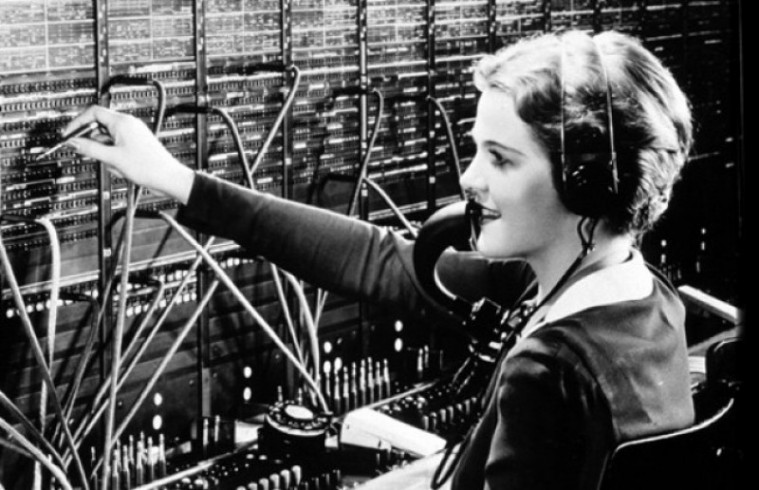
The later v.92 spec supported a digital upstream and could hit 48k upload.
Regardless, dialup users did not have a lot of upstream bandwidth available. They also suffered through high packet loss and latency making their throughput even lower than their line speed would suggest.
https://computer.howstuffworks.com/kazaa.htm
KaZaA didn't store the files itself so it was thought they wouldn't be possible to shutdown. From the site above:
"While Kazaa claims to be "completely legal," there are those who disagree: The free-to-download blue files are controlled by Kazaa users and include copyrighted content."
"Later that year, Kazaa was sued again, this time in the United States by the Recording Industry Association of America (RIAA) and the Motion Picture Association (MPAA). As of February 2005, the decision in that suit is still pending."
I remember they started suing individual users at that time... I found an article explaining that:
https://www.videoproc.com/resource/what-happened-to-kazaa.ht...
"In September 2003, the RIAA filed lawsuits against over 250 individuals, accusing them of illegally distributing about 1,000 copyright music files each, using P2P networks. RIAA sought an average compensation of $3,000 per case."
The result of the first case:
"In July 2006, the MGM Studios, Inc. v. Grokster, Ltd. caused Sharman to settle for $100 million, the amount to compensate the loss of four major music labels – EMI, Sony BMG, Universal Music, and Warner Music. The company also agreed to pay an undisclosed amount to the studios in the industry."
It's unclear exactly how Kazaa got down, the article concludes with "In August 2012, the Kazaa website was no longer active."... "the rise of legal streaming services such as iTunes, Spotify, and Netflix further compounded Kazaa's demise.".
Looks like the music industry managed to scare people away from pirating instead of actually succeeding in bringing them down directly, which is more or less what I remember.
Gnutella brought peer-to-peer searches. Basically it used a flood-fill algorithm: your search would be broadcast to all connected peers, which would broadcast it to all peers that hadn't seen it yet, until somebody responded with the file and their IP and you could download directly from them. Interestingly Ethereum uses basically the same algorithm for block distribution, with some optimizations that were first published by RTM, who was one of the founders of YCombinator.
Kazaa's innovation was to split the peer space into "ordinary nodes" and "superpeers", with the observation that not all bandwidth links were equal. It would enlist hosts on high-bandwidth connections to form quasi-centralized indexing nodes to organize the network topology for all the low-bandwidth consumer nodes. It's a similar principle to how the Lightning Network works for Bitcoin, or how L2s on Ethereum operate. This also made it easier to shutdown than Gnutella though, because being a superpeer made you a legal target for the RIAA.
Kazaa and ed2k were distributed. I think ed2k is still viable.
It was 1995 and pretty magical to get CD-quality audio coming out of the computer, though.
Unless you were young and on a college/university campus where your dorm room probably had Ethernet jacks.
> your dorm room probably had Ethernet jacks.
One 64k T1 channel, so 14% more fun.
Okay to be fair the modem was probably averaging closer to 32k so double the fun.
A ton less latency, though. T1 connectivity still felt snappy for web browsing long after cable modems pushed up average available bandwidth because the latency was so much better.
Except if you were sharing between all the students in the dorm and on campus.
By the p2p era (which napster was) they absolutely needed to do resumable downloads because a peer could suddenly go offline.
Before that I remember getting mp3s from ftp and irc fserves... Ftp definitely had resume, though not all clients and servers did it.
WHAT did Napster replace??? You're full of it, dude. Napster f*cked the scene badly. I guess you weren't involved in the goings on back then. But then why make such ridiculous comments?! We will probably never get the truth on that one. Anyone who spends 3 (no, 6!) hours downloading a single song, Barney at that, and then says that the master copy is WORSE than the pirated copy is a f'ing hilarious ding bat. Enjoy tpb
Some content, e.g. Netlfix, has DRM that limits the quality that you can view in certain browsers/operating systems.
As another example, a DVD/blu-ray sources are often significantly higher quality than what streaming services offer, so if you have a choice to watch some movie on Netflix or a pirated blu-ray copy, the pirated copy will often be higher quality than Netlify while being more convenient than blu-ray.
It in unclear though how you could possibly get higher quality than the best quality that the source offers.
Even in the old analog scene, people trade master tapes that are higher quality than commercial available sources.
That's not to say that they're not interested in providing more quality. There's heavy investment in per-video, and sometimes per-video-section encoding and next generation codecs like AV1. The goal for them though is to get more quality with the same or less storage and bandwidth budget.
peeeee duuuuu denu denu denudenu
Spotify is cool but I have playlists where half the songs are missing because some invisible licensing deal expired and the songs disappeared from reality.
With Spotify you are renting art. The moment you stop paying rent, your library disappears. Sometimes even before that.
Mate, it only takes a few minutes downloading mp3 song that's only a few MBytes, unless you are using dial-up or ADSL connection further down the road from the residential switch.
Aw shit, it dropped to 3kbps.
Downloading via IRC was objectively better in every way.
I remember waiting 3+ hours for a single song to download. Then discovering it wasn’t what I wanted but a troll who renamed the `Barney The Dinosaur I love you` song. Then I’d spend another 3+ hours downloading a different song. Ah 56k internet, what fun.
Today, TPB and a quick search can give you an artist’s entire discography in one go. Or if you’re into automation, lidarr , sonarr , and radarr can pull in your favorite things as soon as they’re released.
What I find most strange about the modern day piracy is quality. It blows my mind how different groups fight to offer the best version of a free thing. And they’re so good at it, that the pirated product is usually substantially better than the official version.