I wonder if some of the gender and queer issues in kids these days are actually because of this issue, same with other pathologies that sometimes require medication like ADHD/Autism.
I'm saying that only from a place of love - as i've always always felt "wrong" in some aspects myself, and have always wondered if increased diagnosis is because of natural biological types getting recognised, because of industry pressure to sell more medication, or because of pollution or lifestyle.
Very different scenarios.
We know that people in history have had conditions like Autism. However even in the present day there are stark differences in prevalence in different regions of the world with modern healthcare systems (Japan, for example).
They weren’t able to stay focused on nearly anything outside of nature, excluding things that brought them anxiety.
However , this is anecdotal. They were before that able to run a semi successful cleaning business for rental properties, with the main issue being paperwork related.
Oh, I feel this. I have ADHD and I can focus on ANYTHING, but I don't get to choose what to focus on. Some days, my body decides I get to focus on Jira - and then my Jira board gets ALL my attention. Some days, I learn a LOT about data governance or clearing out old emails.
The hardest part of ADHD is to STOP focusing on one thing so I can START focusing on the right thing.
What we're seeing since the beginning of petrochemical use in the US (50's) are clear physiology changes (specifically in males) where we're seeing a reduction in physical traits associated with being a biological male of the species.
[1] https://www.npr.org/2011/03/02/134196209/study-most-plastics...
Far from distress, the rate of dissatisfaction trans people after hormonal transition is very low and is most often driven by external factors. https://www.gendergp.com/detransition-facts/
I do not see how plastics are a convincing explanation for current social trends.
Also, these sorts of studies generally look at changes at the population level - an individual won't suddenly wake up with a gender crisis from plastic exposure.
See https://jessesingal.substack.com/p/researchers-found-puberty...
Unfortunately, the vast majority of the control cohort simply stopped responding to the survey over 12 months, so there is no end to potential confounding factors causing children (who for all we know elected not to receive gender affirming care to begin with) to stop responding to a survey issued by a gender clinic, or the confounding factors that caused the others not receiving treatment to remain in the study.
https://somenuanceplease.substack.com/p/is-detransition-the-...
>>The way this question is written makes it very clear that they were primarily expecting to get answers related to “pressure” and what are sometimes called “external factors.” Of the options given, only one option is clearly an internal factor (“I realized that gender transition was not for me”).
>>However, the primary reason that this survey cannot be used to draw conclusions about the number of people detransitioning and their motives is because the 2015 US Transgender Survey was distributed amongst the trans community. It didn’t seek responses from people who detransitioned and never reidentified as transgender.
I suspect it will be a serious issue in another 20, due to not sustaining population, and then we will ban parabens.
It's alex-johns level sounding crazy but it seems true.
[0] https://www.healio.com/news/endocrinology/20120325/generatio...
Also I think we’re rediscovering the power of breath work on performance - as exemplified in the constant record beating times occurring particularly in swimming competitions.
"In 1985, men ages 20-24 had an average right-handed grip of 121 pounds and left-handed grip of 105 pounds. Today, men that age had grips of only 101 and 99 pounds, the study found. Men 25-29 posted losses of 26 and 19 pounds."
source: https://www.npr.org/sections/health-shots/2016/06/13/4815909... and: https://pubmed.ncbi.nlm.nih.gov/26869476/
Don’t have faith in anyone admitting anyone is right or wrong.
I guess I'm just having trouble squaring your comment away; can you elaborate/clarify your caution as it applies to Swan?
Swan's work is dubious on other scientific grounds, however. [0]
[0]: https://www.science20.com/gregory_bond/just_a_dud_swan_book_...
The point of the first part of my comment was to answer the question posed.
This is lazy reasoning - you're imputing on me arguments that I didn't make and even if I had made them, they wouldn't impact the veracity of the other claim I was making.
Edit: I don't care about my comment score, but what about thanking someone for their response and providing perspective is worth downvoting? Asking in the interest of continuing to foster discussion.
> Ah, yeah, I'd forgot about those areas having strong right-wing links.
This is taken to mean that, if there is an idea or conclusion that 'right-wing' people agree with, it is therefore wrong. And you not only think that, but you're thanking someone for reminding you to not actually look at the information objectively, but dismiss it out of hand because the _wrong people_ think it.
It's really revolting behavior.
Personally i see the heavy use of SSRI's and Ritalin etc. for kids through the same lens where societal or psychological changes should be the focus, or a culprit found instead of patching up.
The answer can't be that in the future out of a class room one half will require some dependency from a medico industrial complex, that's dystopian to me.
The difference to "back then" is that the amount of work required both in school and in later work life was far less than today. Only those with actual academic ambitions went to school for longer than eight years, the rest entered the trades and worked on a farm.
The answer will have to be a radical reform of our societies - away from turbo-capitalism that is only focused on hyper-growth and excellence, to a society that actually respects the needs of all of its citizens and nature itself. Not everyone needs to have an academic degree just for a bullshit data-entry job ffs.
[0] https://news.gallup.com/poll/389792/lgbt-identification-tick...
Break it down by race and you see totally different results. Why? You wouldn’t expect that.
>to be a good person you need to be oppressed
So you’re cool with these absurd assertions about society’s direction?
I’m being a bit reductionist, yes. But the overarching point is obvious. It’s what the church and cults have done forever: explain why you are a sinner and then offer ways to not be. But worse because in this postmodern take on cult dynamics it’s about group identity. By virtue of being born with arbitrary DNA you are classified as good or bad and kids don’t want to feel bad so “here’s a way to be good”.
It’s the grooming of jr. revolutionaries.
Your teenage years are naturally a time to "figure out who you are". The widespread acceptance and promotion of LGBT adds an extra variable that teenagers need to "figure out" for themselves.
I don’t have a source for this of course. I’m operating under the assumption that gen z has more internalized the idea of gender/sex/sexuality as a spectrum.
[1] - https://en.wikipedia.org/wiki/Homosexuality_in_the_DSM
I'm not sure how plastics contribute to people becoming more accepting/norms changing over time
The list goes on.
An interesting question is that would the risk of these outcomes be worth the massive amount of savings and productivity that plastics have had on nearly every industry? Then there's also the use cases where plastics are nearly irreplaceable, or at least not easily replaceable without incurring a huge cost increase for example in medical applications (think packaging for syringes, vaccines, surgical tools, or anything that requires contamination control).
It's almost impossible to get away from it. Also plastic bags, clothes shed into the environment and get eaten by fish and animals.
So maybe we all need to be vegetarian.
Source? Lyme disease is from ticks.
Uh, transgender people were scientifically known since at least the late 19th century [1]. The problem is that the Nazis eradicated all the knowledge during their reign [2], and that the Catholic Church was actively fighting against LGBT people for a very long time, even before that era (and modern-day Evangelicals in the US have taken on their mission).
What has changed in "gender and queer issues" is that this negative influence has disappeared as the public importance of the Catholic Church has waned over the last decades and that protections for LGBT people got affirmed by courts, constitutions and laws.
As for ADHD/autism: these were also known to science at least in the mid 19th century [3]. However, for a very long time the issues were not as apparent or problematic in society as they are today, mostly because most of society was working in the agricultural sector with lot less work load than modern-day turbo-capitalism requires [4].
[1] https://en.wikipedia.org/wiki/Scientific-Humanitarian_Commit...
[2] https://en.wikipedia.org/wiki/Institut_f%C3%BCr_Sexualwissen...
[3] https://en.wikipedia.org/wiki/Struwwelpeter
[4] https://groups.csail.mit.edu/mac/users/rauch/worktime/hours_...
You know, in ancient Indian legends there are characters who one can now perceive as LGBTQ people.
Granted, the accuracy of the stories as a whole is questionable — but the very fact that such people are mentioned means the idea existed even back then.
Maybe if somebody looks deep enough they can find something similar in ancient Greek/Egyptian/Chinese literatures as well.
Just a thought. My hypothesis could totally be wrong.
The ancient greek culture is well known to have a decent prevalence of homosexuality
https://en.wikipedia.org/wiki/Homosexuality_in_ancient_Greec...
are not pathologies
are not 'wrong'
are not just in kids, they've been in adults and kids for millenia
Please stop perpetuating such misleading tropes.
Thank you. I’ve been saying this for more than three decades. It’s nice to know people are finally getting on board. Younger people might forget that Republicans were at one time deeply invested in conservation and protecting the environment.
Other nations aren't researching this?
My memories are fuzzy and incomplete, but I remember that nothing ever happened because there was a big uproar from manufacturers. They demanded "proof" and threatened litigation. The problem with tests is that you can create a lot of questions about procedures, for example, did you test just after descaling? First shot in the morning after letting water rest in the pipes overnight? Then there's discussion about "this is so little water, just a tiny espresso, so the amounts are smaller than in drinking water which you drink by the liter so the thresholds don't really apply". Basically, the lab would have to fight the manufacturers in court, so the whole thing was dropped silently.
I still have a 2012 Rancilio Sylvia entrance-level portafilter machine, almost unused, that I had tested by my Bavarian city's own water lab, with a sample taking procedure agreed upon with the leader of that lab (they did not have any procedures for a citizen who wanted something tested but did not want to turn me away, so the head of the lab himself took time to deal with my request). The lead values greatly exceeded the allowed limits. I don't think it would be any different with a current model. I ended up with a copper-based Vibiemme, and now I have a stainless steel based Ascaso Steel PID Uno that was designed with being environmentally flawless in mind.
Most, or just many?, people don't care, however. I found plenty of people who wanted to take my Rancilio Silvia, but I refused because I don't want this lead-laden piece of junk in use by anyone, even if they take it willingly despite knowing of the problem.
The 2013 report: https://www.deutschlandfunk.de/studie-teure-espressomaschine... (German article from 2013, website is from a public German state radio)
My memories are fuzzy and incomplete, but I remember that nothing ever happened because there was a big uproar from manufacturers.
Tangential: let's not forget the whole dieselgate scandal of VW and certain other European car manufacturers.
I mean, they use all their engineering prowess to come up with this?
Just get an Ascaso Steel, it's a far better machine anyway :) It was a significant upgrade from my Vibiemme Domobar, which already was a significant upgrade from the Silvia. Not just espresso quality, there the upgrade (from the Domobar) is mostly greater consistency and the ease of getting the best outcome with less experimenting, it also uses significantly less resources - much less energy and also much less water. The only small complaint I had was that I had to keep my finger on the activation switch because I find the automatic flow-control useless (too inaccurate), until somebody pointed out I could program it to measure a huge amount of water that I would never reach in practice and then I could use it as on/off switch for drawing the espresso.
https://www.ascaso.com/div-espresso-coffee-machines-grinders...
https://www.iflscience.com/health-and-medicine/banned-europe...
> "This principle, in the words of the European Commission, “aims at ensuring a higher level of environmental protection through preventative” decision-making. In other words, it says that when there is substantial, credible evidence of danger to human or environmental health, protective action should be taken despite continuing scientific uncertainty. In contrast, the U.S. federal government’s approach to chemicals management sets a very high bar for the proof of harm that must be demonstrated before regulatory action is taken."
Novel food additives are always approved in the US first and there are more types of additives allowed in the US to begin with. This is an extraordinary claim that requires evidence.
Also many of us sit all the time, watch screens that give us an overload of culture and opinions, and eat up to 3 meals of sugar-infused foods fried in vegetable oils a day. It’s no surprise that gastric and colon cancers have risen. Inflammation is the name of the game - and our sugary, highly processed diets paired with long stretches of immobility compounds the damage.
That language is sloppy and imprecise. What's increased is the (I presume the rate of) diagnoses. Not cases. Phrasing it like that allows the reader to consider many plausible confounders instead of leading them on to the predetermined conclusion of the article, or at least appearing to do so. Has detection of that particular type of leukemia increased dramatically with new technology? Are there cultural reasons why diagnoses with few if any objective measures, like autism, are more readily handed out by doctors? There are plenty of controversies about how the contents of DSM, the book that spells out the gory details of psych diagnoses, are changing over time (i.e. DSM-4 vs. DSM-5).
The right conclusion might very well be the one authors are trying to suggest, but "helping it along" so transparently is unhelpful.
This confounder is virtually guaranteed to account for a lot of that doubling. How much? No idea. Back to my overarching point.
[1] https://evidencebasedbirth.com/wp-content/uploads/2021/05/Fi...
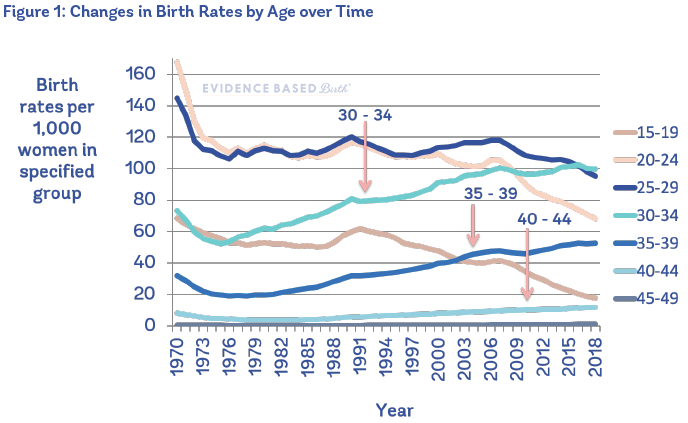
Infuriating. Do you have any sources to back this?
[Decrease in anogenital distance among male infants with prenatal phthalate exposure]
I heard on a podcast interview of Dr Matthew Walker that Alzheimer's seems to be related to a lack of sleep.
> "Today, it is an issue of increasing scientific concern because these microparticles due to their small size are easily accessible to a wide range of aquatic organisms and ultimately transferred along food web. The chronic biological effects in marine organisms results due to accumulation of microplastics in their cells and tissues. The potential hazardous effects on humans by alternate ingestion of microparticles can cause alteration in chromosomes which lead to infertility, obesity, and cancer. (2018)"
You can get it at sci-hub_se just enter this title in the search box: "Microplastic pollution, a threat to marine ecosystem and human health: a short review"
For a broader discussion on the continuing issue of environmental toxins accumulating in human beings, more pop-sci:
https://www.nationalgeographic.com/science/article/chemicals...
> "Yet even though many health statistics have been improving over the past few decades, a few illnesses are rising mysteriously. From the early 1980s through the late 1990s, autism increased tenfold; from the early 1970s through the mid-1990s, one type of leukemia was up 62 percent, male birth defects doubled, and childhood brain cancer was up 40 percent. Some experts suspect a link to the man-made chemicals that pervade our food, water, and air. There's little firm evidence. But over the years, one chemical after another that was thought to be harmless turned out otherwise once the facts were in."
Note however that US academic institutions basically cut all research into these subjects due to political and industrial pressure. It started with Republican attacks on USGS funding for environmental pollution research in the early 1990s, and continued with NIH cutting funding for environmental carcinogen research in favor of inheritied genetic explanations for cancer. Hence, 'little firm evidence'.