Swedish health system basically collapsed under the weight and after an order of magnitude more deaths than in comparable neighboring countries they are now taking to restrictions as well.
I am sure no one takes joy in "destruction of civil liberties", but we have to balance here some fundamental rights, like the right to life, with other fundamental rights such as freedom of movement and economic rights.
Also, I have to point out a glaring cognitive dissonance here. You basically just said: "let's put vulnerable people into unused hotels so we can safeguard civil liberties". Did you mean: "let's put vulnerable people into unused hotels so we can safeguard civil liberties of young people"?
I do agree though it'll be interesting to see what the cause for the relatively high amount of excessive deaths was (not bigger than many other western countries, such as Belgium or the US), but still. I'm not saying the Swedish approach was the best one (or even a good one), but let's not spread misinformation. Sweden is so much misused in this debate (on both sides) and that scares the me the most.
On that note, several really bad/horrible incidents in the spring where health care workers did strict prioritizations was due to media and mass hysteria - NOT because of health system collapse... Misinformation is really dangerous - life and death dangerous...
Sources in English are harder to come by about this, but for example in spring when Stockholm's ICU beds were at full capacity it is implicit that people with better prognosis had to be prioritized. Seniors with severe cases of corona were instead given morphine and sent to die in care homes:
https://www.svt.se/nyheter/lokalt/stockholm/skarp-kritik-eft...
Nothing like this happened in Sweden's neighboring countries with more cautious COVID approach because ICU beds so far never reached full capacity. In a modern Nordic welfare state denying a dying person of care that could save their life is not only a complete failure of the health care system but also a crisis of moral values. I am not sure the Swedish public is yet ready to even admit the latter crisis.
Did care homes in Sweden (which are separately organized from the rest of the health care system) manage COVID well? Probably not. Did some people panic and made they stupid decisions? Probably.
Did we dismantle some temporary ICUs without using them? Yes. Did we reach max ICU bed capacity in any region (the Swedish health care system is organized by regions)? Not that I know. Did we have a national health care collapse? Not as far as I can see. If we did, please provide sources.
From the very beginning of the epidemic it has been clear a person with serious case of corona would go to an ICU and put on a ventilator for the best treatment. Hospitals instead told care homes in Stockholm not to send seniors with severe corona in at all:
> Now, increasing numbers of workers are also coming forward to criticise regional healthcare authorities for protocols which they say discourage care home workers from sending residents into hospital [...]
> "They told us that we shouldn't send anyone to the hospital, even if they may be 65 and have many years to live. We were told not to send them in," says nurse who worked in several care homes around Gävle, north of Stockholm, at the beginning of the pandemic.
At the beginning of the pandemic, people thought this. As I understand it, it is actually preferable to keep patients off of ventilators as much as possible.
It is certainly not the case that, if you show up at a hospital and the hospital has unlimited resources, then you should be put on a ventilator because it’s somehow good for you.
What you actually meant was "got a bit busier".
https://coronakommissionen.com/
https://coronakommissionen.com/wp-content/uploads/2020/12/su...
> The Health and Social Care Inspectorate has shown that there was a marked reduction in the number of referrals to hospitals from residential care facilities for the older people during February–June 2020. However, it is hard to establish whether this type of guidelines led to physicians failing to make individual assessments of care need
So I gather that even if the health care system was never overloaded, there might have been some confusion in the elderly care that led to mistakes.
But to the extent the elderly care system was “overloaded” this has been the case for decades. Not due due to the COVID response.
> We have found that elderly care was unprepared and ill-equipped when the pandemic struck and that this was founded in structural shortcomings that were known long before the outbreak of the virus. The ultimate responsibility for these shortcomings rests with the Government in power – and with the previous governments that also possessed this information
Anyway:
> I guess it all depends on your definition of "collapse". I would describe a situation where hospitals are overloaded to the point where they have to choose who gets to live and who has to die a collapse.
Triaging patients and prioritizing them is every day in a hospital, corona or not. If you talk with a Swedish doctor (I do, because that's the health service I use), they often think in terms of which medicines are cost-effective and for which group of patients they should be used (basically - what is the human basis for using this expensive medication on this particular patient). To make it concrete, maybe they will even tell you that you are a "priority" because you have a long working life ahead of you.
Medicine and care can be infinitely expensive and public health care is a finite resource. They always calibrate towards giving patients adequate care, not infinite care.
So yes, it's not binary between normally being infinate and now not, but it's also a bit too reductive to make that point without also being clear that Covid has caused more and worse triaging than usual. (But someone needed to make your portion of that point and you did it much better than I could have, so thanks!)
A system that is choosing which patients to treat is therefor not collapsed.
Similarly, a bridge that has collapsed transports zero traffic - not 50% of the traffic.
But again, venturing into these semantic debates isn't useful. People choose hyperbolic words in order to justify their preconceived conclusions. The hyperbolic adjectives themselves aren't the point of OP above.
Please review https://news.ycombinator.com/newsguidelines.html and stick to the rules, including this one:
"Comments should get more thoughtful and substantive, not less, as a topic gets more divisive."
150 people arrested in London protest: https://www.bbc.com/news/uk-england-london-55116470
...including Jeremy Corbyn's brother, who was fined thousands of pounds: https://www.bbc.co.uk/news/av/uk-52693383
People are being arrested just for filming empty hospitals: https://twitter.com/Jen70717630/status/1344332042188845056
Hundreds of people fined yesterday: https://news.sky.com/story/covid-19-hundreds-fined-over-new-...
This is clearly enough to create a chilling effect on socialisation.
They don’t understand that they have invited the fox into the henhouse. This model of crisis response is going to be broadly applied in other situations after Covid is over, and they’ve given the government all the ammunition they need to apply it and enforce it.
When the lockdown started, I moved out of London and back home into a relatively poor area. Most people were in favour of it then, but today I do not know a single pro-lockdown person here that isn't:
1) a student with guaranteed income from their loans
2) a white-collar worker, usually senior
3) is somebody who is retired or has a lot of money
I'm not somebody who advocates for breaking the lockdown, but I wish the people pushing for them need to realise there are real consequences beyond pure survival (like people being evicted or going hungry). Rishi Sunak seems to be the only person in government who seems to understand the economic devastation to follow and is openly worried about it.
Most of my personal circle though is small business owners, and starting with the laughable PPP mess and joke loan offerings, and just screwed up situation economically and shifted consumer habits, many are looking for the exits and running for the hills.
Only a couple in my group are doing really well in all of this, but they cater to the luxury end of the scale and the rich have gotten significantly richer in all of this. One of them does very high end custom pools and he is booked into 2022 with jobs because of all the California money flowing into Arizona.
My main concern is we have green lit tyranny to the governments around the world. For a virus that is arguably no worse than anything else we’ve experienced in the last 60-80 years we have flipped human rights and liberties on it’s head and completely perverted it. We are now in the process of normalizing this situation and behavior long term. The consequences of this are going to be felt for years after this, if not decades. We likely won’t even remember the virus in 5-7 years, but we’ll still be living under the system it ushered in.
> The consequences of this are going to be felt for years after this, if not decades. We likely won’t even remember the virus in 5-7 years, but we’ll still be living under the system it ushered in.
Economically, for sure. From a human rights perspective I can't see us continuing for much longer without large scale riots, like we saw earlier this year but directly focused on the lockdown.
One chilling effect from all this is when something worse than Covid inevitably comes about, reasonable countermeasures are going to be completely ignored.
In Germany, you typically get 100% care unless you have specified that you do not want it (or your relatives make this difficult call). So the triage threat has been described by doctors as something along the lines of "we would effectively no longer try to treat a 90 year old nursing home patient with severe dementia in our ICU"
No
All Swedes have the right to the best possible care based on the individuals needs
In coordination with the patient and/or next of kind it’s possible to take decisions to exclude life preserving care if it is determined to be in the best interest for the individual
It is never up to the care giver to take such decisions
That's the case here in Spain for at least some of the oldest patients. Anaesthetizing someone frail and putting a ventilator down their throat stresses the system a lot, so isn't worth the risk - according to a doctor I know who was on the front lines. It sounded like standard medical practice (and she has worked in other countries).
( = They don't test suspected cases, but attribute it to covid)
If you want to compare with the US both that and population density have to be taken into account.
Not sure why I'm getting downvotes though. A lot of people don't know about this and saying this 5 months ago actually received upvotes because it informs people about it. I'm 100% sure the op didn't knew.
Something really changed in the last months.
Misinformation 1: Swedens healthcare system did not collapse on itself. Fact: In the region where most people got sick (Stockholm) the military was called in to set up an emergency hospital. This was never used because the hospitals in Stockholm managed without it.
Misinformation 2: Sweden imposed no lock-down. While technically-kinda correct that we did not lock people in their homes, quite quickly it became illegal with public events of 50 or more people. (mid-late March I think).
Misinformation 3: Sweden "remained largely the same after the virus". Goodness sake, no. Anyone that claims this hasn't talked to a single swede.
Misinformation 4: Swedens strategy was to achieve herd immunity. No. In spring this question was asked at almost every press conference with FHM (ministry of public health). The strategy from the beginning was to preserve the overall health of Swedes as good as possible. During the open questions with FHM they have repeatedly brought up and said that the goal was not to achieve herd immunity. This stuff is complex and poor journalists don't like complex answers. As far as I remember, the reason for this "milder" strategy focused on spreading accurate and correct information about the virus was because FHM (correctly) predicted that we would have to live with the virus for a very long time. They decided that the best way to protect people over a period of possibly several years was by arming them with information on how to protect themselves and others (social distance, wash your hands, work from home if you can).
The real issues that caused Sweden to have such high rates of death compared to similar countries like Denmark and Norway are more complex and has to do with lack of information for those caring for the elderly, poor equipment (and especially reserves with unusable equipment), and other systemic failures when it comes to elderly care.
Those in care homes were especially vulnerable because they are both older and come into contect with a lot of people. I believe the Swedish healthcare system failed to protect these people, and that is a major contributor to the high death toll.
I had to visit Stockholm twice in September to go to an Embassy. I caught the train from Copenhagen, where it was mandatory to wear masks on public transport (though not outside this).
As the train crossed the bridge into Sweden an announcement came over the intercom saying that we could now take our masks off.
As an outsider, I have had the chance to compare the way that a bunch of countries and populations have handled the pandemic. Perhaps the most stark shocks were actually in Copenhagen where I watched people queuing to get into pubs and sitting at densely packed tables at restaurants (September).
I'm always hesitant to judge because there are such complex dynamics at play and there is such and opportunity for biases to creep into what you see. But walking past it, it was hard not to wonder if it would come back to haunt them.
While visiting Sweden it was pretty clear that, aside from the masks, there was absolutely a change in behaviour (social distancing, hand hygiene). Compared to pre-pandemic visits.
The Radisson Blu had packaged up it's buffet breakfast into little containers for safety (that was a truly surreal breakfast -- tiny little glass jars of cheese).
I'm not saying Sweden's approach is right or wrong. The rest of the world hasn't been in any way consistent in their approach(es). But Sweden has definitely taken a different path on several issues.
The one thing I have continuously relearned about this virus is that pandemics are incredibly complex. It makes sense the pandemic spreads into every context humans place themsleves in.
I feel like Sweden (the world?) wasn't well prepared for a pandemic. Hopefully we can prepare better for the next one.
The majority of countries out there have made slip ups. Australia, which has fared better than most, had several "The Ruby Princess" and a hotel quarantine breach. They're still managing to tear each other apart politically even though the total deaths for Australia (pop 25 mil) is 909.
In some ways I think we've gotten off lightly with this pandemic. It could have been Ebola, or with similar survival rates.
We've actually proved as a global society that we can all pull in the right direction -- vaccines, etc. Has it been perfect? Not even close. Has it been worse for minorities and lower socioeconomic groups? Absolutely.
We can only hope, and plan that some of these things are a catalyst for changes that protect us next time, and make the world a better place in general.
The proportion of old people among the dead is not much different in Sweden from other comparable countries; it seems to me that any strategy with "protect the elderly and let the younger people take the hit" is doomed to fail. The more infections there are in the general population, the more infections there will be among the old and weak. And of course even the young and fit will also have a proportion among them who get seriously ill.
Regarding the lack of information for the elderly care tough, I know Anders Tegnell (who was the spokesperson for FHM during most press conferences) have said in several interviews that he regards that as a failure on FHMs part. They believed that stressing that the elderly were the most vulnerable would be enough, but says that this was probably a mistake.
First, Tegnell refused to believe in asymptomatic transmission.
Then he lied that herd immunity was never considered but we have emails from him to the broader scandinavian health directors saying that they should consider herd immunity through natural infection.
Then they insist that the only reason Sweden looks so bad is because of care homes (which, btw, is greatly affected by the fact that Tegnell didn’t believe in asymptomatic transmission well after every health department was officially basing policy on it). Well, care homes amounted to about 50% of Swedish deaths. So even if you completely excused Swedish care home deaths, while doing no such thing for its neighbors, it still had a death rate that was 2.5x that of Denmark and even worse compared to its other neighbors. So if we count Danish care home and old people deaths, but don’t count Swedish care home deaths, Sweden is still 2.5x worse in terms of death rates.
Finally, for all of that, Sweden was also close to the worst performing economy among its neighbors. Final economic numbers will take some time to really settle in, but what is clear is that Sweden didn’t get any economic benefit for not declaring an official lockdown.
Finally, let’s not compare for a moment. Sweden failed on its own terms. Here are some of the things Tegnell said we’re gonna be the benefits of the strategy:
1) Close to herd immunity in major parts of Sweden especially Stockholm after the first wave. This was absolutely destroyed when it was discovered that the worst parts of Stockholm had about 10% infected at most. It was nowhere close to the minimum 20-25% they were predicting. 2) Much better second wave than neighbors. Besides a couple of weeks lag (I’m not entirely clear why this lag existed, but Swedes have a summer tradition apparently of retreating to nature etc, which likely played a role in the improvement over summer as well as delaying the spread), Sweden has once again become the worst affected of its neighbors. 3) Better 2nd wave than 1st. It’s not worked out that way. The 2nd wave is worse than the first.
It would be one thing if the Swedes were like “oh well, this is how we want to do it”. But Tegnell has relied on both Swedish exceptionalism “oh, we Swedes are better than everyone else and so don’t even need to declare lockdowns” and contradictorily has also criticized other governments any week things haven’t looke as bad in Sweden.
"Previous studies have shown that asymptomatic individuals infected with SARS-CoV-2 virus were infectious3, and might subsequently become symptomatic4. Compared with symptomatic patients, asymptomatic infected persons generally have low quantity of viral loads and a short duration of viral shedding, which decrease the transmission risk of SARS-CoV-25. In the present study, virus culture was carried out on samples from asymptomatic positive cases, and found no viable SARS-CoV-2 virus. All close contacts of the asymptomatic positive cases tested negative, indicating that the asymptomatic positive cases detected in this study were unlikely to be infectious."
~10 million residents from Wuhan (almost same size as Swedish population) got screened for covid. In ~30k people who recovered from covid, 107 tested positive for covid a second time. Roughly ~1000 people were in contact with asymptomatic carriers, but none (as in 0) tested positive for covid.
Independence of administration Art. 2. No public authority, including the Riksdag, or decision-making body of any local authority, may determine how an administrative authority shall decide in a particular case relating to the exercise of public authority vis-à-vis an individual or a local authority, or relating to the application of law.
https://www.riksdagen.se/globalassets/07.-dokument--lagar/th...
And the problem for that 1 person was that Tegnell dismissed asymptomatic transmission. Dismissing the possibility of asymptomatic transmission led to making a mockery of his plans.
Everything since then has been an attempt to save face, including coming up with nonsensical excuses about how Sweden cannot do some things because “free dumb” (which it has since proceeded to do anyways).
Ironically, the faceless bureaucratic nature of public health in most countries allowed them to change tacks when they were wrong. In Sweden, since Tegnell became so intimately connected with and responsible for the Swedish response (to the point that politicians would blindly accept what he was saying), it became difficult for him to accept where he was wrong and then change strategy accordingly.
The rest of the world had it easier. Politicians would blame the WHO and China, public health officials would anonymously blame the politicians, and vice versa.
Within all this blaming it was still possible, as various public agencies in the rest of the world have, to actually change and improve responses based on new information since no one individual was tied to the earlier plan.
Of course, in general, the Swedish system is a lot better. But the pandemic has exposed a flaw that it’s over reliant on a single source of expertise. They mah need to consider having a separate private source of expertise (for example, the UK has something called SAGE) that can step in if the original source is unable to make necessary adjustments.
Also, it's even more complicated since FHM don't have authority to tell other government institutions how to run their business. You could call them a governmental support function, if that helps.
Regarding that Swedish politicians are "free dumb" and "they can't do anything". We have laws that could impose lockdown in the event of war, but these laws do not apply to a pandemic/epidemic. My understanding is that Norway and Denmark have similar laws, just that they do apply to pandemics/epidemics. I don't think it is right for politicians to have the ability to lock up people when the law does not support it. We should have had a law that could be used during a pandemic but we didn't.
I also think that the asymptomatic carrier thing is more complex than you describe. I don't think a majority of the cases were from asymptomatic carriers and if you follow the recommendations (social distancing + wash your hands etc.) it wouldn't be a problem.
And Spain locked people in their homes to the point where there was a black market in borrowing other people's dogs in order to have a legal reason to go outside, and did worse. There is not an obvious relationship between severity of lockdowns and deaths or hospitalizations. You see this in the US too, where the media have been demonizing Florida for months for its relatively lax restrictions, while its death rate is right at the national average.
Also I think it was never practically feasible to isolate vulnerable people as you describe.
And it is practical to expect the entire population to put their lives on hold for a year because of a disease that is not a significant danger to most of them?
I just hope the vaccines achieve immunity and stop this pandemic. This is great news. Too bad it's not approved in the EU yet. Hopefully early next year.
Also, I think you are missing the point. The swedish strategy was based on people following the recommendations over a long period of time. Locking down is not a sustainable strategy, especially when you believe that the pandemic might last for several years.
Tried what? They shut care homes as an afterthought, not as part of a plan to protect people (closing care homes came later).
I believe the goal was to keep people informed about the dangers of the virus and how to protect themselves, the most important parts being to wash your hands and social distance. I think they also provide information tailored to different sectors (like healthcare) and advise them on how to fight the virus. It's then up to the different sectors how they handle their specific situation.
I think that Sweden is perceived to not take action when it did. I think this comes from the politicians stepping aside and "transferring the leadership" to FHM (doing the opposite would be political suicide in Sweden). In some other countries you have had politicians boasting how good their response is. I've even seen politicians claim that people of their race just handle the disease better. FHM doesn't have the same vested interest in looking good.
A number of other emails were deleted by Tegnell because “I delete a lot of emails that I do not consider relevant in a way that needs to be recorded”. We can only speculate what Tegnell deemed unworthy of our consideration.
https://www.theguardian.com/world/2020/aug/17/swedens-covid-...
https://journals.sagepub.com/doi/full/10.1177/01410768209452...
The email published by The Guardian don't support this. He is mainly discussing the impact of keeping school open balancing the potential death in the elderly population against the immunity boost.
The official message from Sweden has always been they were trying to keep the virus manageable while minimizing the impact on society. This seems to have resulted in more deaths that their direct neighbors (but less than other countries in Europe). History will be able to judge with the full data.
As an aside, The Guardian coverage on coronavirus is generally awful. They usually deeply misrepresent/misunderstand what's happening in France for example.
What is this "immunity boost" you speak of? It sounds like a less intellectually brave version of herd immunity to me. Tegnell, unlike some, did not mince words when he said “One point would be to keep schools open to reach herd immunity faster”. He obviously had that as an object in mind when making decisions.
Herd immunity (or 'immunity boosting') was a disastrous policy and the link below goes into some detail as to the basic conceit of the position.
> This is especially clear in Sweden, where the authorities publicly predicted 40% seroconversion in Stockholm by May 2020; the actual IgG seroprevalence was around 15%
https://journals.sagepub.com/doi/full/10.1177/01410768209452...
In march it became apparent that stopping covid would not be possible (at least in Sweden) and the time frame of a potential vaccine was unknown - possibly that it would arrive too late to be useful.
At that point in time there is only one strategy left, herd immunity. The ONLY choice you have is how you want to approach it. Full lock-down and wait for vaccine? - not practically enforceable nor desirable. No restrictions? - Would overrun the hospitals and lead to massive suffering even outside of corona victims (at least in countries with an old population, for countries with a very young population that could very well be the best hing you could do).
Flatten the curve is about curbing the spread so that the hospitals can keep up. Not about stopping the disease. Navigating that road is full of compromises. Taking more risk with children in schools - that have a lot to loose on a lock-down but has low chance of getting seriously ill shouldn't be that of a controversial statement. Even if it turns out that the assumptions made when making that decision was wrong.
There are of course infinite considerations to make but yes, of course he had that in mind when making decisions! As he should have.
https://www.npr.org/2020/04/26/845211085/stockholm-expected-...
But by July antibody tests showed that herd immunity was still very far away. Tegnell has since claimed it was never their goal, which to me sounds like hand washing.
EDIT: As pointed, Swedish representatives later asked the article to state that herd immunity was not their goal after all - you could almost forgive the journalist for the confusion. Here is Tegnell instead strategizing in private about letting the virus spread in school children to hasten herd immunity:
https://www.theguardian.com/world/2020/aug/17/swedens-covid-...
April 27, 2020
An earlier version of this story said the Swedish government is pursuing a strategy of "herd immunity." Swedish officials say their plan was to impose limited restrictions instead of a lockdown but have denied they were purposely pursuing a strategy of herd immunity.
If you have a pandemic with a new virus it would be kind off incompetent of the epidemiologists to not try to calculate if the population will reach herd immunity or not. That does NOT mean that heard immunity is the goal.
So where is your source on herd immunity strategy? Or will you just keep on spreading lies?
EDIT: Off course Sweden, just as Finland admits, calculated and talked about herd immunity. But there is not a single shred of proof that they picked that as a strategy. Do you really think everyone at the FHM (health agency) colluded on doing this behind the backs of the population and then they all keep it a secret? Why? What would there motives be?
Source: Had Covid in March 2020, then again in December 2020. Only the second time was confirmed by PCR test (tests were not readily available back in March), but the symptoms are exactly the same so I'm convinced I've had it twice now. Immunity doesn't last 9 months!
Don’t do that please.
Despite no other documented case of reinfection being published (beyond a positive PCR, which prove DNA, not infection).
Kind of a reckless statement.
Here's one for your reference. This pretty much matches my experience/timeframe, except my symptoms were similar both times (not worse the second time), and I don't have any known comorbidities:
Confirmed Reinfection with SARS-CoV-2 Variant VOC-202012/01
https://twitter.com/andrew_croxford/status/13481695186030018...
One order of magnitude, not several.
This Swedish "failure" is not yet manifest. They are an apparently weak performer, but by no means outside the pack. And the better performers in the pack are suspect - India and China may as well be several different countries packed together by population. Their numbers are a bit unrealistic.
[0] https://en.wikipedia.org/wiki/COVID-19_pandemic_death_rates_...
Now the comparison points have suddenly switched to Italy and UK, or I've seen even Peru and Brazil. Which really screams "denialist".
https://ourworldindata.org/coronavirus-data-explorer?zoomToS...
For the note, I don't think it is meaningful to compare these statistics between other countries than OECD members. For instance, the Wikipedia list you mentioned indicates currently 45,000 deaths for Russia, whereas the Russian deputy prime minister has now said that the figure would be 186,000.
An example of a big difference between Denmark and Sweden is that Sweden has a much more lenient immigration policy (for better or worse). I have heard anectodes from (swedish) friends about how these groups fare worse. I can very much imagine that differences like this make the comparison between the nordic countries less valid, so to me it makes sense not to cherry pick those three countries.
It's also very strange to me when people compare the nordic countries they forget that there are real differences between them. The difference in immigration policy is one plausible factor for a different response to Covid. I'm not claiming that the high death toll is caused by immigrants, I'm claiming that the lenient Swedish immigration policy adversly affected the death toll, compared to a more strict one like Denmarks. Is that a straw man argument because it doesn't fit a specific version of reality?
For example:
Sweden:
https://ourworldindata.org/grapher/excess-mortality-raw-deat...
Norway:
https://ourworldindata.org/grapher/excess-mortality-raw-deat...
Cf https://upload.wikimedia.org/wikipedia/commons/6/6a/Grossgli...
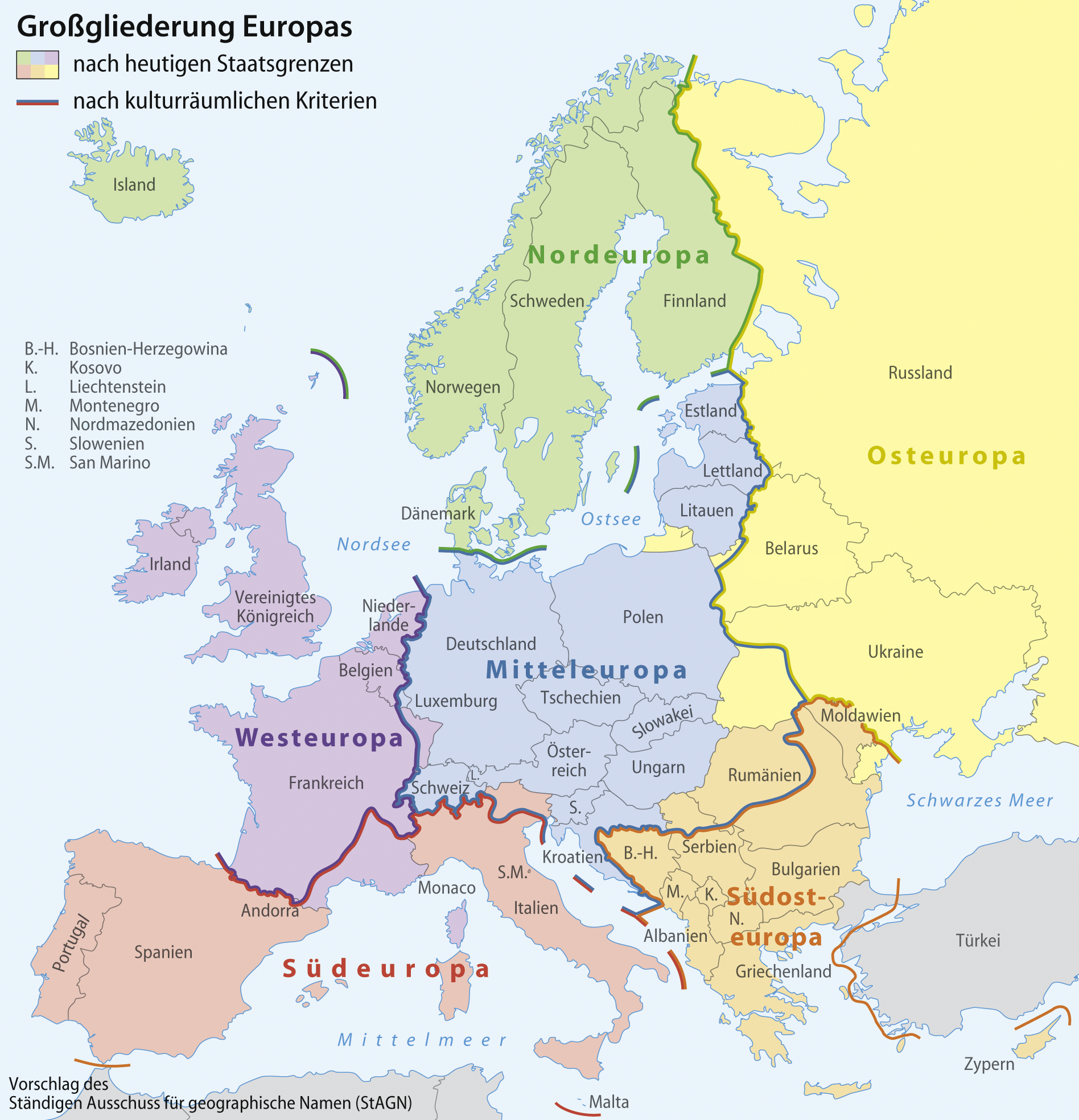
Switzerland is only slightly lower than the US in death rate. I'm not sure the "even" is appropriate here for a country with far more deaths per capita than Austria and Germany, especially considering it also experienced a second wave far more fatal than virtually any other country.
https://boogheta.github.io/coronavirus-countries/#deceased&r...
If you had to look at this comparison without knowing; you couldn't tell which country maintained civil liberties. And yes there are countries that fared better, and countries that fared worse.
https://boogheta.github.io/coronavirus-countries/#deceased&d...
Sweden's second wave seems dwarfed by both France and Switzerland in this comparison.. I mean if you have to squint and twist the stats to make Sweden look bad, then maybe we gave up all our rights unnecessarily.
https://www.worldometers.info/coronavirus/
Overall, they have the 25th worst deaths per million on earth, UK is 12th, USA is 14th and France is 16th worst. They didn't do badly. And most all countries that did worse, did so while stripping every right and liberty off their citizens.
Sadly, I am not so sure
(Not just in relation to the pandemic, the opposition to free speech as well as outright anti-capitalism has been growing for a while)
Opposition to pure free speech is indeed problematic, though.
Case in point for Focused Protection [0]
[0] ; https://gbdeclaration.org/
"By way of example, nursing homes should use staff with acquired immunity and perform frequent testing of other staff and all visitors. Staff rotation should be minimized."
Sweden’s strategy could well have worked if they committed to it. They didn’t actually go for “herd immunity” as you claim, and had a number of lockdown restrictions in place, although to a lesser degree than some other places. They unfortunately had some early blunders with nursing home protocols, and over half their deaths are from nursing homes specifically. But if you correct for that, they would be looking a lot better.
As for isolating the elderly or vulnerable - it’s not a cognitive dissonance. Two different parties both have a right to liberties, the ability to assess risk trade offs for themselves, and agency to make their own decisions. Those who are risk averse can quarantine themselves indefinitely, while those who aren’t can continue with their lives unimpeded. What exactly is the dissonance?
Swedes do a bit more of greeting people by hugging and even cheek-kissing than Finns or Norwegians do, but they all are a far cry from Italy, France or Belgium in that respect.
Thus, with so much similarity in background variables, the policy differences towards the epidemic are highlighted.
There literally hasn't been many possible measures to take beyond those taken.
The country is also more devolved into regional administration than the neighbors. So yes, there are major differences in legislation.
This is weirdly missing from the rah-rah coming from both sides - it's not even really a tactic, but the outcome of our laws.
Catastrophic? They are pretty average for Europe. Cherry picking countries to compare it to makes little sense, as there are numerous factors other than geographical location that affect the virus. > 50% of the deaths occurred in care homes, as Sweden (like many other countries) sent older patients to them. Which is pretty much the opposite of what was I was suggesting.
Here is the Swedish COVID death toll per million plotted against comparable countries in Northern Europe. Sweden is a clear outlier, and there is little debate that their lax strategy was the reason.
What are you suggesting exactly? That old people with medical issues are quarantined in empty hotels? So we can protect the civil liberties of those who are less vulnerable?
https://ourworldindata.org/coronavirus-data-explorer?zoomToS...
and in this list Sweden while very badly hit is no away an outlier amongst the most affected countries.
However, Sweden's infection rate is far higher than Denmark's.
Of course here we are comparing a fairly small data set. But fortunately our friends at Our World In Data have collected a nice graph of it:
https://ourworldindata.org/grapher/covid-19-death-rate-vs-po...
As you can see, it's not easy to draw a trendline that would show that a higher population density would produce higher covid infection rate. Basically, the pattern is what you get from a shotgun.
Clearly Sweden is not the outlier, more the medium as the following are worse
Belgium, Spain, Bulgaria, Uk, Czech, France
Sweden has an urbanization rate of over 85% and if you only look at the density of the area where most of the population lives it's not that different from countries like Denmark or Austria and some degree to Germany.
But I agree with the point; urbanization rate in the sense of having lots of people using public transit might have significant bearance on the spreading of the epidemic, while population density in the sense of people/km² is utterly irrelevant.
Geographically it is not so important that there is a bit of sea between Sweden and Finland (Scandinavia vs. Fennoscandia); this sea used to be something that connects, not something that differentiates between the lands.
Because they argued that comparing Sweden to it's similar neighbour is "cherry picking", and yet cherry picked a much less suitable group - the whole of Europe - because it suited their argument.
Because they, without any facts, imply that Sweden's high death toll could be avoided by putting the elderly in hotels
You don't give a reason for why the whole of Europe is less suitable than it's immediate neighbours (geographic location is only a small part of the puzzle).
I didn't say the third one at all.
Depending on how you define it, there's something like 15 million vulnerable people in the UK. There's fewer than 1 million hotel rooms.
What happens to school-age children of people who are vulnerable? Do they have to isolate in the hotel rooms too?
What happens to the carers of some of these vulnerable people? Do they have to isolate? What about their families?
People who are "vulnerable" need by the far the most medical care. How do you do that safely? We can't avoid people picking up infections in hospitals at the moment. Surely it would be far worse if we let the virus go wild?
Wouldn't having lots of vulnerable people who need lots of personal care packed into hotels be at high risk for the virus spreading between them? Isn't that the problem we currently have with care homes?
As soon as you start looking into this as a solution it looks far easier to try to suppress the virus across the entire population.
Also, natural immunity is only estimated to last around 2 or 3 months and offers no protection against other strains (some of which appear (statistically speaking) to affect younger folk more severely than the original SARA-CoV-2 strain).
I've also heard conflicting data on the natural immunity duration - many sources claim at least 3 months of protection, but I can't quickly find any that suggest immunity lasts no more than 3 months. Indirect evidence suggests immunity lasts longer, namely the persistently low re-infection rate - since the first wave is so long ago, you'd assume there was more reinfection by now if immunity lasted just 3 months, right? But maybe I'm reading this wrong; do you have a citation to back this surprising estimate?
Evidence is necessarily lacking, but at least there's no obvious cause for concern yet.
Vaccine immunity durability is not some kind of primary goal - it's several steps away from one. The risk we should be mitigating is the risk of continued pandemic spread, not the risk of short-lived immunity. That may seem like a pedantic point, but the thing is, it raises one very relevant question: how would our actions be different if we pessimistically assume vaccine-induced immunity only lasts (say) 6-9 months?
I'd argue it's likely that this makes very little difference to our actions at this point. At worst it means we'll need to scale vaccine production to a higher level, but even at that higher level the costs are trivial compared to the extra budgets already being spent to save the economy, which are themselves probably small fry compared to the actual economic damage; i.e. even in the "worst case" the costs are eminently doable; the US or EU acting alone could afford to finance vaccinating the entire world, and would even from an entirely selfish perspective probably be well served to do so - and of course, they don't need to, since other countries won't bother waiting for external help. (However, it perhaps does partially help explain Chinese vaccine diplomacy - not only is it truly helpful, it's also in their self-interest both epidemiological, and diplomatically).
But extreme pessimism isn't harmless; I think people start taking warnings less seriously when we cry wolf too frequently, and turn out to have been too cautious, i.e. wrong, in retrospect. There's little organizational benefit to assuming vaccine protection is short-lived, and it's a dishonest projection. We should be honest about the fact that we don't know how long immunity lasts, but certainly more than a few months, and potentially much longer; it could last for many years.
So sure; we shouldn't unnecessarily accept intolerable risks to society even when those are unlikely (but at least plausible) - but I don't think that's the case here.
But it's not even a binary: the most likely outcome (by far I think) is that strong immunity of the quality that keeps you even from becoming a symptom-less spreader for a few days won't be lasting, but infection will never again be as dangerous as it was the first time (or would have been the first time, without a vaccine). The immune system is a memory hierarchy.
This is plain wrong. Natural immunity for SARS-COV-1 was observed even 10 years after infection in some trials. Immunity against other coronaviruses also lasts longer than 2-3 months and actually there is strong indication that natural T-Cell immunity might last people much much longer and be sufficient on its own like it is also with other coronaviruses.
The only thing which is estimated to disappear after 3-6 months are antibodies in your bloodstream.
Plus having an immunity to one coronavirus doesn’t automatically buy you an immunity to another strain of coronavirus. We are already seeing several new strains.
Also having COVID-19 doesn’t automatically mean your body even develops an immunity. All sorts of caveats might prevent that from happening such as the infection being too mild to begin with (eg viral load).
And lastly, while on the topic of viral load, if your reinfection it too severe then you can still die from a reinfection even if you do have a immunity (immunity gives your body the resistance to fight it, but that doesn’t mean you’re invulnerable to the decease).
So while your points are valid, that doesn’t mean anyone who’s caught COVID-19 and recovered should be thinking they’re bullet proof (metaphorically speaking). At best, they could still be carriers. At worst they could still find their body unable to fight off any new infections.
But I do agree their risk is generally lower.
Wowzers!!!! That’s the most insane idea I’ve heard in 2020. Let’s take a load of people from their homes and pen them all in together, removed from society whilst everyone else goes about their normal lives? You would have rioting on both sides, from those penned in and the relatives of those people on the outside.
"Keep them away from vulnerable people (who could be put into some of the unused hotels for example)"
Lock up our vulnerable and our old! Lock millions away for years! collyw wants to 'live life as normal!'
Anyway, both opposing points of view, while having some merit, are simplifications. Both old and young people should be allowed to vote, and you'll have to find a sensible cut-off at what age to start.
Of course, then it depends who actually turns out to vote, and I believe the younger folks could have been a bit more active on the day of the brexit referendum. (Of course there were also other reasons why "leave" won, including blatant misdirection and cheating by the leave campaign.)
Talking about disenfranchisement - what baffles me the most though is that UK expats living in Europe, who had a disproportionately high stake in the outcome of the referendum, were apparently not allowed to participate.
And that level of lockdown you'd need at some point anyways, because even adults well within working age require intensive care often enough when infected to overload any health system.
And yes, despite all this, if vaccines were decades out (if you expect to be unable to achieve China-grade suppression) instead of months a path like the one you advocate might be the least bad. But "vaccines decades out" a counterfactual.
Sounds better?
Quickly glossing over that paper, 8,000 participants is not more than 30,000 from AstraZeneca’s recent trial. So right there, your claim about it being a larger study is gone.
Then there’s the hazard ratio. There’s a small decrease in mortality but nothing overwhelming. Loads of other studies are out there showing increases in hospitalization time, higher likelihood of requiring intubation, no decrease in viral load and of course, increased mortality. Here is a good summary of those: https://www.covid19treatmentguidelines.nih.gov/antiviral-the...
Now I’m not saying we shouldn’t be trialing hydroxychloroquine…in fact we are! But you seem to be implying that we’re chasing after the wrong thing when in fact, we’re chasing after everything.
Long term side effects will be studied and in great detail. Unfortunately, we don’t have the luxury of time because we’re in the middle of a pandemic. Your solution requires hospitalization, ventilation and for people to continue getting infected, while infecting others because we have no immune defenses against the virus or its variants!
I’m not sure what else to say but you’re going to need a lot more than just one study to be retracted before anything you said starts to make sense.
I mean, they'd be locked up in a national lockdown - so the issue isn't really them being locked down or not locked down. The question is do we lock down everyone else at the same time?
The economy was going to take a hit whatever so pretending everything would be normal if we shipped all the old people off somewhere is just silly. In reality that strategy would have been as imperfectly implemented as the current one and the outcomes would have been similarly flawed.
The clue is the fact that no government on the planet has seriously considered it persuing it for any length of time. It does not withstand scrutiny above the level that random commentators on internet message boards can provide.
Plus, it's not just about death, but life long life quality impairments due to tissue necrosis, especially the lungs. Sure, probably single digit percent of people will develop this, but why risk ?
We've essentially seen a year of this now. I think I would either rather pile all the money lost from protecting "democracy and freedom" into inventively locking up our vulnerable in comfort and safety (e.g. commandeering the Isle of Wight or Cornwall for all I care) OR failing that, go full authoritarian akin to China to eradicate the virus.
The UK is an island for crying out loud...
This halfway house is disastrous for everyone, and we will feel the effects of it for decades, long after most the vulnerable we're trying to protect will have passed away anyway. I'd love to believe we could pretend that we can behave like our civilised Scandinavian peers but the reality is that in the UK social trust is simply too low. During the summer and after, I knew more people breaking the rules than adhering to them. Very few people actually stick to contact tracing and even fewer places will bar you from entry for not tracing. What a joke. The UK govt has made their bed but the population are equally to blame when essentially compliance with most measures are so low.
I agree being locked down would be tough. But that’s what we are asking EVERYONE to do right now. Why should the elderly or vulnerable not have to bear the burden of THEIR evaluation of the risks, by being quarantined, instead of subjecting the entire rest of the world to lockdowns just so they can have a better (sooner) path to normal for themselves? That just looks to me like a selfish imposition on everyone else.
I don’t understand what point you’re making about challenging people to lock themselves away for six months with only basic interactions. That’s the current situation we’re in. And yes it is especially bad for the young, who need socialization, education, play time, and even simply to see faces/emotions without a mask. We are sacrificing their well being and future to do what - give the elderly a faster path out of their own quarantine or a few more years towards the end of their life? It’s a bad trade off and is highly unjust towards the young.
Lastly, we should gauge a society based on how we treat people’s fundamental rights, especially in a difficult situation. A society that gives up those rights easily and advocates for coercive governmental controls is not a great society.
The lockdown helps because it protects people who don't care too, by relying on those who do _just a bit_.
Sadly, the option of segregating all at-risk people is not reasonably feasible.
As for those who don’t want to be locked in a room - sounds like they want to have it both ways - just the right amount of risk reduction and a sooner path to living their lives freely. But why is their desire for a normal life more important than others’ desire? Why should others have to give up their freedoms and endure an extended lockdown to enable them, instead of living their lives freely now?
I agree with you, people want to have it both ways and it's easy to get upset with them, but that's how the world is, and if the healthcare system gets overwhelmed because of people who don't care everyone else still suffers.
For polio, only 0.5 % of those who contracted polio had nervous system symptoms. Of this small minority that developed muscle weakness, about 2 to 5 percent of children and 15 to 30 percent of adults died.
Still, it was a frightening disease, until it was eradicated by vaccines (except where it wasn't: now that covid has brought the world's focus back to vaccines, we should do something about that, too.)
Great plan
For your plan to remotely work you would have to:
- totally isolate the people over an age limit that you want to keep out of society, assuming they don't are still working and/or have the money to stay isolated
- isolate with them any professional they need. Not only nurses and doctors, which I think you already won't find in numbers high enough to be useful, indeed in most states they are not even enough to cover normal hospitals functions in case of spikes, but also for example electricians/plumbers/gardeners/etc only for them, people who have to go shopping for them, etc
- isolate the whole family group of ALL these professional above
- create a sparse amount of covid hospitals with yet another group of medic professionals just for them so to avoid cross contamination in hospitals which is the main sanitary risk at the moment
You only need one person to badly wash their hands or forget to wipe down their deliveries for the whole care home to become a petri dish.
Often there is nothing like this available and whole families get needlesly infected when individual family members get infected as they don't really have anywhere to go to effectively isolate themselves.
We can speculate all day long if the virus will change into something more lethal, but that is hardly beneficial to anyone.
Better to let the vaccine roll out and get our lives back instead of living in fear the next decade or so.