Now this might be the difference -- my town is mid sized and a lot more sprawly. My hypothesis is that folks had for years settled into lifestyles that didn't involve going to bars, and moved into zones that had few or no bars. When the city banned smoking, folks didn't suddenly change their lifestyles.
It's been something like a decade, and things have kind of gotten back to normal (present circumstances aside, of course). But it took a long time.
It will happen with cars and plastic here (NYC) too. I hope the polluters don't resist as much.
People of Vienna who wanted to go shopping in their cars could have went shopping in some other shops accessible by car.
There were no bars where the smokers could have went to smoke.
One thing that puzzles me, living in Vienna as an expat, is how much the average Austrian cared about banning smoke in bars/restaurants/etc (which is fine, don't get me wrong) but how little they do about car smog.
1908 - https://upload.wikimedia.org/wikipedia/commons/5/5c/Mariahil...
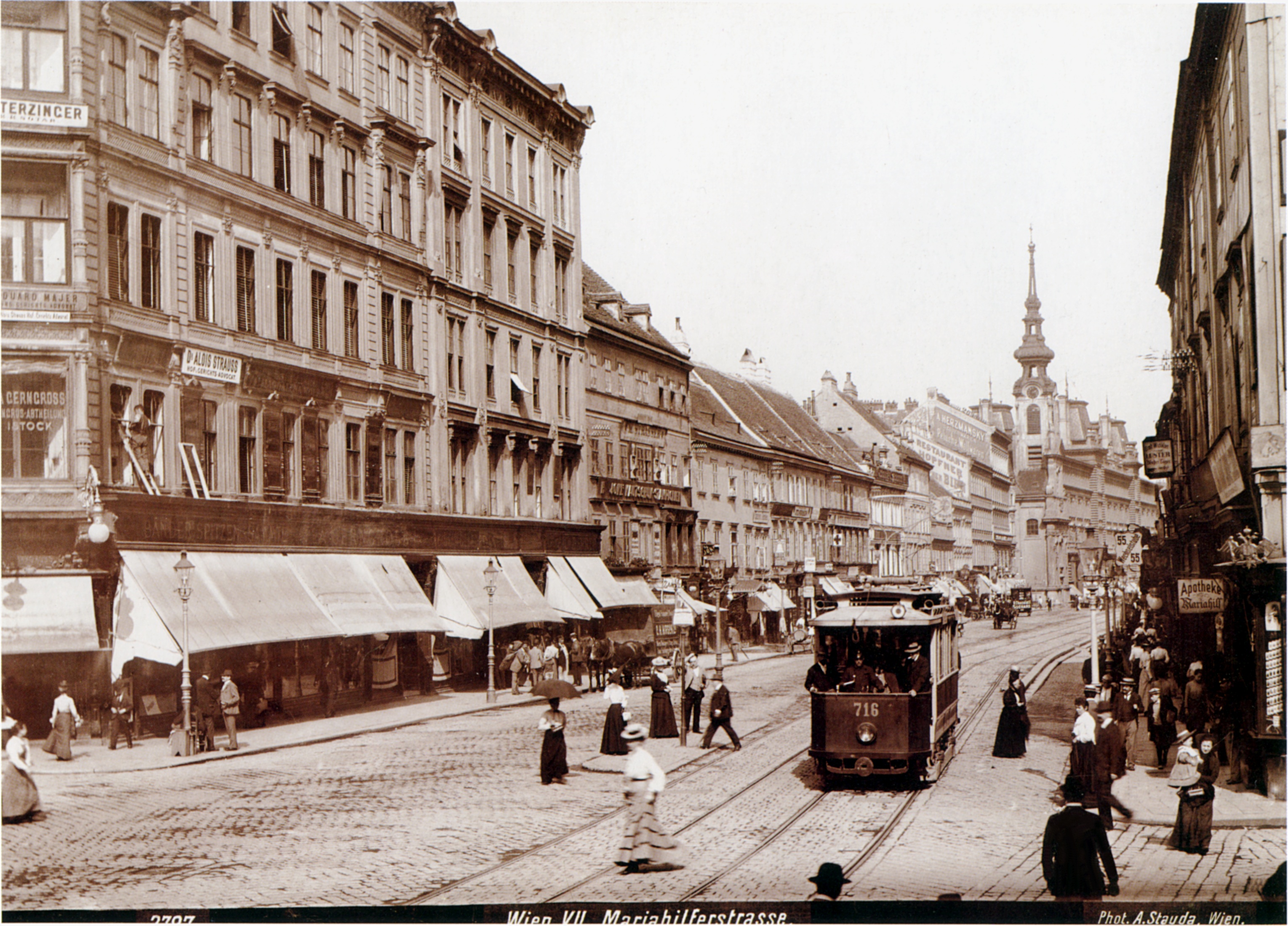
2006 - https://upload.wikimedia.org/wikipedia/commons/8/81/Mariahil...
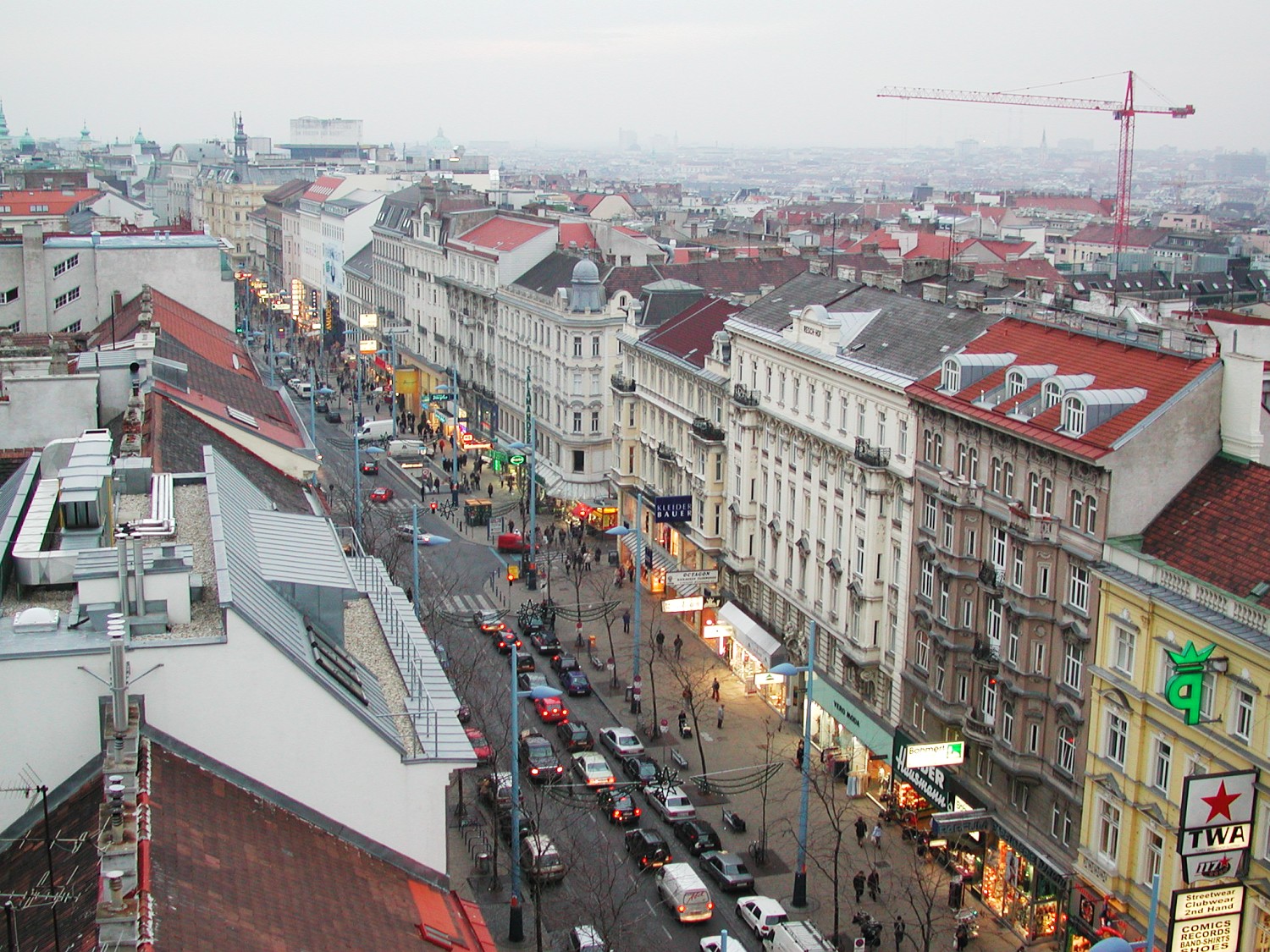
Today - https://upload.wikimedia.org/wikipedia/commons/9/96/Wien_07_...

Smoking was definitely the much bigger problem. The average Austrian, if he doesn't life in Vienna, is simply not confronted with smog. I guess what helps tremendously to cover up the smog problem is they constant wind we have. Honestly I only realized that it could be a lot better after my London visit. Until then I only have seen cities which were much worse then Vienna w.r.t smog.
"coughs in Graz smog"
I don't think I'm going to take public transit in San Francisco ever again. They are missing:
* Speed - BART is relatively fast, all Muni is very slow
* Frequency - BART is low frequency, Muni is also low frequency
* Coverage - BART coverage in SF is limited, Muni coverage is reasonably extensive
* Reliability - BART unannounced delays and breakdowns were a frequent occurrence. Unlike Tube delays (which were also frequent) I could not route alternatively because there is only one BART tube in SF. Muni does not have arrival times.
* Usability - You cannot tell before you pass the turnstiles at a BART station whether the lines are delayed or when they will arrive. One exception I know if is Montgomery St. Station but that's the only one.
It's just so easy to get a car in SF whenever you need it for a few bucks -- sometimes in 15 minute increments.
1. Caltrain which connects downtown SF to San Jose and Gilroy, notably bypassing both SFO and SJC airport [1]. This is a low frequency, mid-long distance commuter rail link that runs almost exclusively outside SF.
2. BART which connects SF to the East Bay, notably serving both SFO and OAK [2]. This is a medium frequency, larger train - think a hybrid of commuter and light rail. It's fast, long trains that run medium distances.
3. Muni Metro which is the SF subway and light-rail service. In the downtown corridor, all the major stations (from Civic Center to the Embarcadero) overlap with BART, but the trains continue out west into the Sunset [3]. This is high-ish frequency, smaller trains that (outside the downtown corridor) run overland.
[1] http://www.caltrain.com/stations/systemmap.html
This says a lot. (Only transport which is okay without arrival times is one which has 5 min or less frequency)
I used to love driving, then moved here and stopped caring altogether when I realized that public transport here is significantly faster (and cheaper) than using your car to go from point A to point B.
So not only it's faster, it actually frees up time for other things.
So you really enjoy packed subways that make you feel like cattle pretty much every time of the day? Sorry but Tokyo is the best example of "best in class public transport" being completely over capacity for the amount of people they have to transport every day.
The feeling of independence (or not feeling like “cattle“) is substantially reduced in big cities, where you are subjected to a lot of traffic rules, overcrowding of cars, jaywalkers, accidents, potholes, diversions, expensive parking space... I could go on.
I think the best way to describe it is that it sucks either way to commute in Tokyo no matter what means of transports you end up using, except if you can live very close to your office, which is not the experience of 99% of people.
Commuting in Tokyo is not without problem, but consistently better than commuting anywhere else I've been.
Also, you seem to completely ignore the point that the alternative "everyone commutes by car" (or you have other alternatives?) would result in a constant gridlock given Tokyo's scale - so it would be orders of magnitude worse.
I challenge you to find a mechanism that works for this and is quick enough to keep up at rush hour in the average Tokyo train station.
Additionally, people move at different speeds through the station due to factors like age, familiarity with the network, disability, bladder capacity etc.
It’s a non-trivial problem to solve, and likely only marginally improves user experience.
I suspect the reason this isn't valuable is that the feedback loop is already pretty good at high occupancy rates: when one car is at capacity, every other car is too.
Not to mention the trains stop every minute or two, and people don't, like, book that stuff ahead of time.
And they already know which train routes at which times are crowded, if they could just add more capacity they'd have already done it.
- which cars are normally less crowded
- which cars are recommended for getting off at a certain station, based on proximity of the exits at that station to each car
Google Maps (as well as other apps) also show similar information when asking for transit directions (for the former it only gives you the average on the whole train, not by car)
I guess also "an hour or more stuck in between everyone's armpits" is also like a worst-case scenario, and it happened to me infrequently enough that I didn't mind overall. Or, Tokyo rush hour might have been like commuting on the LA interstate? Neither are very fun, but driving along the Pacific Coast Highway is a more ideal kind of thing. I think I've had a lot of commuter rail situations like that too which have made up for it.
But Tokyo is also very bicycle-friendly with not many aggressive drivers (ignoring taxis), so that's my pick to get around.
I use this system every day and for me, it's not just good, it's fantastic. The number of routes, frequency and reliability of service is unsurpassed in any city. Notorious crushing may stick in the mind, but moving around the entire city at any time of day...
That visceral image of over-crowding is real but not really representative. From now we'll all need to do more efficient sharding of work schedules and locations.
Bikes are either merged with car traffic, or simply go on the sidewalk, but i haven’t seen a single bicycle lane..
First of all this is not true, so I would start questioning whether you know what you're talking about at all, or whether you're not trying to have an informed conversation based on facts.
Outside of peak rush hours, roughly between 8-9 in the morning and 6-7 in the evening, and mostly on a few well-known lines, it is extremely unlikely for trains to be anywhere close to "packed". Let alone making you feel "like cattle". This kinda already undermines your point.
It is true though that during those peak times, on those lines, the system is over capacity. And this is where working for a company that has flexible working hours and that allows work from home helps tremendously. While this is still not widespread, there are active policy campaigns to push more businesses to enact the same measures - exactly to ease congestion in those peak times. So the problem is not structural, and there is a clear direction that can improve things.
Furthermore, even today with some planning and knowledge you can avoid the worst of the congestion (see my point about reach in my first comment).
Anyway, to answer your question: no, I don't enjoy packed subways, as I don't enjoy being stuck in traffic, or being robbed at gunpoint. But to me (your question asked whether "_I_ enjoy packed subways") it really does not matter, because both are things that I normally do not experience.
I expected the train to work to be packed around 8:30am, but instead there was tons of space.
Most of the time the trains in Tokyo aren't super packed (though I'm sure this is accurate for some commuter routes).
Not just in this discussion, but whenever the subject of transportation and public transit come up.
If you asked me ~10 years ago, I could not have imagined not having a car. I finally sold mine 3 years ago and started biking and taking public transit everywhere, and it works just fine. On the rare occasions where I have needed a car (moving apartments, a wedding in the middle of nowhere), rental cars covered my needs.
The amount of money I save by not having a car is not trivial.
When we go visit my girlfriend's family in southern Germany, renting a car is completely mandatory, it's more or less impossible to do anything without one. So I absolutely understand where people are coming from, you need an environment where public transit and walkability are prioritized for this to work.
Then I moved to a smaller city with a larger suburb area. Within 6 months I had bought the car. The last straw was having had to wait an hour for the bus, carrying grocery bags. At the same time, you find parking spots almost everywhere, and walking was not that easy, with longer distances and in many places not even sidewalks.
It's just two different worlds, really.
Surely you can have city centres (especially old towns) without cars and people living in suburbs, with special needs or whatever to own a car.
I'd love to drive to a city centre and then have a walk without the traffic noise! I'd hate taking 90 minutes of bus instead of 20 minute drive.
There's a huge inherent contradiction here though: You are creating the very problem you want to escape from for everyone along your path of travel. land tends to be quite expensive in the city center, and parking is not a good use of it. Are you willing to spend $50 to park your car there to drive to the city center?
That's pretty common for people who drive into big cities for the day (or indeed to work for a day). Maybe they park on the outskirts and take transit in. But that takes time and, especially for a family, the savings may not really be worth it.
To most people it isn't worth it to spend that much, especially because traffic on the bridges and tunnels is usually so bad that the trains are not only cheaper but faster, too.
Completely car free city is a pipe dream. Diversity is good.
Cars need special roadways with expensive construction methods, maintenance, signaling and provisions for parking their bulk.
This takes up huge amounts of space that could have been used for waking streets, bike paths and attentive urban spaces, instead of large expanses of boring black asphalt.
Ask a shop owner whether she would rather have thousands of people in cars driving by her store and not even look at it, or hundreds of pedestrians who stop and look at her display windows.
Ask a cafe owner whether he would prefer to have his outside seating right next to a major thoroughfare, or on a busy walking street.
Cars actively make environments hostile and uninviting to people.
I'm talking about creating boundary around downtown to which remaining of metro can travel to by either means.
In a lot of cases (at least here) the shops were there first, and the thoroughfare grew in use next to them. This road cuts directly throuhh the middle of the entire city.
Specifically a stream that had decent walkable paths alongside was put underground and a big thoroughfare put on top of it. I'm part of an initiative to reopen the stream and put the traffic in a tunnel underneath, in order to create a park/urban space for people, rather than cars.
I want the entire city to be pedestrian first, bicycles second and cars dead last.
What you really need is a shift so the closer to the centre you get the more you are forced out of the car and onto public transport and ultimately cycling or walking. Cars should be for when you want to leave towards the highway.
Most of them are deliberately deprived of decent public transit, because a segment of people don't want buses and especially don't want trains in/near their neighborhood. The most common explanation I've heard is that public transit attracts the homeless, the poor and criminals.
A lot of suburbs are even designed to prevent walkability for the same reasons, leaving out logical shortcut footpaths and bike paths between streets and cul-de-sacs.
This obviously speaks to a whole host of societal problems and paranoia, to be honest.
With a good local train network with stops in every neighborhood, you could just leave the car at home and not have to worry about parking in the city.
I suspect some of it is political, if you are right leaning then you may well view cycling and public transport as a step towards socialism. It probably doesn't have much to do with the practicalities.
And this also I might add includes families with children. While I don't have any I know a lot of parents who don't rely on cars either.
One city had buses, which mostly served the college campus. The busses didn't run on Sunday, late enough at night for second shift workers to get home, nor run to the edges of town (where some factories were).
So many places aren't walkable (or can be easily cycled). One place I lived... the quickest route was on a state road, and didn't allow cycling/walking and wasn't safe for it either. The police would stop you, especially at night. The route that you were allowed to take was much longer.
I am now in a place where I don't need a car. (and I forgot to transfer my license while moving to another country, so I don't drive). Walking is safe. Cycling is safe. There are 'shortcuts' for walking/cycling. Public transport is pretty robust, though the overnight hours could be improved. I can even go to other cities - including some not-so-big-cities - using public transportation (trains or busses). It is wonderful and definitely feels like some utopia. It is so freaking wonderful to have such an option.
So when they were younger, there are times when you simply do need a taxi. It’s infrequent — buses, subways, walking cover most of your needs — but there are times when you really need one.
Sometimes a rental car/van/truck is the proper tool for a task.
(Certainly I couldn't really have done jobs I've had without being able to drive a car and would have missed out on many, many travel experiences including just visiting family.)
When I was 18 and wanted a licences, I didn't had nor was willing to save up the about $3000 it costs, and later, when I had the money, I wasn't willing to put in the dozens of hours of my time. So getting one is on my "maybe later" list of life todos.
Thing is in Switzerland, as a software engineer (compared to jobs who definitely need licences), using a car is not just a matter whether it makes economical sense: Public transport is often just faster and in my opinion more convenient. E.g. my last time commuting from one city to another was, door to door, 60 min by train and would have been 50 minutes to 1 hour 30 minutes by car depending on traffic. The big difference being that I spent the time in the train working, reading, sleeping, chatting with people etc. and after work I could spontaneously decide to go out with friends, without worries how to get home after some drinks.
Same for weekend activities. Public transport gets you there and especially in Switzerland, cities are so small that you can actually just walk out. You can start e.g. a bicycle tour from your city apartment, no need to get somewhere else first.
As a said in the beginning there are still situation where I wish I had a licence. On the other hand, I'd end up using it maybe 2-3 times a year and I'm not sure how comfortable and safe I would be driving with that little regular experience.
imagine my shock when i went to college with a bunch of kids from “the city” (nyc) who never got a license in the first place and many didn’t even see the point of it. truly mind-blowing.
now i live in LA and haven’t owned a car for years (but still have a license). it’s great! the weather makes this the perfect city for mass biking/scootering, if only we could convert even some of our abundance of street parking into bike lanes.
My point again isn't about owning or not owning a car but being able to drive a car when needed.
It’s almost like asking “well wouldn’t you want to be able to go camping?” Sure, if you grew up camping you might know you want that. But if you didn’t, why would you even think about going camping?
Similarly, if you’ve only lived in a city where you can hire a driver (cabs, moving vans, etc) as needed, why would you ever think you need to be able to drive? What is the situation you’ll be in where you need a license?
When I travel in the US, I go places like national parks which all need cars to get to.
I would absolutely not be fine with living in a city with no real way to get out of it.
When I moved to New Zealand after ~2 weeks I bought a car because it wasn't feasible to move around without one.
But, if you live and work in a relatively major city and are fine with mostly traveling to and from where there's good public transit you can make it work.
It's much harder in the US if only because, outside of New York City, there's sort of an expectation you have a car and things tend to be organized with that expectation in mind. People can and do get help from friends with cars but this becomes harder as you get further out of school.
But the bulk of work and vacations are fine. For work I’m usually in denser cities or can use Uber/taxis. For vacation, I also generally go to places with train infrastructure, or to a specific destination where a car isn’t needed.
Nowadays as an adult, I think on vacations it might actually be a good thing because I've found just taking trains in foreign countries is actually one of the more fun aspects of travelling.
If you take the average EE train, it is worse than Western Europe or Japan, comparable or better than US, with more extensive coverage.
You seriously want to live in a car-free society after COVID19? The subway in NY was a major source of infection in the city.
https://marketurbanism.com/2020/04/19/automobiles-seeded-the...
> New York and other subways
> In multiple other countries, one cannot see the transit cities in the virus infection rates. In Germany the rates in the largest cities are collectively the same as in the rest of the country. In South Korea, the infection is centered on Daegu; Seoul’s density and high transit usage are compatible with an infection rate of about 700 in a city of 9.5 million, about 1.5 orders of magnitude less per capita than in most Western countries and 2.5 orders of magnitude less than in New York. In Taipei, the MRT remains crowded, with weekday ridership in February and March down by 15-16%. In Italy, car usage is high outside a handful of very large cities like Milan, and Milan’s infection rate isn’t high by the standards of the rest of Lombardy.
> However, rest-of-world evidence does not mean that the New York City Subway is safe. The Taipei MRT has mandatory mask usage and very frequent cleaning. German U- and S-Bahn networks are a lot dirtier than anything I’ve seen in Asia, but much cleaner than anything I’ve seen in New York, and also have much less peak crowding than New York. New York uniquely has turnstiles requiring pushing with one’s hands or bodies, and the only other city I know of with such fare barriers is Paris, whose infection rates are far below New York’s but still high by French standards.
> So the question is not whether rapid transit systems are inherently unsafe for riders, which they are not. It’s whether New York, with all of its repeated failings killing tens of workers from exposure to the virus, has an unsafe rapid transit system. Nonetheless, the answer appears to be negative: no evidence exists that the subway is leading to higher infection rates, and the paper does not introduce any.
https://pedestrianobservations.com/2020/04/15/the-subway-is-...
New Orleans has no metro. It's fucked.
Some cities have seen greater business increases on pedestrian and bike converted through-ways because people in cars weren't just passing by.
Bikers and pedestrians stopped and shopped in the areas they were traveling through.
I, for one, look forward to making a choice to move to a place where I can live car-free and hope more cities accelerate plans like this.