I’ve talked to multiple professors about this and I think it’s not because they don’t care about science. They just care more about their career. And I don’t blame them. It’s a slippery slope and once you notice other people who start beating you, then it’s very hard to stay on the righteous pad[note]. Heck I even myself in the PhD have written things I don’t agree with. But at some point you have to pick your battles. You cannot fight every point.
In the end I also don’t think they care that much about science. Political parties often push certain ideas more or less depending on their beliefs. And scientist know this since they will often write their own ideas such that it sounds like it solves a problem for the government. If you think about it, it’s kind of a miracle that sometimes something good is produced from all this mess. There is some beauty to that.
[note] I’m not talking about blatant fraud here but about the smaller things like accepting comments from a reviewer which you know are incorrect, or using a methodology that is the status quo but you know is highly problematic.
It's not even that.
In most fields, you need lab space and equipment and grad students to get stuff done. And to pay for that, you need funding. And to get funding, you need to publish and apply for grants.
You have to pay attention to the "career" side of things -- otherwise, you won't get to do the science at all.
The same applies to police who aren't actively corrupt, but don't combat the corruption around them. The ones who do fight corruption end up fired 'with cause' at best, or forcibly committed to mental institution or killed at worst.
Bud: Lou, I got a sure thing. Anacott Steel.
Lou: No such thing, except death and taxes. Not a good company any more. No fundamentals. What's goin' on, Bud? You know something? Remember, there are no short cuts, son. Quick-buck artists come and go with every bull market. The steady players make it through the bear markets. You're a part of something here, Bud. The money you make for people creates science and research jobs. Don't sell that out.
Bud: You're right, but you gotta get to the big time first, then you can do good things.
Lou: You can't get a little bit pregnant, son.
Bud: Lou, trust me. lt's a winner. Buy it.
https://fs.blog/great-talks/psychology-human-misjudgment/
Charlie Munger's Misjudgment #1: Incentive-caused Bias https://www.youtube.com/watch?v=h-2yIO8cnvw
lol, what are the chances?
The average Joe is interested in Dem vs Rep or what the latest show on Netflix.
The average researcher is worried about his livelihood, tenure etc.
And it's not at all clear if that education does anything other than magnify their intellectual predispositions. The smart people can make great strides, but the stupid will be stupid louder and harder. And the average may well just be... more average.
An increase in blood lead from 10 to 20 micrograms/dl was associated with a decrease of 2.6 IQ
...nobody really knows why
IQ scores were never intended to be used to compare across cohorts. To do so is invalid.
> lol, what are the chances?
Caring = caring to understand how the system works and how the incentives work for participants in it.
If I'm super generous I would guess maybe 0,1 percent of the population cares by that definition.
It still means that they are massively, massively outweighed by loud tribalism.
If you're talking about the US, you can vote center-right (Democratic) or far right (Republican). There is no viable left wing party in the US.
You could just as well claim the Democrats are far left and the republicans center left.
I don't know how well they can fit in a unidimensional scale though.
I don't claim that my views are, or should be, "the middle".
In fact, I didn't share my views at all.
Rather, I contrasted the US Republican Party with the US Democratic Party through the lens of the political spectrum.
Perhaps you think your views are "middle-of-the-road" and maybe they are. I have no idea what you think or believe.
But making the claim you did added absolutely nothing to the discussion, nor did it address anything I wrote. And more's the pity.
Actually, the Democratic Party is mostly libertarian (or classically liberal, if you like, which is, inherently right wing) on social issues -- preferring to allow people to make their own choices WRT their bodies rather than seeking government control of reproductive health and other forms of bodily autonomy.
Individual rights and personal agency are not "left wing," except in the eyes of the authoritarian far right (or far left) who seek control over all else.
So no. The Democratic Party has a solidly center-right agenda/ideology -- no collectivism, individual rights not curtailed by the state, freedom of thought and religion, etc.
Despite what some folks may say, there are no Marxists in the US Democratic Party.
That's not to say that the Democratic Party is the ideal. Far from it. But to place them on the absolute "left" is ridiculous on its face.
It's only "left wing" as compared with the far right (read: evangelical christians, white nationalists, xenophobes, etc.) Republican Party who want to limit women's reproductive choices, force the religious doctrines of the Christian church down everyone's throats and spout xenophobic and long debunked genetic tropes related to melanin content.
I totally agree with you
Also agree with the GP.
If you say that your incentive for working out is to look good and be popular with the ladies then people will judge you for it, even if it's exactly the truth. If you say that you work out "for health" everyone will applaud you for what you're doing. And yet the outcome is going to be the same.
The algorithm is a simple recursive procedure where the guide or therapist evokes the client's motivation or incentive for an initial behaviour and then for each motivation in turn until a (so-called) "core state" is reached. In crude pseudo-code it would be something like:
    FOO = <some "presenting problem">
    M = evoke_motivation(FOO)
    until is_core_state(M):
        M = evoke_motivation(M)
(I have no affiliation with these folks: Core Transformation Process https://www.coretransformation.org/ )
Which is to say, a lot of this stuff works because you expect it to.
In terms of a Venn diagram the region representing people who have experience with NLP and the region representing people who think NLP is pseudoscience are disjoint, they do not overlap. As in I have never found anyone who claims that NLP is pseudoscience who has also admitted to having any experience with it. That is not science, eh? To the extent that mainstream scientists don't take NLP seriously they make themselves ridiculous. So yeah, in this one instance, ignore the scientists and look at the strange thing anyway, please? Humor me?
Now NLP is not scientific (yet) and it doesn't pretend to be (although many promoters do talk that way, and that's wrong and they shouldn't do that) and in fact there's a video online (I'll link to if I find it) where the co-founder addresses this point and says "it's not scientific".
However it does work. So it seems imperative to do science to it!?
At the time it was developed there were dozens of schools of psychology on the one hand[1] and academic psychologists on the other and the two groups did not talk to each other. NLP ran afoul of the academic psychologists in the mid 1980's and they closed ranks against it and haven't bothered themselves with it since. Again, I think it would be fantastic if we would do science to it and figure out what these algorithms are actually doing.
In any event the important thing is that the tools and techniques that have been developed are rigorous and repeatable. E.g. this "Core Transformation Process" works. That's primary data on which the science of psychology should operate not ignore.
[1] E.g. https://en.wikipedia.org/wiki/Esalen_Institute | https://en.wikipedia.org/wiki/Human_Potential_Movement | https://en.wikipedia.org/wiki/Humanistic_psychology
Some things are simply not possible.
> If humanity is to mature
Recognizing and working within the constraints is maturity
Unfortunately many less bright people seem to interpret this as "never trust science", when in reality science is still the best way to push humanity forward and alleviate human suffering, _despite_ all the fraud and misaligned incentives that may influence it.
We may interpret this as convenience... But the tragedy of the commons says that we can't even have science if someone isn't holding what it is we don't want to be holding... I'm not saying I didn't love science or not think it's super interesting or anything... Can we really say it alleviates suffering or does it displace it for one group of people until a new problem comes in and takes that one's place? How many people here will be holding the bag of shit tonight? USA numba 1!!!
They intuit that some parasitic entity or entities has latched on to Science and is co-opting it for it's own gain to achieve it's own purposes which run counter to the interests of the people.
The heavy handed Covid response and censorship is a prime example of that.
The whole system has been corrupted and therefore it is not possible to have a de-facto assumption of good faith of the actors.
The lockdowns resulted in inflation, and caused a lot more poverty and deaths worldwide since. And retarded the normal development of many children.
And we still don't know what kind of long term damage the vaccine caused. My friend that trusted the science, and took every booster, only stopped when she got myocarditis.
And that's before you take into account things like BLM rallies being encouraged during COVID while less politically correct gatherings were banned or decried as "super spreader events." [1]
[1] https://www.politico.com/news/magazine/2020/06/04/public-hea...
As far as the speed of revisions, my memory is the initial advice to wash your hands so much faded within months, as well as the wash your groceries advice. It took the US some time to notice how effective masks were in Japan, and push for masking. And now good air filtration for public spaces is gaining momentum, even as the deaths from COVID declined.
And you aren't a bit alarmed anytime a novel virus hits an immunologically naïf population, well you should be.
This is highly euphemistic. We were explicitly lied to for our own good, over and over again. Including about masks being ineffective early on (to save them for healthcare providers), about ventilators, about the effectiveness of the vaccine, about the vulnerability of normal populations as compared to older ones, the plausible origins of the virus itself, etc. It was over and over again. And again--that's without the injection of left-wing politics as noted in my previous comment.
> As far as the speed of revisions
We had kids out of schools for years. An entire generation is now significantly behind comparable cohorts, and the only reason we even stopped is because the opposition eventually made it untenable. We forced many small businesses to fail and gave out interest-free loans to many others that never need to be paid back. People were forced to get vaccinated or lose their jobs.
I feel like our response to COVID-19 (at least in the US) is like a litmus test for how well one accepts authoritarianism. If one lived through that as an adult, I don't know how one would trust what the medical establishment says next time around, except to trust that it's what they want the unwashed masses to think.
Were outcomes worse than they otherwise would have been? That’s an impossible question to answer. Are there serious studies on the impact of public health interventions?
And saying it was likely made in a lab in China is kind of censored to this day. I think partly because the science community doesn't want to take flack for doing risky stuff and killing millions.
Nobody did that. They prevented you from working with me
Nobody here or there was forced to get a vaccine. But if you refused it was right to shun you
Freedom is about more than the individual. We as a group should be free from the consequences of individual actions
It would have made more sense if the vaccines actually stopped catching it and transmission but they don't really, they mostly just seem to reduce the harm when you catch it. In terms of not spreading it to others you are better isolating than relying on the vaccines - I've had that as a practical issue with my late 80s mum who I visit. Although I've had 4 jabs I've still had it caught it twice since, and have avoided giving it to her by testing if I feel ill and staying away. Which is kind of to say some of the politicians views on it were heavy handed and a bit iffy scientifically.
-- Karl Marx
It’s like they watched Office Space and thought they’d “Milton” everyone.
> Freedom is about more than the individual.
The individual is what it starts with.
As far as the China lab goes, there were plenty of scientific papers that studied the China leak theory, though I personally don't know what they found.
There was also dumb stuff like social media suppressing mention of covid, even to this day youtubers use euphemisms to refer to that period.
To me it seems perfectly understandable how people who aren't actually involved in science might mix up The Science and actual science after all the political nastiness of those years, especially when we add on top all of the awful pop science reporting from the past decades.
For example here restaurants were open, but they had to close at 19. So instead of spreading the clientele over more hours, they were always 100% full.
Also, they CUT ⅔ of public transport rides, so they were incredibly overcrowded. People with real jobs that can't be done from home still had to go to work. BUT they put stickers on the floor telling people to keep distance. Also hired people to be at crowded stops to spray hand sanitizers on who wanted it, and tell people to keep distance (while seeing them having to push their way in).
In general all the restrictions were about the "having fun" stuff, but not about the "go to work" stuff. Even companies had no obligation to let people who could work from home stay at home. Some companies kept having their offices full.
Oh and let's not forget the recommendations of staying home if you so much as sneezed. But you wouldn't get paid. How did they expect people to pay their rent?
I could go on for hours with this. The bullshit measures that were marketed as "what the scientists are telling us to do" did a lot of harm to the trust that the general population puts into science.
Many examples exist where a misguided belief in scientific 'facts' (usually a ropey hypothesis, with seemingly 'damning' evidence), or a straight up abuse of the scientific method, causes direct harm.
Suspicion is often based on facts or experience.
People have been infected with diseases without their knowledge.
People have been forced to undergo surgical procedures on the basis of spurious claims.
People have been burnt alive in buildings judged to be safe.
And look at Boeing.
No one has a problem with science itself per se. Everyone accepts the scientific method to be one of our greatest cultural achievements.
But whether one is "less bright", or super smart, we all know we as humans, are prone to mistakes, and are just as prone to bend the truth, to cover up those mistakes.
There's nothing plebeian about this form of suspicion. In fact, the scientific method relies on it (peer review).
This is just wrong and naive. You can be happy if a majority of people agree to this.
But if you're not a pedant, I essentially mean that most parents will vaccinate their children, many passengers will book flights, and a majority of the citizens in a population do respect their officials (etcetera).
And I think if you were to dig deeper than this, and test that hypothesis with... well... a scientific experiment of some kind, the result would probably support it.
But a good number of people will naturally question the outcome!
The speaker was a psychology researcher from UK who flew here for that, and the talk was about conspiracy theories. When they introduced her they stated that she wouldn't accept any questions from the audience.
This was received with boos and shouts that it was not real science.
She then proceeded to bundle all the conspiracy theories together. Going from "the government is doing something bad" to "earth is flat".
After that talk I can really believe that the bullshit conspiracy theories are made up and spread artificially so that anyone that comes up with any conspiracy theory can be shushed as a crazy person.
But… in reality conspiracies do exist. One can make a theory and then test if it's true (or get killed/imprisoned by the government while trying).
Yes, that’s exactly what they are, upfront, allegations of a conspiracy. And some of them are correct,
If I recall correctly, the Flat Earth Society was originally concieved as a prank intended to lampoon actual conspiratorial groups (I.e. Nasa faked the moon landing, JFK was a mob hit etc)
But through some combination of timing, convimcing execution, and media interest coincidentally developing in the same direction resulted in the supreme irony of an unserious sham cult spawning an unironic counterpart community which rapidly outgrew and ultimately succeeded it.
We used to forcibly quarantine people in their homes at gunpoint for measles. Smallpox? Even crazier.
Hell, we didn’t even shut down international travel until well after it was plainly obvious it had spread well past the point it would matter.
They don't need to intuit it; they're outright told not to trust the science, by the parasites who are criticised by other scientists. Like the asbestos industry.
Unfortunately many "smart" people insist on telling "dumb" people how to think instead of having the introspection and humility to examine where we've gone wrong and spending a lot of time and effort on fixing it.
No, easier to gaslight the idiots
Not “This is bad because it undermines science, is lying, and unethical, regardless of what people think.”
Most people, stupid or otherwise, wouldn't take a critical thinking course, for example. Many would have no time for it, to say little of motivation. Fewer are proud of being stupid and will shun anything they consider "intellectual".
On the other hand intellectuals have poor discernment too, they overly trust the literature and the interpretation of working scientists. These two phenomena are two sides of the same coin, and the flat earthers/antivaxx etc crazies are directly downstream of the "trust the science" bad behaviour, especially since the education system has taught them what good science is and they are rightly perceiving that good science is not being done.
This is a bad start to a post on HN. Less confrontational would be better.
> Because even the craziest of crazies are actually doing the scientific method.
I can name several conspiracy theories off the bat which I've heard repeated by people who have not tested the theories. The vast majority of them, at best, found a video of someone on the internet with "dr" in the username. The percent of "jet fuel can't melt steel beams" folks who have actually personally tested whether steel can lose structural integrity at such temperatures, is absolutely minuscule.
> They are arguably better scientists than "trust the science" folks because at least they are getting out there and moving atoms to test shit.
Reading something on the internet is moving photons and electrons at best, but I can't speak to whether a given Parler thread which convinced someone of a given conspiracy was read inside or outside.
To put this into context though:
Let's begin by supposing that fraud exists in all ventures where people stand to gain, which I don't think is controversial at all, especially not in this comment section.
In light of this assumption the fact that this all came out in the first place is proof that being a luminary does not make you immune from investigation. That this happens 'over and over again' simply means that eventually we catching this fraud. The fact that the scientific community is constantly trying to reproduce and verify is why these become public in the first place.
So on the contrary, it's not that nothing ever happens or nothing ever improves. There will be articles like this one in twenty years because there will still be fraudsters in twenty years, and there will still be scientists working to verify their work.
It's really hard to understand the scale of the problem until you wade through it yourself. Fraud is absolutely endemic in science. Dig in and you can easily uncover bogus papers, and none of them will ever be acknowledged or retracted. In particular there's a nasty attitude problem in which reports of fraud from outside the academic institutions will frequently be written off as "right wing" and thus inherently illegitimate. This can happen regardless of the nature of the criticism or whether it's in any way political. Literally, things like bug reports or reports of numbers that don't add up can be discarded this way. Thus they implement an unwritten rule that only academics are allowed to report fraud by academics, and of course, they are strongly incentivized not to do so. So Lowe is correct. It's really a mess.
The stuff on PCR test false positives went somewhat viral and got some attention from outside of academia but of course it was during COVID so it was ignored by the institutions.
The stuff on epidemiology and the history of Neil Ferguson was triggered originally by an article in the Telegraph. It went no further than that.
The fake lesion surgery got noticed on Twitter and I think it was eventually retracted but the perps still work for the NHS.
The paper mills and fake biology papers gets published about occasionally in mainstream press. But nothing happens.
So... no. Not really.
Sigh
That is because antibiotics, essentially
The mechanism by which antibiotics cause cancer is they stop you dying from bacterial infection, once a huge (biggest?) killer.
You still have to die of something....
Science is the name given to a few different processes, a body of knowledge and statements by designated spokespersons. Each of these have different flaws and failure modes in different environments and domains.
Exactly the kind of less bright people that I inferred about. People so devoid of common sense, that they utterly reject anyone who applies systematic thinking. Unreal.
If such a project happened today, academic scientists would be trying to figure out ways to bend their existing research to match the grants. Then it would take another 30 years before people started to ask why nothing has been delivered yet.
It was a massive government-directed military project in wartime that was able to recruit all the top theoretical physicists at the time around a common aim in an urgent technological arms race to build the bomb. It included a vast effort of army engineers to build the facilities to process the fuel and so on. I'm not seeing the parallels with startups.
They built a gosh darned city... oh wait, I was wrong, they built three. It was run like an extremely high-value military project, which is exactly what it was. Sure it was more theoretical than other military projects(at the time), but that is the game sometimes.
I get the sense that some folks just think "faster then we would do it now" is the same as startup. Which, to put it politely, I strongly disagree with. Startups are great and I am grateful for the daily value adds to my life, but pretending everything "fast" has startup mentality is just missing the mark.
There was a hook to get the funding (easy to get weapons funding in wartime). Recruiting the top talent. Urgency (beat everybody else to the punch). Outsourcing the building of infrastructure while you focus on the unique/hard part.
I'm not seeing how you can't see the parallels with startups.
The GP suggested that a reason for the success of the Manhattan project was that it was run like a startup, whereas it seems more illuminating to point out that it was a massively funded military project in wartime. I was curious if there was some more specific rationale for the startup comparison
No serious person can argue this being plausible today. Sam Altman will drop 10B at a blink of an eye if it means unblocking a major problem for OpenAI.
The government spends 10x that all of the time without anything impressive to speak of since the moon landing.
It's also really odd to me that you claim Sam Altman can do more impressive things with 10 billion than some government. I mean, have you seen a public transit system? A sewer system? A dam? Sam Altman could hand code a true AGI tomorrow and people would still need to flush their poop.
It's also worth noting that without the government there is no economic system that allows for startup investments, nor does the USD really have any value.
Huh? Decision was made by the president Roosevelt, advised by government agencies and even Albert einstein.
This is like top-down, command economy with elements of technocracy. There are no investors, no markets, etc.
Run directly by the government employees, and directly hiring the nessesary people to work for the government. today we would call that socialist or some such, opposite of startup?
> If such a project happened today, academic scientists would be trying to figure out ways to bend their existing research to match the grants
You missed important step- such a project today would start by the government handing out grants, stimulus and tax breaks. If they directly hired the nessesary people, there would be no fighting for grants. People do what incentives demand
In my relatively short career, I have been asked to manipulate results several times. I refused, but this took an immense toll, especially on two occasions. Some people working with me wanted to support me fighting dishonesty. But guess what, they all had families and careers and were ultimately not willing to do anything as this could jeopardize their position.
I've also witnessed first-hand how people that manage to publish well adopt monopolistic strategies, sabotaging interesting grant proposals from other groups or stalling their article submissions while they copy them. This is a problem that seldomly gets discussed. The current review system favors mono-cultures and winner-takes-it-all scenarios.
For these reasons, I think industrial labs will be doing much better. Incentives there are not that perverse.
Agree. Everyone has heard about the extreme fraud cases, but the casual toxicity that the pressure cooker environment elicits is rarely discussed and probably a far larger problem. I say that as someone who has spent too much time in this environment and never witnessed outright fraud - that I know of.
But as others said, addressing smaller shenanigans is also crucial to steer things in the right direction.
In the middle of the episode, the scientist bicycles up to report, dramatically, that the tests "were inconclusive".
In the end, it's revealed that the bones were a fraud concocted by some mall developers to promote their new mall.
After this is revealed, Lisa asks the scientist about the tests. He shrugs:
"I'm not going to lie to you, Lisa. I never ran the tests."
It's funny on a few levels but what I find most amusing is that his incentive is left a mystery.
Lisa's first word is still a personal favourite of mine, especially now as a father.
Not everything, for example I read somewhere that chess "fight" in Tween Peaks was random and didn't adhere to chess rules because no one really paid attention to record or follow moves.
Perhaps they should have taught you to be less sure of that. So many takes in movies that ended up being the best one are where a punch accidentally did land, something is ad-libbed, a dialogue is mixed up, etc.
To take an example of a very critically acclaimed show: in Breaking Bad the only reason we got Jonathan Banks in the role of Mike is because Bob Odenkirk had a scheduling conflict, and Banks improvised a slap during his audition. Paul Aaron even complained about it indicating that he would not have agreed to it.
Pixar's approach to making their movies is a fascinating highly iterative process going through many story boards and internal showings using simplistic graphics before proceeding to the final stage to produce a polished product. I wonder how Simpsons do it.
The lucky break is first a result of a lot of planning and work - and it gets analyzed to death before included - and then probably re-inforced here or there elsewhere. (So that for me, I do notice when I hear movie or TV dialog as completely natural and said exactly right. It's exceptional.)
---
I conjecture the most common underlying motive is to embellish cv, and climb the academic ladder.
The incentive would be money, maybe the pay for doing this test was not good enough.
Or maybe the scientist was motivated by thirst of discovering something good for humanity like cure for cancer and didn't want to get distracted by other things. Funding is also needed but angel bones are clearly impossibility. Why even spend time on disproving that? But if she had engaged in discussion with people clearly believing in this nonsense it would have taken too much time. Saying, the tests are inconclusive lets her be distanced from all this and allow people to leave her alone, mostly that the groups will continue their disputes among themselves.
IMO, Hanlon's razor "Never attribute to malice that which can be adequately explained by stupidity" is a narrative which was created to condition the masses into accepting being conned repeatedly.
On the topic, I subscribe to Grey's law "Any sufficiently advanced incompetence is indistinguishable from malice" so I see idiots as malicious. In the very best case, idiots in positions of power are malicious for accepting the position and thus preventing someone more competent from getting it. It really doesn't matter what their intent is. Deep down, stupid people know that they're stupid but they let their emotions get in the way, same emotions which prevent them from getting smarter.
One can argue malice can be controlled with incentives at some level, though.
I think you have things backwards. Being dumb is the default. It takes ability and effort and help to get smarter. Animals and children are dumber than us. Do you think they realize it?
Perversely many who are dumb are trapped thinking they are not dumb:
https://en.m.wikipedia.org/wiki/Dunning%E2%80%93Kruger_effec...
A dumb person (like a dumb child or animal) are what they are one should not attribute malice. Better to try to see things from their point of view and perhaps help them be smarter. This is what I try to do.
Your other remarks are 100% just the point above was sticking out hence my comment.
Especially when power, violence, money, or sex are involved.
I feel that stupidity is evil in the same way as that a shark might be perceived as evil. You could explain it away as "It's not their fault, it's in their nature, they don't know better" but if it's in their nature to cause people harm, if anything, it makes the label more applicable from my perspective.
That is to say some of the incompetent are so incompetent they can’t distinguish between their incompetence and an actual expert. This is exhibited very publicly in some contestants of the American Idol genre of shows.
https://en.m.wikipedia.org/wiki/Dunning%E2%80%93Kruger_effec...
https://www.mcgill.ca/oss/article/critical-thinking/dunning-...
I posit that anyone who uses DK unironically is actually committing to the DK-paradox, something I'll leave you to define for yourself.
> "The most erroneous stories are those we think we know best -and therefore never scrutinize or question."
-Stephen Jay Gould
– Mark Twain
- Abraham Lincoln
Maybe relevant: https://quoteinvestigator.com/2018/11/18/know-trouble/
Publishing and citations can and are gamed, but is impact also gamed on a wide scale? That one seems harder to fake. Either a result is true and useful, or it's not.
I feel like this same story happens every year and people are surprised. I often wonder how many “academic” or “scientific” quotes to not conflate valid research and study) need to happen before it becomes as distrusted as politicians.
https://static.nationalpriorities.org/images/charts/2021-cha...
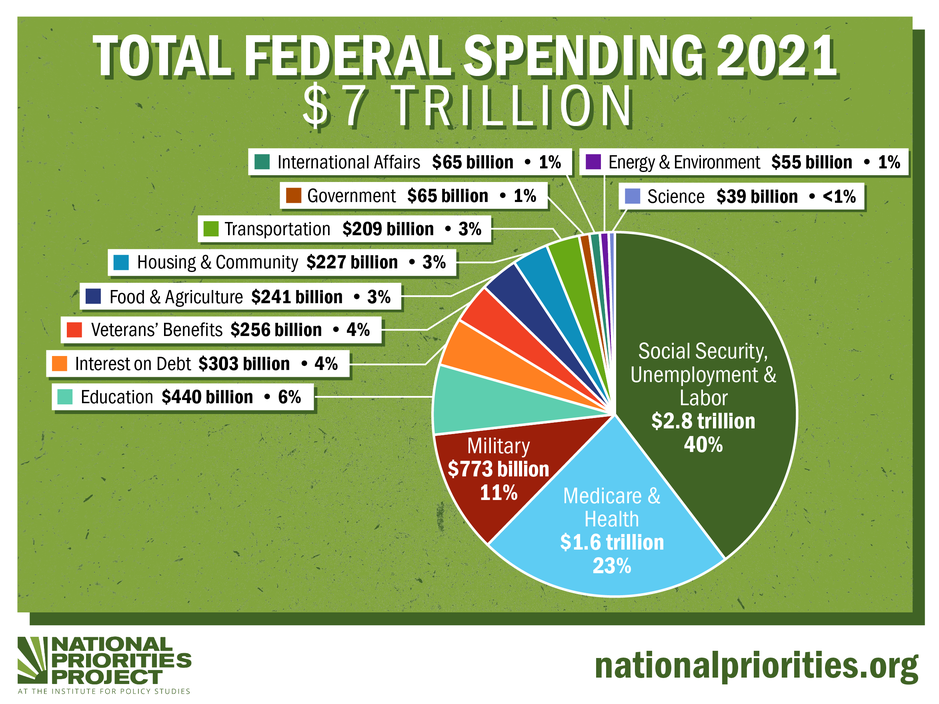
https://www.nationalpriorities.org/budget-basics/federal-bud...
Why do novel research when you can just partner up with your friends, bring your data and combine with theirs for the umpteenth paper on the same thing, then wade into spamming down the submissions in every academic journal with impact in your field! If it published once in this journal, surely the 3rd recombination will too (and more often than not... it does.)
lol arguably? i would bet my generous, non-academia, industry salary for the next 10 years, that there's not a single academic with a citation count over say ... 50k (ostensibly the most successful academic) that isn't gaming the system.
- signed someone who got their phd at "prestigous" uni under a guy with >100k citations
A broken system that incentivizes fraud over knowledge is a real problem.
An assertion that scientists chase the money by nature is a dangerous one that will set us back to the stone age when instead we should be traversing the space as a whole.
The more I've read about finances the more I've realized it can also be applied to many other things in the world due to its sheer objectivity.
On the other hand, I've also noticed most if not all of it is based on contexts and data from the mid 20th century. Interesting how that turns out.
As I've gotten older, I understand that Charlie Munger's observation "“Show me the incentive and I will show you the outcome.” is applicable everywhere - including science.
Academic scientists' careers are driven by publishing, citations and impact. Arguably some have figured how to game the system to advance their careers. Science be damned.