Maybe Nokia was simply too early for the vision, or the execution was somehow lacking in some other aspect, as Apple made basically the same bet but seemed to have pulled it off. Maybe the design wasn't designy enough.
But arguably Nokia did the same, at the time Nokia was a decent phone even if they had no standards between models - no one else did either. Blackberry found more consistency then lent into the status symbol approach.
I suspect that there's probably a common pattern with brands building a decent product, becoming renowned for that, then becoming more fashion like to play up their new status. Eventually someone else able focusing on the product features over the name steals the market.
Also, an iPhone provides so much more utilitarian purposes than anything Nokia ever released. Something as simple as those devices would be much less noticeable if replaced by mood.
You never tried symbian I guess.
Do tell me what kool aid did I drink?
As I read it, "people can’t drop the kool aid drinking caricature view on iPhone users" says not that people who hold the caricature view are kool-aid-drinkers, but that they hold a view of iPhone users as kool-aid-drinkers. So I don't think there was any claim that you drink anything at all. (Though I'm fairly sure you do: At least water, or you'd be dead.)
Any iPhone could replace its metal housing with an equally strong polymer and become exponentially more difficult to break.
There was a tragic brief era when we might have had synthetic sapphire / "transparent aluminium" screens: https://www.theverge.com/2019/5/3/18528920/sec-charges-apple... (sapphire is aluminium oxide)
The 3210 era devices had easily replaceable polymer covers; they definitely did break and scratch, but these operated as disposable ablative shielding for the phone itself. Which also had a much smaller screen that was away from the corners of the device. So what people do nowadays on all of these devices is add third party cases to absorb the everyday wear .. but you can always take the case off for a "dress" phone, which like party or formalwear trades durability for looking good.
The Nokia 1040 (Windows, glass screen) was also pretty good at damage resistance. My wife stuck with hers until the Flash started wearing out round about five years in.
Yeah, but that doesn't help when the phone lands with the glass hitting something. And a heavier metal phone will have accumulated more kinetic energy during the fall than a lighter plastic one, so have a greater probability of shattering the glass.
There were so many significantly different Nokia phones at one point. I'm talking about after 3310, like 3220, 6600, 7610, 3660, 7600, each design is unique.
Apple has like two models (small and larger) at a time, and you can get them in a couple of different colors. The big design revolution is that they add rose gold or purple or whatever color each year so that the few people who care about showing off their latest model can do so.
From an inventory and logistics perspective, that's actually pretty wild!
Apple made almost $200B from iPhone in 2023, for example; per model, even including the older ones, that's an insane revenue per model. Not sure I can think of any other product at that level.
This more analogous to different model years of a car, rather than entirely different car models.
The customer immediately and intuitively understands 14 is better than 13, 15 is better than 14, etc.
The main thing clear to me is that the "mental flow chart" involved in selecting an Apple phone is much, much clearer than it would be for selecting a Nokia.
When you're on top of the industry, you may have a shot at selling lifestyle.
Software did their own thing, design their own and the poor industrial designers tried to keep up.
Apple's secret sauce was proper vertical and horizontal integration so that every design feature was also supported by software.
Sauce: Worked at Nokia in the "let's release 200 phones a year" -times.
Not indulging in the fancy moodboard stuff wouldn't have helped Nokia the tiniest bit.
(edit: reply might have better fit GP directly)
I am a pretty late adopter, but I bought the original iPhone. Totally worth it. Two years later when everyone's phone contract was up, they all got iPhones.
Back in the day, phones would be sold on 12mo contracts. Now, I’m surrounded by people (who are of very sound means) rocking iPhones from 5+ years ago, which are able to function in the tasks most adult phone users care about just as well as a recent model. Friends are passing old iPads down to kids instead of binning.
Quite a humbling experience
Form that did not follow function, phones that looked liked some flashy "original-but-not-really-original" design study straight out of a bachelor's Product Design class.
They could never have invented the iPhone, even if they were organised differently. The culture just wasn't there. The herculean drive to simplify, beautify and improve and NOT ACCEPT HALF-BAKED CRAP that propels Apple is impossible to replicate if it is not part of your DNA and vigorously enforced from the very top.
Nokia wanted to "segment markets", Apple wanted to build the perfect phone.
I made them a cappuccino-themed pinball game. The underlying idea was that when the customer is bored with the autumn colors and fabric edges and whatever, they’re buying the next Nokia for the new experience.
Apple made a phone whose physical form was adaptable to any software experience. They didn’t need to put in a cappuccino pinball on the device because users could get that, and a million other experiences, from the app store, and mold their own experience.
Some parts of Nokia understood this — Symbian was actually a capable smartphone OS under the clunky UI — but the company DNA kept thinking of smartphones as just another feature column for the plastic fantastic market segment games.
They were so unintuitive that some 75% of their coders could not handle strings without severe errors. It did not help that they hired coders directly out of the university (many without a degree yet) and every good coder was promoted to management tasks.
There was no standard to begin with (actually the first release of Symbian and the first C++ ISO standard are pretty close on the timeline), but STL and likes existed.
Then again, Symbian was on the market until 2013, but programming for Symbian always sucked. Especially in the later years, when Nokia completely missed the advent of touchscreens, and tried to keep afloat by throwing Symbian on a touchscreen and seeing if it sticks.
For example, one of the most frequent patterns in touchscreen UI design is an infinite list of views with dynamic data loading and filtering. A lot of use cases fit into this abstraction - social media feeds, storefronts, messaging apps, dictionaries, streaming music players, etc. Android supported this pattern in UI framework from the very beginning and continiously improved it, while Qt's answer at the time was "oh, just write it from scratch".
And the fact that Qt uses highly specific dialect of C++ doesn't really help adoption.
The first Qt version for Symbian was around 4.6, and IIRC QML didn't even exist then. The latest was around 4.8, and it did have QML and Qt Quick, but it was too little, too late.
I know first hand multiple people (some of them my classmates) who decided otherwise and either burned out or quit. The ecosystem was just _horrible_ from the start. The amount of different phone form factors didn't help in the least.
I would like to mention here though that Apple eventually introduced a fair amount of things that Nokia did first with the Nokia N9 (especially once they went buttonless with the iPhone X). Once Nokia had Apple's example to work from, they actually kind of leapt ahead of them for a brief moment, then immediately gave up.
The iPhone X's big splash is easily explained.
Yet it seems that Nokia phones were loved for their UI. Keypad UIs are hard to create - and competitors certainly had some toxically useless UIs.
Somebody at Nokia got something right somewhere along the way? Maybe the engineers? After all presumably the engineers were eating their dogfood.
Yes, for making calls, texting, taking pictures and changing settings, Nokia phones were really nice. The whole games (Java) and apps (WAP) side wasn't the greatest. To be fair, no one had a decent game and app experience until the iPhone and G1 (Android) hit.
Point to where I said snake was novel, or nokia invented snake
This wasn't Nokia, but I believe the experience on their phones was about the same.
But then someone else invented the steam engine. Hard to go back to horses.
The story I heard was that Ericsson had a culture of not handing bad news up the management change unless it was a real problem. Senior management didn't want to be bothered by small details.
By the time they realised it was a massive problem it was too late to buy on the open market and they were forced to spin out the mobile business into a join venture with Sony.
I don't think that was down to "differences in skillsets". It was generic short sighted management that killed Ericsson's handset business and it could just as easily have killed the network infrastructure side of the company if the problem had it happened there first.
If management don't won't accept hearing bad news from their subordinates they won't be told it.
Yes-Men kill you in the long run.
I think you're suffering from a kind of observation bias specific to forums like HN, which have a disproportionate number of people with a chip on their shoulder about defunct tech products and companies. The people who liked Nokia's UI are loud and visible about it, especially when it lets them gripe about Microsoft/Apple/whatever, while the people who didn't like it don't feel the need to talk about it.
You could be generically correct. However I never bought a Nokia and I haven't used one much. I am not a Nokia apologist.
I lived through the period, and I'm commenting on what I saw at the time. Sometimes there are fans of a product or brand for good reasons.
Perhaps one of Nokia's major skills was familiarity between their models - especially for keeping the same menu structure and keyboard shortcuts. Familiarity is a powerful force. Oh, and they reliably worked - a definite plus!
I did own mobiles from other manufacturers and I have the scars from dealing with their (edit) painful UIs (Sony, Kyocera*, Motorola, Dell). A keypad and small screen (or worse a one-line numeric display) create some difficult constraints.
Cordless and Voip phones proudly continued the tradition of crappy handset UIs well into the age of iPhone.
* I loved my Kyocera Palm Pilot phone - there was even a LISP App that you could program a simple UI in -magic! Although my first love was an Atari Portfolio DOS handheld (not a phone): https://en.m.wikipedia.org/wiki/Atari_Portfolio
It's just that consumers wanted the big screen over everything else.
N95 photos still look decent even by today's standards, the original iPhone was a potato in comparison.
* 5MP camera with an amazing lens and dedicated shutter button
* 8GB(?) of flash and dedicated music controls
* Internet Hotspot
* Copy and paste (zing!)
I loved it then and yet I was still awful at making use of its potential.
Everyone has their silo'ed version of SIP plus a few extra features resold & repackaged as something unique and new to the market.
Trying to use the browser on the N95 was difficult it was slow to load pages and the reformatting was barely usable most of the time. Everything was high latency even on wifi.
With the iPhone it didn't really reformat websites so much as allow you to render it normally and then zoom and centre on to the bit you wanted to read. This was pre-responsive web design so everything stayed roughly the same as a desktop screen layout.
That and the multi-touch screen were the bits that made it superior enough for me to swap by the time the iPhone 3G came out.
Nokia 3310 was great for it's use case.
That said, S40 was being used on feature phones for more than a decade (from Nokia 7110 in 1999 up to Nokia 515 from 2013), so it spanned across multiple UI generations and while it was very successful initially, at the end of its lifespan it didn't do particularly well when put on models with big touchscreens.
I believe 3310 used S40 already, though. Wikipedia states otherwise, but it doesn't provide any compelling sources for that statement. 3310 belonged to the same generation of phones as 7110 did. I'm not even use whether "S20" was ever an actual thing.
Looking back, I can't emphasize how much I loved the 3310 UI. Clean, fast, no colors, simply perfect. I'm currently using a Nokia 2600 Classic [1] with Symbian; it feels incredibly slow and cumbersome as compared to the 3310. Literally having to watch a progress bar while the phone's calculator(!) is loading.
But, that darned 2600 also refuses do die (it was already showing dead pixels, so there was some hope in the meanwhile), so I estimate being stuck with this one in the years to come also.
Another fun UI was from a Big Button Phone For Elderly People that belonged to my grandpa. I think it's a ZTE s202 [2]. Unfortunately, the microphone gave up working, so I ditched it.
That world of Old Dumb Phones is actually a lot of fun. And -- it's odd to think how much outdated-but-entirely-usable electronic waste there actually is on the planet.
Thanks, Finns, for enriching the world with the rock-solid 3310, and greetings from the other side of the gulf!
1: https://en.wikipedia.org/wiki/Nokia_2600_classic
2: https://i.hinnavaatlus.ee/p/1200/99/43/S20220must__6ee8.jpg
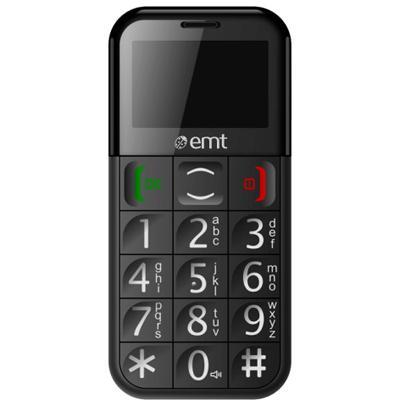
There's no Symbian on that phone. Symbian was pretty much a smartphone OS that didn't really show up on feature phones. It had a full-blown WebKit browser, native apps, multitasking, productivity suites... you could even install Python interpreter and play with writing apps this way on Symbian phones from around that time (which is what I kept borrowing my mom's E65 for). Later versions even had Qt built-in.
Nokia 2600 Classic used one of the iterations of Series 40. Looking at the videos, it indeed appears rather slow on this phone.
At least in Finland just having the more expensive phones was seen as a status symbol and usually people were using them for calling, smses and perhaps for emails.
Secondly that Nokia model was just a nice piece of hardware that was easy to use without unnecessary complexity. Plus if you turned off the ringer it would buzz and hop around on the table like a small but enraged weasel. It was hard not to feel affection for it.
Edit: typo
Basically the definition of indestructible shifted. Back then it was obvious the phone won’t work after such an immersion. And indestructible meant that with proper care it could be restored to working condition. Today it is more of an exception when a phone dies under the same treatment.
but they also had their normal phones with broad appeal, and could make a good business out of mood-board variants of them. if they didn't make a business out of selling the 3310 in the current season's fashionable colours, they'd have been doing something wrong.
I still think that the wheel (navi-roller) they introduced with 7710 [1] was revolutionary and they should have used it in other phones they made.
(Some brand names to search for are Rollermouse, Mousetrapper, Optapad, andErgoslider.)
It was an extremely cool input device, particularly for navigation.
At an industrial design conference in Gothenburg (spring 2005 iirc) I met a senior designer from Nokia around that time, he had a doctorates in ergonomics and interaction design. He lamented that he was not allowed to so any user interface work, only do the aesthetics. Management from up far had decided that design was only about what it looked like, form was not allowed to work with function.
There is a still a strong market for luxury mens' mechanical wristwatches as jewelry. But I expect that will gradually die off as the population of men who grew up wanting a Rolex dies off.
...Microsoft did a hostile takeover with the help of an "ex"-Microsoft Elop being appointed Nokia CEO? Might I say, MS and Nokia eloped.
Oh, and cancelled the very much beloved Linux-based handset without even advertising it.
Think about the Glorious Revolution of 1688.
Worked for Apple, though. (Oh how I hate Apple-made software.)
The oh-so-"intuitive" iOS, with all it's fucking impossible-to-remember swiping gestures this way and that. Aaaargh! Unfortunately Android has been going the same way for the last half a decade or so. :-(
(And Sailfish -- or whatever it's called nowadays -- looked like a contender at first, but then it swiftly marched into the swipey bog.)
Nokia Design sent a massive moodboard PDF, something like 100 pages, with endless visual ideas for what seemed practically like an Autumn/Winter lineup of plastic gadgets. But it was all about the moods. The actual phone's usability and software were a complete afterthought. Those were to be plugged in eventually by lowly engineers somewhere along the line, using whatever hardware and software combination would happen to fit the bill of materials for this lifestyle object.
The game I designed was a "New York in Autumn" themed pinball. There were pictures of cappuccino, a couple walking in the park, and all the other clichés. It fit the moodboard exactly, the game shipped on the device, everyone was happy. Nobody at Nokia seemed to care about the actual game though.
Of course the implication with these fashion devices was that they were almost disposable, and you'd buy a new one for the next season. This would be great for Nokia's business. Unfortunately their design department seemed consumed by becoming a fashion brand and forgot that they're still a technology company. Everyone knows what happened next.