News for hackers. Stuff that matters.
Re:How French Was Medieval England? by gumby on Friday January 26, 2024 @03:07PM (#39147508)
These are fun little essays.

The example that I think most native English speakers learn at some point is the reason for the distinction in food words: we eat pork (porc) and beef (boef) but they are the flesh of the pig/swine (Schwein) or cow (Kuh). This reflects the elite's use of French (thus using French words for food on the table) while the English servants used their Germanic vocabulary for the animals they worked with.

In both French and German the same word is used for the animal in the field and on the plate.

And then there are innumerable hybrids (anglicized french words). With regards to food and husbandry, one my of favorites is "beeves" ("cattle" -- "beefs"): while I have never heard the word spoken aloud I have seen it in novels even as late as the early 60s.

Re:How French Was Medieval England? by zwieback on Friday January 26, 2024 @03:44PM (#39148027)
I heard the same anecdote about the upper classes adopting French after 1066 but the farmers still calling the thing by its animal name. Trust the Germans to just continue smashing nouns together, Schweinefleisch, Rindfleisch and my American wife's favorite: "Hackfleisch" (hacked flesh). Too bad Germany didn't get invaded by the French until Napoleon.
Re:How French Was Medieval England? by vidarh on Friday January 26, 2024 @04:36PM (#39148814)
English "smashes words together" too - English is full of compounds (e.g. shopkeeper), it's just a much slower process, often goes via a long intermediate period of hyphenation, and the implied difference in meaning is a bit smaller.

The "smashing" together of words is much less interesting to most of us who use languages that does so than it seems to be to others - it does little more than placing the words adjacent to each other does in English, with the exception that it disambiguated.

E.g. "hakke" on it's own is the verb to hack in Norwegian, but as part of a compound it will mean something that has been hacked, or is hacking (e.g. hakkespett = woodpecker - and there's another English compound)

Funnily, Norwegian (and Danish) has imported the French boef - Norwegian as "biff" - while we still use the Germanic ku for cow - but we also "smash" words together, so hakkebiff = hakkebøf (Danish) = boef haché.

But "hakke biff" would imply the act of chopping it. And so we compound to remove the ambiguity.

We also have flesk, from the same origin as fleisch and flesh, but in Norwegian it specifically means pork flesh, so hakkeflesk, while it's not a term I can remember having heard, would be understandable but refer to pork because the meaning of combining the words is fairly generic.

Re:How French Was Medieval England? by canjobear on Friday January 26, 2024 @07:54PM (#39151113)
The main difference is really that English writes compounds with a space in between whereas German doesn't. There's no way to express compounds like "pedestrian crossing" or "windshield wiper" with a space in German. When a compound gets frequent enough in English people will stop writing the space (like "windshield") whereas in German the space was never there to begin with.
Re:How French Was Medieval England? by tnecniv on Saturday January 27, 2024 @02:09AM (#39153353)
We don’t do that with all compounds though. It’s really more a cultural thing. At a certain point a pair becomes so common place that it becomes one word. Beehive, for example, isn’t semantically different from bee hive but the pairing was common enough the space got dropped.
Re:How French Was Medieval England? by philwelch on Saturday January 27, 2024 @02:46AM (#39153533)
English also constructs compound words out of Greek or Latin roots. For example “television” is a technology for seeing things that are happening far away (i.e. in a broadcasting studio); the German word is “Fernsehen”, which would be cognate to “Far-sight”, which is what “television” means. And sometimes we even have an Anglo-Saxon compound word alongside an etymologically equivalent compound word with classical roots, such as “manslaughter” and “homicide”.
Re:How French Was Medieval England? by naravara on Saturday January 27, 2024 @08:08AM (#39155220)
> manslaughter

I never understood what they thought was so funny.

Re:How French Was Medieval England? by gumby on Saturday January 27, 2024 @09:44AM (#39155953)
The joke is that they don’t decline “man” properly (“mans” rather than “men”).

Today we’d write it menslol.

Re:How French Was Medieval England? by gumby on Saturday January 27, 2024 @09:49AM (#39156006)
Also Greek and Latin roots like monstrosities like your example “tele” (Greek) + “vision” (Latin).

The one that grates on me most is “monolingual” (unilingual/multilingual or monoglottal/polyglottal)

Re:How French Was Medieval England? by taejo on Saturday January 27, 2024 @10:39AM (#39156431)
Live free! Embrace heteroradicalism!
Re:How French Was Medieval England? by nickles on Saturday January 27, 2024 @11:33AM (#39156925)
I would typically use “crosswalk” in preference to “pedestrian crossing”. The two terms are slightly different, but functionally equivalent. Is there something similar in German?
Re:How French Was Medieval England? by mike_hearn on Saturday January 27, 2024 @12:55PM (#39157938)
Crosswalk is American English. In the UK they are always pedestrian crossings.
Re:How French Was Medieval England? by User23 on Friday January 26, 2024 @07:46PM (#39151053)
But you don’t see things like “Straßenbahnhaltestelle” in English where you have four words mashed together. I’d translate that something like “streetcar stop,” but literally it’s “street car stopping place.” Streetcarstop while reasonable would not be accepted English by native speakers. Tramstop on the other hand is (at least places where people say tram). So while we mash it’s noticeably more limited.
Re:How French Was Medieval England? by lmm on Friday January 26, 2024 @08:47PM (#39151529)
As a native English speaker, even "tramstop" or "busstop" sounds wrong to me.
Re:How French Was Medieval England? by vidarh on Saturday January 27, 2024 @06:18AM (#39154618)
As a native Norwegian speaker, I had to look it up to see whether a space was expected or not, as it seems entirely illogical for me to have a space there as they're so closely connected.

The distinction between "fully merged" compounds, hyphenated ones, and ones with spaces is yet another one of those endlessly annoying quirks of English.

Re:How French Was Medieval England? by User23 on Saturday January 27, 2024 @07:52AM (#39155125)
> The distinction between "fully merged" compounds, hyphenated ones, and ones with spaces is yet another one of those endlessly annoying quirks of English

Being cognizant of these really helps develop empathy with ESL learners.

Re:How French Was Medieval England? by mathieuh on Friday January 26, 2024 @11:09PM (#39152452)
But what’s the difference grammatically if there’s a space or not? Let’s take “streetcar stop”, although there is a space there, what function is “streetcar” performing other than being a noun? It’s not an adjective, you can’t say “that stop is streetcar”, that doesn’t sound right, you’d have to say “that stop is /for/ streetcars”.

So I would argue that “streetcar stop” still parses as a complete compound noun grammatically. This is just a matter of orthography in my opinion. German may more readily “freeze” compound nouns and put them into writing as a single unit, but both English and German are full of long ad hoc compound nouns.

Re:How French Was Medieval England? by User23 on Saturday January 27, 2024 @12:28AM (#39152863)
The difference is for the German compound word you only have to remember the endings for the last part. You don’t need to worry about adjective declension. So yes it’s a real grammatical difference and not just whitespace differences.
Re:How French Was Medieval England? by fauigerzigerk on Saturday January 27, 2024 @05:13AM (#39154269)
I think the difference is that in English you can create new nouns by simply lining up existing nouns (with spaces in between). Over time these words may or may not grow together.

In German, you would have to create a single word from the start (possibly using a hyphen for disambiguation) and in some cases pluralise individual words so they can be joined together.

But you are right that in both cases the result is just a single noun, which contrasts with agglutinative languages such as Turkish where the entire grammar of a sentence can sometimes be packed into a single, potentially very long, word.

Re:How French Was Medieval England? by vidarh on Saturday January 27, 2024 @06:14AM (#39154597)
We (my first language is Norwegian, German is my 3rd, so I'm speaking mostly from my experience with Norwegian) tend to see it as far less of an act of "creating a word" than English-speakers tend to when confronted with our languages, though.

English speakers are often amazed at how we "have words for everything", which makes it seem like it's been some conscious act of establishing a new world on purpose. Of course sometimes that is the case, but that process happens in English too.

But exactly because of what you say, directing that amazement at us just combining words is pretty much the same as if we expressed amazement at how English has sequences of words for everything.

It just looks different to English-speakers for whom the merging of multiple words into a combination they've not seen before is not a frequent occurrence.

Re:How French Was Medieval England? by vidarh on Saturday January 27, 2024 @06:42AM (#39154752)
A lot of this is historical accidents of when shorter alternatives for different parts have or have not been imported, though, and whether there's a culture for going "enough" and shortening things or importing terms. Germans seem to be far more tolerant of holding on to long compounds than most.

Norwegian has "trikk" for tram/streetcar and "stopp" for "stop", and so we have "trikkestopp" for tram stop (but see below). Trikk was a case of "sporvogn" - "track wagon" - being too long.

Meanwhile, while "streetcarstop" is not in use in English "streetcar stop" is some places. E.g.[1].

"Streetcar stopping place" of course would definitely be a step too far in English, but so would it be in e.g. Norwegian that otherwise mostly shares the German approach to combining words (to the point where newspapers regularly have articles about how the language is going to hell because people fail to combine words when they should) but where we'd go "hang on" and omit parts or otherwise rephrase to find a short alternative.

However, we do have "stoppeplass" for "stopping place", though more often used for somewhere to stop a car for a longer period, and "holdeplass" for "holding place" which implies a more temporary stopp, and so we can and sometimes do also use trikkeholdeplass - "tram holding place" [2], but these longer forms tends to gradually be replaced by shorter ones over time, as Norwegian has a tradition for contractions (to the eternal frustration of foreigners learning Norwegian, because spoken Norwegian tends to drop syllables and whole words with wild abandon) and replacing long terms.

[1] https://www.buildkcstreetcar.com/project-news/stages-of-a-st...

[2] We can, and also sometimes do (but a quick search of the Norwegian national library shows it's quite rare, with peaks of tens of uses in print some decades), use "sporvognholdeplass". If you were to say that people would probably wonder what century you are visiting from (even though the full term was no more common before), but it'd be understandable.

Re:How French Was Medieval England? by SiempreViernes on Saturday January 27, 2024 @10:01AM (#39156112)
> to the point where newspapers regularly have articles about how the language is going to hell because people fail to combine words when they should

In Sweden there was for a few years a webpage dedicated to the fight against incorrectly writing words apart, famously producing red stickers that were then used as hypens where appropriate: http://www.skrivihop.nu/exempel/bilder/fika_sugen.jpg
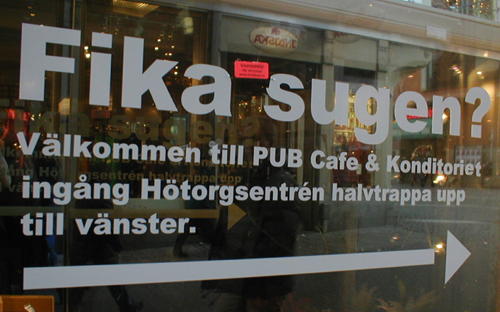
They got wildly popular but shut down after just three years because they felt they ended up attracting a lot of asshole followers that outright harassed people in their name.

Re:How French Was Medieval England? by gumby on Saturday January 27, 2024 @09:50AM (#39156018)
It sounds the same when you speak it it’s just a cultural convention whether you use a space or hyphen or nothing at all.
Re:How French Was Medieval England? by gumby on Friday January 26, 2024 @04:59PM (#39149176)
French does that too so I think an invasion would not have helped.
Re:How French Was Medieval England? by graywh on Friday January 26, 2024 @05:09PM (#39149319)
in English, we refer to smashed-together word(s) as "portmanteau", a French word that is a portmanteau itself
Re:How French Was Medieval England? by NoZebra120vClip on Friday January 26, 2024 @11:56PM (#39152722)
The sort of compound words which we're discussing appear by a process of synthesis:

https://en.wikipedia.org/wiki/Synthetic_language

See also: agglutination https://en.wikipedia.org/wiki/Agglutination

A portmanteau is different, where parts of several words are blended, rather than retaining the substance of each word in a compound.

https://en.wikipedia.org/wiki/Blend_word

And let's not forget xkcd's coinage of the malamanteau:

https://xkcd.com/739/

Re:How French Was Medieval England? by gerdesj on Friday January 26, 2024 @06:20PM (#39150233)
"Too bad Germany didn't get invaded by the French until Napoleon."

Read up on the Holy Roman Empire. Germany, France etc are quite complicated concepts.

Re:How French Was Medieval England? by primitivesuave on Friday January 26, 2024 @06:52PM (#39150557)
To add some context here - the concept of a unified "Germany" has only existed four times in history. First under Charlemagne in the 800s, then under Otto von Bismarck in 1871, then under Adolf Hitler until the fall of the Third Reich in 1945 (assuming one considers annexation of the Sudetenland and the Anschluss to fully encompass Germanic people), and finally the modern state of Germany since 1990.
Re:How French Was Medieval England? by usrusr on Friday January 26, 2024 @09:19PM (#39151754)
Seems arbitrary. Why Bismarck's Kaiser but none of those between Charlemagne and Napoleon? How German was the realm of Charlemagne when it reached further across the Pyrenees than it reached across the Elbe?
Re:How French Was Medieval England? by kergonath on Saturday January 27, 2024 @02:31AM (#39153466)
Charlemagne, of course, being king of the Franks and emperor of the Romans. Things back then do not match neatly to modern concepts such as a French or a German nation-state.
Re:How French Was Medieval England? by rahen on Saturday January 27, 2024 @04:32AM (#39154027)
Weren't France and Germany essentially the same country during Charlemagne?
Re:How French Was Medieval England? by nottorp on Saturday January 27, 2024 @07:30AM (#39154992)
Don't think anyone was considering themselves French or German yet. There were smaller subdivisions we forgot about (or I forgot about, I'm no historian). They just happened to be all under Charlemagne's rule.
Re:How French Was Medieval England? by kergonath on Saturday January 27, 2024 @06:44AM (#39154759)
Yes, they were. Actually the core of both countries was one and the Franks did not care much about our modern borders. Western Francia became eventually France, while Eastern Francia became Franconia (roughly, the borders were always blurry and shifted a lot over time).

Of course, the Franks came from further East and never replaced the populations they invaded, so even there and then both cultures and peoples were always mixed.

Re:How French Was Medieval England? by af3d on Saturday January 27, 2024 @10:21AM (#39156275)
Correct. The current regional concept of "Germany" proper probably started with the Treaty of Verdun, when the lands of Francia were divided amongst three of Charlemagne's grandsons. The inheritor of Francia Orientalis was in fact also known as "Louis the German".
Re:How French Was Medieval England? by cenamus on Saturday January 27, 2024 @04:42AM (#39154081)
And not even all of those included all german speaking populations, i.e. a large part of Switzerland, Austria, Liechtenstein and all those regions/cities that were partly german, modern day Transylvania for example
Re:How French Was Medieval England? by com on Saturday January 27, 2024 @04:43AM (#39154087)
The partial absence of Austria and the German-speaking cantons of Switzerland, Italy, Belgium and perhaps France in all possible variations of these “concepts” means that a United Germany has never been truly achieved I suppose. Probably a good thing for those folks own cultural and dialect identity…
Re:How French Was Medieval England? by toyg on Saturday January 27, 2024 @12:01PM (#39157290)
Language is just one element of identity anyway. Also, the concept of "United Country X" is a XIX century invention, largely based on now-discredited racist ideologies. We should aim for something better.
Re:How French Was Medieval England? by Lio on Sunday January 28, 2024 @01:06PM (#39168140)
I can think of at least one situation where this idea of a "united country" is still being forcefully pushed today...
Re:How French Was Medieval England? by pyuser583 on Friday January 26, 2024 @10:02PM (#39152020)
One of the best Christopher Hitchend quotes is about English/German compatibility:

> Der Brand (The Fire), by the historian Jörg Friedrich, accuses Winston Churchill of a conscious policy of airborne terrorism against civilians … The word “brand” in English, of course, carries a distinctly different vernacular meaning.

Re:How French Was Medieval England? by hackernewds on Saturday January 27, 2024 @01:03AM (#39153032)
Hitchens*
Re:How French Was Medieval England? by gumby on Saturday January 27, 2024 @08:31PM (#39161663)
> upper classes adopting French after 1066

The upper classes were French after 1066 (Harold had definitively repelled the Danes for the last time just three weeks before Hastings).

Re:How French Was Medieval England? by Lio on Sunday January 28, 2024 @01:02PM (#39168103)
It's not so much that the upper classes adopted French after 1066, it's that the upper class was replaced by people that spoke Norman French.

If you examine the richest landed gentry in England today a very sizeable number still bare the family names of those that fought for William at the Battle of Hastings.

Re:How French Was Medieval England? by kraftman on Friday January 26, 2024 @03:14PM (#39147590)
French is pretty similar isnt it?

Pig/pork = cochon / porc

cow/beef = vache / boeuf

chicken/chicken = poulet/poulet

fish/fish = poisson/poisson

Re:How French Was Medieval England? by masom on Friday January 26, 2024 @03:27PM (#39147787)
vache is gendered boeuf :D

We'd say "vache" when it comes to milk or the female, but all "vache" are "boeuf".

Boeuf is used when the gender does not mean much (like for meat).

Re:How French Was Medieval England? by Dodrekai on Friday January 26, 2024 @03:42PM (#39148007)
More precisely, a "Boeuf" is a castrated bull which could explain the English meaning of the word..
Re:How French Was Medieval England? by chrisdhoover on Friday January 26, 2024 @04:12PM (#39148462)
Steer in English
Re:How French Was Medieval England? by meheleventyone on Friday January 26, 2024 @04:20PM (#39148579)
We use Bullock in the UK.
Re:How French Was Medieval England? by seabass-labrax on Friday January 26, 2024 @06:11PM (#39150128)
I have always used 'bullock' to refer to a juvenile bull, but my dictionary lists that sense of the word under 'archaic'. It wouldn't be the first time that I've discovered I'm speaking Middle English!
Re:How French Was Medieval England? by meheleventyone on Saturday January 27, 2024 @02:54AM (#39153565)
Very often the juveniles have had the snip so I wonder if that’s the inflection point.
Re:How French Was Medieval England? by gerdesj on Friday January 26, 2024 @05:25PM (#39149554)
Bollocks, do we!
Re:How French Was Medieval England? by mistrial9 on Friday January 26, 2024 @05:15PM (#39149403)
he meant the slang term "Boeuf" -- basically an accusation of being a feminine male.
Re:How French Was Medieval England? by maximus-decimus on Friday January 26, 2024 @08:30PM (#39151396)
boeuf is also gendered, it's just that "non-gendered" in French means defaulting to male. The same way that Scarlett Johansson is an actress, but Scarlet and Chris Evans are actors. You would never say that Scarlett alone is an actor.
Re:How French Was Medieval England? by williamdclt on Saturday January 27, 2024 @09:54AM (#39156052)
There’s not really the same distinction between “live animal” and “food”, no!

Cochon and porc are both used for the live animal, and both used for the food as well (cochon is a bit less used for food, but still common enough).

Boeuf and vache aren’t really synonymous as another commenter pointed out

Re:How French Was Medieval England? by xaellison on Friday January 26, 2024 @03:32PM (#39147861)
askbeeves.com
Re:How French Was Medieval England? by gumby on Friday January 26, 2024 @08:00PM (#39151163)
I just get a response 410: Mooooooo.
Re:How French Was Medieval England? by amaccuish on Friday January 26, 2024 @03:40PM (#39147989)
> In both French and German the same word is used for the animal in the field and on the plate.

Ehh, in German we talk about Rindfleisch, which comes from a Kuh.

Re:How French Was Medieval England? by nowafizyka on Friday January 26, 2024 @04:53PM (#39149085)
Rindfleisch comes from a Rind (which may be a Kuh, Bulle, or Ochse).
Re:How French Was Medieval England? by n_plus_1_acc on Friday January 26, 2024 @04:44PM (#39148925)
While not same, both are germanic words
Re:How French Was Medieval England? by gerdesj on Friday January 26, 2024 @06:15PM (#39150170)
On the beef thing: French: "biftek" from the English: "beef steak", beef from boef. The borrow words come full circle!

The French used to routinely boil their beef but during a lengthy Parisian siege, the locals noticed that the peoples that they came to call "les rosbifs", roasted their beef (phnaaar!) We were chucking steaks on the barbies long before Australia was even thought of ... or something jingoistic 8)

These essays are a bit of fun, as you say. History and life and language are rather more messy than many would like. At one point the article witters on about France and Wessex. Both terms were valid "back then" and are still valid now but they are sodding complicated ideas and neither mean the same now as they used to.

Even the notion of English (and French - obviously) is pretty tricky. Nowadays, in the UK alone we have a largely homogenised language, with some localisations ... on the surface. For example: jitty - allyway, bairn - child, skritch - cry. Then we have the collisions between the Brythonic languages (Scottish, Welsh, Irish, Cumbric, Cornish and the rest) and English. So a Devonshire bird like my mum spoke what sounded like complete twaddle to a modern (!) lad like myself, when she was a child.

You (@gumby) might know the difference between twaddle and twiddle but I am sure I've lost a few readers right there.

My point is that language, nationality and the like are rather more fluid than people generally think.

Was hal!

Re:How French Was Medieval England? by fuzztester on Friday January 26, 2024 @07:46PM (#39151049)
>biftek

Seen that word, with that spelling, IIRC, in Iranian restaurant menus in India.

Re:How French Was Medieval England? by prawn on Friday January 26, 2024 @08:23PM (#39151346)
I remember biftek in Turkey also? Bistek appears to be "beef steak" in the Philippines?
Re:How French Was Medieval England? by bitbckt on Friday January 26, 2024 @08:33PM (#39151409)
“Bistec a la X” for many types of X is part of the Spanish-speaking world, including the Philippines. The spelling with a “k” is a loan word into Tagalog.
Re:How French Was Medieval England? by fuzztester on Friday January 26, 2024 @10:19PM (#39152130)
And what does the X stand for in that?
Re:How French Was Medieval England? by jdminhbg on Friday January 26, 2024 @11:10PM (#39152461)
Anything. Bistec a la Mexicana is “Mexican-style steak.” Replace with any nationality or style or whatever.
Re:How French Was Medieval England? by teknico on Saturday January 27, 2024 @02:05AM (#39153340)
“Bistecca” in Italian.
Re:How French Was Medieval England? by narag on Saturday January 27, 2024 @06:51AM (#39154793)
Bistec a la X” for many types of X is part of the Spanish-speaking world

Right, even for X = pork. But lately, it's fading in favour of "filete" (slice) of X, at least in Spain.

Re:How French Was Medieval England? by fuzztester on Friday January 26, 2024 @08:35PM (#39151423)
Yes. Not been to Turkey, but I read about cuisines, for fun, including on Wikipedia and food blogs. And IIRC, steak is called biftek in Turkey.
Re:How French Was Medieval England? by cyberax on Friday January 26, 2024 @09:51PM (#39151949)
It's also similar in Russian and Ukrainian: "beefshteks"
Re:How French Was Medieval England? by nemo8551 on Saturday January 27, 2024 @01:53PM (#39158567)
This was definitely a tradecraft code word when two dudes passed a briefcase between each other in a cold park one day in Moscow.

Heavy, heavy pronunciation going on to near comical effect.

Re:How French Was Medieval England? by fuzztester on Saturday January 27, 2024 @02:29PM (#39158937)
Psst! Tovarisch! Next meeting at 11:00 p.m. Tuesday under the bridge just after Gorky Prospekt! Wear a grey checked coat, with a copy of Pravda under your arm. Da?

Oops, too many spy novels plus a bad sense of humour ... ;)

Re:How French Was Medieval England? by fuzztester on Wednesday January 31, 2024 @07:19PM (#39211388)
Or maybe, too many bad spy novels :)
Re:How French Was Medieval England? by nemo8551 on Saturday January 27, 2024 @01:50PM (#39158532)
I think there used to be a kebab place in Glasgow called bifteki.

It generally signalled the end of a night when you headed there.

Re:How French Was Medieval England? by lynguist on Saturday January 27, 2024 @07:12PM (#39161191)
English beefsteak -> French bifte(c)k -> Turkish biftek -> Greek bifteki
Re:How French Was Medieval England? by nemo8551 on Monday January 29, 2024 @07:39AM (#39175553)
Thanks, that makes a good deal of sense.

I guess there’s probably been a few places called bifteki around the uk and other countries then.

Re:How French Was Medieval England? by samstave on Saturday January 27, 2024 @02:53PM (#39159167)
Yep - Bistek is beef steak in PH. and Bifstek in India is likely due to colonialism. Its amazing that Chicken Makhani was actually invented in the UK.
Re:How French Was Medieval England? by hackernewds on Saturday January 27, 2024 @01:01AM (#39153027)
you're thinking of Bistek, also in indonesia
Re:How French Was Medieval England? by makapuf on Saturday January 27, 2024 @03:12AM (#39153659)
That spelling is not the generally used one in French (or other languages) : it's spelled bifteck

(See https://en.m.wiktionary.org/wiki/bifteck)

Re:How French Was Medieval England? by fuzztester on Saturday January 27, 2024 @11:05PM (#39162466)
Yes, but I've seen it the way I wrote it above, in restaurants in real life, that's why I wrote it the way I did. :)

Also, see the Czech, Macedonian, and other entries under the Descendants section at your own link above. Many of them spell it the way I did.

Re:How French Was Medieval England? by nottorp on Saturday January 27, 2024 @07:28AM (#39154981)
Romanian doesn't use K so it's "biftec" in menus and recipes :)
Re:How French Was Medieval England? by donall on Friday January 26, 2024 @11:43PM (#39152655)
> Then we have the collisions between the Brythonic languages (Scottish, Welsh, Irish, Cumbric, Cornish and the rest) and English

Small correction: neither Irish nor the two languages people might refer to as Scottish are Brythonic languages.

Drinkhail! ;-)

Re:How French Was Medieval England? by gerdesj on Saturday January 27, 2024 @05:21PM (#39160477)
Noted. I'm just a linguistic civilian 8)
Re:How French Was Medieval England? by samstave on Saturday January 27, 2024 @02:56PM (#39159190)
I have the etymology bug. Interestingly as I have been on meditative trail rides recently, I have been thinking about a desire to compile the etymology of the corpus of words used in tech.

And was wondering if there might be an easy way to build a a tech geneology/etemology tree.

Re:How French Was Medieval England? by fuzztester on Friday January 26, 2024 @07:38PM (#39150986)
What about steer and heifer, which I've read of in English and Western novels?

Their origin, I mean. I can google, but it's more fun to hear what others have to say. And argue, and put them down and up - or try to :)

Attitude frowned on by HN, I know, only they don't (seem to) know they are doing it themselves, via the voting mechanism, i.e. upvotes and downvotes.

Also, it's interesting that there are so many words for horses in English and Western (cowboy slang, I just made up the word :)

Re:How French Was Medieval England? by canjobear on Friday January 26, 2024 @07:49PM (#39151087)
Steer is Germanic (German has "der Stier") but heifer is unknown origins.
Re:How French Was Medieval England? by cenamus on Saturday January 27, 2024 @04:37AM (#39154055)
It does sound similar to Hufer (e.g. as in Paarhufer, literally sth like 'paired hoofers'), but the Wiktionary states it's indeed of different origin. Etymology is really fascinating sometimes
Re:How French Was Medieval England? by LAC-Tech on Friday January 26, 2024 @08:37PM (#39151441)
Steer means something something more like Bull in modern German I think - it doesn't have the connotations of a castrated animal as in English.
Re:How French Was Medieval England? by LAC-Tech on Friday January 26, 2024 @08:52PM (#39151572)
Old English had cognates of all three words: feahr (porc), swin and picga.
Re:How French Was Medieval England? by tnecniv on Saturday January 27, 2024 @02:04AM (#39153333)
Oh I’ll say beefs when referring to cows as a joke. TIL it’s an actual word!
Re:How French Was Medieval England? by vijayr02 on Saturday January 27, 2024 @03:10AM (#39153647)
>"Why, how call you those grunting brutes running about on their four legs?" demanded Wamba.

"Swine, fool, swine," said the herd, "every fool knows that."

"And swine is good Saxon," said the Jester; "but how call you the sow when she is flayed, and drawn, and quartered, and hung up by the heels, like a traitor?"

"Pork," answered the swine-herd.

"I am very glad every fool knows that too," said Wamba, "and pork, I think, is good Norman-French; and so when the brute lives, and is in the charge of a Saxon slave, she goes by her Saxon name; but becomes a Norman, and is called pork, when she is carried to the Castle-hall to feast among the nobles; what dost thou think of this, friend Gurth, ha?"

"It is but too true doctrine, friend Wamba, however it got into thy fool's pate."

"Nay, I can tell you more," said Wamba, in the same tone; "there is old Alderman Ox continues to hold his Saxon epithet, while he is under the charge of serfs and bondsmen such as thou, but becomes Beef, a fiery French gallant, when he arrives before the worshipful jaws that are destined to consume him. Mynheer Calf, too, becomes Monsieur de Veau in the like manner; he is Saxon when he requires tendance, and takes a Norman name when he becomes matter of enjoyment."

"By St Dunstan," answered Gurth, "thou speakest but sad truths; little is left to us but the air we breathe, and that appears to have been reserved with much hesitation, solely for the purpose of enabling us to endure the tasks they lay upon our shoulders. The finest and the fattest is for their board; the loveliest is for their couch; the best and bravest supply their foreign masters with soldiers, and whiten distant lands with their bones, leaving few here who have either will or the power to protect the unfortunate Saxon.

  - from Ivanhoe by Sir Walter Scott
Re:How French Was Medieval England? by kalbadia on Saturday January 27, 2024 @06:35AM (#39154717)
small correction : it's boeuf ^^ also, fun fact "taper un boeuf" doesn't mean "hitting a beef" but musicians jamming together ^^
Re:How French Was Medieval England? by deadfish on Saturday January 27, 2024 @07:06AM (#39154872)
I learnt the word beeves while reading the Doctrine (the PHP ORM) codebase. I assume it was in case someone had an entity called beef... So the collection would be beeves :) I wonder if anyone ever used Doctrine and had an entity called beef.
Re:How French Was Medieval England? by TomK32 on Saturday January 27, 2024 @08:12AM (#39155261)
The same example is mentioned in The Adventure of English, a series presented by Melvyn Bragg.