"Sell them what they want, give them what they need".
I also dislike this whole game where you have to essentially mould yourself into this "mainstream click-baity character", but part of me recognises that if your goal is to sell, then you'd be wise to spend time on presenting your content in a way that is at least initially attention grabbing.
One way to think of it is - you owe it to your audience to save them from worse educational experiences, and the only way to save them is to try to rank higher than these other more click-baity low-value videos.
The issue is, I think, exactly that everyone must be at least partially a salesman to get ahead. Is this what we want? Is there a way for YouTube to compensate for clickbaity titles and thumbnails? Are they incentivized to do so?
Thinking back at teachers and teaching that I really liked, they aren't always the best salesmen, but they're always very good communicators, and good at speaking. I don't think that the content promoted by today's engagement machines are optimizing for that.
Regardless of what we as a society want, and even if YouTube never existed, it's the reality that salesmanship is always important to some extent.
Persuasive communication is important even outside of business: it's key for academia to get grants, it's important for non-profits to get funding and volunteers, and it's important for individuals who want to improve their lives (even in relationships). I know several people who are technically brilliant, but have abrasive personalities and/or fail to get their point across to key stakeholders, so they don't achieve what they want.
There is a difference between honest salesmanship and sales pitches that include lies or fraud. It's necessary to sell, but you can play the game with some ethics instead of not playing at all and losing out.
What I'm trying to say is, while the medium doesn't change core mechanics of human behavior, it distorts and accentuates – there is, for instance, a difference between tiktok and a novel. And we do have power of mediums, we can choose to engage in different types, and we can lobby for digital mediums to change. So pitting youtubers against the algorithm (just pimp your quantum physics lecture with an O-face thumbnail) isn't the only way forward. There's also "here's how YouTube could be better" or "we need a better alternative for this type of content". Unfortunately, we have almost 0 visibility and control over the algorithm so there's very little behavioral analysis that can be done.
Scientists spend something like 20-30% of their time begging for grant money.
Worse still, in order to get the grant money, scientists have to abandon the genuine pursuit of knowledge and do some random busywork bullshit that they deep down know will produce nothing of value.
Once they have produced the bullshit research, they then spend another disproportionately large chunk of time convincing their colleagues that their research is actually valuable.
The remainder of their work time is spent pretending that they don't realise that their peers' and colleagues' work is complete bullshit.
Don't get into academia.
You've made a good insight with an interesting solution. You might already be aware of this, but for an academic perspective, Canadian academic Marshall McLuhan framed this with the famous assertion "the medium is the message," [0] in other words the method of delivering a message strongly influences how that message is drafted. The reasons align with what you've written: the incentives caused by YouTube algorithms do pressure creators to create more clickbait content.
Perhaps human curation can be an initial way to get more viewership for quality channels that don't try as much to game the algorithms. Recommendations on HN and other forums have led to the discoveries of such interesting channels, though this would have limited impact versus change on YouTube's end.
You said "outside of business," and then gave three examples of _asking for money_. You could have said "in dating," or "in electoral politics," but even in those examples, "persuasive" speech verges on "coercive" speech.
> you can play the game with some ethics instead of not playing at all and losing out.
In a darwinian competition, eg "the marketplace of ideas," ethics will always lose out to money. To play is to lose.
No, I didn't: the third item I listed was "it's important for individuals who want to improve their lives (even in relationships)." Relationships include both romantic and friendship. The second item with non-profits also mentioned recruiting volunteers, not just fundraising.
>"but even in those examples, "persuasive" speech verges on "coercive" speech.
Persuasive speech includes: if I ask a friend to hang out with me and go to a conference, it's great for the both of us because we'll both enjoy it together and learn. There's no threat or coercion here, it's a win-win that is communicated well. The non-persuasive alternative would be: "There's a professional event this Thursday, we should go" with no further explanation.
> "In a darwinian competition, eg "the marketplace of ideas," ethics will always lose out to money. To play is to lose."
Ethics has value in many contexts. Certain non-profits can struggle to raise money due to having a bad reputation. Significant ethical misconduct can lead to scandals and arrests of executives. Highly unethical companies end up paying premiums to applicants due to struggles with recruiting.
I might be confused about the context or definitions, but I didn't read on any darwinian model that included notion of "losing out to". Did oaks lose out to orcas? Or was it the other way around?
Sales were around before the industrial revolution and likely before the agrarian revolution. I'd conjecture that whether one employs ethics or not, a moderate amount of salesmanship can spice up ones daily hunting-gathering.
Darwinian selection is the species versus the environment and this environment can include other species, as well as other individuals in the same species with slightly different traits, that will compete for similar resources as well as the climate.
It's very difficult to even think of who is actually a competitor of who, was Facebook a competitor to myspace? Youtube to myspace? Tumblr? Livejournal? These were all platforms competing for creators and attentions so I think they are all in a certain degree of competition.
I think a sale in this space is the gathering of attention (i.e. time and/or money). But thinking of what's required to actually learn might offer some insight on why it is hard to compete in this space. To learn people need to spend effort and although it can be made fun it is extremely difficult to be made effortless. On the other hand, entertainment is effortless but it offers little learning. So these are two parameters that need to be tuned. But I think the problem here is that the algorithm benefits entertainment much more than it does learning, entertainment is more valuable for youtube's ultimate purpose (to grab the viewers attention) and so to thrive on youtube people that want to offer learning have an uphill battle to fight.
So I think this move is Youtube acknowledging that learning is also desirable in society and can be pulled apart from the loop and monetise in its own way. In other words, it's an evolutionary split, cells all have a common ancestor but some cells evolved to harvest the sun energy while others evolved to harvest the energy of other cells. Learning being desirable has given rise to platforms such as coursera which are also multi-million businesses and Youtube probably sees them uploading most of their content to youtube anyway (usually as private videos), so why not adapt the platform a little bit to give existing creators a chance to stay on youtube instead of moving to other services?
This move won't really solve the problem of entertainment predating on people's time over learning (if we consider that a problem) but it's not really intending to do that. So I believe if we want to look at things from a darwinian perspective we have different angles to look at. Creators that produce entertainment content will probably still benefit more than the ones that produce hard to approach but very good learning material, why? because attention is the most valuable resource out there. This move offers little solution to that, but, on the other hand creators will have more tools inside the platform to manage learning which will completely change the current online learning business and we'll see platforms like edx and coursera in need of offering more value to pull themselves apart from youtube. Because users from these platforms (including youtube education) are already searching for valuable learning experiences we might see evolutionary jumps in this particular area. Though this might also be a race to the bottom where youtube captures the segment and then changes to optimise attention-seeking. We'll see.
I’d be curious to learn if there’s any pain points or things you wish you could do faster in your process. Happy to chat offline :)
Students' attention is low (not an insult, just what my analytics show). They are mostly searching for a fix to their immediate problem when coding. So my videos are split into 3-10 minute chunks covering that single thing. Recordings for a single concept take roughly 1ish hour, mostly a combination of setup, being human and flubbing words, and something in my examples going awry and taking too much time on it rather than demonstrating the example. I mostly record on Sundays (again, free day) or at night if I know I'm going to be away. As faculty, you're not paid extra to do this, so its very much intrinsic altruistic volunteering your time to do it.
And like I said, the second part is being comfortable enough with the material to record it. I'm teaching Intro to AI for the 3rd time this semester and while I'm confident in my ability to teach it, I still have some kinks in my examples. Typos, what gets covered when, etc. type things. I feel ready to record it during my next iteration, but then we fall back to making time to do it.
I stand by this term for various reasons. I think it's accurate and summarizes the current day social media status quo.
> but the problem begins with the audience
Yes, but humans are non-linear. Porn, for instance, is extremely powerful for attracting clicks, and we've figured out that we need to keep it separate. Even if people want some amount of porn, they want other things too and the best way is to not mix. Now say hate, or cheap entertainment, is not porn but not super far off. Similarly, that type of content tends to win the attention-game against math lectures, if presented side-by-side to the average amygdala. If we mix it all together, it's hard to focus. So.. I'm pretty skeptical to leave education to Youtube. Not only do they have all the cheap content, they're incentived to bombard you with it.
Call it misplaced pride or whatever, but they usually feel doing/saying something purely because it helps selling comes across "not pure" or "not in good faith" or not "why I do this".
Eventually they end up justifying with something along the lines of "good product (or person) just sells itself" or end up bitter comparing themselves with someone who sold worse stuff, but sold more to stay long enough in business.
good advertising/sales/marketing (i know they are not the same) strategies have a large upfront cost, which most if not all good-but-failed products/services cannot sustainably pay for.
My hope for the internet was to lower the bar by being accessible to everyone and allowing more indie sellers to prosper. And it did deliver. what i did not see coming was this industry for gaming the system which in turn drowns the true indie voice.
That's what the world's biggest marketing company wants.
Otherwise, I think it's pretty obvious that the idea of rating artists, journalists, engineers and educators primarily on their salesmanship skills is a disaster in the making.
In the long run, online learning will probably become dominated by the equivalent of private schools: companies that hire great teachers and, separately, great marketers to build audiences.
Or look it at this way: Nonprofit authors don’t generally design their own book covers. They work with a publisher who does that. Why should teachers try to design their own YouTube thumbnails?
(On the flip side, if you highly value your independence as a sole proprietor, then yeah, expect that you’ll have to put on the marketing hat sometimes).
Click bait is ok sometimes?
To me it the race to the bottom of clickbait video titles/thumbnails feels dishonest and harmful but it’s hard to see what to do about it other than manual curation and/or alternative platforms which don’t use recommendations to exponentially amplify click rates.
The part I think LTT and many other folks with a similar philosophy ignore is that even engaging with their title/thumbnail isn't free. Clickbait forcefully grabs attention which requires every potential viewer to spend time and energy evaluating that option. A less forceful title/thumbnail makes it much easier to quickly and easily find the things you actually want to spend your time and energy on.
To make matters worse, most/all clickbait does it's damnedest to make it as hard as possible to decide a video isn't worth the time. Even when you know it's not worth it, the clickbait can make it extremely hard to actually skip.
So yeah, it has a real cost, even when the video itself is good. It's not equally good for everybody, and figuring that out has a cost too.
(And LTT in particular really pushes the boundaries, far more than most that actually try to not be dicks. LTT will sometimes draw the line at 'merely' technically not saying a lie, and blame you for hearing one anyway.)
This is clear self-deception and a way for a person to start the slide down the slippery slope to abandoning their standards. You don't owe it to your audience to 'save them' (a weird, evangelical way of putting it). You might like to put better content out there and hope that people find it and value it (and take reasonable steps to promote it, in a non-scammy way) but no, you don't need to rank higher than lower quality content. Because 9 times out of 10 the highest ranking content is junk and trying to rank higher will cause your own content to descend into being junk as well.
Or you bet against fads and hope that your consistent brand will develop an increasingly loyal and appreciative following over the long term.
You could lose that bet, but sometimes cashing in on today’s hot trends means washing out and being forgotten when they change. You’re making bets every where you look.
The courses that sell seem to be made by great sales men and women. But then the actual course itself is bad.
A lot of courses/content is created by a single person. The chances of them being great sales people and educators at the same time is pretty rare I would imagine.
This goes back to what the original commenter is feeling, the algo is going to work to the benefit of the great sales people. Which in turn leaves the good educators and the learner at a disadvantage.
We need a better way to find great courses/learning content. Social media(including Youtube in this) is not a great way to discover good content.
And I'm the same. I won't do the over-the-top, hyped up character who uses the latest trends to grab your attention, like some sort of hollowed out clown that has no real joy in the middle.
Instead, I just focus on writing my online courses, mentoring people, and building a community. If you're interested in the same thing, and I can help, reach out :-)
I wouldn’t have built what became a $2000/month revenue website if I didn’t start making $2/month, then more work to get to $20/month, then 200, then 2000 over ~5 years.
YouTube is shooting itself in the foot with its monetization cutoffs.
I developed the Discord community via the channel plus other ways.
If your videos are genuinely interesting and / or useful, you need to be able to convey that fact to users, before they watch it. It isn't too much to ask.
Just imagine a viewer asking you the question, "ok so why should I watch your videos over someone else's?". It is a fair question. And replying back, "you don't get to know that until you watch it" isn't a reasonable response.
I would expand on it slightly by adding that "Good Thumbnails" are complicated and are not necessarily "Clickbait".
An example of an overcorrection would be posting short one-off videos that address specific problems and solutions with titles such as "When Should I Apply Reverb?" or "My Top 5 VST Plugins". If producing lectures is your strong suit, well, we need more of that...
Do you want to build a community that is a reflection of your ideas?
Do you want to build revenue by growing your channel regardless of the type of consumer you attract?
What does that even mean?
I'd be careful about using the language of silicon value ad companies. It changes how you think. One minute you're talking about content and community and the next thing you know you have metrics and are trying to measure engagement and are now making decisions based off something you could actually measure and not relying on your instincts, experience, and good taste.
Instead, create videos (not content) for your fans / audience based on what you know works. Make it so good, your audience will want to support you.
I think Justin Sandercoe does a good job of this. There is a community on his web site and a community on his YouTube channel, but more importantly he has fans on every guitar forum on the internet. He sells books for people who want them and he has courses you can pay for, but they are mostly guides through his lessons which are all available for free on YouTube or reproductions of copyrighted work which he can't give away for free.
The most important thing for his success (IMHO) is that he has created a lot of very high quality videos. He doesn't do clickbait titles or images. Just video after video of great stuff.
You used the same type of voice you criticized, I'm confused why you're projecting this narrative onto my comment.
I'm obviously pointing out that clickbait content will get more engagement. I'm trying to make the OP ask themselves what they want... which I believe is very clear.
I do bristle at the use of words like content and engagement. If you are thinking about those things, you’ve already surrendered. I believe thinking in those terms will lead you to make more of the same stuff that’s already out there.
Mostly though, nobody should make content. That’s a word used by platform operators because it’s all they see your work as. To them, the thing you’ve created is just another file they can store in their CMS, to be monetized later. Be a video producer or podcaster or digital artist or writer or whatever it is (more specific is better IMHO), but don’t call yourself a content creator.
While obviously in a minority, GP should take heart in the fact there are viewers out there, myself included, that will actively avoid videos with click bait title cards.
Silly facial expressions and “you won’t believe…” type text are an instant turn-off for me. However, they are obviously effective in engaging a younger audience.
Whenever people say that I think "of course I don't believe ..." (ie that the topic is stupid, or that the decision of the day by xyz company is weird/bad/good, etc)
why should I believe or not believe in someone who I don't know?
If my mom says "you won't believe me if I told you you are not my son, but adopted" I'd be shocked.
Random youtuber "you won't believe?" - heck I don't believe a word coming out of your mouth! Of Course I DON'T believe you.
I do, and I think I've done that - I have regular viewers who I interact with, and some of them also get private tuition from me. Many more, though, have bought my book on Cubase and Music Technology, and have found it useful, which is wonderful for me. It's precisely why I don't engage in OTT titles or "shock face" thumbnails - although they are a lot better produced than when I first started the channel (which look more like 1940s UK Government infomercial titles!)
>Do you want to build revenue by growing your channel regardless of the type of consumer you attract?
No, I don't. I'm fortunate that I don't need to earn a lot of money to get by, and I'm not very materially driven. I have a decent house with no mortgage, and no expensive hobbies (any more!) or vices, and I'm generally pretty happy where I am. I'd love to make 10x what I'm making at the moment, and be able to devote a day or two a week to making videos, but I think it'd be difficult to get 10x the subscribers to allow me to do that.
But around the time they implemented their "clickbait" titles and thumbnails, it had the opposite effect on me. They all just *seemed* like so many other videos: bland and tasteless. The content itself hasn't much changed, but the allure certain has diminished for me. I've stopped watching their videos.
Compare that to Curious Droid, or Practical Engineering, which still use descriptive titles, sometimes questions, but always exactly about the subject.
Been watching him from basically when his channel started many, many years ago. Was really disappointed to see him give in to this.
I am hopeful that somehow…somehow!!! we can have the quality content like yours more discoverable without having to game the system.
It reminds me how “SEO” has turned into an entire, absolutely ridiculous meta game industry that rarely has to do with how good a website actually is.
To me it's like spending your lifetime writing an amazing book, only to spend a few minutes on designing the cover. It could be an amazing video/book. But how would I as the customer know?
I (and probably many other people) are constantly searching for good videos to watch. And unlike books, it's so easy to take a peek on a video and decide to close it within seconds if it's not something that is interesting to me.
They have to discover you somehow. The YouTube Algorithm is at least partially concerned with enabling people who would like your channel to discover it.
Regardless of how well you think YouTube does that, you have to admit it's not exactly a simple thing to do. YouTube is trying to maximize ad revenue by maximizing watch time. They are not trying to evenly distribute viewer attention among "worthy" channels.
But even if you feel like that's a betrayal of your integrity and you just want to produce something like MIT OCW, well, there are other examples from fitness content, say Stronger by Science, Sigma Nutrition, Iron Culture, where they either make enough to get by but not a ton, or even in Iron Culture's case lose money from the social media ventures but do it anyway. If you want to use MIT itself as an example of something that can be legitimate, high-quality education, but still make money, you can consider that universities operate as non-profits and rely on charitable donations to amass the wealth they have.
I don't think the phenomenon you're getting at here is limited to YouTube or even to educational content on any platform. Sellers of junk food make more money than sellers of high-nutritional, better quality food, and the most profitable sellers of high-nutrition content, high-quality food are even still using clickbait-like tactics of misleading marketing and overselling what their products can really do. The most boring fruit and vegetable stands in the world selling basic nutrient-dense, really good products but not lying about what it can do for you, are just getting by and not getting rich.
Sometimes, that has to be enough. If you believe in what you're doing, do it, even if you're not going to get rich.
From Wikipedia:
> Clickbait is ... designed to attract attention and to entice users to follow that link ..., being typically deceptive, sensationalized, or otherwise misleading.
Think about it the other way, for all the time you spend producing content in an effort to help others, wouldn't it be more rewarding to you to help as many people as possible? As a user of YouTube, when I search for help with something, I typically start with result that visually looks like it's going to provide me the best answer, as that's the only thing to go on. If the title and thumbnail looked low-effort, I assume the content would look low-effort as well. Maybe that's an intentional aesthetic choice, it can definitely work for some content.
HOWEVER, if the video were to actually deceive me, I would just stop going to that creator entirely. This should be true for most viewers and YouTube is encouraged not to provide misleading results. Otherwise, trust in the results would diminish searching directly through YouTube.
There are many channels that do have great content and accurate captions/thumbnails. From what I’ve seen, having high quality, consistent content over a prolonged period of time is a pretty sure way to grow.
same.
i watch a lot of youtube. i pay monthly for it, so i don't have to see ads. i've seen linus tech tips videos come up in my recommendations a time or two, and i am never going to watch them, just on principle. boy do i ever hate the mugging and pimping people like him indulge in, in an effort to bait me into watching.
Yup.
The consumer's challenge is finding what they want (or need).
Is it ironic that a search company mostly uses recommenders?
Why not better search? Why not better foraging and browsing?
--
Sole reliance on algorithmic recommenders, automated hate machines, has resulted in multiple negative outcomes. Existential threat to democracy, spike in teen suicides, accelerant for self radicalization, death of independent journalism, dominance of conspiratorial thinking, loss of public discourse, and probably a few more.
I'm sure search, foraging, and browsing strategies also have downsides. But I can't imagine how the outcomes could be worse.
A click bait, is a bait, a lure in all instances to get something different what is expected.
A fish wanting the worm gets the hook, a fox wanting the meat, gets the snap trap. The clicker wanting the content promised in the title, gets something different, not what is expected.
> ... wearing a funny hat ...
An instructor still delivers all the details and content as expected with or without the funny hat. Not so for click bait videos.
The thumbnails are doing the funny hat thing.
Parents would probably be interested in alternatives.
what are you talking about?
a student gets stuck going to class regardless of how goofy the teacher dresses, whereas I feel an extreme sense of revulsion when I click on a YT link with a meme-thumbnail or a clickbait title.
your analogy fails since in this instance the 'student' gets to decide whether or not they participate in the course.
If I had had the chance to walk out on goofy teachers through high school then -- just as one anecdote -- I wouldn't have graduated.
so, in other words, clickbait 'engagement' style marketing will get your volume numbers up, but the hidden aspect is that there will be a market that pulls entirely away from you -- 'teachers' on YT will need to understand these market dynamics if they're really interested in teaching the masses rather than making money on viewership.
If teachers K-12 were paid according to their student throughput that'd turn into a major humanitarian crisis, imo.
And honestly? I don’t care. The content is good, and if the hat gets them more viewers then all the better.
In the UK we see this with nonsense talk of 'the [energy] price cap' being some £ figure per year - when it's not, it's a £/kWh cap, but the media can't cope with that, we're stuck with what it means for 'the average household'. Even comparison sites refuse to compare what you actually pay, £/day and £/kWh, and instead insist on asking you about number of bedrooms etc.
I'm sick of everything being dumbed down.
I’m just saying there’s a decent reason for some of it. A huge audience on YouTube are children, teens.
I'm not sure you can call his series a curriculum, yet I think I learned a lot more from there than from my university classes, despite watching it primarily for the fun and not for learning.
I tried to find your channel, but I don't think I found it. Would you say it's name or link to it, if you don't mind me asking?
I agree, race to the bottom of the brain stem. I sympathize with GP
The race is about making the best possible thumbnail based of empirical data and not aesthetics.
Andrew Huberman has tame thumbnail images that are professional and informative. Like others have said, there has to be a middle ground to explore.
[1] https://i.ytimg.com/vi/nZQgszA0_80/hqdefault.jpg?sqp=-oaymwE...
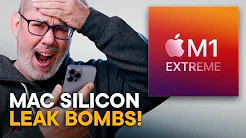
are you seriously going to pretend that optimizing for the most cringy thumbnails , because its a race to the bottom on Youtube, is marketing?
this is a ridiculous take.
I don't see how it's not marketing? YouTube is willing to promote your video for free and asks you to upload some promotional material for them to use.
not just that but the ones shown in this post are absolutely cringe. makes for zero credibility when it comes to education.
From my perspective, there are viable 'solutions' to this problem; Patreon, Curiosity stream, Coursera, etc.
I suppose those solutions, Direct Pay or Subscription, require more from individuals compared to youtube, 'free but with ads'. So the problem here is , "Is there a solution to the ad-revenue-based-on-views approach that keeps the content free for viewers"? When you identify it like that, I don't think there can be. I think the model demanding as many views as possible is a feature not a bug even if the outcomes are less than desirable. And now, in my view, we're talking about failures of Capitalism and this is just one example, Teachers being another.
So maybe the solution is community willpower.
The issue I have with it is that I refuse to produce attention-grabbing clickbaity titles or thumbnails. I don't like the whole algorithmically-driven race to the bottom of the brain stem, and have zero interest in producing the same. I've had plenty of comments from viewers who say the videos are great and informative, but if I'd just jazz things up a bit then I'd get more views.
I'm just wondering how this will change (if at all) with this new program. It takes a LOT of time to produce decent content, and even more if you're going to provide a course and backup materials etc.. Writing curricula is HARD work, and writing tests, etc., that are actually valid is reasonably challenging and time consuming.
I currently get about £100 a month from YT, which definitely doesn't reflect the time I put into it (but I know it has other benefits as I sell a fair number of books partly as a result of the viewership). I know that the beasts of the platform (3b1b spring to mind) would do really well from this (and deservedly so), but I do wonder if things really need to change to make YT work well for genuinely-produced non-clickbait educational content.