News for hackers. Stuff that matters.
Re:Interchange in Houston is the same size as an entire city... by xg15 on Monday August 31, 2020 @12:40PM (#24333165)
> But it wasn’t strictly an “everything is bigger in Texas” ethos that caused Houston to sprawl the way that it does. Rather, Cold War–era urban design philosophy in the U.S. prioritized sprawl because older cities that had urbanized pre–World War II—New York, Chicago, Philadelphia, and Detroit—were seen as being susceptible to nuclear strikes. Less-dense cities such as Los Angeles and Houston were less likely to be targeted for a nuclear attack. Sprawl was a deterrent against Soviet aggression.

That's the first time I've heard this theory.

Would that have worked though? I don't know much about nuclear deterrence, but I'd imagine if the USSR already managed to evade the defenses and other obstacles and destroy the city center in a nuclear strike, it wouldn't be a lot of additional effort to send multiple rockets instead of only one and also target the suburbs.

Not to mention that fallout, breakdown of infrastructure, disease and hunger that followed a strike would affect the entire city in any case.

Re:Interchange in Houston is the same size as an entire city... by jcrawfordor on Monday August 31, 2020 @04:25PM (#24335559)
As a decidedly amateur historian with interest in this area, I think that claim is true on its own but also does not tell the entire story.

It is true that decentralization was viewed as a major component of nuclear survivability, particularly in the earlier part of the cold war. This was the time period during which the FEMA (today's name) crisis relocation program was being devised, for example, and the high cost and complexity of crisis relocation (which, in an earlier form, was a major motivation for the Eisenhower freeway system, to the extent that it's probably fair to say that it was the main motivation with materiel movement as a second) served to highlight the inherent vulnerability of dense cities and keep it very much in the minds of government planners. Decentralized cities had an inherent advantage to planners in that money could be saved on crisis relocation efforts. Of course the crisis relocation program was never fully implemented, but the way of thinking was fairly influential.

The federal government had an enormous role in suburbanization of US cities in many, many ways, which is actually part of what makes it hard to address this point. Support for suburbanization was not coming just (or even primarily) from FEMA, all kinds of federal agencies had a hand. Much of the urban renewal work of the 20th century took the effective form of relocating poor people to the suburbs and replacing their inner-city housing with industrial/commercial/transport, for example the Model Cities program of the late '60s. This was in part a result of the general feeling that the inner city was where poor people lived and so improving their economic situation required getting them out of it, part of it was merely the practical issue that substantially improving a dense area is a lot more expensive than razing it and build something new there. I don't know if these programs were strongly influenced by crisis planning, they probably were at least in part, but it seems unlikely that crisis planning was a much bigger influence in federal advocacy of suburbanization than the more organic trends of white flight and urban decay that came out of a set of race and class relations, in a potent combination with some simple budget and timeline considerations.

My point is that nuclear planning was a factor, but the massive suburbanization of the postwar decades originated from many factors out of which nuclear crisis planning was only one, and I'm not convinced that it was one of the bigger ones in the end. Yes, the Bulletin of the Atomic Scientists very openly advocated for suburbanization of cities and that view was influential, but at the same time so much of suburbanization was motivated by a new vision of the American dream that came out of the peculiarities of post-war economics and demographics, racism, the radical popularity of the automobile (which not only enabled low-density areas but often required the destruction of high-density areas to provide freeway access to business districts), and probably at least a few other things.

Any claim that "urban sprawl is a result of x" where X isn't a list of things is probably pretty hard to defend. A complete change in not just urban planning but people's patterns of life tends to require a confluence of factors.

Re:Interchange in Houston is the same size as an entire city... by S_A_P on Monday August 31, 2020 @07:39PM (#24337010)
This is a really great response. I think there are a ton of both selfish and altruistic reasons for the urban sprawl that is Houston. I grew up here (Alief area) and that was the burbs when I was young. (It’s about 15-20 minutes drive from downtown) there was a 10 or so mile gap between where I lived and Sugarland. Now it all runs together. I now live due south of Katy in an unincorporated area about 40 miles away from downtown Houston. Land and housing is still relatively cheap here but it’s filling out every year.

I say that to say this- I didn’t move way out here to get away from some ethnic group or to some other insidious reason. I moved here because I have a large (blended) family and we wanted to own land. It’s a popular narrative to blame sprawl on racism or living above your means. I think the real reason is way more boring than that. Move away from a population center and things get cheaper. Gas is cheaper. Groceries are cheaper. Price per square foot is much cheaper. Those who are upper middle class can live well in the sprawl so of course they do. I have neighbors of every race religion and culture here. They all want the same thing- decent schools elbow room and some fresh air...

Re:Interchange in Houston is the same size as an entire city... by jcrawfordor on Monday August 31, 2020 @07:43PM (#24337034)
Right, and this is a big part of the post-war economics. After WWII a huge number of people were looking to buy homes in an unusually short span of time, and they pretty much all wanted a "typical American home" with lawn and fence. On top of this, there was a large workforce available that basically kickstarted the American homebuilding industry as we know it today, and made buying a brand-new home a very affordable and attractive option.

And what do you get when you have a huge number of people looking to buy brand-new houses? Urban sprawl, there's not really any way to avoid it.

Re:Interchange in Houston is the same size as an entire city... by joe_the_user on Monday August 31, 2020 @11:57PM (#24338410)
Cheap land and big house is a huge draw for sprawl.

The problem is this is a fundamentally unsustainable proposition. The US is hitting those problems now and it's not pretty. It's not just gridlock but problem that once things stabilize, maintaining sprawl costs more than maintaining a compact city[1]. The roads and the schools in the suburbs are often good only when they're new - once they age, the problem become visible (California is harbinger for the rest of sprawl land, this state has the older sprawl, remember). Poor services can cause an area of sprawl to become undesirable and then it's hard to recover - public transit is hard to add when distances are large but you can still wind-up poor people lacking vehicles in the hinterlands.

[1] https://usa.streetsblog.org/2015/03/05/sprawl-costs-the-publ...

Re:Interchange in Houston is the same size as an entire city... by throwaway316943 on Tuesday September 01, 2020 @06:54AM (#24340393)
It seems like there would be solutions to most of those problems. Roads are long due for a replacement but something more efficient and cost effective. Utilities are already moving towards decentralization with electricity leading the way but sanitation is on the horizon (see Bill Gates efforts). Depending on the outcome of COVID schools are going to be radically transformed. I think there’s enough energy pushing away from city centres right now to fuel a renaissance of the suburbs.
Re:Interchange in Houston is the same size as an entire city... by joe_the_user on Tuesday September 01, 2020 @09:16PM (#24349045)
Roads are long due for a replacement but something more efficient and cost effective.

What could that possibly be? I don't know of anything even on the horizon. Rails and steel wheels are more energy efficient but far more costly to build and maintain. Other nations use rail well by ... not having sprawl. Suburban sprawl essentially rests on the private automobile. As the gp essentially said, the draw of sprawl is a big house and a car, which can be nice 'till your whole planet is on fire and you're choking in rubble (I live in California, can you tell - But Texas will notce climate change too, if they haven't). A road is a just a flat piece of ground, it's pretty hard to find something simpler. Freeways are cheaper to build than railways. But the cost of rebuilding gets huge.

So basically, there are not solutions to these problems. We've basically hit Decline of the Roman Empire levels here. That empire took hundred of years to fall. I'm hoping things last past my lifetime.

Re:Interchange in Houston is the same size as an entire city... by throwaway316943 on Wednesday September 02, 2020 @07:25AM (#24352155)
Nah, you just lack imagination.
Re:Interchange in Houston is the same size as an entire city... by lfnoise on Monday August 31, 2020 @09:59PM (#24337811)
I grew up in Alief too, back when you had to drive past miles of farm fields to get there. We moved there because my dad, a pilot, flew out of Andrau Airpark. (Also, seeing your post history, I am a friend of Roger Linn.)
Re:Interchange in Houston is the same size as an entire city... by S_A_P on Tuesday September 01, 2020 @08:06AM (#24340869)
Tell Roger hey for me and I would love to beta test the next linn drum!!!!
Re:Interchange in Houston is the same size as an entire city... by pfraze on Monday August 31, 2020 @10:24PM (#24337950)
Houston is by far one of the most diverse areas I’ve ever visited in the US, up there with NYC.
Re:Interchange in Houston is the same size as an entire city... by S_A_P on Tuesday September 01, 2020 @08:05AM (#24340864)
And look at that- my cousin has joined the discussion.
Re:Interchange in Houston is the same size as an entire city... by pfraze on Tuesday September 01, 2020 @11:36AM (#24342931)
What up, Craig!
Re:Interchange in Houston is the same size as an entire city... by peterpeppers on Monday August 31, 2020 @10:46PM (#24338066)
The INTERESTING QUESTION is did the Federal Housing Administration prioritize white wealth and lives by moving them into an area less likely to get nuked by the USSR?

Also kudos for not being a racist...

But you might want to take a look at history. The US government actively encouraged urban sprawl with low-cost loans and redlining starting with Roosevelt and the New Deal.

"Beginning in 1934, the Federal Housing Administration (HOLC) included in the FHA Underwriting Handbook “residential security maps” used to help the government decide which neighborhoods would make secure investments and which should be off-limits for issuing mortgages[...] Green areas were were explicitly homogenous, lacking “a single foreigner or Negro.”

SOURCES:

- https://www.thoughtco.com/redlining-definition-4157858

- https://www.smithsonianmag.com/history/how-federal-governmen...

- https://www.businessinsider.com/how-redlining-kept-black-ame...

Re:Interchange in Houston is the same size as an entire city... by js2 on Monday August 31, 2020 @06:59PM (#24336721)
> crisis relocation (which, in an earlier form, was a major motivation for the Eisenhower freeway system, to the extent that it's probably fair to say that it was the main motivation with materiel movement as a second)

I've heard that before, but the DOT claims evacuation was a minor factor. From https://www.fhwa.dot.gov/interstate/interstatemyths.cfm#ques...

President Eisenhower supported the Interstate System because he wanted a way of evacuating cities if the United States was attacked by an atomic bomb.

President Eisenhower’s support was based largely on civilian needs—support for economic development, improved highway safety, and congestion relief, as well as reduction of motor vehicle-related lawsuits. He understood the military value of the Interstate System, as well as its use in evacuations, but they were only part of the reason for his support.

Defense was the primary reason for the Interstate System.

The primary justifications for the Interstate System were civilian in nature. In the midst of the Cold War, the Department of Defense supported the Interstate System and Congress added the words “and Defense” to its official name in 1956 (“National System of Interstate and Defense Highways”). However, the program was so popular for its civilian benefits that the legislation would have passed even if defense had not been a factor.

Re:Interchange in Houston is the same size as an entire city... by jcrawfordor on Monday August 31, 2020 @07:51PM (#24337097)
Yeah, I'm really not sure about this - stories of the strange history of the Eisenhower freeway system are extremely common and there's just a surprising amount of myth around them, like the airplane landing thing that we've seen elsewhere in the thread. It's probably unnecessarily conspiratorial to think that the motivations were anything other than what was officially said (e.g. economic advantages), but I give a certain weight to evacuation as a motive because the vast majority of the efforts made towards survivability were remarkably secretive and it was common, at the time, for the government to use cover stories as justification for survivability efforts. Consider, for example, how FEMA used the FBI as a "front" for the crisis relocation program in order to deny their involvement. It's the kind of secret-keeping that seems really pointless and strange now (how much does it even matter to anyone if it's the FBI or FEMA inventorying relocation sites?), but is an artifact of the ultra-paranoid and minimally accountable atmosphere of the time. Most of these things remain pretty secretive today, not necessarily because there's some ongoing push to keep it a secret, but through the more boring mechanism of once secret, now obscure documents being hard to get declassified.

So I sort of suspect that evacuation was a bigger factor than the government admits, but that's purely speculative. Just like suburbanization there are definitely a lot of reasons the interstates happened.

Re:Interchange in Houston is the same size as an entire city... by pfraze on Monday August 31, 2020 @10:27PM (#24337968)
It’s really common for decisions to be made for more than one reason, even if some of those reasons are just advantages brought up during the planning discussions. I can easily see the defense motives as being one of the many factors involved in the freeway development.
Re:Interchange in Houston is the same size as an entire city... by jcrawfordor on Monday August 31, 2020 @10:56PM (#24338103)
Right, and if my borderline conspiracy theory that evacuation was a bigger factor than we know today is at all true, I'm not saying that the federal DOT is lying to us today or anything. If there was a considerable FEMA influence in the motivation and design of the system, staff today probably just don't know about it. A lot of this stuff happened in face-to-face conversations, a lot of the documentation was classified and by the time it hit the DECL ON it was moldering in a bankers box somewhere... the same reasons that a lot of stuff about the relocation program isn't very well known today despite it being declassified. One of the consequences of secrecy is that the whole thing is more likely to just be forgotten as decades go by and the people who were in the know cycle out. And FEMA and its precursors seemed to have a particularly weird and insular inner culture that makes them hard to talk about from a historical perspective today.
Re:Interchange in Houston is the same size as an entire city... by sbierwagen on Monday August 31, 2020 @09:03PM (#24337499)
I mean, you can just read the original text. Section 108(a):

>It is hereby declared to be essential to the national interest to provide for the early completion of the "National System of Interstate Highways", as authorized and designated in accordance with section 7 of the Federal-Aid Highway Act of 1944. It is the intent of the Congress that the Interstate System be completed as nearly as practicable over a thirteen-year period and that the entire System in all the States be brought to simultaneous completion. Because of its primary importance to the national defense, the name of such system is hereby changed to the "National System of Interstate and Defense Highways". Such National System of Interstate and Defense Highways is hereinafter in this Act referred to as the "Interstate System".

https://www.govinfo.gov/content/pkg/STATUTE-70/pdf/STATUTE-7...

Re:Interchange in Houston is the same size as an entire city... by phone8675309 on Tuesday September 01, 2020 @09:37AM (#24341579)
> Support for suburbanization was not coming just (or even primarily) from FEMA, all kinds of federal agencies had a hand.

There were also non-government actors pushing this - banks redlining the suburbs in order to achieve soft segregation in areas without formal Jim Crow laws on the books, for example.

The legacy of this is the most segregated city in the US, Milwaukee, is in the north, and a major cause was redlining.

Re:Interchange in Houston is the same size as an entire city... by an_opabinia on Monday August 31, 2020 @05:01PM (#24335910)
Well, nowadays, designing a city around defense would seem ridiculous.
Re:Interchange in Houston is the same size as an entire city... by mr_toad on Monday August 31, 2020 @11:14PM (#24338186)
It’s funny that the innermost areas of many European cities have designs that go back to the days when everyone lived behind walls.
Re:Interchange in Houston is the same size as an entire city... by arethuza on Tuesday September 01, 2020 @06:05AM (#24340097)
Also at least famous example in North America:

https://en.wikipedia.org/wiki/Wall_Street#Early_years

Re:Interchange in Houston is the same size as an entire city... by trhway on Monday August 31, 2020 @05:08PM (#24335985)
different times, different threat models. I think we may as well see a city design emerging which would be taking into account aerial viral spread, remote work/study, etc. which would affect density, transportation, etc. Deepening stratification of society will naturally generate even higher social tension gradients which may present a potential threat to social stability, and thus it may require even more intentional measures in the future city designs to support social stability in the face of such gradients. I think we can see city designs addressing such emerging trends as autonomous delivery/transportation (which naturally plays well with the stratification), policing and public safety in general - i.e. more conductive to total surveillance, robot based policing (how about that one at Shoreline Cinema 16 or even those Starships crawling on Castro - today delivering pizza it'd politely wait for you to let him pass, yet i'm sure that while waiting it dreams about tomorrow when painted with police insignia it'd be forcing its way though the crowd by throwing tear gas and delivering taser jolts :) and making it easier for containment of protest and terrorist activity.
Re:Interchange in Houston is the same size as an entire city... by teachrdan on Monday August 31, 2020 @12:53PM (#24333346)
Part of this is brinkmanship. Even if there was no practical way this would improve even short-term survivability, if the Soviets believed that the US believed this would work, that would be enough to show the US would not be cowed by their nuclear arsenal. It was also a way to reassure US citizens that we were not completely vulnerable to nuclear annihilation. Same with backyard fallout shelters and teaching schoolchildren to hide from nuclear explosions under their school desks--the original school shooter drills.
Re:Interchange in Houston is the same size as an entire city... by r00fus on Monday August 31, 2020 @04:07PM (#24335409)
Brinkmanship or security theatre?
Re:Interchange in Houston is the same size as an entire city... by 1propionyl on Monday August 31, 2020 @04:23PM (#24335548)
Or option C: greed.

Any way you slice it, nuclear deterrence, missile defense, containment theory and more generally any initiative motivated by the fear of imminent nuclear holocaust and the Red Menace were huge windfalls for industrial corporations from the end of WWII onward.

It was an effective way to siphon huge amounts of money from the postwar federal coffers for corporations that had made bank during the war, but were now left to justify why the government should continue shoveling money at them.

Now, this may not be the case for Houston's interchanges in particular, but it was certainly the case for many such endeavors going forward for decades. See also: SDI ("Star Wars"). And of course, there were other factors like suburbanization/white flight and the ascendant automobile industry. But all of these potential motivators were (are?) very entangled and hard to fully extricate from one another.

Re:Interchange in Houston is the same size as an entire city... by donjoe on Monday August 31, 2020 @05:24PM (#24336116)
Quite interestingly, the social aspects of urban sprawl was completely left out when designing post WW2 cities.

When people think about beautiful cities, they would mention Venice or Paris or Rome. All these cities were built for 'foot traffic' which still works perfectly fine nowadays. In those cities, the elderly and children do have an environment to move around by themselves and socialize freely.

When it comes to planning cities for people, it is worth checking out Prof. Jan Gehl: https://youtu.be/9_x5Hor2MP8

Re:Interchange in Houston is the same size as an entire city... by LoSboccacc on Monday August 31, 2020 @11:48PM (#24338353)
> still works perfectly fine nowadays.

Rome is all but working perfectly fine, with commuter traffic locked almost daily by the tiniest fender bender happening on the highway around it

Venice is likewise a mess, situation was so bas they built an highway to go around the existing highway that corrected it to the nearby areas, and the lack of easy mobility in the city center is fuelling a severe living cost inflation

Re:Interchange in Houston is the same size as an entire city... by ramshorns on Tuesday September 01, 2020 @01:01AM (#24338709)
That sounds like a car problem, not a problem with cities built for foot traffic.
Re:Interchange in Houston is the same size as an entire city... by LoSboccacc on Tuesday September 01, 2020 @01:54AM (#24338952)
and how are you supposed to go to work on foot? neither the job nor the house market is flexible enough, especially now that airbnb 'disrupted' traditional renting in touristic cities.
Re:Interchange in Houston is the same size as an entire city... by donjoe on Tuesday September 01, 2020 @02:34AM (#24339103)
Yah, bcs all new structures built post WW2 were built for cars and not for people people move at 3mph, not 60mph.

Rome could have invested in public transport instead of building highways. No one would be stuck in traffic. Instead, they used public space for cars. The old parts of the city though which are walkable work perfectly fine.

Venice does have great ferry service and traffic in the city is almost non-existent due to lack of cars.

Re:Interchange in Houston is the same size as an entire city... by LoSboccacc on Tuesday September 01, 2020 @03:15AM (#24339287)
so what's the alternative? build houses right on top of factories? pact stile mass transit with strict worker<>factory allocation?

there's zero chance mass transit can accommodate people's needs, even if you somehow solve the shopping issue with local markets and fixed item prices, the job<>house graph will always look like a fractal set of overlapping stars.

cars is one of the most important social equalizer of this and last century. it allows people from basically all social status to move themselves, their family and their belongings at any time in full autonomy, enabling them to find houses and jobs in the most economical and convenient places.

private cars win over public transit because it's a better product. the only way for public transit to compete is to mandate laws to make cars comparatively a worse product, which is fundamentally anticompetitive - once public transit become monopolistic, once the company owns a tract, they can abuse their position deciding pricing and timetables.

even in traffic, private cars offer a better experience: people are in their own space, under a roof from start to finish, with their preferred temperature and away from both obnoxious or influenced people.

forcing mass transit trough legislation will surely have some short term benefits, but also:

- more class divide between the richs, that will always be able to afford a car, and the poors who won't

- massive gentrification of well connected areas, while the poors get pushed out to where service is of less quality

- dependency of the poors to expensive third party services on any occasion they need to move themselves or their goods across a non serviced destination. rentals is not an option: rentals need a credit card, and guess who don't own one?

- dependency on public transit times. have an unusual work shift or need to visit parents? get prepared to wait in the open under the cold or rain. need to get your child out of school in a down hour because he's suddenly ill? too bad, transit only gives peak service at peak hours.

of course there's situation where mass transit gets convenient, like large cities where a significant percentage of the population shares the same source/destination points, at which point people will use it naturally on their own.

opposing private transit is going to destroy an important achievement of modern society, the car has been a great economical equalizer and still is. market, after all, need customer flexibility not to be captured. pollution is something to be solved with more efficient cars and better technology all around.

it'd be like discovering tomorrow that soap pollutes: some will want to force everyone to smell, some will create a better soap.

Re:Interchange in Houston is the same size as an entire city... by donjoe on Tuesday September 01, 2020 @05:09AM (#24339820)
> so what's the alternative

I think it's quite odd we nowadays think cars are the only possible form of transportation. We are not born with 4 wheels underneath our butt. The alternative is to build structures build for foot or bicycle traffic. Everything within 10k can easily be reached by either bicycle or foot traffic. By building infrastructure for cars, you create distances which are for cars only. They would otherwise not exist.

> enabling them to find houses and jobs in the most economical and convenient places

That's only possible due to the external costs of cars not being accounted for. Burning dinosaurs and destruction of nature is nowhere to be found in cars. If you would price cars accordingly, we would start planning differently.

> once public transit become monopolistic

We already have the same monopolistic issue just right now with cars as the only means of transportation. Without cars, you're not able to move in large parts of the U.S. This excludes about 50%+ of the U.S. population (children < 16yo, people who cannot afford cars or cannot drive themselves due to health reasons).

> private cars win over public transit because it's a better product

Why are cars a better product? Commute and travel time are a huge economical factor destroying time. They take up loads of space and require infrastructure and maintenance paid by society.

> dependency on public transit times.

That's a political issue which could be solved. Most of the money spent nowadays is spent on parking spots and car roads. If you would spend the same amount on public transport, you could probably run a train every 5 minutes.

> too bad, transit only gives peak service at peak hours. That's also how we design our roads. They need to accomodate peak traffic at peak hours. Otherwise they're an unused piece of asphalt.

> the car has been a great economical equalizer and still is

Again, not taking into account external costs. Road traffic kills ~ 1.2M people each year insuring even more which do have a massive impact on the health system.

> pollution is something to be solved

By solving pollution but still focusing on urban sprawl and keeping traffic as-is, we will do the wrong thing better. That's an achievement but not solving the issue.

Feel free to watch the interview mentioned before. It does clarify some of the points I just mentioned: https://www.youtube.com/watch?v=9_x5Hor2MP8

[edit: formatting]

Re:Interchange in Houston is the same size as an entire city... by throwaway316943 on Tuesday September 01, 2020 @07:19AM (#24340584)
Your argument still doesn’t make a clear case for removing cars. All those problems could also be solved by improving cars and infrastructure which has the added benefit of not completely demolishing and rebuilding around a system where you have to schlep your groceries up a hill in the rain on an old bicycle.
Re:Interchange in Houston is the same size as an entire city... by donjoe on Tuesday September 01, 2020 @08:42AM (#24341150)
Alright, there are some options:

a) keep everything as is. Leave up to 80% of public space to cars (as in L.A. for example), destroy all social interactions which could otherwise happen in those places, increase commute time due to cities designed around long distances and destroy our environment.

b) buy a new bicycle and a good rain coat, use our feet, expand public transport, improve our wellbeing by doing some exercise, reduce obesity and diabetes, socialize in public space again and save tons of tax payer's money. Whilst saving the life of 1.2m people.

Which one sounds better to you?

Re:Interchange in Houston is the same size as an entire city... by throwaway316943 on Wednesday September 02, 2020 @07:22AM (#24352144)
B only applies to relatively wealthy, childless people living close to where they work.

A is a straw man. There’s no innovation there. We need to redesign roads so that they are invisible and uncongestible. We either have to do personal air travel, which we don’t have the power density for yet or underground which is looking more promising. All people moving cars need to be electric and self driving. A car should be like a universal elevator, just get in and push a button. That’s the best option, 0 time dedicated to piloting your body through space and you’re able to live anywhere and work anywhere.

Re:Interchange in Houston is the same size as an entire city... by LoSboccacc on Tuesday September 01, 2020 @08:49AM (#24341196)
this isn't a proposal but wishful thinking

there's a load of people, especially in big cities, that commute further than feasible with bicycle.

and no, people will not want to live within biking range from heavy industry.

Re:Interchange in Houston is the same size as an entire city... by cyberdrunk on Tuesday September 01, 2020 @04:04AM (#24339541)
Many/most flats in those cute old European cities have windows directly over a street. You can have cars making noise and pollution literally within 5-10 meters of your window. This is bad for physical and mental health.

Soviet-style housing planning is a good middle ground. There, most flats can enjoy silence (you only hear cars that belong to your neighbors and no passer-bys) and still the districts are planned for walkability and public transport.

Re:Interchange in Houston is the same size as an entire city... by donjoe on Tuesday September 01, 2020 @05:18AM (#24339875)
This is not a problem of houses built that way since the were built pre-car times to allow max light into apartments. The streets back then were also a social aspect of life where we met people and could interact with each other.

Then came a time we handed over streets to parking spots and some folks driving at 50km/h and faster. Social aspects have been gone.

We should not build our apts for cars and align to them. If cars are loud and noisy and destroy our social life, we should focus on solving the car problem and not trying to build around cars.

Re:Interchange in Houston is the same size as an entire city... by cyberdrunk on Tuesday September 01, 2020 @09:48AM (#24341666)
> This is not a problem of houses built that way since the were built pre-car times to allow max light into apartments

Not the case in most of Europe IMO. The apartment buildings were built along very narrow streets to either fit inside perimeter of city walls or (later) because real estate was expensive. Due to narrowness of roads, these apartments are not very well lit and are depressing (you can't see the sky through the window, only the building across the street). Here in Poland, it basically wasn't until central urban planning by communists until we had cities which are livable, car or no car. This is reflected in real estate pries, where apartments in the old, historic buildings can be cheaper (despite often being right in the city centers) than in the (much denser) soviet conglomerates.

> Then came a time we handed over streets to parking spots and some folks driving at 50km/h and faster. Social aspects have been gone.

Even cars at 30 km/h make plenty of noise (when accelerating to that speed). I'm not sure what you mean by "social aspects" of streets?

Re:Interchange in Houston is the same size as an entire city... by donjoe on Tuesday September 01, 2020 @10:49AM (#24342363)
Social aspects in the sense of that we nowadays use them for cars only. Back in the days people traded on streets, had cafes and social interactions. Kids could play football and learn how to cycle. That's all used up by cars with all the externalities that comes with it such as dirt, noise, wasted space, deaths by accidents and air pollution.

Not to forget: streets were used that way until ~80 years ago. We just can't remember them any different any more.

Re:Interchange in Houston is the same size as an entire city... by cyberdrunk on Wednesday September 02, 2020 @06:56AM (#24351953)
> Social aspects in the sense of that we nowadays use them for cars only. Back in the days people traded on streets, had cafes and social interactions. Kids could play football and learn how to cycle.

I still see some of that in my dense city with car traffic. Obviously, this now happens on the sidewalk and not on the street itself. The major difference is kids not playing on the more major streets.

Re:Interchange in Houston is the same size as an entire city... by LoSboccacc on Tuesday September 01, 2020 @10:32AM (#24342164)
> what you mean by "social aspects" of streets?

well the '70s blocks in Poland do have quite some shared greenery, at least the southern part were I've been extensively, but I saw them also up north, even in the outskirts of 'special case' cities that have had their historical centers preserved or restored like Gdansk [1] or Torun [2] - that's what planner can do to encourages a local and social aspect to the local neighbors

but still it doesn't solve working places interconnection in a way that makes walking nor public transit satisfactory.

1 https://www.google.com/maps/place/Danzica,+Polonia/@54.34153...

2 https://www.google.com/maps/place/Toru%C5%84,+Polonia/@53.02...

Re:Interchange in Houston is the same size as an entire city... by LoSboccacc on Tuesday September 01, 2020 @01:02PM (#24343948)
lol somehow someone with an axe to grind has been following me and downvoting all the posts I make as if that proves anything.

interestingly even factual, sourced post like this were victims to trolling; I though there were protections to anti social behaviour in place, but alas, here we are.

Re:Interchange in Houston is the same size as an entire city... by rsynnott on Monday August 31, 2020 @01:21PM (#24333663)
This sounds fairly dubious. There was a period between sub-megatonne pure fission warheads being standard and multi-megatonne 'hydrogen' ones, but it was under a decade. That seems like a very narrow window to change how cities were planned.
Re:Interchange in Houston is the same size as an entire city... by dylan604 on Monday August 31, 2020 @01:37PM (#24333889)
Urban sprawl happened because people were tired of living on top of each other, and cities that had the room to expand used it. There was also another name used for that sprawl, white flight. I think we're seeing some of the results of that today.
Re:Interchange in Houston is the same size as an entire city... by reddog on Monday August 31, 2020 @01:55PM (#24334082)
I've always thought it was funny how whites moving from the city to the suburbs is bad (white flight) and whites moving from the suburbs to the city is also bad (gentrification).
Re:Interchange in Houston is the same size as an entire city... by CydeWeys on Monday August 31, 2020 @02:09PM (#24334221)
It makes logical sense. You cause problem A by leaving, and then in coming back you cause problem B. The same thing happened with the Iraq War -- we caused lots of problems with the unnecessary invasion, then caused more problems by leaving. It's lose/lose. The only winning move was never to play. In the white flight analogy, the only winning move was never to seek segregation from moving out of the cities in the first place.
Re:Interchange in Houston is the same size as an entire city... by dmurray on Monday August 31, 2020 @04:18PM (#24335510)
In the same way, global warming is bad, but global cooling would be much worse. It's climate change that's the problem, disrupting human patterns that we've got used to.
Re:Interchange in Houston is the same size as an entire city... by wolco on Monday August 31, 2020 @06:53PM (#24336678)
If the problem is change then you will always have problems.
Re:Interchange in Houston is the same size as an entire city... by webmaven on Monday August 31, 2020 @11:19PM (#24338217)
> If the problem is change then you will always have problems.

It isn't change per-se that is usually the problem these days, but the rate of change, and sometimes the rate of change of the rate of change.

Re:Interchange in Houston is the same size as an entire city... by dylan604 on Monday August 31, 2020 @02:17PM (#24334308)
When an area is ceded by one group, the vacuum will always be filled by another group. When the people that left try to reclaim that territory, friction will always happen. If the current occupants of that territory have no desire to relocate , or have no where else to relocate to, or have no means of relocating if it were possible then there will always be friction. It's repeated over and over through out history.
Re:Interchange in Houston is the same size as an entire city... by refurb on Monday August 31, 2020 @03:48PM (#24335258)
Right. One way to solve this is moving away from the identity politics (why is that group moving here) and tell people who want to “maintain their neighborhood character” to pound sand.
Re:Interchange in Houston is the same size as an entire city... by CydeWeys on Monday August 31, 2020 @04:08PM (#24335419)
What does "pounding sand" actually mean in this context though? Considering that the people in question are complaining because it's already happening to them? You can't just tell people to stop complaining about grievances.
Re:Interchange in Houston is the same size as an entire city... by refurb on Monday August 31, 2020 @04:19PM (#24335517)
People are free to complain. But the challenge is (at least in CA) is that the most minor complaints will hold up desperately needed housing projects.

Legitimate complaints (e.g. this will mess up traffic) are fine. "Neighborhood feel" complaints (e.g. this building is too tall, it doesn't fit the neighborhood character) should be met with "thanks for your feedback, but that's not a good enough reason".

Of course if there is widespread consensus among voters on how they want their city to be developed, fine. But right now, the current system allows a handful of very vocal opponents to development to derail new housing.

Re:Interchange in Houston is the same size as an entire city... by CydeWeys on Tuesday September 01, 2020 @10:16AM (#24341931)
Agreed with you on all points. Unfortunately housing policy decisions are made at a very local level in the United States, and local politicians are accountable to a very small number of squeaky wheels. And they can't afford to ignore even a few highly pissed-off wealthy voters. So what you end up seeing is that the wealthier, whiter people living closer in have enough political power to successfully stop new development, and then the development that does happen occurs in farther out areas that are poorer and blacker/browner and have less political say, and that's when you get gentrification. Trust me when I say that East Bushwick is not anyone's first choice for erecting new luxury apartment buildings, it's just that SoHo and its ilk have successfully been fighting all new construction for decades running.

That's why doing housing/zoning policy at a much higher level, ideally statewide, would be much better. Japan has that (for their equivalent of states) and you don't see these distortionary effects. Then you'd see the development happening where it really truly does make the most sense, and as a side effect gentrification would be lessened because not as much new construction would be happening in farther out marginal neighborhoods because the demand would be satisfied closer in. Incidentally this also has positive benefits in lower commute times and less environmental impact.

Re:Interchange in Houston is the same size as an entire city... by rsynnott on Monday August 31, 2020 @02:29PM (#24334459)
I think you have to detach the idea of _personal_ blame from it. They're both phenomena which cause problems.
Re:Interchange in Houston is the same size as an entire city... by xvedejas on Monday August 31, 2020 @02:37PM (#24334563)
I've always seen gentrification as more a symptom of a problem, rather than a problem itself. After all, it's not the appearance of a higher economic class that's bad; it's the forceful displacement of the lower economic class, which may or may not follow. I've seen both scenarios play out in both urban and suburban areas, depending a ton on willingness to allow new construction and pre-existing home ownership rates.
Re:Interchange in Houston is the same size as an entire city... by matthewowen on Monday August 31, 2020 @04:04PM (#24335387)
The displacement effect of gentrification is potentially overstated: https://www.philadelphiafed.org/-/media/community-developmen... is an interesting study.

In that case, vulnerable populations in gentrifying neighborhoods were no more likely to leave than equivalent populations in non-gentrifying neighborhoods.

For me, the obvious mechanism is that, well, it's true that people who leave may often blame gentrification / increased costs for their departure. But on the other side of it, without gentrification people may still have left, but for different reasons: to get away from crime, to go somewhere with more amenities. It's possible that these two tendencies somewhat balance each other out.

Re:Interchange in Houston is the same size as an entire city... by rtkwe on Monday August 31, 2020 @04:22PM (#24335541)
Seems like the way to disentangle the two is to look a the people replacing those that move out. If they're roughly the same economically then it's the churn of being a poor person in a capitalist society if the income is going up particularly if it's a sharp increase and rents are rising then it's gentrification.
Re:Interchange in Houston is the same size as an entire city... by nostrebored on Tuesday September 01, 2020 @02:05AM (#24338998)
This is a restatement of the point you're replying to.

The question is which of these is worse for the people living in the area.

Re:Interchange in Houston is the same size as an entire city... by nickff on Monday August 31, 2020 @02:48PM (#24334683)
The harmful displacement effects of gentrification are really a symptom of unresponsive city planning and zoning. If governments were more flexible and faster to adapt to changing circumstances, gentrification could have been positive-sum.
Re:Interchange in Houston is the same size as an entire city... by pessimizer on Monday August 31, 2020 @03:14PM (#24334944)
The appearance of a higher economic class leads to lopsided political power. It's the lopsided political power that then leads to the displacement of the lower economic class from any desirable area.
Re:Interchange in Houston is the same size as an entire city... by refurb on Monday August 31, 2020 @03:47PM (#24335244)
Really? Look at the Mission in SF. You can’t build anything without Calle 24’s approval. Projects aren’t getting shutdown by the wealthy.
Re:Interchange in Houston is the same size as an entire city... by refurb on Monday August 31, 2020 @03:45PM (#24335230)
Seems like one could find problems with anything people do.
Re:Interchange in Houston is the same size as an entire city... by dboshardy on Monday August 31, 2020 @04:08PM (#24335416)
That's a pretty generous interpretation of white flight. You leave out the redlining and segregation that were huge factors in white flight and subsequently reverse white flight and gentrification.
Re:Interchange in Houston is the same size as an entire city... by narrator on Monday August 31, 2020 @03:17PM (#24334969)
There's nothing stopping you from moving to Detroit or Baltimore or East St. Louis. Why wouldn't all the progressive people move there if the housing is such a bargain?
Re:Interchange in Houston is the same size as an entire city... by smileysteve on Monday August 31, 2020 @02:50PM (#24334699)
It's surprising that sudden drastic changes in demand have sudden drastic effects on supply?
Re:Interchange in Houston is the same size as an entire city... by coryrc on Monday August 31, 2020 @03:20PM (#24335007)
Supply is not increasing and that's just another self-induced injury by the USA.
Re:Interchange in Houston is the same size as an entire city... by adventured on Monday August 31, 2020 @04:01PM (#24335368)
Entirely depends on where you're at. Overall the US added nine million new housing units from 2010-2019, while adding only about 19 million people. For housing that's somewhere between keeping pace with and exceeding population expansion. Obviously not all of that supply expansion goes to family housing, however not all of it needs to either, given that's only a two to one ratio.
Re:Interchange in Houston is the same size as an entire city... by CydeWeys on Monday August 31, 2020 @04:09PM (#24335430)
Location location location. A lot of that new housing is not where it's actually needed most. If you need it somewhere within commuting range of your job, but instead it's 18 hours away and several states over, it's really not doing you any good.
Re:Interchange in Houston is the same size as an entire city... by hehebbssjj on Monday August 31, 2020 @08:37PM (#24337326)
Part of the problem is that Black people never had the opportunity to buy the properties they occupied, even at depressed prices when those properties were undesireable. So when gentrification occurs, rents go up and they're shut out. If there wasn't a massive wealth gap to begin with you'd see more Black homeowners in gentrifying areas making bank on their massively appreciated houses.
Re:Interchange in Houston is the same size as an entire city... by dylan604 on Monday August 31, 2020 @09:08PM (#24337523)
In some cases, it's worse. Some families that were able to buy properties have had them for so long they only owe taxes each year. Then some developers petition the city that those properties are vital, and they are granted eminent domain. Even if they are paid the amount of the suppressed values of their property, there's no way they can afford to do anything with that money. Plus, they are now forced out of the property that has been in their family for a long time.
Re:Interchange in Houston is the same size as an entire city... by MaximumYComb on Monday August 31, 2020 @10:08PM (#24337861)
Does the US have a lot of eminent domain for development?
Re:Interchange in Houston is the same size as an entire city... by dylan604 on Monday August 31, 2020 @10:26PM (#24337963)
Yes. One of the sticking points to 'build that wall' is the land they want to build the wall is owned by private citizens. Oil & Gas, transportation, etc have all used it to get the land.
Re:Interchange in Houston is the same size as an entire city... by jonsno56 on Monday August 31, 2020 @02:07PM (#24334204)
Well yes, it goes to show that you can find an abundance of systemic racism against black people in all kinds of housing policy.
Re:Interchange in Houston is the same size as an entire city... by jackpirate on Monday August 31, 2020 @01:02PM (#24333442)
I've also never heard this claim before despite quite a bit of work on nuclear weapons policy. I've asked a question about it on /r/AskHistorians to get more clarification: https://www.reddit.com/r/AskHistorians/comments/ik1v9q/a_rec...
Re:Interchange in Houston is the same size as an entire city... by ctoth on Monday August 31, 2020 @02:10PM (#24334235)
I remember Heinlein talking a lot about the decentralization of cities concept. A bit of googling leads me to Sumner Spaulding, who was apparently a large proponent of decentralization to avoid nuclear disaster.

http://otworld.weebly.com/robert-a-heinlein-the-last-days-of...

Re:Interchange in Houston is the same size as an entire city... by MrMorden on Monday August 31, 2020 @03:12PM (#24334923)
Also City by Clifford Simak.
Re:Interchange in Houston is the same size as an entire city... by badrabbit on Monday August 31, 2020 @01:22PM (#24333685)
That would be a lot of ICBMs. The city center is not residential. Most people that work in the city center for city's like houston or LA commute from one of many different cities. Just to wipe out half of houston you would need to simultaneously strike at least a dozen different locations. The idea was, if there is a missile on the way or if other cities are being attacked, the sprawl would allow evacuating a lot of people.

I do think it is an effective strategy. Look at Hiroshima and Nagasaki, tokyo and kyoto were spared for different reasons but they were spared. No sense in wiping out every single city. For the US, a nuclear attack would probably be against symbolic populated cities like new york, san francisco or chicago, ideally the US would surrender after that point and if there is no surrender, military targets would make more sense (hawaii,san diego,san antonio,anapolis,etc...).

The idea is, if you have a small number of targets to defend you can defend them better. Just like with infosec, you want to reduce attack surface so you minimize exposed services or inputs.

Re:Interchange in Houston is the same size as an entire city... by nilpunning on Monday August 31, 2020 @01:43PM (#24333955)
Tokyo was not spared. On March 9-10th 1945 it endured the most destructive and deadly air attack in human history, killing somewhere between 90-100,000 people (https://en.wikipedia.org/wiki/Bombing_of_Tokyo_(10_March_194...). Perhaps by August 6th when the atomic bomb was dropped on Hiroshima, the major targets in Tokyo had already been destroyed.
Re:Interchange in Houston is the same size as an entire city... by dylan604 on Monday August 31, 2020 @01:34PM (#24333851)
Every single city that was targeted had multiple rockets assigned to them. Each rocket was just a launch vehicle similar to SpaceX launching Falcon9s with multiple Starlink satellite, each nuclear rocket was equipped with MIRVs (multiple independent re-entry vehicles). So one rocket launched would result in multiple targets. You could target each MIRV at different parts of the suburban sprawl. Pretty damn effective.
Re:Interchange in Houston is the same size as an entire city... by adrianN on Monday August 31, 2020 @02:26PM (#24334411)
MAD did not allow for "surrender". You either wipe out your enemies military completely before they manage to launch most of their rockets, or you both die. There is no targeting of symbolic locations and then calling it quits.
Re:Interchange in Houston is the same size as an entire city... by badrabbit on Monday August 31, 2020 @09:35PM (#24337663)
MAD is worse case scenario right? I think in reality if nukes are used both sides will be aware of MAD and it will be to compliment conventional warfare.
Re:Interchange in Houston is the same size as an entire city... by gpderetta on Monday August 31, 2020 @01:34PM (#24333847)
> That would be a lot of ICBMs

That's what MIRVs are for.

The strategy, if it existed at all and it isn't just a post-hoc explaination, was probably designed around the time the strategic bomber was the primary, and only, method of delivery of atomic bombs.

Re:Interchange in Houston is the same size as an entire city... by badrabbit on Monday August 31, 2020 @09:38PM (#24337675)
Good point, I think rockets that re-enter from space were not a thing prior to the 60's and even then I bet they didn't expect thousands of them owned by multiple nations.

I did not know about MIRVs, this comment thread has been educational.

Re:Interchange in Houston is the same size as an entire city... by birdyrooster on Monday August 31, 2020 @02:05PM (#24334185)
Have you ever seen East Tokyo? The destruction from the firebombing in WW2 is still quite obvious even today even looking at a map.
Re:Interchange in Houston is the same size as an entire city... by badrabbit on Monday August 31, 2020 @09:39PM (#24337685)
I did not know the extent but I was aware they were bombed like berlin and london. I meant when they planned the nuke attack Tokyo and Kyoto were on the list but they were removed for different reasons.
Re:Interchange in Houston is the same size as an entire city... by mr_toad on Monday August 31, 2020 @11:51PM (#24338377)
> No sense in wiping out every single city.

This was pretty much the strategy towards the end of the war. More than 60 Japanese cities were firebombed, civilian casualties probably exceeded those killed in Hiroshima and Nagasaki.

Re:Interchange in Houston is the same size as an entire city... by cgriswald on Monday August 31, 2020 @01:33PM (#24333829)
Sparing Tokyo worked because Japan didn’t have the capability to retaliate. Any launching during the mid-to-late Cold War would have been a massive first strike and possibly a retaliation at the same scale. In the early Cold War it may have been a reasonable strategy, but as another poster notes that’s a very narrow window for changing how a city grows.

Even if there was an effect, I’d be very surprised if the signal wasn’t wiped out first by railroads and then by cars.

Re:Interchange in Houston is the same size as an entire city... by gpderetta on Monday August 31, 2020 @01:36PM (#24333870)
Also Japan was hit by bombs in the low tens of kilotons. Modern bombs are in the megaton range.
Re:Interchange in Houston is the same size as an entire city... by andi999 on Monday August 31, 2020 @01:58PM (#24334118)
Tsar Bomb has around 50 Megatons. Radius of total destruction 35km.
Re:Interchange in Houston is the same size as an entire city... by leetcrew on Monday August 31, 2020 @02:14PM (#24334276)
scary, but not entirely relevant. most modern launch systems carry (sometimes multiple) warheads with a much lower yield: 500 kt or less.
Re:Interchange in Houston is the same size as an entire city... by ClumsyPilot on Monday August 31, 2020 @03:37PM (#24335177)
Tokyo and other Japanese cities were burned to the ground with mass firebombing, not spared.

The goal was to get Japan to surrender, and Emperor was considering it. His generals were fanatically opposed, and if the Emperor were to be killed by the bomb, they would fight to the last man, woman and child.

US administration could then pick it's poison - leave Japan as is, suffer and inflict massive casualties from a ground invasion, or commit nuclear holocaust.

Re:Interchange in Houston is the same size as an entire city... by sudosysgen on Monday August 31, 2020 @01:38PM (#24333898)
It wouldn't be a lot of ICBMs, actually. In reality, it wouldn't even take a single ICBM.

Playing around on Nukemap, 5-6 800kt warheads are enough to kill the majority of people in Houston and give third-degree burns to the rest. A Russian RS-28 Sarmat ICBM should be able to carry 10-15.

Or, with a single 20 megaton warhead, it would kill 1 300 000 people immediately and injure 2 000 000 people.

Re:Interchange in Houston is the same size as an entire city... by rexgallorum2 on Monday August 31, 2020 @02:19PM (#24334335)
I would argue the bomb was only part of it though--the other hazard was area bombing. All of those planners had seen (or participated in) the aerial bombardment of Europe and Japan during the war, and one take-away was that areas with different uses should be separated (like in the sim game Cities Skylines), e.g. industrial zones should be separate from residential zones, and all of the above should be as sprawling and low-density as possible to minimise damage from the air, be it nuclear or conventional. And yes the US highway system started out as a civil defense project as well, modelled on the German 'Autobahnen'.
Re:Interchange in Houston is the same size as an entire city... by rauhl on Tuesday September 01, 2020 @07:06AM (#24340493)
> That's the first time I've heard this theory.

More than just a theory. When we were clearing out my grandparents’ house we found a pamphlet (I think it was Civil Defence, but it could have been a different agency) which was basically the paper equivalent of a government-issued FAQ about nuclear war. From my own 2020 knowledge of what they knew then, it was remarkably good stuff, written for a general audience. I remember reading it and thinking that the mockery we have for ‘Duck & Cover’ really isn’t fair, at least with respect to this pamphlet: it didn’t claim that a desk would protect at ground zero, but did (correctly) note that the harmful effects of a bomb decrease over distance. I think it was from late-40s to early-50s.

I recall that one of its points was that tightly-packed cities had been susceptible to the conventional bombing campaigns of the Second World War and would be even more susceptible to nuclear bombs, and consequently it made sense to spread cities out.

> if the USSR already managed to evade the defenses and other obstacles and destroy the city center in a nuclear strike, it wouldn't be a lot of additional effort to send multiple rockets instead of only one and also target the suburbs.

Well, it would be superlinear: if you imagine a hex grid of blast radii, the centre radius is one, the inner ring is six (cumulative seven); the next ring is is twelve (cumulative 19); the next ring is 24 (cumulative 43), and so on. 1:7, 7:19, 19:43 — it adds up!

Re:Interchange in Houston is the same size as an entire city... by mcguire on Monday August 31, 2020 @02:41PM (#24334608)
9MT W53 (Titan II warhead): Fireball covers downtown Houston, moderate damage out to the borders of Houston proper, 50% chance of 3rd degree burns as far as Sugar Land or Humble.

https://nuclearsecrecy.com/nukemap/?&kt=9000&lat=29.7500709&...

Re:Interchange in Houston is the same size as an entire city... by gambiting on Monday August 31, 2020 @02:23PM (#24334377)
It wouldn't have. In case of an all out war each side would send dozens if not hundreds of rockets at each target. US in particular had the problem where each arm of the military(airforce, army, navy and missile command) had their own and completely independent launch plans. So each one would launch their own compliment of nukes at Russian cities. Destruction of your own missiles by the already exploding weapons was actually seen as a significant issue that would lead to loss of many if not majority of weapons. Eric Schlosser's Command and Control is, as always, a great read about this.
Re:Interchange in Houston is the same size as an entire city... by rtkwe on Monday August 31, 2020 @04:26PM (#24335570)
In the beginning stages of the Cold War and the start of urban sprawl the threat wasn't rockets but bombers. ICBMs weren't created till '57 and took over the strategic setup for killing everyone in the years after that, so there's a window there for sprawl to be a legit(ish) survival/mitigation strategy.
Re:Interchange in Houston is the same size as an entire city... by mcguire on Monday August 31, 2020 @02:57PM (#24334760)
U.S. Strategic Nuclear Forces: Background,Developments, and Issues (https://fas.org/sgp/crs/nuke/RL33640.pdf).

The US Army hasn't had strategic nuclear weapons in a very long time, if ever. On the other hand, theater-level weapons like the Pershing (10s (mostly) to 100s of kt) do a pretty fair approximation.

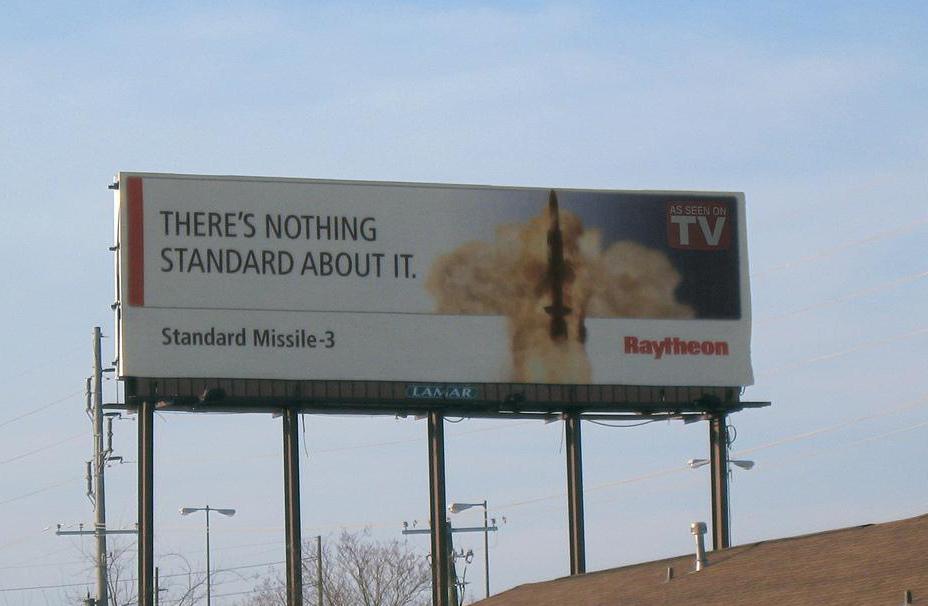
I'm not sure what you mean by "missile command"; Army Missile Command mostly has problems, not solutions. (They build things.) (Standard Missile 3! (https://images.wisegeek.com/billboard-ad-against-blue-sky.jp...)
Re:Interchange in Houston is the same size as an entire city... by duxup on Monday August 31, 2020 @02:20PM (#24334343)
I don't doubt someone thought of / would like that idea... but I have trouble believing sprawl really was influenced by some plan involving nuclear strikes.

Yeah you'd have a good chance of having more survivors due to the nature of nuclear weapons, but I don't see that influencing choices like wanting to have a suburban home and etc.

Re:Interchange in Houston is the same size as an entire city... by RobLach on Monday August 31, 2020 @07:49PM (#24337084)
With all claims like this, it’s rarely the case that these decisions were made on the basis of a claim like that but it was used in a compendium or arguments for whatever policy. If you’re a pro-car lobbyist for example, you might as well throw something like that in as it strengthens your case.
Re:Interchange in Houston is the same size as an entire city... by 7952 on Monday August 31, 2020 @01:47PM (#24333989)
There is also the risk of fire storms being started that destroy a wider area than the initial blast.
Re:Interchange in Houston is the same size as an entire city... by BucketsMcG on Monday August 31, 2020 @01:01PM (#24333431)
For what it's worth, the same thinking was behind the new capital of Myanmar, Naypyidaw. Paranoid military leadership who thought Yangon was too vulnerable to attack, so built a new capital way inland which is massively spread out to make it harder to bomb.
Re:Interchange in Houston is the same size as an entire city... by dylan604 on Monday August 31, 2020 @01:40PM (#24333922)
Such a weak argument as we (as humans) just got better at bombing things. More planes + more bombs = problem solved. "You build a bigger shield, we just build a bigger bomb" mentality has to be a core tenet of the military industrial complex.
Re:Interchange in Houston is the same size as an entire city... by imtringued on Monday August 31, 2020 @06:55PM (#24336690)
Actually, modern warframe is all about completing missions while using less bombs and planes. Killing residents may cripple the economy of your enemy but finding the high value targets and only bombing those is cheaper and more effective.
Re:Interchange in Houston is the same size as an entire city... by csomar on Monday August 31, 2020 @01:35PM (#24333858)
A typical nuclear bomb has a wipe-out radius of 1-2 Km. At 10-15Km radius, you are looking at damages/injuries but not a complete wipe-out. Also residential houses are less susceptible to infrastructure breakdown vs. a high-res building.
Re:Interchange in Houston is the same size as an entire city... by csommers on Monday August 31, 2020 @10:18PM (#24337919)
I don’t believe it. They had MIRVs even back then. There’s no difference in density between .5 miles and 15 miles. You’re fucked either way with: direct impact, over pressure, and radiation/fallout.

This sounds like some armchair theory.

Re:Interchange in Houston is the same size as an entire city... by CydeWeys on Monday August 31, 2020 @02:07PM (#24334201)
It's one of those hackneyed theories that has a grain of truth in it, but nothing more. Yes, perhaps fear of being nuked drove some people from the cities, but what actually drove a lot more people from the cities was racism, plain and simple. See https://en.wikipedia.org/wiki/White_flight That, a lot more than fear of nuclear war, is what drove suburbanization, along with the rising spending power of the middle class that made a detached home in the suburbs and a car achievable on a single salary.
Re:Interchange in Houston is the same size as an entire city... by runamok on Tuesday September 01, 2020 @04:15AM (#24339583)
I do recall a population distribution map of the USSR vs. the US from a book I owned 30iah years ago and they were far more evenly distributed than the US.
Re:Interchange in Houston is the same size as an entire city... by siliconvalley1 on Monday August 31, 2020 @02:32PM (#24334508)
With that advent of MIRVs it makes most of this moot. A single missile could have a dozen warheads and you can blanket target massive areas.
Re:Interchange in Houston is the same size as an entire city... by Animats on Monday August 31, 2020 @04:55PM (#24335842)
It was real enough that IBM moved their corporate HQ from Manhattan to Armonk, NY. HQ is still there.
Re:Interchange in Houston is the same size as an entire city... by sudosysgen on Monday August 31, 2020 @01:15PM (#24333597)
I'm very doubtful it would have worked. The USSR had thousands of warheads, they could turn the entirety of every city into glass. I'm even quite doubtful this was a consideration.
Re:Interchange in Houston is the same size as an entire city... by kiliantics on Monday August 31, 2020 @01:45PM (#24333980)
I think it's more likely the combined factors of automotive industry lobbying and redlining/white flight that led to the level of urban sprawl you see in the US
Re:Interchange in Houston is the same size as an entire city... by konjin on Monday August 31, 2020 @11:10PM (#24338165)
>Would that have worked though? I don't know much about nuclear deterrence, but I'd imagine if the USSR already managed to evade the defenses and other obstacles and destroy the city center in a nuclear strike, it wouldn't be a lot of additional effort to send multiple rockets instead of only one and also target the suburbs.

The USSRs guidance computers were quite bad, and reentry would have scattered multiple payloads without those.

Having talked to people in the programs from before the iron curtain fell they got around this problem by building larger bombs so the radius of destruction was larger than the radius of uncertainty around a target, to the point that dead-reckoning was viable.

The maximum bomb size the USSR designed on top of Huston: https://nuclearsecrecy.com/nukemap/?&kt=100000&lat=29.7589&l...

In short, were the USSR serious about dealing with urban sprawl it wouldn't have taken much effort to build weapons that could vaporize Huston sized cities.

Re:Interchange in Houston is the same size as an entire city... by djsumdog on Monday August 31, 2020 @02:38PM (#24334579)
Let's take a look at Houston on a Nuke Map:

https://nuclearsecrecy.com/nukemap/?&kt=5000&lat=29.7589&lng...

Re:Interchange in Houston is the same size as an entire city... by hannasanarion on Monday August 31, 2020 @03:18PM (#24334982)
That's a modern bomb, in the 50s and early 60s, when Hobby Airport (the one in the southeast of downtown) was considered to be in the boonies, the nuclear threat looked like this: https://nuclearsecrecy.com/nukemap/?&kt=20&lat=29.7589&lng=-...
Re:Interchange in Houston is the same size as an entire city... by simonh on Monday August 31, 2020 @05:27PM (#24336138)
5 Mt is huge, and far bigger than the warheads of most modern nuclear weapons. The one you show is fairly representative of a single modern warhead. Nowadays, and for many decades if you want a large area of effect, you use a MIRV vehicle and pepper the target area. This gives you wide coverage for fewer total megatons and a more compact and flexible weapon system, and hedges your bets in case any of the warheads fails or is intercepted.

In fact big bombs were an early trend for two reasons. One was that the delivery system was expected to be bombers dropping one or a very few bombs with mediocre accuracy and so you wanted maximum destruction from each delivery. The other was that they were worried bombers wouldn't be able to get directly over some targets due to air defences, so you'd drop the bomb short of the target and use the massive area of effect to cover the remaining distance for you.

Re:Interchange in Houston is the same size as an entire city... by jacobwilliamroy on Monday August 31, 2020 @02:18PM (#24334320)
Nope. Sprawl happens in places where the oil industry runs city planning. Plus, if people cant survive in your city without a car, then that kills off the poor too and drives them away. So cities sprawl to serve oil companies and to exacerbate wealth inequality.

What, you people dont believe me? You seriously think we sprawl to protect ourselves from nukes? Like the enemy isnt just going to launch more nukes, or cluster nukes?

If anything, the sprawl would just make the nuclear strike worse, because there's a greater chance you'll survive and have to live through revelation. Here's how you protect yourself if a nuke is on the way: you duck your head down, and kiss your ass goodbye.

No it's just plain ole racist, classist, corrupt government trying to use fear of Russians to drive oblivious americans who dont pay attention, to buy more cars from their rich motor company friends.

That government is mostly in the past now, but the sprawl is a monument to their philosophy, which was racist, classist and corrupt.