What exactly is the evidence behind this? They have been adding several huge components/APIs/tools that they have working for macOS (Metal, APFS, Swift, CoreML, etc), they have had added the Mac App Store, they have tons of under the hood improvements (e.g. memory compression), and so on.
What exactly did you expect to see, or was seeing before "Snow Leopard"?
>I know people like to knock Linux-on-the-desktop, but you know what? I can go buy a Thinkpad, spend 20 minutes putting Debian or Ubuntu on it, and it'll just work, and I'll get software updates forever.
Then don't let the door hit you on your way out.
In my experience in most definitely not "just work" except with very careful selection of laptop/peripherals, and all kind of uses cases break too, including no major creative/office apps like Creative Studio, Pro Tools, Cubase, Premiere, FCPX, MS Office, and so on, which I depend on.
And every now and then this or that project will decide to majorly break stuff in some transition... (Gnome does it, KDE does it, X/Wayland/etc does it, ...).
And I've used Linux (and several UNIX variants) since 1997, and still do professional (as a server OS) everyday, so not exactly new to the game.
10.7 is where they removed Expose (replaced it with Mission Control) and it frustrated me to no end not being able to have rows of workspaces. It go so bad that was around the time I started doing everything in a Linux VM in Parallels. Lion was the last version I used, and at other places I worked, I just heard endless frustration about permissions, root access restrictions and other issues that are pretty specific to developers.
> In my experience in most definitely not "just work"
A lot of stuff doesn't when you need commercial integration, sure. Evolution-ews does mostly just work with Exchange though. You can connect to Docker containers without needing a VPN. Package management in most Linux distros is more straight forward and can update almost everything. You can add 3rd party repos and not be tied to an "App Store."
Linux does require some more work sometime, but I know how to fix things on it. I'm not digging through some Mac or Windows weird subsystem bullshit, trying to figure out why I'm getting permissions errors all over the place.
I agree neglect is probably not the right word. I like the term Marco Arment uses on his ATP podcast: drive-by updates.
> They have been adding several huge components/APIs/tools that they have working for macOS (Metal, APFS, Swift, CoreML, etc),
These all seem to have been developed for iOS first and macOS second.
> they have tons of under the hood improvements (e.g. memory compression), and so on.
Personally I experienced rage-inducing multi-second freezes after updating to Sierra, disabling memory compression solved the problem.
> What exactly did you expect to see, or was seeing before "Snow Leopard"?
Stability, usability, and polish.
I don't think it's controversial to say that all of these have taken a precipitous fall since Snow Leopard.
There are probably many reasons for this. It seems to me the biggest culprit is the yearly release schedule.
They've shown themselves utterly incapable of releasing a quality update each year. The question is, why are they keeping it up? To sync up with iOS releases roughly maybe?
iOS and macOS is basically the same OS.
iOS uses the same kernel and main userland, and was developed just as a spin-off of OS X with more lockdown enabled, some inapplicable services removed, and a profile that fits smaller devices. Otherwise the kernel, fs, userland, etc is 90% the same, minus different APIs (mostly UI) on top (which they also try to unify for several releases now).
macOS+iOS should be seen as the same thing as far as system-level development (kernel, fs, etc) are concerned.
Of course features still need integration to the respective form factors and UI paradigms (e.g. APFS required userland and Disk Utility changes, for one), and Apple has done that for both platforms.
>Stability, usability, and polish
And yet, Snow Leopard was created exactly because people complained Leopard and earlier were not stable enough. It was the release to focus on stability and polish over new features (and they even admitted this was alluded in the name change, "Leopard" -> "Snow Leopard" as opposed to a whole new version-animal).
And if we go back then, we can find tons of complains about instability, lack of polish, the world ending, etc.
>They've shown themselves utterly incapable of releasing a quality update each year.
Given that they ship 100 million or so updates, they have almost immediate adoption (far quicker than new Windows version), and the complains always subdue after 1 point release or so, I don't think so.
Not to mention most complains now are about them deprecating stuff (32 bits for one) -- as opposed to breaking stuff.
Heck, they pushed a whole new FS to hundreds of millions of users (5x+ that with iOS in), and there hardly any issues to write home about -- and that in record time (FS experts said it normally takes 10 years to mature a new FS to do such a conversion and warned of apocalypse which didn't happen).
Sure, but when people talk about "macOS being neglected", they're referring to a neglect of work put into the things that are uniquely macOS: multi-user support (better Fast-User Switching; better Screen Sharing; OpenDirectory et al; AFS back when that was considered a good idea; Server.app features); workstation productivity (evolution of the windowing paradigm seems to have stopped after Mission Control was introduced); fault-tolerance features like Time Machine; treating non-sandboxed (incl. POSIX CLI) apps as first-class citizens; and, well, any updates at all to the natively-desktop apps like Finder and XCode.
When was the last time you saw Apple announce a new feature of an app that exists only on macOS? Or announce a new OS feature that only makes sense, design-wise, on a desktop? They used to do both of these pretty frequently. The only things I can name from the last two releases are tabs (Finder) and dark mode (macOS generally.) Those are pretty small beans.
Oh, and there was also the whole NeXT-y paradigm of document bundles, Spotlight discovering app bundles and registering their file-type handlers and provided components, etc. That seems to have been lost in the shuffle—maybe the people responsible for it have all left. Remember QuickLook plugins? Remember when Preview worked on basically every file-format that you would run into on the internet, rather than not even knowing how to display a WebP?
I'm aware of that. But they are not exactly the same, are they?
> Of course features still need integration to the respective form factors and UI paradigms.
Isn't that what usability and polish are all about?
> And yet, Snow Leopard was created exactly because people complained Leopard and earlier were not stable enough. It was the release to focus on stability and polish over new features (and they even admitted this was alluded in the name change, "Leopard" -> "Snow Leopard" as opposed to a whole new version-animal).
I know, and that's why we all love Snow Leopard. Why the regression since then?
> >They've shown themselves utterly incapable of releasing a quality update each year.
> Given that they ship 100 million or so updates, they have almost immediate adoption (far quicker than new Windows version), and the complains always subdue after 1 point release or so, I don't think so.
They release updates alright, but what about the quality? The fact is overall, macOS has gotten slower, buggier, and uglier with every release.
Yes, in minor ways I already mentioned.
>Isn't that what usability and polish are all about?
Yes, and as I already wrote: "Apple has done that for both platforms.". You don't get a lesser Metal or a lesser APFS on macOS vs iOS, or less UI integration.
>I know, and that's why we all love Snow Leopard. Why the regression since then?
I'm not particularly fond of Snow Leopard over other releases, nor I see much "regression since then". There are several legendary Siracusa reviews until Yosemite (after which he passed the torch) here: https://arstechnica.com/author/john-siracusa/
Here's e.g. Mavericks:
Over the past three years, each successive release of OS X has found its way onto all of my Macs in less time than its predecessor. This year, I may have already gone Mavericks-only across my whole household by the time you read this. Barring any unforeseen bugs or compatibility issues, Mavericks seems like a no-brainer upgrade to me.
And here's Yosemite:
Viewed in isolation, Yosemite provides a graphical refresh accompanied by a few interesting features and several new technologies whose benefits are mostly speculative, depending heavily on how eagerly they’re adopted by third-party developers. But Apple no longer views the Mac in isolation, and neither should you. OS X is finally a full-fledged peer to iOS; all aspects of sibling rivalry have been banished.
Do you see much talk about regression there? There are also post-Siracusa reviews on Ars for each macOS release up to and including Catalina.
>They release updates alright, but what about the quality? The fact is overall, macOS has gotten slower, buggier, and uglier with every release.
Uglier is pretty subjective if not downright wrong. The new dark mode is great, and the UI is as good as ever. What was better? The skeuomorphic years? The candy colored Aqua years?
Slower is easy: it's 100% wrong. In fact, can you show any number of it? If anything, memory compression and battery savings in recent releases made the macOS more performant, and dropping 32bit apps (and double-loading of the same libs for 32/64) even more so... And APFS is also a big improvement over HFS, and Metal is faster than the previous stack and has already given significant performance boost to FCPX and other apps.
I'm not sure what exactly you find "slower" then...
Yes I saw it the first time. They certainly did it. But we're talking about how well they did it, aren't we? Usability and polish?
> I'm not particularly fond of Snow Leopard over other releases, nor I see much "regression since then".
You clearly aren't and clearly don't, but quite a few macOS users are, and do.
Here's a sampling of regressions for your perusal:
https://arstechnica.com/information-technology/2017/11/macos... https://furbo.org/2015/05/05/discoveryd-clusterfuck/
> Uglier is pretty subjective if not downright wrong.
If you like the new looks, good for you I guess.
> Slower is easy: it's 100% wrong. In fact, can you show any number of it?
I don't have any numbers. What I do have, is the experience running these successive releases on the same laptop. And it has definitely not been positive.
Can you be specific? What exactly is the problem with "usability" and "polish" of said features I've mentioned, like Metal, APFS, Swift, SwingUI, etc? The only credible example I could think of that's unpolished is Catalyst (for porting iOS apps to Mac, unified backend) which is a work in progress...
>You clearly aren't and clearly don't, but quite a few macOS users are, and do.
Bad for them I guess. I, however, linked to a pro and well respected OS X reviewer, so there's that...
>Here's a sampling of regressions for your perusal:
I can give you tons of reports like those for any version you wish. Here's from an article about the myth of the "stable" Snow Leopard:
"Initial experiences with Snow Leopard weren’t as blissful as more recent commentary remembers. The troubled rollout of MobileMe, iCloud’s precursor, was still an open wound. Soon after release, a major bug was discovered in Snow Leopard that would cause the home directories of guest accounts to be wiped completely. The issue was prevalent enough that Apple publicly responded and later issued an update, 10.6.2, to address the problem. Early updates to Snow Leopard were packed with fixes to a long list of bugs. A 2009 article from iLounge on Snow Leopard’s reliability is filled with comments from frustrated users, some considering moving back to Leopard. Time heals all wounds, right?"
https://9to5mac.com/2018/01/31/snow-leopard-became-reliabili...
>If you like the new looks, good for you I guess.
Are there many people on record that they don't like them? I've never read any major complaints about the "new looks" anywhere. In fact the Dark Mode was almost universally praised...
Not to mention the "new looks" are just incremental evolution (and mostly refinement) of how OS X looked since forever. What exactly don't you like? Anything concrete?
Prefer this look? (10.2):
https://zdnet4.cbsistatic.com/hub/i/2014/07/31/deed4628-185f...

Or this (10.4):
http://blandname.com/wp-content/uploads/2006/09/mac-os-x-104...
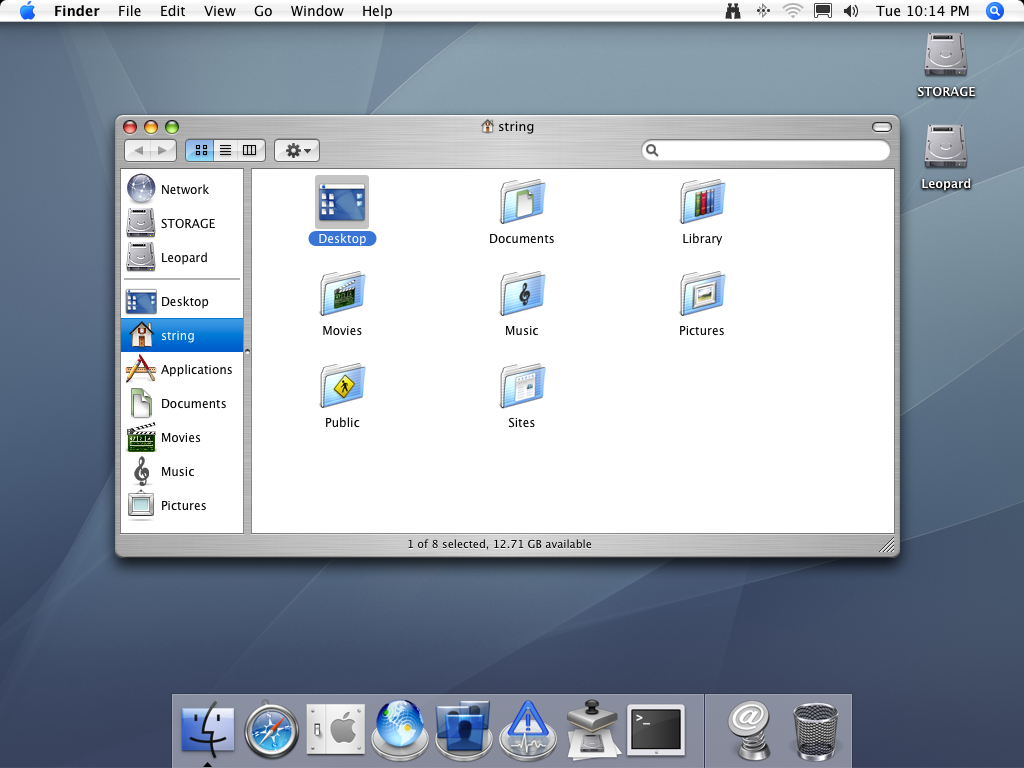
Or maybe this (Snow Leopard):
https://cdn.arstechnica.net/20090828/snow-leopard-leak.png

I'll take this at any day:
https://media.idownloadblog.com/wp-content/uploads/2019/06/m...
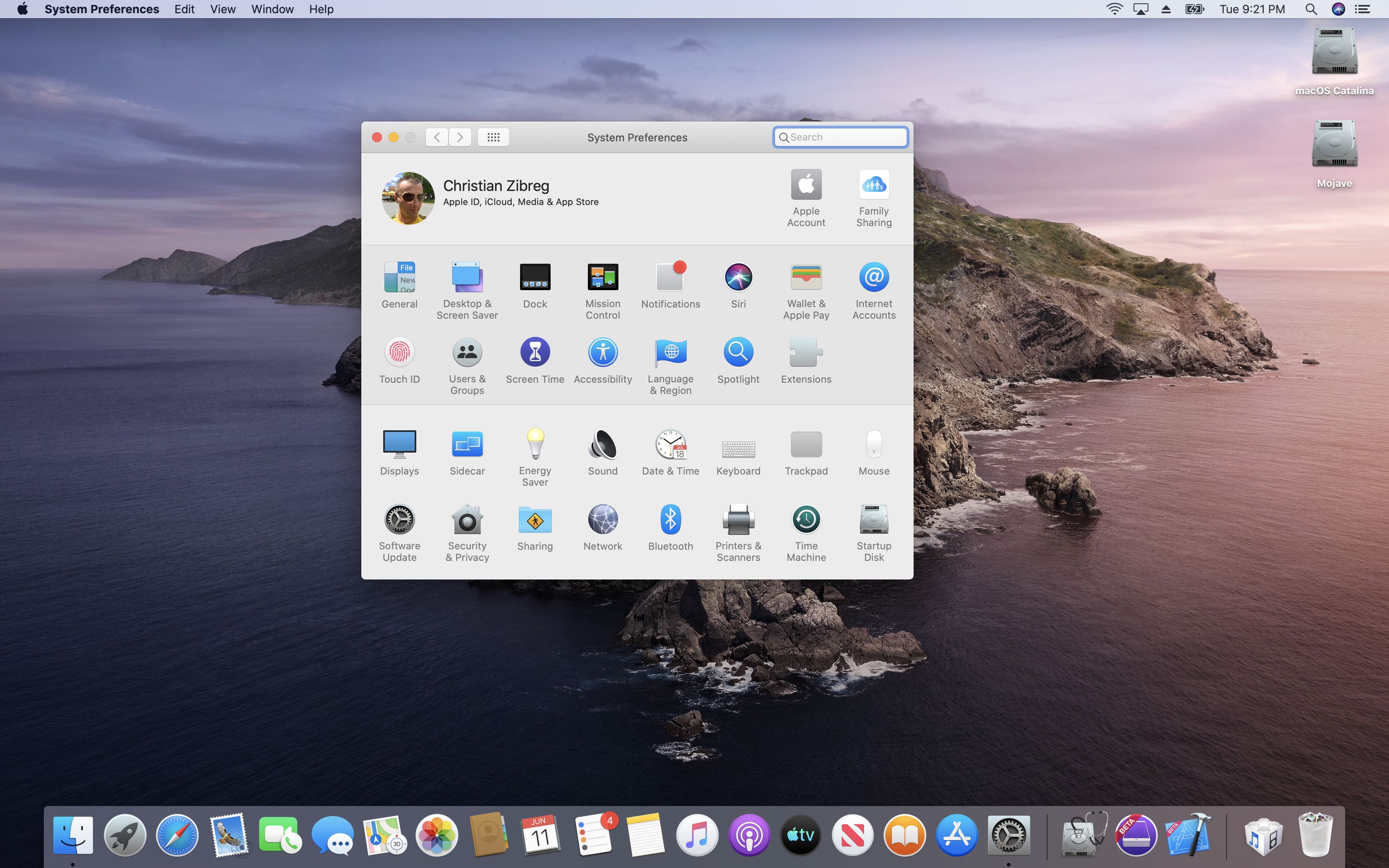
(Not to mention the dark mode)
>I don't have any numbers. What I do have, is the experience running these successive releases on the same laptop. And it has definitely not been positive.
Whatever...
* the previous monstrosity.
Windows will now let you carry on without updating until seriously important security updates are a month old. They really do have to force the hand of ignorant users eventually, else Microsoft gets blamed for an insecure OS.
I also don't understand where you get the idea that msft doesn't care about their desktop OS. They are basically overhauling it twice a year, for free. These larger updates do take 30 minutes, but, mind you, which is it: do they care too little or too much?
Chrome and Firefox are also noticeably faster on Linux than on a fresh Windows install on the same machine. Don't know WTF is up with that, but this has been consistent for years.
Yup.
> Do they still randomly revert telemetry settings on updates?
Yup. I've heard that this is a bug? Who knows, I just know I still see it flipping.
> What was that thing I read last week about no more local user accounts?
It's hidden behind the "Join a Domain" option, or triggers when you're not online. Dark patterns!
> Yup.
No. Windows now remembers that you have uninstalled these apps.
If I specifically tell it not to install, yes.
If I want it to automatically install everything, then give me a notice it needs to reboot? Then I keep having windows shut down in the middle of the night, right after installing, no notice, no "forcing the hand eventually". Has this changed in the last couple months?
At least they seem to have finally figured out how to get virus definition updates automatically while reboot-needing updates are set to notify.
Theoretically, Microsoft could restructure their whole OS to support hot code reloading of system components, such that nothing ever needs rebooting. I mean, nobody else does it, either; but it'd be neat, wouldn't it?
Windows 10 is quite usable, it's in use all over the world by millions of people. The home versions force a reboot when upgrades are required, but even those upgrades and the associated reboots can be delayed 35 days. The enterprise versions and pro versions can be completely controlled as they should be. Forcing upgrades is probably the best thing MS has ever done for the general security and health of the internet.
Linux is still today a piece of shit, as it has always been.
Apple ships zsh, not bash. If you want an upgraded version of bash you install home-brew and do brew install bash. Done. Or just use zsh because it's better.
If you are an xfce linux on the desktop user, you are very out of touch with modern operating systems.
For a couple of years I believed on the dream, nowadays I rather invest my time elsewhere.
Something like macOS Frameworks, Android Frameworks, .NET/UWP.
https://developer.apple.com/documentation/
https://developer.android.com/guide/platform
https://docs.microsoft.com/en-us/windows/apps/desktop/choose...
[1]: https://thenextweb.com/dd/2019/06/04/why-does-macos-catalina...
Which is a quite different issue.
They are allowed, but some of the legal consequences to the new terms in GPLv3 are worth stalling updates, choosing alternative system components and even rewriting components to avoid.
Apple doesn't want to ship a new version because they don't want people to see how they've modified bash. I don't know what patents or top secret features they've added to make their version of bash incompatible with GPL, as they're allowed to ship GPL code in a closed source product just fine as long as they ship it as a separate binary, but it's more important than their users' convenience apparently.
Also note that Microsoft ships entire Linux distros without having a problem with GPL licensing.
This is just false, the old bash is GPL2 and Apple publishes the source for their bash on their open source compliance page. The reason they don't upgrade is the GPL3 patent grant clause, they ship the last GPL2 release for all GNU utils. The linux kernel is GPL2, so Microsoft doesn't have this problem.
I don't exactly know how WSL2 works, but the main difference is that they now use an actual Linux kernel inside a lightweight VM, and that kernel's source is on GitHub. Userland still comes from appx-wrapped tarballs from Canonical.
I suspect Microsoft is also very careful to make sure they don't ship any GPL v3 components with Windows itself, even when they're available via separate download, because they want to be able to ship locked down devices.
And I don't see what the problem is. Okay, so they'd have to let you replace the bash binary. That doesn't give you any abilities you don't already have.
I made him a small Linux partition after clearing up enough space, and now everything runs so much faster that he refuses to boot back into Windows.
That shouldn’t make much of a difference, we only accept it as an excuse because it’s been the norm for so long.
Sleep and hibernate: Works on every Lenovo I've used.
Battery: My most recent laptop gets around 8-9 hours with a new battery on a normal workload, and when it drops to 3 hours, I buy a new battery.
Even my old trusty XPS 13 started not to go to sleep 1 out of 10 times. There must have been a serious regression in the kernel, but no one seems to care.
For this reason alone, I started to seriously consider giving up Linux on the desktop.
When a GRUB update destroyed my dual-boot setup and made my system completely unrecoverable, I ditched Linux and never looked back. Using OpenOffice or LibreOffice was also more akin to self-punishment usually seen in medieval monks.
As a student, all these problems were okay, but nowadays I don't have the time to constantly fight against my own OS to finally figure out that I have to adjust my fan speed rotation coefficient to make the third party WiFi driver work.
If the feature used to work reliably in older kernels, you could try and bisect the issue. There's a bit of work involved, but it's quite doable.
Not true. My Thinkpad E485 from late 2018 has either a Broadcom or a Qualcomm chip, but definitely not Intel. It works like a charm though. The bigger issue is the Realtek Ethernet NIC which has an annoying driver bug where it does not detect the carrier except when the cable is already inserted at boot time. Never buy Realtek if you can avoid it.
But if you're a regular laptop user the bigger issue is trackpad feel, if you're used to Apple devices or the new Windows drivers for trackpads, it's not acceptable. You're better off switching the way you work to using a window manager and shortcuts, like most hardcore linux users do at some point.
Overall, the quality doesn't compare to my 2013 macbook air, but it does have some newer features which're nice.
For wifi, anything with intel wifi will work fine. Atheros and Killer generally work fine as well. Basically, just stay away from Broadcomm and Realtek.
For battery, ymmv. the 2 most recent laptops I've used with linux (a dell xps 13 and a system76 darter pro) get decent battery life (8-10 on the dell, 5-8 on the system76). On the dell, the battery life wasn't much different than windows 10 on the same machine.
For sleep, this usually works fine, but can be broken on certain hardware. On the dell laptop sleep worked, but there was an annoying issue where sometimes upon resume the cpu would get stuck at the lowest frequency.
On the system76, I initially had an issue with a 10-20 second delay resuming from sleep but that was fixed with a firmware update. Presently, sleep/resume works without issue 100% of the time for me on that machine
Even if it does install and seem to work well at first, a non-supported device can break the OS install any time due to some driver / firmware change etc., and you'd have no one to blame but yourself — no promise was ever made by Dell or Linux that this particular device+OS would work.
It's just not what you should do in a business / work setting. We use supported devices — for Ubuntu, for RHEL, for ZFS, for pfSense, for VMware or Xen or HyperV, etc. — because we need someone to call when things don't work, and we need to be sure they just won't fail or break 99.99% of the time. Short of that, you're on your own, and it's no revelation that Windows works on all laptops but Linux simply doesn't — it works "most of the time", "with some caveats quite often". Blame manufacturers who don't write drivers for Linux (looking at you, Qualcomm, Nvidia...), blame OEMs who select those parts for their machines, but don't blame Linux itself — you get it for free with more than 4,000 drivers included last I checked.
It is still not on par with Windows (I kept it just in case). I get around 8-9 hours of battery life on Windows while on Linux it is more like 6-7 hours. But it is mostly due to the fact that Chrome/Chromium and Firefox don't support hardware acceleration on Linux and I watch quite a lot of youtube videos. There is a Chromium that uses the video acceleration API (VAAPI) but it comes from the user arch repository, there is now also a snap package (I haven't yet fully tried them).
I’d like it to work like macOS. It seems like that’s possible but it requires a swapfile to save state to. As far as I can tell that means enabling virtual memory which is a no no on SSD.
Just that and I wish Bluetooth remembered the on/off state it was left in after reboot.
> Just that and I wish Bluetooth remembered the on/off state it was left in after reboot.
That's just a Qualcomm problem. The BT is completely broken. Fixed in the latest kernel for me.
I'm fine with having a swapfile but I don't want it used for anything other than Suspend-to-disk. i.e. I don't want the SSD being hit with multiple writes caused by VM.
On the Mac it will suspend to RAM but also dump to an image file at the same time. If the mac runs out of power it will later restore from the image once power is restored.
That's possible on Linux using hybrid-sleep and suspend-then-hibernate but they require a swapfile.
I haven't yet found a way to have a swapfile without allowing that swapfile to be used for virtual memory too. I worry that virtual RAM will eat my SSD.
I guess it may be more the thought that it will kill the SSD than the reality but it’s still something I’d prefer to avoid if there’s a solution.
Has macOS solved this issue differently? Do they save RAM state to some non-SSD non-volatile memory, or do they just not care and dump it to SSD anyway?
If it was only used for suspend that would be fine because it would only be written to when you suspend the laptop, which in the grand scheme of things is pretty rare compared to writes caused by virtual memory swapping.
WiFi works. Sleep is "meh" compared to the Macbook, but that's on me for not having a swap partition.
Happy with my switch so far, and it's been 1y3mo
"Battery" is not one thing, so can't answer. Does idle draw count as an issue? Do services you can switch on/off count as a battery issue? In comparison, does MacOS indexer out iCloud sync going crazy count as a battery issue?
Do you have a reference for this? This seems like pretty big news.
> the Windows and Azure platforms are being combined, operating under Jason Zander
https://arstechnica.com/gadgets/2018/03/windows-leader-terry...
I also like my arch Linux as well.
Even my MacOS rund stable enough that I don't have any issues with that.
But if you don't keep your Debian up to date the chance that you can't longer upgrade it is high. After 1-2 years.
10.6 was my last favourite release. Lion (10.7) removed expose (no way to put it back in) replaced it with the terrible Mission Control (removed having multiple rows of desktops. Now you just had one long row. Expose no longer split out all windows so you could see them; it grouped like windows together without the ability to turn the feature off)
I've personally been using Linux at all the jobs I've held since 2012. I use it at work and at home, with my Windows machine being exclusively used for games and photo editing (I have some workflows with Darktable, but I still really prefer Lightroom).
Linux is a great development platform and tiling window managers (i3/swap, xmonad, awesome, etc.) really make it shine if you're willing to put in the effort to learn them. I'm lucky I've been at four different companies that either allowed or encourages developers who wanted to run Linux exclusively. These days I ask about it in job interviews and don't continue down paths where a Mac is the only option.
That said... I agree. Between this, the abysmal keyboard failure rate, and some of the user-hostile choices they've made, I've switched to a Razer laptop.
Windows 10 Pro lets you avoid most of the jank, by the way. But, I'm only on it as an eventual migration path to something running XFCE (my favorite wm due to its out of box usability).
Besides, licensing problems would persist no matter how much more effort Apple is willing to put into macs.
Why/When MacOS transitioned to zsh?
Why; because bash became GPLv3 at some point in history and MacOS couldn’t update their version of bash. (The last GPLv2 version).
When; was catalina (just released)
Apple has been neglecting OS X since Snow Leopard, thinking that iOS is the only thing worth investing in. Microsoft apparently agrees -- they chopped up the Windows team last year, pushing out the Windows chief and dumping the remaining re-orged husk under Azure. Just for security reasons alone, it should be terrifying that there isn't a standalone Windows group anymore.
Windows hasn't been usable since 7; the current version literally requires you to let it reboot itself on a 9-5 schedule. And now this with Apple, again.
Can we move on already? Most of us spend at least half of our waking hours interacting with a desktop operating system, most of us use either OS X or Windows, and yet both of these companies have made it clear that their desktop OSes are no longer a priority! Why are so many of us still putting up with this?
I know people like to knock Linux-on-the-desktop, but you know what? I can go buy a Thinkpad, spend 20 minutes putting Debian or Ubuntu on it, and it'll just work, and I'll get software updates forever. I used to care about flashy widgets back when Gnome was cloning old OS X features, but now I just use XFCE because it looks reasonable, it works, and it stays the fuck out of my way. And when there are bugs, people make a little noise, and then they get fixed. Remind me again what version of bash Apple ships? I don't have the time or the energy to work around that crap anymore.