News for hackers. Stuff that matters.
Re:75% decline over 27 years in total flying insect biomass ... by avip on Wednesday October 18, 2017 @04:54PM (#15502954)
Yes. This is a case of hard data confirming what we already know. As in - few types of butterflies I used to like, and see yearly as a kid - are gone. I see them now once in 5 years, if lucky. I bring my kids to look because it's a first time for them.

On the other hand, some types of beetles, ants, flies, mosquitoes, even wasps - are just new. They were not here 20-30 years ago. Now, what are the consequences of all that... I kind of feel we'll find out sooner than we'd like.

Re:75% decline over 27 years in total flying insect biomass ... by MrBuddyCasino on Wednesday October 18, 2017 @05:44PM (#15503474)
This is making the headlines in Germany right now:

http://www.zeit.de/wissen/umwelt/2017-10/insektensterben-flu...

http://www.spiegel.de/wissenschaft/natur/insekten-in-deutsch...

http://www.sueddeutsche.de/wissen/insektensterben-dramatisch...

Der Spiegel discusses issues in the methodology of the data collection. The intervals over the years weren't uniform, data was collected by volunteers/hobbyists and they did not measure the dry mass weight. There are differing opinions whether or not those issues have relevance.

SZ gives some details on suspected causes. Neither climate change (warmer weather should yield more insects, not less) nor changes in plant diversity can explain the observed effects alone. Main suspects:

- agricultural fertilizers, especially nitrogen

- pesticides, especially neonicotinoides

Re:75% decline over 27 years in total flying insect biomass ... by Xylakant on Thursday October 19, 2017 @04:17AM (#15506270)
It's worth noting that data was collected by amateurs in the sense that they're doing this on their spare time but some of them are highly regarded in their field. Quote from http://www.sciencemag.org/news/2017/05/where-have-all-insect...

    Members of the Krefeld society have been observing, 
    recording, and collecting insects from the region—and
    around the world—since 1905. Some of the roughly 50 
    members—including teachers, telecommunication 
    technicians, and a book publisher—have become world 
    experts on their favorite insects. Siegfried Cymorek, 
    for instance, who was active in the society from the 
    1950s through the 1980s, never completed high school. 
    He was drafted into the army as a teenager, and after 
    the war he worked in the wood-protection division at a 
    local chemical plant. But because of his extensive 
    knowledge of wood-boring beetles, the Swiss Federal 
    Institute of Technology in Zurich awarded him an 
    honorary doctorate in 1979. Over the years, members 
    have written more than 2000 publications on insect 
    taxonomy, ecology, and behavior.
Re:75% decline over 27 years in total flying insect biomass ... by kpil on Wednesday October 18, 2017 @08:27PM (#15504492)
Just speculating wildly and looking at Sweden, for example meadows have more or less disappeared since 30-40 years. I mean flowering meadows, not pastures for grazing.

The meadows have been turned into forests and to a lesser extent pastures.

It's not a few percent, it's 30% of the land, probably more in Germany where there are much lest forests than in Sweden.

The bio-diversity in a meadow strikes me as much higher than heavily grazed pastures or a mono-culture wheat fields or pine forest.

Re:75% decline over 27 years in total flying insect biomass ... by slackingoff2017 on Wednesday October 18, 2017 @09:26PM (#15504739)
Not sure if this is case in Sweden, but here in the US the reforestation is actually a return to the natural state. Much of the country was logged repeatedly in the last few centuries. Modern sustainable logging and the transition to other energy sources is resulting in the land returning to the endless forest it was before settlers arrived.

This is mostly clearly seen on the east coast because most of the Midwest is still used for farming.

Edit: in Europe this is visible in coppiced forests. https://en.m.wikipedia.org/wiki/Coppicing . Haven't seen one here in the US but I assume they're somewhat common in Europe where they were an early and effective method of sustainable forestry.

Re:75% decline over 27 years in total flying insect biomass ... by macawfish on Friday October 20, 2017 @09:03AM (#15515404)
US forest management is definitely more wild than I've seen in Germany, but it's not always necessarily a return to natural state. For example, in many parts of the country, reforestation meant planting pine monocultures where there were previously diverse old-growth forests or savannas. People look at these monoculture forests and think they are "the way things used to be", when in reality they are nothing but a shadow of the kinds of biodiversity that was destroyed.

Something that bothers me is the gristly, meager attitude of a certain type of conservation ecology. I think we are really going to start having to cultivate healthy ecosystems from the ground up, regardless of who's originally "from here" or not. I'm very optimistic about permaculture and wild cultivation techniques. I think they deserve more of a shot than people often give them.

And that "ag-tech" oligopoly has gotta go, along with its foolish, ignorant, exploitative approaches to ecology and economics alike.

Re:75% decline over 27 years in total flying insect biomass ... by kpil on Thursday October 19, 2017 @03:41AM (#15506115)
The industrial forests of Sweden is nothing like a 'natural' state, and I don't think we even know what a natural state would look like since people have been around since the ice age.

But the case in point was that the countryside has changed considerably because of changes in agriculture.

Re:75% decline over 27 years in total flying insect biomass ... by djsumdog on Wednesday October 18, 2017 @11:59PM (#15505379)
It seems like a lot of American logging has pushed to the Pacific Northwest, where it's very wet, doesn't get very hot/cold and new growth is very fast. I was talking to someone in Portland out in the middle of nowhere who said, "Almost everything you see is new growth; less than 60 years old. It grows that fast." The Singapore City gallery had a display where they talked about growing plants sustainability for paper.
Re:75% decline over 27 years in total flying insect biomass ... by timthelion on Thursday October 19, 2017 @04:31AM (#15506337)
It may grow fast, bug the pacific north west once was covered with HUGE trees. Those trees may seem normal, but they are small in comparison to how things "normally" looked before Europeans. https://www.google.cz/search?q=spruce+giants+olympic&source=...
Re:75% decline over 27 years in total flying insect biomass ... by Bartweiss on Thursday October 19, 2017 @10:45AM (#15508347)
Yep - PNW forestry is a fairly reasonable solution, at least in the sense that it's sustainable as-is. But it's far from a natural condition for that area.

The comparison between relatively preserved parks and National Forests (e.g. Willamette) and the rest of the states forests is truly jarring.

For that matter, the same pattern can be seen across the country. Much of Pennsylvania is densely forested, but the entire state has only a few thousand scattered acres of old-growth woods.

Re:75% decline over 27 years in total flying insect biomass ... by mc32 on Thursday October 19, 2017 @12:28AM (#15505466)
Yup, Fat growing pulpwood is what they use. 20-40 year cycle. http://forums2.gardenweb.com/discussions/1634930/is-the-larg...

Weyerhaeuser, etc. grow those fast growing pulpwood trees and harvest.

Re:75% decline over 27 years in total flying insect biomass ... by asddddd on Friday October 20, 2017 @06:02AM (#15514640)
Sounds like they may have been referring to the Tillamook Burn. Also, I doubt it was you, but this reminds me of a conversion on Saddle Mtn that happened to be right while the Eagle Creek fire was starting.
Re:75% decline over 27 years in total flying insect biomass ... by zerkten on Wednesday October 18, 2017 @10:49PM (#15505126)
I think the point was made at the end of the previous post that pine (or other non-deciduous) forests are being planted there. I think it's a similar story across Europe, but I'm most familiar with Ireland where modern forestry has used Sitka Spruce which is non-native and impacts biodiversity.
Re:75% decline over 27 years in total flying insect biomass ... by rlonn on Thursday October 19, 2017 @03:37AM (#15506097)
Sustainable logging isn't enough in itself to really maintain insect diversity because logging forests aren't very diverse forests so they only help a small number of insects thrive. But if done right (e.g. leaving some dead tree trunks behind when harvesting, as homes for insects) it is much better than nothing.
Re:75% decline over 27 years in total flying insect biomass ... by nordsieck on Thursday October 19, 2017 @12:11AM (#15505410)
> before settlers arrived

I think you mean "before Native Americans arrived". One of the side effects of the European arrival to North America was reforestation due to a disease-driven decline in the population of Native Americans.

Re:75% decline over 27 years in total flying insect biomass ... by alsetmusic on Thursday October 19, 2017 @12:34AM (#15505493)
Seems appropriate to mention controlled burns preceding European settlers:

https://en.wikipedia.org/wiki/Native_American_use_of_fire

Re:75% decline over 27 years in total flying insect biomass ... by dandr01d on Thursday October 19, 2017 @02:56AM (#15505969)
Test
Re:75% decline over 27 years in total flying insect biomass ... by panglott on Friday October 20, 2017 @09:12AM (#15515464)
Even in the adgricultural midwest reforestation is notable. One factoid I recall is this: At the beginning of the 19th century, Indiana was about 85% forest and 15% barrens (prairies). By the 20th century it had become 20% forest and 80% open land and farmland. Now it is ore like 25% forest and 75% open land and farmland.

European deforestation was most extreme during the late middle ages and early modern period. When people were using wood for fuel in a growing economy, before switching to coal, major European nations were running out of trees. Coppicing was adopted out of a desperate need for basic resources.

Re:75% decline over 27 years in total flying insect biomass ... by gbrown on Friday October 20, 2017 @08:35AM (#15515243)
Not everywhere. Much of the Midwest used to have a fire ecology, leading to prairie and Oak Savannah. Now forests of non-fire-resistant trees crop up on any bit of unused and unmaintained land.
Re:75% decline over 27 years in total flying insect biomass ... by javajosh on Wednesday October 18, 2017 @08:35PM (#15504535)
My understanding is that there is a give and take between meadows and forests that occurs on multi-year cycle. Meadows grow when there is too much water, and trees grow when the water recedes. You can see this in the Yosemite Valley really clearly. Perhaps this is a sign that the freshwater in the ground is going away.
Re:75% decline over 27 years in total flying insect biomass ... by chewz on Wednesday October 18, 2017 @11:12PM (#15505212)
Large areas had been meliorated (in 70-ties in my country Poland) so the meadows are gone for good outside of some protected areas.

All these wild weeping willow which had been a signature of Masovian landscape and which I still remember from childhood visits to family farm died soon thereafter. So did the frogs. It is like coming to different country now.

Re:75% decline over 27 years in total flying insect biomass ... by mantas on Thursday October 19, 2017 @03:32AM (#15506086)
Same in Lithuania. Although it's not as permanent as you might think. In 90s many state farms went under and huge portions of land was left to it's own devices. By 00s, many of them turned into grass with wild flowers, tiny trees, and everything Wherever melioration failed, it was slowly nearing meadow-like conditions. Now big portions of it are used again either for agriculture or housing...
Re:75% decline over 27 years in total flying insect biomass ... by mschuster91 on Wednesday October 18, 2017 @08:46PM (#15504570)
> Perhaps this is a sign that the freshwater in the ground is going away.

Now look what Nestle/other food giants, but also slaughterhouses and animal farms, do: they use groundwater with private wells, and they extract more water than can be replenished... boom.

Re:75% decline over 27 years in total flying insect biomass ... by WillReplyfFood on Thursday October 19, 2017 @04:46AM (#15506408)
I wonder if sabotaging such private wells, by conrecte blocking parts of the aquifying layer would constitute as self-defense.
Re:75% decline over 27 years in total flying insect biomass ... by mschuster91 on Thursday October 19, 2017 @06:52AM (#15506849)
Most likely not, and you risk disruption of underground water flows by injecting huge amounts of concrete into the ground...
Re:75% decline over 27 years in total flying insect biomass ... by jopsen on Thursday October 19, 2017 @04:30AM (#15506331)
Yeah, lots of wet land have been drained for farming.
Re:75% decline over 27 years in total flying insect biomass ... by ChuckMcM on Wednesday October 18, 2017 @06:24PM (#15503790)
The massive use of neonicotinoides would not surprise me given the research of its impact on bee colony collapse.
Re:75% decline over 27 years in total flying insect biomass ... by sogen on Wednesday October 18, 2017 @07:44PM (#15504280)
Maybe a side effect of less bees pollination?
Re:75% decline over 27 years in total flying insect biomass ... by ChuckMcM on Wednesday October 18, 2017 @07:54PM (#15504331)
I was listening to an entomologist podcast on colony collapse and they were suggesting that as members of the colony became more and more impaired the interdependency of the various bee groups (workers, foragers, queen) was compromised and then "all of a sudden" the hive was unable to reliably function. And large social group (ants, termites, bees, etc) might be similarly affected.
Re:75% decline over 27 years in total flying insect biomass ... by sitkack on Wednesday October 18, 2017 @08:55PM (#15504609)
Not unlike if one drives up the cost of rent in a city so high that the people who make it function, can't afford to live there and leave. Dogs don't get walked, burritos unmade and drinks unstiffened. Jane Jacobs outlined all of this decades ago.
Re:75% decline over 27 years in total flying insect biomass ... by dreamcompiler on Wednesday October 18, 2017 @11:07PM (#15505198)
And criminals don't get caught and fires don't get put out. SF is not quite there yet, but already most emergency responders live outside the city. (Article is from 2011. I'm sure the situation is worse today.) http://www.sfgate.com/bayarea/article/Most-S-F-firefighters-...
Re:75% decline over 27 years in total flying insect biomass ... by dsfyu404ed on Thursday October 19, 2017 @10:44AM (#15508344)
You reap what you sow.

If you DGAF about planning and resource management and just do the same thing year after year your fields will soon be useless for growing that one thing you've specialized in and it will suck to be you but none of your neighbors will feel sorry for you because they all saw it coming from years off.

Re:75% decline over 27 years in total flying insect biomass ... by asquabventured on Wednesday October 18, 2017 @10:02PM (#15504934)
What city has this problem? I haven't heard of a burrito extinction event, maybe I missed the news though.
Re:75% decline over 27 years in total flying insect biomass ... by sitkack on Wednesday October 18, 2017 @11:16PM (#15505231)
If the burritos are extinct, you are definitely out of foie gras. First they came for PB&J, but I didn't complain, I ate lobster bisque.
Re:75% decline over 27 years in total flying insect biomass ... by KozmoNau7 on Thursday October 19, 2017 @05:13AM (#15506496)
All of which is only exacerbated by the über-rich buying property as investments, leading to almost completely empty neighborhoods, which obviously can't support convenience stores, laundromats, bars, cafes, bookstores and all of the other local business that support and are supported by locals.
Re:75% decline over 27 years in total flying insect biomass ... by JulianRaphael on Thursday October 19, 2017 @03:56AM (#15506182)
Could you please share the link to the podcast?
Re:75% decline over 27 years in total flying insect biomass ... by sogen on Saturday October 21, 2017 @12:24PM (#15522349)
I think it was on 99pi
Re:75% decline over 27 years in total flying insect biomass ... by sogen on Saturday October 21, 2017 @12:26PM (#15522358)
Like breaking a food chain, thanks!
Re:75% decline over 27 years in total flying insect biomass ... by stevenwoo on Wednesday October 18, 2017 @10:24PM (#15505027)
That unsuredness may be true about the collective data here but we definitely know that one particular species is in precipitous decline - the Monarch butterfly with it's 3400 mile annual journey to go north/south with the seasons. Since they only eat one plant, we could eliminate some causes directly (although they could be secondary causes - like making other plants/insects thrive).

https://www.csmonitor.com/Science/2016/0301/Mexico-s-monarch...

Re:75% decline over 27 years in total flying insect biomass ... by reacweb on Thursday October 19, 2017 @04:06AM (#15506224)
Don't forget glyphosate. Have you watched "mosanto in trial" ? The facts are frightening.
Re:75% decline over 27 years in total flying insect biomass ... by christophilus on Wednesday October 18, 2017 @10:09PM (#15504969)
This year, I left a portion of my lawn unmowed. I seeded it with a $10 bag of wildflower seeds. It's given me 4 months of beautiful flowers, loads of polinators, many butterflies, and it's given me less yard to mow. I now think that lawns of neatly trimmed grass are about as dumb as it gets.
Re:75% decline over 27 years in total flying insect biomass ... by rlonn on Thursday October 19, 2017 @03:27AM (#15506070)
Yes, a big problem for insects in suburban areas is humans tendency to want "manicured" nature. Just walk around anywhere in e.g. silicon valley, where lawns are kept short and there are less than a dozen types of trees and bushes (also often trimmed) and you'll note there are very few insects, which has resulted in even fewer types of birds and practically no small animals. Insects need old, decomposing tree trunks and branches on the ground, and humans tend to remove those because it isn't tidy enough for them. I share a vacation house on a small (maybe 5 square km) island in the archipelago of Stockholm and despite there being houses on almost all of that island, we have 120 different species of birds on it. This is likely a result of a longtime policy that says house owners should strive to keep old, fallen trees when possible and avoid tidying up their land too much, and the parts that are public land are not interfered with much at all.
Re:75% decline over 27 years in total flying insect biomass ... by christophilus on Thursday October 19, 2017 @09:38AM (#15507738)
Yeah. I have a stack of fallen tree limbs / logs in one relatively hidden corner of my lawn. It turns into super good soil. It's got a bunch of insect life there, as well as good fungal life. And my neighbor's chickens love it.
Re:75% decline over 27 years in total flying insect biomass ... by nsporillo on Thursday October 19, 2017 @02:26PM (#15510335)
A lot of people don't like having insects in their homes, so it would make sense that they manicure their lawns to reduce the number of insects around their homes.
Re:75% decline over 27 years in total flying insect biomass ... by clort on Friday October 20, 2017 @09:32AM (#15515586)
It might, but how far do insects actually travel? If it was really restricted like that then it would surely be better to concrete over the yard and park their cars there.

I've seen various flying insects more than a hundred miles out to sea but I accept that not all insects fly.

Re:75% decline over 27 years in total flying insect biomass ... by stinos on Thursday October 19, 2017 @03:55AM (#15506176)
now think that lawns of neatly trimmed grass are about as dumb as it gets.

Not just dumb: as far as biological life goes those trimmed lawns are pretty close to dead useless land.

Now, you don't even need the bags of flower seeds though it helps. Just mow your lawn + remove biomass only twice a year. At max 3, if you've been using fertilizer in the past, or down to 1 if the soil has gotten rid of most nutritients: by cutting grass and removing it you remove nutritients so the fast-growing plants (grasses, nettles, ...) get less of a chance while the slower growing ones (amongst which a lot of wild flowers are, as wel as plants which used to be common before mass-scale agricultuter but are now rare because they don't get a chance mostly due to the abdundance of nitrogen deposition) will florish. For maximum ecological results you'll also leave certain pieces untouched for a year (some butterflies/files/spiders need long grass to survive winter). Do this for a couple of years and your once neatly trimmed green piece of land will turn into an actually valuable piece of colourful nature. I realize this is not for everyone, e.g. it's not an ideal place to play football or teach your kids how to ride their bike, but if you have the chance it's worth giving it a shot.

An ideal tool for applying the above principle is the scythe. It has several advantages over machines like mowers and weedwackers: you learn how to use a nice tool which does not burn fossil fuel, makes no noise except from a satisfying 'swoosh', is relatively cheap yet will likely outlive you. Depending on how you use it it can be a tai-chi-like moment of peace to start the day, or you gan go full-on and treat it as your work-out instead of going to the gym. And in the end it is less work than keeping grass trimmed throughout the growing season (unless you have a robotic mower, or vast amounts of land): mowing/raking for a couple of hours twice a year doesn't even come close to the amount of time I see my neighbours running around with all their mowing devices bi-weekly even though I have more grass to cut than they have.

Re:75% decline over 27 years in total flying insect biomass ... by timthelion on Thursday October 19, 2017 @04:38AM (#15506366)
Given that I spent much of my childhood staring at and placing things on ant hills, I'm not so sure a meadow is a terrible thing for children.
Re:75% decline over 27 years in total flying insect biomass ... by njarboe on Thursday October 19, 2017 @11:33PM (#15513382)
We hardly watered our lawn during the three year California drought. Let it go dead and even had exposed soil in spots. When the rains came again we didn't mow for many months. It was fun to see all the different plants and wildflowers sprout and grow. Wish I could have given it a burn after it dried out in the summer instead of mowing, but in urban Oakland I don't think that would have gone over well.
Re:75% decline over 27 years in total flying insect biomass ... by radiorental on Thursday October 19, 2017 @06:53AM (#15506850)
Here's my kids doing their bit to protect the biomass in my back yard

https://www.youtube.com/watch?v=ukZA4Y7usQk

But in all seriousness, yes.. lawns are evil. Created in Victorian Britain to demonstrate wealth.. "look at me, I can afford to have un-productive land". I try to minimise them as much as possible on my 1.5 acre lot. Veggie gardens, mushroom logs, wetland and lots of dead wood as in the video

That all said, I keep a couple of hives, this might be the last year. For the last couple of year my otherwise very healthy hives have collapsed around this very time of year, I just noticed one wasn't doing well all of a sudden.

Roughly when everyone is putting stuff on their lawns for winter, especially the golf course a 1/4 mile away. I know correlation is not causation but it's an unusual time for hives to fail, they've been working all summer building up and it is this point that they are their strongest.

Frankly, my feeling has been for a while that we, as a species, are at the end of our golden age.

Re:75% decline over 27 years in total flying insect biomass ... by njarboe on Thursday October 19, 2017 @11:35PM (#15513392)
If you have sheep or cattle grazing, a short cropped "lawn" is just where you get your meat to eat.
Re:75% decline over 27 years in total flying insect biomass ... by radiorental on Friday October 20, 2017 @09:15AM (#15515481)
Lawns and golf courses don't get rotated. They're permanent dead zones.
Re:75% decline over 27 years in total flying insect biomass ... by irrlichthn on Wednesday October 18, 2017 @10:30PM (#15505050)
Ha, did exactly the same thing, since I noticed nearly no bees or other insects last year. I dedictated around 200 m² of my lawn to nature. I think it helped: This year, there where so much more of them to see.
Re:75% decline over 27 years in total flying insect biomass ... by downer71 on Wednesday October 18, 2017 @11:27PM (#15505267)
Aren’t there local ordinances in some jurisdictions, requiring an orderly yard about the house? For sure, in many places there are laws regulating tree count and what you can and can’t chop down. I swear I’ve heard of fines for unmowed lawns too.
Re:75% decline over 27 years in total flying insect biomass ... by sulam on Wednesday October 18, 2017 @11:48PM (#15505338)
HOAs, township laws, etc — it is somewhat common in the US to be unable to do anything but grow grass in your front yard. We took advantage of the CA drought and tore out all our grass in front and replaced it with drought tolerant natives. It looks better and the kids didn’t play there anyway. And now we have monarchs.
Re:75% decline over 27 years in total flying insect biomass ... by Tharkun on Thursday October 19, 2017 @11:00AM (#15508488)
Land of the free, indeed.

In all seriousness, if anyone tells you you can't have a thriving eco system in your yard, fight them on every level. Manicured lawns should be outlawed, not encouraged.

Re:75% decline over 27 years in total flying insect biomass ... by dsfyu404ed on Thursday October 19, 2017 @10:46AM (#15508358)
>somewhat common in the US in the parts of the US that are over-represented on HN

FTFY.

Re:75% decline over 27 years in total flying insect biomass ... by Bartweiss on Thursday October 19, 2017 @11:00AM (#15508483)
21% of all Americans live in common-interest housing. Half of that is condominiums, half is HOA-governed housing. It's a safe bet that large portions of that heavily restrict lawn conditions. Add in another ~10% of the country living in multi-family apartment buildings, which usually have no lawns or owner-controlled lawns.

And, of course, single-family home lawns in any densely populated area are likely to be regulated, many of which aren't high income. I can't get numbers on how many of those ~70% of Americans are under town restrictions, but it's not a trivial number.

So no, it's not just HN's demographics. This is genuinely widespread in the US; I'd estimate that at least 100,000,000 Americans live under some form of these restrictions.

https://www.caionline.org/AboutCommunityAssociations/Pages/S...

http://www.builderonline.com/money/economics/80-percent-of-a...

Re:75% decline over 27 years in total flying insect biomass ... by dsfyu404ed on Thursday October 19, 2017 @11:18AM (#15508627)
Homeowners on HN are wealthier and live in more densely populated areas than the average American homeowner. Wealth directly correlates with minimum standards of upkeep. Population density correlates with volume of rules and regulation. A suburb of Portland ME and Portland OR both likely have a bylaw disallowing you to run a pig farm without some paperwork/approval.

A suburb of Portlad OR is far more likely to have a bylaw or HOA reg about grass height or some other nit picky thing than the suburb of Portland ME because the OR suburb is wealthier and wealthy people have the time to care about these things, care about what the standards should be and care about how to enforce them.

Yes, many Americans live somewhere one or more rules/laws that control what they do on/with their own residential property. The Americans who are most represented here likely have far many laws/HOA rules with which they much comply.

Re:75% decline over 27 years in total flying insect biomass ... by Bartweiss on Thursday October 19, 2017 @12:15PM (#15509196)
Sure, agreed, but that's not what you said before.

Someone said it's "somewhat common in the US" to be restricted from growing eco-friendly laws. You "fixed" that statement by adjusting it to "somewhat common in the US in the parts of the US that are over-represented on HN".

The initial statement was true, there was nothing to fix. It might be "very common" among HN readers (though I'll bet they skew more urban than you're suggesting), but it really is "somewhat common" nationwide.

And the distinction isn't irrelevant, because this isn't just a parochial HN-reader concern - turf covers roughly 2% of US land. Not all of that is lawns, and not all of those lawns are legally constrained, but as I tried to demonstrate, the total amount is significant. I'm not objecting to the point that this situation has heavy demographic skew, I'm objecting to the implication that it isn't widespread.

Re:75% decline over 27 years in total flying insect biomass ... by sulam on Friday October 20, 2017 @06:22PM (#15519504)
Keep in mind the "more free" places also tend to be much less dense in general (not just fewer HN readers, fewer people in general). So even if it's relatively geographically isolated where these rules exist, it still covers a substantial portion of Americans (including HN readers).
Re:75% decline over 27 years in total flying insect biomass ... by irrlichthn on Wednesday October 18, 2017 @11:48PM (#15505339)
AFAIK, I can do with my garden whatever I want to do, as long as a I don't turn it into forrest. But that's here in Austria. What you describe sounds terrible. Fines for not mowing? In which country do you live?
Re:75% decline over 27 years in total flying insect biomass ... by Fezzik on Thursday October 19, 2017 @02:16AM (#15505806)
In the United States most (all?) cities have local ordinances regulating lawn height. For example, in Portland, Oregon “lawn areas” can be no more than 10 inches high[1]. Mind you, this is just for the city and only applies to lawns, not gardens, or forested areas on large acreages. I imagine it stemmed from helping reduce fires near dwellings, but that is a total guess. Rural areas will have different regulations though.

[1] https://www.portlandoregon.gov/citycode/article/514518

Re:75% decline over 27 years in total flying insect biomass ... by viridian on Thursday October 19, 2017 @08:03AM (#15507145)
>Rural areas will have different regulations though.

Sometimes those can be even worse. I lived in a town of 300 growing up, and we often had to deal with the mayor's wife and occasionally the mayor himself coming to our door to tell us we were in violation of some lawn ordinance or another. This is particularly obnoxious considering that the only way to even look up town ordinances is to go to the other side of the county to view the documents at the county office.

Re:75% decline over 27 years in total flying insect biomass ... by christophilus on Friday October 20, 2017 @09:04AM (#15515416)
If you're in Austria, you should definitely check out Sepp Holzer's farm[0].

Edit: Context: He's a permaculture farmer (one of the first), and has a really compelling solution to modern agriculture, in my opinion.

[0] https://en.wikipedia.org/wiki/Sepp_Holzer

Re:75% decline over 27 years in total flying insect biomass ... by kpil on Thursday October 19, 2017 @03:46AM (#15506138)
The land of the 'free' I believe they call themselves....
Re:75% decline over 27 years in total flying insect biomass ... by viridian on Thursday October 19, 2017 @07:56AM (#15507115)
People are free to not move into a HoA area or gated community though. I'm looking to buy a house soon, and any HoA with any real authority causes me to reject the house based just on that. There's nothing wrong with the idea of "lets all agree to these rules that define a neighborhood we all would like to live in" in theory, but in practice the HoA contract is often a cudgel used to bludgeon people who aren't well liked into submission.
Re:75% decline over 27 years in total flying insect biomass ... by dsfyu404ed on Thursday October 19, 2017 @11:01AM (#15508495)
Yes, but government doesn't go away. You get HoAs that spring up outside of Denver, Austin and all the other places people from SV go when they're sick of SV. They get there and realize that while they don't miss lawn height rules they don't like their neighbor's copious power tool usage well into the evening or loud parties they create a HoA thinking that they won't recreate the situation where they come from. After all, they only want the rules to reign in or drive off a few people who's behavior they don't like. Over time the list of rules and regulations grows and personal freedom to do what you want on your own property slides down the greased slope into the abyss. It starts at reasonable noise restrictions (nothing >85 db as measured on your property line after 10pm on weeknights) and grows to include disallowing motor homes and trailers to be visible from the street, acceptable mailboxes and so on. The influx of poeple who don't want to put up with community (local government or HoA) micromanagement of what they do on their own property tapers off and is redirected at some further out suburb of whatever unnamed "up and coming" city we're talking about or to the suburbs of some other city all together. The cycle repeats itself. The road to hell is paved with good intentions.

This isn't SV specific DC, NYC or pretty much any other large city has a slow drip exodus of upper middle class people from it's suburbs to the less stifling suburbs of some other city with similar results.

Re:75% decline over 27 years in total flying insect biomass ... by jakevn on Thursday October 19, 2017 @09:35AM (#15507711)
This is not specific to HoAs. Most non-rural ordinances have some definition of what is legal to have for a lawn, and those generally forbid natural growth.
Re:75% decline over 27 years in total flying insect biomass ... by Tempest1981 on Thursday October 19, 2017 @02:05AM (#15505772)
The issue is homes/lots in dry areas with 1-meter-high dead weeds. After the California fires, and how quickly they spread, I can understand the concern.

That said, since the drought, there are thousands of dead lawns, and I've never seen these laws enforced.

Re:75% decline over 27 years in total flying insect biomass ... by dragonwriter on Thursday October 19, 2017 @02:18AM (#15505814)
They are regularly enforced with notices to clear weeds by a date certain or they will be cleared with costs charged to the property owner, at least in some CA jurisdictions.
Re:75% decline over 27 years in total flying insect biomass ... by KozmoNau7 on Thursday October 19, 2017 @05:24AM (#15506543)
I'm doing this when I move to a house with a garden, in a couple of years (my girlfriend needs to finish her PhD first).

I'll still want some lawn to play ball and such, but I'm all for keeping some wilder areas in the corners, let whichever flowers want to grow, grow there.

Re:75% decline over 27 years in total flying insect biomass ... by mholmes680 on Thursday October 19, 2017 @10:12AM (#15508023)
I highly recommend planting some milkweed in that area. I've done just about the same as you, although the previous owner had planted the milkweed. The monarch butterflies rely on it, and they're currently in decline.
Re:75% decline over 27 years in total flying insect biomass ... by libraryatnight on Thursday October 19, 2017 @12:21AM (#15505437)
oh my goodness, a home on my parent's street did this with their entire front yard. We turned the corner and I think it made us both instantly smile. It was precisely the dose of beautiful color we needed that day.

Of course later we drove by as they were all dying, not quite as dazzling a display lol That noted, I am all for this!

Re:75% decline over 27 years in total flying insect biomass ... by musha68k on Friday October 20, 2017 @06:56AM (#15514812)
I concur, dumb. In addition we also pave over more and more soil everywhere on this planet.
Re:75% decline over 27 years in total flying insect biomass ... by freeflight on Wednesday October 18, 2017 @06:07PM (#15503658)
> On the other hand, some types of beetles, ants, flies, mosquitoes, even wasps - are just new.

Afaik most of these are usually invasives species, displacing local populations, which is happening in the weirdest ways and places.

In Germany, our local ladybug species are on the verge of going extinct because an imported Asian ladybug species emits some kind of spores killing them, and the Asian ones generally being sturdier.

Eastern grey squirrels, brought to the European mainland from the UK, are also increasingly replacing local red squirrels. Red squirrels get through winter by hiding food supplies and staying lean and mean, while grey squirrels build up fat reserves.

What ends up happening is that the grey squirrels sniff out the food supplies of the red ones and clear them out to fill up their own fat reserves, that leaves the red squirrels with no food supplies to get through the winter and so they starve.

But I agree with your general sentiment, I remember nature being quite a bit "buzzier" when I was a kid, I always thought I felt that way because I might have paid more attention to things like insects as a kid, but I guess my feeling wasn't all that off.

Re:75% decline over 27 years in total flying insect biomass ... by stevekemp on Thursday October 19, 2017 @04:45AM (#15506403)
>that leaves the red squirrels with no food supplies to get through the winter and so they starve.

Things with squirrels are a bit more complex. While the two species do fight over the same resource, the main reason for the decline of red squirrels is disease.

The grey squirrels carry squirrel-pox, which can be fatal to the reds. That's always the explanation I've heard cited for the decline in red squirrels in the UK at least:

https://en.wikipedia.org/wiki/Squirrel_parapoxvirus

Re:75% decline over 27 years in total flying insect biomass ... by freeflight on Thursday October 19, 2017 @08:13AM (#15507203)
I think it's a combination of a number of factors. It's still really fascinating to me how the grey squirrel's survival tactic pretty much seems like it's built on exploiting the survival tactic of the red squirrels.

I wonder if the grey squirrels adapted this behavior because of previous encounters with red squirrels, displacing them in the process, or if it's just "bad luck" for the red squirrels to run into grey squirrels who just happen to perfectly counter their survival tactics?

Re:75% decline over 27 years in total flying insect biomass ... by Pxtl on Wednesday October 18, 2017 @09:15PM (#15504680)
Yeah, the orange Chinese ladybugs are everywhere here in Ontario too. The darn things cluster up into large groups on windowsills so you're cleaning up corpses, and critters bite too, and stink when you slap them.
Re:75% decline over 27 years in total flying insect biomass ... by NegativeLatency on Wednesday October 18, 2017 @06:34PM (#15503858)
Same thing happened with the squirrels in the Pacific Northwest. Little red ones replaced by the big grey ones.

In more remote places and in the mountains where the winters are harsher you still see the small red native squirrels though.

Re:75% decline over 27 years in total flying insect biomass ... by kazinator on Wednesday October 18, 2017 @08:41PM (#15504554)
According to my recollection of the words of a tour guide in Vancouver, Canada, those big, dark squirrels we see around here were brought to Stanley Park from New York. Then they multiplied and kind of outcompeted the small native squirrels.

Someone's related blog: https://www.miss604.com/2015/03/grey-squirrels-of-stanley-pa...

Quote: So how did this squirrel get here just over 100 years ago? Some reports say that the squirrels were a gift from the Mayor of New York City in 1909 but Jolene from Stanley Park History found that in 1909 Vancouver Park Boar Chair, Charles Tisdall, wrote to various American cities in search of purchasing “grey squirrels” for Stanley Park.

Re:75% decline over 27 years in total flying insect biomass ... by freeflight on Thursday October 19, 2017 @08:24AM (#15507254)
> In more remote places and in the mountains where the winters are harsher you still see the small red native squirrels though.

And here I was thinking milder winters would benefit the red squirrels because they would have a better chance getting through those without food supplies/fat reserves. Guess it's actually more of an even playground in terms of food supplies, where things like the grey's parapoxvirus tip the balance in favor of more greys surviving.

Are harsher winter conditions harder on the grey squirrels? Maybe their fat-reserves give them a mobility disadvantage that becomes crippling in harsher winter conditions? Or maybe those remote places are so remote that grey squirrels merely haven't made it there, yet.

Re:75% decline over 27 years in total flying insect biomass ... by gaius on Thursday October 19, 2017 @10:55AM (#15508439)
Eastern grey squirrels, brought to the European mainland from the UK

Don't blame us, they are an invasive species here too. Proper British squirrels are red.

Re:75% decline over 27 years in total flying insect biomass ... by ashark on Wednesday October 18, 2017 @05:38PM (#15503400)
Monarchs used to be a "oh cool, look, it's the 50-100 monarchs in that field which we'll see a couple times a week for the whole season" thing here. Now it's "holy crap, it's our one single monarch butterfly of the year!" thing.
Re:75% decline over 27 years in total flying insect biomass ... by GlenTheMachine on Wednesday October 18, 2017 @05:45PM (#15503486)
That has a simple explanation, though. Monarch caterpillars can only survive on milkweed, and we've decimated the amount of milkweed around because we see it as, well, a weed.
Re:75% decline over 27 years in total flying insect biomass ... by frakr on Wednesday October 18, 2017 @06:04PM (#15503638)
You can help out with this by harvesting seeds and planting them all over!
Re:75% decline over 27 years in total flying insect biomass ... by winslow on Wednesday October 18, 2017 @07:36PM (#15504245)
I've been growing milkweed at my parents house and we saw a around 20 caterpillars this year! Unfortunately, ~1/2 of them didn't make it but we at least start seeing Monarchs again. Everyone should be planting better garden plants that can compared to the bland green bushes and grass that never blooms.
Re:75% decline over 27 years in total flying insect biomass ... by kafkaesq on Wednesday October 18, 2017 @07:47PM (#15504293)
So basically the planet is starting to treat us as a kind of a ... weed, in return.
Re:75% decline over 27 years in total flying insect biomass ... by smt88 on Wednesday October 18, 2017 @07:50PM (#15504315)
The planet isn't conscious and can't "treat us" as anything.

We are doing this to us. We are changing the environment to support short-term wants/needs at the expense of its human habitability in the future.

Re:75% decline over 27 years in total flying insect biomass ... by radiorental on Wednesday October 18, 2017 @08:57PM (#15504614)
Let’s say you were interviewing a butterfly — or a Mayfly. A Mayfly lives for four or five days. Say that Mayfly was standing on the branch of a giant Sequoia tree in California, which lives for thousands of years. If you were to ask that Mayfly, “Do you perceive this branch that you are standing on as being alive?” The Mayfly would say, “Of course not. I’ve been here my entire life, four days, and the branch hasn’t done a doggone thing.” Yet when you look at the tree in our context, it is very much alive. It started with a seed, and it grew. Well, the earth is very much like that tree, and mankind is very much like that Mayfly. If we are lucky, we will live a hundred years. We are standing on a planet that was born four and a half billion years ago. It looked very different when it was born; it evolved and has changed. Africa used to be just outside the window here. Morocco was connected to Cape Cod. Beneath this building are rocks from Africa. It’s hard to imagine that. But if you were to sit on the moon, and look at the earth and blink your eyes once every million years, it would come blossoming to life.
Re:75% decline over 27 years in total flying insect biomass ... by gibberfish on Thursday October 19, 2017 @03:44AM (#15506131)
Still doesn't mean this clump of rock has any kind of intentionality.
Re:75% decline over 27 years in total flying insect biomass ... by radiorental on Thursday October 19, 2017 @06:40AM (#15506804)
ohhh you, and your 'free will'
Re:75% decline over 27 years in total flying insect biomass ... by monochromatic on Wednesday October 18, 2017 @11:39PM (#15505307)
Not a great analogy. And even good analogies don't make great arguments.
Re:75% decline over 27 years in total flying insect biomass ... by naasking on Wednesday October 18, 2017 @09:52PM (#15504882)
> The planet isn't conscious and can't "treat us" as anything.

Well, we don't really know what consciousness really is, so it's hard to say that the Earth isn't conscious. After all, who would have thought a complex network of simple neurons arranged in a particular way would be conscious?

Re:75% decline over 27 years in total flying insect biomass ... by erikpukinskis on Wednesday October 18, 2017 @10:22PM (#15505015)
Of course the planet is conscious. The entire consciousness of the human race combined is a lower bound on the consciousness of the planet.
Re:75% decline over 27 years in total flying insect biomass ... by alonmower on Thursday October 19, 2017 @12:15AM (#15505420)
I guess it depends on what your boundary for the 'earth' is (sure, we're all made up of atoms that existed on the earth before they were us) but if you transported all humans to a different planet they would all be identically conscious and the earth, by your definition, would not. I think if you draw a boundary between human and earth it's hard to make the claim that the earth is conscious
Re:75% decline over 27 years in total flying insect biomass ... by log_base_login on Thursday October 19, 2017 @12:48AM (#15505541)
Humans would not be identically conscious on a different planet because our consciousness is dependent on the environment in which it exists.

Even a cursory definition of consciousness must include the sum total of all of our sensory perception, and without the biome to augment that perception, it is impossible that our consciousness would not shift to accommodate the inclusion and exclusion of whatever difference in our sensory input would give to our experience of being alive.

We would all _be_ conscious (presuming relative health), but if we were all on Pluto, for example, the lack of light would change our consciousness, and for each individual this change would happen at a rate determined by their experience.

Perhaps this change would happen gradually enough for some that it might be considered an artifact of evolving, but certainly the change would begin the instant we left Earth's influence, and what might be considered our 'normal' state.

I realize it's a little (though I detest this term) 'hand wavy' because it's a thought experiment based on zero examples, but we do know that our consciousness is dependent on what we perceive and don't perceive. Hence the question posed by Nagel [1] "what is it like to be a bat?", as bats are cognitively very close to humans (relative to the entire biome), but without eyesight, it is fairly clear that the consciousness of a bat would be different than that of a human.

I recognize that this point is not necessarily the one central to your comment, but I do think it's interesting to remember that if we were not here, we would not be as we are.

[1]https://en.wikipedia.org/wiki/What_Is_it_Like_to_Be_a_Bat%3F

Re:75% decline over 27 years in total flying insect biomass ... by monochromatic on Wednesday October 18, 2017 @11:39PM (#15505305)
By that argument, my house is conscious whenever I'm at home.
Re:75% decline over 27 years in total flying insect biomass ... by adamsea on Thursday October 19, 2017 @03:13AM (#15506024)
Did your house spontaneously give rise to the lifeforms from which you evolved?
Re:75% decline over 27 years in total flying insect biomass ... by monochromatic on Friday October 20, 2017 @01:08PM (#15517380)
What would that have to do with consciousness?
Re:75% decline over 27 years in total flying insect biomass ... by kafkaesq on Thursday October 19, 2017 @05:07PM (#15511565)
The planet isn't conscious and can't "treat us" as anything.

You may want to revisit that assumption.

Being as the science on this subject is changing very rapidly, as we speak.

Re:75% decline over 27 years in total flying insect biomass ... by terminado on Wednesday October 18, 2017 @08:30PM (#15504508)
Time to face facts. Some of us are weeds.
Re:75% decline over 27 years in total flying insect biomass ... by artursapek on Wednesday October 18, 2017 @10:14PM (#15504996)
George Carlin called it.
Re:75% decline over 27 years in total flying insect biomass ... by kafkaesq on Thursday October 19, 2017 @06:04PM (#15511928)
Indeed. Talk about a man ahead of his time.
Re:75% decline over 27 years in total flying insect biomass ... by analogic on Wednesday October 18, 2017 @06:30PM (#15503832)
Not getting my hopes up, but have seen more this year (Ohio) than I remember seeing in a long time. As in, like maybe 4-5 instead of 1-2, but I'll take it.
Re:75% decline over 27 years in total flying insect biomass ... by delbel on Thursday October 19, 2017 @06:22AM (#15506752)
replying to your comment, I have seen hundreds of monarch butterflies this year. so many, my cat has given up and runs away. I have problems walking around. There are also dozens of other types of butterflies. Like I said you have to stop when you are walking and let them fly away 30-50 at a time. I actively look where I walk because I don't want to run into them, like in-my-face-there-are-so-many. So I don't know what everyone is talking about.
Re:75% decline over 27 years in total flying insect biomass ... by Infernal on Friday October 20, 2017 @07:35PM (#15519822)
Where have you seen all these butterflies?
Re:75% decline over 27 years in total flying insect biomass ... by jimmies on Thursday October 19, 2017 @12:58AM (#15505580)
I am Vietnamese. There was a mythically rare oil called 'ca cuong' that not many have experienced in their life but was mentioned enough times in traditional folklore and old-timey food novels. The oil is from a little cockroach-like insect that has a liquid producing sac in their body. They live in rice fields that span across the north of Vietnam. It was believed you have to catch hundreds of them to harvest those little sacs just to have just a raw drop.

So ten years ago when I was 20, I had the chance to go with my rich old friend-boss to a relatively high-end restaurant. He called a noodle dish -- I have eaten the same dish -- that cold noodle with shrimp paste (which smells pungent but tastes good) -- for hundreds of times in my life and I didn't expect anything different. But before we started, the waitress brought up a bottle that has a small pipette and dropped a little drop to the paste. The aroma was warm and fuzzy like how you would think of the cinnamon apple juice for a cold day. When I tasted the same dish, it tasted so warm, so rich, and so aromatic. But that's about as good as words get because it was unlike anything I have had in my life. It transformed the dish and my experience to another level of existence. It was that little bug that made me appreciate the food, my life, and the little heritage in the little country, where, honestly, not a lot of things really made sense. But definitely, that little drop of oil does make a lot of sense.

Fast forward one year ago, life has been so much easier to me. Food is abundant, but I sometimes miss that little dish. I asked my parents if they could get some of the ca cuong oil to me, even if it's expensive (as it always has been believed). They tried then replied that they couldn't source the oil, no one sells it. Further researching revealed to me that the little insect has gone practically extinct and it is now illegal to catch them. I want to believe that it wasn't me that contributed to it, but maybe I did. It was more widely believed, however, that the widespread use of pesticide and insect-resistant rice has pushed the little insect to extinction in just a matter of 10-15 years.

The day I figured that out, I feel died a little bit inside. I feel something was lost when I, and many people around me, was busy pursuing. I am now doing work that has a lot to do with biology, and I go to talks of people having that little spiel with how our challenge for the 8-billion people world is food security. I heard PhD students and faculty talking about how great is insect-resistant plants. The scientists in large agree with the assertion that GMOs aren't harmful. My friends would go great lengths to defend GMOs on their blogs and facebook statuses. They are all hardcore, hardworking, real scientists with good intents. I tend to believe smart people meant goodwill.

Still, the world marches forward for whatever it marches forward for, little insects that eat human's food be damned.
Re:75% decline over 27 years in total flying insect biomass ... by kiliantics on Friday October 20, 2017 @12:13PM (#15516935)
Wow, amazing story. Unfortunately, scientists, for all their glorification of skepticism, are often not quite skeptical enough...
Re:75% decline over 27 years in total flying insect biomass ... by jxramos on Wednesday October 18, 2017 @06:21PM (#15503758)
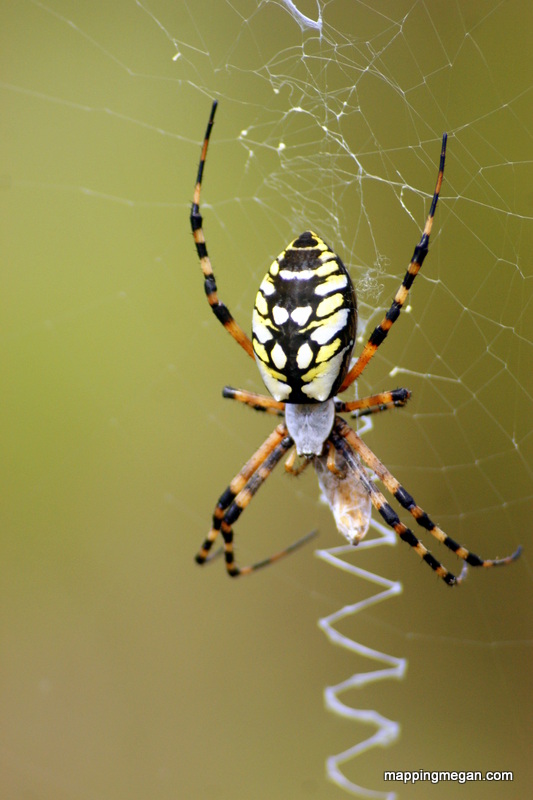
I was wondering about my experiences of not seeing bugs I'd see as a kid. Not sure if I just didn't go hunting like I used to or if there was an absolute decrease. I remember spotting these many times and catching a few http://www.mappingmegan.com/wp-content/uploads/2013/08/1-90-..., now I mainly see their hairier cousins http://www.suttonmass.org/animals/spiders/orbweavercrucifera...

Various little butterflies would be abundant seem much less now. I wish I knew their names.

Re:75% decline over 27 years in total flying insect biomass ... by adriand on Thursday October 19, 2017 @06:16AM (#15506722)
I totally agree with the anecdotal perceptions around the decrease in insects since childhood. In my case, what I noticed recently was how few times my children have been stung by bees/wasps at their current ages, compared to how many times I was stung at those ages.

My seven-year-old daughter has never been stung. My ten-year-old son claims he was stung once, but I'm not sure I believe him. By the time I was ten years old, I had been stung at least a dozen times. (I can still remember some of the particular stings, just due to the severity of the swelling.)

This strikes me as odd, and in the context of this paper, frightening.

Re:75% decline over 27 years in total flying insect biomass ... by Chris2048 on Thursday October 19, 2017 @06:25AM (#15506764)
Did you spend more time outdoors, or in woodlands?
Re:75% decline over 27 years in total flying insect biomass ... by dawnerd on Wednesday October 18, 2017 @05:30PM (#15503343)
I’m seeing a ton of wasps this year too. Also seems like there’s way more spiders in recent years.
Re:75% decline over 27 years in total flying insect biomass ... by deelowe on Wednesday October 18, 2017 @05:33PM (#15503370)
Tons of wasps. Wasps everywhere and carpenter bees. It's insane. I don't recall it being like this when I was a kid.
Re:75% decline over 27 years in total flying insect biomass ... by dawnerd on Wednesday October 18, 2017 @06:32PM (#15503843)
I could barely mow my lawn last weekend. They just kept attacking me. Didn't even get to trim the edges because I was tired of being stung.
Re:75% decline over 27 years in total flying insect biomass ... by musage on Wednesday October 18, 2017 @06:47PM (#15503952)
Maybe they're trying to tell you to stop mowing the lawn and start enjoying the meadow?
Re:75% decline over 27 years in total flying insect biomass ... by harshreality on Wednesday October 18, 2017 @09:47PM (#15504845)
This might not apply to GP if they're not in an incorporated area, but in cities, the wasps should tell that to city councils, which tend to have established rules regarding height of lawns and weeds and such.

Good luck talking to them about it; you'll be labelled a green wacko one step removed from eco-fanatics who firebomb SUV dealerships. If you don't want or like proper suburban manicured lawns, maybe you shouldn't live around everyone else who does want them, would be their attitude.

Even if you dodge that hurdle by finding stuff that doesn't need mowing or edging, your neighbors are going to think you're crazy if your yard is all monkey grass or vines or cacti.

Re:75% decline over 27 years in total flying insect biomass ... by musage on Wednesday October 18, 2017 @10:02PM (#15504938)
> Good luck talking to them about it; you'll be labelled a green wacko one step removed from eco-fanatics who firebomb SUV dealerships.

Yes, and? That's them projecting the weakness they actually do have inside them on you. To the degree you are free from weakness, their weakness will destroy them, so be the wall they splatter themselves against, be the water they drown in.

> your neighbors are going to think you're crazy if your yard is all monkey grass or vines or cacti.

If someone genuinely thinks a person who is otherwise acting perfectly normal is genuinely, clinically crazy because of some vines or weeds... there's a reason for that, too. If you end up with such neighbors, laugh your ass off and go about your day. Walk softly, carry a big stick, and let honesty be your biggest ruse. If you want to please everybody, you're going to be a hostage of the worst and then still die like all of us. So "cut the crap, fuck the rest."

Re:75% decline over 27 years in total flying insect biomass ... by mikestew on Wednesday October 18, 2017 @08:00PM (#15504362)
“Enjoy” a meadow full of stinging insects?
Re:75% decline over 27 years in total flying insect biomass ... by musage on Wednesday October 18, 2017 @09:01PM (#15504630)
First off, stinging insects hardly make up 100% of the biomass of a meadow, so if it's full of stinging insects, it's a bowl filled with stinging insects, not a meadow.

Secondly, http://www.countrylovers.co.uk/hort/wildgrdn.htm

> Where 'attracts insects' is mentioned you can assume that birds will also be consequently be attracted

https://www.kingsseeds.co.nz/Kings+Seeds+Blog/x_post/Plants-...

> But what if we are trying to DISCOURAGE insects from coming into our garden. After all, there are some we just get completely sick of. What can we sow to help us to repel the insects we don’t like? Here are some ideas for that:

Thirdly, if all fails, enjoy it with binoculars. You'll live. Heck, most people will even survive insect stings.

Re:75% decline over 27 years in total flying insect biomass ... by deelowe on Wednesday October 18, 2017 @11:55PM (#15505362)
Just so we're clear here, you're whole argument here is that people shouldn't mow the lawn b/c it causes stinging insects, but at the same time doesn't cause stinging insects? What is your point exactly?
Re:75% decline over 27 years in total flying insect biomass ... by titzer on Thursday October 19, 2017 @04:54AM (#15506442)
> Just so we're clear here, you're whole argument here is that people shouldn't mow the lawn b/c it causes stinging insects, but at the same time doesn't cause stinging insects? What is your point exactly?

Well if you read the link, I believe the point was that some plants attract stinging insects and others repel them. Also, stings. You'll live.

Re:75% decline over 27 years in total flying insect biomass ... by dawnerd on Thursday October 19, 2017 @04:56PM (#15511486)
> Also, stings. You'll live.

As long as you're not allergic like I am. Sometimes nothing, other times... it no good.

Re:75% decline over 27 years in total flying insect biomass ... by deelowe on Wednesday October 18, 2017 @08:54PM (#15504605)
And ticks.
Re:75% decline over 27 years in total flying insect biomass ... by titzer on Thursday October 19, 2017 @04:56AM (#15506445)
Put a small amount of tick repellant _on yourself_ and check yourself for ticks after being out. Contrast that defensive strategy with an offensive strategy, which seems to be a tick apocalypse.
Re:75% decline over 27 years in total flying insect biomass ... by alien_at_work on Thursday October 19, 2017 @10:07AM (#15507968)
What do we need ticks for?
Re:75% decline over 27 years in total flying insect biomass ... by Spooky23 on Wednesday October 18, 2017 @06:29PM (#15503824)
In my area, this is attributed to the mild winter last year.
Re:75% decline over 27 years in total flying insect biomass ... by r00fus on Wednesday October 18, 2017 @06:44PM (#15503935)
Less butterflies and fish, more wasps and squids.

Thanks climate change!

Re:75% decline over 27 years in total flying insect biomass ... by pvaldes on Thursday October 19, 2017 @05:21PM (#15511648)
thanks overfishing...
Re:75% decline over 27 years in total flying insect biomass ... by thearn4 on Wednesday October 18, 2017 @07:17PM (#15504122)
Same in rural Ohio, tons of both this year
Re:75% decline over 27 years in total flying insect biomass ... by frik on Thursday October 19, 2017 @12:15AM (#15505419)
Isn't it well understood that Monsanto with its gen manipulated crap is very bad for humans and animals (like bees).

"EU report on weedkiller safety copied text from Monsanto study"

https://www.theguardian.com/environment/2017/sep/15/eu-repor...

Re:75% decline over 27 years in total flying insect biomass ... by baxtr on Thursday October 19, 2017 @01:37AM (#15505686)
Once we are gone, they’ll all come back: http://www.telegraph.co.uk/news/2016/04/23/wildlife-returns-...
Re:75% decline over 27 years in total flying insect biomass ... by avodonosov on Wednesday October 18, 2017 @07:02PM (#15504032)
Butterflies - exactly the example I wanted to mention too. In childhood I saw them often, now - very rarely.
Re:75% decline over 27 years in total flying insect biomass ... by throwme211345 on Friday October 20, 2017 @10:56AM (#15516257)
A field of butterflies in the cow pasture feeding on manure. Pure joy. Rarely seen now, more the lone floater on the wind.
Re:75% decline over 27 years in total flying insect biomass ... by jly on Thursday October 19, 2017 @11:10AM (#15508560)
Invertebrates often get overlooked for conservation efforts and money spent, in favor of larger animals. Pollinators are critically important for their direct food supply services, but we really just don't know the full ecological impact down the road of mass species loss on a scale we could be heading towards with many other species of insects, other arthropods, molluscs, coral, etc.

If you're in the US, we have a great conservation organization for invertebrates that is doing great work on both habitat revival and pesticide reduction, and receives not nearly enough donations: https://xerces.org/

Re:75% decline over 27 years in total flying insect biomass ... by refurb on Wednesday October 18, 2017 @08:14PM (#15504433)
Don't different species normally wax and wane in prevalence? And enter/leave areas? A particularly cold winter can kill off a certain type of insect and the loss lasts for year.

How can we determine how much of the change we even have control over?

Re:75% decline over 27 years in total flying insect biomass ... by codefined on Wednesday October 18, 2017 @08:18PM (#15504453)
When 75% of _all_ flying insect biomass is lost, that's not just wax / wane. Considering the only difference in the past 2 years vs. the other thousands of years that insects have survived is human intereference, doesn't this suggest that we have complete control over this change?
Re:75% decline over 27 years in total flying insect biomass ... by atomical on Thursday October 19, 2017 @05:18AM (#15506518)
I'll respond with my ancedotal experience as well. I live on a farm and the bugs are irritating as ever. There is a lot of pesticide used around here and I have used pesticide as well on the lawn. It hasn't decreased the number of bugs.
Re:75% decline over 27 years in total flying insect biomass ... by Shivetya on Friday October 20, 2017 @05:32AM (#15514559)
well for few years we had a severe reduction of monarchs and (blue/black variety whose name escapes me) in NW metro Atlanta but they returned this year in large numbers. Also returning, not sure of exact connection, but the tent caterpillars were abundant after seemingly being gone.
Re:75% decline over 27 years in total flying insect biomass ... by timthelion on Wednesday October 18, 2017 @06:57PM (#15504010)
I never read "silent spring", but the title has stuck with me since childhood. Perhaps I'll read it now.
[dead]
Re:75% decline over 27 years in total flying insect biomass ... by avip on Wednesday October 18, 2017 @05:33PM (#15503364)
I wouldn't jump into blaming the climate. We've shifted many parts of a very complex system in the last 50+ years.

I'd put monoculture and pesticides higher on my list of suspects.

Re:75% decline over 27 years in total flying insect biomass ... by GlenTheMachine on Wednesday October 18, 2017 @05:42PM (#15503458)
As an anecdotal data point, I'm trying to establish a robust, poly-culture, mostly chemical-free agricultural system on my hobby farm. We do seem to get more flying insects on my place than our neighbors, all of whom have grass lawns. Critters of all kinds, in fact - lots of frogs and toads as well, and box turtles. Obviously I haven't done a scientific study, but we see butterflies, lighting bugs, and so on; not as many as I saw growing up but they are there in some numbers.

If you look around suburbia, there really isn't much ecological space for anything to grow unless it can survive on grass. Even in a lot of rural areas, with the advent of heavy-chemical farming and bigger and bigger monocultures, we're taking a lot of living space away from mother nature.

Re:75% decline over 27 years in total flying insect biomass ... by ioquatix on Wednesday October 18, 2017 @07:18PM (#15504126)
I think it's up to city planners to include more green belts. Better for the environment, better for water drainage, better for humans, it's really win win win.
Re:75% decline over 27 years in total flying insect biomass ... by monodeldiablo on Thursday October 19, 2017 @05:40AM (#15506608)
City planners would if they could, but they're not autocrats. They know that green space (and mixed zoning and high density and...) is a good thing, but they are captive to the whims of politicians and poorly-informed citizens. And property developers have more than enough money to buy policy and sway public opinion.

A close relative is a city planner, a job he went into as an idealist. He saw the economic, social, and ecological suffering created by terrible urban design, and he wanted to make a better world. After 30+ years, though, he's jaded and cynical.

He's seen historically active flood and landslide and earthquake areas quietly and repeatedly re-zoned for residential development. He's seethed at 40 years of opposition to even modest expansions of mass transit. Suburban sprawl, ghettoization of the poor, retail-only developments... At this point, although he still does his best to advance healthy policy, he's resigned to the fact that the developers always win in the end.

So please don't direct your ire at city planners. In many places, they're the only resistance to the boundless greed of property developers. As in all things, it's important to follow the money. The only people getting rich off the status quo are banks and developers.

Re:75% decline over 27 years in total flying insect biomass ... by ioquatix on Friday October 27, 2017 @06:19AM (#15567080)
I'm honestly sorry about the situation you talk about.

It must be frustrating..

People work hard but it's difficult to make things genuinely better.

Thanks for enlightening me.

Re:75% decline over 27 years in total flying insect biomass ... by coliveira on Wednesday October 18, 2017 @05:42PM (#15503454)
One of our problems is the idea that a single cause is responsible for these things. It is not just pesticides or CO2 or some other single change. It is the combination of those changes (even the small ones) that is driving this huge environmental problem. The only way to get out of this is starting to think of the environment is a complex system that needs to be preserved, not trying to find a single culprit that we can manipulate.
Re:75% decline over 27 years in total flying insect biomass ... by andai on Wednesday October 18, 2017 @07:50PM (#15504310)
Less finger-pointing, more parameter-tweaking!
Re:75% decline over 27 years in total flying insect biomass ... by nostrademons on Wednesday October 18, 2017 @05:52PM (#15503543)
Fireflies are interesting - as a New England kid in the 80s, I used to read about them in all sorts of childrens' books, but I was really bummed because I never saw one. I think I saw one firefly in my whole childhood. I just went back to Long Island this summer, and they were all over. It'd get to be twilight and hundreds of them would just be dancing through the air. I got to show my wife the childhood scene that I'd only imagined.

Maybe all the fireflies moved from Michigan to New York. I think I'd read somewhere that firefly populations tend to be very cyclical anyway though.

Re:75% decline over 27 years in total flying insect biomass ... by TallGuyShort on Wednesday October 18, 2017 @05:57PM (#15503588)
Attributing this to climate change in it's political context is as ignorant of actual science as what you claim to be detesting.
Re:75% decline over 27 years in total flying insect biomass ... by nnfy on Wednesday October 18, 2017 @06:48PM (#15503958)
Some of the people you go out of your way to slander as both trump supporters and climate change deniers exist as they do because of people like you, who immediately take any adverse global trend, blame it on climate change with what amounts to shakey, correlative evidence, and then shame anyone who dares glance over with a skeptical eye.

We are dumping all kinds of chemicals into the environment - pesticides, plasticizers, and a host of bio-active compounds which we already know may be directly responsible for the decline of certain individual species[1].

Climate change is a serious threat. But your post is an example of how climate change has become a highly politicized meme.

Next thing you know, it becomes a cultural taboo to be skeptical about climate change, and suddenly we're only asking the questions we are allowed to ask, looking for the data we are allowed to look for, sweeping inconsistencies under the rug, and just generally practicing sloppy science.

The scientific method necessitates skepticism. I welcome sources to the contrary, but modern western climate science is void of any published criticism, or at least it was when I had access to journals some 5 years ago. Hell, I couldnt find ONE paper discussing ANY benefit on any place on earth from a warmer climate-which is absurd, because northern permafrost could thaw and create arable land, for example.

Climate science has been sickened by politics and political correctness. You should be very wary.

1. https://en.m.wikipedia.org/wiki/Colony_collapse_disorder

Re:75% decline over 27 years in total flying insect biomass ... by matt4077 on Wednesday October 18, 2017 @08:31PM (#15504517)
> I couldnt find ONE paper discussing ANY benefit on any place on earth from a warmer climate-which is absurd, because northern permafrost could thaw and create arable land, for example.

Bullshit.

Here's what I found within two minutes, from the IPCC's Fifth Assessment Report, i. e. the currently valid "bible" of climate change:

Studies since the AR4 have confirmed that high-latitude locations will, in general, become more suitable for crops (Iqbal et al., 2009). Trnka et al. (2011), for example, examined projections of eleven agro-climatic indices across Europe, and found that declines in frost occurrence will lead to longer growing seasons[..]

https://www.ipcc.ch/pdf/assessment-report/ar5/wg2/WGIIAR5-Ch...

Start of Section 7.3.4. on page 504.

Re:75% decline over 27 years in total flying insect biomass ... by smt88 on Wednesday October 18, 2017 @07:55PM (#15504336)
Saying that science is biased because it fails to see the benefit of global warming is like saying it's biased because it doesn't discuss the benefit of a worldwide plague.

Sure, there'd be benefits: fewer lines at amusement parks, all the food you can eat, etc. But that's so far from a net "good" that only a psychopath or moron would publish a paper with that argument.

Re:75% decline over 27 years in total flying insect biomass ... by nnfy on Wednesday October 18, 2017 @11:42PM (#15505317)
How would you even know of there has been so little research on the subject? How can you claim to have an unbiased answer when you only research one side of a topic?

I legitimately want to ask you how you can be so sure that our doomsday scenarios are accurate, when we still have a fledgling understanding of a massive chaotic system like climate, and when almost all research has been purposefully negative?

If you look hard enough, you'll find anything. That's why skepticism is necessary. You'll at least agree that anything remotely pro climate change is taboo, I hope, and there is no room for taboo in science, in my opinion.

Edit: hell, how long have we known about deep ocean currents? Stratification of the subsea into various isoclines and thermoclines? Calthrates? People seem to underestimate how complex climate is, and how much we've yet to discover.

Re:75% decline over 27 years in total flying insect biomass ... by smt88 on Thursday October 19, 2017 @04:29AM (#15506327)
> How would you even know of there has been so little research on the subject? How can you claim to have an unbiased answer when you only research one side of a topic?

Like a plague, the millions or billions of human deaths is all the research we need. No benefit is going to counterbalance that.

Just to take one example (of many) of deadly things that are already happening that you yourself mentioned: permafrost melting.

"More arable land" also means "the release of incredibly dangerous, dormant pathogens like anthrax". Kinda makes the "arable land" moot.

https://www.vox.com/2017/9/6/16062174/permafrost-melting

Re:75% decline over 27 years in total flying insect biomass ... by WillPostForFood on Thursday October 19, 2017 @12:18AM (#15505429)
So you would say we are at perfect temperature now, or should we pursue strategies to cool the globe toward a cooler temperature?
Re:75% decline over 27 years in total flying insect biomass ... by groby_b on Thursday October 19, 2017 @02:13AM (#15505794)
You seem to be under the misapprehension that climate change is simply fiddling with the thermostat. The decidedly ill-chosen name of "Global Warming" might certainly lead in that direction.

But here's the thing - the weather systems on the planet are rather complex systems that are in a somewhat stable equilibrium. Changing temperature will affect that equilibrium, which will mean rather impressive upheaval. Both a warming and a cooling will have catastrophic effects for humanity. What we should pursue are strategies that prevent shifting too far from that fragile balance. No matter which direction.

Re:75% decline over 27 years in total flying insect biomass ... by WillPostForFood on Thursday October 19, 2017 @05:21AM (#15506531)
You seem to be under the misapprehension that we are at a stable equilibrium. The temperature and weather systems of the planet have continually been changing since forever. Do you consider the last ice age part of the somewhat stable equilibrium you refer to? It is impossible to hold the current state, it will inevitably change, it is just a matter of how fast, how well we can deal with it.
Re:75% decline over 27 years in total flying insect biomass ... by groby_b on Thursday October 19, 2017 @01:05PM (#15509603)
Nice attempt to move the goal posts.

Read the text. Somewhat stable. I'm well aware it moves, but it's moving much more rapidly than anything we've experienced, and at least a large part of that is without any doubt anthropogenic.

So how about you stop trying to parse words, and engage with the issue?

Re:75% decline over 27 years in total flying insect biomass ... by mirimir on Wednesday October 18, 2017 @10:02PM (#15504935)
It'd be good for other species, however ;) Except for those that we farm, anyway.
Re:75% decline over 27 years in total flying insect biomass ... by libraryatnight on Thursday October 19, 2017 @12:33AM (#15505489)
So you're angry that perhaps some of the people that are trying to affect change for a cleaner planet are doing so under misinformation? You seem to be the one politicizing things. I think most of us just want to support ideas, technology, and people that make sense. Cleaner more sustainable energy just makes sense regardless of what you think about bugs and weather.
Re:75% decline over 27 years in total flying insect biomass ... by sixothree on Wednesday October 18, 2017 @07:32PM (#15504218)
I hate to admit it but whatever the solution to this problem will be, Trump supporters will almost certainly fight against it.
Re:75% decline over 27 years in total flying insect biomass ... by libraryatnight on Thursday October 19, 2017 @12:36AM (#15505505)
Yes, it has nothing to do with anything based in reason or fact it's just heaps and heaps of angry stupid spewed in an attempt to defend their holy tangerine.

edit: words.