Given how tightly they control development, disallow third-party clients, disallow federation, disallow self-hosting servers, have a history if disallowing use without google play and have hid huge development features from the public (mobile-coin) despite being open source. etc;
The idea that it's a great undertaking of our time is so bombastic that it's guaranteed to be false even if you truly believe that they are completely altruistic (which I'm willing to believe but it's not coming easy to me based on the above).
"What's better"? Matrix. Which seeks to solve all of my points, the only thing lacking is market share which honestly is partially caused by these "easy to use" services which trade off everything else, which also consumes developer mind-share even if you're unwilling to acknowledge that. (devs are motivated to solve issues for friends, family and themselves if they are exposed more frequently to systems and services that are sub-par).
https://blog.koehntopp.info/2024/02/13/the-matrix-trashfire.... explains why Matrix is lacking market share, and I think Signal's decision to be aggressively closed is due to a justified fear of becoming that.
I've criticized Matrix before for their "protocol-first" approach and "too neutral" stance towards clients (which they've changed somewhat it seems; previously [1] was a table of clients with no clue what to choose, now it at least has "featured clients"). I feel they repeated the same mistakes as XMPP, which has not improved their client list.[2] Protocol nerds will say that's a good thing, but all it really does is ensure your protocol remains marginal because most people just get confused. People choose software, not protocols.
But you can write a high-quality client and a specification and allow people to write their own apps. IMHO Signal is needlessly restrictive. Sure, focus on your own implementation and the quality of that first. 100% the right decision. But there's no reason to not at least allow some things down the line. Signal is just a few months shy of their tenth birthday – they're well past the "ensure the quality of our official client"-phase.
Friend 2 insists on using their client because it has dark mode, and for the average user, what they see isn't "friend 2 is extra and has a broken client", they see "that app fails to send pictures about a quarter of the time, let's use whatsapp".
The mantra of every network that stays mediocre and never achieves critical mass
It complains that cyberfurz.chat is a "server with profanity in the name".
...why?
If I am working with a source who gets frustrated by the impenetrability of communicating with me because I insist they use matrix while they're not technical and likely impatient, then that person will be much more likely to use a fallback method such as SMS or email, and they'll do it without warning. It's legal risk, period. My job is to make sure that they can share information with me as easily as possible and during a particularly sensitive period of that person's life, usually. Matrix, as a sibling post highlighted well, is too difficult for this use-case. That is an enormous failure for a use-case of sensitive information sharing.
While I think there are better services to be private and secure from a technical perspective, there's one killer security and privacy feature that Signal has that on one else does: usability. It's pretty hard to get my grandma onto Matrix, but it isn't hard to get her on Signal. The truth of the matter is that you can't have private and secure conversations if there is no one on the other side. So while I really do like Matrix and the like, I think of them as more alpha or beta type projects. I don't find that the bashing of Signal is helpful (like we also do with Firefox) because all it does is creates noise for people that don't understand the bashing is coming over a nuanced and biased point of view (we're mostly highly tech literate here on HN, it is a bubble. But people still read our comments that aren't). End of the day, if we aren't getting 1 click server installs (or literally everyone is a host), federated systems are going to become highly centralized at some point. PGP's always failed because the easiest way to hack a PGP email was to reply that you couldn't decrypt. It wasn't appropriate for the masses even when it wasn't difficult to use. Don't get me wrong, I love Matrix, but it's got a long way to go to get mass adaptation.
Fwiw, I remember a user awhile back offering a bounty for a decentralized pathway in Signal[0]. The idea was to create an AirDrop like system to help with things like local file sharing but then extend the project forward to create a mesh network. Seems like a reasonable idea to me. I think it may be more advantageous to try to push Signal in the right direction than rebuild from scratch. I'd highly encourage people with other opinions to participate in the Signal community because it is a crazy echo chamber in there and for some reason the devs treat it as a strong signal.
An analogy is the U.S. is a two-party system, but most would consider this significantly different than the one-party system in North Korea or Russia.
A federated system with a few large players is still much better than a centralized one.
Like I said, I'm all for Signal becoming federated. It's why I dropped that link to the airdrop feature request. I'd also be in favor of people running their own servers. I mean the server code is available, you just can't connect it with the main network. So as far as I see it, there's nothing stopping this from happening. I see a lot of people complaining but I'm not aware of any major roadblocks. That doesn't mean there aren't any, but I'm just not aware of any. And fwiw, there are alternative Signal clients like Molly[0]. So at least the app can be disjoint from the official ecosystem.
B) Network effects drive the value of tools that are networked. The forks aren't popular at all.
C) Signal is well funded and not in financial trouble, so they can sustain effort on development and infrastructure.
D) I suspect you already knew all this too. So why did you respond the way you did?
Signal is very much in the same area of: "trust us".
With a caveat that they also say: "here's a bunch of information on why you should: but you can't really verify any of it and we have proven bad faith before- also we have an army of people who will pile-on if you call us out for not being actually verified, so, just trust us- we are the secure messenger and all those scary things are just so we are easy to use".
To their point, there are benefits to federated systems. But I've yet to see a federated system have moderate to large usage without becoming centralized. Think email. And until this problem can be solved you're still left with a "trust us" problem. There's no trustless system out there, yet. But hopefully it comes in the future. In the meantime, signal is the best if you also want to communicate with anyone that can't tell you if a stack is FIFO or LIFO (or even know those acronyms).
Definitely not true. Facebook literally censors private conversations. You simply can't send certain text strings to your friends. That is far more dangerous than relying on a third party that claims to be protecting your privacy. Especially since all signs point to them being honest.
To be clear, this is in private conversations. Not just posting publicly on Facebook or w/e.
Matrix did an interoperability talk on FOSDEM (https://fosdem.org/2024/schedule/event/fosdem-2024-3345-open...) and it's basically confirmed (https://www.wired.com/story/whatsapp-interoperability-messag...) there was some experimental work done on connecting WhatsApp (and ergo every other Signal protocol compatible app) and Matrix.
> It is unlikely that we will ever federate with any servers outside of our control again, it makes changes really difficult.
> ... I understand that federation and defined protocols that third parties can develop clients for are great and important ideas, but unfortunately they no longer have a place in the modern world. ...
Also, hasn't Moxie basically left Signal?
I truly believe they are altruistic, although it is unrealistic to expect that to last forever.
By the way, some of the claims you made about their "bad actions" are actually false. And Matrix is still incredibly annoying to work with for "normies" and only recently got first-class E2EE and retention policy, both things needed for a secure chat experience. And btw, those things aren't deeply supported in the ecosystem, and also it doesn't have client feature flag alerting (to allow good intentioned clients to de-facto report they don't support certain security features).
I do think Matrix (or something like it) is the future, but it's certainly not the present.
It's not just any open-source project.
It's a privacy-orientated open-source project.
They could at least BSL the server code and allow others to verify the server code and host but not compete.
This is exactly what they do (except they use AGPL): https://github.com/signalapp/Signal-Server
> If you think running servers is difficult and expensive (you're right), ask yourself why you feel entitled for us to run them for your product.
Forks are a natural consequence of releasing free software. This is the life they chose.
Also, free software isn’t a product.
The ToS is the only thing that governs end users connecting to the API, and it doesn’t deny end users the use of third party clients. Also, even if it did, that would be insane, like Google saying you can’t even load google.com when browsing with Firefox. It would be pretty much without precedent on the web, and bonkers.
The GPL is the only thing that governs developers’ use of the client codebase. The GPL of course allows forking and modification and redistribution.
Such forks and redistributions obviously cannot use Signal’s trademarks, so LibreSignal was dumb to do so. Ultimately the feelings of the Signal team don’t matter here - only the license under which they officially released the code. You can’t be more explicit about permitted uses than that.
You can’t be open source but then claim you don’t want forks. It’s one or the other.
"You must not (or assist others to) access, use, modify, distribute, transfer, or exploit our Services in unauthorized manners" [1]
By my reading, the ToS does deny the use of third party clients. Someone could try to argue that a third party is using the services in the same manner as the authorized first party client, therefore it doesn't break the ToS; but since the company's leadership have said that's not OK (causing the mentioned client to stop being updated), I'd assume that if that argument worked in court, they'd just change the ToS to be more explicit about stopping it.
This is like attempting to sue qBittorrent for copyright infringement.
[0] I don't even use Signal. My tack is to isolate and contain my "mobile phone" device as much as possible (when I'm home it generally stays next to the door on a charger). Whereas Signal has been designed around a single device being a critical part of my life. When I can sign up using only a username, and use Signal from a native client or web browser without any sort of Android device in the picture, then I'll be interested.
Matrix also is just not particularly private. Servers control and know far too much about users, and pretty much no mainstream client enables E2E encryption by default. Matrix is an impressive piece of technology, but it has a long way to go before it's as usable for an average mobile phone user as Signal is.
I don't want to be too negative on Signal since they do some good work and I do use it.
But freedom? No. It is another completely proprietary platform. A better one, but still proprietary, so the antithesis of internet freedom.
For example just earlier this month the Signal client overnight stopped working on my old Mac because they decided to no longer support older OSX releases. So I can longer use it on that machine, my primary desktop.
If Signal was in any way open or free (as in freedom) I'd just compile my own client to speak an open protocol and be back in business. But no, Signal is just a proprietary service with a proprietary client.
Isn't the source code available? What's preventing you from compiling your own copy?
> older OSX
How old OSX are we talking? Is it older than current Xcode with Sonoma supports? If it's that, then you have your answer. If you want to daily drive and older machine Linux or even Windows should be fine, but this is not really the way with Apple hardware - if it was, Xcode would make this easier for the developer. For reference, you can still build for Windows Vista using current Windows 10 SDK - I haven't tried Windows 11 SDK, so not sure how things are there.
https://github.com/signalapp/Signal-Android/blob/main/reprod...
Why can't you run your own? Sounds like it is not entirely open. (Never looked into it, so would be interesting to understand what is missing.)
> But you can compile the app and desktop clients yourself.
This has been talked at length here in HN before, they prohibit any clients other than their proprietary binary distribution.
If that has changed, I'd be thrilled. Can anyone point at it having changed?
I might very well be wrong, and if so, someone please correct me.
[0] There's always talk about the big deal breaker for Signal being that it isn't federated. So I've always wondered why this passion isn't used to generate a federated Signal network and is more focused on Matrix (who only recently started being E2EE). I don't know how these things work, I'm not that kind of programmer, but I can't see why you couldn't modify the server code to work in a federated fashion and edit the app code to be able to connect to both? I'm actually interested to know why if someone actually has an answer.
source?
Otherwise, it'll always be niche. I'm never getting non-technical friends and family to adopt a messaging app that isn't unified for SMS and secure messaging. When they say "users might not know they're sending insecure SMS messages" - fine, you own the client. Make the client bright red with a flashing "INSECURE MESSAGES" across it for all I care. It's not hard to inform a user in 2024 that they are sending a less secure message.
Er, what? So no one you know uses Whatsapp, FB Messenger, Telegram, Google Talk, or anything else? I suppose it's possible that's true, but even if so, you and the people you know do not represent the common-case user.
I always like to remind people that you can also donate through your employer and many will match. This is a great way to multiply your donation and everybody wins. Your org is going to donate x amount a year anyways and so might as well "vote" on where some of this money goes.
For instance, I would love to see picture sent to me by my spouse automatically saved to camera roll. Signal has no option for this because it could put the privacy of me and the sender in jeopardy.
Fwiw, I want this feature too. And others. I've submitted feature requests in the past. I even asked that usernames add QR codes and links. I'm not sure if I was heard, but hey, the feature is there and even some of the echo people were against it.
My camera roll is for photos that I have taken. If I want to put something from someone else in there, that's a decision I will pro-actively make. Other apps shouldn't be doing that for me.
Edit: Ok, ok, I was wrong, signal does have advantages over whatsapp.
WhatsApp requires you to give it access to all your contacts (your entire address book) in order to use it at all. This information is uploaded straight to Facebook’s servers where they’ll inevitably use it to place your WhatsApp account in a social graph so they know who you are based on your contacts. I found this to be unacceptable so I uninstalled it.
I'd get a chuckle out of comparing that with the privacy of Whatsapp.
FBI doc on what messaging apps can provide via subpoena pulled by a FOIA request...
https://propertyofthepeople.org/document-detail/?doc-id=2111...
Your own link does not say that. At all. It directly disputes that.
> Message Content: Limited*
> * If target is using an iPhone and iCloud backups enabled, iCloud returns may include WhatsApp data, to include message content
2. WhatsApp tries to get every user to accept the option to backup messages and photos to Google Drive, where they sit unencrypted and accessible by Google. Even if you reject that option yourself, your correspondents are likely to have enabled it (if only just to stop WhatsApp from nagging about it) and so your messages are available for Google to read. Example of why this can be bad: https://www.vice.com/en/article/zm8q43/paul-manafort-icloud-...
3. Google Photos asks WhatsApp users if they'd like it to back up their WhatsApp photos. Even if you reject that option, your correspondents may have enabled it and so your photos are stored online unencrypted and accessible by Google.
4. Why should we limit what Google and Facebook know about us? Google and Facebook influence our behaviour for the benefit of their paying customers. Their computer systems are too powerful for our minds. They work against us, not for us. Companies like Facebook will come to be seen like tobacco companies, except that the harm is as from mind altering drugs. There is a documentary on Netflix called The Social Dilemma which explains this well. The polarisation of societies and the spread of conspiracy theories are some of the effects. The only defence is to disengage.
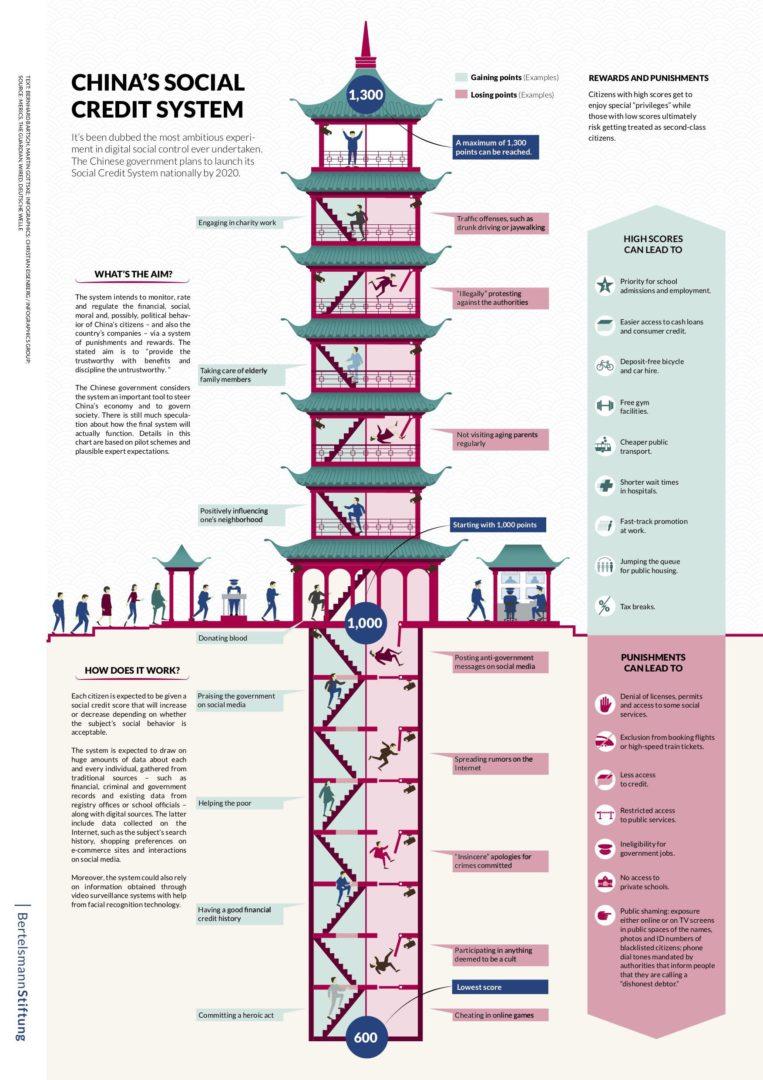
5. Read about Chinese-style social credit to understand why you want companies like Facebook and Google to know as little about you as possible. This is a good overview: https://nhglobalpartners.com/wp-content/uploads/2021/10/chin...
WhatsApp provides an option (off by default) to encrypt the backup with a password so that it cannot be decrypted by Google.
A free-to-use global communications platform that doesn't censor, respects user privacy from the ground-up, and is run by a non-profit foundation that is faithfully dedicated to its mission. https://signal.org/bigbrother/.
We should support it. If you haven't already, then consider signing up for a recurring donation to the Signal Foundation. I try to give what I can afford, because I believe that digital freedom is essential for the progress of all humankind, https://signal.org/donate/
Without such projects, our civilization will stagnate and die in darkness.