Mdi-x/auto crossover for ethernet was introduced in 1999, that is after USB (1996) was designed, not sure of the technique was known at that time
https://electronics.stackexchange.com/questions/73295/in-a-u...
It works for Ethernet because the transmit and receive lanes are separate, but with USB, there's only one pair used for both directions.
It chose to. They could just use different way to do it. Like, I dunno, a single packet of negotiation in slow mode...
Ethernet needs crossover because it has dedicated transmit/receive pairs, but USB 1.x/2.0 uses a single wire pair for both tx & rx. Ethernet crossover is pretty much identical to serial null modem cables, and those were around for a few decades by then.
USB "crossover" of the single differential wire pair would be an inversion of 0 and 1. Pretty trivial to do once you figure out a way to communicate crossover or not.
All they had to do was make the connector have a non-symmetrical shape so that it's immediately obvious which way round it goes when you pick it up - you could do it without even looking. Think of how much time we'd have collectively saved with this minor design change.
I disagree. When connecting an HDMI cable I sometimes have issues, especially if in a weird angle.
However I do concede is faster to connect an HDMI than a USB
Display port has a much more usable design, with a chamfer that is about twice the size as HDMI.

It does not really matter though, they are very similar in construction, and are very sturdy, and I really like them both :)
Edit: ninja'd by an enormous amount of people elsewhere in the thread, gah.
Does everyone follow the standard? No. Including big names that prefer to have their logo facing up.
For some values of "top"; that is, some device manufacturers install the socket upside-down.
I've definitely cursed many times failing to plug in non-rectangular VGA, serial and parallel cables ;)
[edit: it is still better, but not a panacea]
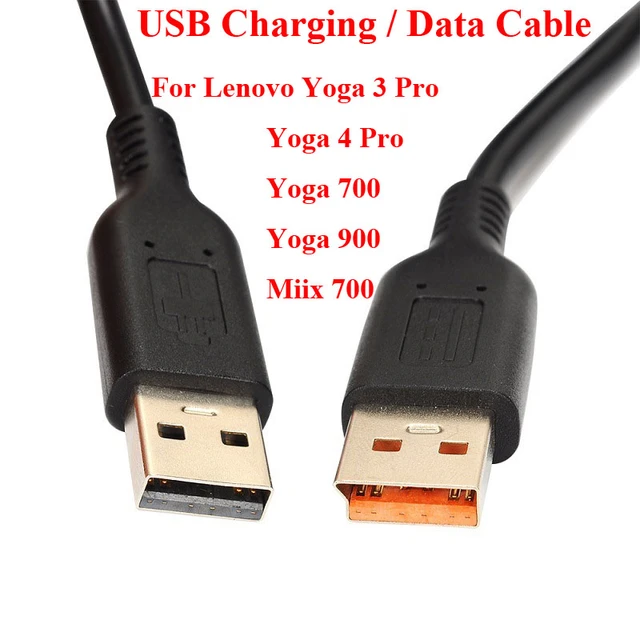
https://ae01.alicdn.com/kf/HTB1XeKTDHSYBuNjSspiq6xNzpXae.jpg...
imgur mirror https://i.imgur.com/RQvMfhT.png

random newegg link: https://www.newegg.com/p/2MV-00MD-00DX3
It's so bad it takes me 3 attempts to plug in USB-A blind, at least 50% of the time.
Given how Mini-USB looked I'm gotta say nobody there had any clue about designing connectors...
Hyperbole aside, there are some very good reasons to go with round connectors, it can be very strong and you can put a big nut on them to have an extremely secure lock. however the PS2 connector is nether of these things, It would require a much more robust key to work well.
The worst connector I ever encountered was on a old ATI capture card, it was the same barrel as a ps2 connector but had about 15 pins. Everything had to be perfect for it to insert, a tiny scratch or a slightly bent pin, it was not going anywhere.
The Apple desktop bus (ADB) that was used for keyboards and mice in Mac-land was also round. They improved it by using asymmetrical plugs, which marginally helped.
Not really sure that that's USB's fault so much as a lack of front USB ports. I think in those cases the consumer can chose to get some sort of hub that's easier to access/can be pulled out from behind their setup.
Now that C exists though, idk if we really need to go much further. Connector much smaller than it is now will become fragile.
I've always thought they could add a single fiber core to USB cables for some "ultra high speed" standard, since USB4 is predicted to top out at 80GBps, but we could get 50Tbps or so over a single fiber if we really needed to.
But after owning several fiber cables, for networking and HDMI fiber based cables...yeah they're far, far too weak to replace copper. Just look at 'em wrong and they snap/break.
Plus tbf if we get 80gbps from usb4...the problem then becomes that we don't reaaaally have a use case for that speed. Maybe network adaptors, but beyond that...I mean a modern SSD will saturate that with a sequential read I suppose, but still.
https://www.pcgamer.com/youre-telling-me-we-could-have-had-r...
https://2b.com.eg/en/2b-cv177-cable-usb-type-a-reversible-pl...
> Incidentally, the late Steve Jobs deserves a tip-of-the-hat for helping USB become a long-lasting standard. It was in 1998 that USB made some real headway, courtesy of the iMac G3, the first computer to ship with only USB ports for external devices (there were no serial or parallel ports). That came three years after USB 1.0 debuted, with a data rate of 12Mbps.
Also PCgamer:
> Given that it was a protocol designed to counter the typically Apple expense of sticking Firewire onto a motherboard, cost was the biggest reason for the eventual success of USB as a thing
Apple started building FireWire 400 into Macs when 12Mbps USB 1.0 was not really an equivalent. USB 2.0 didn't make the cut for the first generation iPod but was supported on subsequent models.
I remember presenting this in a project as an undergraduate and I was challenged by the lecturer that it would be highly unusual for a consumer device to ship without RS232 and I could only say “yeah”
It's kinda funny that this makes complete sense to me and I wouldn't have argued it either, but at the same time despite having been using computers since the late '80s the only thing I've ever had that required the use of a serial port for normal operation was my 2001-era Palm m100.
PS/2 keyboards/mice, parallel printers, and gameport controllers I had many of each, but all my modems were internal so the first time I ever plugged something in to a serial port was a null-modem cable in late '99 so my friend and I could use Windows 98 Direct Cable Connection to play Counter-Strike against each other without having to buy ethernet cards.
Aside from that one Palm device everything I've ever plugged in to an actual serial port has been a temporary thing like that null-modem connection. Mostly serial console for last resort access to misbehaving network appliances. Even then, most devices that have had the slightest bit of effort put in to them in the last 20 years have at least built in a USB-Serial adapter these days so we don't have to deal with the battle of devices that want full 12v RS232 and USB-DE9 adapters that deliver somewhere between 5 and 8.
WX-X299-PRO or its newer cousin ASUS Pro WS W680-ACE
Isn't that essentially what all ethernet cables do? it's not like this something never done before.
Many devices won't get updated until chipsets go EOL or there's some other compelling reason to do so.
Having said that, modern chipsets seem to all support it.
The 3Com card was unscathed. In fact, it is probably feeling stronger after that exertion.
That was my introduction to wiring up CAT-5 cables and rj45 connectors and, with so many to make, I needed a way to remember the wiring diagram without having to read it over and over or use a visual reference. The mnemonic rhythm I used to remember the pattern was "orange/white, orange... green/white, blue... blue/white, green... brown/white, brown". Of course, said out loud, you couldn't tell if it was "orange/white, orange" or "orange, white/orange" and I kept confusing the rest of the team when I'd say it, but it worked for me.
This was circa 2005/2006 and I still say it like that. It just stuck.
Orange
Stripey green
Blue
Stripey blue
Green
Stripey brown
Brown
Thanks for the memories!
The one I remember the most was a Bluetooth speaker that yapped your ear off for a half-minute combined with an obscene amount of jingle beeping at 100% blast and more LEDs than a Christmas tree as a power-on/off procedure back when they were novel items.
Same sequence -> Straight ethernet cable
Same sequence except for 1 swapped pair -> Probably a crossover Ethernet cable
Inverted sequence -> ISDN cable, burn it.
Also (apart from the ISDN cables) - it hasn't mattered for close to quarter of a century, all switches and NICs are auto-MDI-X nowadays, why throw away the stuff.
There are of course various devices which somehow ended up using TRRS for USB, but unplugging/plugging those while powered is definitely not recommended:
https://www.reddit.com/r/ErgoMechKeyboards/comments/rt083u/a...
http://www.totekinternational.com/35mm-trrs-to-usb-a-male-ca...
https://pinoutguide.com/PortableDevices/ipod_shuffle_pinout....
https://github.com/zsa/docs/blob/master/Ergodox%20V5-L.pdf
Of course the design requirements of USB would be different, since you'd always plug/yank the cable on a machine that is on, rather than protect against doing this accidentally sometime. Given that, it probably made more sense to completely avoid the issue.
ESD protection diodes also don't really solve the problem. They are intended for short-duration high-voltage low-current spikes, not long-duration low-voltage high-current ones. Definitely better than nothing, though!
No. You have to deal with disconnects being possible at both the host side and the device side. Making the tip live means you're touching a live wire to each contact in turn while plugging in the device side.
In your place I would legit verbatim forward your comment here to the freaking inventor, call him off on his bs and threaten his cat if he ghosts your inquiry haha
    1: GND
    2: DATA +/-
    3: VCC
    4: DATA +/-
5: GNDEdit: see https://en.wikipedia.org/wiki/USB_communications#Signaling_s...
Depends on the signal. With low-frequency stuff (like audio) you want to ground the shield on one side to avoid ground loops, but with high-frequency stuff (USB 3, for example) you definitely want to ground the shield on both sides: if you don't, you end up creating an antenna which is really bad for your EMI performance.
USB 1.x happens to be at an in-between point where neither issue is a big deal. The connector spec literally says "use accepted industry practices", so either approach is fine if it manages to pass emissions testing.
>
> Answer: “Sometimes yes, but only if you are seeking to avoid a ground loop. You likely don’t have to worry about this. If you are running shielded Ethernet between two structures that have their own separate AC systems or separate grounding rods installed, then YES, you should worry about what is known as a ground loop. A ground loop occurs when you have actual conflicting AC ground systems. Merely bonding your Ethernet cable at multiple points to the same AC grounding system in a single structure does not create ground loops. Think in terms of ground rods. How many ground rods are involved? If you have more than one with more than one structure involved then you are wise to bond to ground at a single end only.”
From https://www.truecable.com/blogs/cable-academy/residential-bo...
I really really really hope that this was just an error by the journalist, and not Bhatt essentially lying to justify the choice.
Data lines -- use differential signalling and polarity determined by whether +/- got reversed by the rectifier or not.
Or do like Comcast does and put all bidirectional data through 1 conductor at multi-gigabit speeds.
The usual implementation is using diodes, but that means you lose twice the diode forward voltage to the rectifier. Even with a Schottky diode that means you are losing 0.5V-1.0V. That's a 10%-20% loss at 5V!
You could use a transistor-based "ideal diode" solution, but that's not going to be cheap - especially in the 90s.
> Or do like Comcast does and put all bidirectional data through 1 conductor at multi-gigabit speeds.
And how much modem's transceiver cost ? And how does that compare to cost of computer mouse or other cheap USB peripherals.
It's also not just few transistors to flip the lines around, it's also the logic to drive that
There were 42 million transistors in a Pentium 4, I'm sure they could have put a few thousand per USB port if they thunk optimistically instead of pessimistically.
When USB came out we already had some very crude 3D realtime rendering already at that time available to mass consumers, I'm sure we could have figured out how to flip power on a port if we put our minds to it.
Think "how can we make shit happen" instead of excuses of why it's hard.
It's by doing hard things that we got to the 80 billion transistors of modern GPUs.
USB 1.1 was in '96
That's Pentium 1 era. Pentium 2 was released year after. Pentium 1 had one tenth of that
> When USB came out we already had some very crude 3D realtime rendering already at that time available to mass consumers, I'm sure we could have figured out how to flip power on a port if we put our minds to it.
Why your six neuron brain can't imagine saving pennies on chips used in cheap computer peripherals?
    1: GND/sense
    2: DATA +/-
    3: VCC
    4: DATA +/-
    5: GND/sense
The device will sense LO on 1 and HI on 5 if either both sides are plugged in straight or both sides are plugged in reversed, but it will sense HI on 1 and LO on 5 if exactly one of them is reversed. This allows the device to detect when inversion of D+/D- is needed.
But yeah that was only one of many misdesigns along the way. Like making turning ports on and off optional features, mini-usb (seriously, none other usb version I've seen failed as often as mini-usb connectors), just how overcomplicated USB-PD is, or the recent mess in USB-C cabling.
This is... not correct.
You can make USB reversible with 1 extra pin and 1 extra wire. Grounds on pins 1 and 5, data on pins 2 and 4, and VCC on pin 3. Then have those pins on both sides of the plug and a socket with a single set of contacts on one side.
That's BASICALLY what Apple did with lightning.
Then you implement auto crossover detection, (edit: Gah! you don't even have to do that just flip the flipping wires) which had been around for years and is dirt cheap, in the hub. It would have been like, six, more transistors in the hub IC.
edit: I completely forgot that reversible USB 2.0 plugs already exist and use a simpler (and cheaper) method. They just tend not to be so reliable because of the thinner materials and the fact that they're not spec-compliant so they tend to be grey market jobs made for the lowest price possible.
Here is one: https://www.amazon.com/Tripp-Lite-Universal-Reversible-UR050...
No doubling of wires or circuits required, just a thin double-sided PCB.
Was the connector form-factor inherited from an earlier project and the players didn't want to design a new one?