Well, obvious missing to you. That's probably why it will always expand, no one will agree on when it's done, including you. ;)
Absolutely nothing wrong with that, especially since people on hn love to complain about inclusion of unnecessary assets in websites that could be more lightweight.
It’s really a win win of size reduction, consistency and accessibility.
The only competitive systems are something like font-awesome icons or SFSymbols. The latter isn’t available to sites afaik though.
There's no consistency, because different operating systems and web browsers display emoji differently, and emoji availability depends crucially on the OS or browser version.
Users know what emoji are, full stop, and you don't have to serve images (which can be expensive). Is it perfect? No, but nothing is.
There's no misunderstanding of definitions. The argument is about whether emojis are "really a win win". I don't think they are, for reasons I've explained. Specifically, with regard to needing icons for "berries and maybe more vegetables", you can already do this with small jpgs that would not take much bandwidth, and in general there's more consistency in jpg support across different software then there is in emoji support.
Waiting for the Unicode committee to add emoji for every possible object in the world seems like madness to me.
I think they’re just approaching every argument from that perspective so any positive is treated cynically
It is consistent for the user on whatever system they are on. If they switch between apps, they see the same emoji that they’re familiar with.
The web developer doesn’t have to care what the icon looks like. They just say: use this emoji that semantically means “flower”. They know it may look different to other users but it will look like what that individual user is familiar with.
I'm not struggling with any concept.
It's a simple fact that as emojis continually get added to Unicode, not all browsers and operating systems support all emoji, and so one person sees a broken black box where another person sees the emoji. That's gross inconsistency.
Or let’s not use images because support for image formats varies across devices. Wait till we get into accuracy of color reproduction or how different decoders result in different images.
Or we can just understand that every design decision has pros and cons that must be debated, and clutching pearls on the internet without knowing the actual constraints is a futile exercise.
The website designer may use a Unicode subset that has wide support across the demographics they’ve decided are important to them.
Ancient? The submitted article is "New emojis in 2023-2024" about "the draft emoji candidates up for approval by Unicode this September". Thus, no software even supports the new emoji yet, and ironically they have to use png images to show what the emoji will look like.
I'm done talking with you. This is getting too ridiculous. Moreover, your "pearl clutching" remarks are stepping over the line and violating the HN guidelines: https://news.ycombinator.com/newsguidelines.html
Yeah in general but in this case it is probably just me and few friends who use that site.
Googles emoji kitchen
Emojis, like language, is social and will continue to change.
[0] https://github.com/LVMBDV/emoji
I'm probably missing some newer ones now. Not sure how the original list was made.
Emacs's M-x insert-char may be able to do something kinda similar. I know describe-char works great for identifying an emoji at least.
btw, this is much cooler than GNOME or whatever...
There you go! Made it much easier for you and the reader!
But really,
> I'm not sure which window manager they're using, but GNOME does have an emoji keyboard
Even better!
https://en.m.wikipedia.org/wiki/Acad%C3%A9mie_Fran%C3%A7aise
Really hard to do by this time. Since they allowed so many it's harder to say no. They have a burrito, but why no kebap, yet? They have person's playing basketball or golfing, but no person playing football (any variant) putting a stop to it gives an arbitrary set and restricts representing develoment in society (they have kick scooters which are modern, but what about the future successor?)
But of course, the more they add the harder it is to use. These new directional ones can be hidden as variants similar to skin color etc is currently handled in UIs, but individual ones ...
Deprecating also isn't an option. Text using those exists. They can't really break it.
I'm also confused as to how a lime or a shaking head is an identity.
> Wait, if a country gains independence and is recognised by ISO, does that mean no flag emoji for them?
> Flags for countries with Unicode region codes are automatically recommended, with no proposals necessary! First their codes and translated names are added to Unicode’s Common Locale Data Repository [CLDR], and then the emoji become valid in the next version of Unicode. These emoji are also automatically recommended for general interchange and wide deployment.
So making it dependent, as you described, on recognition by a different governing body seems quite likely.
(My favorite fun Unicode fact: naively reversing a string containing the flag for Spain will turn it into the flag for Sweden. ES —> SE)
If you don't like how they appear, some system setting could be made for changing the overall colours to switch them all to black, white, green or any other colour.
Highlighted beyond irony by comments like this.
BTW. If your skin actually has turned yellow then you should seek the nearest hospital emergency room ASAP, because it can be a sign of acute liver failure.
Anyway, it certainly implies not-dark skin...
I imagine that if I had dark skin, I'd feel a bit alienated by this experience. I'd be using these symbols that were supposed to represent me / my-reactions, but which very much didn't look like me. There'd be this pervasive sense that I was not included, not important enough to be the one represented.
That would kinda suck. I don't have to experience that, and I'm happy to have emoji set up so that people who don't look like me also don't have to experience it.
Put another way, would you care if the default emoji color was changed to be dark-skinned?
And the change is literally skin deep. They added skin color, but not racial features. The "black man" emoji just looks like a white guy with dark skin.
Imagine if I was a dwarf. I'd feel a bit alienated that all emojis are of tall people. Shouldn't there be a dwarf modifier for every emoji: dwarf man facepalming, dwarf woman shrugging, dwarf man bride, &c
If you felt yellow is too white, they should have changed emojis to magenta or something. Adding variants makes them unusable.
There's no need to send the colour to fix this issue.
Then I noticed that most of the non-white people I knew were changing them - and actively celebrating when new skin-color variants were added.
I realized that by keeping mine white I was not being ‘color-blind’, I was, at least to some, saying something like ‘I’m happy with the default because I think it adequately represents me’. Perhaps I did feel that, to be honest!
On top of that, I could even be seen as passive-aggressively saying ‘your choice to use the skin colored emoji is unimportant and/or wrong’, which is certainly not what I felt at all!
The whole Simpsons argument (emojis weren’t created in a vacuum - the Simpsons came first and there the ‘default’ yellow is obviously representing ‘white’) was in my mind a little when considering all this.
I use the second-lightest white ones now.
I see people of all shades use tones. To me it just says "btw I'm <race>". I can't help but think "who cares" in the back of my mind. I don't think yellow icons "represent me" either, I'm not self-inserting into The Simpsons.
At the risk of being overly dramatic for a discussion about emoji, I think that dismissing the concept of "color-blindness" in favor of "race consciousness" and other assorted identity politics, which led to hyper-focus on superficial characteristics like skin color, has done more to foster racism than anything else in the last few decades.
That’s not what I consider myself to have done. My non-white friends and colleagues are not, in my experience, ‘obsessed with identity labels’. They were just choosing an emoji that looked a little more like them, and a little less like the ‘default’ [that did _not_ look like them, but arguably did look like me] when representing themselves.
This is all in contexts where I knew who I was communicating with, btw (Slack, text messages etc.). In anonymous settings I might think differently.
In a ‘color-blind’ world perhaps it would not really matter to you what color people’s emojis were, just like in real life?
As a bit of a meta-comment, I suggest that if you want to convince others of your beliefs you might want to present them with a little more humbleness and kindness apparent in your words. Your first two paragraphs are quite confrontationally phrased.
Lego actually is a stronger precedent for ‘yellow is what color you make a person when you don’t mean to identify race’. Once they started adding movie character minifigs they introduced white skin as well.
But the journey there also gives the lie to ‘yellow minifigs we’re never coded white’. The very first Star Wars Lego sets shipped with yellow minifigs for characters like Luke, Leia and Han. It was only once they started to think about shipping characters like Lando Calrissian and Mace Windu that they realized ‘wait a minute, we’re never going to get away with a yellow Lando’.
(And actually around the same time they were also dealing with releasing NBA player minifigs.. the decisionmaking at Lego must have been pretty complicated at the time)
But really, it mostly comes down to that yellow == white. In Simpson the white people are yellow, and the brown people are brown.
I wish we could have gotten away with skin-colour-less emoji, but that’s just not the reality we live in.
Emoji have become trite, lazy, and practically meaningless, especially a few such as "face with tears of joy", "rolling on the floor laughing face", and "fire".
The reductio ad absurdum is the recent Canadian legal case where the court determined that a "thumbs up" emoji signals a binding contract.
Why do you believe so?
If "Looks good," "Ok," and "Yup" signal a binding contract, as detailed in the case you're talking about, I contend it's perfectly reasonable for :thumbsup: to also signal a binding contract between the same parties. [0]
Consider:
> 5. For instance, on July 14, 2020, after discussing and agreeing on a contract with Chris Achter, I prepared a contract for the sale of 185 metric tons [sic] of durum wheat from Achter Ltd. to SWT for a price of $312.31 per ton [sic]. I signed the contract and then took a photo of it using my cell phone and sent it to Chris at 306-264-7664. I messaged: “Please confirm terms of durum contract.” Chris texted me back: “Looks good”. At the time, I understood this to be that Chris was agreeing to the contract and this was his way of signally [sic] that agreement. Achter Ltd. delivered on this contract without issue. A copy of the contract and text message is attached as Exhibit “B”.
> 6. On September 11, 2020, after discussing and agreeing on a contract with Chris Acter [sic], I prepared a contract for the sale of 131 metric tons [sic] of durum wheat from Achter Ltd. to SWT for a price of $284.77 per ton [sic]. I signed the contract and then took a photo of it using my cell phone and sent it to Chris at 306-264-7664. I messaged: “Please confirm terms of durum contract”. Chris texted me back: “Ok”. At that time, I understood this to be that Chris was agreeing to the contract and this was his way of signally [sic] that agreement. Achter Ltd. delivered on this contract without issue. A copy of the contract and the text messages is attached as Exhibit “C”.
> 7. On October 21, 2020, after discussing and agreeing on a contract with Chris Acter [sic], I prepared a contract for the sale of 395 metric tons [sic] of durum wheat from Achter Ltd. to SWT for a price of $308.65 per ton [sic]. I signed the contract and then took a photo of it using my cell phone and sent it to Chris at 306-264-7664. I messaged: “Please confirm terms of durum contract”. Chris texted me back: “Yup”. At that time, I understood this to be that Chris was agreeing to the contract and this was his way of signally [sic] that agreement. Achter Ltd. delivered on this contract without issue. A copy of the contract and the text messages is attached as Exhibit “D”.
[0] https://www.canlii.org/en/sk/skkb/doc/2023/2023skkb116/2023s...
I wasn't criticizing the decision in the case. I'm neither a lawyer nor a Canadian and have no opinion about that.
I was criticizing the entire situation, the absurdity of emoji becoming a matter of legal controversy.
> Emoji have become trite, lazy, and practically meaningless, especially a few such as "face with tears of joy", "rolling on the floor laughing face", and "fire". Emoticons used to be a supplement for words, indicating the tone of the words, but now emoji are a replacement for words, the ultimate illiteracy.
Also, even worse, emoji are "evolving" so damn fast and continually that they appear as broken boxes if you're not running the very latest browser or operating system version.
People have been using things like "lol" and "lmao" since long before Unicode even existed, let alone emojis.
Sure, but how are emojis superior to this? Text is universally compatible, whereas emoji introduce compatibility and versioning issues across browsers and operating systems.
Besides the technical universality of text, it's also demographically universal. We've replaced "lol" with laughing-face-of-specific-skin-color-and-hair-style-and-gender-and-,etc., which is a worse situation than the original.
Of course "lol" is English-specific, but if you can't read another language, then what exactly would you be laughing at anyway? Different languages are always a barrier to communication, regardless of whether emoji are used.
To be specific, they introduce a lot more of such issues, but such issues were already there with plain text as well. Fonts that don't support some characters, fonts where some characters are displayed incorrectly (the whole CJK unification fiasco), fonts where some characters are not distinguished (I've run into the is-this-an-I-or-an-l issue quite a few times, personally).
It's been fascinating to see emoji work their way into everyday usage, even in professional settings. I would love to see the day where emoji becomes a viable form of cross-cultural shorthand.
People who speak different dialects or languages can still communicate with written Chinese.
I remember at a conference talking to a Japanese guy and a guy from Korea. I wrote my name in Chinese and they could both read it, but said it in their native language.
I have my doubts regarding this. We're already seeing a situation where different groups within a single culture, the young and the old, use many common emoji in ways that differ dramatically (at least in the west), sometimes even with opposing meanings. If the meanings of emoji aren't stable even within a single culture, how could they ever hope to transcend culture?
Of course, the fascinating thing is that different groups of kids use the same emoji slightly differently. So.
1: https://pbs.twimg.com/media/FdxZ5koVsAAQj-n.png:medium
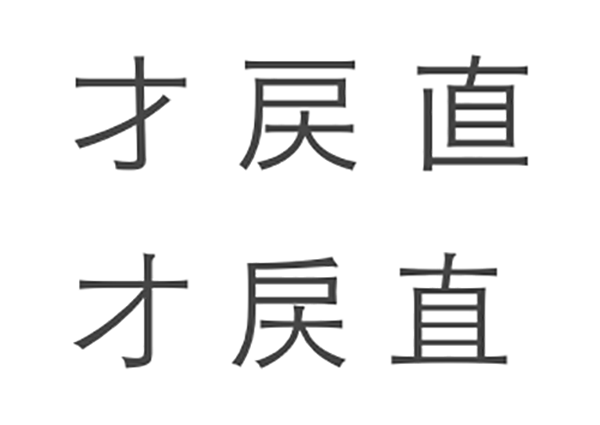
2: https://jyurin-hack.com/it/wp-content/uploads/2017/09/nihong...

3: https://answers.microsoft.com/en-us/windows/forum/all/chines...
4: https://www.codeproject.com/Tips/1227524/Fixing-Inconsistent...
And then the Unicode Consortium does give them a codepoint — because the whole point of Unicode is that there shouldn't be any text on the Internet that can't have its meaning determined 50 years from now because it was encoded in some proprietary now-lost encoding.
This is how it was from the very beginning. The first emoji codepoints in Unicode were added in order to have a valid projection-mapping into Unicode of the "SJIS with emojis" text written on Japanese mobile phones that became common on the Japanese Internet — including documents like "cellphone novels" with high historical preservation value.
The great thing about emoji used to be the constraints, which made for a clear overview of available emoji and made people use the limited set in creative ways to express different things. Besides the more extraneous options, they never should've started adding things like skin/hair color modifiers imo, sticking to the single yellow/neutral color instead. Counterproductively, that opened up ways for people to not feel represented.