You can see it better in this high-res photo from Wikimedia Commons [0]. Each of the square windows appears to span four rooms on two floors, while the lower floor rectangular windows appear to spam three floors, making it six rooms.
0: https://commons.wikimedia.org/wiki/File:Bellagio_hotel.jpg

The picture in the OP didn't make it totally clear, which left me wondering too, although I figured that's what they meant so it must be that way -- the fact that we have to look so carefully to verify it, I guess shows the success of the "illusion"!
That’s why it shrinks the apparent visual scale of the hotel, which has twice as many floors and twice as many rooms per floor as it seems from the “window” frames outside.
30 minutes later…
We watched Penn and Teller at the Rio. You look at a map, see its a block over from the strip, no problem. You walk out your hotel room and see the giant Rio sign, totally fine look how close it is!
20 minutes later you stare in horror at the same sign wondering how it hasn't gotten an inch closer to you.
It doesn't help that there's nothing in between the Rio and the rest of the strip. I've gone up and down the strip before and there's at least things to keep you occupied for those distances. But seeing nothing but that stupid sign is hell.
(It's not all that bad. The Venetian really is more or less across from the Mirage and Caesar's Palace is then reasonably close.)
Going down Flamingo, the only intersection between the Bellagio and the Rio is I15. You could say maybe a block and a half, but that's still nowhere close to 30 minutes' walk.
> not anything deceptive about the city.
The entire purpose of the strip is to be deceptive, so it's hilarious that this is even an argument.
Sorry that you're so defensive when minor criticisms are levied against a stretch of road in your city. It's certainly a weird hill to die on, but you do you.
The strip has always reminded me of the old western towns (at least, in movies) where there is a high street of grand facades, but it's chaos behind.
It's about a certain type of spectacle.
The only reason Las Vegas even has water issues is because of water rights, not anything that makes it inherently worse than the rest of the southwest.
https://upload.wikimedia.org/wikipedia/commons/f/fe/Las_Vega...

I remember eating at the Top of the Dunes restaurant as a kid - we would sometimes go there for Sunday brunch. Right before they demolished the Dunes to build the Bellagio they had a property-wide auction and the entire property was open during the process. I went through it with a couple of friends and we went up to the top of the Dunes - and I was shocked at how small it was vs. what I remembered from being a kid. I think the dining room was maybe 4 tables wide and 10 or so long - the space was TINY. But I guess being a kid and surrounded by windows on three sides made it feel much larger back in the day.
I agree with this and believe we should make beautiful structures. I’m not sure much architecture since the 1950s in the west really does this. Modernism was the last consistently great style imo. Post Modern styles just seem so temporary and self indulgent which I suppose reflects our time.
--Thomas Jefferson
If anything, I think the 50s architecture opened the door to new ideas, helped us see what works and what doesn’t. Villa Savoye is a bit from before the 50s, but it basically feels like it could be built today it wouldn’t be out of place in any bit.
TBH I’m glad the 50s architects opened the future instead of clinging to the past.
Even your extremely arrogant musing on “clinging to the past” sums up the problem with post modernist ideas. You think we suddenly know better than thousands of years of experience. That much of what was done in architecture (and everything else) wasn’t just old ideas that were stubbornly held onto but rather the result of thousands of years of refinement about what works and has meaning.
> Glass houses are stupid for numerous reasons.
I don't know how much glass you see in "Glass houses", so I'd agree there can be extremes (same as for any style). Now, normal houses I've seen built in modern style are very pleasant to live in, highly practical and I wouldn't want to get back to a 19th century house short of getting paid millions to do so.
> You think we suddenly know better than thousands of years of experience.
Those thousands of years of experience brought us new techniques, new insights on what works and what doesn't. Builders have constantly moved forward for these thousands of years. People in the 12th century didn't stop innovating telling themselves "why would we know better than the 3 thousands of years of experience that led us here".
We stand on the shoulder of giants, to me it's our duty to push the envelope and not stand there ordering buildings to be exact replicas of what came before.
When I look at the Gare du Nord in Paris, I'm not lamenting that they didn't keep the dark and gloomy roof panels that used to be there for decades. I'm super glad it became a warm, luminous and welcoming place instead.
It feels like we optimize for the wrong things because the tech allows us to. We build bigger at the expense of quality. Seeing 3000 sq foot homes with a small number of vinyl windows, vinyl siding, laminate flooring, etc is weird. But engineered wood and trusses let us build big, ugly spaces for cheap.
Before I cone off as too much a crank there is a lot of great post modern stuff. Especially more recently.
https://culture.pl/en/article/polands-surprising-socialist-r...
The PVC curtains seem particularly icky to me, reminding me of naff shower curtains and hospitals.
The South Bank Centre is on the Thames and is decorated with trees, and the Barbican has a central water feature and garden.
They're also fairly opulent on the inside.
https://www.thetimes.co.uk/imageserver/image/%2Fmethode%2Fti...

Trellick and Balfron Towers have some trees now, but didn't have much greenery when they originally opened.
https://designanthologyuk.com/wp-content/uploads/2019/09/web...

The order/variety observation is absolutely right, and a core feature of practical aesthetics across all domains. Successful aesthetics are a fine balance between surprise and predictability. Even something as basic as proportion is based on comprehensible non-random relationships.
The Wundt Curve describes how too much order and too much chaos are both unsettling/boring.
https://researchportal.port.ac.uk/files/8060373/COXj_2017_cr...
Coincidentally the fountains were fixed yesterday after years of being turned off.

And like shipping containers stacked haphazardly in pictures taken in the winter: https://upload.wikimedia.org/wikipedia/commons/thumb/e/e3/Ha...

I guess there were practical reasons in the beginning to not focus on adding additional finishes?
I live in a brutalist townhome and it exemplifies the things I love about the style, lack of ornamentation, function over form, yet scaled and appropriate to its location.
The simplicity and usefulness of the house lends it as much elegance as it needs.
It is not a facade, it is not cladding, it is the functional building its-very-self.
It abandoned the far more ornamental Stalinist style for brutalism as part of Khrushchev's push for that.
Note the far more ostentatious buildings under Stalin and Stalin's rejection of Le Corbusiers extremely radical proposals for redevelopment of Moscow in favour of far more traditional designs.
To the extent it was later used as propaganda, that was a follow on effect once stagnation forced doubling down on construction that had initially been intended as relatively short term cheap housing.
Probably because it’s called good design yet it’s almost the cheapest possible design outwards. Convenient. But I think in 30 years we will facepalm at these white boxes we call houses.
Look at McMansions, which is a cohort of styles that are much easier to get wrong, and there are many objectively bad homes. But for minimalism, the worst you can often say is it's boring. Correct, but boring.
it never was popular, it wasn't an organic movement. It was pushed by the Soviets and those sympathetic to them in Western governments and academia who used tax payer money to construct hideous buildings
Tangentially, speaking of non-organic movements, the history of the CIA funding abstract expressionist art in the Cold War to serve as a foil to Soviet realism is fascinating. Arguably there are echoes of those influences in this conversation.
Brutalism like all other styles is a mixture of the requirements of the time and a response to the culture at the time. The building features the original article is railing against is simply poor design. A poorly designed classical inspired building will look exactly as bad.
The push towards stripping back ornamentation gained traction in the west long before the time Khrushchev was able to push for this in Soviet construction.
Basically, cities were left levelled [1], and the postwar population and economic boom created an intense housing and building shortage over a few decades. new construction methods centered around concrete proved cheaper and faster, and helped bridge that shortage.
Brutalism can also be pretty pleasant when it's well done - which most of the building in that style aren't, due to being build as fast and as cheap as possible to address the situation at hand.
[1]: https://theculturetrip.com/europe/france/articles/the-story-...
It’s like vinyl floors, it was the rage at some point and people really valued them. Or heavily decorated wallpapers. So many of that stuff is just considered fugly now.
A good example of one where they did care a lot about the finish and its lasting finish is the Barbican in London - there's a little about it here [0]
[0] https://www.barbicanliving.co.uk/barbican-story/construction...
This is what I was thinking looking at that first Hong Kong building--it would look a lot nicer if it wasn't so dirty.
Concrete eventually starts spalling, and high pressure washing actually accelerates the spalling process. The reason these buildings aren't washed more regularly is because of that tradeoff; it's not (generally) because of maintenance budgets. Once you get spalling, maintenance becomes expensive. The Barbican can afford it, but this is one of the reasons a lot of brutalist buildings in Eastern Europe are getting sealed and painted.
Also, more importantly, buildings are judged live by who sees them.
They should be. But in that period of time there was a whole lot of internationalism even as international travel wasn't cheap enough to be routine. So you could imagine a committee commissioning a famous architect like Le Corbusier from another country when most of them had only seen his buildings in photographs - and while colour photographs existed, printing them was expensive, so most widely circulated photos would have been black and white.
Brutalism embraced this constraint as well as the most expedient materials for building skyscrapers. Intellectually and aesthetically I like this choice of honesty in reflecting materials personally.
Where Brutalism failed is similar to other grand modernist projects: it failed to engage properly at the human scale, creating environments that look striking, but that also read to most people as cold and alienating. In practical terms this sort of grand architecture usually fails to anticipate how humans will actually use the spaces, leading to spaces that are opposed to humans organic behaviors.
All that said, when Brutalism is tempered with empathy, and combined with interior design that both features and softens its starkness, I quite like it. The old library in my home town was brutalist.
This is the exterior: https://th.bing.com/th/id/R.8b7a56ab55fbd5227b8d5c04be176e56...

Unfortunately there's no photos online of the old interior, but it did a good job of humanizing the starkness.
On the other hand, the exterior also showed the flaws of brutalism, having wide empty featureless grass plains that I never once saw anyone use for relaxation, a picnic, etc, in two decades of living in that town.
Keep in mind, that at the time these were built, these were generally meant as rapid responses to cheaply house large amounts of people with basic living standards. After the war, most places had most of their housing stock destroyed, and whatever was left was also in high demand due to postwar baby booms, and for rapidly developing "Asian tiger" economies like Hong Kong, Japan, South Korea, rapid urbanization.
When you need to house millions and your budget is paltry, aesthetic is one of the first things to get chopped. And for many of the people who would live in them, having a unit with its own running water and electricity, toilet, bath and kitchen was a significant upgrade, especially if their previous residence was a tin shack in a slum or a refugee camp.
https://sika.scene7.com/is/image/sika/usa-first-methodist-ch...
UMass Amherst's campus is famously too-brutalist [1] for the university's 21st century tastes. From my years there, the embarrassment was for good reason. The buildings make you feel all of the things I mentioned above.
Brutalism works when it either contrasts contrasts with its surroundings. Implant concrete-laden sharp-shapes into nature and the contrasting outcome[2] is beautiful. Even America's most famous house : Fallingwater [3], uses huge concrete slabs exclusively while looking absolutely stunning. Another form of contrast is the Velasca Tower [4] which standout out like a sore thumb when set against its very Italian surroundings.
Brutalism wears on you the second it is used as a template for huge repeating projects. It has good shock value. But, do it enough times, and it is exhausting.
[1] https://www.darrenbradleyphotography.com/post/umass-amherst-...
Albeit, as a Pole myself I think soviets created the best and most livable and efficient neighborhoods I've ever seen in the world.
There was no shortage of green spaces, parks, benches, people spent a lot everything was close on foot, public transport was efficient.
American style suburbs where development is horizontal rather than vertical are miles and miles of nothing where everything is far and requires a car.
Post 1990 economic gains killed soviet style neighborhoods as they were not designed for so many cars, people don't have as much space to socialize, kids have to go more far to play because parkings are put in those spaces.
I kinda hate cars for that.
And that's setting aside the question of why that system was so impoverished and what it chose to invest in. But the architects and urban planners deserve some praise.

A similar phenomenon occurs when architects place a modern building in a scene of beautiful classical architecture, sometimes even connecting the new building to the old. The "beauty" of this type of modern architecture is parasitic on pre-existing beauty and cannot stand on its own.
https://www.escapetraveler.net (see model "One" with exposed wood)
https://www.azureprintedhomes.com (see model "Marina" with 3D printing)
Reminds me of https://www.smbc-comics.com/comic/2014-11-16.
"Giant glass clad high rises" are not a fashion -- they're popular because most people in the U.S. and Europe like the way they look.
In some sense these pretty glass buildings are a symbol of American ideology. Free markets tipped the balance from the art elite, who wanted people to live in brutalist slaughterhouses, toward the common people, who like their optimistic, futurist buildings and are willing to pay for them.
I am having trouble seeing the 4-6 windows combined from the photos of the Bellagio. The close up does not help.
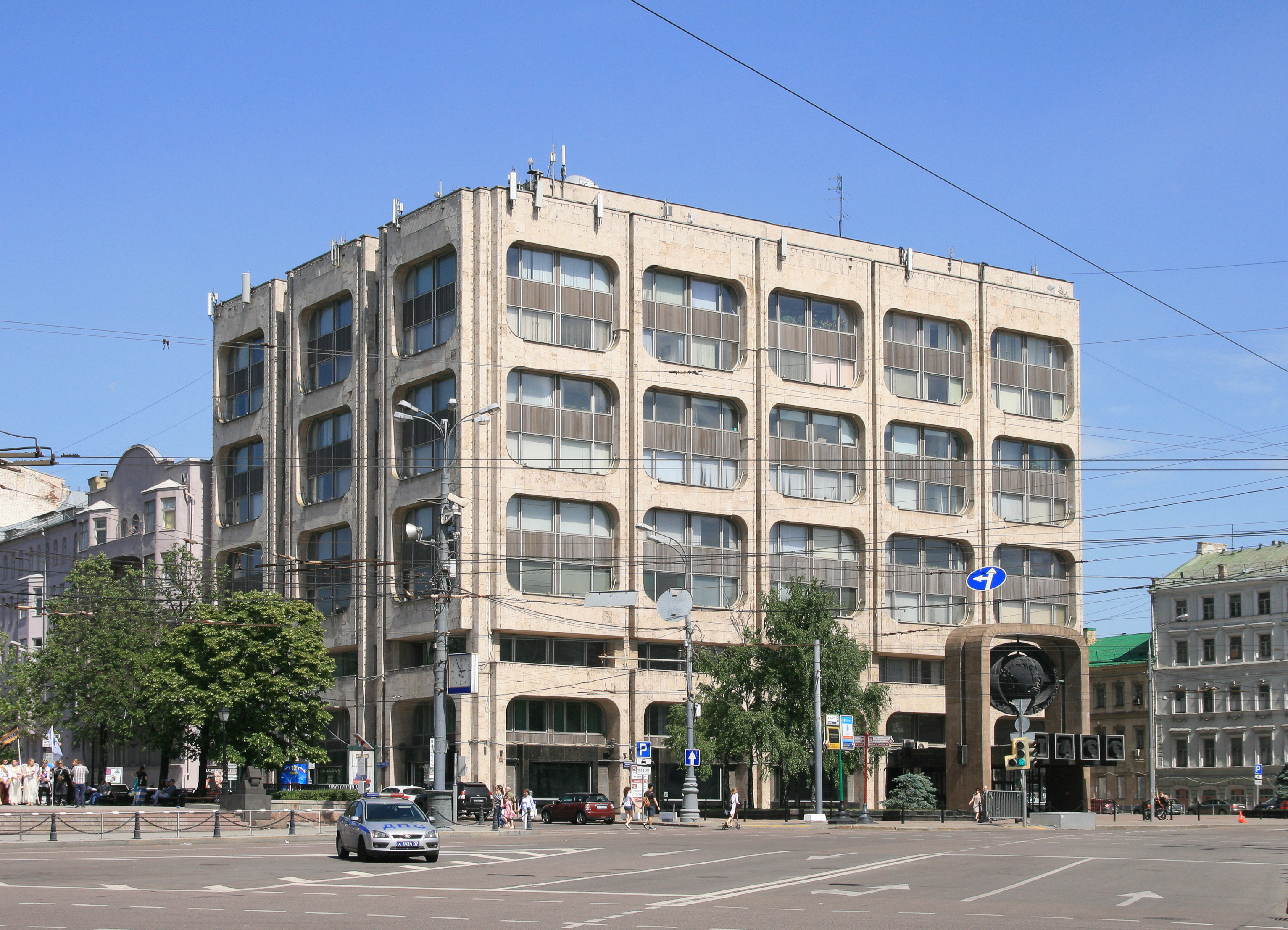
The first mentioned buildings seem brutalist esp. the second one. It is a form of utilitarian architecture that has great appeal to me. I think in part because it is rare now.
I find them far more pleasing to the eye than the giant glass clad high rises that was the fashion for a long time. I have read that it is now going out of fashion, but I have not yet seen any examples locally.
Wanting to give my dogs new and exciting places to sniff and pee I try to walk around in different neighborhoods in the area. As have been doing this for many years now and the unexplored neighborhoods are getting farther and farther out.
About two years ago, at random, I found a brutalist single family dwelling. It is a big house for a single family but it is the smallest such building I have ever seen, it is beautiful. (to me)
I truly stands out from all the other nearby houses. I have visited that area often to take pictures and just look at it. I would love a chance to see the inside.
If I had the money and I most certainly do not, id love to live in a house like that. It would make giving directions a lot easier as well.
I wonder if there exists brutalist "tiny homes". That would be something to behold
For an explanation of the term brutalist see: https://en.wikipedia.org/wiki/B%C3%A9ton_brut