Folks were running scams like this in the 90's. I remember a friend of mine bought a hard drive from CompUSA. Turned out it was actually a brick sealed in a box.
https://en.wikipedia.org/wiki/MiniScribe
> In July 1987, Jesse Parker, director of far east operations, told Wiles that something was amiss. In August, Wiles travelled to Hong Kong and Singapore where he found a complete loss of control. The inventory count from that fall showed that the numbers had grown to $15 million, mostly in Colorado. A report was prepared to consider various solutions, but Wiles suggested that they continue hiding the problem, ordering all copies of the report be destroyed. This led to the company's most infamous cover-up; the managers rented a second warehouse in Colorado, where they personally packed 26,000 bricks into hard drive boxes and shipped them to Singapore in order to shore up the inventory count. After the count was complete, they recalled those serial numbers as defective units, but instead of writing them off, they checked them into inventory, along with other failed drives that had been returned.[6]
Maybe one of the bricks made its way to a store :P
People ran all sorts of scams, most commonly putting a $500 video card in a $20 box. I’d catch them all of the time, but if you reported it you had a chance of losing commissions when loss prevention people interviewed you.
Solution: avoid the aisle.
The other crazy one was what we called the crime bus. A charter bus of Asian people, usually Chinese, would pull up and flood the store with like 30 people on a weekday, pinning down every employee with stupid questions. Another group would loot the aisles of hard disks, various video/other cards and certain inks. I was there for one — it was absolutely insane.
They put that stuff back behind the counter a few months later.
Too bad they went broke! In the 90's, CompUSA was one of the only local places that had a large selection of computer parts.
Also, I wonder how many customers even failed to notice they wound up with an older card. Probably not all of them!
Wait, what? The loss prevention people wanted you to not prevent loss?
Sitting in some windowless office at $5.75 an hour for two hours basically cost me $100-300 in commissions from lost sales.
Those jobs were great in the 90s. One year I paid for my College tuition in the week before Christmas.
Sears didn’t do any checks if anything. You just took your boxed up computer to the back of the store and you got your money back. It was common to pull the RAM and HD from a computer, return it for another, and then you had double the memory and drive space for free.
You couldn’t do that at Best Buy, the Tech bench (before they had the Geek Squad) would inspect your returns. If you wanted to fool us, you’d have to make it look like you never opened the boxes, and put the correct amount of patio bricks in it.
You couldn’t swap video cards or RAM, we checked the model numbers. So you’d have to take the video card over to the appliance department, slice the side of the box with a knife, remove the video card and throw the empty box in a washer or microwave. When the Voodoo 5 came out we found every single one was stolen and the boxes in a freezer that was on display.
We even had a RAM tester that would tell you the speed and size of the chips. We never got one that would do DIMMs, just SIMMs, so as the Pentium II became popular it was less useful.
Now, if you knew someone who worked at the tech bench, you could bring your home PC in for a bullshit service like a $29.99 disk defrag, and you could get it loaded up with memory, disk drives, or hell, you could just stick as many audio CD’s as you could in your tower. Just make sure the case screws are on tight when you leave, or the panel falls off along with whatever you were smuggling out, right in front of the whole store.
Lastly, there was a DEVO area towards the back of the store, basically a dumpster full of returns. I heard they got sold to the lowest bidder, stuff we couldn’t return to the manufacturer for some reason. Memory, hard drives, all kinds of random stuff would end up back there because the computer said so. Anything that could fit in a pocket, people helped themselves to.
I'm surprised Amazon doesn't X-ray incoming merchandise and then use Computer Vision (i.e. face tagging but for objects) to say whether what's inside the box matches what "should" be in there according to a database of SKU X-ray "fingerprints."
That percentage matters less the smaller it gets.
Maybe some rudimentary thermal imagery, and that is the method?
In the late noughties/early onesies I went through this period where I realised I could just buy anything I wanted that wasn't food from Amazon, and it was briefly great. However, they have had a huge problem with counterfeit, poor quality, seconds, and reconditioned goods for a number of years now. If you need thing X you're much better buying it from a specialist retailer, direct from the manufacturer or - depending on what it is - even from eBay, Gumtree (or its US equivalent Craigslist), particularly for used items.
Avoid Amazon like the plague for non-media items.
Apparently Amazon’s own print on demand service produces high quality books but it is impossible to know what sort of book you are getting until it arrives.
I ordered an audio CD set from Amazon.jp and it arrived faster than it would by US ground and the packaging was flawless, with Apple-esque plastic attached to the easy-open cardboard to keep every corner perfectly sharp.
So... it varies by region?
Or I’ve gotten lucky, n=1 ;-)
(Aside: that’s the annoying part about Amazon, 9 times out of 10 it’s exactly what you expected but then there’s that one time, maybe you buy something you wouldn’t normally, or the box is mostly empty, or the item’s serial number is invalid, and... you really don’t know what you’re going to get sometimes. And Amazon doesn’t make it easy to report it, it’s simply not something they visibly care about...)
In Europe a number of companies (most notably shoe company Birkenstock) are refusing to sell on amazon due to them mixing fake and real products and the producer gets the losses AND takes the commercial and reputational hit when things go wrong.
I was injured in 2010 by counterfeit toiletries and since have embargoed them completely. I'm happy to buy things from the manufacture and pay shipping, at least I know with a reasonable confidence that what I am getting is going to be the real thing.
Had no idea it wasn't legit until I started having crazy dermal issues and saw a doctor.
Paid crazy amounts to have a sample tested to see if there was anything I could do to solve it.
Whenever possible, I always initiate the return myself to avoid customer service messing things up (there is a specific return reason "received incorrect item" in the dropdown).
I propose to add some markings to these products to explore how often Amazon will try to sell the same non-product.
Amazon did refund, but made me resend the item rather than throwing in the trash. Proof: https://photos.app.goo.gl/f1jxjvooWAPVuh4DA
Given the purported working conditions in their warehouses, is it that much of a surprise?
[0]: https://images-na.ssl-images-amazon.com/images/I/71u2ZnjYcWL...
The insides revealed a mix of genuine components (probably off of scrap?) and an assembly-line quality bodge-work. (I didn't take any pictures, but I still have it -- so I can post some pictures if anyone's interested.)
Would be quite good content to let other places know too - hackaday for example.
I recall that I'd already de-soldered a few components (for the salvage-drawer!) and cleaned the awful flux residues so the my pictures look much cleaner than how it was when I opened it [2].
It still turns on though, so I might end up doing more digging into it. I'd add whatever I find in the repo soon.
Hope that this is useful for "reasons"!
[1] https://github.com/prashnts/mods/tree/master/devices/dubious...
[2] https://github.com/prashnts/mods/blob/master/devices/dubious...

That's been my one line of defense against knockoffs after hearing in the past that was the case. Whereas an item that's "Sold by Sony and fulfilled by Amazon.com" will pay Sony for the sale but might actually use co-mingled inventory that came from a fraudulent seller.
I guess neither of them address the problem in the article though which is now a new source of issues I didn't know I needed to be looking out for, of getting a return which may have been tampered with or swapped out instead of a brand new product.
No shit, that was the problem!
See: https://lawyerrant.wordpress.com/favorite-scams/the-empty-bo...
But... Why?
I was trying to figure out how it was swapped, and assuming the original packaging was used, it looked like the glue of one flap may have been slit open with a box cutter and then resealed with low viscosity adhesive.
It probably also wouldn't be hard to scan an unfolded box and then print it with an altered barcode on some light container board or card stock, just a lot more effort.
It was the single most frustrating customer service experience of my life. The return was a nightmare but it wasn’t because of the counterfeit. Some weird glitch with the return label and a terrible call center employee.
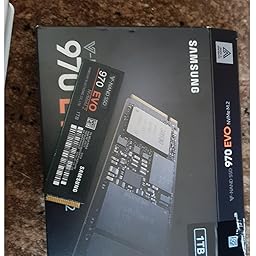
The SSD box was seemingly factory sealed.
I also bought a Dyson fan recently and what came was an obviously used, yellow stained, disgustingly old model of a Dyson fan. I hopped on Live Chat, they apologized, initiated a return - few weeks later I get a semi-threatening email from Amazon telling me that the Dyson fan I sent back "wasn't sent back in its original condition" - I hopped on Live Chat and made sure everything was ok with my account (it was) - but still, ..wtf. this is a problem.