On the other hand, if they think that they'll catch up by replicating things in the united states down to the layout of research labs... then that's kind of hilarious and they've really missed the point. It's like the Soviets copying the space shuttle and concorde. They're copying the wrong things, too late.
(1) Japanese semiconductor industry, for which there is an excellent NHK documentary [1].
(2) After WW2, the British invited Soviet engineers to tour jet engine factories as a token of good faith. The engineers documented the factory layout, and wore adhesive on their shoes to gather metal filings for later analysis. A few years later, Mig-15's were shooting American planes out of the sky over Korea. A similar example: the British transferred huge bodies of knowledge to US aircraft engine manufacturers during WW2. This laid the foundation for the industry's future success.
Here is a related link. https://www.inkstonenews.com/tech/chinese-spy-accused-trying...
Treatment, how it's worked, how it's coated are just as important.
Not to mention how contaminated filings usually are.
They are being thorough.
And then he told them everything during an interview. Or maybe it's all lies to hide something else. Who knows.
But something doesn't add up to him just confessing that quickly all that information
And wiping your phone before international travel, particular to China, is just smart. That doesn't imply wrongdoing.
This is super common with industrial espionage. As a reductio ad absurdum after 1991 I believe the Russians sold working fighter jets with detailed blue prints and instructions on how to manufacture all the components to the Converse Chinese. They still failed to make a perfect copy. Same deal for whatever the Soviet copy of the B-52 was. Building a sophisticated piece of machinery when your supply chain is very different you have to make compromises and different choices and they all add up.
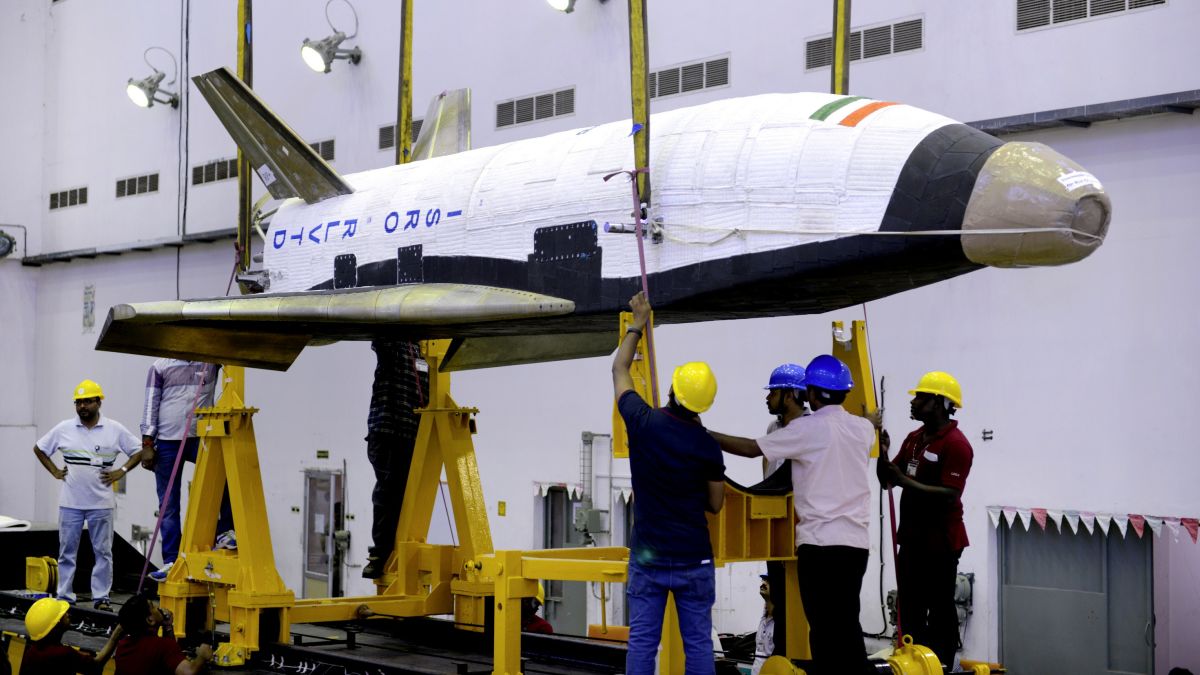
This sounds rather absurd given that preparing a space shuttle for launch takes literally months. But the idea was, as far as I can tell, that it would launch on a regular mission, then use its heat shield and aerodynamic surfaces to change orbit inclination radically while out of reach of soviet radar, resulting in totally unexpected direct overflight of Moscow, making a decapitating strike possible.
There was industrial espionage too. Considering they had the former and political backing, it's surprising how much of a disaster the 144 was - Not least because it was built for a market that didn't exist (comrade) in the Soviet Union, it was a noisy deathtrap. Their western equivalents flew somewhere on the order of a thousand times further (Concordski only did about 100 commercial flights)
Not quite, a layout, and process organisation of some high end labs are quite important, especially if you deal with some hazardous materials, and want to design protocols to avoid contamination/theft.
If he is a bacteriologist, then, moreover given what's in the news these days
"... the type entered large-scale service in 1949. Entry into service of the Tu-4 threw the USAF into a panic, since the Tu-4 possessed sufficient range to attack Chicago or Los Angeles on a one-way mission ...
and early Intel microchips: https://en.wikipedia.org/wiki/KR580VM80A , which included military versions.
Here’s a good summary of its life: https://youtu.be/XLOCQw5s9Uw
The Buran only existed in order to send a message. And it was also technically better designed than the space shuttle.
Now NASA did end up spending a lot of time refurbishing those engines, but if they wanted more frequent launches they could have simply built more engines. The program dramatically misunderstood how much they would be flying resulting in vastly higher costs over time.
Which was the major design flaw of both systems. Dig into things more and Buran was simply an even worse fit for either program than the Shuttle ended up being.
they didn't though, please try again.
It just occurred to me to check out the Mig-29 on Wikipedia, and it has an uncanny resemblance to the F-15.
When I say it looks like the F-15, I'm saying, as opposed to, say, the F-16 or F-18 or F-14.
And it's just a comment on the superficial appearance, not based on aerospace knowledge or about espionage.
This thread isn't even about espionage, is it?
Labs have sensitive areas too. Knowing the layout of them helps not just in-and-out operations but can also guide other kinds of educated guesses. Do lab staff in their offices have direct views of the lab equipment or are they separate? etc
The real issue at hand is that he is suspected of something worse than merely copying a lab layout. Is a laboratory setup even protected? In many cases an experiment will elude replication because the lab setup was not properly documented.
Have you stolen intellectual property?
People are pretty open about "I'm planning to work at Google for a year so I can learn how they do things and then take that with me to my startup."
If they lose the research edge, basically the only structural advantages America has is (1) public elections, (2) likely more advanced legal theory and (3) not being an ethnostate. If they don't succeed in bringing those advantages into play then the US military is "soon" going to confined to the American continent.
The US is going to have legal problems with this Chinese activity and is going to try and do something about it, whether that is intellectually honest or not.
There is no scenario where that outcome happens. It's so absurd as to barely warrant a retort. Your premise requires that China enslave the entire planet, literally. China has to physically occupy - whether directly in-border or near-shore - and dictate all choices of every ally of the US, including all NATO members, as well as all of Asia.
You missed a lot of other advantages the US has over China.
4) A demographic advantage, which is a separate advantage from just not being an ethnostate. China's demographics are rapidly collapsing. There has never been a rising superpower that maintains its upward trajectory with a failing demographics, that will hold true as it pertains to China as well. Cheap, high volume labor is their largest single advantage, and they're losing those workers at an accelerating rate.
5) The US has fewer people and a system already transitioned to a high income low labor volume approach, which is a massive advantage in the era of automation and artificial intelligence. China has to go through that transition yet and it's going to be brutal for them. China has a population the size of the US living on $3 per day; one of the poorest large segments of population on the planet. Those people will never climb the prosperity ladder because it's impossible, and that dire context is only going to get worse as China's formerly easy growth slows perpetually going forward. China has already gotten old before they got rich at the median, it's too late.
6) An immigration advantage, which is slightly different from (although it relates to) the ethnostate reference. China will never convince the Elon Musks of the world to move to China.
7) Freedom of expression and speech, which is a massive cultural benefit globally (including when it comes to propaganda). It's why the US is the only country in world history to acquire a position of global cultural hegemony, spanning music, TV, movies and cultural projection broadly. No other nation has come even remotely close. As is, China can never possess this advantage.
8) China's system requires that they install a global dictatorship, or it has to collapse back in on itself. Their system is too fragile, too easily broken. You can see that in their emotionalism and fear about Taiwan, Hong Kong, Xinjiang, any tiny protest or movement, any challenge to the party dictatorship, and how you can't discuss any of their numerous atrocities like Mao's famines or Tiananmen (ie you can never actually discuss their history). They have to expand their system of censorship globally (which is what they're trying to do right now, with Wolf Warrior diplomacy, trying to browbeat and threaten everyone into submission). In the US, you can freely discuss all of the mistakes the US has made, and everyone constantly does; we're jabbed globally 24/7 and we absorb that as part of being a superpower; that openness to criticism generates real long-term stability (not fake perceived stability, a managed image that isn't real).
9) English as the globally dominant language. The world will never adopt Mandarin widely.
10) The US is a liberal, democratic nation with a huge number of powerful global allies that are also part of the liberal order (from France to South Korea). China has no allies, only frenemies like Russia and North Korea. All the countries near China are terrified of them and will naturally ally with the US accordingly, including Vietnam. Countries like Japan and South Korea will never be allies with China, they're permanent rivals.
11) Open societies are always vastly superior to insular, closed-off societies. That includes when it comes to attracting immigration, getting the maximum out of their own people, or producing cultural output to project into the world. In the US, a Muslim genius from Xinjiang is free to become the next Jensen Huang; in China, they're in a re-education camp being tortured and denied all human rights. In the US, you can freely mock our leaders if they do stupid things (as an example) - on TV, in movies, and so on, a critical cultural element that China entirely lacks and it makes their system weak, fragile (see: Alec Baldwin v Trump, or Will Ferrell v Bush; those people would be in prison for doing that in China; the US has a long, glorious history of taking its elites to the mat, going back before Mark Twain). Being able to freely make fun of the elites, is a critical necessity to a stable system over time; in China, joke apps are illegal.
12) China has an aggressive caste system that de facto wholly revokes all rights of minority groups such as gay persons (and also including many other groups). The US welcomes and celebrates openly the vast success of a Tim Cook or David Geffen or Ellen Degeneres or Peter Thiel, China doesn't; instead, China violently opppresses all gay people (going so far as to torture them, literally, in an attempt to convert them from being gay).
13) The US has the global reserve currency and it shows no signs of being under threat of being replaced. The Yuan has basically a zero global share of the currency market outside of their borders. The reason for that is because nobody trusts China. That isn't going to change anytime soon.
14) The people of the US have the ability to openly interact with the rest of the world, which is an extraordinary advantage in all regards. The people of China have no ability to freely interact with the rest of the world's citizens, a detriment in so many ways it would take me hours here to discuss it all.
15) Dictatorships always get worse with time, as the dictators seek to retain power against all the forces that inevitably naturally want to rebel against that. Long-serving dictators essentially never liberalize a society. Xi will further crush the people of China under his lust for power, as all dictatorships do as the years go on (and he has already done plenty of that, so it'll get that much worse yet). China's political trajectory is terrifying for the people of China, given the near total revocation of all practiced human rights we've seen there in just the past decade.
16) Command economies don't function well over time. China's fast growth had been quasi masking their vast inefficiencies and economic flaws. You can see those mistakes and problems showing up in their extreme, and rapidly growing debt levels (specifically in their economy), as they require enormous constant additional debt to fake growth; in the span of just ~20 years they became the most indebted nation in history. The market economy system always proves vastly superior, you can see this all over the globe. The most successful economies are market based economies, including: the US, Canada, Sweden, Denmark, Ireland, Britain, Finland, Germany, Belgium, Norway, Netherlands, Germany, France, Spain, Italy, Switzerland, Australia, New Zealand, Japan, Singapore, Taiwan, South Korea, Israel and so on. All the highest GDP per capita nations are market based economies (with the sole couple exceptions being small energy states like Qatar), not command economies like China. China's one great trick was the combination of mercantilism and vast cheap labor. That trick has been exhausted, going forward their situation will get far more difficult as the easy slack in their economy is gone.
There are a lot more I can list.
- the RMB is indeed in use in a number of Asian countries as an informal second currency.
- USD as global reserve currency is strong but on a downward trend. In some parts of the world the Euro has become more important and the largest holder of USD is China. If they truly wanted to harm the US they could dump these in big tranches - without this unique advantage a lot of US politics (in particular the eternal debt growth) simply don't work any longer.
- from a European perspective I have to say it does not look like the US is very democratic. A two-party state effectively run by the wealthy for their own profit, with a hundred million in an economically precarious condition with not even real access to healthcare.
I do think the last years have shown that the US too is extremely fragile, just as you diagnose for the PRC.
China successfully infiltrates the US military research network and develops/steals enough technology to close the arms tech gap. Then China, aka 'the factory of the world', starts producing military gear and using it to stabilise regimes in Middle East and Africa. The US, worn down under infighting and with very high debts, cannot sustain its involvement on the Asian and African continents and is forced to withdraw. The Europeans, sensing a sea change in the world order, remilitarise and ask the US to leave.
There you go, now you know a scenario that could play out over ~20-30 years. Maintaining a worldwide network of military bases is expensive, China doesn't have to 'enslave' the planet to force the US to mind their own business. It just has to level the playing field a little and the US won't be able to afford the effort.
Oh, you mean... kinda like the US does? How deep do you think our alliances that haven't even survived a century run?
This is the thing that annoys me, many Americans approve their government doing industrial espionage to other countries, but then are morally outraged when others do it.
We're not at war, and I assume it's perfectly legal to copy information about labs or whatever, so long as you don't incidentally violate any contracts or laws.
Ultimately, there is no real morality when it comes to the actions of state actors beyond "will it improve my citizen's life?". This most certainly will, so for a Chinese official it seems moral to them.
Many people do believe it is a moral wrong to impose something on other people without their consent.
You could also make an argument that the other people are withholding something that could be used to do good for their own interests they lose the moral high ground.
In any case, there is really no moral argument to indict them, it's purely a question of interests in this case, so let's not pretend.
Let me clarify I’m pretty naïve on anything China. And not trying to say everyone over there lacks integrity (thought the opposite) but seems like lack of integrity was like trendy from what I could tell?
Maybe a person who has lived in China or is Chinese could shed more light on why they want to cheat in the first place?
It's a helpful attitude. Other countries really do things differently than the US.
From what what I've read in newspapers, talking to recent immigrants and travelling for years in Asia:
1) Both China and India consider cheating on school tests to be a necessary thing to get the highest possible score. Riots occur when school physical security or test questions are changed. So it's baked into academics from a young age.
India arrests hundreds over Bihar school cheating
https://www.bbc.com/news/world-asia-31998343
A Q and A about cheating among Chinese students
https://www.davisenterprise.com/local-news/ucd/a-q-and-a-abo...
Riot after Chinese teachers try to stop pupils cheating
https://www.telegraph.co.uk/news/worldnews/asia/china/101323...
2) In the case of China, invention originality is not a goal - results are.
3) Art copies are not seen as inferior because they have the same appearance:
https://aeon.co/essays/why-in-china-and-japan-a-copy-is-just...
4) Ideas around what democracy mean in other countries are often different than the Western model.
In Indonesia, candidates pay voters $2 to $5 per head (vote buying) and guarantee they will be repaid after they win. If they don't win, the candidates go into hiding for a while to avoid the repayments.
In China, there's Xi, dictator for life.
no democracy can exist without first spilling blood for it imho.
At least 3 Indonesian airports are named after heros of the revolution KIA against their Dutch colonizers. (IIRC a single DC-3 was shot down, killing most of those.)
Halim Perdanakusuma in Jakarta is one of those airports.
Indonesia finally got its independence after WW2 when the USA told the Dutch not to return. Indonesia is a close friend of the US government until today, doing most of their military pilot training in the US, NTSB investigation training, and of course periodic internal purges using US intelligence.
Aside from corona, Indonesia is doing very well in terms of having a popular and well-regarded general as President, and prospering. Jakarta is a beautiful capital today, and its traffic is tolerable. (They implemented a busway system with reserved lanes, which is heavily used by commuters, and a new light rail system is going online around this time.)
Bali is not doing so well, as peak tourism is tough on locals, with insufficient electrical production, and agricultural-use water diverted to the tourist areas like Kuta - in at least one area, they can no longer grow rice.
I’m a little disappointed how words loose meaning over time. People are extremely shocked watching video games. And there are no words to express their feelings when, for example, their dog hit by a car? Because barely anything can be more shocking than extremely shocking.
> “I wondered if [the municipal health authority] got it wrong,” she says. “I had never expected this kind of thing to happen in Wuhan, in central China.” Her studies had shown that the southern, subtropical provinces of Guangdong, Guangxi and Yunnan have the greatest risk of coronaviruses jumping to humans from animals—particularly bats, a known reservoir. If coronaviruses were the culprit, she remembers thinking, “Could they have come from our lab?” [0]
Given that a leading virologist who specifically studies bat coronaviruses at the Wuhan Institute of Virology considers this a possibility, I think it's safe to say that it's not some wild conspiracy theory. I obviously don't know what happened, and it seems very plausible that the virus came from standard zoonotic transfer, but it's a bit unfair to characterize this as a conspiracy theory.
[EDIT] The article was actually changed since I read it:
"She is distressed because stories from the Internet and major media have repeated a tenuous suggestion that SARS-CoV-2 accidentally leaked from her lab—despite the fact that its genetic sequence does not match any her lab had previously studied."
So it sounds like she came to the conclusion that it wasn't an accidental release in April.
[0] https://www.scientificamerican.com/article/how-chinas-bat-wo...
And all the ambiguity means any stance on accidental release vs standard zoonotic transfer is going to be driven more by politics ("China is evil!" "No it's not!") than by any empirical evidence.
https://medium.com/@yurideigin/lab-made-cov2-genealogy-throu...
As I understand it, the best reasons to suspect lab escape are:
1. The horseshoe bats thought to carry the virus live about a thousand miles away from Wuhan. Why wouldn't the virus start over there instead of in Wuhan.
2. The Wuhan Virology institute was a "BSL-4" lab, China's first and only. The BSL-4 lab is the only kind rated to handle very severe or infectious pathogens.
2.5 There were preexisting documented concerns about the safety protocols at the lab, saying they were substandard.
3. The Wuhan lab worked on "Chimeric coronavirus" exactly like Covid.
There's a lot more evidence and analysis from people more capable than me (see sources 3 & 4), but to me, the basic case "We are absolutely certain it came from bats a thousand miles away and definitely not the bioweapons lab next door researching this exact type of virus" makes me pretty suspicious. Add on to that the "mainstream" consensus has been wrong at every step, no lockdown, it's the flu, masks won't help, slow and few tests, etc - and I don't think anyone is really justified in dismissing the lab escape theory out of hand. Perhaps the experts are wrong. Again.
I'm actually not familiar with the evidence claiming that it's certainly zoonotic. My understanding is that is less likely due to the fact that it looks like a combination of a horseshoe bat virus and a pangolin virus - which theoretically could happen if a bat caught a pangolin virus, those two viruses infected the same cell, while reproducing the viruses were accidentally merged to cause the resultant virus to still be viable and have gained function, and then that unlucky bat traveled a thousand miles away to Wuhan to enjoy a bat stew...
Either all that, or, again, the neighborhood bioweapons lab with sloppy safety controls that was genetically modifying coronaviruses accidentally let one out.
1. https://www.livescience.com/coronavirus-wuhan-lab-complicate...
2. https://www.bbc.com/news/science-environment-52318539
Whether or not this is a bioweapon is unclear. If it is, perhaps it's designed to shut down economies rather than kill people. On the other hand, perhaps it isn't a weapon at all and is just a research project similar to the other Chimeric coronaviruses produced and studied at the Wuhan lab.
There may be plenty of virologists who think this couldn't possibly have come from a lab, but the problem right now is that when they say it couldn't possibly have come from a lab, they don't have any good reason, that I've seen, to support that conclusion, whereas there's a lot to suggest lab escape is possible. I'm willing to listen to people who know more than me, but I need them to actually show some evidence. The people who are showing evidence are those I linked to in my previous comment in points 3 and 4. It seems like there's a great deal of evidence for a lab escape.
In fact, I would say it's "likely". If you see a nuclear leak somewhere, it's not a "widely implausible conspiracy theory" to think it might come from the nuclear power plant in that same area.
I don't know if it actually comes from that lab. I'm just saying it's not a wild conspiracy theory to think that it might well come from there.
China’s intellectual property theft is really getting out of hand. It’s about we take a stand in one way or another.