The issue is that this is not just a random social media post, it's coming from the President of the US, and most people expect that someone in that position will not post clearly false messages, specially when those messages affect something as fundamental as the election process.
Do most people still expect that someone in that position will not post clearly false messages, specially when those messages affect something as fundamental as the death of thousands of people and the overthrow of a government?
Iran contra, Watergate, Vietnam, ...
Is there any trust left?
It's bewildering that the answer is, "Yes". It's discouraging that so many presidents have so often deceived the people so horribly. It's much much more discouraging that the people don't learn.
How exactly is a society with those principles supposed to function?
B: don't demand that politicians meet standards
Your argument (not mine): A -> B
Then you argue that B is dysfunctional so A leads to dysfunction.
Can you not imagine some C such as
C: demand that politicians live up to some standard
Wherein A->C makes everything better?
The fact that you concocted B to discredit A is a logical fallacy called "strawman".
Either you already understood this, but hoped for an audience that did not, or you didn't even realize what you had done. I point it out here for your possible benefit and for the possible benefit of anyone else who doesn't understand this flawed reasoning. I apologize to everyone who recognized it immediately and has then suffered through this response.
Language has implied meaning, it's one of the maxims of conversation in the field of linguistics, of the Cooperative principle [1].
If you're going to immediately jump to technical dissection of a conversation, you should probably consider the relevant field first.
[1] https://en.wikipedia.org/wiki/Cooperative_principle#Maxim_of...
That said. I don’t see a solution to this dilemma. It has no satisfactory solution.
Unfortunately, the modern political climate is such that even that is considered censorship. We can't even dare claim that lies exist, because obviously no one person or institution can be trusted to define what is and isn't truth without an ulterior motive.
So the only politically correct solution is to assert that all politicians are equally (maximally) corrupt, all statements are equally valid, all attempts at nuance are motivated by partisan hypocrisy, and any possible solution is a slippery slope to an Orwellian dystopia, so we have no option but to simply let the fire burn.
Although I must say, it is strange how none of this seemed to be the case prior to 2016.
Now is an opportune time for Trump to make a big claim to get attention and frame reality to his advantage. Politics 101. Trump is actively being attacked by a well established and well funded machine. Reminding people of this as election time approaches mobilizes them.
Only one of the two is realistic.
https://www.politifact.com/article/2013/dec/12/lie-year-if-y...
This lead to huge stability in Iran and the middle-east and arguably lead to the rise of Al-Qaeda and a super unpopular right-wing religious government in Iran that they have now.
[1]: https://en.wikipedia.org/wiki/1953_Iranian_coup_d%27%C3%A9ta...
No knowledgeable person believes what Trump is saying about mail in ballots. I don't think he believes it. This is really different.
Except the his administration part. I dont think cheney and rumsfeld believed it. It was largely manufactured. And the “counter arguments” werent really arguments. The administrations own advisors said the uranium couldnt have been sold.
And the tubes they barely clung to as proof were heavily contested by just as many that believed it internally. Thats not actionable intel.
And when the advisor outed his own reports publicly, his wifes career was ended by being outed.
It was malicous from within from specific participants, but not necessarily the president. Unvetted, unactionable intel was used as cover. Nothing more.
Bushes negligence was not being throrough and surrounding himself and empowering the absolutely wrong people. But the buck still stopped with him.
https://www.nytimes.com/2012/10/07/us/politics/as-more-vote-...
> Yet votes cast by mail are less likely to be counted, more likely to be compromised and more likely to be contested than those cast in a voting booth, statistics show. Election officials reject almost 2 percent of ballots cast by mail, double the rate for in-person voting.
You could say that 1% increase in problems is small, but in close elections that could easily be considered huge.
> There is NO WAY (ZERO!) that Mail-In Ballots will be anything less than substantially fraudulent. Mail boxes will be robbed, ballots will be forged & even illegally printed out & fraudulently signed. The Governor of California is sending Ballots to millions of people, anyone..... ....living in the state, no matter who they are or how they got there, will get one. That will be followed up with professionals telling all of these people, many of whom have never even thought of voting before, how, and for whom, to vote. This will be a Rigged Election. No way!
This is also patently false - they're sending out ballots to registered voters, not everyone regardless of how they got there.
> That will be followed up with professionals telling all of these people, many of whom have never even thought of voting before, how, and for whom, to vote. This will be a Rigged Election. No way!
Who are these "professionals"?
I thought that according to the right, Americans were perfectly capable of making life / death decisions for themselves and those around them during an active pandemic. So a trivial thing such as misinformation should be easy to deal with for them.
They’re called “campaigns.”
And they work especially well on the kind of people who think Trump’s posture of outrage is in response to genuinely outrageous behavior.
(Disclaimer: I am pro mail-in voting and lean leftist in my political beliefs. I am merely disagreeing that there are no pushes to encourage people to vote that are also anti-trump.)
So basically he is afraid of more people voting? Like how is a election where more people then ever vote rigged? Like wtf.
This might fall in line with the analysis of <forgot name sorry> which claimed that election results are more based on which people vote and which don't then on swing voters and that swing voters are pretty much irrelevant.
If this is true and it turns out that an majority of voters in the US is more on the side of the democrats then a voting method which makes more people vote could indeed cause a long term defeat of the republicans in a fair democratic non rigged manner!
But the more accurate statement is that some groups of people decided not to vote at all because they disliked Hillary, and other groups of people decided to show up and vote.
You are forgetting that most Americans are self-proclaimed independents and not sworn to support either of the two parties.
https://news.gallup.com/poll/15370/party-affiliation.aspx
If you look at the week by week numbers, you see variance; I suspect most independents lean one way or another, but their willingness to commit in a poll varies based on various affairs.
With regards to your other point: Hillary did not win the election, no matter how you spin it. She won the popular vote, but that means nothing in terms of who becomes President (read: who wins).
We also don’t “value some people’s votes more than others.” The Electoral College votes based on the way that state’s populace votes, and every electorate’s vote is equal. However, each state can have their own rules regarding how those votes are distributed: some states are winner-takes-all at the state level, while Maine and Nebraska are winner-take-all at the district level.
One can argue whether the Electoral College should exist at all, but it’s worth keeping in mind why it was created: we are a union of states (United States of America), not a homogenous unit (United America?).
I didn't say she did. I said she won the democratic election, which you call the popular vote. It's the same thing.
> We also don’t “value some people’s votes more than others.”
This is another tomato tomahhto splitting of hairs. A Nebraskan voter's vote is worth about 3.4 Californian votes. If you don't consider that as "counting some people's votes more than others", I don't know what to tell you. We can argue about whether you think that is a good idea (aka have the electoral college debate). But there should be no debate whether we do systematically prefer some voters over others.
This stance just ignores the facts of electoral college vote allocation as well as the related and probably much more important existence and power of the Senate. The rules that define the federal government intentionally discount the contributions of millions in the most populous states. It's a crime that would have been rectified decades ago were it not explicitly written into the Constitution (see Baker v. Carr).
[EDIT] to be clear it's fine to think some parts of our election systems suck (they definitely fucking do) but "it's not democratic" isn't a very useful, meaningful, or even clear objection, per se.
Lets say the states decide to send out mail in ballots to all members of a house hold. A parent intercepts the ballots and fills them out on behalf of the kids or grandparents, or even the previous tenants. All of a sudden casting multiple votes becomes much easier by a single person.
In a more cynical situation, the ballots are intercepted and returned filled out by party members.
"The Governor of California is sending Ballots to millions of people, anyone living in the state" is a specific claim, and would need to be supported. It's a different category of claim than merely boasting "I am the best president".
> There is NO WAY (ZERO!) that Mail-In Ballots will be anything less than substantially fraudulent
Translation: 100% certainty that Mail-In Ballots are substantially fraudulent
Where do you get the 2% from?
> Maybe he thinks 2% is “more than substantially”
We don’t know what he thinks - we know what he wrote. And he didn’t write a “maybe 2% chance of fraud”
He specified a 100% certainty of substantial election fraud
For an example, I could pull the same trick on your comment. I could try and convince people that "does indeed," implies 100% confidence, and then I could point out that since from a Bayesian perspective you should never reach 100% confidence, you can't know what you're talking about. Obviously nobody would buy that, because it's not you that wrote down 100%, it was me.
In order to make that reasoning (you could say that arguments are not false or true, they're just arguments) he's using false (CA will not be sending ballots to "anyone") and unsubstantiated (mail-in ballots have been working for years without extended robberies and forging, why would this be any different?) claims.
You can search and reason about the words so that "technically" he isn't lying. But the actual message he's sending is very, very clear.
States like Oregon and Washington have systems in place to make sure every ballot is counted. You get 18 days to send in your ballot, you can check online to see if your ballot has been received. If not, you have plenty of time to request a new one.
Oregon has been voting by mail for almost 20 years. In that time they have sent out about 100M ballots with only 12 cases of voter fraud found.
But here is what people seem to gloss over -- Yes, Oregon has been voting by mail for almost 40 years in fact. But it wasn't just done overnight. In fact, the process started before most here were born; in 1981 mail-in voting was allowed at the local level[0], and it wasn't until 6 years later that it was determined to be something Oregon would do every year. And it wasn't until 2000, nearly 20 years later, that presidential elections were included.
What we're talking about for this election cycle is drastically and suddenly switching the method of voting, not phasing it in over 40 years like Oregon did. When you make a drastic change like that, the situation is ripe for failure and abuse, because the people and systems in place are not equipped to handle the situation. Frankly, they don't even know what they're getting into until they're into it, and a major election is not the time to find out that the whole system is messed up.
Oregon may have taken a long time as it was a leader. Charting the unknown. States enabling more mail in voting now have well established examples to follow. Its hardly "drastically" changing anything.
If I've learned anything working with state governments, it's that they all think they know better than the other states. They'll all set off on their own paths, rather than duplicating the successes from other states.
Only after a few annoying failures will they come to something akin to parity (in the case of immunization registries, it's the CDC's specification guidelines, which were there all along).
Edit. From Wikipedia, https://en.wikipedia.org/wiki/Elections_in_Oregon#Balloting
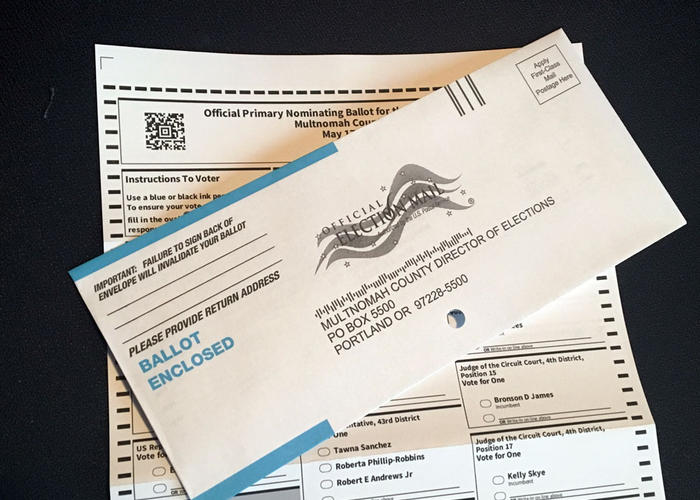
Ballots packs are mailed to every registered voter 14 to 18 days before the election. When the ballot pack comes in the mail, it includes:
    An official ballot
    A secrecy envelope
    A ballot return envelope
Once received, an Elections Official at the elections office where the ballot is received will compare the signature on the ballot return envelope to the signature on the voter registration card to verify that the voter is registered to vote. Once verified, the secrecy envelope containing the actual ballot is removed and polled with the other ballots. Once the "polls" close at 8pm on Election Day, the ballots are removed from their secrecy envelopes and counted.
    Open the ballot envelope and the secrecy envelope
    Note who you voted for
    Pack the secrecy envelope and the ballot envelope
    Use the vote information in whatever way they see fit
Variation:
    Hey grandpa Joe, I'm here to help you vote
    Note who you voted for
    Help you pack the secrecy envelope and the ballot envelope
Use the vote information in whatever way they see fitAlso, what stops someone from doing that with the current voting system? We have computers do the counting with little to no oversight; They could easily be programmed to report people who “voted the wrong way.”
With regards to your variation, that’s an inherent weakness of vote-by-mail, yes. There’s not much that can be done about that other than outlawing vote-by-mail.[^a]
[^a]: Due to the way the Constitution is written, the power to decide the method of voting is not with the federal government. As such, the Tenth Amendment delegates that power to the states. Meaning, the power to require “secret ballots” rests with the states, and many do not have such requirements in their Constitutions. It also means that the federal government can’t outlaw vote-by-mail without a Constitutional amendment.
On voting machines, good point. We should not use voting machines either.
It seems to me your criticisms very much fall into "letting the perfect be the enemy of the good" territory. States have conducted some version of vote-by-mail or absentee balloting for decades, and there's no evidence I'm aware of that either of these have, in practice, materially increased voter fraud. Furthermore, studies on existing voter fraud conducted by groups like the Brennan Center for Justice and the Heritage Foundation have concluded the incident rates are around 0.0025% -- and that's the high end of the estimates. Even if your concern that a push to move most states to vote-by-mail in the 2020 election causes that number to go up substantially proves valid, how likely is it, truly, that it increases by the two orders of magnitude it would take to bring it up to a quarter of a percent -- and that such an incredible increase goes essentially unnoticed and unchallenged?
This is a cost benefit analysis, there are known upsides with no proven downsides and the only downsides seem to be unproven.
* Trust but verify. I'm not aware of a cost-effective way to monitor mail-in voting. Suppose I want to observe the process. Do I need to sleep in the voting collection room for 18 days in a row to monitor that no one is messing with the ballots? What about the post office? What about the post truck?
The argument 'is the proven voter fraud higher when using voting process X vs process Y' cuts both ways. I haven't seen evidence to conclusively prove that proprietary voter machines with no paper trail tamper vote counts. And yet most people agree that paper trail voting is a much more trustworthy approach.
In King County, Washington where I live they record and livestream all ballot handling during elections [1] and the drop boxes themselves are designed with security in mind [2]
1. https://www.kingcounty.gov/depts/elections/about-us/security... 2. https://crosscut.com/2019/10/these-ballot-boxes-keep-your-vo...
If other states see higher problem rates in their vote by mail, it's likely a selection effect due to vote by mail being not the main method.
Seriously. I am getting a "we have always been at war with East Asia" vibe from this latest uproar.
If you use Google search tool to look up "mail-in voting fraud" and limit the search to before April 1st, you get a lot of concerned articles from NPR, NY Times, Propublica, etc, that mail-in voting fraud is a problem to worry about, and that expanding mail-in voting might lead to more fraud (and they also think Republicans will benefit from this expansion): https://www.google.com/search?q=mail-in+voting+fraud&source=...
But then Trump tweets about and there is a 180 and now it is disinformation to claim that a massive increase in mail-in voting will lead to a massive fraud problems.
Two old quotes are interesting to me:
From NY Times in 2012:
> “Absentee voting is to voting in person,” Judge Richard A. Posner of the United States Court of Appeals for the Seventh Circuit has written, “as a take-home exam is to a proctored one.”
From Pro Publica in March 2020 ( https://www.propublica.org/article/voting-by-mail-would-redu... ):
> “To move from a couple of thousand to a couple of million requires an entirely different infrastructure,” said Tammy Patrick, a former county election official who is now a senior adviser at the nonprofit Democracy Fund in Washington, D.C.
Just from those two quotes, it is not at all unreasonable to extrapolate and predict that massively increasing mail-in voting on a tight schedule is going to be a huge fricking problem. I don't know what the answer is, and I don't which party is going to benefit more. And even if you think Trump is wrong, he is still making a prediction that is based on real concerns, which is something that politicians do all the time, it is not a blatant error of fact.
"Statistics show." Yeah, no, that's not how it works. Evidence shows, and there isn't any, or the New York freaking Times would describe it.
There's no justification at all for that tweet. He's saying that mail-in votes will lead to substantially fraudulent elections, eroding the trust in the process. One could even consider what he's saying as dangerous to the democratic system itself.
The real effort is in getting your historic/likely supporters to show up rather than stay home. If someone is a big Biden supporter, there's almost nothing you can say that will get them to vote Trump. And vice versa. So your hope is to get your likely Biden supporter angry/scared/whatever enough to get off their butt and vote. That's what these things are about. That's why Trump says crazy flamboyant things. It's why Twitter never fact checks things like the gender pay gap, perhaps the most debunked concept in all of economics.
For me, seeing the world through this lens results in a lot more things making sense. It's especially true now that information/news is so siloed. People in power can say basically anything they want as long as it's emotionally aligned with their team. And their team will never know they've been lied to, because they don't watch the other side's rebuttals. For example, Twitter is fact checking Trump on this mail in ballot fraud issue in the same week that there's multiple examples of mail in ballot fraud in the news. But the people who think Twitter is a reasonable source to fact check Trump will never see that, so they will get away with it.
Recent election winners have used social media to present, more effectively than using just the press, a preferred narrative that has - IMO - conned the electorate and won narrow wins for parties/people based primarily on falsehoods.
You can't preserve democracy by relying solely on elections.
Those who seriously, and serially, abuse the system also attack the ability of people to post/make their vote. Again happening the ability of the demos to choose their candidates.
In some countries the system stands markedly against a fuller democracy - by use of things such as electoral colleges, or first-past-the-post voting systems.
TL;DR see para.3
Who the hell actually expects that from any elected politician, let alone Trump?
Is the idea that all politicians constantly controversial among other adults? I thought we all knew this?
Thus if you wish to say that the world is flat, then you are allowed to say so, and others are allowed to state their supporting or opposing arguments on the same topic on the same forum, and everyone is allowed to listen.
Free speech and the correctness of a message are orthogonal concerns - the Earth is flat is a false claim no matter whether there is free speech or not and neither supporting nor opposing arguments have any bearing on that fact, they may however influence other people accepting or rejecting it.
A good way of looking at rights is: yours end when it begins harming someone else. For example, one can “assemble”[^a] and protest, but once you start getting violent, your right to protest is gone and you’ll probably be arrested.
Tangent:
However, there is a controversial reading of the concept of free speech (concept, not First Amendment), and that is: what about monopolies silencing you? Most people would agree that removing a disorderly person from your restaurant is ok, but where do you draw the line when it comes to monopolies?
As in, what if a restaurant chain owned 90% of the restaurants (all brands included) in the country, and they banned you because they didn’t like the words coming out of your mouth?
I don’t know the answer to that.
----
[^a]: quotes because the First Amendment refers to it as “assembling”
Hence I think that statement should be extremely narrowly applied to direct physical violence (and threat of), and that’s it. Anything more and you are just masquerading as wanting to censor speech under the guise of that highly exploitable statement.
> Does emotional or mental or spiritual/religious harm count?
Actually, it depends. Sometimes yes; sometimes no. Anti-bullying laws are very much a thing, but then there’s the Westboro Baptist Church (where the courts have ruled their hate speech is protected).
Wikipedia has a list of “free speech exceptions”[0]. Among those include fraud (sometimes in the form of depriving someone of property through lies), CP (harm to minors), threatening the President, and others.
[0]: https://en.wikipedia.org/wiki/United_States_free_speech_exce...
I'm really not following this argument. If something is stated with a political purpose, it cannot be false?
There are several ways you could measure this - is it based on the S&P Index? Rising GDP? Income inequality reducing? Low unemployment? Balance of Payments? Not all of those measures may be true at once, and if they're not true which one is the correct measure?
The relative importance could vary from person to person. Somebody with, say, a large pension fund might see the S&P Index as the most important measure. Somebody else might view it as income inequality.
You could argue a case for each one, and each voter would have to make up their own mind as to whether they agree with the statement.
We noticed David Rothkop who had a decent size following and contributed to MSNBC and the DailyBeast was a registered foreign agent of the United Arab Emirates [1]
David Rothkopf had made some wild accusations against two presidential candidates who were most critical of Saudi Arabia and the United Arab Emirates.
We asked Twitter multiple times that if anyone is a registered foreign agent and is constantly commenting on the US primaries and elections, that twitter should flag that account with some indicator or icon.
All Twitter's government public relation person did was to give us some lip service and didn't do anything about it.
[1] https://efile.fara.gov/docs/6596-Exhibit-AB-20180927-1.pdf
Has this always been the case for you? or just in the past few years?
I didn't care about news until the first gulf war. Then something flipped a switch in my brain and I could not get enough news. When news broadcasters started adopting websites in the 90's, I was like a junkie.
I don't recall significant partisan division over Gulf War I, but I do recall a hard left/right split with the house takeover by Gingrich in 1994, and then the Clinton impeachment. Late 1990's is where things started to become bifurcated (remember, I wasn't paying attention in the 70's and 80's so it could have been as bad).
Fast forward to mid 2010's and suddenly there are too many websites with "news" combined with SEO and recommendation algorithms spouting demonstrable nonsense that I can't help but hear Steve Bannon's "Flood the zone with shit" argument.
Because it is working on me. I am over-educated (an engineering patent attorney for a top silicon company), I get paid to be a critical thinker. Facts and news just are clearly under assault from the zone-flooding angle to the point where being critical wears me to the bone.
Was this intentional, or is this a consequence?
Has the zone been successfully flooded as Bannon commanded?
The noise we interact with is the intersection of waves created half a world away and the waves we create or come into contact with locally. The best perspective to maintain, in my opinion, is that local is the most important. If you were under immediate threat of death (eg a stranger with a knife in your home), you probably wouldn't care what's happening in DC, you'd be 100% focused on the danger in front of you. I measure that as "more important". The problem is in distant or murky danger, where you don't want to be caught off-guard. You have to be able to gauge your ability to adapt and achieve safety in comparison to the magnitude of danger, then limit your anxieties. Do what you can to be prepared and accept the rest. (This is what I have learned from a lifelong anxiety disorder).
There is also no general mechanism for making sense of the massive amount of information being produced, so it's overwhelming. Google attacks the problem as an indexing tool (I'm sure they're attempting to become a generally intelligent agent). Wikipedia is a curated collection of humanity's abstract knowledge. Neither describes causality of arbitrary macroeconomic events though. If there was one broadly accepted source of truth then we'd all cling to it like a life raft.
This statement concerns me, greatly. Its implication is that facts are merely point of view statements. That is just, well, it's just wrong.
Facts are facts. The truth is the truth. They don't care what your beliefs are. If it is empirically true, then it is true.
Why and when did it become okay to hand-wave and dismiss anything you didn't believe in, personally, just because you don't believe in it? What is this world?
It is amazingly easy to lie with statistical "facts", through careful sampling, use of technical language, and overly broad or narrow definitions: https://medium.com/@hollymathnerd/how-to-defend-yourself-fro...
I could write a "factual" article claiming hundreds of mass shootings in 2020 (obviously false). I just need to define a "mass shooting" as an incident where four or more people are injured (no deaths required).
Or an equally "factual" article claiming that zero mass shootings in 2020 (also obviously false). I just need to define a "mass shooting" as an incident where twenty or more people are killed.
Exact same dataset, two different and mutually exclusive "facts".
What counts as "injured" or "killed"? If shots are fired and the resulting human stampede kills 4 people, does that count as 4 mass shooting deaths? Obviously the shooter is at fault, but these details affect the interpretation of events.
My undergrad was in statistics. In our capstone course, my professor had us read journal articles and discuss the statistical analyses within. I remember one study we read (peer reviewed, a couple dozen citations), and my professor's take away was, "I can't say it's wrong, but based on the data they gave, I can't for the life of me figure out how they reached their statistical conclusions." So yeah, it's a "fact" that the researchers reached a certain conclusion, but the conclusion itself is not fact.
I don't believe in post-truth, but "Facts are facts; truth is truth" is a philosophical statement, not a practical one. And even then, we have an entire field of philosophy to iron out those details, which we call epistemology.
Absolutely!
> I don't believe in post-truth, but "Facts are facts; truth is truth" is a philosophical statement, not a practical one.
Bingo. :)
People can lie with statistics and people can lie without statistics. The latter is much easier, but the former is possible, as you lay out.
That's why we need to check whether an alleged fact is true, or at least can be confirmed from multiple sources of evidence so it can be accepted as true for the time being. We can also check statistics for anomalies and errors. Statisticians do that all the time.
All of that is fact checking.
For example, if you let an apple fall down to the ground and you say "The apple fell to the ground", then you can't really know whether it's a fact or not, because you don't have access to the official logs of the Universe where it would be recorded that "An apple fell to the ground". So you have to trust your senses (and for example the fact that you're not under hallucination or visualizing an illusion) to put some confidence into this belief. If you know you're not under drug usage and if there are other witnesses of the event, then you'll have a very high degree of confidence into the idea that the apple indeed fell on the ground, so much confidence that you would consider it a fact.
When it comes to complex questions about society and everything that we can read on the news, such degree of confidence is very rare. In the end, the threshold at which you consider something to be "a fact" is subjective and for this reason I think all this "facts aren't opinions" thing is dangerous, because it gives the illusion that what we call "facts" are absolute and binary, whereas it's often things we just have a high confidence about, and so it opens the door to slide our standard of what a fact is.
What matters is that our view of the world shouldn't be shaped by what we hope or believe the world _should_ be, but by what it really _seems_ to be. And that is sufficient enough without having to get on one's high horse with "facts".
I don't question the casual usefulness of the word "fact" in appropriate contexts, but when the discussion at hand precisely handles the very nature of what is a fact and what isn't, we need to dig down the true implications of the word.
As soon as you start talking about what happened with those other witnesses, the group begins influencing the way each other remember what happened, and the narrative becomes more "real" than the actual memory. The more time that passes, and the more times the story of the apple falling from the tree is told, the more reinforced the narrative becomes, regardless of how the apple got to the ground.
My immediate reaction to such sentiments is that the ones who hold them would have imprisoned Galileo and poisoned Socrates. We can comfortably say that the truth exists. We cannot so comfortably say that we know what it is.
No, its implication is that claiming that something is a "fact" does not mean it actually is a fact. Which is perfectly true.
If Trump's statement about fraud is not predictive, then it is fiction and meaningless instead of wrong.
In this case, it just seems like Twitter disagrees with him. They aren't really arguing facts.
Having said that, the comparative fairness argument supports a status quo that rewards bombastic discourse, at the expense of truthfulness. We now know it is socially pernicious.
We're talking about facts established by research, indicating they have occurred in the past. I don't know what you're talking about.
Because the 'correct answer' to many questions is 'it depends...'. You enumerate the advantages and disadvantages of various options and pick an option that satisfies some sort of evaluation function (which may depend on your point of view). Some of the advantages and disadvantages are facts while others are probabilities.
This of course doesn't work well in short form media or for people who like things simple.
We've been doing it for years, on every president and congressman in America.
There are such things as indisputable falsehoods. And when important people relay them as the truth there are dozens of fact checking organizations that exist only to call these individuals out and hold them accountable to their word.
The fact that Twitter has started doing this with one specific individual is neither new nor innovative.
With other words:
- fact check => removal == bad especially if automatised, basically censorship
- fact check => warning + link to some source + maybe slightly less visibility in search (but still visible and potentially still even first result) == ok, people still can make their own opinion there is basically no censorship.
(Side note, yes I'm aware that even "non" censoring methods can have a minimal censoring effect due to peoples laziness, but it's quite limited and IMHO acceptable especially if linked sources are objective.)
For anyone who believes that Twitter should be in the business of fact-checking, or censoring harassing or disinformation, tell me which of these should be fact-checked or censored:
1. "Don't wear masks. They don't work and take away masks from healthcare workers."
2. "The government is lying about whether masks work or not because we don't have enough masks for everyone."
3. "Masks help. Everyone should be wearing masks, wear a home-made mask if we don't have enough store bought ones."
4. "Fact: coronavirus is not airborne"
5. "Coronavirus is airborne."
6. "Scientists think Hydroxychloroquine might be effective in treating coronavirus, link here: "
7. "Scientists think treating men with estrogen might be effective in treating coronavirus, link here: "
8. "Look at this video of this Karen calling the police and lying because a black man who just told her to leash his dog. Do better white women."
9. "Look at this article about this Shylock who scammed thousands of seniors out of their retirement money. Do better Jews.
10. "Look at this Laquisha and her five kids taking over the bus and screaming and disturbing all the other riders. Do better black women."
11. Look, another tech-bro mansplaining and whitesplaining why racism isn't really a thing. I can only stomach so much of this ignorance.
12. "Under the Trump administration, there are actual Nazi's in the White House."
13. "Trump is a traitor against his country, he criminally colluded with Russia to rig the election."
14. "Representative Scarborough killed his intern."
15. "There is a paedophilia blackmail network that is pulling the strings behind the Democratic party."
16. "There is no precedent that anybody can find for someone who has been charged with perjury just getting off scot-free"
17. "The United States is the highest taxed nation in the world -- that will change."
18. "Michael Brown was murdered by a white police officer in Ferguson, Missouri."
19. "If Democrats were truly serious about eradicating voter fraud, they would severely restrict absentee voting, permitting it only when voters have a good excuse, like illness."
20. "Absentee voting is to voting in person as as a take-home exam is to a proctored one. And just as teachers have reported a massive cheating as a result of moving to take-home tests during coronavirus, we can expect massive fraud as we move to mail-in ballots."
Here are my answers if I was running Twitter: I would not fact-check any of these statements. I would censor the one's using derogatory racial language that is 8, 9, 10, and 11. Also 8, 9 and 11 should be banned for harassing a private citizen. For the potentially defamatory statements -- 12, 13, 14 and 15 -- if made by a real-name account they should be let stand and the offended person or organization can sue in court for defamation if they think it is false. If made by an anon account, the statement should be removed if reported.
Can 15 really sue the person for defamation? Regardless, IMO, the DNC is part of the government and therefore open to public criticism, especially anonymously. This goes for all the other statements here about government bodies and officials.
I'm having trouble processing "tech-bro" as something worth censoring, but I have to admit it's derogatory and aimed at a particular stereotype, and so it's in the same category as the other statements. But it leads me to wonder: Don't all descriptions of a certain group of people end up falling into that category? Where does the line stop? People will (and have, historically) just start using the non-derogatory descriptions as derogatory ones if you censor the ones they currently use.
Woops. It was 9 that arguably wouldn't be harassing a particular person if the article they were commenting on was about how the person had been convicted in a court of law. My thinking is that signal boosting something bad someone has done is not harassment if they have actually been convicted of a felony.
Can 15 really sue the person for defamation? Regardless, IMO, the DNC is part of the government and therefore open to public criticism, especially anonymously.
The DNC could sue the person, but under current American libel laws, which are very strict, they would probably lose. Basically as long as the person can show some grounds for honestly believing the claim, however stretched or flimsy, the person is not liable. Libel laws in other countries are less strict.
But it leads me to wonder: Don't all descriptions of a certain group of people end up falling into that category? Where does the line stop? People will (and have, historically) just start using the non-derogatory descriptions as derogatory ones if you censor the ones they currently use.
I think the rule would be that if you are referring to a group that is a protected class (sex being a protected class) then you should use the word that that group uses to call itself. Or the very least, a neutral term, not a term invented by critics. So with "tech bro", it was not a term coined by men in tech themselves, it was coined by people who were criticizing male tech culture, and so should not be allowed.
It's always going to be a bit subjective, and there will be churn of epithets over time, but even reducing the number of derogatory epithets used by 95% is still better than nothing.
Now in fairness this was before airborne transmission was as well established [1]. The Tweet came 45 minutes before the LA Times article documenting airborne transmission at a choir practice. But still -- it is unforgivable that they said, "Fact: COVID19 is NOT airborne" rather than saying, "We don't know."
And it really shows the dangers with Youtube's policy of banning coronavirus related videos that contradict World Health Organization advice -- there is no magic pixie dust that makes the WHO an infallible authority, and like any bureaucracy, they are subject to increasing rot and incompetence over time.
[1] Actually, to be more specific, it seems this whole "airborne" versus "droplet" transmission distinction that the WHO was adhering to is a false dichotomy and that it is much more of a messy gradient than sharp distinction.
Even before we knew about the Seattle choir, Twitter could have given the tweet a fact-check in the form, "Actually, there is conflicting evidence and we are not sure to what extent it is airborne." But of course on what authority does Twitter make that fact check? There are no easy answers.
A slightly different problem, but Tom Scott did an excellent video on the automation of the copyright system on YouTube: https://www.youtube.com/watch?v=1Jwo5qc78QU
In summary, auto copyright checking solves Most copyright issues, to a degree that no other solution can really provide. And while there are a small (yet very unfair) number of false positives, the benefit that the system as a whole allows far outpaces that downtrend: for YouTube to exist!
With regards to fact checking, I'd be more interested to hear how many people who read those kind of "fact flags" actually change their opinion in an easy case (flat earth, climate change, etc.). Honestly, the problem of "true truth" might never be solved, but so will the cause of incompetence never disappear.
It doesn't need to be a solved problem to provide value by flagging highly questionable content. And many statements are known to be false or misleading, and providing info to people who don't know better is a step in a positive direction.
Personally I don’t have a problem with anyone who wants to vote by mail being able to request a ballot. Most states already allow no-excuse absentee ballets.
I think the problem arises when the State automatically mails ballots to every registered voter at an address.
If too many ballots show up at a house because someone requested it, there’s a paper trail. If too many ballots show up at a house automatically, there’s zero paper trail to be able to tell if they were all filled out and mailed back, besides the overall voter participation rate going up, which surely it will do.
Voting is a responsibility and a civic duty. It need not be effortless, and in fact it should not be effortless. It should be economical, practical, predictable, safe, and secure.
Registering to vote is one step in the process. It’s something anyone who wants to vote can and should know about. Typically cities/towns will send out a census every year which if you do not complete will result in you being removed from the voter rolls, but I’m sure it varies by state.
Once you’ve registered I think most people would expect they can lookup their designated polling time and place and arrive then to place their vote. You would not want someone who has registered and expects to be registered to be unexpectedly removed from the rolls, for example, and only discover this at the last minute.
This also doesn’t address the auditability concern. I would be extremely wary of any system which can associate a serial number on a ballot with who it was mailed to. Such a system is totally unacceptable in my opinion.
By comparison, I have absolutely no issue keeping a list of who requests a mail in ballot, just like I have no issue with keeping a list of who votes in person. Obviously people who receive a mail-in ballot cannot also vote in person, right?
So I don’t particularly like the idea of banning in person voting either. I’m sure many people will find voting by mail convenient, but I’m sure there are also people who find that physically voting in person is both an important ritual and more reassuring that their vote actually is being counted, but also could be more convenient for them.
In particular, I recall there being a very popular article/blog post that went hugely viral on Twitter comparing Trump's election margins in key states with the number of supposedly "suppressed" votes in that election, allegedly demonstrating that Trump won the election that way, where it was clear that the author knew the supposed voter suppression scheme wouldn't even work as described. Part-way through, after the breathless claims about hundreds of thousands of voters, was a careful ass-covering disclaimer about how what actually happened to voters on the purge lists which would supposedly stop them from voting would depend on the state. That disclaimer was because, in at least one of those key states Trump had to win and probably all, being put on the list didn't stop people from voting at all - they just had to confirm or update their address when they went to vote.
Politics gonna politik. Neither team red nor team blue is above slimy tactics. That's not an excuse not to push for a viable, non-partisan solution.
I personally don't think periodically scrubbing rolls is either the right solution nor a good one. When they are scrubbed, the scrubbing is usually done by elected officials (who are almost certainly not above the corruption temptation) and who generally choose to over-scrub given too little confirmable data (causing false positive to be removed and increasing the burden on the average voter who doesn't know what happened or how to assure that their ballot isn't invalidated).
Citizens should demand that the government actually use the data is already has on us and keep our address and eligibility current. One simple PubSub system with {Post Office, DMV, Credit Bureaus} as publishers of address changes and {Elections, IRS, etc} as consumers would fix this pretty quick.
1. Ballots contain: a ballot, a serial number, a small envelope and a large envelope. 2. The voter fills in the ballot and stuffs in the small envelope and closes it. 3. Voter now needs to get a code from a webpage and add to the serial number card. Here's the part where infrastructure in Iceland is excellent. Nigh everyone has personal electronic certificates on their phones so authentication is easy. I must admit I have no idea how easy or hard this would be in the States. 4. Puts the small envelope and the serial number card in the large envelope and closes it. 5. Mails in the large envelope. 6. Precinct opens the large envelope and validates the serial number. If it is valid, puts the small envelope in box headed for counting. 7. Count the votes. Declare results. 8. Investigate the "bad serials and validation number".
There are fun things to think about doing to increase confidence in the voting process. In this scheme I describe the validation code could be a hash of the serial and a salt. Then you could actually release all the validation cards so voters can actually verify that their ballots were counted.
It’s a complex and laborious process, including multiple partially automated steps both in sending, receiving, and processing an application for an absentee ballot, as well sending, receiving, and processing the absentee ballot itself (in one of several possible languages, as requested by the voter).
This includes a manual step of comparing the voters signature on an outer envelope, which is scanned by machine and presented to remote data entry techs for side-by-side comparison with the signature on the scanned application for the absentee ballot. If the signatures aren’t a good enough match as decided by the human, the ballot is rejected (and the voter eventually notified).
So if you’re not sending applications for an absentee ballot out to voters, where is this signature coming from that you are comparing against? It can’t possibly be the electronically captured signature on the drivers license, because that one is chicken scratch...
[1] - https://www.ocvote.com/election-library/docs/2007%20Grand%20...
* The tampering envelope is extended to weeks instead of hours.
* There is a non-zero risk of vote secrecy violation.
* There is a non-zero risk of voter pressuring.
Coming from a country that earned the right to vote through violent revolt, it is strange how established democracies, especially the US, are cavalier with weakening the voting process: vote on a Tuesday [???], no paper trail voting machines [???], mail-in voting [???].
In a perfect world I would execute elections in the same manner we do in Iceland. Voting booth, paper ballots, pencils for marks. We have a presidential election this summer and everyone was worried if COVID would suppress the vote. Looks like it won't since we only have 2 active cases and new cases are almost none (can't find the numbers atm but iirc we had 7 new cases in the month of May).
[0]: https://www.brennancenter.org/our-work/research-reports/auto...
One more thought: Simple >>> Complex.
Small variations in a technically correct process may break some of its properties. The more complex the process, the easier is to inject variations, some of them adversarial. If gerrymandering is to be taken as an example, this can be taken to quite some extremes by two sides driven to win the zero-sum game at all costs. But even in absence of that, bugs happen.
To nitpick one detail, I'm not persuaded by the secrecy violation prevention argument. You either prevent secrecy violation by anonymization, or you prevent vote fraud by keeping a link between the voter and the ballot. You can't have both at the same time. In person voting minimizes the bounding box of anonymization: in space, at the ballot box, and in time, the election day. Hopefully both parties afford to have observers during this space-time interval. As you spread out the voting process, both spatially and temporally, it becomes increasingly impractical / too expensive to maintain observers of the entire process.
With that, we are left with the following attack vectors: the server and its software, either via hacking or via subtle rule tweaks, targeted ballot invalidation, voter pressure. As a technopesimist, I'm especially uncomfortable that a key piece of the process is an opaque blob of silicon that can't meaningfully be inspected by a human observer. Echoes of Diebold voting machines, plus billions of dollars poured into elections. But I can see why HN audience is prone to be persuaded this is a good idea.
Clarification: serial number is mailed with the ballot, contains a signature (like two part keys for API f.ex.). You submit the serial for signing through authentication mechanism (verifying the voter). The signature can be either PKI or hash. This way you can validate serials, signatures and have them independent from the ballot after separation. If you have designated drop-off locations you insure the ballots are tamper-proof after being filled out (barring massive system-wide fraud).
http://mediad.publicbroadcasting.net/p/northwestnews/files/s...
I would really like a settled question on whether mail and groceries are safe to touch. There was a study that came out saying the virus could exist on different surfaces for different periods of time. News reported last week that CDC update the website that indicated that the study was flawed. Soon after the CDC added clarification which still leaves the conclusion open. https://www.cdc.gov/media/releases/2020/s0522-cdc-updates-co...
The subject at hand are public statements from the president of the United States. How exactly does one not "take that seriously"? Given the gravity of the situation: if it's wrong, and you know it's wrong, surely you have a responsibility to tell people it's wrong. Right?
> Ask some oracle what "fact" is and shun every other point of view?
How is Trump being "shunned" here? Twitter put a correction link at the bottom of his tweet.
That's quite an accusation; do you have a source for it?
I'm not quite sure about your intent, but I think this is a more effective phrasing:
"You say you are a person, but I say you are a banana. As a banana, who are you to dispute my facts?"
Like, you can be skeptical of the idea that the Russian interference was decisive in the election without dismissing the very real lawbreaking that happened.
I think it was inappropriate for him to stress this, and that it undermined his legitimacy and the legitimacy of the investigation. It isn't the job of an investigator to "exonerate" people that havn't been charged or prosecuted for a crime.
As far as I can tell all these comments did was validate his supporters beliefs that the investigation was a politically motivated attack, and simultaneously served as a psychological "out" for his detractors that were convinced he was in cahoots with Putin to undermine the country. Widening the divide between 2 sets of people that really ought to reconcile.
Disclaimer: I am not american, so this is an outsiders perspective.
Trump's supporters would have taken any action beyond cowed silence as evidence of a "politically motivated attack," because that's been the president's messaging. The investigation itself was characterized as "politically motivated messaging," despite having been started under Trump by Trump appointees.
Mueller isn't responsible for "widening the divide," and there was nothing he could do to heal it while living up to his mandate. The president, or at least the president's team, did a lot of illegal things during the election. You don't meaningfully hold them to account or heal "the divide" by falsely exonerating the president.
1. A total of 34 individuals and 3 companies were indicted by Mueller's investigators. A total of 8 have pleaded guilty to or been convicted of felonies, including 5 Trump associates and campaign officials. Here's a Wall Street Journal article about the convictions: https://www.wsj.com/articles/mueller-indictments-whos-who-15... Also, here's a long Wikipedia article about the whole investigation: https://en.wikipedia.org/wiki/Special_Counsel_investigation_...
2. When the Mueller report was about to be released, Attorney General Barr wrote a memo to Congress that purported to summarize the principal conclusions. Trump and Republican supporters seized on this to claim Trump was exonerated. In fact, Mueller explicitly stated that he did not exonerate Trump. Further, in a subsequent letter of his own, Mueller stated that Barr's memo "did not fully capture the context, nature, and substance" of the investigation. (Washington Post article here: https://www.washingtonpost.com/world/national-security/muell...)
3. A bipartisan report from the US Senate affirms the findings by US Intelligence agencies about Russian interference in the 2016 election. Here's a Wall Street Journal article: https://www.wsj.com/articles/senate-report-affirms-u-s-intel...
There are many more findings, but I tried to be concise in response to the specific claim that there is "nothing there".
When the investigation began and Mueller was appointed, Republicans praised him. (C.f. Fox News article: https://www.foxnews.com/politics/robert-mueller-appointment-...). Now they claim the investigation was either unlawful, or that FBI investigators were criminals, or similar. One does not need to take my or anyone else's word for what Mueller's team reported. You can get the redacted report from the government or even Amazon, and read it for yourself. You can also get the Senate committee's report from the government and read it for yourself. It is clear to me (and should be clear to anyone who has read the report or followed the story) that it is a flat-out lie to say there is "nothing there", and that Trump supporters have shifted from welcoming a fair investigation into Russian interference to attacking the investigators. And that's where we are now.
Russia had some paid shit posters and a 100k Facebook ad spend.
Blaming Russia is just a cop-out. No need to hold ourselves accountable, it was those damn Russians!
[1] https://www.theguardian.com/us-news/ng-interactive/2018/dec/...
"He was convicted on five counts of tax fraud, one of the four counts of failing to disclose his foreign bank accounts, and two counts of bank fraud."
So, he was convicted of tax fraud and bureaucratic discrepencies. While factually related to the investigation, none of these charges has nothing to do with what the investigation was about.
This is all directly related to his work for Russia and Russian interests, in exactly the same way that Al Capone's famous tax evasion conviction was the result of his operation of a criminal organization.
Tax fraud rendering you guilty of all the bad things you were ever accused of is not really sound logic. Also, I am not really defending Manaford - tbh after reading more on him, this whole Ukrainian foray seems to be one of his lesser offenses. But for example in the case of Flynn/Trump where prosecutors were taped discussing how they need to "find him guilty of anything or provoke him to cross the law", there is no doubt of bias.
The contention above was that there was "literally nothing to" Russian interference in the 2016 election. Manafort's convictions for activities related to his attempts to hide his Russian influence is clear evidence to the contrary.
I don't see anyone saying this makes Manafort guilty of "all the bad things he was ever accused of". But it makes him guilty of hiding Russian influence in the 2016 election, which was the point to be demonstrated.
Then perhaps you can give me some more clarification:
* What about the Russian troll farms running fake pro-Trump social media accounts?
* What about the hacking of Clinton's email server and strategic release of those emails right before the election (even though the e-mails ended up containing nothing incriminating)?
* What about the many people lying/obstructing justice that were investigated? Why were so many people caught lying if there was nothing to hide?
Honestly curious, I'm not from the US so I don't have a horse in the race and I don't know that much about the investigation, but it seems to be quite obvious something fishy is going on there. Whether or not Trump's team was personally involved is another matter, but it seems obvious Russia meddled in the election extensively to assist Trump in winning. That alone seems quite alarming to me.
It also feels like you are defending it primarily because it happened to someone on your team, and you would not be defending it if the situation were reversed and, say, Clinton was assisted by China or something like this, even if she had no part to play in the assistance.
Until there is no hard evidence, those troll farms are conspiracy theories. Besides, these days the left press is so ridiculously biased that NYT, Guardian, etc could easily qualify as troll farms.
* What about the hacking of Clinton's email server and strategic release of those emails right before the election (even though the e-mails ended up containing nothing incriminating)?
You mean the "e-mail server" (lol) which was "hosted" at her bedroom? You do realise that here of all places there is probably the highest number of people to see how ridiculous this is.
* What about the many people lying/obstructing justice that were investigated? Why were so many people caught lying if there was nothing to hide?
There is always something to hide, the question is were they guilty of what they were accused or not. Also after this appeared:
'What is our goal?' one of the notes dated January 24 2017 - the day of the interview - read. 'Truth/Admission or to get him to lie, so we can prosecute him or get him fired?'
I would not give too much credibility to those investigators.
1. https://www.dailymail.co.uk/news/article-8271953/Unsealed-me...
As far as I see reading about the report, there were multiple indictments made against several Russian entities and nationals for online campaigns supporting Donald Trump [1]. They were (obviously) not prosecuted, but the evidence is there, otherwise there would be no indictments.
[1] https://www.businessinsider.com.au/mueller-indicts-russians-...
* Besides, these days the left press is so ridiculously biased that NYT, Guardian, etc could easily qualify as troll farms.
This feels to me like you are not diversifying your news sources at all, and are only reading biased right-wing news and using that to feed your existing biases. The left wing media is not anymore biased than the right wing media, and there exists a scale of bias on both sides (there exists both ridiculously biased left wing media and ridiculously biased right wing media and everything in between).
I suggest you diversify where you get your news from to get a clearer picture of the world. Try to keep more of an open mind. Nothing good comes from blindly following one side or the other - both sides have plenty of good and plenty of criminals.
* You mean the "e-mail server" (lol) which was "hosted" at her bedroom? You do realise that here of all places there is probably the highest number of people to see how ridiculous this is.
Plenty of people have a private e-mail server at home for one reason or the other. This was blown up way out of proportion. Partisanship has heavily clouded your judgement here.
* There is always something to hide, the question is were they guilty of what they were accused or not. Also after this appeared:
* 'What is our goal?' one of the notes dated January 24 2017 - the day of the interview - read. 'Truth/Admission or to get him to lie, so we can prosecute him or get him fired?'
* I would not give too much credibility to those investigators.
This seems like a conspiracy theory to me. Weren't the investigators Republicans themselves?
Worse, for me in the UK, his success got adopted by UK Tories, now we also have a people in positions of power who just dodge hard questions and where possible exclude press as punishment. People in power who lie and aren't held to account. It's diabolical -- but by subverting the rule of law they're able to continue.
And that's just the head of the team. You can see the hard-left and pro-Antifa affiliations of the team outlined here: https://nickmonroe.blog/2019/11/28/dear-jack-twitter-is-poli...
Would we really want people to be the inverse ? Meaning would we like them to be more fascist or accepting of fascism ?
What exactly happened that AntiFa has become a group that people don't support ? Maybe I missed something there.
https://en.wikipedia.org/wiki/Vice_and_Virtue_Ministry
Why? because things and people are always named after what they are! See Biggus Dickus
I think people also have a problem with the violent methods employed by Antifa, such as beating up unarmed journalists.
In general, provocative and non-defensive violence seems to be a strategy employed by a small minority of people involved in the anti-fascist movement. As is usually the case, the loudest voices are amplified, so the small amount of provocative violence is highlighted by the news media, as well as by the critics of the anti-fascist movement.
The rise of right-wing, racist, nationalist, jingoist, corporatist strong-man authoritarianism.
I think there's a shorter term for that...
Would we really want people to be the inverse? Meaning would we like them to accept more of death?
Is there no way to consider social media as unreliable overall and not bother fact checking anything there? All this tech is relatively new but maybe we should think in longer time scale. Wikipedia is still not used as a source in school work because that's the direction educational institution moved. If we could give a status that nothing on social media is too be taken seriously, maybe it's a better approach.
Let me end this on a muddier concept. I thought masks was a good idea from the get go but there was an opposing view that existed at some point about this even from "authoritative" sources. In that case, do we just appeal to authority? Ask some oracle what "fact" is and shun every other point of view?