News for hackers. Stuff that matters.
Re:On whether changes in bedroom CO2 levels affect sleep qua... by DocG on Monday January 21, 2019 @02:14PM (#18962727)
I was lucky to get my hands on 5 proper co2 sensors from university, while I was teaching and working. So plenty of test places.

What I found:

-Just a couple of hours in a office, without ventilation spikes the co2 enough to make everyone dizzy and tired by the end of the day. Keeping eye on the meter and ventilating properly, increased everyones productivity and people werent so tired by the end of the day.

- Classrooms, with 20-30 people are as bad. co2 rises really fast and makes people dizzy. Most often ventilation is too low, as a cost saving measure.

-Closing bedroom door, sleeping alone made bedroom as bad by the morning than classroom or office.

-Main culprit seems to be our perfection with insulating and making rooms airtight. I do live in a cold climate, so having open vents or windows is not common half the year. It seems it has not been such a big issue before plastic windows or in older houses. I think it is getting worse with every new building.

Re:On whether changes in bedroom CO2 levels affect sleep qua... by AngryData on Monday January 21, 2019 @05:14PM (#18964126)
As someone who has built my fair share of houses and worked on many more over the last 25 years, I have to agree that our ability to seal air better than ever is causing problems, especially if you don't have forced air heating and cooling running all the time. People just completely ignore or haven't ever thought about room ventilation, positive or negative room pressures, and where and how to ventilate to the outside. In older houses there was always air leaks, small, but they let the house breath, especially if you had a central fireplace and your house was at negative pressure. I have seen many people purposefully over seal their house in ill conceived ways, to try and improve insulation, but end up causing ventilation problems with mold being especially common. Materials and vents that should let air pass through are commonly replaced with impermeable plastics and sealing tapes, many times in conjunction with a misunderstanding in expansion and contraction joints that have small gaps.
Re:On whether changes in bedroom CO2 levels affect sleep qua... by dangravell on Tuesday January 22, 2019 @05:12AM (#18967267)
> As someone who has built my fair share of houses and worked on many more over the last 25 years, I have to agree that our ability to seal air better than ever is causing problems, especially if you don't have forced air heating and cooling running all the time. People just completely ignore or haven't ever thought about room ventilation, positive or negative room pressures, and where and how to ventilate to the outside. In older houses there was always air leaks, small, but they let the house breath, especially if you had a central fireplace and your house was at negative pressure. I have seen many people purposefully over seal their house in ill conceived ways, to try and improve insulation, but end up causing ventilation problems with mold being especially common. Materials and vents that should let air pass through are commonly replaced with impermeable plastics and sealing tapes, many times in conjunction with a misunderstanding in expansion and contraction joints that have small gaps.

Sorry, but this is just wrong and is the type of "accepted wisdom" that holds back construction, particularly here in the UK.

Repeat: ventilation and permeability are different things.

Yes, permeability can achieve some ventilation but it comes at the cost of:

1) Not being reliable; it is dependent on pressure deltas around the dwelling.

2) Being potentially deleterious to the fabric of the building where escaping warm air cools and water condenses on surfaces in the fabric.

3) Being wasteful of energy.

The solution is to separate the two:

1) Seal the fabric totally, bearing in mind vapour permeability. The seal should be on the warm side of the insulation.

2) Install a ventilation system which provides reliable fresh air and, ideally, exchanges the heat leaving the building with the fresh air coming in.

We can no longer rely on folksy wisdom. Let's engineer our houses.

Re:On whether changes in bedroom CO2 levels affect sleep qua... by throw0101a on Tuesday January 22, 2019 @09:05AM (#18968283)
You may be interested in the "perfect wall" concept by Joseph Lstiburek:

* https://buildingscience.com/documents/insights/bsi-001-the-p...

Also check out Matt Risinger. They both have various good content on building science.

Re:On whether changes in bedroom CO2 levels affect sleep qua... by dangravell on Tuesday January 22, 2019 @09:31AM (#18968446)
Thanks for the reference. Trouble is there is no one "perfect" - depends on so many other constraints.
Re:On whether changes in bedroom CO2 levels affect sleep qua... by tylerl on Monday January 21, 2019 @06:40PM (#18964695)
Apparently certain residential building codes have air-freshness provisions:

I recently added A/C cooling to a previously heat-only house, and I took the opportunity to ask the company to explain some quirks in the existing system, like how the ventilation fan in the laundry room is on the same breaker as the central heating, and had a hidden timer attached to it.

The house was built (early 1990s) with a particularly powerful vent fan in the laundry room which was on (regardless of the wall switch) a certain number of hours a day, and the forced-air system had an air intake outside the house which mixed with the return air before hitting the filter.

This was all sized such that all the air in the house would be replaced about once every 24 hours, according to WA state's VIAQ ("Ventilation and Indoor Air Quality") code.

That's all been superseded by the International Mechanical Code and International Residential Code.

Re:On whether changes in bedroom CO2 levels affect sleep qua... by throw0101a on Tuesday January 22, 2019 @09:06AM (#18968293)
See also ANSI/ASHRAE Standard 62.1-2016:

* https://www.ashrae.org/technical-resources/bookstore/standar...

Re:On whether changes in bedroom CO2 levels affect sleep qua... by segmondy on Monday January 21, 2019 @09:32PM (#18965553)
I have a 100+yr old house, no vents. Old style radiator. Doors have large gaps underneath them, the holes on the floor that the radiator pipes travel through have gaps that you can feel the draft. It's annoying, but the house really does breath and is noticeable comfortable for me unlike houses with forced heat that are sealed well.
Re:On whether changes in bedroom CO2 levels affect sleep qua... by throw0101a on Tuesday January 22, 2019 @12:45PM (#18970335)
That draft you feel is money going out the (proverbial) window. It's better to stop the air going in/out through walls, doors, and windows, and bring it in in a controlled fashion:

* https://www.youtube.com/watch?v=CIcrXut_EFA

The problem is that many retrofits don't bring in outside air into the mix and just recirculate what's already in the house. This is not current best practice.

Re:On whether changes in bedroom CO2 levels affect sleep qua... by AstralStorm on Tuesday January 22, 2019 @12:53PM (#18970426)
Any kind of air exchange will cause heat loss or gain, decreasing insulation. Does not matter if it's through wall or HVAC.

If there is no draft, it means there is no air circulation.

The only difference is if the draft goes through HVAC vents or through unsealed doors and windows, or through walls.

If your local heaters are effective and seal controllable, there should be really no difference in many municipal settings as the heating is waste heat from electricity generation anyway. (Those cooling towers "greens" love to hate.)

Certain baseline air flow is strictly required and it is quite a lot, especially in small volumes.

Now, if you have to burn something to heat, then by all means do install a heatpipe recovery system.

Re:On whether changes in bedroom CO2 levels affect sleep qua... by throw0101a on Tuesday January 22, 2019 @01:53PM (#18971122)
You're not wrong, but one can mitigate energy loss with an HRV (or ERV) and get fresh air in a controlled manner:

* https://en.wikipedia.org/wiki/Heat_recovery_ventilation

With the added bonus that the air can be filtered as well, instead of coming in as-in through leakage.

Re:On whether changes in bedroom CO2 levels affect sleep qua... by marricks on Monday January 21, 2019 @05:44PM (#18964348)
And I recently remember hearing forced air is bad for air quality inside! Did I hear wrong or is there something more to the story like “forced air brings in outside air, so if your outside air is bad you’ll have trouble”?
Re:On whether changes in bedroom CO2 levels affect sleep qua... by Kadin on Tuesday January 22, 2019 @12:07AM (#18966115)
Most residential forced-air systems don't bring in air from outside (intentionally at least). They recirculate the air in the building through the heating/cooling unit (typically a combination updraft furnace with AC evaporator sitting on top).

Modern systems (since late 80s, maybe?) have return air ducts so that you get even heating even if interior doors (e.g. bedroom doors) are closed, but older systems may only have one return vent per floor or even just a single one in the house, and depend on gaps under doors and such for return air circulation.

Bigger commercial forced-air systems have had exterior air intakes and heat exchanger systems for a while, but are pretty new for residential (I've never seen one in the wild myself).

Re:On whether changes in bedroom CO2 levels affect sleep qua... by gregmac on Tuesday January 22, 2019 @03:02AM (#18966757)
Heat recovery ventilators [1] are reasonably common in Canada. Most (all?) EnergyStar homes [2] have one, and they includes most if not all the houses I've looked at (or friends have bought) in the past decade or so.

I lived in a house built around 1985 that had one, which was R-2000 [3], so they're at least that old.

[1] https://en.m.wikipedia.org/wiki/Heat_recovery_ventilation

[2] https://www.nrcan.gc.ca/energy/efficiency/housing/new-homes/...

[3] https://www.nrcan.gc.ca/energy/efficiency/homes/20575

Re:On whether changes in bedroom CO2 levels affect sleep qua... by gregmac on Tuesday January 22, 2019 @08:28AM (#18968075)
Oops, I meant houses that were built in the last ~decade are mostly EnergyStar.
Re:On whether changes in bedroom CO2 levels affect sleep qua... by millettjon on Monday January 21, 2019 @06:52PM (#18964769)
You can add filters on the blower to clean up the air. Especially important in cities.
Re:On whether changes in bedroom CO2 levels affect sleep qua... by twothamendment on Monday January 21, 2019 @10:46PM (#18965861)
Also important in the middle of nowhere when the clean, forest air turns to smoke each August.
Re:On whether changes in bedroom CO2 levels affect sleep qua... by mikorym on Tuesday January 22, 2019 @06:30AM (#18967539)
This is a bit of a side quest comment.

South Africans are (at least historically) quite different in this respect. Everyone is cold in the winter due to complete disregard for insulation (at least, when compared to Europe). People also don't get layering. The comments about construction do hold mostly. In the warmer areas of the country usually you are cold in the winters for only a couple hours per day.

When we go overseas we tend to open all the windows. Maybe this is because we are not used to long winters.

My grandparents were experts at opening select windows in their houses to create drafts in the pre-aircon age.

There is a meme: "If a guy invites you to a braai at his home at 3am, it really is a braai."

Re:On whether changes in bedroom CO2 levels affect sleep qua... by throw0101a on Tuesday January 22, 2019 @09:03AM (#18968272)
A house should not breathe. A catchy mantra I've run across is "seal tight, ventilate right":

* https://www.youtube.com/watch?v=CIcrXut_EFA

Mold is not a ventilation problem, but rather a moisture control problem. Keep the humidity down (especially with whole house dehumidifiers), and eliminate condensation points (by eliminating thermal bridging), and it goes away.

While the above video, which is from the really good channel by Matt Risinger, is a good introduction, I recommend you also check out the building science stuff put out by Joseph Lstiburek for a more science-y explanation:

* https://en.wikipedia.org/wiki/Joseph_Lstiburek

On the "perfect wall":

* https://buildingscience.com/documents/insights/bsi-001-the-p...

Presentation on control layer (especially starting around 15m):

* https://www.youtube.com/watch?v=rkfAcWpOYAA

Good webinar:

* https://www.youtube.com/watch?v=sBcNFeiWjrg

Re:On whether changes in bedroom CO2 levels affect sleep qua... by chrismeller on Tuesday January 22, 2019 @09:19AM (#18968366)
> Mold is not a ventilation problem, but rather a moisture control problem. Keep the humidity down (especially with whole house dehumidifiers), and eliminate condensation points (by eliminating thermal bridging), and it goes away.

This sounds like one of those kinds of answers that only works with spherical cows in a vacuum.

If my shower were completely open and in the middle of the living room, perhaps. Alas, it's in a small private room that usually has the door closed while in use, and now we've circled back around to ventilation...

Re:On whether changes in bedroom CO2 levels affect sleep qua... by throw0101a on Tuesday January 22, 2019 @12:31PM (#18970188)
Yup, ventilate right:

* https://www.youtube.com/watch?v=Ulaz3aUSZlQ

* https://www.youtube.com/watch?v=-3CRGhu8C5I

There are houses that are almost hermetically sealed, and do not have issues because they control temperature and humidity properly:

* https://en.wikipedia.org/wiki/Passive_house#Airtightness

Re:On whether changes in bedroom CO2 levels affect sleep qua... by dangravell on Tuesday January 22, 2019 @09:30AM (#18968439)
> A house should not breathe Well - first you have to define what "breathing" is, because I've talked to tradesmen who thought it meant allowing air in and out...

Closer to the correct definition shared amongst building scientists is to allow the passage of water vapour. Many engineers would disagree with the approach of having non-breathable walls. If you're renovating old properties you are putting a LOT of faith in your VCL if you go this route.

I like the concept of breathability personally, allied with high air tightness. But you have to use the right materials and, crucially, install it right.

Re:On whether changes in bedroom CO2 levels affect sleep qua... by throw0101a on Tuesday January 22, 2019 @12:30PM (#18970172)
Yes, moisture transport is a lot higher with air leakage:

* https://www.ecohome.net/guides/2316/the-difference-between-a...

However, if you're doing an air barrier, you can often get a moisture barrier "for free" nowadays. Since a lot of housing uses OSB/plywood, if you go with something like Huber's Zip System--which has a coating on it--you can save a lot on labour by only doing one pass around the house. Though you do have to seal the seems as well.

Otherwise something like the popular Tyvek will get the job generally done, but there are peal-and-sticks as well that tend to be tighter (and vent as well, like Delta Vent).

If one is okay with the cost, there's also the idea of simply closed cell foaming the entire house. :)

Re:On whether changes in bedroom CO2 levels affect sleep qua... by sam_goody on Tuesday January 22, 2019 @04:32AM (#18967139)
What's the solution?

My house is absolutely frigid during the winter, and I got quote for resealing it. He told me that afterwards I am either going to have to leave my windows open (no thanks!) or live with mold.

I've heard that you can install vents, but can't find useful info. My grandparents had a chute vent, and it somehow became a breeding ground for flies and all sorts of ichies. Not sure why.

And short vents sound to me like an always open wondow, which just brings in the cold.

I want the insulation, the circulation, the breathability and the warmth. Is there any way to have it all?

Re:On whether changes in bedroom CO2 levels affect sleep qua... by extrapickles on Tuesday January 22, 2019 @04:51AM (#18967196)
Heat recovery ventilation can bring in fresh air with about half the heat loss, but it needs regular maintenance.

You can also look at whole house dehumidifiers to take the water out of the air to help reduce the mold problem.

Re:On whether changes in bedroom CO2 levels affect sleep qua... by throw0101a on Tuesday January 22, 2019 @09:10AM (#18968316)
Yes. Matt Risinger has a really good channel on building science, and this video is a pretty good intro on air tight houses and ventilation:

* https://www.youtube.com/watch?v=CIcrXut_EFA

Go through the archives as well. Lot's of good stuff.

He's based in Austin, TX, so needs to worry about heat and humidity being kept out, but the principles also apply for colder climate where the cold needs to stay on the outside.

Another good person is Lstiburek, and his concept of the "perfect wall":

* https://buildingscience.com/documents/insights/bsi-001-the-p...

Re:On whether changes in bedroom CO2 levels affect sleep qua... by JauntyHatAngle on Monday January 21, 2019 @05:09PM (#18964092)
My friend studied Interior Architectural Design, one of his professors there started one lecture a year by getting the CO2 sensors, placing them around the lecture hall, showing the readings at the start of the lecture, closing the doors and then after the hour long lecture showing the readings.

During the lecture he mentioned the figures for CO2 concentration that led to symptoms, e.g. dizziness, sleepiness etc.

The reading at the end of the lecture showed that it was over the recommended limit, and well beyond the threshold that causes people to get sleepy and lose concentration. (I believe it was less than 400ppm at the start and thousands ppm afterwards?)

A simple demonstration using an older building crammed full of students in a closed space, but it was apparently quite impactful in showing the students how there are a lot of features of interior design architecture that aren't really addressed and are only coming to the fore recently.

Re:On whether changes in bedroom CO2 levels affect sleep qua... by shagie on Monday January 21, 2019 @07:57PM (#18965086)
This now makes me wonder if there is another dimension to the “people who get in early or stay late are more productive than those who work traditional hours.”

I’ve attributed this to “fewer people, fewer distractions.” However, with a CO2 component... hmm.

Well, there is another project idea. Arduino with a CO2 sensor and plotting a running total. Or not displaying and instead have a “I feel productive” dial that would allow for correlation to the recorded data.

Re:On whether changes in bedroom CO2 levels affect sleep qua... by nloladze on Monday January 21, 2019 @10:15PM (#18965726)
>there are a lot of features of interior design architecture that aren't really addressed

Nearly every standard rectangular building should be in actuality built with the energy efficient building design in mind, but we don't... out of simple mental oversight and in the increased cost in construction.

https://kammaliyaa.files.wordpress.com/2013/01/figure-11.jpg

Literally, we could save 20% to 30% in energy costs with every building with possibly only 10% to 15% increase in cost of construction, but we simply don't because we have no congregate valuation of resource consumption, only individual guilt.

Re:On whether changes in bedroom CO2 levels affect sleep qua... by valtism on Monday January 21, 2019 @07:48PM (#18965036)
Maybe this is why I would feel sleepy during lectures. I always thought it was because I was mismanaging my sleep or the teacher was boring (it was probably a combination of the three).
Re:On whether changes in bedroom CO2 levels affect sleep qua... by dcbadacd on Monday January 21, 2019 @08:09PM (#18965141)
This might also be the reason individual and small-group learning is more effective - there's less CO2.
Re:On whether changes in bedroom CO2 levels affect sleep qua... by jjeaff on Tuesday January 22, 2019 @01:26AM (#18966389)
Wouldn't that be a wacky turn of events, for all those studies showing that smaller class sizes produced better outcomes, to end up being mostly attributed to lower co2 levels in smaller groups.
Re:On whether changes in bedroom CO2 levels affect sleep qua... by vagab0nd on Monday January 21, 2019 @11:27PM (#18965992)
This might be a really stupid question but, wouldn't you _want_ sleepiness when you, I don't know, try to sleep?
Re:On whether changes in bedroom CO2 levels affect sleep qua... by JauntyHatAngle on Tuesday January 22, 2019 @12:50AM (#18966268)
I think the answer to your question is, yes, however you want to be sleepy due to a need for sleep rather than impaired function.

CO2 is damaging to your body, I am not an expert in these matters however I know that much.

Becoming tired due to CO2 is in effect a minor form of gassing yourself, and during sleep high CO2 is bad for you and I would assume does not give you high quality sleep - same as alcohol makes can make you drowsy while also interrupting your sleep.

"Natural" sleepiness has none of these downsides.

Re:On whether changes in bedroom CO2 levels affect sleep qua... by krageon on Tuesday January 22, 2019 @02:46AM (#18966690)
Do you have some followup sources for these fairly strong claims?
Re:On whether changes in bedroom CO2 levels affect sleep qua... by fao_ on Tuesday January 22, 2019 @09:29AM (#18968425)
https://scholar.google.co.uk/scholar?hl=en&as_sdt=0%2C5&q=sl...

Most of the claims are trivially verified true with a proper understanding of hypoxia and the effects on the brain.

Of course you want to be sleepy, but you don't want that sleepiness to be due to hypoxia because hypoxia is known to damage the brain.

Re:On whether changes in bedroom CO2 levels affect sleep qua... by krageon on Thursday January 24, 2019 @04:31AM (#18987196)
Hypoxia is about oxygen levels, not CO2 levels. Those are definitely related, but not at all the same.

The link you gave makes me think I actually have to dig through quite a few studies to find something supporting what you said (it's not on the first page, for anyone wondering), which is why I asked for direct sources.

Re:On whether changes in bedroom CO2 levels affect sleep qua... by fao_ on Thursday January 24, 2019 @07:56AM (#18988205)
> to find something supporting what you said read the username, I am not OP, and did not make the claim.

A simple search of "hypoxia from excess CO2" brought up https://en.wikipedia.org/wiki/Hypercapnia, which also support the claims.

Please, for the love of god, learn to google properly: http://www.catb.org/esr/faqs/smart-questions.html

Re:On whether changes in bedroom CO2 levels affect sleep qua... by justinator on Monday January 21, 2019 @11:30PM (#18966003)
Followup rhetorical question: Do you like waking up sleepy and dizzy?
Re:On whether changes in bedroom CO2 levels affect sleep qua... by nine_k on Monday January 21, 2019 @11:32PM (#18966008)
But not in the morning.
Re:On whether changes in bedroom CO2 levels affect sleep qua... by wcoenen on Tuesday January 22, 2019 @12:27PM (#18970129)
> I believe it was less than 400ppm at the start

Then this must have been before 2016. Atmospheric CO2 concentration has always been higher than 400 ppm since that year.

Re:On whether changes in bedroom CO2 levels affect sleep qua... by gnat on Monday January 21, 2019 @03:13PM (#18963225)
+1 here. I worked at an IoT startup with a lot of gas sensors. When we tested the CO2 sensor, we immediately noticed a correlation between early-afternoon sleepiness and high CO2 levels. Opening the door to the outside world lowered levels and within 5 minutes we felt more awake. It changed how I work: I still like to be warm and cozy, but now I'll bundle up and endure changing the air rather than seal every door and window as I used to.
Re:On whether changes in bedroom CO2 levels affect sleep qua... by John_KZ on Monday January 21, 2019 @05:33PM (#18964269)
I feel like most of these experiments don't control for air temperature. I feel like cold air has a much more rejuvenating effect than just lowering CO2 levels. Not that they don't matter, but it's not like you'll instantly feel better.
Re:On whether changes in bedroom CO2 levels affect sleep qua... by jodrellblank on Monday January 21, 2019 @09:42PM (#18965589)
Why won't you "instantly" feel better? Instant meaning a few breaths of outside air, anyway, likely well within the claimed 5 minutes.
Re:On whether changes in bedroom CO2 levels affect sleep qua... by a_lieb on Monday January 21, 2019 @07:51PM (#18965055)
This is wildly conjectural, but assuming the "CO2 is causing widespread cognitive problems" hypothesis is true, I wonder if there are whole colleges whose student bodies are getting slightly worse grades because of this. There are a couple of small colleges in my area that are regionally famous for their stuffy buildings.
Re:On whether changes in bedroom CO2 levels affect sleep qua... by jodrellblank on Monday January 21, 2019 @09:49PM (#18965617)
I wonder similar about office buildings or apartments which are next to large car-parks, does that measurably affect air quality inside?
Re:On whether changes in bedroom CO2 levels affect sleep qua... by kijin on Monday January 21, 2019 @10:43PM (#18965841)
If most of the cars in the car park are turned off, it might not be any worse than a building next to a busy highway where cars are actively spewing CO2.
Re:On whether changes in bedroom CO2 levels affect sleep qua... by paradoxparalax on Tuesday January 22, 2019 @01:59AM (#18966523)
The worst would be a small leak of CO (not CO2) , even in very small quantities, daily miligrams of CO coming from a leaky(small leak) Gas burning heating system. This will most probably get students scores down, among other extremmely bad health effects.

Bigger CO leaks are extremely dangerous, many people lost their lives because of heating systems.

If you can, change to Oil Flow system with burner outside the house and far and aislated from humans. Or, if you can, electrical system. CO from gas is Really Very dangerous.

(using the word "very" is against Mark Twain's advice[1], and using the word "really" is against my own advice, but there are exceptions, here above was one)

1:

“Substitute "damn" every time you're inclined to write "very" ; your editor will delete it and the writing will be just as it should be.”

                  Mark Twain
2- "delete all instances of "really" in you text, and your writing will be better"

ImmerseintheImmensity, Also unknown as InfimousInfinity, Also unknown as ParadoxParalax

Re:On whether changes in bedroom CO2 levels affect sleep qua... by kickout on Monday January 21, 2019 @02:33PM (#18962886)
Curious if you have a link to what sensors you had? Think this is cool and i've been on/off looking for co2/o2 sensors greater than recreational precision
Re:On whether changes in bedroom CO2 levels affect sleep qua... by leonroy on Monday January 21, 2019 @02:36PM (#18962918)
Can’t speak for OP but I’ve been using the IQAir Air Visual Pro and can support everything they’ve said. I try to keep CO2 around 400-500 in my office and home but it spikes surprisingly fast with even one person breathing in a medium sized room.

It can integrate with HomeBridge and has a good API and unlike a lot of IOT stuff it’s well supported and stable.

Re:On whether changes in bedroom CO2 levels affect sleep qua... by forthispurpose on Monday January 21, 2019 @04:29PM (#18963785)
do you know how accurate it is?
Re:On whether changes in bedroom CO2 levels affect sleep qua... by benmccann on Monday January 21, 2019 @11:48PM (#18966064)
It seems pretty accurate. The South Coast Air Quality Management District tested a bunch of consumer devices against a $30,000 professional device. I was deciding between the IQAir and Laser Egg 2+, which both did well according to their tests http://www.aqmd.gov/aq-spec/evaluations/field. I got the Laser Egg 2+ the other day. It's really enlightening to see how it spikes when we cook dinner or lunch on the gas stove.
Re:On whether changes in bedroom CO2 levels affect sleep qua... by drited on Tuesday January 22, 2019 @10:59AM (#18969179)
Does the Laser Egg 2+ monitor CO2? Looking at the kaiterra product page [1] I don't see it

[1] https://kaiterra.com/compare-page/

Re:On whether changes in bedroom CO2 levels affect sleep qua... by leonroy on Monday January 21, 2019 @06:38PM (#18964684)
Pretty accurate, there was an air quality report which compared about 3-4 samples of them with commercial air monitors - the lab found them adequate with some but not massive sample variance. They were the best of the consumer models tested.

Can’t seem to find the report but to be honest I stumbled on it while searching for PDFs on the subject a year or two back. (I own no stock nor have any affiliation with IQAir - just a satisfied customer - high price not withstanding).

Re:On whether changes in bedroom CO2 levels affect sleep qua... by DocG on Monday January 21, 2019 @04:14PM (#18963688)
They were too expencive to buy recreationally, at least for me. Evikon, small company that does science instruments. Sorry, cant find the model anymore, I think it was discontinued.

I do belive now though that even having recreational level sensor will give you at least understanding overall co2 levels and this something we should look into more.

I founs a paper using the same sensors that measured co2 in schools. In all cases, at certain times the measurement was higher than norm. occassionally over 2000. I can now understand much better kids getting sleepy and unable to concentrate in classroom.

Paper sadly in Estonian only: https://www.google.com/url?sa=t&source=web&rct=j&url=http://...

Re:On whether changes in bedroom CO2 levels affect sleep qua... by Ductapemaster on Monday January 21, 2019 @07:13PM (#18964870)
For a couple hundred bucks you can get a highly accurate CO2 sensor that reads out via a USB-serial connection: https://www.co2meter.com/products/k-30-co2-sensor-module
Re:On whether changes in bedroom CO2 levels affect sleep qua... by gsich on Tuesday January 22, 2019 @01:42AM (#18966461)
Try MH-Z14 or Z19.
Re:On whether changes in bedroom CO2 levels affect sleep qua... by scottdupoy on Monday January 21, 2019 @05:25PM (#18964212)
Are atmospheric CO2 levels rising to an extent that currently projected levels would have a noticeable effect in the same way?
Re:On whether changes in bedroom CO2 levels affect sleep qua... by dTal on Monday January 21, 2019 @06:07PM (#18964478)
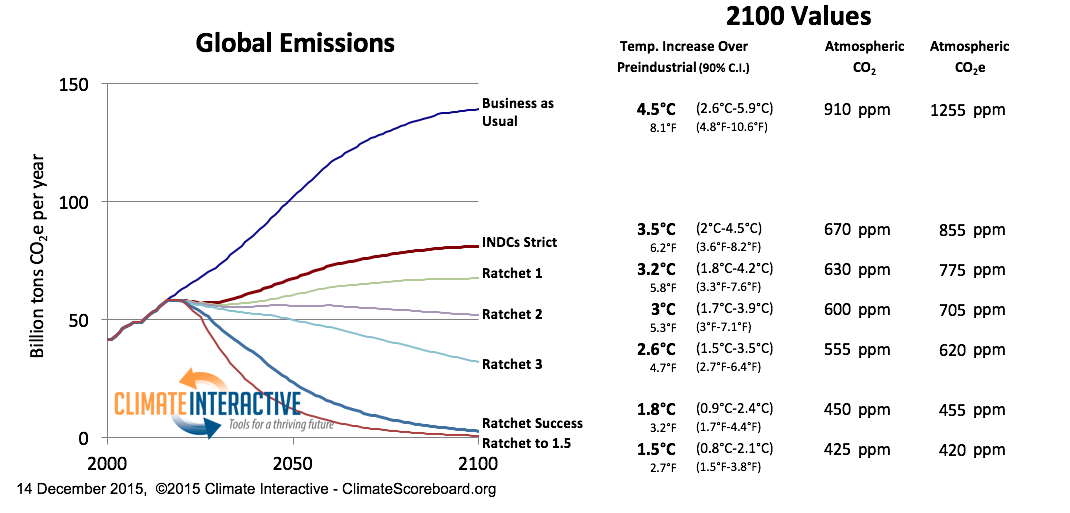
We're on track to reach 1000ppm by the end of the century, if levels continue to rise at their present (accelerating) rate. This is about the threshold where cognitive effects become reliably detectable. However, such levels also bring climate change on such an apocalyptic scale (4.5+ degree temperature rise) that industrial activity could well wind down as society collapses.
Re:On whether changes in bedroom CO2 levels affect sleep qua... by stale2002 on Tuesday January 22, 2019 @01:46AM (#18966473)
This is absolutely not true.

The predicted number is much closer to around 650 ppm, and that's assuming no change.

In reality, things like solar technology have massively gone down in price over the last couple decades, and are only continuing to reduce in price.

We will likely see 2-3 degrees of warming, but no credible scientist is making the predictions that you seem to be making.

Re:On whether changes in bedroom CO2 levels affect sleep qua... by dTal on Tuesday January 22, 2019 @05:19AM (#18967286)
I suppose the question is, predicted by whom? And no change in what?

If there is no change in CO2 emission, then yes we might restrict the total damage to 650 ppm. But "no change in CO2 emission" doesn't mean "business as usual", it means a moratorium on all kinds of expanding industrial activity.

Not only are CO2 levels increasing, but CO2 emission rates are increasing. Hell, the first derivative of CO2 emission rate was also increasing until the past couple of years, a minor but happy development that could easily snap back. "Business as usual" means an exponential curve.

Solar powered industry is still a far-off pipe dream. Even if it only takes 30 years to replace all energy sources with sustainable alternative, in 30 years huge damage will have been done. We cannot afford to just shrug and say the problem will just solve itself.

https://www.co2.earth/images/widgets-in-site/climate-interac...
Re:On whether changes in bedroom CO2 levels affect sleep qua... by stale2002 on Tuesday January 22, 2019 @05:43PM (#18973399)
> I suppose the question is, predicted by whom?

As predicted by the scientific consensus and the intergovernmental panel on climate change.

Disagreeing with them on this is no different than being a climate change denier, TBH.

The right thing to do is listen to the opinions of the experts, and this is what the experts believe and is the scientific consensus.

Re:On whether changes in bedroom CO2 levels affect sleep qua... by dotancohen on Tuesday January 22, 2019 @02:02AM (#18966539)
> The predicted number is much closer to around 650 ppm, and that's assuming no change.

Though solar and other non-carbon energy sources are coming down in price, world energy needs are outpacing them. Out CO2 emissions are increasing, not decreasing. I doubt that we'll see 1000 ppm by the turn of the century, but if the "no change" projection is 650 ppm then by simple matter of inference, due to increasing CO2 output, we should be higher than that.

Re:On whether changes in bedroom CO2 levels affect sleep qua... by stale2002 on Tuesday January 22, 2019 @02:17AM (#18966587)
What I am saying is, that we will get to the point where it literally doesn't matter if world energy demand is increasing or not.

Why? Because if solar power and others, continue to go down in price, as they are doing now, then solar ect will be cheaper than coal.

From a purely economic stand point, countries will eventually just stop burning coal, because the alternatives are just flat out cheaper, even when you ignore the costs of global warming.

That point in time, when alternatives are just straight up cheaper than coal, isn't too far away.

Re:On whether changes in bedroom CO2 levels affect sleep qua... by dTal on Tuesday January 22, 2019 @05:28AM (#18967305)
From a certain level of abstraction, if countries always did the economically rational thing, we wouldn't be in this mess at all. Building out solar capacity requires planning and foresightedness and political will. Hell, America could transition entirely to solar power for a fraction of the price of the Iraq war - in that sense, sustainable power is already cheaper than carbon-based, once you factor in the externalities of middle-eastern instability. If you factor in all the externalities - pollution, environmental destruction etc - then sustainable has been "cheaper" for a very long time.

The trouble is that countries are not purely rational, and do not factor in all externalities.

Re:On whether changes in bedroom CO2 levels affect sleep qua... by jodrellblank on Tuesday January 22, 2019 @12:31PM (#18970185)
Or maybe Solar will never be the environmental fix-everything that people hype it as - https://www.youtube.com/watch?v=ciStnd9Y2ak
[dead]
Re:On whether changes in bedroom CO2 levels affect sleep qua... by dTal on Tuesday January 22, 2019 @05:30AM (#18967318)
Why was it so important to you to say something so perversely selfish that you felt compelled to make a throwaway account to do so?
Re:On whether changes in bedroom CO2 levels affect sleep qua... by dwaltrip on Tuesday January 22, 2019 @01:42AM (#18966459)
That's an attitude that we can all apsire to.
Re:On whether changes in bedroom CO2 levels affect sleep qua... by pizza on Tuesday January 22, 2019 @01:21AM (#18966367)
Probably still going to be your family's problem..
Re:On whether changes in bedroom CO2 levels affect sleep qua... by muro on Tuesday January 22, 2019 @03:28AM (#18966847)
Not with that attitude :)
Re:On whether changes in bedroom CO2 levels affect sleep qua... by graeme on Monday January 21, 2019 @07:35PM (#18964977)
Indoor air co2 only lowers due to outdoor filtration. So, higher outdoor co2 will make us reach higher indoor levels faster. A change of outdoor air to 500 from 400 ppm, for example, means there's 16% less difference with indoor air at 1000 ppm.
Re:On whether changes in bedroom CO2 levels affect sleep qua... by rb666 on Monday January 21, 2019 @08:37PM (#18965267)
All/most modern houses (10-15 years old) have central ventilation systems here. This allows for great insulation while also having great ventilation. The central system sucks out warm air from bathroom/kitchen and uses it to warm up incoming air from the outside.
Re:On whether changes in bedroom CO2 levels affect sleep qua... by graeme on Monday January 21, 2019 @02:48PM (#18963010)
What level was it at when you started noticing those effects? And how did you measure productivity?

I have a sensor and try to keep readings low. My girlfriend isn't quite convinced though, especially in winter....

Re:On whether changes in bedroom CO2 levels affect sleep qua... by DocG on Monday January 21, 2019 @03:59PM (#18963563)
Around over 2000 I think. Less than 1000 would be ideal, I think outside is around 400.
Re:On whether changes in bedroom CO2 levels affect sleep qua... by graeme on Monday January 21, 2019 @05:13PM (#18964119)
Yeah it never gets above 1300 at our place with windows closed. With a window open a crack it stays at 700-1000.

Outside is 400 globally but often 450 or more in cities. At least on my meter.

Re:On whether changes in bedroom CO2 levels affect sleep qua... by codetrotter on Monday January 21, 2019 @07:09PM (#18964851)
My previous employer had excellent air quality and I often stated this to others as one of the things I liked about working there. A lot of people look at you kind of funny if you say that but it really was remarkable, and I really felt a difference when working in that building compared to when I went to school and a lot of other places where you stay inside for a prolonged time. I felt much less tired there than most other places!
Re:On whether changes in bedroom CO2 levels affect sleep qua... by userbinator on Monday January 21, 2019 @10:02PM (#18965671)
It seems it has not been such a big issue before plastic windows or in older houses. I think it is getting worse with every new building.

That's because the focus on energy efficiency means installing HVAC that recirculates and setting the recirculation ratio to as high as they can get away with. Before that, buildings were taking in 100% outside air to heat/cool, which was extremely inefficient but also gave no chance for CO2 to build up.

Re:On whether changes in bedroom CO2 levels affect sleep qua... by Kadin on Tuesday January 22, 2019 @12:21AM (#18966163)
> buildings were taking in 100% outside air to heat/cool

This hasn't been true since fireplaces stopped being used for heating. Even very basic furnaces, such as the coal-fired one my grandparents had in the 1940s, recirculated the air inside the house. (It was an unforced / gravity "octopus furnace", fired with soft coal, with the house temperature controlled via a damper on the chimney.) But it took its combustion air from inside, and was vented via a chimney to the outside, so the house was constantly at a very small negative pressure, and combined with the natural draftiness of prewar construction there was naturally some fresh air intake. But certainly not 100%!

I think it's the newer high-efficiency furnaces where you start to have very high recirculation ratios and consequent CO2 issues. Because they pull combustion air from outside, there's no incidental exhausting of interior air to outside (which would tend to pull in outside air through gaps in the building envelope). Great for efficiency, though.

Re:On whether changes in bedroom CO2 levels affect sleep qua... by pojzon on Tuesday January 22, 2019 @01:05AM (#18966312)
What i found is that i can open a window to bring fresh air in but togather with it magnitude of pollution that causes cancer and asthma...

Not a great choice if you ask me.

Re:On whether changes in bedroom CO2 levels affect sleep qua... by paradoxparalax on Tuesday January 22, 2019 @01:53AM (#18966494)
Move out of Beijing right now. Or out of Hebei province, or faraway from North Henan Province. Just move as sson as possible to a place with good air.

It does't not worth the money to live in Beijing, no matter how rich you can get there, and you can get rich there, but it simply does not worth.

Your life is more important, specially if you have kids.

Re:On whether changes in bedroom CO2 levels affect sleep qua... by pojzon on Wednesday January 23, 2019 @05:17AM (#18977092)
I live in Poland and we are the lungs of Europe, still air is polluted as hell.. i dont wanna think how bad it is in other countries. And its not so easy to move out if you dont have enough of money.
Re:On whether changes in bedroom CO2 levels affect sleep qua... by paradoxparalax on Wednesday January 23, 2019 @01:56PM (#18981388)
Yes, you are right. Not easy.

But I am happy to know that Poland's air still can breath, at least, compared to India or China.

I have been in Szczecin‎ city once, and I love Poland, and I specially love the Polish people.

Wish all good for you guys over there, and that the air gets better in the future, we need to hope.

Re:On whether changes in bedroom CO2 levels affect sleep qua... by simonebrunozzi on Monday January 21, 2019 @06:02PM (#18964444)
Can you suggest a commercial CO2 sensor that you think is accurate enough? Most of the ones available on Amazon.com seem to be quite amateurish.
Re:On whether changes in bedroom CO2 levels affect sleep qua... by simpsond on Monday January 21, 2019 @06:15PM (#18964537)
Vaisala makes good probes, acceptable for use in life science applications. They are expensive and you need an rs485 adapter for the ones I used. The serial protocol is nice and simple though.
Re:On whether changes in bedroom CO2 levels affect sleep qua... by pkaye on Monday January 21, 2019 @03:00PM (#18963126)
Air tight buildings need a heat recovery ventilator.
Re:On whether changes in bedroom CO2 levels affect sleep qua... by AstralStorm on Tuesday January 22, 2019 @01:01PM (#18970502)
Any ventilator. Heat recovery is optional - it is really hard to recover heat from lukewarm air without actually recirculating most of it.

The pressure drop requires more electricity due to more power in the pumps, making it a relatively bad trade - only heatpipe systems are worth anything.

Re:On whether changes in bedroom CO2 levels affect sleep qua... by gamma-male on Monday January 21, 2019 @05:41PM (#18964333)
Wow. Didn't realize how important it was to aerate. I seldom open the windows at my place.

I also remember often getting really dizzy working in my previous office, and I couldn't understand why, maybe you're on to something.

Now I'm wondering how all of that has affected my health along the years

Re:On whether changes in bedroom CO2 levels affect sleep qua... by KozmoNau7 on Tuesday January 22, 2019 @08:37AM (#18968112)
The recommendation here in Denmark is to air out for ~10 minutes, 3 times a day, ideally with all doors and windows open, making sure to get good airflow between rooms.

I think very few people actually air out that much, but I've found that it's very helpful for my sleep quality to air out just before I go to bed. Airing out in the morning also helps eliminate moisture from showering, as my bathroom doesn't have a window, nor any forced ventilation.

Re:On whether changes in bedroom CO2 levels affect sleep qua... by jodrellblank on Monday January 21, 2019 @09:47PM (#18965608)
This is one of my regular arguments in the office, I open a window, someone says "aren't you cold??" and I say "I don't want it colder, I want it fresher, less stuffy".

Your anecdata has cemented it as fact(tm).

Re:On whether changes in bedroom CO2 levels affect sleep qua... by Tharkun on Tuesday January 22, 2019 @05:57AM (#18967423)
I've certainly worked in poorly ventilated offices, and my bedroom is even worse. But I don't think I've ever gotten dizzy in an office. Is this something that affect different people at different rates?
Re:On whether changes in bedroom CO2 levels affect sleep qua... by dzhiurgis on Monday January 21, 2019 @08:59PM (#18965403)
> I think it is getting worse with every new building.

Only if you skimp on HRV system (which are cheap and works like magic).

It's lame to say it's getting worse, when it's actually getting better.

Re:On whether changes in bedroom CO2 levels affect sleep qua... by general8bitso on Monday January 21, 2019 @08:04PM (#18965118)
Check out ERVs, energy recovery ventilators.
Re:On whether changes in bedroom CO2 levels affect sleep qua... by dzhiurgis on Monday January 21, 2019 @09:16PM (#18965500)
How are these different from HRV - Heat recovery ventilation?
Re:On whether changes in bedroom CO2 levels affect sleep qua... by nkurz on Monday January 21, 2019 @10:09PM (#18965703)
HRV's exchange only heat. ERV's (where E stands for energy or enthalpy) also exchange moisture. One is not strictly bette than the other, it depends on your house and your climate: https://www.greenbuildingadvisor.com/article/hrv-or-erv
Re:On whether changes in bedroom CO2 levels affect sleep qua... by graeme on Monday January 21, 2019 @10:40PM (#18965830)
These require a ducting system, correct?
Re:On whether changes in bedroom CO2 levels affect sleep qua... by kilotaras on Tuesday January 22, 2019 @01:48AM (#18966484)
Not necessarily. There're units that are installed in, basically, hole in the wall.

This makes them very attractive for older renovated building, which used to rely on drafts for air circulation.

Re:On whether changes in bedroom CO2 levels affect sleep qua... by general8bitso on Thursday January 24, 2019 @10:01AM (#18989210)
There was a link in the comments on this site awhile back from a company that made on similar to an AC window unit, and it had an optional active HEPA filter add-on, whick looked similair to a portable ducted AC.

Also, Panasonic makes a bathroom fan ERV for about $400, which you can find on Amazon, with two ducts, one for fresh air intake, and the other to vent the stale air, and you need to have the intake and exhaust ideally on opposite sides of the structure.

Some people use it for their basement humidity levels. It is much less expensive to run than a dehumidifier.

Re:On whether changes in bedroom CO2 levels affect sleep qua... by chaosbutters on Tuesday January 22, 2019 @07:55AM (#18967891)
do you have recommendations for CO2 sensors?
Re:On whether changes in bedroom CO2 levels affect sleep qua... by paradoxparalax on Monday January 21, 2019 @03:39PM (#18963421)
There was an NBA coach who use to obligate his players to sleep with at list some inches/centimeters of air access in their windows hotel rooms the night before playing an important game/match. Don't remember what Team.
Re:On whether changes in bedroom CO2 levels affect sleep qua... by dagoat on Monday January 21, 2019 @05:08PM (#18964084)
Surely he'd have to tuck them in at night to verify that...
Re:On whether changes in bedroom CO2 levels affect sleep qua... by paradoxparalax on Monday January 21, 2019 @06:33PM (#18964651)
Could see the windows from outside the building, probably, without needing to wake the players up, if that was his wish at a certain point of the night.
Re:On whether changes in bedroom CO2 levels affect sleep qua... by Symmetry on Monday January 21, 2019 @04:56PM (#18963975)
Colder temperatures also generally help people sleep.
Re:On whether changes in bedroom CO2 levels affect sleep qua... by xeromal on Monday January 21, 2019 @06:39PM (#18964686)
I'm pretty sure I read 68F is the ideal sleeping temp
Re:On whether changes in bedroom CO2 levels affect sleep qua... by paradoxparalax on Monday January 21, 2019 @07:25PM (#18964925)
That depends if are an an Ianomami[1] born in Brazil or an Inuit[2] born in Denmark.

1- https://en.wikipedia.org/wiki/Yanomami

2- https://en.wikipedia.org/wiki/Inuit

: There is a risk, not for the Ianomami that are somewhat numerous, but that some other in Brazil are going to Extinction soon, after the last elections in that country. Only if they could move to Denmark...Or Northern Canada, where there are Inuits too. But North Canada recently is so full of political "moon landing" deniers that they probably would not be very welcome there. But Greenland is far enough from "civilezed" people. But they will have to learn how to hunt monkeys and collect mango fruits in the north-pole.

Re:On whether changes in bedroom CO2 levels affect sleep qua... by paradoxparalax on Tuesday January 22, 2019 @12:47AM (#18966252)
Don't know if above is getting downvoted by the the rightists or by the leftists here, what is fun. But probably getting d.v. because of being too caustic, too snarky and too ironic, what is not fun and I confess I deserve.

And, most important off all, I am getting downvoted for being Not polite to xeromal, and I apologise to xeromal for this. My comment sounded like he was being discriminative or something like that, what is not true, and off course I should have found a decent way of pointing that the ideal temperature to sleep varies from person to person. And off course, I should have avoided going astromically off-topic. But will not delete the comment, to let the lesson there for myself.

Irony is really not welcome, I have to make an effort to understand that and abide by rules and follow the recommendations.

But giving or asking explanations for up or down votes is equally Not recommended and not welcome, sure.

Better to abide. Otherwise just do[1] like Bender Bending Rodriguez of Futurama.

The original quote from Bender is: "I will make my own Lunar(really on the moon) Amusement Park, whith Blackjack,... and Hookers!!!. ...Well...forget about the Blackjack...You know what?...forget about the Park too."

1- https://i.kym-cdn.com/photos/images/original/000/348/790/b3f...

Re:On whether changes in bedroom CO2 levels affect sleep qua... by Balero on Tuesday January 22, 2019 @06:34AM (#18967548)
Hi, I didn't downvote you, but hopefully I can shed some light on why other's did.

This is a conversation about the levels of CO2 and how it effects a person, especially their sleep. In this part of the conversation people have started to talk about how the temperature also effects your sleep. This was a natural progression, as less CO2 needs more ventilation, and brings with it colder temperatures.

You then started talking about two groups of indigenous people in different climates. Brilliant, I'm interested in how these two groups of people sleep! You however did not talk about these people's sleeping habits (as would have been another natural progression for the conversation) but instead go completely off the topic of conversation and talk about a bunch of unrelated topics, with very tenuous links between them.

Your comment did not add to the conversation, at all. Neither has mine of course, but I hope it goes some way to explaining the unpopularity what you said.

Re:On whether changes in bedroom CO2 levels affect sleep qua... by paradoxparalax on Wednesday January 23, 2019 @02:03PM (#18981465)
Thank you Balero, I hear your words.

Only see this your comment now, long time after.

But Thank You for taking your time to help me seeing those things, really.

Cheers and wish you all the good in the universe!

Thank you!