I don't know about American law, but here in the UK you would lose that complaint. A price label is what is known as an "invite to treat", and a store is under no obligation to sell the item to you at that price. If they say it's a mistake they can and you have no right to say otherwise.
A price of 1/5 ct would probably be considered too low to be sensible and would not be considered binding.
For example, Wisconsin:
98.08 Price refunds; price information. (1) A person who uses an electronic scanner to record the price of a commodity or thing and who sells the commodity or thing at a price higher than the posted or advertised price of that commodity or thing at least shall refund to a person who purchases the commodity or thing the difference between the posted or advertised price of the commodity or thing and the price charged at the time of sale.(2) A person who sells a commodity or thing and who uses an electronic scanner to record the price of that commodity or thing shall display, in a conspicuous manner, a sign stating the requirements of sub. (1).
https://glitchndealz.com/glitch-laws-by-state-pricing-error-...
Did you actually do either of these things?
Ignorance of math is a bad thing!
> The store must honor the price in the advertisement, even if it is wrong, until they correct the misrepresentation using the same advertising medium and/or by corrective signs in the store.
> Items sold in a grocery store must ring up at the lowest displayed price. Food stores that are in the waiver program must offer consumers one of the items free if it scans higher than the lowest advertised price.
[1] https://www.mass.gov/guides/a-massachusetts-consumer-guide-t...
Does anybody reading the sign not understand what it's trying to communicate?
"It's a banana Michael. What could it cost, 10 dollars?!"
You say "obvious" but I don't think that means what you think that means. Why is it obvious? Why would it be impossible that a store sells bananas at a loss in order to pull people in (what people in sales call a "loss leader")? If you don't buy bananas regularly, why couldn't you assume this is just a great deal?
If there were a sign advertising 5 bananas for a penny (or whatever) with no asterisk, fine print, or mention that "terms may apply", I would be livid if I couldn't take advantage of that price.
If you would like links: Here's a 5 year old piece about Amazon giving away bananas: https://www.foodandwine.com/news/amazons-free-bananas-disrup...
Here's a 2 year old coupon for free bananas from some couponing blog: https://www.thecouponingcouple.com/free-bananas/
Another blog, more free banana coupons: https://spoonuniversity.com/how-to/10-food-budgeting-tips-i-...
TL;dr- Don't put up bullshit pricing signs and assume people will understand the "joke", you're coming from a place of different cultural awareness and it will burn you when people like me get involved.
Also, grocery stores sell a lot more than just groceries.
More of the backstory: https://verizonmath.blogspot.com/
Honestly, I think the correct policy is probably just to interpret .19¢ as a syntax error.
Trader Joes could sell for .19 cents and require a minimum purchase of ten pounds, for example.
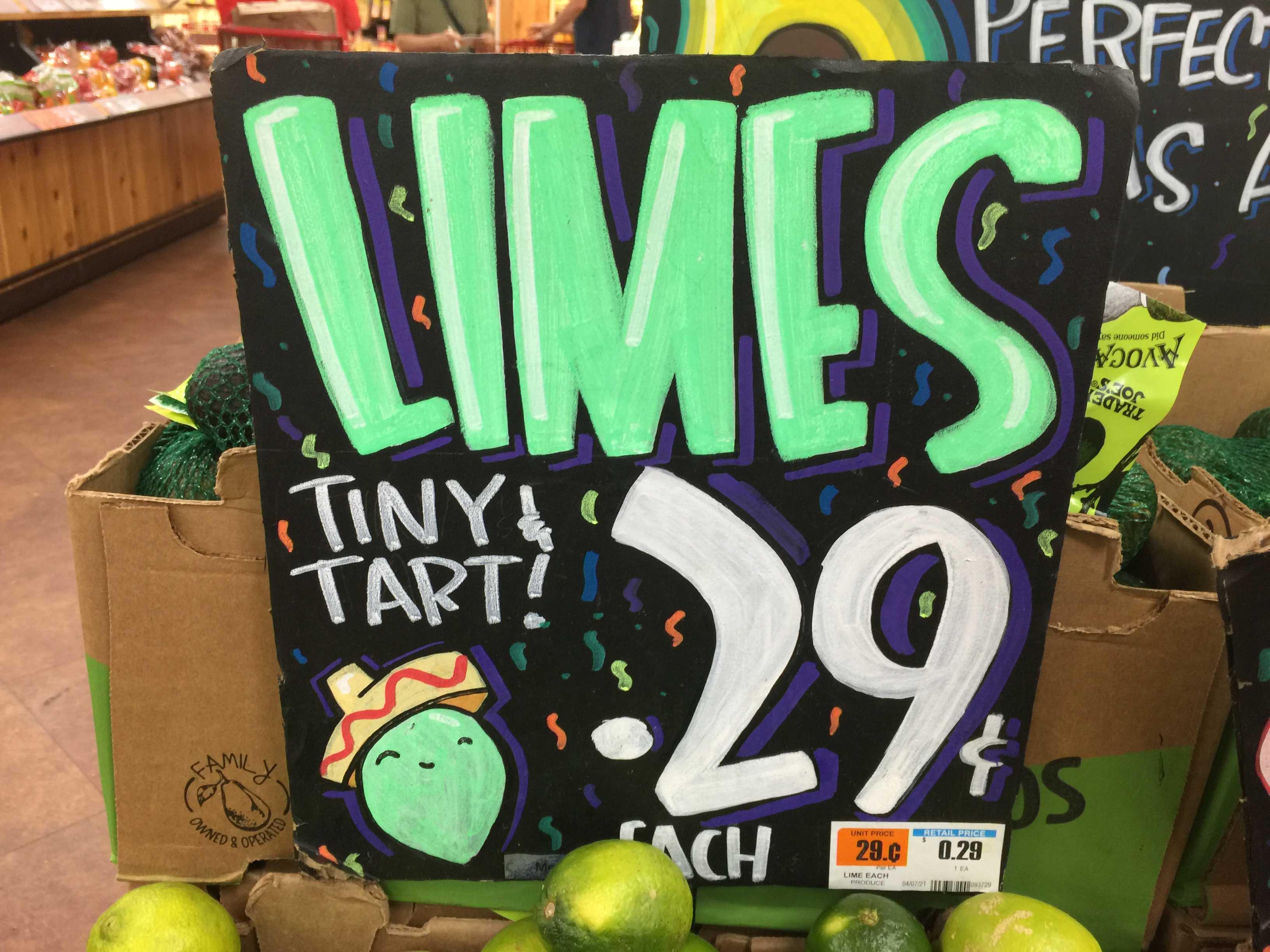
That method of representing price has been normalized.
We all know what it means.
That's different than miscommunication something.
My pet theory, is that putting 30c just 'feels' bigger to people. So a long time ago, everyone started putting .30c.
Trader Joe's, for instance, makes signs for their produce with crazy prices. Five bananas for a penny! Yes, you read that right! They either don't understand decimal places, or they don't realize that it's not legal to advertise incorrect prices.
Their signs clearly say .19¢. I pointed it out to them, and they looked at me like I'm crazy.
Perhaps they'll care when I insist they sell them to me for that price, then complain to the county's Office of Consumer Affairs if they don't.