Have you heard of the TV programme Grand Designs? It's just this over and over again. Sometimes the wife is pregnant, sometimes they're living in a caravan on site. https://www.channel4.com/programmes/grand-designs
They're not trying to build anything as simple as a house, either, the "grand" part implies some mad architectural vision that will become unliveable within months while also looking completely horrendous in its rural setting.
Grand Designs is as much a monument to human achievement as it is failure!
[1] https://youtube.com/watch?v=3AlsMEiAMvM [2] https://youtube.com/watch?v=CBpRLzbrCa8
The most dramatic one that I noted was a very contemporary museum looking home. The owner stressed how long they had spent planning it, and how you only get once chance, and it would be his dream home. He completes the house in the Surrey woods (it was beautiful, to be sure). Sells within a year and buys property on the Costa del Sol in Spain.
So you have two choices; struggle and be miserable for as long as you can before it all falls apart (but in your dream home) or sell up for financial safety and compromise on the location.
The mid project reveal is always "surprise we are pregnant". It brings me great added joy when they are building a 'dream' 3 bedroom house and it is the 3rd kid that they are pregnant with.
Since my boys are teenagers now, I spent the pandemic building a rather nice lofted bed setup out of baltic birch ply for their shared room. It gives them their own personal space (had them help design use cases) and more privacy than most kids in the world have. One is autistic and hypersensitive to the others habits, but I was able to mitigate 95% of that with visual blocking, acoustic materials, and a HomePod mini for pink noise.
You make do with what you have. Some of son’s friends live in 5-10M houses, some live in trailers, some in apartments. I think they all understand that, while they probably want more, they’re lucky to have this.
Fortunately, my wife isn’t pregnant… I don’t think.
Reminds me of my grandpa’s house kinda. Well, he’s from Southern Europe, so he built a brick box amongst a bunch of mid century/post WWII vinyl siding houses. Nothing wrong with it, but sticks out. Sure is solid though. And a cube is a good use of materials to maximize inside space to perimeter ratio.
Take a shot every time Kevin says "bespoke"
Some close relatives bought a plot in a newly developed area, and tried to find a contractor to build their home. After listening to others in the area, it was pretty clear there was a couple of good, reputable ones and one avoid-at-all-costs.
So they went with one of the reputable ones. The guy decides at some point to have a look and see how it's going, and finds a somewhat confused-looking 17 year old trying to pour the basement floor/deck on his own.
Guy asks wtf he's doing there. Turns out he's the son of the guy running the avoid-at-all-costs contractor, and this was the first time the kid had done this kind of thing. His dad had told him to go and fix this, so being an obedient son he gave it his best...
Of course the reputable company had hired the avoid-at-all-costs company to do the job since they were too busy for some reason...
I figure this is the brick & mortar equivalent of an exit scam, or a tech startup's "incredible journey". Build up lots of good will over several years and then blow it all as you collect enough money to retire and never deal with people again.
Stick to buying spec houses. They will always be better than a custom home because people get to examine the house before they agree to buy it. Whole world changes when you are under contract for a build/remodel.
I also got to visit the site every day and take pictures, which is really nice to have. Especially the day before they did drywall, I went nuts with pictures and now I can tell you exactly what the inside of every single wall looks like, what the electrical looks like, the plumbing, conduit, smurf tubes, etc.
Also, if you are nice and polite, you can talk directly to the subcontractors in some cases and get even more customization at a great price. E.g. the electrical guy offered to run cat5 throughout the house for a few hundred bucks. He couldn't terminate it, because he's not licensed for low voltage, but he could run the wire itself and leave it coiled up in a single gang box in every room. The builder didn't think to offer that, but having a chat with the electrician when he was on site gave us that option.
I would be livid and consulting lawyers if I was exposed to this brazen bait and switch by so called “reputable” company.
I did this for my new house that was being built before, during, and after the peak of the pandemic. I wouldn't do it again. We're moved in now and we find small mistakes all the time that an experienced contractor would have easily spotted during construction. It makes me wonder what we can't see. Oh and it's impossible to get the subs back out to fix the problems because they have all their money at this point.
Just having someone will keep the GC (and usually the subs) honest most of the time. And it's super valuable when you have someone knowledgeable to go to bat for you if needed.
I recently did a remodel with a well regarded GC in my area, but still had an outside person to inspect for me. Saved me a lot of time/headaches, and probably only spent a few thousand extra
note: i got a job on a framing crew so i could learn to build my own house.
I guess my point is, if you're interested in DIY it's ... doable, YouTube can be a great help depending on your region. I'm an ISTP in the Myer-Briggs scale and don't get bored digging into little details as I assume many people on this site. 3 years in no failures in anything I've did, people who hired regularly posted cracked corners, even ceilings in the local facebook group.
Great material and a real example of true craftsmanship. Highly recommended!
(Contact info in my profile if you don’t want to post it publicly)
I don't know if it's the same guy, but I watched videos of a guy laying aerated concrete blocks himself and it's much more work: you need a good supplier of blocks with good dimenions, you still have to rasp down and sand down the tops of each row so they form a perfectly horizontal plane for the next row or the glue won't catch, door and window gaps are tricky and upper floors are even trickier if you want to use aerated concrete for the floor/ceiling.

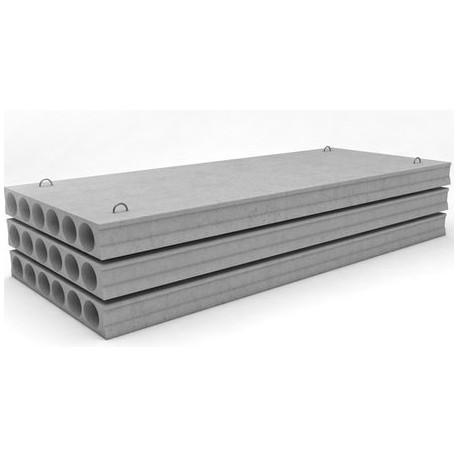
Expertise required is getting the corners up precisely and being able to use a laser level and a string. You don't make ceilings/floors from these, the best option for multi-story house would be to have the floors done from a pre-fabricated concrete blocks which a crane would put on your walls https://baltparma.lt/39-large_default/perdangos-plokstes-pk...., this will give very stable floor. On the other hand, in US there's lots of framing expertise as you're saying and the options I've laid out are probably not as accessible.
but without any experience (which is ~99% of us, even if handy), it is difficult to know how to build a house both efficiently (tools, techniques, sequencing, etc.) while meeting regulatory and bioenvironmental goals (airflow, water control, power, waste, etc.), because it's a whole glut of little things to know, most of which are not "hard" by themselves but overwhelming in totality.
for the inexperienced, i'd heartily recommend volunteering for habitat for humanity (at least a half-day weekly, more the better) and asking lots of questions of the experienced workers there to learn those little things (esp. the locale-dependent stuff) while networking with them to boot.
I'm not sure what you have in mind here, but my brother did an "owner build" in the true sense of the word and sunk every nail into every piece of wood, every pipe, every wire, every window, floor, staircase, insulation, lighting, built all the cabinets, everything. That was 8 years of his life. Two of those years he literally quit his job and worked on it full time.
Caution, it is easy to seriously underestimate how much work it is to build a house. It could stretch on for years. Not to mention the pain in the ass that is bad weather, the logistics of sourcing and moving all the materials, plans, permits, etc.
I used to work at a bike shop and thought it would be easy to build a bike from the ground up. Easy. Get a frame, fork set, and some other parts. Easy, right? I had no idea the amount of small parts one needs, including all the other minor stuff you have to buy like brake lines, headset, etc. Instead of a few week process, it became a few month process because I had to keep buying all these things I had forgotten about and didn't know I needed.
Now scale that up a house. I can't imagine the amount of things one could easily forget about on a project that scale and not realize until it was too late.
And yes, my grandparents in Europe also build their house like you say. Not being involved in the process (nor other family that I know of), I’m afraid that such knowledge isn’t being passed down.
But I agree: It’s easy to greatly underestimate the amount of work that goes into a house. Contractors will have entire crews, all of the equipment they need, and most importantly they have years of experience to know how to do something quickly and in a way that will pass inspection.
A DIYer must first learn each step before doing it, which can take as much or more time than the task itself in many cases.
May you rest in peace.
I'm guessing they just left the industry to do something less mentally damaging than web development - perhaps started a spider farm or something.
(I'll see myself out)
Block is generally level, but if they pour it, they don't get very close
I have heard many horror stories of people who had houses built and the builders made terrible mistakes. The person having the house built had to micromanage them and kept finding bad mistakes, like "forgetting" to put insulation in walls before the drywall, putting a window in the wrong spot, or putting crawlspace pillar supports in the wrong area.
I feel like right now the most reliable way to make sure my house gets built right is live nearby and check on it every day. Is there a better way?
you got it.
> Is there a better way?
no.
The other problem in the UK is there is no formal registry for a "builder" as opposed to plumbers, electricians and even window fitters that have to be registered.
There is definitely a need for good people skills (passive aggressive doesn't work on the building site) and being clear up-front. You also need to try and avoid over-reliance on one person/company, you don't want everything stopping because the electrician cancelled on you.
You don't even need good people skills, just being aggressive works, but you do have to be clear up-front: "stop right now, I am sure you fucked up this part: either prove to me I am wrong or redo it ASAP or I am not paying you for this" works much better than rolling out a list of complaints when they present the final bill.
In the UK, electricians do not have to be registered.
But I don’t know for sure.
Even that has been outlawed sadly. You can't fit your own fuse board and get an electrician to just sign off on it anymore - there might be people who still do it and give you a document saying they've done the installation, but in general it's not a thing anymore.
Of course absolutely nothing stops you from doing it anyway, then having a general electrical inspection done. If anyone asks just say it was like that when you bought the house already.
It is quite a racket in some towns, as some electricians will have an “expedited” relationship with the town’s inspectors, so you basically have to hire certain electricians if you want your project to move along smoothly. The electrician will come by and walk through for 5 min glancing here and there and sign the paper for $10k or $20k or $30k depending on size of the project.
Where I live, a homeowner is allowed to do their own electrical work. Must be permitted and inspected, though. When I've done big projects in the past, I've asked the inspector out at the start to ask for their advice -- gotten really good info that way.
There's a separate exam for solar installs. I took and passed that, but given that it is open book (you get the NEC book) and covers "only 3 sections of the NEC"), it was suprisingly hard.
That way, if an issue turned up later, he could prove by showing the pics that they forgot to do something or did it in the wrong way.
Contractors try to look after each other. Most know enough about other trades to stop and say "this isn't right, are you sure you want me to continue" if someone else did something wrong. But everyone once in a while this fails.
Of course they say that. What would you think if they said the opposite?
Not the same guy, but I might start to trust them more
Going every day is how you check the GCs work. A good GC should probably tell you the days where it's more important for you to come and check and what you should be looking for, but being there to notice things and ask questions helps keep things on track.
I remember when this became popular and also remember plenty of articles deriding the fact by architects and engineers both agreeing this was an incredibly poor idea for a number of reasons.
You'd be a thousand times better off just hiring an architect and doing a prefab or modular home.
I have a friend who plans on building a container house, and who is convinced that it will be much cheaper than a traditional house. Note that we live in Europe, where homes are build from stone and concrete, not wood and cardboard.
I've no idea what permissions you'd need for a container house.
EDIT: There's a caveat here. Because containers are trivially transportable, you have lots of options when it comes to assembling off-site that could be kind of nice. For instance, if you were a carpenter with a nice workshop, and wanted to fit out your house in your shop instead of in a muddy building site, it's kind of cool that you can do all the fitting, then put the parts on a truck. This would also be cheaper. If I was self-building, this would be a big consideration for me, because it's not actually very nice working in a building site, and it's not particularly efficient either.
As I recall, the biggest challenge was cutting out the sides while maintaining structural integrity. They ended up having to do a lot of complicated stuff to make it structurally sound, nearly negating the benefits of using containers in the first place.
But it looks great. I think the episode is on Netflix. Here [1] is an article with photos and a ten-minute clip from the episode.
[1] https://metalbuildinghomes.org/grand-designs-shipping-contai...
Then build a detached garage, get experience with pouring a slab, attaching walls to a foundation, trusses, more practice with exterior doors and windows, insulation, wiring. If you’re really feeling confident you could put a half bath in it to practice plumbing.
You should be ready for the house at this point. You’ll either love it or hate it so much you’ll just hire someone to do it for you. Having a shed and garage on site is a big plus for building a house since it gives you a warm dry place to work and store your tools. I’ve known people who built their garage first so they could live out of it while building the house, only works if you’re a bachelor though.
Part of learning is learning from mistakes -- you learn which parts of the "correct" way to do something are essential, and you learn why the correct way is correct, when the incorrect way fails. Ideally, that's the part you want to outsource as much as possible; if you were working with an experienced builder, they'd be correcting you constantly to keep the mistakes from affecting the build, but hopefully YouTube can at least show you the big "don't"s.
Pro-tip: most fasteners (nails and screws) are not "structural"; they hold wood in place, but they don't support weight. That's why eg windows are framed the way they are, instead of just nailing a 2x4 between two others; it allows each piece of wood to be supported directly by another.
Very good tip. So very often I see decks (for example) built improperly, relying on non structural fasteners to hold it all together. This kind of stuff tends to fail in a number of years. I've seen a few collapsed porch roofs for the same reasons. Make sure your fasteners are rated for how they're used. A general rule of thumb is that wood sits on wood, not attached to the side.
Here's one about corners some contractors often cut: 10 DUMB (and Common) Building Practices https://www.youtube.com/watch?v=LuUxUt6MwIU
Here's another about his regrets about how he remodeled his own house: https://www.youtube.com/watch?v=4HYROAFgp7Y
In general you want "fixing old houses" videos that focus more on the tear down and guts and less on the "look how pretty my house looks at the end" before & afters.
That said, I didn't follow through yet and haven't built anything myself. Even if you do use a GC it's still a great read.
https://www.buildwise.org/review-what-your-contractor-cant-t...
Edit: I did get as far as talking to my go-to mortgage banker about construction financing, and learned that self-GC'd projects are pretty much not finance-able through traditional paths. Many of these projects end up unfinished, with the GC-owner running out of money. And with no certificate of occupancy they can't be easily sold or refinanced.
Definitely communication, good diagrams, developing a good rappour with the contractor and not being overly tight or strict with them otherwise you can build resentment. For example, don't withhold all of their expected money because of a single piece of dodgy drywall, give them most or all of the money and make sure they make-good first thing next week.
Plan on hiring a plumber, electrician, and HVAC specialist. Probably another 3-6 months to figure out all the paperwork.
The playlist currently has 126 videos. It's here: https://www.youtube.com/watch?v=AGCC-_Cuhhw&list=PLRZePj70B4...
My impression after watching most of it: It might be "easy" to build your own house once you are an experienced contractor. If that's not you, then it's going to be a second job, or even a third job (building and learning). You will need to hire and manage subcontractors - the kind of job the contractor does. If you like that sort of thing and that's how you want to spend your time, go for it. I personally think that my time would be better spent finding a better job in tech and getting a promotion, so I can hire a professional to do all that.
I think he only really goes over the top with concrete.
His finish work is finicky. I'm thinking of those craftsman columns on the spec house. Most people would just caulk and be happy with it.
Each mock-up slightly bigger than the last, until one day...
Neither modern, nor practical, but it has excellent drawings on how to build everything in a house out of wood and nails.
Decades of FPL.gov data on lumber species pretty much agree with his assessments from the 19th century as well.
https://success.cabrillo.edu/Student/Courses/Search?subjects...
Yeah, but the GC also has all of the good subs. The good subs all have work with GCs -- what normal people can pick up are the "left overs" (not every "left over" is terrible, but probability is high).
I don’t get why simplicity isn’t more of a thing. Complexity is just asking for extra maintenance and the very high likelihood of something being done wrong.
He's a guy who worked for USPS and wanted to build a metal building on an undeveloped lot so he bought a backhoe, then an excavator, then a dumptruck, then a crane, etc. He buys all his equipment used and maintains it all himself. He quit USPS a long time ago and does work for hire with his equipment now that he has it all.
1. My lifestyle is such that I only get an hour or two here and there to progress my projects. It takes probably 2h to go fetch a machine and unload it, so zero work would get done.
2. Around here rental machine availability is very inconsistent: it's quite likely that whatever machine you want is not available when you need it.
3. I've found that it's beneficial to have various attachments and accessories that most rental places don't carry such as a ditching bucket, pallet forks, brush mower.
4. I need to do snow removal in winter and although not necessary, heavy equipment comes in handy for that.
5. Other random things that arise when you own property: lift a fallen tree off your vehicle; unload palletized deliveries from semi truck, etc.
6. Typically the value of machines doesn't drop much, so if you have the cash available, buying machines with the expectation of selling them some time in the future means overall low TCO.
That said, I'd rent when I need a machine I would only use for one job.
This is what's wrong with America.
Houses are complicated systems that need to control heat, moisture, water, and power while removing waste. This whole thing needs to be structurally sound while burning slowly enough so that you have time to react and escape in case of a fire. These are the most important investments most people ever make, and for the most part we are all served the cheapest legally permissible house that consumes as much space as possible.
Yep, we should leave that to the market. You happen to live in a building that collapses, well, then you can have The Choice(TM) to never inhabit a building made by the same company again (if you're lucky). Eventually they'll be driven out of the market, unless people choose to risk it after assessing all available information, in which case there's nothing we can really do about it.
That's part of why. Also some rent seeking in there. We used to have weak building codes, more buildings fell down.
We soon learned that a simple timber frame with paneling on both sides meant the whole house was a collection of chimneys, which meant any fire would very quickly overwhelm the entire house.
So we came up with some building codes which said that the timber frame needed more side-trusses to act as firebreaks.
Note that this applies mostly to single and duplex home owners.
I'd agree with you that there is a lot of unnecessary and unproductive bureaucracy in the process, but I do not mind the status quo.
If 14 months ago, they were building them for $450,000, I'd wait.
I'd shop around for another contractor too. A young guy starting out, might save you a lot. (There's no way to verify he knows what he's doing though.)
If you are some what handy, it's not that difficult to owner build your own house. That is if you get the blueprints past the town's council. Getting approvals is the tough part.
If you get all the town, county, approvals, and have a very buildable lot (flat, no flooding, etc.). Once the foundation is poured, it step by step, and done.
(If you decide to build yourself, don't make any changes. Don't build a custom house either. A simple home will make the process go smoothly. Realize too, the General Contractor just hires licensed subs, and takes a healthy cut off your nut. Then again--if you have never done construction yourself, disregard everything I said. I just pictured a typical computer developer in a wet lot, with an unhappy wife. Muttering to Google translate to communicate with the unlicensed, unbonded, subcontractor.)