Most paper uses a very decent amount of recycled paper, has ti actually. To the point the industry faced issues last Q1 when demand went down and there wasn't enough recycled paper on the market. Trees are grown explicitly for paper production, and are regrown in the same forests. Net forest losses are mainly due to farming, e.g. in the Amazon region. Energy wise, paper production offers great opportunities to balance the grid.
Most paper, at least in Europe, is actually recycled.
And electronics do have there issues as well. They consume raw earthes, are consumed as well, end up in land fills and also have quite extensive supply chains and CO2 foot prints. And they consume electricity, which has to produced. And we are nowhere near the necessary levels of renewables.
I do support getting rid of useless paper consumption, it just not as straight forward as it seems.
We have a great deal of logging going on in temperate rainforests and there are whole swaths of the food chain that require moss growing on old growth trees. Clearcutting kills all of this. So does leaving a few trees intact, which is seen as some sort of improvement to conservation. It is not. Everything dies, it just dies slower. Most of the flora and fauna are adapted to full forest cover and high humidity. A copse of trees does not provide any of this. Summer comes and everything dries out.
We are still in need of a very different process for creating paper products. Fishing exclusion zones are an interesting model, but fish can move a lot farther than ferns, and a hell of a lot farther than moss and the habitat they provide. We may end up having to leaving a considerable amount of land intact (larger blocks, closer to everywhere) to avoid tree farm situations.
Now, let's talk about the other components:
the ink (petrochemicals, for the most part)
the production, transportation, and containers for the ink
the runoff into our biosphere from the ink production
the transportation of the paper to the printing facility
the binding (glue)
the transportation of the catalogs to the stores
the plastic wrap and other packaging for the catalogs
the labor put into it (perhaps those people could be paid to rest instead? probably better for everyone all-around)
Did I miss anything?
How many dead, displaced, or injured animals do you think that is per catalog? How many humans harmed by exposure to manufactured poison? How many gallons of diesel extracted, transported, refined, transported again, and burned? How many dozen pieces of trucks, trains, and container ships mined, produced, and worn down? Is it still better than viewing the same catalogs online on an already existing computer screen?
Every single artefact produced by our system has a similar footprint. It's not just money cost. And I think it's worth considering.
But taken to the logical conclusion, that argument can look rather hypocritical, for example why is the discussion about paper vs electronic catalogs for buying furniture and not about why we even need beds and chairs to begin with, while people in japan are fine w/ futons[0] and kotatsu[1]?
One can take the argument to extremes and argue that amazonian forests burning in Brazil are partly due to you and I existing and needing to eat and wanting to have kids who need to be fed.
It's clearly a slippery slope, and if one draws the moral line to make others bad, while conveniently claiming to be "kosher" themselves, that's not really a convincing line.
However, my aim is not to take it to the extreme, nor to suggest that we shouldn't eat. It's merely to introduce a measure of "seventh generation" thinking and consideration into buying habits, beyond the amount of funds it takes to procure something.
If I take it further than sounds comfortable to you in my own life, it is only show what is possible, and to shift the needle of normal a little bit towards the direction of prudence and restraint.
Do we still need food? Of course! Do we need a place to sleep comfortably? Of course we do, and I do not suggest othrwise.
But what about new clothes when we already have quite a few sets which are still good, or a new pair of shoes when we still have a couple which are just a bit scuffed?
My argument is to consider the full systemic impact of buying those items, something no one else will do for us, before going through with it. If you consider this idea next time you are about to buy something, that each {dollar} spent comes back around in so many ways to harm us and our close relatives on the biological tree of live, then I will consider my writing a success.
I'm speaking to the idea of in-groups vs out-groups. For example, think about veganism and how their activism generally falls on deaf ears outside of their own circles. Bringing supply chain arguments to this discussion is very similar in the sense that they are strictly true but easily dismissible by someone who doesn't share the same set of values/priorities.
The line of argument might potentially even be self-defeating, for example, if the takeaway is that electronic catalogs > paper catalogs, never mind the rare earth mines and sweatshops in china and that drawers in ikea furniture still invite further consumerism. That's a very very different takeaway than "geez I should buy less stuff".
So I don’t think it would qualify.
Similarly, kotatsu don't require chairs.
You should see how compact things are in Japan :)
I am not saying pushing the catalogue to digital is a net negative, no idea how that could even be reliably quantified. Just that paper and print production is by no means as negative to the environment as is believed.
I'd say having such forests which are relatively unmolested for several years before being harvested are less negative than clearing them out and placing say farms in their place. So, overall it's not the biggest thing to go after, but then, I'm no expert.
[1] also depends greatly on what type of cutting we're talking about. I would say it's clear that illegal and / or legal but permanent deforestation is a negative. Above, I'm talking about forests which are planted and re-planted to obtain their wood.
https://e360.yale.edu/assets/site/_1260x709_crop_center-cent...
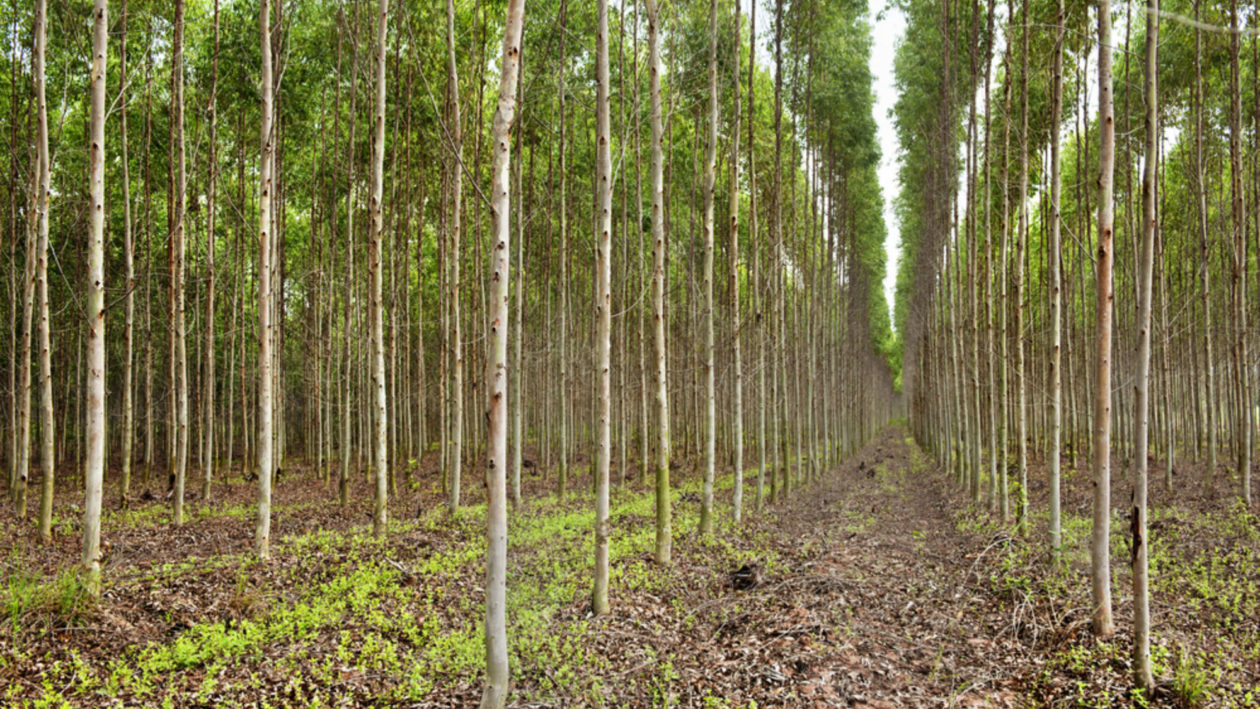
You don't go out too much, do you? In my municipality we have wolves - at a population density of 214 ppl/km² no less. Since there's no recorded killings of livestock by wolves and they have to eat something, it's save to assume we're OK on boars and deer, too. Not to mention the rabbits, hares, badgers, various songbirds, birds of prey, insects and other critters I encounter on a daily basis when walking the dog. Through the local woods. Which are very much filled with wildlife.
edit: I got the population density wrong - it's actually much lower if the entire area is considered, not just the town :) the correct figure including all land would be ~45 ppl/km².
You missed coatings, which can include minerals or plastics. https://en.wikipedia.org/wiki/Coated_paper
One of the reasons they do not degrade well.
I hate to think how much junk mail I receive every year. We use a 14 gallon recycling bin and it's about half full of waste paper mail EVERY WEEK in the USA. Catalogs, flyers, credit card offers, loan offers, etc. It's disgusting and I can't opt out.
And how would someone who spends money reduce their complicity?
It is likely not helpful if IKEA gets to enjoy the image of an environmentally-friendly eneterprise based on a token gesture. Many companies engage in such gestures to get themselves off the hook for their involvement in problematic practices.
I'm not saying that it's IKEA's fault that people buy throw-away furniture, or that the population is growing etc, but still.
But, I'll take any environment win I can get at this point.
Just throwing this out there -- it's not like all of this stuff is ending in the trash. This dresser is over 30 years old now.
This is why I have not bought a new computer in 10+ years, and have only used hand-me-downs for the last 8, with a similar track record on mobile devices.
However, if the book in question is one which will be kept for a while, actually read or referred to, perhaps it is a more worthwhile endeavor?
Compare that to the other end of the spectrum, e.g. supermarket ads, most of which do not even leave the plastic bag which carries them into someone's front yard and straight into the trash.
This paper mill was a recycling paper mill and the cost to produce acceptable standard paper was enormous. It used an enormous amount of gas to feed it's huge boilers producing steam, it even had it's own water turbine generators fed by the local river it was built alongside to produce electricity. It supplemented this with electricity from the grid which was even more expensive. It's biggest customer I'm fairly sure was McDonalds
Pulp was shipped in from Norway because again it was cheaper, at that time 100% recycled paper was not profitable and pulp from the UK was too expensive. When the company went into administration most of it's equipment which was old even at that time was bought by companies from China.
This mill was old, dating back to 1880 and it's infrastructure was part of the reason of it's demise. But there were 2 other paper mills in the same small town that eventually met the same demise, one being a much more modern construction, however it lasted longer by specialising in more profitable products such as tissue.
The paper industry is not carbon efficient, it will be much more efficient than it used to be but it still takes a huge amount of energy to produce. In lower volume it could be but consumerism dictates it isn't, it's why China is the largest paper making country in the world now.
I do have some fond memories working there even though it was hard work, at christmas time when the mill would shutdown it was absolutely freezing and doing a 12 hour shift on boxing day working inside a 5 storey high boiler was maybe not so pleasant. There were some wonderful quirks about the place, where the turbine generators were you could climb below the workshop floor where the bypass outflow was and you'd find one or 2 people sitting on wooden girders above the water fishing on their lunch break
Recycling is terrible too, you waste tons of fresh water to wash out the color and contaminate it with soap and all that toxic colors, and the glossy paper is even worse because it's normally not recyclable, so it's made to carton or burned.
Trees grown explicitly for paper still require energy to plant, manage, cut and still represents a habitat loss. Europe has absolutely obliterated its forests. Anything that isn't a net gain is a major issue at this point.
Norway has actually increased the number of trees in the last 100 years.
In 1925 the volume of Norway’s forests was 300 million cubic meters of wood. Today it adds up to 900 million cubic meters.
Source: https://sciencenorway.no/enviroment-forest-forskningno/norwe...
As someone who lives in a smaller European country, I can empathize. At least on HN, it seems like both Europeans (in the regional sense) and non-Europeans are guilty of this. However, while the parent claim may or may not be accurate in this case, I think the use of "Europe" can reasonably be interpreted as referring to the region in aggregate, just as North America or Oceania might be used.
My larger problem with the parent and GP comments is that they both make specific claims about "Europe" that aren't self-evident without any citations.
Also, at the risk of moving the goalpost, having more trees than some arbitrary point in time isn't particularly reassuring. In central Europe, at least, 1925 would have been near an all-time low. The deforestation in central and northern Europe has been going on for millennia (https://www.nature.com/articles/s41598-017-18646-7)
As wth everything, hyper industrialisation didn't do anything good. Sustainability used to be a hallmark of forestry. If we could just go back to that, and adopt it to maximize CO2 capture, it would be great. As would be going back to pre-industrial animal farming, better for the animals, better for the environment, better for the farmers and better meat.
I some cases they don't even provide the same amount of carbon capture because of all the energy spent on irrigation that wouldn't be necessary without the groundwork they do to make harvesting the trees easier.
Yeah more paper doesn't equal less trees, but it does equal less forests because you can't grow a real forest if you are constantly irrigating and harvesting trees.
- Leviathan Wakes, James S. A. Corey
Books are not just decadent, they're also a reliable store of information which cannot be erased or altered easily without our knowledge.
There's immense and irreplaceable value in paper books, and I've taken to collecting the best ones.
I just don't think there's much value in this particular one.
I love paper books as well, but I think the authors have prophetically captured the inevitable. Cutting down forests to only add tangibility to our bytes just isn't worth it.
I agree that it's inevitable that things move that way - my only paper books in recent years have been to complete my collection of Ian Banks because that particular edition looks gorgeous, and Stålenhag's art books. I don't anticipate buying more paper copies of novels or textbooks unless there are books I can't find in digital version.
But at the same time, I just published a scifi novel and was surprised at how large a proportion of sales are still made up by paperback (not exactly selling millions, so it's not exactly a large sample of the market). It seems like it will take a long time before paper books become unusual to the point of being considered decadent.
Many, many books are being discarded these days, so I don't have to buy new, or buy at all.
My old hometown's system used to do a semi-regular culling at the yearly mini arts & crafts fest in the park. They'd lay out 5 long rows of tables and cover them in old books that had to be retired. You could take as much as you could carry for a donation of any size.
I used to go when I was in my teens and had two dollars to rub together, and I still go back now in my 30's if I'm in town (with more of a donation). I've found some real gems.
What digital storage do you have that will last that long? A few CDs would in the ideal case (but most are not that grade). I'm not clear how long SSDs will last. Magnetic tape becomes brittle and single read in about 30 years as we know from history.
The only advantage of digital is IF you care at all it is easy/cheap to copy to something new.
If you actually want books to last a long time, they must be stored under controlled conditions by an actual archivist.
Hardbacks are more likely to last, and premium heirloom hardbacks = special print runs with special materials and extra assembly effort - are most likely to survive.
But for what? Most heirloom hardbacks are better-than-average novels for well-heeled fans and collectors, not a complete guide to rebuilding civilisation.
I'd be all for an apocalypse-beating Self-Study Handbook of The Important Stuff We Worked Out and Did, but good luck finding a publisher to fund what would be a massive project.
And I have several books published in the nineteen thirties and forties that would serve well to reboot civilization having comprehensive instructions for building all sorts of necessary machinery, buildings, clothes, etc. There were many such books with titles such as "Everything Within" and "The Handyman's Complete Self-Instructor".
There is no need for a publisher to fund a massive project; most of what is needed is already available on paper and increasing amounts of it have been scanned so that anyone with a laser printer can make their own permanent copy.
Of course those 1930s and 40s books won't tell you how to build a modern computer but they do tell you how to build a radio without needing to build a chip fab first.
And it seems that there is sufficient interest (presumably as conversation pieces) for some such books to be republished: https://bookshop.org/books/the-handyman-s-complete-self-inst...
1) Endless knowledge
2) It's a bloody fortress
Kidding aside, though, and also being one that maintains a small library I have to agree. Most of them are not so cheap as to actively degrade so fundamentally as to be unreadable. Maybe old dime-store dramas. I mean, unless you've left them open in the sunlight for 50 years.
Other than binding, which can be re-done pretty easily, paperbacks are readable after 50-100 years.
The paper may yellow, but crumbling takes a bit longer.
Although I have PDFs of all of them, so it doesn't matter. The fact that I can change the font size to make them legible now does, to me at least.
The hardbacks are still fine. (Except for the print size.)
They're not a guide for rebuilding civilization. They're something that can last through whatever dark time you're considering in some semi-forgotten corner, so the next civilization can learn about and study what came before. And honestly, they don't need to last the whole time, but rather only until thins recover enough that you start to have copyists, etc.
[0] "The Knowledge" by Lewis Dartnell
It happened back in 1859, but it's effects were limited as the only susceptible tech was telegraph systems.
Did you miss the memo where hordes of people drive their trucks to IKEA and buy furniture that’s designed to be affordable by the middle class, costs an enormous amount of energy to produce and recycle and has a huge carbon footprint?
But never mind those things, catalog is paper so it makes it easy to market your argument to tree huggers.
The gas consumption alone to drive to IKEA dwarfs the energy required to make and print catalogs.
Just don’t go to IKEA and next time they won’t print as many! Problem solved. And you’ll save gas too.
IKEA catalogs are culture. It’s like saying let’s close down the Louvre museum because it’s consuming too much energy and inviting people to travel to Paris wasting more energy.
The furniture and its procurement is only the next logical step in the conversation.
Thinking and talking about this stuff is how I myself went from buying Ikea furniture to no longer doing so.
I think that without having these kinds of conversations and perpetuating them we have little hope.
I don’t shop at IKEA for similar reasons and I have also cut down Amazon purchases for random things that I can do without.
I think I was being too harsh, but I am sad that the catalogs are going away. They’re such a big part of IKEA’s contribution to culture that it’s carbon footprint can be forgiven.
> 40 million copies of a thick catalog with glossy pages means a couple shittons of not just trees but petroleum and petrochemicals for production, distribution, and disposal. Every year!
- What about about daily printed newspapers?
- What about shop brochures that we receive weekly in the mailbox?
- What about toilet paper and derivates?
I can't understand people congratulating the discontinuation of an yearly book (arguably an historic document) instead of focusing one order of magnitude higher.
For what it's worth, I don't use toilet paper for its intended purpose, and I bet my butt is way cleaner than yours if you do. :)
I'm not sure why you are so critical of applauding one good thing just because other bad things are still in place.
I never understood the idea of privation being considered progressive. It isn’t progress to set the thermostat to a more uncomfortable temperature in order to save energy. It isn’t progress to have massive grid outages because windmills froze — windmills that are sitting atop many lifetimes of oil and natural gas reserves. It isn’t progress to freeze today because someone is theorizing that Tuvalu is on the cusp of sinking. Yet Tuvalu is growing in size instead of sinking but our policies still feature Chicken Little fear-mongering as a tool of control.
Sitting in a frozen-windmill-induced blackout in sub freezing temperatures for day two in Houston of all places makes me extremely irritated that the reason we have a blackout is because the hysterical anti-carbon crowd is afraid of a catastrophe that we’ve been promised since Al Gore’s inaccurate film. [1] A “catastrophe” being used in a similar vein as the war in Eastasia. Or was it Eurasia? Kind of hard to remember now given that new printed books are being replaced by digital because forgotmypw17 is worried about the carbon footprint of ink.
https://www.houstonchronicle.com/business/energy/article/Tex...
This is just the first source I found on google to quote, but if houstonchronicle isn't a trustworthy news source let me know. It seems like all forms of energy suffered from a lack of winterization. To me, it seems the issue is not that renewable energy was depended upon, but rather that the whole system was unprepared for a cold snap like this.
> But the vast majority of energy the state generates is through natural gas. In October 2020, the U.S. Energy Information Administration reported that renewables generated 22% of the state's energy, while gas generated 51.8%.19 hours ago
https://www.kxan.com/news/texas/are-frozen-wind-turbines-to-...
- https://www.chron.com/news/article/Texas-blackouts-fuel-fals...
How did Texans manage to screw up windmills? The ones across the lake from me work perfectly fine all winter long, despite much colder winters.
I'm guessing they cheaped out on basic preparedness measures for this sort of thing, and clearly across the whole grid, not just renewables.
I don't recall claiming such a thing. I'm sharing what I do and why, and if anyone wants to use my knowledge they're welcome to.
Sorry about the blackout, and any role I have inadvertently played in it.
No offense, there are many places around the world where blackouts are a regular everyday (or even every day) occurrence. Perhaps, you can give them a thought in an idle moment.
But I recently decided to switch to digital. The paper keeps piling up, and I increasingly find myself reading the news on their app.
Pretty simple solution, should be standard everywhere.
https://blog.nationalgeographic.org/2010/04/16/toilet-paper-...
I haven't used an actual bidet in a while, but I honestly find it hard to fathom not washing my butt after pooping now that I've started doing it.
TP is just smearing it around...
The basic method is to keep washing it and rinsing it off and then washing off my hand, until I no longer feel poop or anything resembling it on my butt. Be gentle. No soap on the butt, that will dry it out. (As I mentioned in other posts, I don't use soap anywhere besides my hands.)
I then keep washing it, occasionally washing off my hand. When I can rub my butt with my hand it comes back not smelling like poop at all, I consider my butt to be clean.
If you look at animals, they do something similar, though they have to lick it clean. I consider myself very fortunate and blessed to not have to do that. :)
Afterwards, I wash my hands, get dressed, and then wash my hands again.
After you're done wiping as thoroughly as you will, run your hand or another piece of toilet paper through your butt and smell it.
Great! A new carbon capture method that also provides utility! I’ll take 40M please.
2) What do you think the impact is of poorly constructed IKEA furniture that lasts some small fraction of time of massive wood furniture.
If you want to go off, then go off on the fact that our governments support the creation of throwaway products rather than long lasting products.
I can't do anything about what our governments support. I can do something about what I support and what I am complicit to.
What if we call it "carbon sequestration" instead? :)
You can start on Monday!
The stack would reach from earth to ISS multiple times.
You need a fast internet connection. And a fast computer. Even your older iPhone probably can’t handle the online catalog anymore. After a few pages, you just give up.
But with a paper catalog, you can put it down. Circle it. Fold it. Rip pages out. Write on it. Then discard it. You can rifle through the pages, and dream of how you want your home to be laid out.
Can you even imagine a stack of one million catalogs?
That's space, trees, plants, mammals, birds, insects, mushrooms, ... all being squeezed for a glossy catalog, most of which will get thumbed through once or twice and sent to the landfill to rot.
These catalogs do not biodegrade well, by the way, because they're not just paper.
I love paper books, and I enjoyed browsing this catalog just like many others in this thread, and yet I don't think I will miss this one. Hopefully, other thick glossy catalogs will follow suit.
Production of catalogs like this squeezes our biome, and if we don't turn back, it will pop, and we'll be left with only enough resources for a small fraction of us to survive.