You can't compare the energy storage density in isolation. Engines are heavy...Model S's motor generates 362 horsepower (according to the official specs), and only weighs 70 pounds...the equivalent ICE would be 500+ :-)
(Yes, the inverter weighs something, but the transmission is much simpler as well for electric...overall you save a few hundred pounds easily...A Model 3 battery pack is between 600 and 1000 pounds--so pretty close to the crossover point.)
Edit: typo
Real life doesn't have perfect regen, but on the other side of the equation real life ICE cars actually lose more efficiency to added weight than just what is converted to heat while breaking because they tend to compensate worth a bigger engine to get comparable (or better even) acceleration than a lighter counterpart and that means that during cruise where the mass is irrelevant the engine is running at all an even worse load point in terms of efficiency. ICE are terribly inefficient at partial load and when your engine is sized to get decent acceleration despite high total mass you simply can't gear long enough to get the engine to a reasonable load point in a moderate speed cruise. Electric motors don't have this problem (or a much, much smaller version of it), so they wouldn't suffer quite as hard from added mass as ICE even worth no regen at all.
Yes, but this doesn't happen much anymore. Torque converter, electronic throttle control, variable valves, and 6+ speed gearboxes means the engine is usually near full throttle even if your foot is barely on the gas.
Turbochargers also help, along with cylinder deactivation for some V8s.
Modern engines are nearly always at a relatively efficient load point. This wasn't true until about a decade ago though.
Tesla low gearing induction motor is by far not the best here.
Synchronous motors have much better regen capability.
It's only used because dumping excess energy back to batteries is cheaper than including brake hardware. The math may work out the same for EV's. Regen just to decrease the cost of brakes rather than increase range significantly. In the e-scooter world, the cheap ones use regen and more expensive models have traditional disc brakes.
Air resistance burns a ton of energy at any speeds over 20mph.
You say 5% at most... The difference in between, say, 5% and 10%, a bad and good regen is huge.
The RPM doesn't matter much though. Regen efficiency is around 80% from wheel to battery. With cars you get much less regen because you lose tons of energy to air at the speeds they travel.
Second, as other comment says, the idea that braking regen is going to make up for an extra half a ton of batteries is pretty laughable
It's not quite that heavy. An LT1 makes 500 horsepower and weighs less than 500 pounds.
The point still stands though. You're savings a few hundred pounds compared to an ICE, but you're losing more than in battery weight. An x2 (or maybe even x1.5) increase in battery density, and a (ground up) electric vehicle will almost always be lighter than a similar conventional car with a full tank of gas.
Teslas have a transmission, but it's not in the same league of complexity or weight.
In the end we would have slower planes but we will eventually reach a point where we can do it.
Someone can probably explain it better and my understanding is rough and not current; jets were cool when I was kid
It is profoundly foolish to compare motors and heat engines on first principles like this, obviously. Still, here's a turbine that handles 30x the power of a jet engine, running a generator that is about the same size as a jet engine: https://www.ge.com/news/sites/default/files/Reports/uploads/...
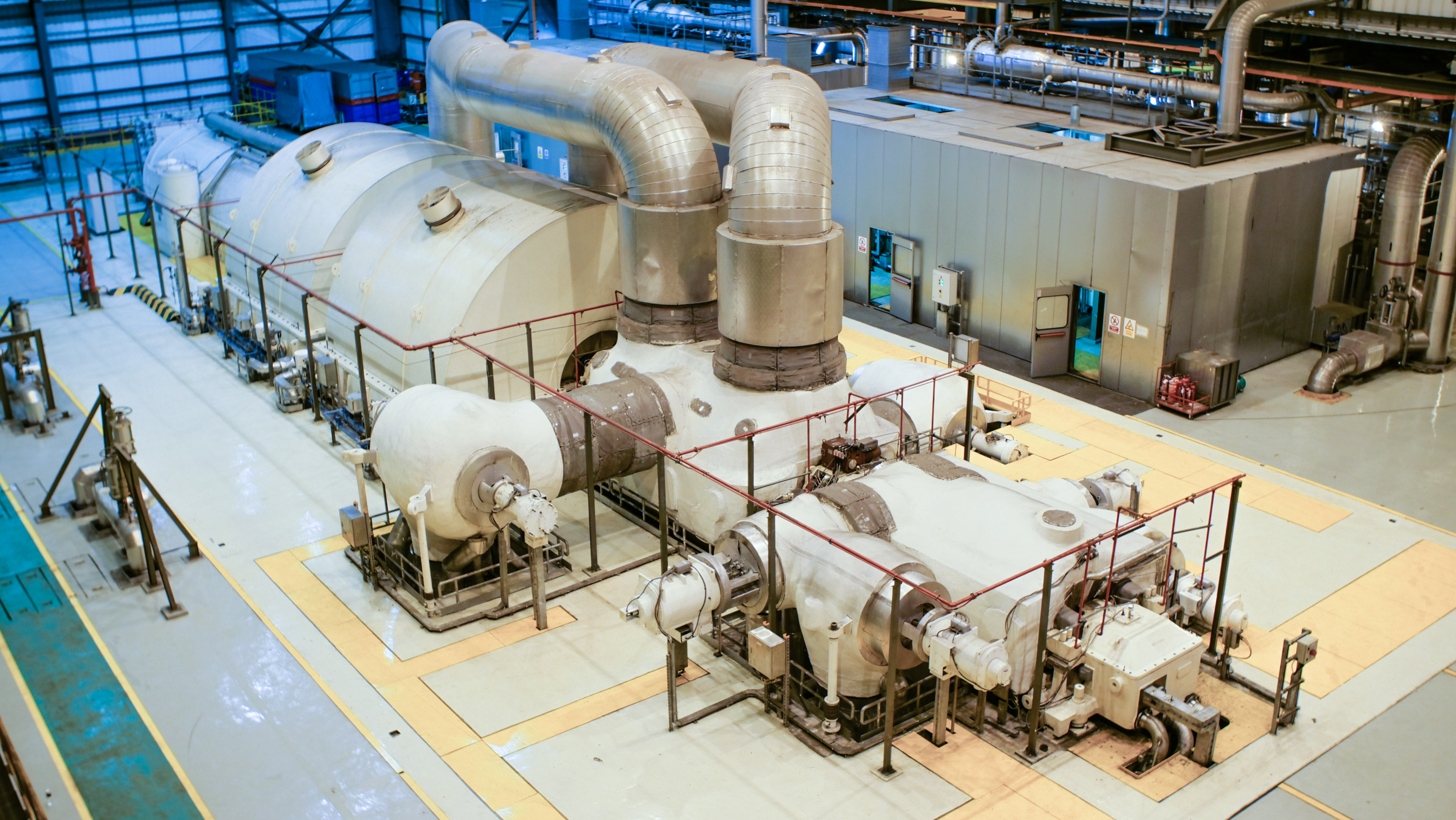
generator is in the upper left. Obviously not at all optimized for size or weight- there aren't even any magnets in that thing.
Mercedes is selling cars with an engine that weighs 354 lbs, with just 2 liters of volume. Now 354 lbs is still pretty heavy, but it's 354 lbs with fluids and accessories.
Some (many even) of those accessories have equivalents on a Tesla that aren't included in saying it weighs 75lbs, like pumps for coolant and the AC compressor
With a car, unless you have a specific use-case where you are driving 200+ miles a day, an EV is a no-brainer when it comes to efficiency in operating cost as well as emissions and overall energy use.
The Accord is also $10k cheaper, presumably that is because the Model 3 requires more materials and more embodied energy.
Do economies of scale and manufacturing expertise factor in to "embodied energy"?
Electric: 54 in manufacturing, 74 in use
Gas: 45 in manufacturing, 420 in use
Yeah, and yet, if you are talking about cars, you are bound by the Carnot efficiency, which is at most 35% no matter what(in reality more like 20% or so). Now gasoline goes to 4270 Wh/kg even assuming the best possible engine. That's without accounting for extraction, refining, transportation losses.
Yes, still 10x more. However, you don't really need 10x, as electric motors are way more efficient (85 - 90%).
The long range Tesla Model 3 only requires a 75kWh (72.5 usable) battery for a 450km (~279 miles). In other words, it uses 161 Wh/km .
> ICEs are real technology
So are EVs. For all the tech they tend to have, it boils down to: Battery and electric motor. There are some pretty reliable solid state electronics to monitor and deliver power, but that's all you really need(even the 'charger' is optional - and for quick charging, it's located outside the vehicle).
You could theoretically use decades old technology to control the amount of power delivered to the motors - so you could see with your naked eye. And, in fact, we have done that! The first cars ever designed were electric, battery tech just wasn't there. It doesn't make sense to do that in this day and age, electronics driven by software work better. We would replace ICE engines with solid state components if it was possible.
Now, for an ICE car, you have valves. You have a crankshaft, controlling said valves (and tied to pistons) - hundreds of moving parts right there. You have spark plugs (and a coil to generate the voltage). Air filters. You have an alternator (usually driven by a belt). You have water pumps (optional on EVs - and for the battery only, when they are used). You need fuel pumps. Fuel filters. Radiators (because of all the engine inefficiency). You need oil - and replace said oil, as well as the oil filter. You have an exhaust with a catalytic converter.
Each one of those things may break and some are even consumables. So much crap EVs don't have.
And you still have software and the tiny electronics you can't see with your eyes ! Unless, of course, you still use carburetors (which add a few hundred more parts each).
EVs are much, much simpler. And more reliable, less parts and most of them don't move. The only thing that degrades is the battery. For now. I drive a Leaf, which is notorious for having no battery thermal management, and degradation is minimal.
Internal-combustion engines are not limited by the Carnot efficiency; see page 4 of these slides. In fact, latest-generation Priuses gets almost 40% thermal efficiency on the gasoline engine, and large diesel engines -- thanks to lean combustion (favorable ratio of specific heats for the gases that push on the piston), no throttling losses, higher compression ratio -- do even better.
https://www.energy.gov/sites/prod/files/2014/03/f8/deer11_ed...
Does the 40% for Prius include energy recapturing techniques?
They are real technology, in the sense that this is where over 100 years of optimising every aspect of ICE has got us to. Fascinatingly complex, extremely well engineered, and depending on the brand still relatively likely to break down within the first few years.
The engines are also longer designed to be maintained without special processes, and are increasingly designed around emission regulations. To the point where a lot of the complexity is in emission systems and the cars are choked by their own extremely lean fuel maps.
Electric motors on the other hand are still relatively unoptimised and the potential in things like torque vectoring is amazing. I'll miss driving manual, but it's getting just about impossible to buy those now anyway.
Electric motors have huge applications across most industries for longer than combustion engines. Calling them unoptimized is quite a stretch. There're some car specific optimizations to be done, sure, but it's very mature technology, with little potential for breakthroughs.
For example Axial flux motors are still very much being developed with a steady flow of breakthroughs (Magnax, Emrax), and have mind bending power to weight ratios. A lot of the current issues seem to be around heat dissipation, which is where I am hoping some of the next big wins are.
I'm a bit sad that currently easily available motors are currently not in the same league as Tesla (I have a 50kw Me1616 and Sevcon 4 sitting on my bench) but it looks like that is slowly changing.
You should test drive a random eletric car and a random ICE car.
Many modern ICE cars are effectively fly-by-wire with eco-junk-softwware in between the accelerator and engine.
Manual transmissions would likely not have the lag that you're experiencing, but I definitely recognize what you're saying w.r.t. torque curves.
I'm not challenging ICE v. Electric, but instead attempting to clarify that there is quite a wide variation in ICE-behavior that is less present in a manual transmission ICE car.
And even when I do it fast, I'm much much slower to manipulate the clutch and change gears compared to a modern automatic gearbox.
1) Electric v. ICE? No contest. Electric wins. Not at dispute.
2) "Manual Transmission" v. "Eco-Junk Software". Please see the following: https://www.motorbiscuit.com/does-sport-mode-really-do-anyth...
At a minimum, some "fly-by-wire" automatic ICE cars default to an "eco" mode which significantly impacts throttle (gas) responsiveness.
No doubt ECO mode does something well, and no doubt that modern automatic transmissions shift well.
My original statement was: "Electric (very responsive) => Manual (...) => Automatic (perceived unresponsiveness of ICE engines)"
Almost nobody is a race car driver, but the fly-by-wire in some ICE cars definitely affects driving feel in a way that is different than both manual transmission ICE and electric cars.
Electric cars are like synthetic computer benchmarks - amazing on paper, but to actually drive? On a real road, with corners and a competent driver? So, so much worse. We'll get there, in time - some hybrids are really great, but we need to work a lot on battery weight before a pure electric car can match an ICE/hybrid car for real world performance. Weight always has been and always will be the enemy, and right now a tesla is closer to a truck than a sports car in terms of weight. The day will hopefully come, but today is not that day.
Engines need time to rev fast, that's the problem yes. I don't know what you mean by good engineered ICE engine because I don't drive the worst at all and it's not good. Do you mean the super sporty 600kW ICE engines you find in supercars that cost a fortune to maintain and pollutes a lot?
Hybrids are shit in my humble opinion. You have the worst of both worlds, and not the best.
Weight is a problem but weight distribution is important too. And yes Tesla cars are heavy, as is tradition with American cars : a lot of torque and power, heavy, shitty brakes.
But I think that any car today is much faster than what you need. The roads are not a race.
Most ICE engines have efficiencies from 20 to 35%. Taking an average of 25% effciency, batteries have to essentially aim at about 3000 Wh / kg
Most battery motor systems have a round trip efficiencies of about 80%, so to compete with ICE engines, EV systems have a target of about 4000 Wh/kg.
edit : I also forgot to add about regenerative braking. For on road EV vehicles, regenerative braking can capture about 70% of the energy lost in braking. So, while a battery can store just 450 Wh/kg, averaged total energy, expended from the battery terminals, averaged over time, would have to be higher.
It also makes sense to calculate the average total energy stored in the vehicle, rather than the energy densities of the fuels. For a 300 mile range, assuming an average 30 mpg fuel efficiency, you would need about 10 gallons, about 38 kg. So total stored energy in the vehicle in form of fuel, is 12200 * 38 = ~ 465 kWh. But, of this energy, only 25 % is converted to usable movement, i.e, about 118 kWh.
However on a Model 3 LR, which has a range of 300 miles per charge, the battery capacity is 80 kWh (Tesla claims 75 kWh). So there is no basis to compare energy densities of various fuels directly.
Electric motors are 90% efficient, ICE are less than 20%. So in reality gasoline is 2-3x as energy dense, when you look at how much of the fuel's energy can be used to do useful work.
When was the last time you saw an ICE with both a trunk and a frunk? :)
Seconds ago -- there's one in my carport :-) (A 1993 Toyota MR2; it's mid-engine. The frunk is small, and completely filled by the spare tire and aftermarket stereo amp.)
Even monster SUV motors are only ~350 lbs. That doesn't include cooling, oil, accessories, or transmission but EV's have those too.
You could also have battery swaps during flight as they pass over drone battery depots.
Sounds crazy. Might not be worth the gains for the complexity, but could be worth it across a whole fleet.
Microwave laser groundstations (or solar satellites) could come first, removing much of the battery requirement.
Instead of a catapult or a flying battery pack, go for a tethered launch. The plane taxis onto a platform that is actually a powerful "cable laying UAV" with powerful ducted fans for propulsion and some lift and two big powered spools of copper as heavy as it can carry. The platform arrests the plane's main undercarriage, connects power lines to the plane and raises itself on its own set of wheels. They accelerate together, leave the ground together, all while the powered spools are unrolling the wires to the ground station exactly as fast as needed to avoid mechanical drag (the wires are effectively in free-fall, perhaps issues with the cable landing could be evaded by sending up a chain of "cable carrying (T)UAVs" that take the role of virtual poles). In time before the spools run out, the platform disconnects from the plane slows down the spools so that the inertia and main motors of the platform start pulling on the wires, then reels itself back in while it maneuvers to a point above the base station, finishing the circle with a tail-landing followed by dropping into "platform" position controlled by its secondary fans. Meanwhile, the plane flies of into the sunset on a fresh set of batteries.
But the battery tender UAV actually sounds far more practical, I guess I just like ideas involving tethered UAV.
(and somehow I feel almost entitled do spew out the most improbable ideas, since seeing footage of the successful dual suicide burns of the Falcon Heavy boosters - if that's possible, why isn't everything else as well?)
Well, it doesn't need to have the same rate of acceleration as a carrier's, but honestly it just doesn't make sense in general.
Oh absolutely, it compares favourably to one of the most asinine first-pass approaches to this problem I've ever seen, heheh.
The real solution is to find a way to produce good liquid fuel from a cheap and abundant source of overprovisioned baseline power (maybe make hydrogen† from your nuclear power in off-peak hours).
Batteries are mostly composed of matrix, so even if you could extract energy as efficiently from the non-matrix materials in the battery as you can from hydrocarbon combustion, you would still be lugging around all that matrix.
† Yes, I get that it's 3 times less energy dense than good hydrocarbons, but it's a start when compared to batteries.
On a very cold day 60% of that waste heat might be used to warm the cabin. This translates to up to 50% range reduction in electric vehicles.
On longer trips, the waste heat from motors are cycled through the battery to bring it to ideal temperatures. Even in extreme cold weather, you get full "regen" capability (meaning battery is warmed up), just from the waste heat from the motors. There is also an option to pre-condition the battery for fast charging by intentionally driving the motors less efficiently to generate more heat.
Other use cases like aviation and ocean boats are more difficult. It may well be that synfuels made with renewable energy will be the solution there.
I agree that we will produce and burn synthetic fuel for flight long into the future. But this is going to burn in turbines for flying in atmosphere, and in rocket engines for getting to orbit.
You see the same pattern with EVs. All of the cool ones are really heavy compared to the ICE cars they compete with. But they still go really fast and pretty far. So, you see much heavier Tesla's making formerly cool ICE sports cars look sluggish and outdated. And lets be honest, those never had any kind of fuel economy (or range) worth talking about because they burn fuel at obscene rates to get that speed. Being obscenely noisy and inefficient was kind of the point of owning one.
Meanwhile, gasoline / petrol / benzin (wherever you are in the world) has an energy density of 12200 Wh/kg.
In other words, even in a world where all petroleum is perfectly depleted, we would still be producing synthetic gasoline for high-demand applications and capturing 100% of the emissions for recycling — essentially using gasoline as a battery. It’s just too good an energy storage to ignore.
I’ve been looking at cars and geeking out on internal combustion engines for the past few weeks since I had to buy a car, and for the usual Silicon Valley guy such as yours truly whose standpoint on cars hadn’t been much more than ‘I want a Tesla’, it was an outright revelation.
ICEs are real technology — and for a software guy it is easy to understand because the complexity is bounded by physical dimensions of parts (i.e they don’t work past a certain small size) so you literally see human-size machinery with human size movements. It’s been a refreshing change from potentially unbounded complexity of software.