News for hackers. Stuff that matters.
Re:Early Europeans Ate Seaweed for Thousands of Years by HeckFeck on Thursday October 19, 2023 @11:38AM (#37944372)
Some of us still do! In Northern Ireland, we have a lesser-known seaweed dish called Dulce.

https://www.bbc.com/travel/article/20180522-the-renaissance-...

It's tricky to find it fresh, you usually only get it in small greengrocers or at the Auld Lammas fair. Used to be quite cheap for a bag. Very salty but quite edible and said to be nutrient-dense.

Re:Early Europeans Ate Seaweed for Thousands of Years by cmrdporcupine on Thursday October 19, 2023 @11:40AM (#37944413)
"Dulse" is also still commonly eaten in Atlantic Canada (originally settled by Gaels).

Actually an export product, too. https://www.dal.ca/news/2017/08/03/nova-scotia-s-best-kept-s...

Re:Early Europeans Ate Seaweed for Thousands of Years by BizarreByte on Thursday October 19, 2023 @04:46PM (#37948503)
Yep, in the summertime you'll see driveways covered in it. Turns out the black driveways in the summer sun are an excellent and free way to dry it.
Re:Early Europeans Ate Seaweed for Thousands of Years by tecleandor on Thursday October 19, 2023 @11:44AM (#37944461)
Kind of funny it's salty but it's called dulce/dulse (Spanish for 'sweet'). I'd love to know the pronunciation for 'Duileasg'
Re:Early Europeans Ate Seaweed for Thousands of Years by cmrdporcupine on Thursday October 19, 2023 @12:19PM (#37944909)
The etymology is completely distinct tho, not a cognate.

From Old Irish duilesc (compare Scottish Gaelic duileasg), from Proto-Celtic doliskos, duliskos (compare Welsh delysg), from Proto-Indo-European dʰelh₁- (“to bloom, be green”) (compare duille (“leaf”)).

Whereas Latin 'dulcis' comes from PIE dl̥kús ("sweet")

Actually probably cognate with Latin 'folium' (Italian foglia, French 'feuille'). EDIT: Actually no. Not sure there's a Latin cognate at all; the dʰelh₁ PIE doesn't seem to have evolved to "Leaf" in Latin and the Greek word for "bloom" was borrowed instead? Something like that.

[deleted]
Re:Early Europeans Ate Seaweed for Thousands of Years by cmrdporcupine on Thursday October 19, 2023 @12:28PM (#37945007)
Yeah see my edit, it seems clear to me that the bʰleh₃- is the origin, and Latin never got the dʰelh₁- derivation.
Re:Early Europeans Ate Seaweed for Thousands of Years by chupasaurus on Thursday October 19, 2023 @11:59PM (#37952245)
It sounds OK to me if dʰelh went through some thenanigans to Latin. Fun fact: zelen is one of common roots in Slavic languages for green/leafs.
Re:Early Europeans Ate Seaweed for Thousands of Years by thaumasiotes on Friday October 20, 2023 @09:40AM (#37955830)
Comparing this other comment:

> Note that phonetically dulce in NI would be pronounced "dulis."

is interesting in that the modern pronunciation looks much closer to the ancient pronunciation than the modern spelling is to either. What happened?

Re:Early Europeans Ate Seaweed for Thousands of Years by cmrdporcupine on Friday October 20, 2023 @12:25PM (#37958197)
I am not an Irish (or any kind of Celtic) speaker but orthography for those languages looks absolutely crazy to me. Both Welsh and Irish / Scottish Gaelic look like languages that might have benefited from their own alphabet, or at least the addition of some diacritical marks.

We also have no real idea how proto-Celtic or even Gaulish or early old Irish would have been pronounced. Only best guesses. We have inscriptions in e.g Gaulish from Roman times but they look to me suspiciously Latinized.

And then look at English.. it's a mismash of a bunch of different orthograpic conventions -- Anglo-Saxon, Norman French, Nordic, Latin, Greek... and makes no sense. Even us native speakers have no absolute certainty how to pronounce a word they've never seen before.

Re:Early Europeans Ate Seaweed for Thousands of Years by asveikau on Thursday October 19, 2023 @11:53AM (#37944585)
I'll give you that /θ/ is pronounced [s] by the majority of the Spanish speaking world, but it's definitely "dulce" and not with s.
Re:Early Europeans Ate Seaweed for Thousands of Years by tecleandor on Thursday October 19, 2023 @11:58AM (#37944643)
My fault, I wrote it with an 's' just because I looked for the seaweed around and I found it written as 'dulse'. I in fact don't pronounce it with the 's'. :P :D
Re:Early Europeans Ate Seaweed for Thousands of Years by AlecSchueler on Thursday October 19, 2023 @01:16PM (#37945647)
Note that phonetically dulce in NI would be pronounced "dulis."
Re:Early Europeans Ate Seaweed for Thousands of Years by huron on Thursday October 19, 2023 @03:23PM (#37947444)
West coast of Clare we call it Dilisk. Pronounced, more or less, dilishk.
Re:Early Europeans Ate Seaweed for Thousands of Years by declanjfleming on Thursday October 19, 2023 @04:32PM (#37948333)
My mom came from the West coast of Mayo and called it Dilisk (dilishk).
Re:Early Europeans Ate Seaweed for Thousands of Years by pvaldes on Thursday October 19, 2023 @05:50PM (#37949196)
universal name: Palmaria palmata
Re:Early Europeans Ate Seaweed for Thousands of Years by Thedarkb on Thursday October 19, 2023 @05:15PM (#37948830)
In Waterford we call it Dilisk with a normal S.
Re:Early Europeans Ate Seaweed for Thousands of Years by raducu on Friday October 20, 2023 @04:57AM (#37953795)
In romanian it's the same; but it can also mean "fresh" in the context of dairy. It's the same in Spanish?
Re:Early Europeans Ate Seaweed for Thousands of Years by pvaldes on Friday October 20, 2023 @12:41PM (#37958400)
> It's the same in Spanish?

not. Dulce means sweet or candy in Spanish, but not fresh

Re:Early Europeans Ate Seaweed for Thousands of Years by pstuart on Thursday October 19, 2023 @11:48AM (#37944525)
Here in Oregon we're farming Dulse and it seems to be taking off: https://www.oregonseaweed.com/

Apparently when prepared right it tastes like bacon.

Re:Early Europeans Ate Seaweed for Thousands of Years by beebeepka on Thursday October 19, 2023 @12:26PM (#37944983)
I love all sorts of green things and gave up on meat a while ago but seaweed with a taste of bacon sounds amazing.
Re:Early Europeans Ate Seaweed for Thousands of Years by UncleOxidant on Thursday October 19, 2023 @02:26PM (#37946601)
I happened upon that seaweed farm in Garibaldi last fall when we were over on the coast. Bought a bag of it directly from the tank. It didn't exactly taste like bacon, but it was an umami bomb. If I lived over there I'd probably eat it pretty regularly.
Re:Early Europeans Ate Seaweed for Thousands of Years by telesilla on Thursday October 19, 2023 @04:01PM (#37947938)
I buy it dried and use it as a bacon substitute. I'm paying way too much for what I wish I could harvest.
Re:Early Europeans Ate Seaweed for Thousands of Years by joduplessis on Thursday October 19, 2023 @11:56AM (#37944624)
Yes! Came here to say that. I was in Ireland a few years back and had a bag. I would admit it wasn't really my thing - but love Ireland nonetheless.
Re:Early Europeans Ate Seaweed for Thousands of Years by _joel on Thursday October 19, 2023 @12:40PM (#37945171)
Laverbread entered the chat...
Re:Early Europeans Ate Seaweed for Thousands of Years by pbhjpbhj on Thursday October 19, 2023 @02:35PM (#37946734)
It's a seaweed eaten in [South] Wales and Eire. I gather it is very salty. People cook it in bacon fat to make it palatable.

https://en.wikipedia.org/wiki/Laverbread

Re:Early Europeans Ate Seaweed for Thousands of Years by KaiserPro on Thursday October 19, 2023 @12:51PM (#37945297)
I'm not sure how local it is to east anglia and kent but https://en.wikipedia.org/wiki/Samphire is still eaten. Its not /technically/ seaweed but its not far off.
Re:Early Europeans Ate Seaweed for Thousands of Years by AlecSchueler on Thursday October 19, 2023 @01:15PM (#37945635)
Haha, I clicked on comment to be the token Northern Irishman bringing this up, but you beat me to it!

I didn't know seaweed wasn't a common food until I moved to the Netherlands and started enquiring about the local seaweed, only to be met with blank looks or people pointing me to the sushi nori at Albert Heijn.

I've been here for years and I still don't understand how such a seafaring nation with such an intimate connection with the coast line could lack a seaweed culture.

Until I saw this article I was starting to think seaweed was unique to rockier island coastlines, but I guess it just comes down to taste/fashion?

After all, you can sail the seven seas as pillage the world of all its spices, but nothing compares to a broodje kaas! Have heard the theory that it's part of Calvinistic protestantism to avoid strong flavours, but then I'd expect to see more seaweed etc in the South.

Re:Early Europeans Ate Seaweed for Thousands of Years by youngNed on Thursday October 19, 2023 @01:19PM (#37945691)
I have only ever eaten it dried, but last time I was in Portstewart I saw someone collecting it fresh, and got talking to him.

It tastes a LOT nicer fresh. But that's not saying a lot, I mean it still tastes like salty rubber.

As for the content below, that it tastes like bacon?? I mean, yeeeeeaaaaaahhh? In the same way that a used condom might taste of bacon?

Re:Early Europeans Ate Seaweed for Thousands of Years by olddustytrail on Thursday October 19, 2023 @02:45PM (#37946872)
I'm assuming that is more texture based. I think it just tastes of seaweed. I'll bow to your greater experience on the flavour of used condoms.
Re:Early Europeans Ate Seaweed for Thousands of Years by AlecSchueler on Thursday October 19, 2023 @03:18PM (#37947370)
Wasn't expecting to see Portstewart on Hacker News today but here we go!

Aye, I've only had the fresh stuff myself as a child. My aunties would rent a caravan down on the Strangford coast and we would go down to get it ourselves, and we'd pick mollusks from the rocks and other things of that nature. Some great memories there, thank you for bringing them to the fore.

Salty rubber is right. I don't actually like the stuff myself but I still enjoy eating it somehow! The iodine flavour is always the main thing for me, but I can see the appeal for sure.

Re:Early Europeans Ate Seaweed for Thousands of Years by JAlexoid on Thursday October 19, 2023 @01:49PM (#37946106)
>Have heard the theory that it's part of Calvinistic protestantism to avoid strong flavours

That's very believable. Puritan protestants banned all kinds of things that produce "pleasure". How do you think westerners got so prudish about intercourse?

> but then I'd expect to see more seaweed etc in the South.

Warmer waters carry less oxygen(I think that's the gist of it), so less seaweed grows.

Just think about a perfect beach, with clear blue waters and seeing all the way down to the sand on the seafloor... you know it's somewhere very warm and there's no seaweed.

Re:Early Europeans Ate Seaweed for Thousands of Years by AlecSchueler on Thursday October 19, 2023 @03:08PM (#37947251)
I meant the South of the Netherlands, sorry, which doesn't have a drastically warmer climate than the North of the country.
Re:Early Europeans Ate Seaweed for Thousands of Years by Cthulhu_ on Thursday October 19, 2023 @02:55PM (#37947046)
Cheese and milk products in general are popular because it keeps well in winter, and large swathes of the country would get flooded on occasion; only grass would survive, which cows eat, and cows produce milk. Hard to build underground cold storage as well in case of flooding or just a high water table. Cheese will save us all.
Re:Early Europeans Ate Seaweed for Thousands of Years by AlecSchueler on Thursday October 19, 2023 @03:12PM (#37947292)
That makes a lot of sense actually, thanks for the insight! I guess that kind of chimes with the Dutch passion for preservation as well, with the salted herring etc. Anything you can preserve you can sell further afield as well!

You also reminded me of something I heard on the great History of the Netherlands podcast from the University of Amsterdam. Apparently back in the day in Friesland they would tether their cows to something and let them float when the regular flooding came.

But speaking of the flooding: I can see how that would be bad for other kinds of crops, but surely seaweed would actually be pretty notable for dealing well water? Sounds like even more reason why I'd expect to see it as part of the culinary traditions here.

Re:Early Europeans Ate Seaweed for Thousands of Years by actionfromafar on Thursday October 19, 2023 @05:52PM (#37949223)
Seaweed must have water though.
Re:Early Europeans Ate Seaweed for Thousands of Years by TeMPOraL on Thursday October 19, 2023 @03:07PM (#37947229)
> Cheese will save us all.

Except vegans, of course.

Re:Early Europeans Ate Seaweed for Thousands of Years by AlecSchueler on Thursday October 19, 2023 @03:14PM (#37947323)
Interestingly the Netherlands is actually one of the biggest markets for vegan cheese altnernatives. Many people here, even if they aren't vegan, try to limit their reliance on animal products for health, climate related or other moral reasons.
Re:Early Europeans Ate Seaweed for Thousands of Years by jna_sh on Thursday October 19, 2023 @04:11PM (#37948065)
Moving here from London was a shock: I thought London was one of the better places for vegetarian food, I wasn’t prepared for the huge selection of vegan alternatives in everyday Dutch supermarkets
Re:Early Europeans Ate Seaweed for Thousands of Years by Melting_Harps on Friday October 20, 2023 @04:50AM (#37953742)
> Moving here from London was a shock: I thought London was one of the better places for vegetarian food, I wasn’t prepared for the huge selection of vegan alternatives in everyday Dutch supermarkets

They are often the source for lots of Asian ingredients in mainland Europe, while I was in the UK we sourced lots of things like umeboshi and miso from Holland; to my surprise being from CA with lots of access to Japanese/Chinese/Korean ingredients I found lots of the Dutch stuff to be really good.

I'm not sure if that has to do their with relationship (and desire for it's food) with Japan during the isolation period, but there were lots of Japanese products in a biodyanmic farm/shop I worked at in Germany too.

Sadly, it was rather limited in scope because they are the main exporters of conventional food in the EU for a reason.

Re:Early Europeans Ate Seaweed for Thousands of Years by AlecSchueler on Friday October 20, 2023 @06:00AM (#37954191)
Lol we really aren't as unique as we think, are we? I had the inverse experience.

After a few years living in the NL I was travelling home via London. I'd come to love vegan food while living here and expected London would be beyond my wildest dreams for choices, being so big and so diverse.

Imagine my dissappointment when I went to the shop and the closest thing to a vegan option I could find was a cheese and egg sandwich!

Ended op going to Boots where I found mint and sweetpeas.

Re:Early Europeans Ate Seaweed for Thousands of Years by thedaly on Thursday October 19, 2023 @05:42PM (#37949111)
I don't think our ancestors had the luxury of being vegan.
Re:Early Europeans Ate Seaweed for Thousands of Years by oregano on Thursday October 19, 2023 @07:01PM (#37949975)
Our ancestors didn’t abuse animals on the scale we do now.
Re:Early Europeans Ate Seaweed for Thousands of Years by adolph on Thursday October 19, 2023 @07:55PM (#37950410)
Ancient cheeses might have abused a larger variety of species given regional variations in prokaryotes.

https://www.ncbi.nlm.nih.gov/pmc/articles/PMC9792889/

Re:Early Europeans Ate Seaweed for Thousands of Years by ars on Thursday October 19, 2023 @10:30PM (#37951691)
Ancient people did not see animals are beings with feeling, they were seen as useful production machines.

It's only in modern times that we have the luxury of taking the animal's feeling into account at all. I'm sure you would want even more consideration for the animals, but it's much better today than it was.

Re:Early Europeans Ate Seaweed for Thousands of Years by peterashford on Thursday October 19, 2023 @11:17PM (#37952013)
How do you know that "ancient people" never thought of animals as having feelings? Seems an extraordinarily broad claim given all the cultures and ages that encompass "ancient people"
Re:Early Europeans Ate Seaweed for Thousands of Years by ars on Friday October 20, 2023 @12:51AM (#37952485)
Because I read some of their writings? The concept of a "Pet" was foreign to them. Animals - even dogs, were there to work.

The concept of how an animal was feeling simply didn't occur to them. An animal was a tool, and you took good care of the tool, but not because of the tool, but because then it was more useful.

It was the 18th century when animal rights started becoming a thing, which exactly corresponds with the industrial age when things became less scarce and people could worry about animals, and not just themselves.

Re:Early Europeans Ate Seaweed for Thousands of Years by eszed on Friday October 20, 2023 @01:26AM (#37952620)
"Some of", indeed. The poster above is correct that your statements are over-broad.

There are hundreds of Roman monuments, inscriptions, and poems [celebrating dogs](https://thepetrifiedmuse.blog/2015/06/20/every-dog-has-his-d...) as companions and pets. There are medieval European graves that strongly suggest sentimentality towards the animals buried in them. There's this [lovely ninth-century Irish poem](https://www.poetryfoundation.org/poetrymagazine/poems/48267/...) about a cat. Someone with more knowledge in the area than I possess should comment on animal portraiture in ancient and early-modern China and Japan, but that was a thing as well.

I think the fairest thing to say is that people in every era - very much including today - instrumentalize some animals, and sentimentalize others.

Re:Early Europeans Ate Seaweed for Thousands of Years by asimovfan on Friday October 20, 2023 @04:17AM (#37953538)
Buddhism even back then 2500 years ago was very conscious of all that.
Re:Early Europeans Ate Seaweed for Thousands of Years by defrost on Friday October 20, 2023 @05:28AM (#37953976)
You read some writing by some "ancient" people (post writing 'ancient it seems) and you're launching into broad sweeping generalisations about all "ancient people" ?

Wow.

Meanwhile, I've travelled a lot for work - mostly to odd corners of the world, and I've yet to meet people that didn't have stories about animals and animal behaviours.

Famously, for example, Australian Aboriginal Dreamtime stories are largely about animals, Tiddalick the Frog, Emu and the Jabiru, etc.

They encapsulate the place of animals in the environment, and as hunter gatherers attuned to where next years meal will come from, attention is paid to breeding and caring for the young so that there are full grown adults to breed again and to eat.

Rightly or wrongly the stories are about the imagined feelings of animals, the things that make them happy and plentiful, the bad things that cause numbers to dwindle.

Various people had various relationships with various animals, not as "pets" but as other beings in the world.

For example: Ngarritj - the Yolngu speaking bird

https://www.youtube.com/watch?v=ZbSxc6Y1aVA

Re:Early Europeans Ate Seaweed for Thousands of Years by peterashford on Tuesday October 24, 2023 @08:37PM (#38007721)
some != "all people across all cultures for all time"
Re:Early Europeans Ate Seaweed for Thousands of Years by sensanaty on Friday October 20, 2023 @05:32PM (#37961800)
I mean even my own currently-alive ancestors (farmers, the majority of them) don't look at livestock as living, conscious beings. They obviously care for each animal and give them a swift and as-painless-as-possible butchering when the time comes, but they're not the bleeding hearts that many people these days are, they're mostly just vehicles for vital necessities.

I don't find it difficult to imagine my great-great-great-great-(fill in the appropriate number of greats here to qualify for ancient ancestors) grandmother butchering a pig and not really giving it a second thought at all, having grown up on a farm myself. Hell, my current grandma is probably much gentler and gives the pork a much better time than my ancient ancestors did

Re:Early Europeans Ate Seaweed for Thousands of Years by AlecSchueler on Saturday October 21, 2023 @04:31AM (#37965095)
I think it's a mistake to look at cultural trends across the last century and to extrapolate from there without any broader research.
Re:Early Europeans Ate Seaweed for Thousands of Years by FooBarBizBazz on Friday October 20, 2023 @01:09PM (#37958748)
"A wise person does not kill any living being."

- Mahavira, 6th century BC

(Translated, of course.)

Re:Early Europeans Ate Seaweed for Thousands of Years by pvaldes on Monday October 23, 2023 @03:25PM (#37990363)
We can easily conclude that Mahavira was either a dumb person, or an hypocritical one, 21th century AD.
Re:Early Europeans Ate Seaweed for Thousands of Years by LemmyInThePub on Friday October 20, 2023 @07:27AM (#37954747)
> Our ancestors didn’t abuse animals on the scale we do now.

It's sad this type of trolling is becoming tolerated on HN.

Re:Early Europeans Ate Seaweed for Thousands of Years by corinroyal on Friday October 20, 2023 @09:30PM (#37963297)
How is this trolling? The development of factory farms where living creatures are so inhumanely mistreated at scale is a very recent development.
Re:Early Europeans Ate Seaweed for Thousands of Years by j33zusjuice on Saturday October 21, 2023 @12:47PM (#37968413)
They probably misunderstood scale to mean something like “in the ways,” not more literally “by the numbers.” I’ve seen people suggest that we’re more savage and brutal towards animals these days on other websites, and I think that’s an absurd conclusion to draw because I don’t think we have sufficient evidence for it. It seems unquestionable that we’re doing it to more animals, though. There are more people eating far more animals these days. I suppose some might argue they aren’t suffering or something? That’s crazy, to me.
Re:Early Europeans Ate Seaweed for Thousands of Years by maeil on Thursday October 19, 2023 @08:10PM (#37950510)
By the standards of modern "meatlovers" they might as well have been, given just how rarely they had meat.
Re:Early Europeans Ate Seaweed for Thousands of Years by manonthewall on Thursday October 19, 2023 @09:06PM (#37951007)
It depends on where you lived whether you had large supplies of meat.
Re:Early Europeans Ate Seaweed for Thousands of Years by AlecSchueler on Friday October 20, 2023 @06:02AM (#37954209)
And even more on when you lived! Who are my "ancestors?" Big difference if we're talking about the ice age or the 18th Century.
Re:Early Europeans Ate Seaweed for Thousands of Years by tessierashpool on Friday October 20, 2023 @09:58AM (#37956097)
I don't think our ancestors had the luxury of being vegan.

on the evolutionary scale, this is provably false. all the great apes are vegetarian. we have flat, grinding teeth like cows, and long intestinal tracts like cows too -- not the quick, short intestinal tracts of predators or their sharp, pointy teeth.

strictly speaking, not even cows are vegan. not absolutely, perfectly, and totally. one of the weird side effects of ubiquitous cameras today is people have caught cows eating birds that were trapped in fences. it doesn't happen a lot, but it happens.

but overall, with a reasonable margin of approximation, then yes, our ancestors were definitely vegan, at least our evolutionary ones.

Re:Early Europeans Ate Seaweed for Thousands of Years by snowpid on Friday October 20, 2023 @11:08AM (#37957196)
Chimpazees do hunting. https://en.wikipedia.org/wiki/Chimpanzee#Hunting

" their sharp, pointy teeth." Humen can create weapons and fire. No need for long teeth.

Australopithecus did eat animals. "https://en.wikipedia.org/wiki/Australopithecus#Diet"

Its a common misconception among vegetarians that humen were originally vegetarians. Quiet the opposite is true.

we have evidence for hunter gathering societies since 1.8 million years https://en.wikipedia.org/wiki/Hunter-gatherer#Archaeological...

Re:Early Europeans Ate Seaweed for Thousands of Years by tessierashpool on Saturday October 21, 2023 @01:45AM (#37964385)
1.8M years is a drop in the bucket on an evolutionary timeline

Humen can create weapons and fire. No need for long teeth.

sure. is that evolution or technology?

Re:Early Europeans Ate Seaweed for Thousands of Years by snowpid on Saturday October 21, 2023 @08:04AM (#37966098)
1.) Can you just admit that your original claims are debunked by wikipedia? 2.) Of course 1.8 Million years matter in Evolution. Please make you familiar with the Wikipedia article instead being a pseudo sceptical.
Re:Early Europeans Ate Seaweed for Thousands of Years by tessierashpool on Saturday October 21, 2023 @08:06PM (#37971655)
sure, ok. I misspoke when I said all the great apes are vegetarian. in reality, all the great apes are and were mostly vegetarian.

idk if that's really worth the effort, but I admit it, you made a point.

edit: to everybody else, I apologize for the passive-aggressive vibe, I just don't see where else this (requested!) reply can really go.

Re:Early Europeans Ate Seaweed for Thousands of Years by manonthewall on Thursday October 19, 2023 @09:06PM (#37950999)
When you're starving to death in the middle of winter everyone is an omnivore.
Re:Early Europeans Ate Seaweed for Thousands of Years by AlecSchueler on Friday October 20, 2023 @06:03AM (#37954216)
Thankfully fewer and fewer of us are regularly facing starvation. Yay for choice and luxury!
Re:Early Europeans Ate Seaweed for Thousands of Years by qubex on Sunday October 22, 2023 @02:41PM (#37977928)
I deplore cheese. It’s a personal thing but I just cannot fathom people eat rotten solidified milk. Same applies to yogurt. I’ll happily eat seaweed and insects though.
Re:Early Europeans Ate Seaweed for Thousands of Years by riedel on Thursday October 19, 2023 @03:03PM (#37947155)
Typically you get Salicornia in the Netherlands which is not strictly seaweed but I guess somewhat comparible (aquatic plants is I guess what they call it in the article)
Re:Early Europeans Ate Seaweed for Thousands of Years by AlecSchueler on Thursday October 19, 2023 @03:21PM (#37947414)
Ah yes samphire! Zeekreel. Funny enough it's something I've seen growing at home in Ireland but never thought it was something I could be eating. I'll check that out for sure, thank you.
Re:Early Europeans Ate Seaweed for Thousands of Years by JelteF on Thursday October 19, 2023 @04:08PM (#37948032)
Zeekraal is really nice in lots of dishes. It goes well with at least pasta, patatoes and salads.
Re:Early Europeans Ate Seaweed for Thousands of Years by bullfightonmars on Thursday October 19, 2023 @04:20PM (#37948179)
This is something I really miss now that I don’t live in NL. I have found it along the coast in Washington, but almost never for sale.
Re:Early Europeans Ate Seaweed for Thousands of Years by wlamartin on Thursday October 19, 2023 @04:01PM (#37947942)
Northern Irish, living in the Netherlands, commenting on hacker news, there must be severals of us!
Re:Early Europeans Ate Seaweed for Thousands of Years by username135 on Thursday October 19, 2023 @06:40PM (#37949788)
Dozens of us
Re:Early Europeans Ate Seaweed for Thousands of Years by aidano101 on Thursday October 19, 2023 @07:01PM (#37949976)
Dozens! A wheen at least :)
Re:Early Europeans Ate Seaweed for Thousands of Years by youngNed on Friday October 20, 2023 @05:27AM (#37953970)
a brave wheen
Re:Early Europeans Ate Seaweed for Thousands of Years by AlecSchueler on Friday October 20, 2023 @06:11AM (#37954257)
Do I smell a meetup coming? I know a place in Rotterdam that does Tayto and bottles of bucky!
Re:Early Europeans Ate Seaweed for Thousands of Years by bboygravity on Thursday October 19, 2023 @04:52PM (#37948559)
I suspect Dutchies used to eat quite a bit of seaweed and aquatic plants (and that some still do, zeekraal is fairly popular), but that it was just forgotten by most Dutch people/culture.

If you're interested you might want to look for hiking/walking tours into the dunes with some nature-freak and/or chef. Or do some internet searching. I recall going on walks with guides as a kid with the family and they would point out tons of stuff that was edible, but somehow ceased to be popular food.

This reminds me of some other losses of Dutch identity/tradition: Dutch folkloric dances (almost no Dutch person will be able to tell you what they where) or the fact that only Japanese seem to know what "Dutch coffee" is.

Re:Early Europeans Ate Seaweed for Thousands of Years by AlecSchueler on Friday October 20, 2023 @06:08AM (#37954242)
That's a brilliant idea, I'll definitely look for those, thank you.

I know what you mean about the dancing too. I play traditional music from Ireland and we have a regular folk dance evening here in Rotterdam. It's always a pity that we have to look so far afield for the music and the steps.

From what I've heard there's a perception in Dutch society that folk dance would be mainly associated with the far right. Do you recognise that? Always surprises me because at home the traditional music is very much anti colonial.
Re:Early Europeans Ate Seaweed for Thousands of Years by layer8 on Thursday October 19, 2023 @01:32PM (#37945852)
It’s “dulse”, from the link. “In dulse jubilo”, one might say. ;)
Re:Early Europeans Ate Seaweed for Thousands of Years by stdbrouw on Thursday October 19, 2023 @01:58PM (#37946216)
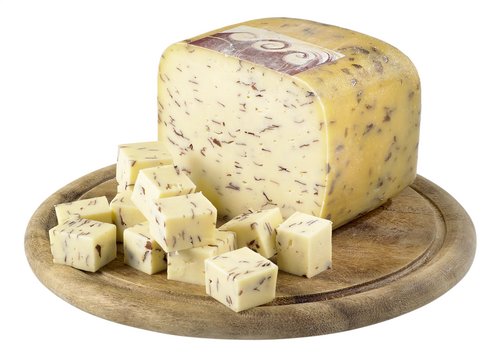
Also wonderful in cheese, adds a little umami but also just looks great: https://static.colruytgroup.com/images/500x500/std.lang.all/...
Re:Early Europeans Ate Seaweed for Thousands of Years by UncleOxidant on Thursday October 19, 2023 @02:22PM (#37946557)
They're growing dulse on the Oregon Coast at Garibaldi now. I bought some directly from the grower when I was there last year. Made it into a vegan burger that was an umami bomb.
Re:Early Europeans Ate Seaweed for Thousands of Years by deaddodo on Thursday October 19, 2023 @03:15PM (#37947333)
In the Republic, they have carrageen; which is a seaweed in the Irish Sea. It's used as a natural thickener and ingredient in foodstuffs like Carrageen Moss Pudding:

https://www.atlasobscura.com/foods/carrageen-moss-pudding

Re:Early Europeans Ate Seaweed for Thousands of Years by perihelions on Thursday October 19, 2023 @04:53PM (#37948571)
That one's used in many other things too! Very popular gelling agent.

https://en.wikipedia.org/wiki/Carrageenan#Food_and_other_dom...

Re:Early Europeans Ate Seaweed for Thousands of Years by talideon on Friday October 20, 2023 @10:30AM (#37956595)
We have dilsk in the Republic too, but it's more of a thing along the Atlantis coasts, not so much the east coast.
Re:Early Europeans Ate Seaweed for Thousands of Years by tejohnso on Thursday October 19, 2023 @03:44PM (#37947720)
Dulse here.

Not uncommon in Canada, especially eastern coast.

You can find it in grocery stores sometimes. Price has nearly doubled in the last few years.

https://www.amazon.ca/stores/page/6A642280-AC30-4571-9ECB-08...

Re:Early Europeans Ate Seaweed for Thousands of Years by thinkingemote on Thursday October 19, 2023 @04:28PM (#37948276)
Can also be found in some health food shops in the UK. Its lovely

I've also seen it sold in little bags in pubs in the Republic of Ireland!

Re:Early Europeans Ate Seaweed for Thousands of Years by youngNed on Thursday October 19, 2023 @05:49PM (#37949188)
i've never understood why it isn't given out free in pubs - its a pittance to source, and my god, it gives you a thirst. Not to mention it tapping into some kind of trad-pub vibes
Re:Early Europeans Ate Seaweed for Thousands of Years by pimpampum on Thursday October 19, 2023 @04:31PM (#37948320)
How do you cook it?
Re:Early Europeans Ate Seaweed for Thousands of Years by dexwiz on Thursday October 19, 2023 @05:31PM (#37948996)
I have started to use this in some soup stocks instead of anchovy paste. Very tasty. Throw a few strips into boiling water, strain out after 15 minutes, and you have a decent broth. You can also sub chard out of recipes for it in some cases. Its still seaweed, so I would only serve to those who already eat it. If someone doesn't like sushi rolls because of seaweed, I wouldn't push it.
Re:Early Europeans Ate Seaweed for Thousands of Years by joveian on Thursday October 19, 2023 @06:20PM (#37949566)
In the US it is widely available dried along with several others, but is quite expensive. It sounds like Maine Coast Sea Vegetables can't harvest enough to keep up with demand (although flakes or powder are available in bulk). Nori seems like the most popular seaweed in the US, though. I tried a bunch of varieties years ago and found dulse to be my favorite snack seaweed both from the flavor (I like it better than nori) and because it is easy to eat out of the bag while others (besides nori) are quite stiff if you try that.
Re:Early Europeans Ate Seaweed for Thousands of Years by username135 on Thursday October 19, 2023 @06:37PM (#37949740)
I came here to mention Ireland. Seaweed was a huge food supplement during the famine for those on the west coast, especially. Still in practice today to a degree. I love Ireland.
Re:Early Europeans Ate Seaweed for Thousands of Years by BoxOfRain on Thursday October 19, 2023 @06:43PM (#37949816)
On the other side of the Irish Sea there's a seaweed dish in Wales called laverbread, I guess there's something about that sea that makes particularly edible seaweed.
Re:Early Europeans Ate Seaweed for Thousands of Years by adolph on Thursday October 19, 2023 @07:48PM (#37950358)
While dulse (which comes from the Gaelic duileasg) grows in cold-water pockets of the North Atlantic and Pacific from Canada to Scotland, “it’s as Irish as potatoes,” according to chef, writer and director of Slow Food Northern Ireland, Paula McIntyre. [0]

Given potatoes are part of the post-Columbian exchange, dulse might be more Irish than potatoes.

https://www.bbc.com/travel/article/20180522-the-renaissance-...

Re:Early Europeans Ate Seaweed for Thousands of Years by Zamicol on Thursday October 19, 2023 @08:20PM (#37950581)
My Mom is from New Hampshire, and raised us in Colorado.

I special order dulse to here in Colorado. https://i.imgur.com/iLvfc1L.png

Re:Early Europeans Ate Seaweed for Thousands of Years by Melting_Harps on Friday October 20, 2023 @04:47AM (#37953721)
> Some of us still do! It's tricky to find it fresh, you usually only get it in small greengrocers or at the Auld Lammas fair. Used to be quite cheap for a bag. Very salty but quite edible and said to be nutrient-dense.

I had some potatoes from the Island of Jersey when I was working in kitchens in London, they were incredibly good and paired well with seafood dishes: I had to do some research on a dish my Sous had asked me to create with them and I found out why they were so well matched.

Turns out the Isle of Jersey is often covered in seaweed [0], and they use it extensively in the cultivation of it's potatoes. So even indirectly they are eaten even though things like wakame and kombu are not common outside of fine-dining in London they are still a main-stay of the British diet, well if you Jersey Royals at least.

0: https://jerseyroyals.co.uk/about-us/

Re:Early Europeans Ate Seaweed for Thousands of Years by pjmlp on Friday October 20, 2023 @06:00AM (#37954189)
And in Portugal we make soup out of it, and use them as vegetable in costal regions.
Re:Early Europeans Ate Seaweed for Thousands of Years by iamsaitam on Sunday October 22, 2023 @03:30AM (#37973536)
Really? What is the most well known sea weed based dish?
Re:Early Europeans Ate Seaweed for Thousands of Years by talideon on Friday October 20, 2023 @10:28AM (#37956563)
I wouldn't say that Dulce/Dilsk/Dillisk is 'lesser known' at all! And along the west coast of Ireland, it's also commonly eaten, and works great as a flavour enhancer in stews.
Re:Early Europeans Ate Seaweed for Thousands of Years by Eavolution on Sunday October 22, 2023 @09:31AM (#37975202)
Beat me to it! I used to get it as a kid in Donaghadee, not sure if you can still get it there though.