A lot of the “electric is better” posts have an implied “gas stoves are bad for people and the environment so we should get rid of them but it’s fine because electric is better anyway”.
This will work.
It's pretty obvious that we need to work very hard at getting this cost down.
I mean, there's subjectively better ("I prefer to cook with it") but there are objectively better traits too.
Oh wait, were you trying to say that forced divorce and remarriage is the same thing as "this other type of cooking tool should be used instead of the one you are familiar with"?
Hahahaha
My friend, I cook more and better than most.
Maybe you have no idea what an electric induction unit is? You sure you aren't thinking of the round red coils?
Surely, secretly subsidizing harmful behaviour is twice as bad, first due to the subsidy itself and second for the harm it causes to other people.
Some things are inherently difficult to make electric, yet we need them to have what we'd call a "modern civilization". Planes are the biggest one: there is a drive to use more trains instead of planes, but should we give that up? It is definitely a step backwards in civilization, as large parts of the world are now impossible to go to and from. Some people admonish flight tourism as hedonistic and say it harms the planet: but should people not be allowed to travel intercontinentally? Is that the world we want?
I believe the investment in carbon capture and greenhouse gases abatement should be increased. Not just because we'll not meet our climate goals and need a way to clean our atmosphere, but because even if we do we still need some things that burn fossil fuels (possibly for hundreds of years).
In that sense, if all of our energy grid was renewable, heavy industries didn't burn coal, and all cars were also electric, would it matter that we have gas stoves and other modern conveniences? Maybe not.
Gas stoves are also generally used by gas companies to get gas lines drawn into buildings, so that they can easily sell gas to the bigger consumer of gas - heating. And indeed, in this aspect too, gas is _vastly_ inferior to modern heating technologies such as heat pumps.
There is no real convenience trade-off when it comes to gas. It's time for it to die, permanently.
Gas is very efficient. If you have the choice of burning gas at a power station (which is how a lot of electricity is generated now a days) and piping it directly into people's homes for the end goal of generating heat, piping wins every time. The inefficiencies of converting gas to electricity and transporting that electricity are significant and well known.
Additionally, I don't know how anyone who has cooked on gas and electric can claim electric is superior. I will grant that a very good electric (ie, induction) _might_ be superior to a very bad gas, but I have used a lot of examples of each and I would choose gas every time (and to demonstrate I am not ideological about this, I always prefer electric ovens over gas).
Heat pumps are also a vastly overrated technology which only work for very well insulated houses with an HVAC system which keeps the rooms ventilated artificially.
I am big on electrification - I'm a Tesla shareholder - but the carbon benefits of electric heating over gas are minute. The Green agenda should avoid battles where the perceived detriment to people's quality of life vastly exceeds the provable environmental benefit.
More importantly for me is that, you don't pollute your breathing air with the byproducts of combusting gas indoors in your home - particular nitrous oxides and fine particulates.
A study by Natural Resources Canada found that cold climate air source heat pumps (CC-ASHPs) work in Canadian winters, based on testing in Ottawa (Ontario) in late December 2012 to early January 2013 using a ducted CC-ASHP. (The report does not explicitly state whether backup heat sources should be considered for temperatures below −30 °C. The record low for Ottawa is −36 °C.) The CC-ASHP provided 60% energy savings compared to natural gas (in energy units).[10] When considering energy efficiency in electricity generation however, more energy would be used with the CC-ASHP, relative to natural gas heating, in provinces or territories (Alberta, Nova Scotia, and the Northwest Territories) where coal-fired generation was the predominant method of electricity generation. (The energy savings in Saskatchewan were marginal. Other provinces use primarily hydroelectric and/or nuclear generation.) Despite the significant energy savings relative to gas in provinces not relying primarily on coal, the higher cost of electricity relative to natural gas (using 2012 retail prices in Ottawa, Ontario) made natural gas the less expensive energy source.
The way my entire kitchen noticeably heats up from pan-searing anything says otherwise.
In addition to all the other responses you've received disputing technical aspects of your post, I'd just like to comment on this one. I've used both extensively (coil, solid resistive, halogen, and infrared for electric, and both bottled and piped for gas), and I far prefer an induction or even a coil stove over gas for everything except for wok. For example, I currently live in a place with a gas stove, and if I want to boil water quickly, I will put 1.7 litres in an electric kettle and 0.3 in a large pot on an appropriately sized burner. By the time the 1500W kettle boils, the water in the pot on the gas stove is ~80°C.
I live in a Japanese apartment (=absolutely terribly insulated, single pane glass, drafty as hell) and our minisplits work way better than any resistive heating we've tried. The only other heaters we use are radiant heaters to heat your body quickly if you don't need to heat the rest of the room.
I don't see how "method that heats air using less energy" can be worse than "method that heard air using more energy". Both are just heating air.
That’s factually wrong.
> I will grant that a very good electric (ie, induction)
This sentence doesn’t make sense. Resistive and induction cooktops have nothing in common. One is not a good version of the other. It’s a completely different experience. The fact that you don’t seem aware of this seriously hinders your comment.
Well that's weird. I live in 1875 adobe house with no HVAC system other than my wall-mounted minisplits. The house is poorly insulated (adobe has high thermal mass but is a very poor insulator, plus lots of leaky windows and roof construction details). The heat pumps kept us warm during this last winter's 5F overnights.
I think most of your counterpoints have been entirely disproven by other posters, but I'll chip in a few more points
>Gas is very efficient. If you have the choice of burning gas at a power station (which is how a lot of electricity is generated now a days) and piping it directly into people's homes for the end goal of generating heat, piping wins every time. The inefficiencies of converting gas to electricity and transporting that electricity are significant and well nown.
This is only true for an energy mix using 100% gas, which is dumb, outdated and rapidly vanishing. Given the very small efficiency difference in gas -> stove to gas -> electricity -> induction, as soon as you have merely a few percentages of renewables, gas becomes the clear loser. The more of the grid we move to renewables, the more gas loses out, and the trend towards renewables is undeniable merely on the economics of it.
That's only covering the cooking-case. Heat pumps are several times more efficient than gas heating down to very low temperatures, I'm really not sure how you can be so wrong on the facts for that point.
>Additionally, I don't know how anyone who has cooked on gas and electric can claim electric is superior. I will grant that a very good electric (ie, induction) _might be superior to a very bad gas, but have used a lot of examples of each and would choose gas every time (and to demonstrate am not ideological about this, always prefer electric ovens over gas).
Whatever small preference people at large have for gas cooking is dwarfed entirely by the list pf drawbacks it has, and that's not even involving the environmental aspects - completely wrecking your indoor air quality is enough of a reason to disregard gas cooking as a technology entirely. Having to risk gas leaks is another aspect that is bafflingly dumb.
>Heat pumps are also a vastly overrated technology which only work for very well insulated houses with an HVAC system which keeps the rooms ventilated artificially.
You very clearly have no idea what you're talking about.
>l am big on electrification - I'm a Tesla shareholder. but the carbon benefits of electric heating over gas are minute. The Green agenda should avoid battles where the perceived detriment to people's quality of life vastly exceeds the provable environmental benefit.
'The Green agenda' - jesus christ.
Any imagined quality-of-life difference between gas cooking and induction is trivial nonsense.
Also, Tesla is not a climate solution, fwiw.
End-state will still have lots of economic processes that require releasing greenhouse gases to the atmosphere, even new or novel ones. But these will be offset by the sequestering paid by their taxation.
Taxes will shift greenhouse gas emissions to no-emission alternatives where that's practical and desirable, probably meaning most of them in the end.
You know, using terra preta for soil improvement would generate basically infinite demand bio char which can then be sequestered into the soil.
If you wanted to get carbon out of the atmosphere this would not only sequester carbon, it would also improve the soil and reduce the need for synthetics in conventional farming.
There is no way this will happen. If we had the right economic system we wouldn't be in this mess in the first place.
If you have good trains it's not giving things up. Apart from long distance travel HS trains are just better is almost every way.
Anecdotes:
I've yet to live in an apartment/house that actually had a gas stove.
No one I know made gas a criterion when house/apartment hunting. They use whatever the place has. When leaving a place with a gas stove, none of them cared if the new place would be electric or gas.
On the flip side, I know quite a few people that exclude places with gas stoves when hunting for housing, because they're used to electric and are worried about fires (never mind if their worry is reasonable or not).
So I've definitely met more people who insist on electric than on gas.
Regular electric ranges typically do not perform as well for cooking. They can be better for cleaning and aesthetics, e.g. smooth top ranges are attractive and easy to clean, but most everyone I've ever talked to who actually likes to cook prefers gas ranges because they can get hotter and are better at temperature control. I don't know if I've ever talked to someone who cares about electric vs. gas ovens though, and I am not sure that either would necessarily have a performance advantage over the other.
Induction ranges are a very appealing subset of electric, but tend to require beefier circuits than most people have running to their kitchen; I've pointed out in other conversations that older houses in the US often don't have the panel capacity to retrofit without also replacing the panel. Induction is also not compatible with aluminum, copper, or glass cookware, which may comprise the majority of cookware in the US (just a guess).
I would agree that most people don't care about this, and will use whatever they have.
Actually lots of people care about gas versus electric ovens. If you look at high end ranges, “dual-fuel” is the product category name which is gas stove with electric oven.
One reason why chefs prefer electric ovens, or rather why gas ovens are not preferable is that gas contains humidity. That additional moisture is desirable at times, but not always. On the very high end, an electric oven with a steam reservoir allows the chef to control the humidity. For instance, you can bake bread with steam for a soft rise and finish with no humidity for a crunchy crust. I’ve never seen a steam oven fueled by gas, but I haven’t sought one out. If this has peaked anyone’s interest Anova makes a countertop steam oven that’s great - previously this was only available on commercial equipment and the fanciest home ovens.
Oh for sure - for heating the house and water, I prefer gas. At least where I live it's more cost effective than electric. In fact, my electric bill in my 1 bedroom apartment (all heating was electric) was just a tad lower than my gas + electric when I moved into a much bigger house.
And of course, gas fireplaces. Once you get used to it, you can't imagine life without it. Electric heaters are horrible in comparison.
My comment was really just about cooking as that is what the parent was referring to.
Doesn't this prove the opposite of your point that gas is more cost-effective than electricity? Perhaps I'm misunderstanding, but the last sentence seems to illustrate that electricity is more cost-efficient.
I never made that point.
Resistive electric ranges almost always require a 240V circuit, and unless you go for a high-end (high output) induction unit, the most that might be required is a new breaker in the panel.
The biggest annoyance after my latest move was that every single apartment had flat top electric ranges so I didn't even have option of preferring apartments with gas ranges.
I like cooking with gas, I've had electric and induction as well.
Generally I like having options and backups.
That sounds like an induction stovetop (which is electric). Those are nice and becoming more common, but they cost more. The majority of electric stove top ranges are like this:
https://www.istockphoto.com/photo/corroded-kitchen-electric-...
Not exactly flat.
https://blog.bellinghamelectric.com/hs-fs/hubfs/Above%20the%...
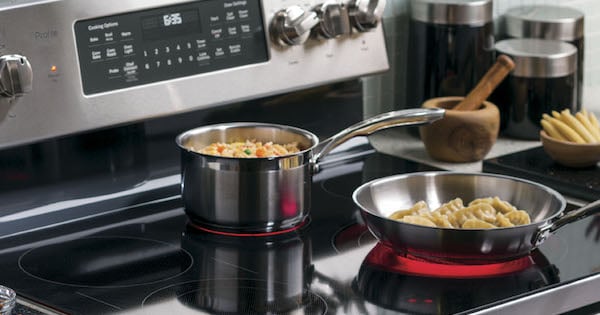
Not induction, so not the same plusses, but the flat stovetop thing is nice, even for an old gas head like me.
Considering the extreme shortage of housing inventory in our most prosperous cities I doubt gas hookups kill any projects.
Find a small problem, propose drastic measures to counter it, end up making the problem worse.
Then, later, accuse everyone of impeding progress, and that there is an urgent need for even more drastic measures.
https://www.treehugger.com/more-trees-than-there-were-years-...
Actually, most of the interest I see is in the indoor air quality impact rather than in the global environmental impact.
Gas stoves emitting particulates wasn't a big deal back when houses were drafty as hell. However, now that everything is sealed up for insulation, indoor air quality is a much bigger deal.
And gas stoves are terrible for indoor air quality.
When you add in gas water heaters, heating, etc. then gas becomes a more significant contributor to GHG. Whereas switching all of those with heatpumps and induction cuts off the gas lobby from fucking with everyone.
Best way to get gas lobby to stop winning? Get rid of gas stoves. Climate Town has a good video on this subject. https://youtu.be/hX2aZUav-54
They say all residential stoves in the US emit GHG equivalent to 500,000 cars.
There are 276 million cars in the US. So, this problem is about 1/500 of the car problem. If you eliminated all stoves today (eliminate, not replace with induction), you would make an impact equivalent to reducing driving by 0.2%.
Of course it only applies to new construction. If it disincentivizes construction, that's widely considered a feature, not a bug. California is the Land of Unintended Consequences.