China has Hong Kong. Full assimilation, normalization would eventually happen. The local's were onboard and content. Why make a fuss now?
Taiwan also wanted full normalization, eventually. So much upside. Wait another generation and few people alive would even remember what the fuss was about. Call it reunification, cousins remarrying, federation, whatever.
China's subjugation of Tibet and the western provinces were fait accompli. The critics were completely impotent. Why prove them right, breath oxygen into their opposition?
Harassing foreigners, thereby pushing them out of the country.
My guess is Xi felt compelled to act aggressively now to head off upcoming crisises. Something the insiders see better than is yet publicly discernible. One or more things that will rock the legitimacy of the ruling party. (The upcoming demographic bust is even worse than expected. Public finances are terrible. To forestall any correction of official GDP measurements. Widespread accounting fraud and corruption. Environmental degradation leading to food shortages. Exodus of manufacturing to Vietnam, Malaysia, others is faster than admitted. Probably a dozen other credible threats.)
The timer on him is still ticking. He himself may well secured an n-th term, and party's temporary obedience at gunpoint..., but I feel he is very desperate, and have sleepless nights in anticipation of 2022.
Any fault of him, whether it is flagging economy, or any concession on the foreign front, or him not scoring just enough of political capital on that, would be 1000% used to undermine his position by whomever wanting to unseat him.
Unlike the oligarchates of ex-Union, CPC has very real internal conflicts. CPC's size ensures that there will never be enough posts, titles, and entitlements for every member of the establishment.
Xi will never be safe from the party. The moment he runs out of steam, and presents a chance for power to be taken from him, someone, out of many millions of ranked party cadres, is just ought to take advantage of the situation.
Remember, both Kruszev, and Deng were relatively small fish at the time they seized power, as was the case for power takeovers in a lot of single party regimes.
Kruszev and Deng wouldn't have been able to seize power without substantial supporter.
The way I see it, the failure of those in power (from their perspective) was of not recognizing that well of support as it built.
Or, put another way, this is why authoritarian regimes are always paranoid: they have no objective methods for gauging public / party / military support, as dissent is always private.
(Well, aside from secret police)
Edit: Although I still don't think the circular firing squad is a great strategy.
China is going to be facing a demographic crisis soon - https://www.nytimes.com/interactive/2019/01/17/world/asia/ch...
CCP leadership might still think they have a chance for true reunification, or maybe they're just saber rattling. Personally, I don't think full reunification is possible until Chinese propaganda is able to compete with American ones.
I see this, but I also see the "We're [Taiwanese] the real China, and the mainland isn't" mentality as well (they'll get upset if you call them Taiwanese). It does get a bit complicated, especially if you think back to what happened during the cultural revolution and the people that stayed in mainland vs those that went to Taiwan.
Another generation and hardly anyone will have Chinese identity, I imagine. An example I hear a lot is that the Vietnamese and Koreans also used to be Chinese.
What term would you use?
Look at how the US responded to Chinas aggressive actions against Hong Kong. They imposed sanctions which basically treated Hong Kong the way the US did the rest of China. The punishment is exactly what Xi wanted!
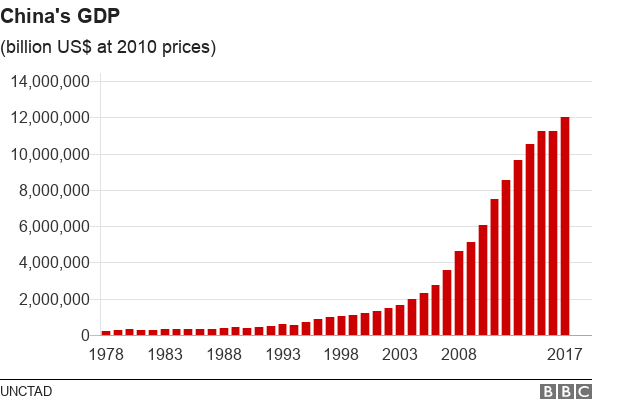
I'm not a sinophile, but I have pro CCP friends (we get in a lot of arguments). I think the reason to support Xi is very simple. Look at Shanghai in 1990 and 2010[0] and GDP[1]. While many are still poor in China, it is nothing to what it was in the 80's and 90's. Many families went from living in impoverished conditions to being wealthy. Living conditions improved dramatically for the average Chinese person and cities appeared out of nowhere and many of them are quite successful. This is just fact. But when you look at it through this lens it is easy to understand why people support Xi. Their lives got better. Then think back to Mao, where no line couldn't be crossed if it was for "the greater good."
It is important to keep this in mind, because it is easy to ignore things like human rights violations, racism, colonialism. I mean the same thing happened in America. It is also easier to not compare things on a spectrum but discritized (e.g. you're either "racist" or "not racist" there is no more racist or less racist)[2]. So what do you see in China? Your country is booming. You see America talking shit. You see Americans revolting and complaining about their own government. You see George Floyd. But you don't see Xianjiang. You don't see Hong Kong the same way we see it in the west (it's just a few protestors). You see "We, the powerful China are trying to help our fellow Chinese people gain a better life" and the average mainlander doesn't understand "why they don't want our help" (something my Mandarin tutor said to me). They don't see HK as successful, they see it as falling behind the rest of China.
So my understanding is that it is more about that they fully trust their government. They have real evidence to point to too. The other issue is that the viewpoint is different as well. Uyghurs are seen as terrorists and the term "reeducation camp" is not synonymous with "concentration camp" for them. There's a high level of nationalism and sense of being a part of something bigger. You can also see this in how the history of China has been taught differently through history and how the definition of "Han" has changed (as well as what "China" is and called). The terms China and Han have become great unifiers for the country and people (there's something to say to creating less racial division points). It really comes down to perception and flow of information. And I'll be honest, seeing a lot of this makes me question a lot about the flow of information we have here in America.
To be honest, watching China (and America, Africa, Europe, Russia), I've come to believe that political support more comes down to human psychology and emotional appeal than it does to logic and morals. That might be why the current state of the economy is a good predictor of the next president (not 100% accurate, but pretty good). If you weren't doing well before and you are doing well now, well it must be the leaders, right?
[0] https://i.redd.it/9rcoznoiwol21.jpg
[1] https://ichef.bbci.co.uk/news/800/cpsprodpb/14997/production...
[2] I'd say that this binary thing is an important aspect (one that has also become a problem in America). But like I have friends that say that America is hypocritical because it complains about censorship in China but not about it on Twitter. There's no nuance. There's no taking into account if an individual is expressing consistent ideology (complain about censorship in China and in the US) vs hypocritical (complain about censorship in China but not in the US, or vise versa). There's also some confusion that complaining is an essential part of democracy as criticizing your government in the west is seen as a way to improve and iterate as opposed to tearing it down.
Basically Xi's nightmare is the disintegration of the Soviet Union and he's running the opposite playbook that Gorbachev used.
I'm just a westerner reading reports from other westerners. I'm relating my perception, as gleaned from western media.
"The characterization of Hong Kong..."
IIRC, I read there's a huge swing in the self identification of HK residents from "Chinese" to "Cantonese". Slim evidence, I know. But maybe directionally correct?
"Xinjiang and Tibet..."
I didn't say that. Western media has related that ethnic Tibetans and traditional Muslims have struggled, since I began reading the news in high school (80s).
This is certainly what it looked like from Russia in the 90s, when China was just starting to meaningfully rise. I think Gorbachev's main mistake was that people were given political/personal freedoms before economic ones, and it was done way too quickly. After some 70 years without these freedoms, people did not know what to do with them, so a lot of bad shit happened in late 80s and "wild 90s". Economy was decimated, Soviet Union collapsed, and Russia itself was close to falling apart as well. Just read any US geopolitics text from late 90s or early 00s - they all prognosticate that Russia will be no more, salivating to divvy up the spoils. What got in the way of that was Putin, or, to be exact, Russia's national security establishment which installed Putin, since nobody knew who he was 6 months before he became president.
So the way the Chinese policy was perceived from Russia, it was something more sane. For one thing their stated timeframe for the transformation of the country (50 years IIRC, but I might be wrong), seemed more realistic. For another they started introducing capitalism first, rather than give a bunch of dirt poor people completely unrestricted political freedom a-la early 90's Russia, which could only lead to anarchy and disaster.
And I do believe they will succeed in the long term. The best analogy I have is the current obsession in US corporations with quarterly results, leading to suboptimal long term outcomes. This is what the US itself behaves like, except the "quarter" is 4 years long.
China doesn't have to worry about that, they live on a different time scale and can enact consistent policies spanning many decades. This is both a blessing and a curse. It's easier for the US to course-correct, which can be beneficial because most long term plans do not survive contact with reality. But if China gets the big picture right (which to me it seems like they do), and is able to course correct on the margins, they don't really need the randomness that the US system has.
I just wish they'd knocked it off with the concentration camps and child labor at this point. It undermines their own progress.
As to Ma, oligarchs with political aspirations need to be periodically reminded who runs the country. This is why Khodorkovsky ended up in prison for a decade. He got way too powerful, exerted a lot of ifluence in Duma, and thought taxes were optional. None of those three things were acceptable to the Kremlin.
I find it funny by how hard people of Western upbringing try find some "higher meaning" to what villainous characters do, the more powerful, and scarier they are.
And they do not want to take the most obvious, explainative, and floating on the surface explanation, because according to them, "it can't be that simple!"
A phrase I hear often is "I don't believe in cartoonish evil characters!!!"
And that despite much of 3rd world dictators very much being such, and their actions being very well explainable by "evil guys, doing evil deeds, because they are evil, arrogant f..ks," and that being their primary motivations, with all their "roleplay" obligations, and nominal official duties coming second to that.
I don't agree with you about Westerners not seeing the villainous wood for the evil trees, but I think it's moot when there's an even simpler explanation: they do not want to lose control.
Take a look at Bin Rasheed, or Li.
I feel like you just want to make a point about the CCP being evil. Fair enough, but that doesn't really have any connection with what you were trying to say about Western critical thinking.
Western critical thinking seem to be hell-bent on thinking that some grand totalitarian regime cannot be just "dumb evil," and it must always come with some kind of equally grand conspiracy, secret agenda, maybe even some semi-valid point, as they probably think "it must take some brains, complex motive, and talent to run you evil empire at such scale."
It's beyond them to concede that their grand political theories are not the case, and the man is driven just by your regular arrogance, greed, and cowardice, aka lust for power, even if his ways of achieving those may be quite sophisticated at the time.
The fact that the communist party made extensive studies of the fall of the Soviet Union has been well documented.
https://www.wsj.com/articles/SB10001424052702303755504579207...
Western people are not misunderstanding China, they just are content with a myopic tiny view, and happy to apply whatever judgement they can at the whim of the moment.
Discussing any China related issues on HN is like arguing with mobs. You either are drowning in downvotes, like saying Mr. Xi is not just a dictator; or arguing with someone who questioned any minor details you raised as a Chinese, often make me questioning did I lose touch with China so much that a random HN visitor actually knows better than myself...
I'm sorry, but the US actually is scared of Russia and China and it's whole point in having a large Navy with carriers and such is to counter them. Those two countries are the only adversarial countries to have any meaningful naval presence, so there really wouldn't be any treason to maintain such a large carrier fleet unless they were scared of them.
The average citizen, however, may fall under your "accepts" criterion. It doesn't matter what nation I suggest, indeed I have made up nonexistent nations before, and most people will allow that, yes, given sufficient winding-up on the part of "news" organizations and politicians, they would accept bombing them to hell and back. In the long view of history, this will be why USA and Germany are discussed together in the same chapter. The public does not desire ruinous horrific ridiculous pointless endless war, but it does accept that, after enough gaslighting by MIC's paid employees in government and media. That's on us. I don't really like my team.
China (Russia can't even entertain the dream of it any more) doesn't have a dozen carriers, it's a totally different side of the geopolitical scales.
> Maybe Xi is a bit paranoid, but you don't become a lifelong dictator of a billion people by doubting yourself.
It's worth citing Nixon as an example of someone who while maybe not doubtful of themselves but was utterly paranoid and belligerent towards any and all dissent and opposition, but still made to the very top of the world.
Trying not to do the apology of a terrible regime, but I can see why Xi would see himself as "leading China into an age of unprecedented glory".
If things go south there are plenty to blame(i.e China, Russia, EU, rebels, etc). It is never the leader to blame. As the party leader controlls the police and the millitary there are really very few that would dare to consider a coup/leader change.
Even North Korea's Kim is "officially" supported by his party members but we already know what happens when they question him.
It's only a dream, but it could be so beautiful.
As Hyman Minsky would agree - there's only one way to handle volatility, take it in your face. You can't suppress it.
It's not so much "they're pumping the numbers by cooking the books", it's more of the regime being at the right place at the right time. Other east asian countries industrialized at the same time without the CCP, for instance.
In fact, by making himself basically dictator in life he has added the potential for tremendous instability in Chinese politics that did not exist before he took those actions.
Of course, you'd have to be wearing rose-colored glasses to take that portrayal at face value, and you'd also have to ignore significant atrocities the leaders were responsible for.
I agree that the US isn't scared of Russia or China, but I think the US is afraid of the idea of not having military dominance.
> Xi is clamping down on religion because he can
My source may be dated, but as of 1988 policy making in China was a protracted, incremental process involving negotiation among numerous different groups (central and provincial governments, bureaus and departments)[0]. Things may be more centralized now, but I think it's safe to say that if something is happening in China, it's because multiple government entities at different levels have agreed to it. Who knows what the reason is.
[0] Policy Making in China, Lieberthal 1988
b. China has substantially centralized post-2000.
I would go so far as to say it is close-to-useless to cite a 1988 book on modern China unless to reference its history, that's how fast things have changed.
My own experience was seeing a huge commotion right in the city centre of Guangzhou, a megalopolis bigger than New York, without single mention in the media the next day besides some random youtube uploads.
I can co-sign that there are often incidents of civil unrest in China that are not reported in the media. However, from what i can gather, these are not explicitly anti-establishment. Most of them appear to be localized labor disputes or middle class NIMBYs making a fuss about development that inconveniences them.
For reporting on the former, you can check out China Labour Bulletin[0].
At least in 2012, there were apparently 500 protests _every day_: https://www.theatlantic.com/international/archive/2012/01/ho...
When I was there in 2014 there was a HUGE protest in Changsha. None of these are reported in the media inside or outside China.
I concede that my source on policy-making is dated, but I highly doubt the the functioning of a country as vast and complex as China can be completely transformed in forty years. Still, I'm not sure, so I emailed the author to verify.
I think there is a world of difference between protests (usually over eminent domain related concerns, not always) and an "uprising." I've tracked to track down some of these claims of 180,000 protests a year (following the links) and it's been hard - I find it hard to believe that these are very large protests.
A truly confident, powerful man would not fly into a blind rage if compared to Winnie The Pooh.
For what it's worth given the ... disastrous state of the US, the deep rifts in the EU and the total retreat from anyone not China from Africa, that is a very valid, yet frightening, assessment of the future.
Xi is rattling his saber against Taiwan because he can and he will face no consequences.
Xi is sending police to Hong Kong because he can and he will face no consequences.
Xi is clamping down on religion because he can and ...
Maybe Xi is a bit paranoid, but you don't become a lifelong dictator of a billion people by doubting yourself. If I have to guess, Xi is convinced that he's leading China into an age of unprecedented glory, and he's surrounded by people who talk the same and mostly think the same.