News for hackers. Stuff that matters.
Re:No-till no-herbicide farming system in trial since 1981 by estsauver on Monday October 19, 2020 @09:01AM (#24825910)
They're running 72 experiments on 12 acres. That's mostly interesting to me because that's an incredibly small area of land. US corn agriculture is on about 83 million acres of land. Subsaharan African Agriculture also plants about 83 million acres of maize. They see yields that are 1/3 to 1/4 of US agricultural yields. These yield gaps dramatically close when you start using fertilizer and modern agricultural practices. (The One Acre Fund puts out some pretty good data on this, the Burke and Lobell lab at Stanford have a few good papers on this as well.)

In short, I would just ask people to remember that there are quite a few farmers who would love to stop paying for fertilizer if it didn't impact their yields: all of them in fact. It's one of their biggest costs generally. When an organization says "The Farming Systems Trial was started by Bob Rodale, who wanted scientific backing for the recommendations being made to the newly forming National Organic Program in the 1980s" they've incorporated confirmation bias into their heart.

I'm certainly biased, I'm the CTO of a company that's trying to improve agricultural inputs by financing access to smallholders in subsaharan Africa (Apollo Agriculture, we're actually a YC F1 company also,) but it's worth noting that this is research that's quite a bit outside the normal recommendations that ag scientists believe. I also worked at The Climate Corporation before, to put all my potential biases out on the table.

Re:No-till no-herbicide farming system in trial since 1981 by bregma on Monday October 19, 2020 @09:35AM (#24826211)
> They're running 72 experiments on 12 acres.

I live on a 54 acre property: I can picture 12 acres as about a quarter of my property. If I further divide that into 72 plots, I end up with a bunch of little gardens.

What works in a small garden plot is usually totally unscalable at crop production volumes. My experience (over decades) is I couldn't sustain my family for a year on a 1-acre garden plot even if I had the time to work it intensively and used nothing but recycled organic byproduct (compost and, uh, other stuff) as fertilizer. Even if we tried to reproduce the great Kampuchean agricultural experiment of the mid-1970s and put everyone to work in the fields full time we could not feed the world this way.

I don't have a problem with folks idly dallying in this kind of research, and I think useful practices could possibly be revealed, but scale and practicality need to be taken into account when interpreting results.

Re:No-till no-herbicide farming system in trial since 1981 by durkie on Monday October 19, 2020 @10:40AM (#24826790)
> My experience (over decades) is I couldn't sustain my family for a year on a 1-acre garden plot even if I had the time to work it intensively and used nothing but recycled organic byproduct (compost and, uh, other stuff) as fertilizer.

I find this surprising. I help run an Atlanta-area non-profit that has a ~1 acre organic farm that donates everything it produces. For the year 2020 we have already donated 3120 lb / 1415 kg of food.

We're not trying to produce a nutritionally complete output on the farm, but that's still ~70 lb / 31.7 kg of food a week on average.

Re:No-till no-herbicide farming system in trial since 1981 by f- on Monday October 19, 2020 @11:20AM (#24827141)
Well, potato is one of the higher-calorie crops, and one pound contains around 350 calories. If you produce 3,120 lbs a year, that gives you about a million calories.

Now, let's assume a family of three - an average person needs around 2,000 kcal a day. That's 2,000 * 365 * 3, or around 2,200,000 kcal a year. So, you come quite a bit short. And that's on a good year; you're gonna have bad years, too.

Also a function of climate and soil. In the 19th century, settlers in the plains - Nebraska, Wyoming, etc - often couldn't make it work on 640 acres granted by the government. In contrast, there are eastern states where 20 acres would be more than enough.

(Farming in the West is now much more viable thanks to deep wells and mechanical irrigation, but that's a capital-intensive and resource-intensive approach that works best at a scale.)

Re:No-till no-herbicide farming system in trial since 1981 by owenversteeg on Monday October 19, 2020 @11:43AM (#24827362)
As pointed out downthread, you can indeed feed a family on one acre of land, and many people do actually do this.

The problem with your math is that it assumes the 3k lb yield from gp comment is for potatoes. Your crop yield depends a lot on the crop. Aparently you can get between 10-30 tons of potatoes per acre (that range is from beginner yields to expert) which would be 7-21 million calories per year. Plenty of room, then, to grow a number of other crops to eat a balanced diet.

Re:No-till no-herbicide farming system in trial since 1981 by noir_lord on Monday October 19, 2020 @01:06PM (#24828383)
Potatoes (if you eat the skin) and milk would theoretically be a balanced diet, supplemented with fish/occasional meat it was pretty much the Irish diet pre-potato famine.

Boring as hell after a while but it'd keep you alive.

Re:No-till no-herbicide farming system in trial since 1981 by marzell on Monday October 19, 2020 @04:19PM (#24830507)
During the famine, ireland produced way more for/potatoes then it required to feed it's people; they were just taxed to all hell.

Currently the US produces about twice the calories it requires. There are so many calories produced in forms of corn that the industry has made huge efforts to find new ways to use those calories (hfcs, ethanol, etc) in order to justify corn industry practices. The one liner is that we need to be able to feed the people, but obesity is at an all time high. People need more nutrition, not more calories.

Re:No-till no-herbicide farming system in trial since 1981 by bwilli123 on Monday October 19, 2020 @06:00PM (#24831524)
Taxes were not the main contributory factor. "Ireland continued to export large quantities of food, primarily to Great Britain, during the blight. In cases such as livestock and butter, research suggests that exports may have actually increased during the Potato Famine. In 1847 alone, records indicate that commodities such as peas, beans, rabbits, fish and honey continued to be exported from Ireland, even as the Great Hunger ravaged the countryside." https://www.history.com/topics/immigration/irish-potato-fami...
Re:No-till no-herbicide farming system in trial since 1981 by marzell on Monday October 19, 2020 @06:35PM (#24831787)
Thanks for the clarification. I was actually meaning that they were being "taxed" in terms of food sent to the rest of the UK and not in terms of money. Even with the article you linked, it's not clear to me if "exports" means they were forced/taxed into sending food, or if they were willingly exporting food for money in lieu of eating... Or something else
Re:No-till no-herbicide farming system in trial since 1981 by Spooky23 on Monday October 19, 2020 @07:15PM (#24832124)
Most Irish didn’t own property and were tenants. They didn’t “export” in lieu of eating, the English landlord exported the fruits of their labor and left them to starve. The English were very concerned about the Irish and their moral fiber, so they allowed them to persevere rather than get hooked to charity.

Others couldn’t pay their rent and were evicted. Millions of Irish didn’t flee to the slums of NYC, etc for kicks.

Re:No-till no-herbicide farming system in trial since 1981 by thefringthing on Tuesday October 20, 2020 @01:02AM (#24834074)
For this reason the Great Famine is sometimes characterized as a genocide perpetrated by the British landlord class.
Re:No-till no-herbicide farming system in trial since 1981 by bitdizzy on Monday October 19, 2020 @07:13PM (#24832102)
> they were willingly exporting food for money in lieu of eating...

The "they" who decided to export were not the "they" who starved.

Re:No-till no-herbicide farming system in trial since 1981 by CryptoPunk on Tuesday October 20, 2020 @03:56AM (#24834881)
Ireland could not affordably import food, due to the Corn Laws.
Re:No-till no-herbicide farming system in trial since 1981 by bane on Monday October 19, 2020 @03:51PM (#24830202)
You can also get pretty complete with potatoes and oatmeal.
Re:No-till no-herbicide farming system in trial since 1981 by ed25519FUUU on Monday October 19, 2020 @08:56PM (#24832934)
You can maybe keep a small family alive on an acre, but not really feed long term. With such little space you need to dedicate nearly the entire plot to high caloric crops such as corn.
Re:No-till no-herbicide farming system in trial since 1981 by FlyMoreRockets on Tuesday October 20, 2020 @12:14AM (#24833865)
Each year, I grow an increasing amount of my food from less than an acre. Corn is not an efficient way to get calories in an organic system, it requires too much nitrogen. As others have mentioned, potatoes are much better. And beans/peas, which require achieve their nitrogen requirements via bacterial symbosis. If you really want to go efficient, grow Azolla. I once calculated that a person in a temperate climate could produce most of their nutritional requireents with a plot roughly 25 square meters. Azolla doubles in mass every 2-3 days in ideal conditions and draws everything but trace minerals from the atmosphere.
Re:No-till no-herbicide farming system in trial since 1981 by three14 on Tuesday October 20, 2020 @01:16AM (#24834136)
Wikipedia seems to think that Azolla might be neurotoxic.
Re:No-till no-herbicide farming system in trial since 1981 by FlyMoreRockets on Tuesday October 20, 2020 @03:55PM (#24841721)
Yes and no. When stressed, it produces a neurotoxin.
Re:No-till no-herbicide farming system in trial since 1981 by phkahler on Monday October 19, 2020 @12:24PM (#24827866)
You math is wrong. Way wrong. 70lb per week is 10 pounds per day. I'm not sure its feasible for a person to eat that much. Maybe a family could. Maybe.
Re:No-till no-herbicide farming system in trial since 1981 by nkurz on Monday October 19, 2020 @12:36PM (#24828000)
It's frequently claimed that the average Irish male just prior to the potato famine ate well over 10 lbs of potatoes per day:

On a typical day in 1844, the average adult Irishman ate about 13 pounds of potatoes. At five potatoes to the pound, that’s 65 potatoes a day. The average for all men, women, and children was a more modest 9 pounds, or 45 potatoes.

https://slate.com/culture/2001/03/putting-all-your-potatoes-...

While there are people who doubt these figures, eating 10 lbs of potatoes per day is definitely more plausible than your comment indicates.

Re:No-till no-herbicide farming system in trial since 1981 by Vrondi on Monday October 19, 2020 @04:33PM (#24830701)
I have lived almost exclusively on potatoes at several points in my life, and there's just no way. I've watched a bulky manual laborer live almost exclusively on potatoes as well, and still not near 10 lbs a day.
Re:No-till no-herbicide farming system in trial since 1981 by ponker on Monday October 19, 2020 @01:21PM (#24828553)
This is kind of inconceivable to me. Is it because I’ve never done enough manual labor to eat 65 potatoes in a day? I can’t imagine even finding the time to cook and eat them.
Re:No-till no-herbicide farming system in trial since 1981 by nkurz on Monday October 19, 2020 @01:29PM (#24828643)
Arguing against the article, 1/5 lb is a pretty small potato. I just weighed a baseball sized potato I dug last week, and it was 7.5 oz (~1/2 lb, 200 g). So if you are picturing an average baked potato, it's probably only 30 potatoes per day. Which, granted, is still a lot.

Cooking time doesn't strike me as a problem. Boiling 30 potatoes does take somewhat longer than boiling 1 potato because the mass is greater, but it's pretty much boil and forget. Also, the boiling can probably be done by one of those women or children who are only eating 10 potatoes a day!

Re:No-till no-herbicide farming system in trial since 1981 by 3131s on Monday October 19, 2020 @01:50PM (#24828851)
Probably because they weren't getting enough protein. It's easy to eat carbs forever if you have nothing else because you'll still feel intensely hungry without protein.
Re:No-till no-herbicide farming system in trial since 1981 by silveroriole on Monday October 19, 2020 @01:50PM (#24828847)
And if the calorie count upthread is right, that’s 4550 calories per day purely from potato, not counting any added butter, milk, beans, meat etc! I know people did more manual labour back then, but something seems wrong with that figure.
Re:No-till no-herbicide farming system in trial since 1981 by vram22 on Monday October 19, 2020 @03:44PM (#24830117)
They may not have had access to much of (barely) higher end foods. I read somewhere that the English, who had conquered them, took away a lot of that sell / use in England, including beef.

Update: Found where I read it - Wikipedia:

[ The Celtic grazing lands of ... Ireland had been used to pasture cows for centuries. The British colonised ... the Irish, transforming much of their countryside into an extended grazing land to raise cattle for a hungry consumer market at home ... The British taste for beef had a devastating impact on the impoverished and disenfranchised people of ... Ireland ... pushed off the best pasture land and forced to farm smaller plots of marginal land, the Irish turned to the potato, a crop that could be grown abundantly in less favorable soil. Eventually, cows took over much of Ireland, leaving the native population virtually dependent on the potato for survival.[41] ]

That quote is from the section:

Potato dependency

in:

https://en.m.wikipedia.org/wiki/Great_Famine_(Ireland)

Re:No-till no-herbicide farming system in trial since 1981 by vkou on Monday October 19, 2020 @02:33PM (#24829373)
Pre-industrial agricultural labour is incredibly calory-intensive. 4000-6000 calories sounds about right for a day of agricultural work.
Re:No-till no-herbicide farming system in trial since 1981 by peterwoerner on Monday October 19, 2020 @04:01PM (#24830313)
I used to eat about that much a day when I was running twice a day (and I was losing weight while doing so). Michael Phelps was known for eating 10,000 calories a day.
Re:No-till no-herbicide farming system in trial since 1981 by James_Henry on Monday October 19, 2020 @12:52PM (#24828186)
His math is correct. Also, it's really easy math to verify. It's not surprising either. With the stated yields, you could feed a person. You'd need more for a family.

Of course, the yields could probably be improved in order to get the 140 or so lbs needed to feed a family of 3

Re:No-till no-herbicide farming system in trial since 1981 by commiefornian on Monday October 19, 2020 @04:06PM (#24830365)
The math is correct but the calorie count per pound potato is way off. It is 350 kcal not 350 cal.
Re:No-till no-herbicide farming system in trial since 1981 by 1propionyl on Monday October 19, 2020 @04:32PM (#24830673)
In the US, 1 Calorie = 1 kcal elsewhere.

We refer to kilocalories with capital-C "Calorie". I don't know why.

Re:No-till no-herbicide farming system in trial since 1981 by Groxx on Monday October 19, 2020 @06:16PM (#24831629)
Probably because lower-c calories are meaninglessly small for like 99% of the population. It'd be like doing all your cooking in milligrams.
Re:No-till no-herbicide farming system in trial since 1981 by bane on Monday October 19, 2020 @03:59PM (#24830298)
When I used to work heavy manual labor I was definitely able to easily put down around 7-8 pounds of food per day. One of my coworkers was into weight lifting and estimated we were burning between 3,000-5,000 calories per day depending on the job.

10 lbs of potatoes is only 3,500 calories. Which, while far in excess of a "normal" sedentary lifestyle, is completely reasonable for people working heavy labor jobs if that's their primary food source.

Re:No-till no-herbicide farming system in trial since 1981 by jjk166 on Monday October 19, 2020 @02:52PM (#24829593)
A typical person eats 3 to 5 lbs of food per day, and that generally includes some very calorie rich meats, dairy, nuts and/or processed foods - not exactly the stuff you'll get in your backyard. You might be able to feed a family on an acre of beans, but not on an acre of generic greens.
Re:No-till no-herbicide farming system in trial since 1981 by grawprog on Monday October 19, 2020 @07:57PM (#24832432)
A 10lb bag of potatoes isn't really that big. If you take one of those bags, split into thirds, as in three meals a day, that's a bit more than 3lbs per meal. If that's your only source of food, that doesn't seem entirely unreasonable.
Re:No-till no-herbicide farming system in trial since 1981 by bane on Monday October 19, 2020 @03:55PM (#24830255)
Potatoes have great yield in terms of calorie per unit harvested. Other plants, not so much. Think about how much weight you might throw away with a pumpkin or a watermelon.

I have some family members who devoted about an acre and a half to a mix of crops, squashes mostly as they grow the best where they live, and for a family of 5 still had to supplement their diet pretty significantly.

At the same time, they ate more healthily than they ever had before, and often had too much of certain crops that they gave away or sold at the local farmer's market.

Re:No-till no-herbicide farming system in trial since 1981 by ed25519FUUU on Monday October 19, 2020 @08:58PM (#24832950)
The magic valley in Idaho (named after its transformation) is a great example of this. Modern irrigation has turned what is naturally a high dessert climate into a food producing powerhouse.
Re:No-till no-herbicide farming system in trial since 1981 by jcampbell1 on Monday October 19, 2020 @11:45AM (#24827395)
My guess is your one acre of growing whatever you grow would feed about .6 people per year. A human consumes about 1M Kcals a year (accounting for meat as waste), and at best you can achieve 11M kcals per acre with corn or potatos. Beans yield about 6M and wheat 4M. My guess is you are growing and giving away about 600k kcals of roughage. 70lbs of tomatoes only has about 6000 kcal, so enough for one person for half a week.
Re:No-till no-herbicide farming system in trial since 1981 by codeulike on Monday October 19, 2020 @10:32AM (#24826723)
Its not 72 experiments, its 72 plots. This is normal for agricultural research, as a control for soil variations within the test area. i.e. you dont compare several big plots, you compare lots of little ones to control for natural variations accross the field such as proximity to a river.
Re:No-till no-herbicide farming system in trial since 1981 by bluGill on Monday October 19, 2020 @01:23PM (#24828582)
This is very important. Farmers with thousands of acres still divide it all into subfields that are around 2500 square meters that they manage separately. They are looking to go smaller than that, which computers allow them to do.

By manage separately the same tractor crosses over each one in a field, but each subsection gets a different amount of fertilizer, seed, and other chemical based on all the data they can get. Sometimes they even have more than one seed/chemical tank so they can apply different amounts of each in one pass.

When you have poor and good soil in the same field (all fields have this to some extent) you want to put the minimum money into the poor areas, while it is worth putting more into the productive areas. (People often ask about building up the bad soils - this is done too, but you can't really change the sand/clay ratio)

Re:No-till no-herbicide farming system in trial since 1981 by voisin on Monday October 19, 2020 @10:26AM (#24826659)
> I couldn't sustain my family for a year on a 1-acre garden plot even if I had the time to work it intensively and used nothing but recycled organic byproduct

Check out “The Market Gardener”[0] if you need help learning how to do far, far better than this. We need more, smaller farms. Biointensive farming and permaculture can save our planet.

[0] https://www.goodreads.com/book/show/18406251

Re:No-till no-herbicide farming system in trial since 1981 by vram22 on Monday October 19, 2020 @11:28AM (#24827234)
Yes, Jean-Martin (JM) Fortier (Quebec) is a good example, though there are better / more comprehensive ones, and at larger scale too, see below. And JM is not even doing full permaculture, e.g. not using multi-height crops (i.e. ground covers through plants of a few more different heights to top canopy trees, 100 or more feet tall), so as to use more of the available sunlight and underground nutrients (shrub roots can go deeper than herbs, and trees even deeper, and what is brought up from deeper can be shared with shallow-rooting plants via compost, chop-and-drop, etc.). And he still makes fairly high profits per acre / person / year, i.e. overall. He has many videos about his work, both the technicals and commercials, on YouTube. Search by his name as well as for a great series titled Les Fermiers. And some examples higher on the axes of land area as well as permaculture and / or regenerative agriculture, vs. "just" organic farming, include:

- Gabe Brown, 20+ years at it, 4 or 5000? acres, mixed grasses (grains) and broadleaf crops, cover crops, livestock (beef, pigs, etc.), land getting better each year, saves hugely on synthetic fertilizer and pesticide (see a chart in his Treating The Farm as an Ecosystem video), profits better too, and higher than his synthetic-using and tilling neighbors and state averages (ND, USA), and going up the value chain, so getting more of the final consumer dollar vs. middlemen. The average take for "conventional" US farmers is quite low, he says. Oh, and he does not need or take govt. farm subsidies, as many others do.

Has many videos too, search for his name. Check the comparative stats and photos.

- Richard Perkins, Sweden. Not sure of area, but above a few acres at least, maybe 25. Mixed stuff again. High profits again. Videos again. Many years' good results again.

- Last but one of the best, Geoff Lawton (NSW, AU), long time permaculture expert (learned from Bill Mollison), doer, 66 acre Zaytuna Farm, is real mixed farm plus demonstration site, yearly trains many interns, consultant (to small orgs through to countries). Ditto for many of above points like axes, diversity, profits, improving over time, cost savings, etc. etc.

Edited for typos.

Re:No-till no-herbicide farming system in trial since 1981 by vram22 on Monday October 19, 2020 @01:17PM (#24828524)
Also see, very significantly, Elaine Ingham, soil (biology) scientist, Ph.D., also founder of startup soilfoodweb.com (to consult and get her research applied widely).

Almost all the farmers I mentioned above, quote her work with respect and apply it in their operations, and consider it key to their results. She (along with many other researchers, over years, not a sudden thing) has come out with some rather startling results that, as I said, are being applied by these guys and many others. A key result is that it is the quantity and diversity of the life in the soil that is as (or more) important to soil health and hence farm results (now and long term) as the actual levels of plant nutrients in the soil. And this is because it is the soil life (they use the term "biology" for it, but okay, go with the prevailing term the experts use) that makes the chemical nutrients available in forms that plants can actually use, via a deep symbiosis and mutual helping that happens between plants and the soil biology, which includes bacteria, fungi, archaea, nematodes, arthropods and small animals.

Another quite surprising / non-intuitive result is her saying that most or all soils on earth, already have many times more the amounts of nutrients than plants need, like 1000x more, including macro (e.g. N, P, K) and micro ones (like trace elements), so the limiting factor is really the soil biology, which depends a lot on soil organic matter content (all those critters need to eat), humidity and temperature, all of which are helped by organic farming, permaculture and regenerative agriculture practices like applying organic fertilizer (manure, compost, etc.), mulching, and cover cropping (according to her, more for the organic matter than for the nutrients per se).

Check her video below in which she talks about all these things.

Watch "The Roots of Your Profits - Dr Elaine Ingham, Soil Microbiologist, Founder of Soil Foodweb Inc" on YouTube:

https://youtu.be/x2H60ritjag

Re:No-till no-herbicide farming system in trial since 1981 by dmos62 on Monday October 19, 2020 @05:11PM (#24831072)
Thanks a lot for sharing all this. I'm a geek for efficient farming and this is great! You've provided content for months.
Re:No-till no-herbicide farming system in trial since 1981 by vram22 on Monday October 19, 2020 @06:41PM (#24831824)
Welcome, and glad you think so :)
Re:No-till no-herbicide farming system in trial since 1981 by vram22 on Monday October 19, 2020 @11:49AM (#24827448)
Forgot to say:

Gabe runs his operation with only a handful of people, maybe 4 total, plus a few interns, who are more of a liability than asset, so also say Richard and JM - at least initially :)

And Gabe uses some machines for scale, including a few he and friends innovated / improvised, IIRC.

Re:No-till no-herbicide farming system in trial since 1981 by vram22 on Friday October 23, 2020 @09:07PM (#24876047)
Another such farmer like Gabe, JM, Richard etc. above, is Krishna McKenzie, Solitude Farm, Auroville, Tamil Nadu, India. Englishman who studied as a kid in a J. Krishnamurti school in England, came to Auroville ~20 years ago, started Solitude with friends, and has been there ever since. Inspired by Masanobu Fukuoka and his book, One Straw revolution. Has met him. Mixed crops, fruit trees, grains (including millets), many vegetables including common ones, plus less-known but traditionally eaten high-food-and-medicinal-value indigenous local and Indian ones, some in regular beds, some intermixed in a food forest, again utilizing more layers of sunlight and underground soil than single layer traditional monoculture. Again, has intern program, video channel, trains others in the community, gives talks, runs a popular on-premise vegan and raw food restaurant supplied by the farm itself.

Nowadays doing more training work and helping others in the area to bootstrap community permaculture gardens, since there is much more interest in food security, local food, lowering food miles, traditional-but-forgotten-plants-as-food, weeds as food, etc., since the coronavirus pandemic started.

Re:No-till no-herbicide farming system in trial since 1981 by vram22 on Monday October 19, 2020 @03:28PM (#24829940)
>Search by his name as well as for a great series titled Les Fermiers.

I should have said that Les Fermiers is in French - Quebec dialect, ha ha, they pronounce oui (French for yes) as way instead of wee, for example, but it has English subtitles, so English speakers can easily understand it.

Re:No-till no-herbicide farming system in trial since 1981 by jtc331 on Monday October 19, 2020 @06:25PM (#24831701)
See also Elliott Coleman’s The New Organic Grower; he suggests feeding the vegetable needs of 100 people from 2 acres with year round growing.
Re:No-till no-herbicide farming system in trial since 1981 by vram22 on Monday October 19, 2020 @06:45PM (#24831874)
Yes, JM Fortier (who I and another mention elsewhere in this post - the author of The Market Gardener), says that Coleman was one of his main inspirations.
Re:No-till no-herbicide farming system in trial since 1981 by prawn on Monday October 19, 2020 @07:42PM (#24832345)
I was going to say! First Fortier video I watched is about leeks and his technique looks identical to what Coleman showed when I visited his Four Season farm in Maine. That place is incredibly interesting for any aspiring gardener - so many techniques and inventions that were new to me.
Re:No-till no-herbicide farming system in trial since 1981 by vram22 on Monday October 19, 2020 @11:46PM (#24833751)
Ha ha, nice. Yes, I remember one of them talking about the fact that Coleman created many light farm tools that helped with work or productivity.
Re:No-till no-herbicide farming system in trial since 1981 by kiliantics on Monday October 19, 2020 @11:15AM (#24827090)
John Seymour has also been writing books for years on how to sustain a whole family on an acre of land.
Re:No-till no-herbicide farming system in trial since 1981 by jfengel on Monday October 19, 2020 @10:16AM (#24826551)
Right now we over-feed the world, especially ourselves in the West. We produce an enormous amount of low-quality food, and malnutrition is driven more by external interference (misgovernment, wars) than by agriculture. Food is, as a percentage of people's budgets, cheaper than it has ever been.

That suggests that there's a middle ground, where we shift to more labor-intensive practices to grow some more expensive but better produce that's less hard on the environment, without dismantling the entire industrial system. People could introduce more fresher foods, while still growing vast amounts of highly-processed-maize-and-soybeans for people who can only afford that.

There are a lot of dimensions to that. It's not easy to prove that eating this way is necessarily healthier or easier on the environment. But we do know that the Western diet is bad for people's health, and we do know that it's hard on the environment, so it's worth considering alternatives.

Re:No-till no-herbicide farming system in trial since 1981 by easytiger on Monday October 19, 2020 @03:04PM (#24829698)
I agree to some extent, except that lower cost food means access to higher quality lower cost food. That's a good thing.

Growing up in the UK in the 80s most people were eating a post war inspired limited diet.

> But we do know that the Western diet is bad for people's health, and we do know that it's hard on the environment, so it's worth considering alternatives.

The western diet is all things to all men. In my circle the "Mediterranean" diet is largely what people aspire to on a daily basis with everything else enriching their food experience on a less frequent basis.

Re:No-till no-herbicide farming system in trial since 1981 by searine on Monday October 19, 2020 @10:51AM (#24826880)
>Food is, as a percentage of people's budgets, cheaper than it has ever been

This is a good thing. Let's not screw it up, but rather improve on it.

>where we shift to more labor-intensive practices

Who is going to do the work? We already struggle filling these jobs. Those jobs that are filled are unsafe and low-paying.

Re:No-till no-herbicide farming system in trial since 1981 by jfengel on Monday October 19, 2020 @11:04AM (#24826995)
There's no reason we have to make farm work unsafe or low-paying. It's a consequence of the state of agriculture a century ago, when we were constantly afraid of running out of food. We put into place a lot of systems to drive down the price of food and increase the quantity.

So yes, we should improve it. This is one suggestion for how to do so. It costs more money, but we no longer have to make price the #1 objective, not in a world where people are willing to spend $4 and up on a cup of coffee or pay a 50-100% premium for a dubious "organic" label (a term that has drifted very, very far from what it meant when Rodale coined it).

That makes more money available for farm labor, to improve safety and pay workers better. It would take only a small increase in costs to make a large increase in wages: they receive only a few percent of the final consumer cost of the product.

Re:No-till no-herbicide farming system in trial since 1981 by searine on Monday October 19, 2020 @11:37AM (#24827318)
>There's no reason we have to make farm work unsafe or low-paying.

Okay. Who is paying for it?

Farming is razor thin margins already. Most people aren't on techie salaries that can afford organic food. Raising the price is just a tax on the poor.

Re:No-till no-herbicide farming system in trial since 1981 by tastyfreeze on Monday October 19, 2020 @12:24PM (#24827870)
Food cost does not need to go up when the cost of farming goes down. Regenerative ag does take more farmers which means more jobs. The shift to regenerative farming is already happening. Gabe Brown was meeting with General Mills a couple years ago. Now General Mills is promoting pilot programs. https://www.generalmills.com/en/Responsibility/Sustainabilit...
Re:No-till no-herbicide farming system in trial since 1981 by falcolas on Monday October 19, 2020 @12:40PM (#24828046)
> Regenerative ag does take more farmers which means more jobs.

More workers (jobs) raises food costs, not lowers. Our savings with food crops is found mostly in the scale of production and automation.

Re:No-till no-herbicide farming system in trial since 1981 by tastyfreeze on Monday October 19, 2020 @01:48PM (#24828831)
Inputs are drastically reduced or eliminated. That is where the cost saving comes in. There is room to pay more people when you arent spending the majority of revenue on fertilizer.
Re:No-till no-herbicide farming system in trial since 1981 by sokoloff on Monday October 19, 2020 @03:11PM (#24829766)
Farmers, particularly large ones, are pretty savvy about what is more or less profitable for them. If they could add labor and save more money on fertilizer than the additional labor cost, they'd probably already be doing it.

Source: I dated a literal farmer's daughter and talked with him a fair bit about the economics of his farm (corn, soybeans, and dairy, plus associated by-products) and farms larger than his. He was sharp on the numbers in addition to being sharp on the biology.

Re:No-till no-herbicide farming system in trial since 1981 by tastyfreeze on Monday October 19, 2020 @05:15PM (#24831098)
From stories that Gabe Brown has shared there are many farmers that are afraid to take a leap to an entirely different way of farming from one they know well. He recommends farmers do a trial field so they can prove to themselves that it works.

Watch any of Gabes talks on YouTube. They are usually to small crowds of farmers looking to improve their operation. People are learning but the easy path is to continue doing what you know. Gabe has said he would have done the same if he wasnt flat broke when he inherited his farm. He simply didnt have the money to buy inputs. His choice was find a different way or sell the farm.

Re:No-till no-herbicide farming system in trial since 1981 by falcolas on Monday October 19, 2020 @02:31PM (#24829354)
By how much? Your link don't say anything about how much fertilizer usage is reduced. Nor does it mention how much formerly crop fields are now being used for ranch land.

The concept of self-sustaining farming and ranching is as old as dirt itself, with various implementations including crop rotation or fallow fields, but it typically means that the are of land dedicated to a staple crop (such as oats or wheat for the exemplar GM) drops dramatically, as would the profits.

Nothing in the linked literature disagrees with this notion or comments on the different costs (other than the grants for a farm that's trying it).

Re:No-till no-herbicide farming system in trial since 1981 by tastyfreeze on Wednesday October 21, 2020 @03:43PM (#24851300)
I keep coming back to this comment for some reason. I think this video can answer some of your criticisms.

https://www.youtube.com/watch?v=HuRpEA1sFow

Re:No-till no-herbicide farming system in trial since 1981 by Marinlemaignan on Monday October 19, 2020 @12:57PM (#24828258)
But, if the price increase is to give a better wage to "the poors" working in the farm, because we need more people working there to produce the same amount organically. Then, they would be able to afford those more expensive products right ?
Re:No-till no-herbicide farming system in trial since 1981 by rrix2 on Monday October 19, 2020 @02:34PM (#24829392)
People who shop at neighborhood farmers' markets, as a start.
Re:No-till no-herbicide farming system in trial since 1981 by modo_mario on Monday October 19, 2020 @11:51AM (#24827487)
Most of those razer thin margins come from stuff like monopsonies they might push down prices on behest of the consumer but obviously also will run with as much of the profits as they can.
Re:No-till no-herbicide farming system in trial since 1981 by tastyfreeze on Monday October 19, 2020 @12:28PM (#24827914)
Dont forget government subsidies for corn and soybeans that drive prices stupid low and trap farmers in corn and soybeans. Some farmers would gladly shift to more profitable crops but are stuck on corn and soybeans.
Re:No-till no-herbicide farming system in trial since 1981 by bluGill on Monday October 19, 2020 @01:33PM (#24828679)
For most farmers corn and soybeans are the most profitable crops. They are easy to farm in large quantities, and they store well. Most crops that you think of as more profitable are worth more, but not always profitable - either because so much labor is needed that you cannot scale as far, or because they spoil so fast that you can't be sure of selling your entire harvest before it rots (Corn can be stored for a few years if you need to, lettuce is not edible after a week). Also there is the demand problem - even if there is more profit in some other crop that doesn't mean there is enough demand to sustain adding another farmer without prices collapsing.
Re:No-till no-herbicide farming system in trial since 1981 by estsauver on Monday October 19, 2020 @10:57AM (#24826936)
Many of our farmers do sustain themselves (and often their families) on an acre or less in Kenya, so I would suggest that you contact your local agricultural extension school for some suggestions. :)
Re:No-till no-herbicide farming system in trial since 1981 by rch on Monday October 19, 2020 @11:20AM (#24827134)
The library system is helpful as well. In Colorado (and elsewhere, as I understand it) some libraries have seed banks, classes on pollinators and nutrition, and potentially community gardens.
Re:No-till no-herbicide farming system in trial since 1981 by Melting_Harps on Monday October 19, 2020 @12:07PM (#24827681)
> The library system is helpful as well. In Colorado (and elsewhere, as I understand it) some libraries have seed banks, classes on pollinators and nutrition, and potentially community gardens.

I'm in Boulder county, and many offer(ed) those programs and seed banks but access to Community Gardens has always been limited here. The wait lists can be pretty long and during the pandemic and shortages people ran to local farms and bought out their CSA memberships and meat pre-sales (happening now actually for most livestock) in record timing.

California has it, too. UC Davis is quite involved in Biodynamics in the region and offers classes for winemaking using the practices. These fires have really put a strain on the local economy and programs so I'm not sure what it will look like after this, but I hope it prevails.

With that said, the results of this study are not really that surprising to me and follow my own observations: I did a Biodynamic horticulture apprenticeship in Europe and managed a Biodynamic farm in Maui.

The issue is with the subsidies that distort the prices and perverts the incentives to keep farmers dependent on such a vile system, and this is all over the Western world, and much of the East, in my experience. We should be encouraging our youth that are aware of the climate change they will face to get involved in restorative Ag and offering them low to no interest loans on land and equipment while systematically removing the subsidies for corn, soy and other non profitable crops that heavily rely on dangerous external inputs which only consolidates the Industry more in the hands of large chemical corps.

If I'm honest people should see the transition to organic/ biodynamic Ag as one of not just viable Soil Biology and ethics but also of Climate Science, Carbon sequestration from Ag can make significant in-roads in reducing the atmospheric carbon. Hemp is an incredibly amazing crop at capturing carbon from the atmosphere and building top soil, it sheds most of its foliage throughout the season and create a high canopy to reduce water requirements after 7-10 weeks after germination depending on regions and cultivar. It is a heavy feeder and will require crop rotation, but as seen with the green-rush of CBD products, these have massive Value added Market potential.

While I studied the significance of other plants throughout my apprenticeship none captured my attention as much as hemp and I mainly went to Europe as hemp was legal in the EU and many products were being made from it while it was still illegal in the US at the time (2011-2014).

With that said, I really hope COVID disrupted the paradigm we had been operating for so long and makes people look at these problems with solutions that some of us had been involved in and advocating for nearly decades now.

Re:No-till no-herbicide farming system in trial since 1981 by smadge on Monday October 19, 2020 @08:35PM (#24832731)
Your criticism of this study is that is is conducted on too small of plots (6 experiment groups on 12 acres = 2 acres per group) to be scaled up to real farms. However the real farms to which you sell synthetic fertilizer or fertilizer financial products in Subsaharan Africa are of similar sizes?
Re:No-till no-herbicide farming system in trial since 1981 by estsauver on Tuesday October 20, 2020 @12:50AM (#24834021)
No, my criticism is it’s a very small sample size to get this result, is clearly run by an organization that has a specific mission and is trying to find results for that, and to point out that while interesting, this research has different results than the rest of the ag research world.
Re:No-till no-herbicide farming system in trial since 1981 by chordalkeyboard on Tuesday October 20, 2020 @05:08PM (#24842363)
Basically all research is motivated to some extent, people do not choose hypotheses randomly, but on the basis of their own subjective perceptions of the state of knowledge of the field. The “rest of the ag research world” is not uniform and neither are they uniformly in disagreement with the research presented here. Finally, this is a relatively large sample size for prospective research. Many of the studies that purportedly demonstrate different outcomes are retrospective and unable to control for confounders.
Re:No-till no-herbicide farming system in trial since 1981 by bregma on Monday October 19, 2020 @03:56PM (#24830264)
I have a considerably shorter growing season in Canada than those fortunate enough to live in Kenya.
Re:No-till no-herbicide farming system in trial since 1981 by ClumsyPilot on Monday October 19, 2020 @11:04AM (#24826999)
"I couldn't sustain my family for a year on a 1-acre garden plot"

That should give you between 4 tons (for wheat) and 25 tons (for potato) of produce. Surely that's enough?

Re:No-till no-herbicide farming system in trial since 1981 by falcolas on Monday October 19, 2020 @12:53PM (#24828207)
At what cost for fertilizer, water, and labor?

For potatoes, about 1 ton of (commercial) fertilizer would be required, and a lot of water (around 2,800m3 of water), which is fine if you live in the mid-west with lots of rain, less fine in the desert portions of California.

Re:No-till no-herbicide farming system in trial since 1981 by Dylan16807 on Monday October 19, 2020 @06:37PM (#24831798)
Goodbye goalposts!
Re:No-till no-herbicide farming system in trial since 1981 by mortehu on Monday October 19, 2020 @11:08PM (#24833580)
GGP actually said "[using] nothing but recycled organic byproduct".
Re:No-till no-herbicide farming system in trial since 1981 by ChrisLomont on Monday October 19, 2020 @11:24AM (#24827180)
Eating only wheat or only potatoes is not going to be very healthy. Once you have to mix vegetables, yield will suffer dramatically.

Also, US yield for wheat is ~45 bushels per acre, wheat is 60 lbs per bushel, for 2700 lbs. This is 1.3 tons, not 4.

And this is done with large scale, high yield processes that do not scale down to an acre.

Where did you get 4 tons?

https://www.statista.com/statistics/190356/wheat-yield-per-h...

Re:No-till no-herbicide farming system in trial since 1981 by ClumsyPilot on Monday October 19, 2020 @12:39PM (#24828024)
Uk Gov. Statistics gives 9 tons per hectar, which is like 2.2 acres. Are we measuring different stuff? Surely yield in Uk can't be 3 times higher.

As for diet: yield of carrots and many vagetables is usually higher than for wheat, but yes getting any real variery from that hectar would be unrealistic.

http://www.farmbusiness.co.uk/business/2019-farm-output-esti....

Re:No-till no-herbicide farming system in trial since 1981 by ChrisLomont on Monday October 19, 2020 @01:03PM (#24828345)
A hectare is 2.47 acres, almost an 11% difference from 2.2. Also the 9 was an abnormally high year (I think the highest ever in the UK?). This year is down 40%, which is the worst since the 1980s [0].

>Are we measuring different stuff?

Apparently.

Also, why use UK numbers to compare to a story on US agriculture, especially without mentioning you switched countries? Can I cite numbers from Congo without noting it?

>Surely yield in Uk can't be 3 times higher.

Sure it can - variation in wheat production has well over a 50x variation among countries. Not every country has the UK climate, or even the uniformity that the UK has. The climate and rainfall in the UK are very well suited to wheat production.

Also, I just posted the values. And here's [1] another place you can look. From this place you can select countries to compare them. The US is ~1/3 the output. The UK has exceptionally high numbers, nearly the highest in the world.

Pretty much every source I find is similar.

[0] https://www.allaboutfeed.net/Raw-Materials/Articles/2020/8/U... [1] https://ourworldindata.org/crop-yields

Re:No-till no-herbicide farming system in trial since 1981 by peterwwillis on Monday October 19, 2020 @10:08AM (#24826487)
I've gotten massive amounts of food out of small raised beds with nothing more than compost tea and "plant food". Is it really not possible to consistently produce good yields from tightly packed beds with crop rotation on a 1 acre plot [without pesticides/herbicides]? I know it wouldn't scale up with typical large-scale farming monocultures, but for a mixed family plot?

Aside: it seems we've long been able to feed the world (in terms of meeting caloric and nutritional needs) based on American farm capacity alone, it's just that nobody wants to pay for it.

Re:No-till no-herbicide farming system in trial since 1981 by bregma on Monday October 19, 2020 @04:07PM (#24830381)
I can get massive harvests of zucchini from two plants but it can't sustain a family for a year. Even more than a couple of weeks and the only thing it would sustain would be a mutiny.
Re:No-till no-herbicide farming system in trial since 1981 by bamboozled on Monday October 19, 2020 @10:32AM (#24826721)
In Japan it seems this is how farmers work, on very small lots.
Re:No-till no-herbicide farming system in trial since 1981 by onecommentman on Monday October 19, 2020 @10:30PM (#24833414)
The tribal wisdom for ecofolks in the 1970s was 2 acres to nutritionally support a family of 4 with environmentally friendly practices that didn’t involve potatoes, beans and cabbage every day...
Re:No-till no-herbicide farming system in trial since 1981 by davexunit on Monday October 19, 2020 @10:40AM (#24826791)
Food resilience can't be found in a few large farms, but many little ones.
Re:No-till no-herbicide farming system in trial since 1981 by brodouevencode on Monday October 19, 2020 @01:37PM (#24828727)
Could it be true that some experiments don't require that much land?
Re:No-till no-herbicide farming system in trial since 1981 by ponker on Monday October 19, 2020 @01:18PM (#24828534)
What does labor do for crop yields? What do you actually do to change the crop yields?
Re:No-till no-herbicide farming system in trial since 1981 by bregma on Monday October 19, 2020 @04:05PM (#24830357)
Hoeing weeds. Bug picking. Fencing to keep out the wildlife. Watering in dry spells. Covering on frosty nights. Tilling, planting, soil conditioning, mulching, harvesting, processing for storage.

Everything from fungus and nematodes to weevils, mice, rabbits, birds, deer, and bears all want what's in my garden. I have seen berry and tomato plants completely stripped of all leaves in less than a day by caterpillars. You can spend a day picking Colorado bugs off your potatoes and start again the next day picking off the same number.

There is no end of work that can't be easily and cheaply replaced by a tank of chemicals and some petroleum-powered equipment to give better yields of better-looking food.

Re:No-till no-herbicide farming system in trial since 1981 by ponker on Monday October 19, 2020 @04:56PM (#24830916)
Interesting, thanks. I wonder how much of this will be replaceable by good robots that can use smaller amounts of electrical power. Bug picking seems like a good candidate, watering too. Fencing not so much, etc.
Re:No-till no-herbicide farming system in trial since 1981 by codeulike on Monday October 19, 2020 @10:25AM (#24826642)
They have 72 experimental plots. Thats not 72 experiments.

They have 3 x 2 = 6 different approaches being evaluated

It is divided into 3 overarching systems: organic manure, organic legume, and conventional.

Each system is further divided into two: tillage and no-till, for a total of 6 systems. There are a total of 72 experimental plots.

It is likely that the 6 main approaches have been divided into smaller plots to act as a control for natural soil variations within the area, or, e.g. one side of the field being nearer to a river than the other. This is normal for agricultural experiment design I believe.

Re:No-till no-herbicide farming system in trial since 1981 by Cthulhu_ on Monday October 19, 2020 @10:25AM (#24826649)
What kind of fertilizer though? I believe this article mentions using manure and organic fertilizers.

I'm no expert, but you cannot maintain a healthy soil without putting stuff back in it - manure, biomass / mulch, etc.

Anecdotal and incomparable, but my backyard (just a few m2 of exposed soil) has had an overhaul in the past year or two; it was very sandy and kinda boring, but mixing in mulch / soil improver made it a lot better. There's worms in the soil now, that kinda thing.

But yeah, you need some kind of fertilizer or the soil will just 'die'. Leave the clippings after harvesting, yeet a load of other biomass on there in between harvests, let it lie fallow, etc.

But I think an issue is that biomass in whatever form is actually quite difficult to get in significant quantities, or hard to balance, so artificial fertilizer is used instead.

Re:No-till no-herbicide farming system in trial since 1981 by estsauver on Monday October 19, 2020 @10:37AM (#24826763)
There's also the limitations of the nitrogen cycle.

Organic fertilizer is generally cow poop. Cows are fed almost exclusively grain corn (and then are admittedly grass finished, but generally the manure you could get is from the grain feed period.) That grain corn is... made with inorganic fertilizer.

To keep making more food, someone has to introduce nitrogen into the system. You can use bat guano (which we actually used to use before inorganic fertilizer) or you can use nitrogen fixing crops (great but typically fix much less nitrogen into the soil then people think!) or something that comes from inorganic fertilizer, whether it's been green washed through a cow's GI tract.

It's also a logistical nightmare as it's much less dense, but that's a separate problem. A huge fraction of the problems of soil health in rural places are logistical.

Re:No-till no-herbicide farming system in trial since 1981 by phkahler on Monday October 19, 2020 @12:30PM (#24827934)
>> To keep making more food, someone has to introduce nitrogen into the system.

Isnt that the job of nitrogen fixing bacteria? You know, the microbes that probably dont do so well in modern farm soil. Presumably that's part of the reason crops do well in the organic plots.

Re:No-till no-herbicide farming system in trial since 1981 by KaiserPro on Tuesday October 20, 2020 @02:27AM (#24834445)
Depends on how you look at it.

In the UK, we have a terrible problem with runoff. Its not that we don't have enough nitrogen to put on the fields, its that the soil is so degraded that when it rains it all runs off into ditches and eventually out to sea.

In the netherlands its even more pronounced. There are cow farmers that have bought land especially for dumping effluent on.

So its not a problem of enough, its a problem of keeping it in the right place.

Re:No-till no-herbicide farming system in trial since 1981 by estsauver on Tuesday October 20, 2020 @03:02AM (#24834591)
Certainly, much of the developed world uses too much.
Re:No-till no-herbicide farming system in trial since 1981 by eppp on Monday October 19, 2020 @03:20PM (#24829851)
We run our cows entirely on grass and hay throughout their time on our farm. Typically we sell calves at 700lbs. Then they may go to feedlots and taste corn for the first time.
Re:No-till no-herbicide farming system in trial since 1981 by solotronics on Monday October 19, 2020 @03:21PM (#24829857)
https://youtu.be/a-zaAie8UZs

Joel Salatin has been doing no-till, no fertilizer farming at scale for years and his videos are really eye opening on what is possible. As a layman with a small home garden I do not have the expertise to say if this would work for more people but it is interesting to read about.

Re:No-till no-herbicide farming system in trial since 1981 by Angostura on Monday October 19, 2020 @09:19AM (#24826074)
> there are quite a few farmers who would love to stop paying for fertilizer if it didn't impact their yields:

I think you are over simplifying here. Of course simply stopping artificial fertiliser will hit yields. The question is whether other methods can be introduced that will sustain yields with fewer detrimental environmental impacts.

Re:No-till no-herbicide farming system in trial since 1981 by Lazare on Monday October 19, 2020 @09:32AM (#24826193)
The linked article suggests that their system will yield "competitive" yields and higher profits. I interpret that as "yes, just stop paying for fertiliser, do something else that's much cheaper than fertiliser, and get the same yields!"

Which would be amazing if true, since it basically means "hey, free money". But as you say, it feels a little over simple.

I'd be curious to know what the catch is.

Re:No-till no-herbicide farming system in trial since 1981 by kickout on Monday October 19, 2020 @09:40AM (#24826255)
The catch is this is like LeBron James saying, 'see it is easy to win championships in the NBA' because he's a .00001% outlier.

The system like the ones in the linked article are complicated, and the stated yields and profits likely represent an idealized top 1% percentile.

Re:No-till no-herbicide farming system in trial since 1981 by ac29 on Monday October 19, 2020 @02:56PM (#24829626)
Organic farming uses fertilizer, and this experiment is no different. They use manure, so unless one's farm is also a dairy and/or ranching operation, the farmer would still be buying fertilizer. It'd just be manure instead of synthetic fertilizer.
Re:No-till no-herbicide farming system in trial since 1981 by tastyfreeze on Monday October 19, 2020 @02:18PM (#24829181)
The catch is teaching people to farm this way. It requires many more farmers but there is money to be made. My hope is that some of the unemployed millions will see the dollar signs in the soil and start a new generation of farmers.

Most people outside farm country dont even consider farming to be a viable career. Just look at the comments here. High cost of entry to compete on an industrial scale and razor thin margins. Who would want to even try. But a small farm run like the article can be very profitable.

Re:No-till no-herbicide farming system in trial since 1981 by SuoDuanDao on Monday October 19, 2020 @06:34PM (#24831777)
Still takes a lot of startup capital to get the first plot of land though...
Re:No-till no-herbicide farming system in trial since 1981 by HeyLaughingBoy on Monday October 19, 2020 @09:18PM (#24833071)
Yes, it does. That's a reason that a lot of people in farm country don't consider farming to be a viable career.
Re:No-till no-herbicide farming system in trial since 1981 by sudoaza on Monday October 19, 2020 @09:17AM (#24826059)
Where do you get that 1/3 to 1/4 of US yield? In that page they claim comparable yields, and particularly "In 2016, our no-till organic manure systems produced 200 bushels of corn per acre". Average US corn bushels per acre is 176.
Re:No-till no-herbicide farming system in trial since 1981 by tgb on Monday October 19, 2020 @09:31AM (#24826181)
"They" presumably refers to Subsaharan farmers.
Re:No-till no-herbicide farming system in trial since 1981 by tonyarkles on Monday October 19, 2020 @09:40AM (#24826254)
I think the poster is referring to sub-Saharan yields, not these test plots.
Re:No-till no-herbicide farming system in trial since 1981 by estsauver on Monday October 19, 2020 @10:29AM (#24826687)
I am!
Re:No-till no-herbicide farming system in trial since 1981 by sudoaza on Monday October 19, 2020 @11:04AM (#24826992)
Ah got it
Re:No-till no-herbicide farming system in trial since 1981 by nanna on Monday October 19, 2020 @09:23AM (#24826112)
Trouble is the yields of fertilized crops are unsustainable because over time they lead to soil erosion. If your concern is /sustainable/ yields, fertilizers are the wrong answer.
Re:No-till no-herbicide farming system in trial since 1981 by mikey_p on Monday October 19, 2020 @10:46AM (#24826840)
This doesn't apply to a large amount of farming today, much of the issues with erosion have been solved by reducing tillage and other improved practices like contour farming, adding waterways, cover crops etc. None of this is related to fertilizers and their usage.

Also if you want to get the most out of your fertilizer you will automatically be trying to reduce erosion. No one wants to put investment into soil that is going to disappear or be lost.

There is also an increasing amount of regulation around controlling runoff of fertilizers in order to control water quality in lakes, rivers etc. Follow what is happening in Ohio and Lake Erie for example.

Re:No-till no-herbicide farming system in trial since 1981 by SuoDuanDao on Monday October 19, 2020 @06:46PM (#24831875)
This is a fair distinction, but artificial fertiliser still requires fossil fuels to produce and so isn't sustainable even if it has zero negative impact on the soil's health.
Re:No-till no-herbicide farming system in trial since 1981 by hedora on Monday October 19, 2020 @10:34PM (#24833434)
Artificial fertilizer doesn’t require fossil fuel. It requires energy, atmospheric nitrogen and hydrogen:

https://en.m.wikipedia.org/wiki/Haber_process

Roughly 50% of the nitrogen in average humans was extracted from the atmosphere using this process; it is well-established.

Re:No-till no-herbicide farming system in trial since 1981 by SuoDuanDao on Tuesday October 20, 2020 @07:03AM (#24835986)
Interesting - so theoretically one could run the process off photovoltaics? Didn't know that!

Still, if we had to change to renewable sources of energy to run these processes tomorrow,the price would likely jump so enormously that their value would be mostly in niche applications.

Re:No-till no-herbicide farming system in trial since 1981 by refurb on Monday October 19, 2020 @10:23AM (#24826628)
Soil erosion? Why is erosion unique to fertilized crops?

Seems like erosion has more to do with farming technique, independent of fertilizer use or not.

The soil erosion of the Dust Bowl area was addressed through improved technique. Fertilizers were not a key component of that.

https://en.m.wikipedia.org/wiki/Dryland_farming

Re:No-till no-herbicide farming system in trial since 1981 by hinkley on Monday October 19, 2020 @12:40PM (#24828041)
Because the practices break down soil organic matter which help stabilize the soil.

The American Dust Bowl was a combination of things, but the frequency of tilling was a big part of it. Farmers now till at least one fewer times per year, which makes quite a bit of a difference.

It's complex, because our annual crops are almost all prairie soil plants, prairie soils are typically bacterial dominant anyway, but fungi typically provide a lot of the soil stability. Tilling pretty much kills all of the fungus, and the bacteria run wild breaking down soil carbon (fungal and crop roots).

Re:No-till no-herbicide farming system in trial since 1981 by some-people on Tuesday October 20, 2020 @04:46PM (#24842208)
We also do crop rotation, altering corn and soybeans every year. Applying nitrogen to the soil after harvest is also common practice.

If it wouldn't cause another dust bowl, a lot of farmers would probably plant only corn since its much more profitable.

Re:No-till no-herbicide farming system in trial since 1981 by KaiserPro on Tuesday October 20, 2020 @02:35AM (#24834477)
Modern farming assumes that the soil is a mostly sterile medium to dump both fertiliser and seed.

Basically sand with a tiny bit of organic fluff.

Firstly sand blows away, secondly it doesn't hold water anywhere near as well. This means that you need more drainage channels, which means you get more runoff, which means you need more fertiliser.

_proper_ soil, with plenty of organic matter is both more porous _and_ able to absorb more water.

Re:No-till no-herbicide farming system in trial since 1981 by asdfasgasdgasdg on Monday October 19, 2020 @09:58AM (#24826393)
How long does this process take? Presumably more than a few decades as I imagine much of the agricultural land in the US has been farmed this way for more than that amount of time.
Re:No-till no-herbicide farming system in trial since 1981 by ced on Monday October 19, 2020 @09:57AM (#24826382)
Since everybody's been using fertilizers for a long (?) time, does that mean that farmlands aren't sold for as high a price? What happens when all the soil is eroded away?
Re:No-till no-herbicide farming system in trial since 1981 by bluGill on Monday October 19, 2020 @01:53PM (#24828891)
Modern farming doesn't erode soil. There have been decades since the dust bowl with less rainfall, but no repeat dust bowl because farming has improved.
Re:No-till no-herbicide farming system in trial since 1981 by mikepurvis on Monday October 19, 2020 @10:11AM (#24826511)
The obvious one is that when you conclude your farming operation and cease dispensing fertilizer, you leave behind a sterile desert where there was once fertile soil. This may not bother you if your intention is to farm indefinitely, but it's a bit depressing from a land-stewardship point of view.

Other things can happen, too, of course: https://en.wikipedia.org/wiki/Dust_Bowl

Re:No-till no-herbicide farming system in trial since 1981 by kickout on Monday October 19, 2020 @09:09AM (#24825983)
Is growing maize the best use of Subsaharan Africa land if their productivity is ~33% of 'optimized' regions?

Or is it better to sequester carbon that land? The world is not short of maize supply

Re:No-till no-herbicide farming system in trial since 1981 by rmah on Monday October 19, 2020 @10:03AM (#24826431)
It's only the best use for them if they want to continue to eat and live.
Re:No-till no-herbicide farming system in trial since 1981 by Devils-Avocado on Wednesday October 21, 2020 @08:58AM (#24847367)
Why does a human in Africa have a greater right to landmass and habitat than an elephant, gorilla, or giraffe?

If these humans are thriving thanks to Western technology and aid, I think we have the right to dictate their population levels and environmental impacts.

Re:No-till no-herbicide farming system in trial since 1981 by drewmol on Monday October 19, 2020 @11:01AM (#24826967)
If you are asking: Is it better to somehow repurpose the areas of cropland in Sub Saharan Africa that are currently growing maize to optimize for emission reduction?

Then the answer is no, not any time soon at least. Plenty of other land is available.

- SSA has ~ 1.25B hectares of agricultural land.[0]

- The total harvested area under maize in Africa was around 38.7 million hectares in 2018.[1]

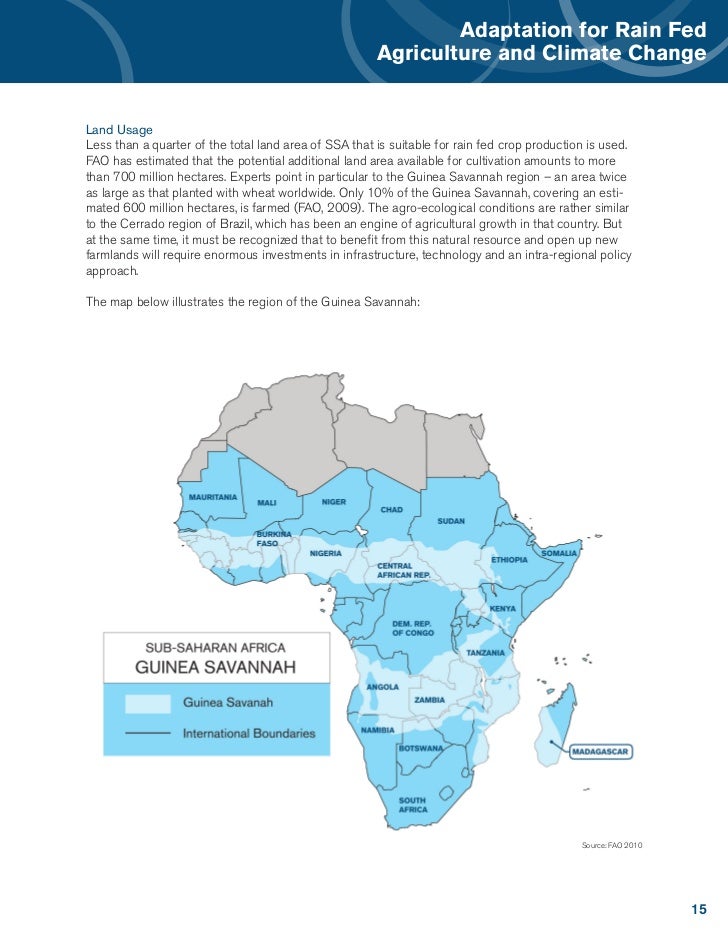
- Less than %10 of the Guinea Savannah region (a region where crops much more lucrative than maize can be grown, ~600M hectares) was farmed as of 2009.[2]

[0]https://data.worldbank.org/indicator/AG.LND.AGRI.K2?end=2016...

[1]https://www.mordorintelligence.com/industry-reports/african-...

[2]https://image.slidesharecdn.com/60366271-evolution-economic-...
Re:No-till no-herbicide farming system in trial since 1981 by nicoburns on Monday October 19, 2020 @09:16AM (#24826054)
Or indeed grow other crops that might be better suited to the environment in that location.
Re:No-till no-herbicide farming system in trial since 1981 by estsauver on Monday October 19, 2020 @10:29AM (#24826684)
Maize ends up being one of the most economically efficient and calorically dense crops to grow. If you have very little money to invest in your land, it's definitely one of your best choices. We're trying to get farmers a bit more capital access to be able to move to more productive systems, but if you don't have an extra 50$ for fertilizer, you definitely are going to struggle to switch to potatoes.
Re:No-till no-herbicide farming system in trial since 1981 by nicoburns on Monday October 19, 2020 @10:49AM (#24826868)
Yes, but it's often less resilient to variations in weather than other crops that are native in the region. So it's great until you get a drought and then you end up with a famine.
Re:No-till no-herbicide farming system in trial since 1981 by davexunit on Monday October 19, 2020 @10:38AM (#24826775)
Nothing is going to get better until we understand that "yield" isn't just the produce harvested. Synthetic fertilizer yields the most pounds of produce, but the yields of nutrient-dense food, soil microbes, insects, atmospheric carbon sequestration, etc. are all abysmal. Farmers farm right up against waterways which they then pollute with fertilizer runoff because they have to maximize output at all costs. We're systematically killing our soils because capitalism allows for nothing else.
Re:No-till no-herbicide farming system in trial since 1981 by kickout on Monday October 19, 2020 @12:04PM (#24827645)
That's the current incentive structure for better or worse. Someone (maybe the USDA, maybe SV) needs to pony up money to compete with using that ground for cropland. In an ideal scenario, the ground surrounding waterways should be easily worth $300/acre (which enables it to compete with row crop rental prices).

Problem is people laugh at that concept and then complain we have overproduction, dwindling soil health, and poor water quality.

Re:No-till no-herbicide farming system in trial since 1981 by davexunit on Monday October 19, 2020 @12:25PM (#24827876)
I do laugh at the idea that some more capitalism is the solution. In an ideal scenario, the ground surrounding waterways would be unowned wild riparian buffers that prevent erosion and provide long stretches of contiguous habitat for animals.
Re:No-till no-herbicide farming system in trial since 1981 by chordalkeyboard on Monday October 19, 2020 @04:43PM (#24830781)
yeah but the people deprived of the opportunity to develop that land seem to prefer a system where they have opportunities rather than a system where entrenched interests use the power of the state to inhibit anyone from competing. In an ideal scenario agriculture would not have been discovered but once it was then it became necessary to compete or be assimilated.
Re:No-till no-herbicide farming system in trial since 1981 by Game_Ender on Monday October 19, 2020 @06:44PM (#24831855)
Using less labor to grow food is what makes society productive enough for scientific and medical research. Those in turn address common public health issues and create more labor saving technologies allowing people to do things that they enjoy.
Re:No-till no-herbicide farming system in trial since 1981 by chordalkeyboard on Tuesday October 20, 2020 @04:02PM (#24841793)
Yes, in essence, capitalism. But the discussion was about regulating the use of undeveloped land (“idle capital”) and that disproportionately benefits those in society who already own land (“capital”).
Re:No-till no-herbicide farming system in trial since 1981 by Igelau on Monday October 19, 2020 @03:35PM (#24830020)
> Synthetic fertilizer yields the most pounds of produce, but the yields of nutrient-dense food, soil microbes, insects, atmospheric carbon sequestration, etc. are all abysmal.

Please explain how synthetic fertilizer reduces the yield of nutrient dense food. I can't find anything to support this in my cursory searches.

Re:No-till no-herbicide farming system in trial since 1981 by davexunit on Monday October 19, 2020 @04:15PM (#24830465)
Along with the synthetic fertilizer comes other interests in our industrialized food system: Plant varieties are bred and grown for their shelf life, not their nutritional density or taste. Here in the US our food comes half way across the country (or all the way if it was grown in California and you live on the east coast) to get to a supermarket so it needs to stay good for a long time. And that's why we end up with cheap, flavorless iceberg lettuce that has no real nutrition in it. The greens worth eating are expensive.
Re:No-till no-herbicide farming system in trial since 1981 by estsauver on Tuesday October 20, 2020 @12:44AM (#24833996)
It’s worth noting that the question on yields is actually pretty orthogonal to the question of taste. You can optimize for taste and yield pretty effectively, but humans generally use yield and appearance as what we pick our veggies on.

It’s also really easy to make organic and untasty things, as any struggling gardener will tell you. :)

[dead]
Re:No-till no-herbicide farming system in trial since 1981 by davexunit on Friday October 23, 2020 @08:53AM (#24868919)
Fuck off fascist.
Re:No-till no-herbicide farming system in trial since 1981 by text70 on Monday October 19, 2020 @10:12AM (#24826521)
I used endogenous soil bacteria to effect no-till soil gardening while increasing yield and drought resistance in tomatoes.
Re:No-till no-herbicide farming system in trial since 1981 by alex_young on Monday October 19, 2020 @11:18AM (#24827119)
Are the plots you mention employing no or low til methods as in this study? If not, how is this comparison relevant to this research?

I do appreciate you pointing out your previous work with The Climate Corporation, but it’s probably also useful to point out that they are a subsidiary of Monsanto.

Re:No-till no-herbicide farming system in trial since 1981 by Nicksil on Monday October 19, 2020 @11:33AM (#24827267)
>[...] it’s probably also useful to point out that they are a subsidiary of Monsanto.

Why would that be useful?

Re:No-till no-herbicide farming system in trial since 1981 by alex_young on Monday October 19, 2020 @11:54AM (#24827532)
Monsanto's core business is selling herbicides and seeds genetically altered to be herbicide resistant, including maize. This work is directly challenged by the sustainable practices which are being discussed here.
Re:No-till no-herbicide farming system in trial since 1981 by kickout on Monday October 19, 2020 @01:00PM (#24828312)
No, they don't necessarily challenge sustainable practices. They just haven't figured out a way to monetization framework. When they do, they'll push it harder than Roundup. Until then, sustainability is good PR and sustainable practices don't have scale, so no threat to their core business IMO.
Re:No-till no-herbicide farming system in trial since 1981 by carapace on Monday October 19, 2020 @11:44AM (#24827385)
> These yield gaps dramatically close when you start using fertilizer and modern agricultural practices.

Yes, but only if you start with degraded soil in the first place. Adding fertilizer to healthy soil just messes it up.

Even when you start with degraded soil, the fertilizer and modern agricultural practices only help up to a point and then diminishing returns set in.

Check out what Gabe Brown is doing on his land: "Treating the Farm as an Ecosystem with Gabe Brown Part 1, The 5 Tenets of Soil Health" https://www.youtube.com/watch?v=uUmIdq0D6-A

Re:No-till no-herbicide farming system in trial since 1981 by onecommentman on Monday October 19, 2020 @10:27PM (#24833406)
So at 200 bu/ac conventional corn yield, that’s about 16B bu/year? I ran numbers at one point, and came up with 8 bu/yr corn to provide the calories for a grown adult for a year (protein, nutrients notwithstanding). So ~2B people a year whose calories could be provided by just conventional corn produced by just the United States?

So if a practice reduced yield by 50%, for the US it would mean reducing the calorie yield by 1B people? (Ethanol, feed for animals and the like ignored). How much surplus is in the system to support alternative practices?

Re:No-till no-herbicide farming system in trial since 1981 by russnewcomer on Monday October 19, 2020 @01:50PM (#24828845)
As an American software engineer who used to work at a small ag software company but left after it got acquired in part because of business model of the new company, I just want to say that what I've seen of Apollo is extremely promising in understanding how to improve the lives of smaller-scale farms, which I believe is key to the future of agriculture as a leveling power across the world. Thanks for working at, and please keep at helping small ag!
Re:No-till no-herbicide farming system in trial since 1981 by estsauver on Tuesday October 20, 2020 @12:45AM (#24834002)
Thanks, I appreciate that! My email is in my profile if you ever want to say hi.
Re:No-till no-herbicide farming system in trial since 1981 by elproxy on Tuesday October 20, 2020 @07:08AM (#24836018)
Surprised that nobody in the answers points to the levels of nitrous oxide emissions that nitrogen fertilizers brought along with them. At some point we have to decide which is worse: lower yields or hothouse earth...
Re:No-till no-herbicide farming system in trial since 1981 by titzer on Monday October 19, 2020 @05:44PM (#24831368)
> Subsaharan African Agriculture also plants about 83 million acres of maize. They see yields that are 1/3 to 1/4 of US agricultural yields. These yield gaps dramatically close when you start using fertilizer and modern agricultural practices.

I'd just like to point out that these are two different continents with completely different conditions, soils, microbiota, seeds, pests, and climate. So apples and oranges.

Also, you count wrong because you don't count the number of acres needed to produce fertilizer.

> I'm certainly biased, I'm the CTO of a company that's trying to improve agricultural inputs by financing access to smallholders

At this point, yeah, your financial incentives pretty much color your entire worldview. If you stand to make O(millions) and this is your primary line of work, that's a one massive grain of salt.

Re:No-till no-herbicide farming system in trial since 1981 by estsauver on Tuesday October 20, 2020 @01:19AM (#24834143)
Yah, the interesting piece happens when you compare what happens when agricultural practices converge. Us historical corn yields prior to 1920/1930 (major introduction of industrial fertilizer happens pretty shortly thereafter) were identical to current SSA yields. Subsaharan African farms close in on US yields pretty quickly when the same inputs are used.

The number of acres to make fertilizer are minimal. It’s very, very small relative to agricultural land under cultivation.

In regards to financial incentives, I mention this specifically so you know I could have a bias and am leaving references to the science so you can make your own judgement. I’m not really in this line of work for the money though.

Re:No-till no-herbicide farming system in trial since 1981 by projektfu on Monday October 19, 2020 @11:02PM (#24833557)
Have you ever read The Story of B? Would you be able to read it without trying to argue against it simply because it contradicts your raison d’etre?
Re:No-till no-herbicide farming system in trial since 1981 by estsauver on Tuesday October 20, 2020 @12:41AM (#24833987)
I haven’t, but definitely do read things from outside my view point pretty regularly. I tend not to find fiction compelling for settling empirical questions though, so I’m likely to pass on reading this for the same reason I have passed on reading atlas shrugged. The best way to convince me of something is generally non fiction.

(To give a few examples of books that have changed my mind, I was a very conservative libertarian growing up in the school of Nozick, but ended up being much more liberal as a result of reading Foucault and his rather compelling recasting of how power dynamics work. I found Peter Singer, Nussbaum and Sen to all be compelling enough writers to basically convince me of what I should spend my life doing. If you have suggestions for science based books, I’d love to read them, but I find religious fiction generally leaves me unmoved and uninterested.)

Re:No-till no-herbicide farming system in trial since 1981 by projektfu on Tuesday October 20, 2020 @03:23PM (#24841360)
It’s not religious fiction. It’s more a collection of essays (or lectures, organized in the back of the book) with a sort of thriller storyline in the novel to make the reading more fun and explain better how the narrator is reacting to the lectures. But you could get a lot out of it by simply reading the appendix, which contains the arguments.
Re:No-till no-herbicide farming system in trial since 1981 by teorema on Monday October 19, 2020 @02:03PM (#24829000)
This is partly an aside, but I often feel like homogeneity in plant (and animal, I suppose) consumption and production is a part of this that is rarely discussed. That is, I think there's a lot of unused potential in domestication of native plants for agricultural use.

I bring this up mainly because one of my first thoughts in discussing, e.g., US corn agriculture versus Subsaharan agriculture is whether or not you'd even be able to compare them well because the crops optimally suited to each would often be entirely different. I think often probably so, but at the same time I wonder if things would look different if the same volume of money and resources were put into things that assume different consumption preferences.

I'm not opposed to conventional agriculture, and don't believe in pointing fingers when it comes to food sustainability (in an ecological as well as humanistic sense). I do sometimes wonder, though, if conventional practices are often driven by assumptions or factors that are unwarranted or problematic in themselves.