News for hackers. Stuff that matters.
Re:How housing became the world’s biggest asset class by closeparen on Wednesday January 22, 2020 @11:55AM (#22119272)
I'm a big fan of the folk wisdom that the power of housing as an investment is essentially a self-discipline mind trick. Paying your mortgage feels more urgent than contributing to a brokerage account, withdrawing home equity feels dirtier than withdrawing stock portfolio value, and holding onto your house during a downturn is easier than holding onto your crashing stock portfolio.

Once you know those things, you can rig yourself similar safeguards around other asset classes (automatic payroll contributions, tax sheltered accounts with early withdrawal penalties, etc).

Re:How housing became the world’s biggest asset class by hkmurakami on Wednesday January 22, 2020 @12:14PM (#22119545)
There’s been some research lately about whether Private Equity outperformance is partly driven by the illiquidity making it harder for investors to dump their positions in a moment of panic. Your thoughts about housing illiquidity seem related to this concept. (If you’re interested, Matt Levine has covered it in Money stuff with links to the research papers).

In addition, we have affordable margin loans, mortgage interest tax deduction, property tax deduction to juice the system, not to mention additional legsilation like 1031 exchanges, prop13, etc.

Many of these were put in place as public policy promoting homeownership driven by the idea that homeownership would be less costly / beneficial to society compared to long term tenancy. That thought doesn’t seem to necessarily be wrong per se. but if you help out demand side legislatively while restricting supply legislatively, sometimes you’ll get cases of imbalance like we see in the coastal cities.

Given what we’ve observed in the last couple of decades around the world, a managed system like Singapore where property appreciates at a ~2% rate a year (and if demand suddenly shoots up, they’ll add transfer taxes or stamp duties or inject supply into the market) seems much more stable for society.

Re:How housing became the world’s biggest asset class by throw0101a on Wednesday January 22, 2020 @12:47PM (#22119971)
> There’s been some research lately about whether Private Equity outperformance is partly driven by the illiquidity making it harder for investors to dump their positions in a moment of panic.

There are apocryphal stories of studies purporting to find that the best performing investment accounts are those that belong to people who are either dead or had forgotten about their account:

* https://www.marketwatch.com/story/why-the-buy-and-play-dead-...

* https://twocents.lifehacker.com/the-best-investors-literally...

Generally, even if one invested lump sums right at market peaks, just before crashes, you'd still get a decent returns as long money was not withdrawn:

* https://awealthofcommonsense.com/2014/02/worlds-worst-market...

Though the best strategy for most people seems to be to just put away a little every money in a total market passive index fund:

* https://ofdollarsanddata.com/even-god-couldnt-beat-dollar-co...

Re:How housing became the world’s biggest asset class by LeoTinnitus on Wednesday January 22, 2020 @12:53PM (#22120049)
2008 really showed that homeownership is no different than tenancy. Look at Detroit. Entire city blocks were owned by the bank simply because people either couldn't afford the mortgage, their loan was called due, or they thought the short term loss in equity wasn't worth staying in a run down place anymore.

I believe that the purpose for homeownership in the US was primarily to foster a competitive housing environment. That way landlords wouldn't control the majority of the housing market and people could help keep housing prices down per month by being able to have the ability to qualify for housing just as easily as tenancy.

Re:How housing became the world’s biggest asset class by vinniejames on Wednesday January 22, 2020 @12:20PM (#22119626)
| making it harder for investors to dump their positions in a moment of panic

On the flip side, it also makes it harder to sell when it is booming.

The potential return is intrinsically higher from 0 to 1 for PE, than it is from 1 to N in public markets

Re:How housing became the world’s biggest asset class by gowld on Wednesday January 22, 2020 @12:46PM (#22119958)
My Matt Levine says that Private Equity is actually financial engineering scams to steal money from creditors of bankrupt companies:

https://www.bloomberg.com/opinion/articles/2019-04-18/privat...

Re:How housing became the world’s biggest asset class by DataWorker on Wednesday January 22, 2020 @01:12PM (#22120240)
It seems like housing demand is almost entirely a function of population growth. Supply is tied to a finite resource, land. We cannot do much to increase supply. The conclusion from this set of facts should be obvious.
Re:How housing became the world’s biggest asset class by blaser-waffle on Wednesday January 22, 2020 @04:25PM (#22122222)
> The conclusion from this set of facts should be obvious.

Build more housing? Build more land? One-child policy?

Or were you talking about just shooting people?

Re:How housing became the world’s biggest asset class by imtringued on Thursday January 23, 2020 @06:15AM (#22126587)
It's pretty much limited. The barriers are psychological but they do exist.
Re:How housing became the world’s biggest asset class by GhostVII on Wednesday January 22, 2020 @12:00PM (#22119332)
Another benefit is that you are essentially trading on margin when buying a house, which you couldn't do to the same degree with other assets.
Re:How housing became the world’s biggest asset class by wocram on Wednesday January 22, 2020 @12:14PM (#22119537)
You could if you wanted to, though for whatever reason people are much more comfortable with leveraging 5x to purchase a home than they are with leveraging 5x to invest in a brokerage account.
Re:How housing became the world’s biggest asset class by Slartie on Wednesday January 22, 2020 @12:27PM (#22119739)
Nah, it is indeed much easier to invest in real estate on 5-10x leverage than doing the same with stocks or ETFs, because the banks are usually much more comfortable lending you the money in the first case.

I think it's because of the mind trickery that makes the first thing a solid "buying a house" investment and the second thing a "gambling on the stock market" game. You can easily see that trickery at work: just confront someone who bought a house on credit with the fact that he just put all his money into a highly leveraged single investment, which combines two of the usual "don'ts" from the "Investment for Dummies" book. You will usually earn blank stares.

Not saying that doing such an investment doesn't make sense in certain circumstances (use the house yourself and plan on staying there for decades), but one should be very clear about the risk profile of it.

Re:How housing became the world’s biggest asset class by phatfish on Wednesday January 22, 2020 @12:50PM (#22120015)
This seems to be the benefit to me as well. The average person won't get a £100,000+ loan from a bank so easily for anything else.

Want to start a business with that money? Better have a rock solid business plan. Investing elsewhere? No chance, a bank won't lone that money for you to play with on the stock market, and the rate you would get would wipe out any gains from something safer like a tracker fund.

For anyone that is not content living in the same area for the rest of their life buying is a poor decision. But it is the only way most people can access a loan that size and leverage in that way.

I've resigned myself to the fact you have to buy (in my country at least), and I will just make sure it can be rented easily when I want to move.

Some European countries are much more renter friendly and I would consider renting exclusively there. Germany and Berlin seem more appealing in that regard with the rent control that was put into place recently.

Re:How housing became the world’s biggest asset class by scarby2 on Wednesday January 22, 2020 @01:27PM (#22120424)
The thing is housing almost comes with a rock solid business plan and as a basic need is somewhat resistant to radical decreases in price (it is almost impossible that your house would depreciate by 100% - company stock/your own business investments could).

With the way the market is it is likely that mortgage principal + interest + maintenance is actually less than rent...

Re:How housing became the world’s biggest asset class by mywittyname on Wednesday January 22, 2020 @03:08PM (#22121470)
Lots of things can drag down the value of a home to zero. Lack of maintenance or a natural disaster are two big ones, but also the neighborhood could turn to crap or an infrastructure crisis that isn't resolved.

Add to that property taxes continue to accumulate on buildings. There are quite a few ways to drive a house to worthless. I used to live in a region where houses were <$10k because they were condemned shells in crime-ridden areas.

Re:How housing became the world’s biggest asset class by xchaotic on Thursday January 23, 2020 @04:08AM (#22126031)
It still wouldn’t be 0. There’s land value and even in depressed areas like Detroit you see price rebound because you get good value for money.
Re:How housing became the world’s biggest asset class by eldavido on Wednesday January 22, 2020 @02:25PM (#22121041)
I see it a bit differently.

A house provides a basic human necessity (shelter) and can be insured. It stands to reason that it can be mostly financed with very long-term, cheap, debt capital. Other than mass-scale depopulation, not much will cause a house to dramatically lose value, especially to a first-lien lender.

Stocks are a different animal. Even assuming a company performs well, which it may or may not, there are all sorts of crazy things -- trade tensions, interest rates, valuation changes, investor sentiment for/against various sectors, completely leaving aside rational changes in value due to company performance -- which cause price swings far detached from company fundamentals. US equity markets went up ~30% in the past year. They could fall as well. If anything like this happened in housing, you'd literally get riots in the streets.

I don't think it's an accident that the financial system provides so much credit for housing. Yes, it should probably be a little more expensive (thank Fannie and Freddie for that) and yes, maybe we could use a little more equity, 20%, or 30%. But suggesting houses should be 100% equity-financed like most stock purchases? Doesn't make sense.

Re:How housing became the world’s biggest asset class by viklove on Wednesday January 22, 2020 @11:29PM (#22124873)
Well you can live in a house... Can you live in an ETF if things go south?
Re:How housing became the world’s biggest asset class by Slartie on Wednesday January 22, 2020 @11:44PM (#22124935)
If "south" is a sudden and extreme loss of value, then you might be just as screwed with a house as well: think of a flooding of an area, having a catastrophic wildfire nearby, or a sudden increase of crime in your neighborhood (technically leaving you able to live in the house, but maybe you don't want to do that for your dear life).
Re:How housing became the world’s biggest asset class by viklove on Thursday January 23, 2020 @04:35PM (#22132389)
Well home insurance is a thing that most people have to protect against those possibilities. I don't think something similar exists for ETFs. Also, if an ETF loses 90% of its value, it's pretty much worthless. If a home loses 90% of its value... you can still live in it!
Re:How housing became the world’s biggest asset class by Slartie on Friday January 24, 2020 @02:07AM (#22136031)
You probably can't, because there must be a reason for it to have lost 90% of its value, and that reason probably has to do with the house somehow (I named a few examples, but there are more possibilities) losing its capability to "house" people, because after all, that is the only value proposition of a house - that capability literally gives it its value.
Re:How housing became the world’s biggest asset class by speedplane on Friday January 24, 2020 @02:16AM (#22136078)
> You probably can't [live in a home that loses 90% of its value], because there must be a reason for it to have lost 90% of its value

I agree 90% is extreme. However, the nice thing about owning a home is that even if it loses value, more often than not, other homes will also lose their value.

Say you buy a 1 bedroom place for 500k, and 5 years later you have 2 children and need a 3 bedroom place, but your home lost value and is now only worth 400k. The good news is that the 3 bedroom place also probably lost value. So even though your home decreased 20% in dollar value, the 3-bedrooms also did too, so your house (as far as in-kind value) is worth the same.

In fact, in some cases you could go further and say it's good if your real-estate loses money. Suppose that you bought that 500k place, and had 100k left in your bank account afterwards. Now 5 years later the real-estate market sinks 20% and your home is worth 400k. Suppose you didn't invest your 100k and it's still all cash. When the housing market sinks 20%, your in-kind trade value plus your existing cash is actually worth more than if the real-estate market did the opposite.

For the above reasons, it's better to think about your primary residence as planting a flag in the area that you want to live rather than a financial investment.

Re:How housing became the world’s biggest asset class by rainyMammoth on Thursday January 23, 2020 @03:15AM (#22125800)
you cannot live in that house if everything goes "south" and cannot pay your 1% property tax (that's 10k a year for a 1M$ home, not easy if everything goes "south"), Let's also not forget HOA and maintenance.

Owning a house is expensive, even after your mortgage is fully paid off. People like to simplify the model so they can feel good about owning a "paid" piece of land.

Re:How housing became the world’s biggest asset class by usaar333 on Wednesday January 22, 2020 @12:27PM (#22119731)
A housing loan is far less risky than a 5x margin position as they are structurally different types of loans:

* The housing loan is non-recourse (you can't lose more than your home), while brokerage is not.

* A housing loan's collateral value is only determined at purchase, not hourly. You can't get "margin called" on your house if its value declines.

All said, I'll give you that people are oddly leverage-adverse when it comes to brokerages and actually take on more risk (to achieve a given expected return) than they need to if they were willing to use light (10-20%) leverage.

Re:How housing became the world’s biggest asset class by slumdev on Wednesday January 22, 2020 @01:02PM (#22120157)
5x? Amateur.

I put 3% down when I bought my house. That's 30x leverage.

The difference is that my lender wouldn't call the note on my house if the value of the home dropped below the principal still owed. Not if they want to see the money, anyway.

Re:How housing became the world’s biggest asset class by fredophile on Wednesday January 22, 2020 @12:43PM (#22119935)
Real estate isn't a very volatile asset class. Using leverage in more volatile asset classes, like FOREX, is where people run into big problems very quickly. Your bank will also make you buy insurance if you're getting a mortgage with more than 5x leverage. Good luck finding anyone that would insure your stock picking at 10x leverage.
Re:How housing became the world’s biggest asset class by Slartie on Wednesday January 22, 2020 @12:52PM (#22120037)
> Real estate isn't a very volatile asset class.

This conventional wisdom has been increasingly getting less true over the last decade. Valuation increases of 5-10% per year on a regular basis are also "volatility".

Re:How housing became the world’s biggest asset class by magicalhippo on Wednesday January 22, 2020 @01:16PM (#22120292)
My home will not depreciate much relative to other homes I could have bought. Yes I'm forced to sell during a downturn it's not good, but once the market picks up it's almost certain my home will increase in value as well.

Harder to have the same confidence that the stocks I picked will survive a downturn as well as my home.

Re:How housing became the world’s biggest asset class by jdsully on Wednesday January 22, 2020 @01:42PM (#22120581)
All your arguments of safety are even more applicable to index funds since you actually own a slice of the entire market rather than just being merely correlated as you are with your house.
Re:How housing became the world’s biggest asset class by asdfasgasdgasdg on Wednesday January 22, 2020 @12:24PM (#22119693)
> You could if you wanted to

Not really. There are no margin accounts with terms as favorable as the typical mortgage loans. (Some examples of terms mortgages have that margin loans don't: the absence of margin calls, the low interest rates, the relative diversity and transparency of rates from potential lenders, etc.)

Re:How housing became the world’s biggest asset class by User23 on Wednesday January 22, 2020 @12:31PM (#22119792)
You can get margin rates as low as a mortgage or even substantially lower[1]. If you don't want to switch brokers you can also ask your current broker for a discounted margin rate. I've heard anywhere from $250k to $1m total assets is enough for them to consider discounts. However, margin calls are a lot more terrifying than foreclosure proceedings, that's for sure. As such, it's virtually imperative to appropriately hedge and that should be factored into the cost of borrowing.

[1] https://www.interactivebrokers.com/en/index.php?f=18069

Re:How housing became the world’s biggest asset class by asdfasgasdgasdg on Wednesday January 22, 2020 @02:04PM (#22120811)
I was unaware that IB's rates are so low. From reading about it, it looks like they make the money back on other fees, including inactivity fees and commissions. So the real rate is not really as low as what it says, although I suppose on large accounts those fixed fees would make up only a small fraction of the total value. Either way, I was wrong about there being "no" options with interest terms as favorable as mortgages. There is plainly at least one. Your point about hedging is well-taken, also.
Re:How housing became the world’s biggest asset class by jdashg on Wednesday January 22, 2020 @02:31PM (#22121120)
Margin calls are the primary difference. (InteractiveBrokers and Robinhood have pretty good margin rates: <=3.05% and ~5% respectively) Being forced to sell at during a temporary low is the major threat, whereas most people who kept their house during 2008-2009 are doing fine today.
Re:How housing became the world’s biggest asset class by refurb on Wednesday January 22, 2020 @08:37PM (#22124021)
That's true for the US market, but what I learned is a "margin call" is a potential scenario in Canada.

Unlike the US, mortgages typically have 5 year terms (can range from 1 to 10). The amortization period is still 25 years (on average), but you refinance every 5 years.

If you put 20% down on a house, which then loses 10% of it's value, you can't refinance without coughing up enough cash to have the loan be 80% of the appraisal.

As you said, at least in the US you can choose to ride out a crash if you have a 30 year fixed mortgage.

Re:How housing became the world’s biggest asset class by astura on Thursday January 23, 2020 @08:35AM (#22127378)
During the housing crisis in the US a lot of mortgages were ARMs, which are basically the same thing as your describing.

https://www.cbsnews.com/news/adjustable-rate-mortgages-make-...

Re:How housing became the world’s biggest asset class by throwaway100773 on Wednesday January 22, 2020 @08:34PM (#22124000)
You don’t get margin calls with a house. You just have to make the mortgage payments.
Re:How housing became the world’s biggest asset class by chii on Wednesday January 22, 2020 @10:48PM (#22124657)
a margin call is the same as a foreclosure. You prevent margin calls if you put in your own money (to boost the margin). A broker margin calls you because they no longer accept the raised risk, but it's the same concept.
Re:How housing became the world’s biggest asset class by throwaway100773 on Thursday January 23, 2020 @06:40AM (#22126729)
A margin call is not the same as a foreclosure. It’s quite different. You have a fixed payment with a mortgage. If the value of your house declined precipitously, that fixed payment stays the same. You enter foreclosure proceedings only if you cannot make that payment, and depending on the state, this takes some time. You might be living in your house for a year or more without making a payment while in foreclosure.

On the other hand, with a leveraged position in the market, if the value of your portfolio falls to a certain level, you either need to post more capital or your position is liquidated. If you are capital constrained, there is literally nothing you can do in the case of a leveraged position - your broker forces you out.

Regardless, if you keep making your payments, there is no way for a bank to force you out of your mortgage or call for additional capital due to a decline in value. This is the big difference.

Re:How housing became the world’s biggest asset class by chii on Thursday January 23, 2020 @07:46PM (#22134186)
> if you keep making your payments, there is no way for a bank to force you out of your mortgage or call for additional capital due to a decline in value.

it's the same coin, you're just looking at it from a different angle. The timeframes are certainly different between foreclosure and margin calls, but the concept is the same - the lender sees you as more risky than they originally intended, and chooses to liquidate you. In a foreclosure, you "prevent it" by constantly paying the interest. In a margin call, you are not paying until you hit the drop in valuation, and you have to pay to top it back up.

Re:How housing became the world’s biggest asset class by tenpies on Wednesday January 22, 2020 @10:09PM (#22124475)
This cannot be understated. You can conceivably get a house with 5% down. There is no other instrument that allows a retail investor to get 20X leverage - especially at that price. Even leveraged ETFs are basically capped at 3X because anything else is too volatile and was deemed a market hazard.

Now imagine a 20X ETF that invests in a single property, with high maintenance costs, extremely low liquidity, zero diversification, and high transaction costs. That is basically what some of these mortgages are.

It is absolutely intoxicating when the asset price goes up and I am not surprised in the least that people love it as an investment. Even if it explodes, you walk away and your losses are minimal. You only risked 5% of the price and sure you made some payments along the way, but the risk asymmetry completely rewards being as reckless as possible.

Re:How housing became the world’s biggest asset class by rainyMammoth on Thursday January 23, 2020 @03:21AM (#22125820)
Completely agree with this. Homeowner usually understand very little about investing. As you said it is intoxicating when it goes up a 5 or 10% a year but pretty much invisible if it goes down or stays flat (since the mortgage is seen as an alternative to rent).
Re:How housing became the world’s biggest asset class by rainyMammoth on Thursday January 23, 2020 @03:18AM (#22125814)
Because housing is typically such a bad investment, it actually only makes sense in some cases because you get your mortgage on margin.

I see this argument all the time but once you do the math, it comes down close to the same with the house being leveraged and index funds without leverage (also known as the 5% rule)

Re:How housing became the world’s biggest asset class by xchaotic on Thursday January 23, 2020 @07:50AM (#22127068)
If it’s close why complicate things?
Re:How housing became the world’s biggest asset class by chiefalchemist on Wednesday January 22, 2020 @12:04PM (#22119399)
Housing as investment is a mindtrick, and a dangerous one at that.

With it often comes property taxes. There's the time and cost of maintenance. There's the friction of being able to easily relocate for a better paying job.

Worst of all, past performance is no indication of future returns. That is, it's possible your property won't appreciate, at least not sufficiently. For example, think Detroit. Or beachfront property in say 25 yrs. Or McMansions. Will smaller less consumption-minded families in the future want them?

Housing works as an investment because everyone is in on the scheme. The gov. The banks. Everyone. And it's still a roll of the dice.

Re:How housing became the world’s biggest asset class by the_gastropod on Wednesday January 22, 2020 @12:25PM (#22119699)
No idea why you're being downvoted here. You're absolutely right. As an investment, housing has some incredibly awful attributes:

- Incredibly low liquidity—takes months of effort to buy or sell

- Very complex to buy/sell (usually requires lawyers, lots of inspections, documentation, etc)

- High fees to both buy AND sell it

- It's taxed every year, regardless of whether you actually earn any money on it (aka: sell it)

- It's constantly falling apart, and requiring upkeep maintenance

- It's completely undiversified: subject to not only one country, one state, one city, one neighborhood, but a single tiny plot of land at one specific location that could be hit by any sort of natural disaster, get bad neighbors, have the local economy collapse, etc. Its pool of potential buyers is also limited to this very tiny location.

- Returns are relatively low, roughly in-line with inflation

- It's almost always leveraged (often good, but that cuts both ways, and you have to pay the interest on it regardless of what happens)

Sounds like a wonderful deal, eh?

Re:How housing became the world’s biggest asset class by maxsilver on Wednesday January 22, 2020 @01:02PM (#22120158)
> - Returns are relatively low, roughly in-line with inflation

I wish. The problem with housing is that the returns are not low, they're reasonably high and really safe.

You can buy a property in basically any city, sit on it for 5-30 years, and be guaranteed to beat inflation by at least a small margin -- often a wide one. Sometimes this is true, even if you never maintain the place, even if you level the existing structure, and it's just an empty grass lot.

I wish housing was not a good investment. If housing could depreciate the way a car does, that alone would solve like 40% all problems in the housing market today.

Re:How housing became the world’s biggest asset class by the_gastropod on Wednesday January 22, 2020 @01:11PM (#22120233)
The Case-Shiller Index [1] has increased ~3.4% annually since 1900. The general rate of inflation over that same period has been about 2.9%, leaving you with a ~0.5% rate of return. Savings accounts tend to have significantly better returns. Even if you account for the effects of leverage. Note: this doesn't include maintenance costs, taxes, buy/selling fees, inspections, or anything else. So all-in, RE very likely under-performs inflation.

[1] https://en.wikipedia.org/wiki/Case–Shiller_index#/media/File...

ETA: I wonder why this is such a common belief? Is it because most HN (myself included) readers live in booming real-estate markets like NYC and SF? Those markets have done very well in the past 10 years. But remember: places like Detroit, Atlanta, Chicago, and Cleveland also exist.

Re:How housing became the world’s biggest asset class by javagram on Wednesday January 22, 2020 @03:41PM (#22121773)
Savings accounts aren’t inflation protected. You can buy inflation protected assets - US series I savings bonds, and they offer between 0 and 0.5% fixed rate historically on top of inflation and are limited to $10,000 per person per year.

An actual high yield savings account right now gives around 2% nominal interest which is less than inflation.

The economist chart of house prices from the article certainly seems to show them outpacing inflation recently. Looking at an index since 1900 is a bit misleading since public policy changed dramatically in the 1950s-70s to constrict supply and juice demand.

Re:How housing became the world’s biggest asset class by the_gastropod on Wednesday January 22, 2020 @04:22PM (#22122193)
> An actual high yield savings account right now gives around 2% nominal interest which is less than inflation.

The inflation rate in 2019 was 1.76% [1]

> The economist chart of house prices from the article certainly seems to show them outpacing inflation recently. Looking at an index since 1900 is a bit misleading since public policy changed dramatically in the 1950s-70s to constrict supply and juice demand.

Ok, then look at it from 1970... The results are even worse

[1] https://www.in2013dollars.com/inflation-rate-in-2019

Re:How housing became the world’s biggest asset class by bcrosby95 on Wednesday January 22, 2020 @04:48PM (#22122404)
The SF bay area in general has done very well for the past 50 years, not just 10. The San Jose house my parents bought brand new for $34k in 1973 was sold for $95k in 1978. Similar houses in that neighborhood sell for a bit over 1 million dollars today.
Re:How housing became the world’s biggest asset class by thorwasdfasdf on Thursday January 23, 2020 @01:11PM (#22130031)
Those returns can't continue. When people spend 30% of their income on housing and housing doubles in cost, it means they'll now have to spend 60% on housing. From there it simply can't double again, not without coping strategies exceeding anything reasonable (1 family per room, families living in garages, commutes that exceed 6 hours a day).

Every coping strategy has it's limit. You can't commute more hours than there are in the day. YOu can't have more than 3 people living per room (at least not legally). Once you move in with your parents, you can't do it again. etc. I think we've reached that limit in the bayarea (at least the core bay area) so we can look forward to housing returns of roughly inflation.

Even with the severe dystopian restriction on supply, it will just force more and more people out of the bay area.

Maybe some of the outskirt areas still have room to go up, like Tracy, antioch, brentwood, etc. some of those places haven't yet been gentrified.

Re:How housing became the world’s biggest asset class by rainyMammoth on Thursday January 23, 2020 @03:31AM (#22125861)
This is also a fallacy.

Why do you think houses are going for 2 m$ in the bay area? Because the expectation that it goes up is already priced in. Also a good reminder that the return of the past are not an indication of future returns.

Buying in the bay area is de facto a speculative investment as rents are comparatively way cheaper. The only incentive for buying at those prices is the hope to sell it for even more to someone else later (see also, the greatest fool theory).

Re:How housing became the world’s biggest asset class by refurb on Wednesday January 22, 2020 @08:41PM (#22124042)
Depends on what time period you look at.[1]

Housing in SF was pretty much flat from 1990-1998. It went down by ~30% in 2008 and took 10 years to match the peak in 2006.

[1]https://fred.stlouisfed.org/series/SFXRSA

Re:How housing became the world’s biggest asset class by SubuSS on Wednesday January 22, 2020 @02:00PM (#22120777)
How come you count inflation for house and not for savings? :)

As others point out, houses can be easily setup in and around the metros to give a steady 3% return not including appreciation. Considering dense living is the future and the house will materially remain through a market downturn, why wouldn't you diversify your portfolio with a few?

Re:How housing became the world’s biggest asset class by the_gastropod on Wednesday January 22, 2020 @02:06PM (#22120832)
If you have enough money to buy a few metropolitan homes to add "diversification" to your portfolio (you know, well north of a $10 Million net worth), you're not at risk of feeling any sort of pain from major market downturns.

FWIW, broad-market index funds hold REITS, which give you a market-weighted chunk of the RE market. No need to "diversify" into RE. Doing so only skews your portfolio to be overweight in RE.

Re:How housing became the world’s biggest asset class by conanbatt on Wednesday January 22, 2020 @08:55PM (#22124115)
Multiply that return by the leverage however.
Re:How housing became the world’s biggest asset class by codegeek on Wednesday January 22, 2020 @01:17PM (#22120300)
Housing may not depreciate like cars but it doesn't always appreciate at the rate in many areas that justifies keeping it with all the costs. In my neighborhood (with a decent school district and safe/no crime area), housing market has appreciated like 3-4% at best in last 7 years. I like living in my house but looking at it purely from an investment perspective, the returns are terrible because If I sold it today, I don't know if the 3-4% gain would be enough to offset the costs of repairs/taxes etc. that I have spent in last 7 years. And I live in NJ, the highest taxed state in the nation when it comes to property taxes. Sure I could stay in another 5-10 years to find out if appreciation rate goes up but it is more of a gamble then since I am spending tons of money every year to maintain the house in addition to mortgage payments.

Housing is NOT always a good investment from an economic perspective. It depends on the location, market events and most importantly what price you bought it at.

Re:How housing became the world’s biggest asset class by maxsilver on Wednesday January 22, 2020 @02:08PM (#22120864)
> If I sold it today, I don't know if the 3-4% gain would be enough to offset the costs of repairs/taxes etc. that I have spent in last 7 years.

Sure, agreed, but let's think that through a minute. So your housing has 'only' beaten inflation by ~25%, and that if you sold it today, you would have 'only' gotten 7 years of effectively-rent-free living?

Imagine if you had actually had to rent a house during that time. I don't know what rates are in NJ, but you would have spent about $1200/month in rent (or ~$100k over 7 years) to have done something like that in Michigan.

The common "bad" scenario I hear about is one like yours, where you got 7 years of housing, and the appreciation "only" covered almost all of that maintenance/upkeep, but didn't also cut you a free-money bonus check on top of it.

That's where the "housing is always a good investment" line comes from. Yes, you had to take out a loan and front all the other money out-of-pocket yourself (and not everyone can afford to do that). But if you get it most-to-all of it back when you sell the house, then even in your "bad" example, you came out ~$100,000 ahead of any regular person who had not owned.

Re:How housing became the world’s biggest asset class by the_gastropod on Wednesday January 22, 2020 @02:14PM (#22120923)
Whoa, there! Not so fast. In addition to things like home insurance, maintenance, etc, there's opportunity cost on the (I'm guessing?) 20% down payment. If GP had invested that 20% in a broad-market index fund over the past 7 years, I suspect it'd have grown a hell of a lot more than $100k.
Re:How housing became the world’s biggest asset class by maxsilver on Wednesday January 22, 2020 @02:16PM (#22120949)
If that was an option, sure absolutely. I've never met a person who could actually afford a 20% downpayment recently (5% downpayments are common here in Michigan, for real humans buying houses in the past decade or so).

But yes, if you are wealthy enough to afford a 20% downpayment on a house, you are wealthy enough to potentially have opportunity costs from other investments at your disposal. Agreed.

Re:How housing became the world’s biggest asset class by codegeek on Wednesday January 22, 2020 @07:33PM (#22123639)
I actually put 20% down 7 years ago on the house and I can tell you that if I had invested that downpayment purely in index funds, I would have a lot more cash today. So again, housing was not a good investment from an economic perspective. I bought it for my children but I look at it as a major expense and not investment.
Re:How housing became the world’s biggest asset class by chii on Wednesday January 22, 2020 @11:00PM (#22124731)
if you were less risk adverse, it's possible to pull equity out of your house and have that reinvested in stocks, and continue paying the mortgage (and may be work out a way to make it tax efficient, like debt recycling). Then as long as the stock market out-performs the debt cost (which is likely), you win out ahead by quite a bit more.
Re:How housing became the world’s biggest asset class by codegeek on Thursday January 23, 2020 @11:30AM (#22128861)
How would you pull equity out of the house other than doing things like HELOC ? HELOCs have huge interest and doesn't make sense to take that money and reinvest unless you know how to play the risky games like options trading etc.
Re:How housing became the world’s biggest asset class by chii on Thursday January 23, 2020 @09:39PM (#22134891)
with a variable mortgage loan, a bank usually has a product called an offset account. When you pay back the principle, this offset account grows. It acts like a line of credit, and the max size is the value of the loan.

So essentially, it is a HELOC. But it's at the same rate as your home loan, which is usually quite a lot lower than the margin rate if you borrowed to buy shares. Of course, this offset loan cannot go higher than the equity you've already paid back, so unlike a margin loan (which can go up to 10x!?).

Re:How housing became the world’s biggest asset class by chiefalchemist on Wednesday January 22, 2020 @06:08PM (#22123060)
The irony of the lower down payment? It increases demand; which obviously increases price.

So they are able to afford what they normally can't afford because of the tool (i.e., lower down payment) which helped make homes unaffordable.

Re:How housing became the world’s biggest asset class by chiefalchemist on Wednesday January 22, 2020 @04:08PM (#22122056)
> effectively-rent-free living?

Not in NJ. Property taxes quickly eliminate any illusion of free. Factor in maintenance, including time, and you're barely breaking even.

Owning provides a sense of stability and community. But investment in many areas is highly overrated.

Re:How housing became the world’s biggest asset class by throwaway100773 on Wednesday January 22, 2020 @09:10PM (#22124177)
People might be singing a different tune in a few decades when the ground flood of their buildings are taking on water from rising sea levels and economic activity is ceasing due to environmental effects.

It’s a very idiosyncratic risk you’re taking buying a home. Looking at a primary residence as an investment is silly in my opinion. Treating it as consumption makes more sense.

Re:How housing became the world’s biggest asset class by chiefalchemist on Wednesday January 22, 2020 @04:03PM (#22122007)
> I wish. The problem with housing is that the returns are not low, they're reasonably high and really safe.

Where? In high demand areas? Sure. Supply is limited in NYC or SF. But those areas are becoming outliers where buying in (so to speak) is less available.

Or what about trying to sell in 2009 or 2010? People weren't foreclosing because they were in the black.

Re:How housing became the world’s biggest asset class by usaar333 on Wednesday January 22, 2020 @12:35PM (#22119833)
Agreed in general, but there are some advantages.

> It's taxed every year, regardless of whether you actually earn any money on it (aka: sell it)

Property tax is generally lower than your imputed rent. In the US at least, there is a huge advantage of being shielded from capital gains taxes (up to $500k if married)

> Returns are relatively low, roughly in-line with inflation

This is market dependent. SF Bay is something like 5.4% nominally over the past 30 years, which crushes inflation. Housing prices in the Bay Area in fact imply heavy future price appreciation. [1]

Also, the high leverage position (which you point out cuts both ways) does drive expected returns above inflation. Especially with, in the US, interest being somewhat tax deductible.

Also strongest advantage of owning a house over renting is the stability you get. My rent can always go up, potentially above my ability to pay; my ownership costs (esp. in CA with prop 13 limiting property tax rise) only barely goes up. (and far less than inflation)

[1] https://medium.com/@usaar33/why-you-shouldnt-buy-a-home-in-t...

Re:How housing became the world’s biggest asset class by the_gastropod on Wednesday January 22, 2020 @01:03PM (#22120167)
> This is market dependent. SF Bay is something like 5.4% nominally over the past 30 years, which crushes inflation. Housing prices in the Bay Area in fact imply heavy future price appreciation. [1]

Yes, but this is cherry-picking. In the US as a whole, RE typically matches the inflation rate. Some physical and temporal locations over- (or under-) perform. But in aggregate, that's the reality. There's no way of knowing ahead of time which market will out-perform. Investing in Bay Area real-estate today very well could continue to out-pace inflation. But that seems as big a risk as dumping $1M into Tesla stock today.

Re:How housing became the world’s biggest asset class by dpc_pw on Wednesday January 22, 2020 @01:24PM (#22120381)
> Also strongest advantage of owning a house over renting is the stability you get.

From:

https://www.zillow.com/homedetails/3203-Benton-St-Santa-Clar...

Neighborhood home value

95051 home values have fallen 8.3 % over the past 12 months. One-year prediction

Zillow predicts the home values in 95051 will fall 9% in the next year.

http://www.stock-market-crash.net/wp-content/uploads/2012/06...
Re:How housing became the world’s biggest asset class by toast0 on Wednesday January 22, 2020 @02:56PM (#22121348)
Do you have rent trends? Did they follow the housing trends, or did they just keep going up (either one sometimes happens, I'm not in the market anymore).
Re:How housing became the world’s biggest asset class by dpc_pw on Wednesday January 22, 2020 @03:29PM (#22121664)
From what I can tell, they are roughly flat since around 2016. Example: https://www.zillow.com/homedetails/1174-Pomeroy-Ave-Santa-Cl... . Depends on what and where, of course.

And AFAIK, generally rents are lagging behind house prices and are more sticky. If you're a prospective buyer and houses are loosing and are projected to loose hundreds of thousands of dollars each year, that's pretty big incentive to stick around in your rental and wait.

Re:How housing became the world’s biggest asset class by usaar333 on Wednesday January 22, 2020 @03:25PM (#22121627)
If I'm planning to live in a home forever, the short term price fluctuations of it are hardly relevant - it does nothing but inform me about the past (I got a great deal or bad deal when I bought.. in hindsight). They are relevant to a renter.
Re:How housing became the world’s biggest asset class by dpc_pw on Wednesday January 22, 2020 @03:39PM (#22121762)
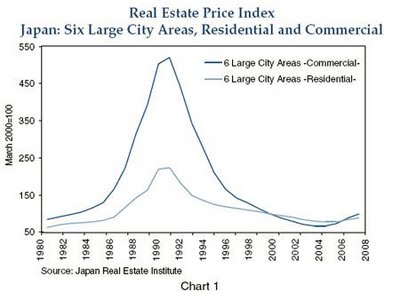
"Short term fluctuations" can last decades. https://fred.stlouisfed.org/series/QJPN628BIS

And "forever" often turns into couple of years because of health problems, job opportunities, personal events, and so and so.

The only reason why houses cost as much as they do is historically low mortgage rates https://www.macrotrends.net/2604/30-year-fixed-mortgage-rate... . And if this (mean reverting) trend is to revert any time soon...

I don't know what actually is going to happen. And maybe FED will eventually decide to hyperinflate the crashing credit bubble which would be great for people with big mortgages. But people that live in oblivion thinking that's the safest investment ever, are completely clueless. But maybe they'll be lucky. :)

Re:How housing became the world’s biggest asset class by imtringued on Thursday January 23, 2020 @07:26AM (#22126953)
Unfortunately I cannot seem to find a much better place than where I currently am. I have tried. Most of the super fancy locations have an awful local purchasing power that can't be offset with better international purchasing power. Sure you might go there for 6 years and save some money but then you will also leave again.

Meanwhile here I am in my little city with barely more than 100k people spending less than 1/3 of my income per month with the help of a stable government job. I could get more if I wanted simply by working at the largest employer in town. So why move?

Re:How housing became the world’s biggest asset class by rayhendricks on Wednesday January 22, 2020 @02:18PM (#22120984)
It’s a terrible investment for many. However the government has made a holy war against tiny houses/high density and anything which costs less than 500k, because tax revenue and vested interests.

I’d say that upkeep and taxes on a house will be much greater than the management fees on a similar investment. In addition you have to deal with multiple government agencies (health dept, municipal tax dept) if you want to continue to live in or sell your house.

Much of the new houses I see being built are prefab hardeeboard which will look atrocious well before the mortgage is paid off.

We should really just get 3D printed high-density concrete houses down and be done with it. This is a solvable problem but everyone with the 1.2mm loan will freak out when you can get a better quality apartment that won’t rot for 200k.

Re:How housing became the world’s biggest asset class by UncleOxidant on Wednesday January 22, 2020 @12:15PM (#22119555)
I don't look at my house as an investment as much as it is an inflation hedge. We bought our current house in 2010 when prices were low due to the great recession. Our mortgage is $835/mo (15yr mortgage). If we were renting now our rent would be ~$1500/mo for a comparable house in the same area. And our mortgage will be paid off in about 3.5 years as we've paid some extra on the principal over the years. Yes, there's still property tax and repairs but those are built into rental prices anyway. I also don't have to worry about having to move if the landlord sells the place I'm renting. I like the area and don't plan to move for a different job anyway.
Re:How housing became the world’s biggest asset class by _bxg1 on Wednesday January 22, 2020 @12:49PM (#22119993)
Sounds like that panned out, but it's pretty circumstantial. Not all of us have the opportunity to buy a house at the bottom of the largest real-estate recession in generations.
Re:How housing became the world’s biggest asset class by sunnytimes on Wednesday January 22, 2020 @12:58PM (#22120116)
i got extremely lucky buying my first house right in the middle of that recession. paid 101k , got it appraised last year at 190k and the area has gone up since. my second house where i'm at now was right when the prices started going up so a bit more but less wife. i owe alot to that recession.
Re:How housing became the world’s biggest asset class by snowwrestler on Wednesday January 22, 2020 @02:53PM (#22121321)
> I don't look at my house as an investment as much as it is an inflation hedge.

It's worth pointing out that hedging inflation is a valid goal for investing, whether or not the investment involves real estate.

Re:How housing became the world’s biggest asset class by toast0 on Wednesday January 22, 2020 @12:22PM (#22119657)
> With it often comes property taxes. There's the time and cost of maintenance. There's the friction of being able to easily relocate for a better paying job.

As a renter, you may not pay directly for property tax and repairs, but they do come out of your rent, unless your landlord's business is unsound. Maintenance costs the renter time and hassle too, although depending on the work done, perhaps less.

Certainly, relocation friction is higher, although some turn that into an opportunity to be an absentee landlord in a way that's more satisfying than subletting.

Re:How housing became the world’s biggest asset class by refurb on Wednesday January 22, 2020 @02:51PM (#22121292)
As a renter, you may not pay directly for property tax and repairs, but they do come out of your rent

Yes, but what the landlord is paying may be very different from what you'd be paying if you bought.

For example, I know a landlord charging $3,000 per month for a place that would rent for $5,000 (rent control) or have carrying costs of $6,000 if purchased today.

He does just fine since he bought 15 years ago, so his mortgage is $1,500 and his property taxes don't go up more than 1% per year.

So yes, rent must cover the cost of ownership, but not the cost of ownership today.

Re:How housing became the world’s biggest asset class by usaar333 on Wednesday January 22, 2020 @12:30PM (#22119780)
They come out of your rent, yes, but at least in markets with low supply (think the Bay Area), your rent is not being set by the presence of property taxes and repairs.

That is, if we raised everyone's property taxes by 0.2% or so, approximately speaking, no one's rent would go up.

Re:How housing became the world’s biggest asset class by tagami on Wednesday January 22, 2020 @12:23PM (#22119673)
I am pleased with the 6.5% compounded annual return on our principal residence we purchased in 1994. Tax deductions are helpful, but the big benefit is our mortgage is less than half the cost of rent.
Re:How housing became the world’s biggest asset class by citrablue on Wednesday January 22, 2020 @01:17PM (#22120304)
For comparison, the stock market has done 9.1% during that time. $40k in an index fund back then would be worth around $390k today.

Leverage is the biggest benefit, I would imagine. Although paying half as much in rent sounds really nice these days :).

Glad it worked out for you.

Re:How housing became the world’s biggest asset class by wahern on Wednesday January 22, 2020 @05:44PM (#22122868)
> Leverage is the biggest benefit, I would imagine.

Yes, absolutely. A 20% downpayment of $40k suggests a $200,000 purchase price. A 6.5% annual return over 25 years suggests the house is presently ~$950,000, because that's usually how people frame things (appreciation on the value of the asset, not their equity), unless they say otherwise. (Correct me if I'm wrong.)

So the house appreciated $750k, which is theirs to pocket. And based on the $40k downpayment, that's a ~13% annual return. But even if you base it on the purchase price, nobody cares about a lower annual return if you have a higher absolute figure you would't have been able to achieve otherwise.

(If you're not paying a mortgage, you're paying rent, and rents are typically approximately the current price of houses plus maintenance. There's a ton of variance, of course.)

We live in an intensively capitalist society, for better or worse. If you're not in debt, using money to make money, you're losing. Houses can be a risky investment, and for most people a mortgage is just what you have to do to maintain an average standard of living, especially in your later years when you can draw down equity and any appreciation. But if you don't have a mortgage you're at a serious disadvantage.

Rich people, or people who have the time and energy to trade derivatives, don't need home mortgages because they have other ways to make leveraged investments. For the vast majority of people, the first and only opportunity is a home mortgage.

This is why I think it's insane that we're building low-income housing with exactions and public expenditures. It's like buying Cadillacs for everyone too poor to buy a car on their own. You either buy older buildings (used cars) and refurbish, or better you get banks to finance construction of new properties in which they and the low income residents can have a property interest, similar to Singapore and (I think) some places in Honk Kong. The property interest may have constraints (can't sell for 5-10 years, some appreciation has to be rolled back into the program, etc), so it would take some public expenditures to cover the gap. But you're still playing the capitalist game, leveraging assets, and digging into the pockets of global wealth (not just the local tax base). Of course, the potential for abuse and bad planning is immense, but there'd have to be a ridiculous amount of abuse to burn money faster than buying Cadillacs for everybody. And when you consider the wealth building potential for residents (no longer just a handout, but the opportunity to build assets, like the middle classes), it makes even more sense.

A couple of years ago there was some press about some non-profits doing this in Oakland and elsewhere in the U.S. But the programs are just too small to matter, and the constraints far more onerous. If you don't permit such properties to eventually enter the free market and "gentrify", you risk creating ghettos. Do it right in a place like the Bay Area you need billions on the line.

Re:How housing became the world’s biggest asset class by ssalazar on Wednesday January 22, 2020 @05:41PM (#22122852)
If you could take the money you were going to pay in rent (or at least the difference of mortgage-minus-rent) and instead put it in an index fund, this would be a meaningful comparison.
Re:How housing became the world’s biggest asset class by citrablue on Thursday January 23, 2020 @09:43PM (#22134910)
Sure, but you aren't getting 5x leverage in an index fund.
Re:How housing became the world’s biggest asset class by treyfitty on Wednesday January 22, 2020 @12:16PM (#22119584)
Idk why you’re being downvoted. I can confirm- bought in the Upper East Side of NYC 5 years ago. Appreciation wouldn’t offset closing costs and fees when I wanted to sell last year.
Re:How housing became the world’s biggest asset class by jhauris on Wednesday January 22, 2020 @12:42PM (#22119921)
Common wisdom is that 5 years is the bare minimum time to own before selling. Buying a house is a long-term strategy to lock in a current mortgage when you know you aren't going to move and rents are likely to go up. After 10 or 15 years your payments will be slightly larger (with increased tax evaluations), and rent is likely to have increased more. There are additional benefits, but these vary drastically based on what you buy and what your goals are.

This is all very general, and doesn't apply to every area equally, but it is a very rare situation where selling after less than five years makes sense on its own. Renting is a great option for people planning to move again in that time frame.

Re:How housing became the world’s biggest asset class by refurb on Wednesday January 22, 2020 @02:45PM (#22121239)
This is very true.

I've talked to people who bought a house at $200K, then sold at $300K 5 years later. Crazy return right?

Then you account for maintenance, opportunity cost of the down payment, transaction fees, etc. Then you realize the actual return was 8% when the market has returned 12% since then.

Suddenly it doesn't seem like such a great return.

Re:How housing became the world’s biggest asset class by SketchySeaBeast on Wednesday January 22, 2020 @03:56PM (#22121927)
If you want to get technical you'd also have to give credit for how much you're saving a month by not renting. That'll be a grand or two a month you're not having to spend while you live in your investment.
Re:How housing became the world’s biggest asset class by refurb on Wednesday January 22, 2020 @03:59PM (#22121968)
Absolutely. The baseline would be renting and doing something else with the down payment. In a lot of cases, principle, interest, insurance and taxes are a wash with rent (obviously there are exceptions).
Re:How housing became the world’s biggest asset class by JakeTheAndroid on Wednesday January 22, 2020 @12:34PM (#22119823)
Well if you aren't investing in property as a principle residence, then relocating is moot. You can still get a huge amount of value investing into the housing market looking to cash flow, not buy your potential forever home.

And, so long as you don't any old house on the market, but instead take your time, do your research, and expect to hold it for longer than 10 years, your risks are substantially lower. Which is true for a lot of investing. Time in market is king. And it doesn't matter how long you spend in the market if you buy ignorantly for well over market value.

Re:How housing became the world’s biggest asset class by goobynight on Wednesday January 22, 2020 @03:35PM (#22121715)
My family definitely got the short end of most of these factors in the midwest.

* Very few high paying companies in the area and they were less likely to move due to owning.

* They made about 3.3k/year in appreciation for 20 years. That's on the order of a 13 hour per month side gig.

* Any gains definitely erased by the amount of labor they put into things such as mowing the lawn, shoveling snow, having the washing machine hose disconnect and leak water down into the basement. All of these little things added up to many man hours across.

Re:How housing became the world’s biggest asset class by untog on Wednesday January 22, 2020 @12:37PM (#22119868)
> Housing works as an investment because everyone is in on the scheme.

Does that not apply to most investments? The stock market, aftre all, only works as an investment because everyone is in on an elaborate confidence game.

Re:How housing became the world’s biggest asset class by rifung on Wednesday January 22, 2020 @12:57PM (#22120092)
> Does that not apply to most investments? The stock market, aftre all, only works as an investment because everyone is in on an elaborate confidence game.

I don't think this is true?

As far as I can tell, there is no reason for housing prices to increase on their own. I suppose you can make the argument for increased population growth but we haven't reached the point where this is a problem, at least in the US.

On the other hand, businesses exist for the sole purpose of making money. Literally everyone in the company is (supposed to be) working towards the goal of increasing profits.

Re:How housing became the world’s biggest asset class by valdiorn on Wednesday January 22, 2020 @12:04PM (#22119397)
ehm, are you not forgetting the small detail that if you forget to contribute to your "investment" (i.e. your house, i.e. pay your mortgage) this month, you become homeless?

> Paying your mortgage feels more urgent than contributing to a brokerage account

Of course it does, because if you spend your monthly brokerage allowance on a fancy dinner and booze, nothing too bad will happen. If you spend your mortgage payment on booze and steaks, you lose your house.

That's not a "mind trick", that's a real problem with serious repercussions. Housing is not just an investment for most people, it's THE investment, with life-changing, family destroying consequences if you don't keep it afloat.

Re:How housing became the world’s biggest asset class by Guvante on Wednesday January 22, 2020 @12:23PM (#22119678)
Renting has all of these problems and is the baseline. This pretend "no rent no mortgage" baseline doesn't exist.

Also getting kicked out of your owned house generally takes six months not six hours as you imply here. Which again is longer than you will get if you rent which is also not zero time.

Re:How housing became the world’s biggest asset class by pc86 on Wednesday January 22, 2020 @01:47PM (#22120637)
"No rent no mortgage" absolutely exists - just because most people don't take advantage of it (or are structurally excluded from it because they live somewhere with insane housing costs) doesn't mean it doesn't exist. The only bill you have to pay to keep your house is property taxes, which if you are in an area where you can buy a home in cash, probably means they're less than a car payment or even cell phone.
Re:How housing became the world’s biggest asset class by chii on Wednesday January 22, 2020 @10:51PM (#22124669)
you forget the capital costs (aka, opportunity cost) in your home.

If you paid cash for a house, you're losing the risk free rate of a treasury bond (or the rental rate). That's a cost most people don't count, but only because they dont know how to do financial valuations properly.

Re:How housing became the world’s biggest asset class by majos on Wednesday January 22, 2020 @12:19PM (#22119615)
I think they're arguing that the real contribution of home ownership is the incentive to regularly invest in an appreciating asset, not the fact that the asset is a house. I don't think they're arguing that the incentive is irrational.
Re:How housing became the world’s biggest asset class by marcosdumay on Wednesday January 22, 2020 @01:08PM (#22120202)
Except that housing is not an asset, it's a fundamental good without with people can barely survive.

Making it appreciate is very problematic.

Re:How housing became the world’s biggest asset class by chii on Wednesday January 22, 2020 @10:52PM (#22124677)
> Making it appreciate is very problematic.

nobody is "making it appreciate" - it's a natural consequence of people desiring a home, and the supply not keeping up (whether by physical constraints, or by political/policy constraints).

Re:How housing became the world’s biggest asset class by intarga on Thursday January 23, 2020 @06:41AM (#22126738)
> nobody is "making it appreciate"

> political/policy constraints

You just found exactly who is making it appreciate

Re:How housing became the world’s biggest asset class by wingspar on Wednesday January 22, 2020 @04:17PM (#22122149)
Is a vacation home an asset?
Re:How housing became the world’s biggest asset class by marcosdumay on Wednesday January 22, 2020 @04:40PM (#22122345)
Well, ok, I have taken it a bit too far. Anything you can use or sell is technically an asset, even if it's more expensive to maintain than you would get on a sale (so even boats qualify).

But policy should never treat it as an asset. For policy, it should be a consumable good that only happens to take a very long time to consume.

Re:How housing became the world’s biggest asset class by kgwgk on Wednesday January 22, 2020 @04:55PM (#22122472)
The building depreciates and eventually is worth zilch unless you spend to keep its value (maintenance), but the land where the building stands is not a consumable.
Re:How housing became the world’s biggest asset class by hinkley on Wednesday January 22, 2020 @03:39PM (#22121756)
You can get some of these benefits by setting up an automatic transfer each month to another account.

Money in your house ends up abusing the inability of people to reason about compound interest and inflation.

Making 2x inflation per year on your house is not a terrible rate of return, but it leaves you at the backend believing you've doubled your money when you haven't, and you lose much of that to property taxes. At the beginning when you own 20%, your property taxes are 1% of the assessed value of your house, which is going to be between 3-5% of the purchase price. And that's at the beginning before inflation and compound interest.

Then 6% for the purchase and sale... and now taxes if you don't roll it into a new house...

And then there's home improvement. I figured out at one point that renting an apartment for a few hundred bucks more a month for a nicer kitchen/bathroom was cheaper and potentially less disruptive to my life than having someone tear apart my kitchen for weeks at a time and the dust and noises and people around all day.

Re:How housing became the world’s biggest asset class by webninja on Thursday January 23, 2020 @07:26PM (#22134024)
You could just get a home with a kitchen you are content with and don’t want to rip out.
Re:How housing became the world’s biggest asset class by umvi on Wednesday January 22, 2020 @01:29PM (#22120445)
Well the thing is, even if the value of your house tanks, you still have something. You have a house you can live in.

If the value of your stocks tank, you have nothing to show for it...

Re:How housing became the world’s biggest asset class by rainyMammoth on Thursday January 23, 2020 @03:25AM (#22125839)
This is a fallacy. The chances that an index fund goes to 5 or 10% of today's value is way lower than the probability your home going to zero. There are plenty of catastrophic events all over the country that happen periodically (fire, tornadoes, flooding,... you also seem to forget that in order to Have your home you still need to pay for HOA, maintenance and... property taxes.
Re:How housing became the world’s biggest asset class by mrep on Thursday January 23, 2020 @11:42AM (#22129000)
That's why you get home owners insurance.
Re:How housing became the world’s biggest asset class by rainyMammoth on Thursday January 23, 2020 @10:11PM (#22135069)
And the exact same type of assurance exists for Stocks. It is called hedging your bets.
Re:How housing became the world’s biggest asset class by closeparen on Thursday January 23, 2020 @09:14PM (#22134767)
That benefit is just like any other investment income. Lots of financial products have a payout irrespective of their market value. Some countries even treat "you can live in your house" the same as e.g. dividend income by taxing imputed rent.
Re:How housing became the world’s biggest asset class by the_gastropod on Wednesday January 22, 2020 @03:16PM (#22121545)
Well, you have dividends, which presumably can help pay for some of your (likely now lowered) rent?
Re:How housing became the world’s biggest asset class by alexmingoia on Wednesday January 22, 2020 @05:31PM (#22122777)
Housing isn’t an investment if you don’t plan to sell. One doesn’t receive a yearly liquid return on a house like they do in an index fund. Most people aren’t buying and selling a house every year. Lowering debt (refinancing) isn’t “earning” income.
Re:How housing became the world’s biggest asset class by cjbillington on Wednesday January 22, 2020 @10:25PM (#22124550)
The interpretation I've heard is that the dividend is the rent. You can rent it to someone else for a few percent of its value per annum (which definitely looks like an investment), but even if you don't, it's still paying the dividend in the form of you not having to pay rent each month, which would be the case if you didn't own the place.
Re:How housing became the world’s biggest asset class by alexmingoia on Wednesday January 22, 2020 @11:07PM (#22124778)
The rent is profit only after the loan is paid, minus property taxes, repairs, insurance, and management costs.

If one isn’t living in the house then it’s not a home and they aren’t a homeowner, they’re in the property management business.

My point is that obtaining a mortgage on a house is not necessarily an investment, particularly if one plans on living in it. Yet I often hear from homeowners that their home was a “good investment” despite never having realized a gain on it, and never planning on selling it.

Re:How housing became the world’s biggest asset class by barry-cotter on Thursday January 23, 2020 @12:56AM (#22125198)
If you live in it it’s an asset. You’re receiving a return in the form of imputes rent, the money that you would have to pay to rent equivalent housing. That your return is in kind not cash doesn’t make it not an investment.
Re:How housing became the world’s biggest asset class by 3fe9a03ccd14ca5 on Wednesday January 22, 2020 @12:39PM (#22119895)
Discussion of housing as an investment without also taking into account that you live in your house is pretty silly. There’s really nothing like owning your own home. What other investment options allow me to grow food to eat in it?
Re:How housing became the world’s biggest asset class by _bxg1 on Wednesday January 22, 2020 @12:47PM (#22119966)
> There’s really nothing like owning your own home.

For some people. Others really don't care one way or another about a sense of home-ownership, they just buy because "it's what you're supposed to do, financially".

Re:How housing became the world’s biggest asset class by saberdancer on Wednesday January 22, 2020 @05:34PM (#22122801)
I completely agree with that idea. Especially when buying a first home, I often hear that rent is throwing money away. In reality, your rent is or should be lower than equivalent home mortgage and as a renter you do not need to invest in long term maintenance of the property. Problem most people find is that they do not invest the difference and instead just live a slighty more expensive lifestyle.

If they buy a house, they can no longer "cheat" themselves out of the savings and instead their home becomes a type of forced long term investment.

Re:How housing became the world’s biggest asset class by kmonsen on Wednesday January 22, 2020 @04:11PM (#22122084)
There is one more difference, at the end you are left with a house you can live in. That is good and bad I guess, but it is a tangible asset that if all goes bad can still be used as your home.
Re:How housing became the world’s biggest asset class by robomc on Wednesday January 22, 2020 @06:02PM (#22123023)
The big difference is that no bank will let you borrow 500k @ 3% to invest in stocks or whatever.
Re:How housing became the world’s biggest asset class by slumdev on Wednesday January 22, 2020 @01:13PM (#22120254)
> housing as an investment

It's just a meme that needs to die.

A primary home is an asset, not an investment.

Home prices were stable (in real dollars) until Greenspan kicked off this train of asset bubbles in the 1990s.

Re:How housing became the world’s biggest asset class by snowwrestler on Wednesday January 22, 2020 @02:20PM (#22121000)
I think you're not clear on the definition of an investment; it's not mutually exclusive with the definition of an asset.
Re:How housing became the world’s biggest asset class by rolltiide on Wednesday January 22, 2020 @01:17PM (#22120302)
> a primary home is an asset, not an investment.

so weird that this venn diagram only has one circle on it

Re:How housing became the world’s biggest asset class by slumdev on Wednesday January 22, 2020 @01:52PM (#22120706)
I think you are asserting that "asset" and "investment" are synonymous. I'll reply to that.

A house is something you own. It can appreciate or depreciate, but it does not generate value. You might get lucky and realize a capital gain by selling it after it appreciates (if it appreciates and you can time the sale correctly), but it does not create value.

An investment is ownership of something that generates value.

All investments are assets, but not all assets are investments.

Re:How housing became the world’s biggest asset class by rolltiide on Wednesday January 22, 2020 @02:14PM (#22120927)
Your definition of generating value is narrowly linked to interest-bearing or dividend issuing investments.

Even with that fictionally higher standard and procedurally generated definition of "investment", renting out a part of the house is generating value.

Re:How housing became the world’s biggest asset class by slumdev on Wednesday January 22, 2020 @03:29PM (#22121667)
If we go with the fictional notion that all homeowners become landlords, then we can start calling a home an "investment", and I will retract everything I've said.
Re:How housing became the world’s biggest asset class by snowwrestler on Wednesday January 22, 2020 @02:22PM (#22121018)
By your definition, a stock that does not pay dividends would not count as an "investment" either because you can only realize capital gains on it (if you get "lucky").
Re:How housing became the world’s biggest asset class by slumdev on Wednesday January 22, 2020 @03:26PM (#22121641)
My definition of an investment does not require that the investment return be liquid.

The stock is still generating value. The house is not generating value unless you go out of your way to rent part or all of it.

You could just as easily rent out bicycles or hammers, but no one would go so far out of their way to class a bicycle or a hammer as an investment.

Re:How housing became the world’s biggest asset class by chii on Wednesday January 22, 2020 @11:47PM (#22124947)
if you lived in that house you owned, then it's generating value - for you, since you're paying yourself rent!

All assets generate a return, some just do so badly (or negative returns). Anything that's not an asset is a consumable (like food).

Re:How housing became the world’s biggest asset class by slumdev on Thursday January 23, 2020 @09:08AM (#22127609)
Do you continue paying yourself rent after the mortgage is paid?

And how is the rent "income" not offset by an equal rent expense?

Re:How housing became the world’s biggest asset class by chii on Thursday January 23, 2020 @07:42PM (#22134155)
> Do you continue paying yourself rent after the mortgage is paid?

yes, in a sense. The fact that you're not getting paid a rent from somebody else doesn't mean there isn't value. You could think of it as opportunity cost - owning a property but not getting rent from it.

> And how is the rent "income" not offset by an equal rent expense?

it is exactly offset-ed if you lived in that property.

Re:How housing became the world’s biggest asset class by pgreenwood on Wednesday January 22, 2020 @11:33PM (#22124896)
I call stocks that don't not pay dividends speculation. I do not count them as investment.
Re:How housing became the world’s biggest asset class by rolltiide on Sunday January 26, 2020 @11:43PM (#22156895)
positive expected value = investment

negative expected value = gambling

every other money game is a synonym of either of those