News for hackers. Stuff that matters.
Re:Kansas City is first major city in U.S. to offer no-cost ... by matchbok on Monday December 16, 2019 @04:22PM (#21807346)
Great to see. Our tax money subsidizes car ownership (quite massively) already, glad to see some equity here. Everyone kicks and screams about transit systems "paying for themselves" but nobody asks the same of huge highways in the middle of nowhere.
Re:Kansas City is first major city in U.S. to offer no-cost ... by mrep on Monday December 16, 2019 @04:39PM (#21807544)
> Everyone kicks and screams about transit systems "paying for themselves"

If you mean paying for themselves with fares, then no, as most public transportation does not cover the costs with just fares [0]. For example, I'm in Seattle currently and the fares only cover 20-40% of costs [1]. Not that I am complaining as I take the bus to work everyday, but it's not a slam dunk case of invest more because it has a positive return on investment.

[0]: https://en.wikipedia.org/wiki/Farebox_recovery_ratio

[1]: https://www.soundtransit.org/sites/default/files/fare-revenu...

Re:Kansas City is first major city in U.S. to offer no-cost ... by milkytron on Monday December 16, 2019 @04:46PM (#21807612)
I think what the original commenter meant was that people get upset because they don't want to subsidize transit systems, and would rather have them break even or turn a profit.

What a lot of those same people don't understand, is that taxes pay for the road systems.

The people that understand public transit realize that it's hard to recover the costs without assistance (taxes).

Re:Kansas City is first major city in U.S. to offer no-cost ... by baddox on Monday December 16, 2019 @07:01PM (#21808988)
> What a lot of those same people don't understand, is that taxes pay for the road systems.

I don't think those people are failing to understand anything. They're just people who use the road systems and don't use public transit.

Re:Kansas City is first major city in U.S. to offer no-cost ... by asdff on Monday December 16, 2019 @11:20PM (#21810530)
And those same people fail to realize the fact that they are moving at all in their car in traffic is thanks to those 50 people crammed in the bus in the next lane. Could you imagine if the million people who take LA metro daily suddenly switched to cars? The city would functionally break.
Re:Kansas City is first major city in U.S. to offer no-cost ... by kiliantics on Tuesday December 17, 2019 @11:53AM (#21815475)
Yes, for some reason, no one ever thinks of the opportunity costs here. This is why all public transit should be free and all street parking should be paid. If I need to pay 6 bucks to go into town and back on the train, but I can pay a couple bucks in gasoline cost and have free parking, why would I choose the train? The city can change this so easily and maybe even in a way that they lose no money.
Re:Kansas City is first major city in U.S. to offer no-cost ... by runarberg on Monday December 16, 2019 @05:21PM (#21808009)
I think exactly that happened in the last Washington state election. The state legislator put on the ballot a measure that would limit the amount the state could tax each car owner. Proponents would claim that the tax was going towards public transit infrastructure (like Sound Transit 3) and that it was unfair to tax car owners for that.

The measure was approved.

Re:Kansas City is first major city in U.S. to offer no-cost ... by julienb_sea on Monday December 16, 2019 @05:29PM (#21808118)
The measure was sold largely as a general flipping of the bird towards King and neighboring counties by the rest of the state. Generally there is opposition from eastern Washington for car tabs going to fund Sound Transit's investments on the western corridor, which doesn't really do anything to benefit those that don't live in the western corridor.

And yes, I am aware that King net exports money to the east. I'm not sure how impactful that argument is for a minimum wage worker living far away from Seattle paying $500 a year on car tabs, for a car that they have no alternative but owning in order to get to their job.

Re:Kansas City is first major city in U.S. to offer no-cost ... by sitkack on Monday December 16, 2019 @11:19PM (#21810528)
You might want to reference [1], as you are flagrantly incorrect.

https://www.dol.wa.gov/vehicleregistration/docs/VehicleFees....

> If you live in the Sound Transit RTA district of King, Pierce, or Snohomish counties, you may be required to pay an RTA tax that helps pay for local mass-transit projects.

Municipalitis tacks on an additional fee, Seattle's is 80, Spokane's is 20. The only way for someone to be paying $500 in Wenatchee is if they owned 4+ cars.

[1] http://www2.csudh.edu/ccauthen/576f12/frankfurt__harry_-_on_...

Re:Kansas City is first major city in U.S. to offer no-cost ... by haberman on Monday December 16, 2019 @07:14PM (#21809115)
I thought the SoundTransit car tabs were only paid inside the SoundTransit area? Are Eastern Washington voters really paying $500 car tabs to build light rail hundreds of miles away? That would be shocking to me if true.
Re:Kansas City is first major city in U.S. to offer no-cost ... by bingotips on Monday December 16, 2019 @08:12PM (#21809493)
You are correct, the RTA tax is assessed at the time of (car tab) renewal using the vehicle's address of record. It only covers Snohomish County, Seattle area, South King County, East King County and Pierce County.
Re:Kansas City is first major city in U.S. to offer no-cost ... by lazyasciiart on Tuesday December 17, 2019 @05:48AM (#21812404)
No, they aren't, but they are convinced that they are.
Re:Kansas City is first major city in U.S. to offer no-cost ... by seanmcdirmid on Monday December 16, 2019 @05:41PM (#21808249)
It wasn’t the state legislators who put that on the ballot, but anti-tax activist Tim Eyman. We’ve been down this route before with property taxes and even car tabs. Note that a previous county-wide initiative approved the car tabs in the first place (in those counties only), they were then repealed by this state-wide one. Amazing how the vote can swing when sampling grows beyond King and parts of Snohomish and pierce county.
Re:Kansas City is first major city in U.S. to offer no-cost ... by weberc2 on Monday December 16, 2019 @08:57PM (#21809756)
I have a really hard time believing public transit could reasonably compete with the highway system with respect to return on investment. Consider how much food and consumer goods would cost without highway infrastructure never mind the secondary effects. Consider also that you would be making road travel prohibitively expensive for the lower classes.
Re:Kansas City is first major city in U.S. to offer no-cost ... by milkytron on Tuesday December 17, 2019 @06:19PM (#21820078)
Public transit isn't meant for private (commercial) distribution of goods.

There are other trains for that, and they are hugely important to the US infrastructure. We would not be the country we are today without rail.

Re:Kansas City is first major city in U.S. to offer no-cost ... by JoshTriplett on Monday December 16, 2019 @05:07PM (#21807873)
Interestingly, in some cases the amount of subsidy required may go down by eliminating fares and the associated collection and ticketing infrastructure. (That doesn't account for changes in ridership level. On the other hand, it also doesn't account for speeding up pickup times by not worrying about fare collection.)

On balance, it's likely more efficient to pay for public transit via approaches like taxes on businesses served by that transit (who will get increased business).

At this point, I don't think fares serve much of a revenue function; they serve as a filtering function, excluding people who can't afford them, and as a PR function, making transit get more votes.

Also, I have a lot of sympathy for "should we subsidize this or not" arguments, but any such argument also needs to take into account how much we subsidize roads. Gas taxes and registration fees don't fully cover the costs of roads, any more than transit fares fully cover the costs of transit.

Re:Kansas City is first major city in U.S. to offer no-cost ... by opportune on Monday December 16, 2019 @04:49PM (#21807638)
Not all of the ROI can be captured with fares.

For example, public transit takes people off the road and keeps commutes for other people reasonable (or at least makes them less bad). Which is why it makes sense for public transit to be subsidized by people working in a region even if they aren’t necessarily using it.

If public transit is good enough, it can even make it so people don’t need to purchase their own cars+gas+insurance, which is a huge cost savings. You can argue that this would be more fairly priced with fares than taxes, but again, cars off the road (less parking infra, less air pollution, etc). Only capturing this value via fares turns this from a global optimization problem for a region into a local optimization problem for each agent

Also some public transit does pretty well with fares anyway. Caltrain covers about 75% of its operating budget with fares (and parking and some other minor income sources).

Re:Kansas City is first major city in U.S. to offer no-cost ... by g_langenderfer on Monday December 16, 2019 @07:48PM (#21809357)
A large portion of routes are low demand and have few passengers. Does an empty bus reduce congestion?

I'm not sure what percentage of routes are like this, but I assume it's non-trivial because predicting demand is a tough problem.

Re:Kansas City is first major city in U.S. to offer no-cost ... by dint on Monday December 16, 2019 @11:20PM (#21810531)
By this logic: A large portion of roads are low-demand and have few drivers. Why do my taxes subsidize the upkeep of those roads, and not just the major highways?

Low-demand, niche routes are necessary for a public transit system to work for its users. Sure, 80% of my trips might be on 2 or 3 routes. But without access to the handful of routes I ride the other 20% of the time, the system wouldn’t work for me, and I’d need a car to get around.

For example: when I take the bus later than ~9pm, I’m often one of just a few people riding it. But knowing I have the option to take the bus late at night is critical to the system feeling reliable. This allows me to live without a car.

Hopefully, this effect reduces congestion in my city, as more people are enabled to live low-car or car-free.

Re:Kansas City is first major city in U.S. to offer no-cost ... by asdff on Monday December 16, 2019 @11:22PM (#21810546)
Feeder lines are important. If they didn't have low demand lines to far flung areas, those people who take advantage of these lines would have to use cars and contribute to traffic by the time they get to the city core with everyone else.

Demand predictions are pretty robust these days. Civil engineering is an entire science.

Re:Kansas City is first major city in U.S. to offer no-cost ... by huebomont on Monday December 16, 2019 @04:23PM (#21807355)
The problem is there's no additional investment into the system to make it attractive to riders. The KC transit system is poorly designed and making it free isn't going to make it good. Better to keep charging the fare and use the revenue to improve service, then reevaluate when ridership is growing.

Transit investment has a LOT of catching up to do to even get close to the types of subsidizing and handouts we give drivers in every corner of this country.

Re:Kansas City is first major city in U.S. to offer no-cost ... by rayiner on Monday December 16, 2019 @05:22PM (#21808019)
> Transit investment has a LOT of catching up to do to even get close to the types of subsidizing and handouts we give drivers in every corner of this country.

That’s completely untrue. Yes we spend more on vehicles than transit. But way more people drive than use transit. There is not even a comparison.

In 2016 federal and state spending on road, transit, and water infrastructure was $416 billion: https://www.bidnet.com/resources/business-insights/us-govern.... Water is about 1/3 of that, leaving $276 billion for transportation. Spending on transit was $65 billion, or 1/4 the transportation spend.

Transit, however, accounts for just 5% of commutes: https://www.bts.gov/content/commute-mode-share-2015. 85% is driving alone or in a car pool. So we spend 3x as much on road infrastructure, but 17x as many people drive to work as take transit.

If you run the numbers on a cents of subsidy per passenger mile basis, busses and subway trains come out to $0.50+ per passenger mile. Roads are just $0.02 per passenger mile. Even adding in CO2 footprint and pollution (assuming that cars are all ICE) puts you at about $0.25.

Transit is incredibly expensive.

Re:Kansas City is first major city in U.S. to offer no-cost ... by asdff on Monday December 16, 2019 @11:26PM (#21810572)
Transit is not something you look to make money on. That's precicely why every private transit agency has failed in the U.S. You invest in transit because it creates economic opportunities, it's environmentally responsible, and it's the best way to move people in and out of a congested city. You ever try driving into Manhattan or through downtown LA?
Re:Kansas City is first major city in U.S. to offer no-cost ... by kasey_junk on Monday December 16, 2019 @05:32PM (#21808143)
I’m not disagreeing with your broader point but none of those studies account for space utilization issues. Transit uses space better due to lack of parking and more density per track.

No idea how that impacts the actual dollar numbers but it’s worth noting.

Re:Kansas City is first major city in U.S. to offer no-cost ... by peteey on Monday December 16, 2019 @10:43PM (#21810318)
Loss of life impacts the dollar amount.

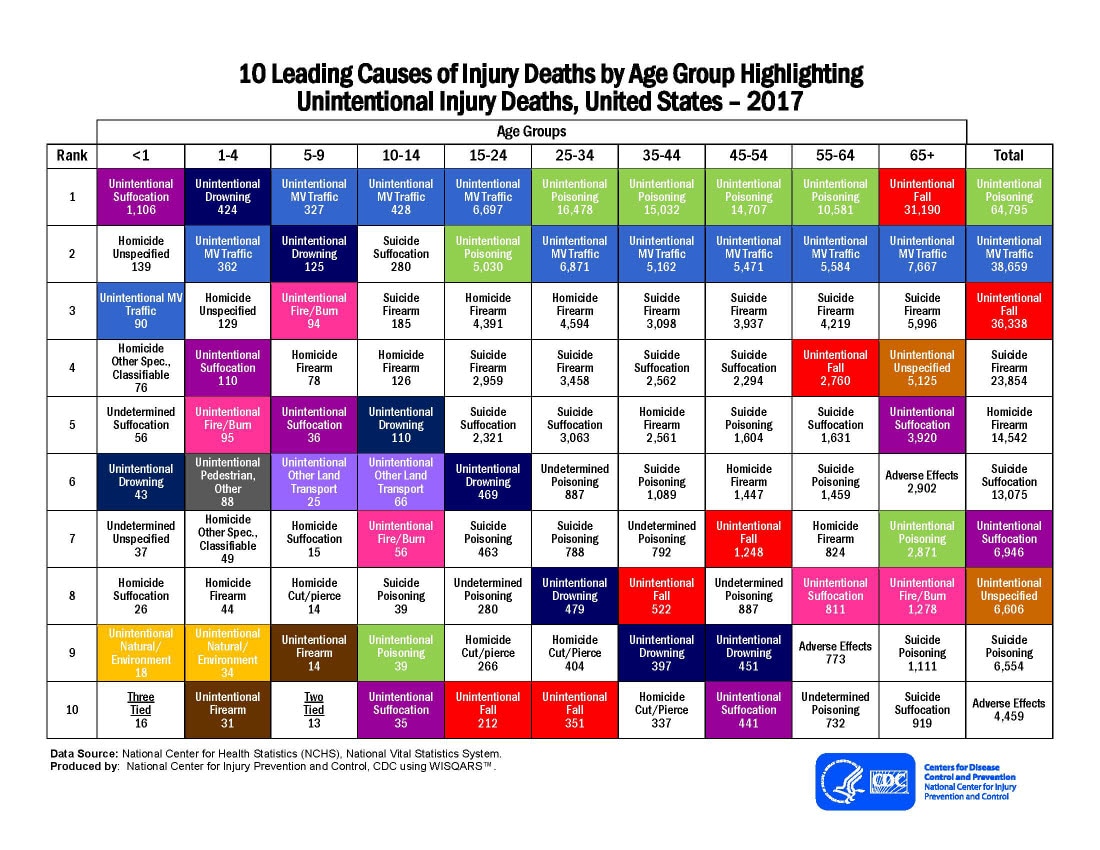
Unintentional injury is the leading cause of death for young people. Of which, motor vehicle accident is the leading cause. It takes second place after age 25 due to overdoses. Young people have the most life left to live.

https://www.cdc.gov/injury/images/lc-charts/leading_causes_o...
Re:Kansas City is first major city in U.S. to offer no-cost ... by weberc2 on Monday December 16, 2019 @09:10PM (#21809802)
The cost per passenger per mile is two orders of magnitude lower for roads than for public transit; I can’t imagine parking space accounting for that.
Re:Kansas City is first major city in U.S. to offer no-cost ... by greglindahl on Monday December 16, 2019 @09:43PM (#21810028)
What is the cost on the road when the road is full and can’t be expanded? Lots of urban areas in the US have this problem.
Re:Kansas City is first major city in U.S. to offer no-cost ... by kasey_junk on Monday December 16, 2019 @09:12PM (#21809814)
Parking space and the tracks/roads/right of ways themselves?

I don’t expect it brings them to parity but I expect it’s non-trivial.

Re:Kansas City is first major city in U.S. to offer no-cost ... by huebomont on Thursday December 19, 2019 @04:28PM (#21839524)
Per person? It's not. Cars are.
Re:Kansas City is first major city in U.S. to offer no-cost ... by baddox on Monday December 16, 2019 @04:30PM (#21807438)
> The problem is there's no additional investment into the system to make it attractive to riders.

It seems to me that public transit probably follows the law of demand fairly strongly, and reducing the price will almost certainly make it more attractive to riders. Of course this won't fix all problems with public transit, and I don't think that's the goal. It sounds like the goal is to increase ridership (and specifically to increase access to people who cannot easily afford the fares).

> Better to keep charging the fare and use the revenue to improve service

Or...use tax revenue to improve the service. That's the point, and is exactly what happens with most public roads.

Re:Kansas City is first major city in U.S. to offer no-cost ... by bobthepanda on Monday December 16, 2019 @04:38PM (#21807533)
The question is whether or not $9M annually would be better off making more useful transit. As it stands, very little of KC is covered by frequent transit throughout the day, and in fact much of it is covered by services that don't run the entire day. https://ridekc.org/assets/uploads/route-maps/SystemMap.pdf

A free bus that runs every hour is still going to screw you over if you mistime your walk to the bus stop and it leaves without you. The bus not being available at noon is not made better because it is free, because there's still no bus to take.

Re:Kansas City is first major city in U.S. to offer no-cost ... by baddox on Monday December 16, 2019 @05:01PM (#21807802)
But the point is to offer rides for free and use other money (presumably tax money) to maintain (and hopefully invest in more) infrastructure. I don't see how the current quality of the KC infrastructure is relevant: if it's bad, then they clearly the $9m in fare revenue isn't cutting it, and they already need tax revenue to make it better. If they can't or don't get the tax revenue they need, then that's definitely a problem!
Re:Kansas City is first major city in U.S. to offer no-cost ... by bobthepanda on Monday December 16, 2019 @05:19PM (#21807995)
Or, you could use the tax money that you could use for free rides (that only makes bad service marginally more useful) and put it towards more useful service? It's not as if this money came out of a box labeled "only for free fares." Right now this is a $9M opportunity cost, annually. To get both the free fares and $9M of better transit would double the cost of this, but then you'd have to ask why not use all $18M on better transit, etc.

Making a service that isn't usable most of the day free still makes it unusable for most of the day.

Re:Kansas City is first major city in U.S. to offer no-cost ... by AnthonyMouse on Monday December 16, 2019 @06:39PM (#21808797)
> To get both the free fares and $9M of better transit would double the cost of this, but then you'd have to ask why not use all $18M on better transit, etc.

But then there is a reason for that -- spending has diminishing returns. If you have some money and you could use it to serve an area with 1500 riders then that may be worth it, but once you've served it, the next best unserved area which costs just as much to serve would only have 750 riders, which may not be worth it. The point where you stop is where the value of the service no longer exceeds the cost.

And the value of eliminating fares has a major comparative advantage because it allows you to eliminate the cost of collecting fares, which is typically a huge fraction of the money collected in fares. Especially when the fares are already subsidized (which they are most everywhere), because then you still have the pay the full cost of the collection infrastructure but generate much less revenue. In some places the cost of collection can exceed the total revenue from the fares. And even if you beat break-even, the little amount left over is hardly worth losing the benefits of having fewer cars on the road.

Re:Kansas City is first major city in U.S. to offer no-cost ... by bobthepanda on Monday December 16, 2019 @06:47PM (#21808868)
I would argue that KC is nowhere near diminishing returns on transit spending. Right now, despite having lower fares and higher metro population than, say, Rochester NY, KC has less than half the transit ridership per capita.

https://www.apta.com/wp-content/uploads/Resources/resources/...

Off peak travel is generally also much less expensive, since you already have the buses and drivers doing peak-only shifts generally spend the middle of the day just sitting around. KC could run a lot more all-day service and garner a lot more ridership.

Re:Kansas City is first major city in U.S. to offer no-cost ... by AnthonyMouse on Monday December 16, 2019 @07:15PM (#21809123)
> I would argue that KC is nowhere near diminishing returns on transit spending.

The status quo doesn't really have anything to do with it though. If it's optimal for them to spend $X on transit while also eliminating fares, then that's what's optimal whether they're currently spending $X or $0.2X.

> Off peak travel is generally also much less expensive, since you already have the buses and drivers doing peak-only shifts generally spend the middle of the day just sitting around. KC could run a lot more all-day service and garner a lot more ridership.

Which would tend to make it so that you would build more transit before you hit the point of diminishing returns, but that doesn't mean the point of diminishing returns doesn't exist, or that we shouldn't also eliminate fares. They're just two independent questions.

It's like asking whether we should increase the size of the child tax credit or subsidize solar panels. Maybe we should do both. Maybe we should do neither. But the answer to each question has more to do with whether its benefits exceed its costs than how you answer the other question.

Re:Kansas City is first major city in U.S. to offer no-cost ... by gnopgnip on Tuesday December 17, 2019 @07:19PM (#21820536)
The flip side of this is induced demand. If you create a better option, more people will use it, more overall trips are taken, and more value/tax revenue is generated indirectly.
Re:Kansas City is first major city in U.S. to offer no-cost ... by huebomont on Monday December 16, 2019 @05:11PM (#21807907)
You leave out the possibility that they could run much better service with the money they have and they need to plan better. I don't know if that's the case here, but it's always the first thing to ask. Too many poorly run transit systems skip right over that to dumping more money into a poorly planned system and wonder why it doesnt work.
Re:Kansas City is first major city in U.S. to offer no-cost ... by brewdad on Monday December 16, 2019 @05:43PM (#21808261)
If the transit system sucks compared to the alternatives, free fares are meaningless. When I lived in Phoenix, I could drive to work in 20-30 minutes. The same trip by bus took 90 minutes if I made a successful connection midway. If I missed that connection, which I did once, it became a 2 hour trip home.

I only made the trip by bus two days, when the city was literally out of gas in 2003. The city could have paid me to take the bus and I still would have driven. I have to think the same would be true for pretty much everyone there who wasn't already stuck taking the bus.

Re:Kansas City is first major city in U.S. to offer no-cost ... by shantly on Monday December 16, 2019 @06:05PM (#21808515)
Kansas City buses are like that. Outside parts of a handful of routes they're only tempting if you have way more time than money. Making them free does help the people already using them but I can't imagine it'll do much to increase use of it for actually getting from place to place (increasing its use as a place for the homeless to get out of the heat/cold, as mentioned elsewhere in the thread, might happen, and isn't exactly a bad thing, though I agree that if it becomes common it might actually reduce total ridership)
Re:Kansas City is first major city in U.S. to offer no-cost ... by huebomont on Monday December 16, 2019 @05:08PM (#21807883)
Better and more frequent service is the number one ridership driver. Free transit is a nice perk but there's some convincing argument and survey data indicating that most people aren't avoiding transit because of the price, but because of perceived lack of utility or reliability.

(And yes, obviously continue to use tax revenue as well, just like we charge tolls for some roads but that doesn't pay for all their upkeep.)

Re:Kansas City is first major city in U.S. to offer no-cost ... by AnthonyMouse on Monday December 16, 2019 @07:07PM (#21809050)
The thing about eliminating fares and having more frequent service is that they're complementary. To have more frequent service you need enough riders to justify it; eliminating fares gives you at least some increased ridership.

Suppose you have an existing A line with 1500 riders and you're considering building a B line, but you need 1000 riders to justify it and you predict there will only be 900, so you don't build it. However, if you eliminated fares then you might expect 1100 riders for the B line. Then the lack of fares also gives you another 300 riders for the A line, and the existence of the B line gives you another 600 riders for the A line since then people can then go from A to B. So eliminating fares allows you to build the B line and add 2000 riders across the two lines, even though only 500 of them were directly from the elimination of fares.

And you get a much better incentive for ridership when you go from something like $1 to zero than you would from, say, $2 to $1, because it increases convenience. You don't have to worry about tickets or exact change or anything, you just go through the door and you're on your way.

Re:Kansas City is first major city in U.S. to offer no-cost ... by huebomont on Thursday December 19, 2019 @04:30PM (#21839538)
You would never want to build a B line that doesn't have any ridership. The move here would not be to make it free, but to reconsider the project and re-align it with a route that would actually attract riders.
Re:Kansas City is first major city in U.S. to offer no-cost ... by ReptileMan on Monday December 16, 2019 @04:46PM (#21807616)
Public transit follows the law of utility. Shitty transport cheap or free is used less than expensive but good.

Tfl could hike the fare wuite a bit and after the riots have died down people will use it the same.

And you could make Emirates Air Line free and I doubt it will bump ridership substantially.

Re:Kansas City is first major city in U.S. to offer no-cost ... by bobthepanda on Monday December 16, 2019 @04:28PM (#21807408)
Past experience shows generally that things like tolling or road pricing only become politically palatable if an alternative with existing capacity already exists. But funding such alternatives is hard and usually road pricing is proposed in part for the funding. So it's a very chicken vs egg situation.
Re:Kansas City is first major city in U.S. to offer no-cost ... by huebomont on Monday December 16, 2019 @05:12PM (#21807920)
It's not a hard chicken/egg situation though - put money into making transit a viable alternative for these roads, then start charging for the roads when there's another option. We don't think twice about spending billions eternally digging up and reconfiguring our highways, so we could do the same to transit, for much more bang for the buck.
Re:Kansas City is first major city in U.S. to offer no-cost ... by bobthepanda on Monday December 16, 2019 @06:07PM (#21808535)
The main issue is that historically in the US, transit operational funding is a strictly state and below matter, but the feds are happy to stump much of the bill for highways. And states and cities generally have fewer resources.

With such a strong urban-rural political divide these days, and suburban views of transit ranging from apathetic to hostile, federal support for transit operations is unlikely. Personally, I would be a fan of devolving transport funding entirely to solve this issue.

Re:Kansas City is first major city in U.S. to offer no-cost ... by AnthonyMouse on Monday December 16, 2019 @08:34PM (#21809629)
The reason for the distinction is that federal highways are interstate. Neither New York nor San Francisco is going to be willing to pay for highways to connect the two cities, but we all benefit from being able to get from one side of the country to the other.

But arguing that states and cities have fewer resources is ridiculous. Cities have more resources than anybody -- they're where the highest income people live.

It's the rural areas that have no money, but mass transit is useless there anyway, because it's too spread out and there is no need for it there because those areas have no traffic congestion.

The cities are where mass transit works as the cities are where the money is. It's only a matter of popular will.

Re:Kansas City is first major city in U.S. to offer no-cost ... by bobthepanda on Monday December 16, 2019 @10:14PM (#21810180)
Cities give a lot more in federal taxes than they get, hence the "less available resources." Things like eliminating the state and local tax deduction have also hurt urban areas.

If transportation taxes were devolved to the states or the localities then there would be a lot more public transportation funding.

Re:Kansas City is first major city in U.S. to offer no-cost ... by AnthonyMouse on Monday December 16, 2019 @11:04PM (#21810433)
Cities give a lot more in federal taxes than they get, but the percentage of what they give that goes to transportation funding is negligible. >75% of the federal budget is social security, medicare/healthcare and the military, and the next biggest category after that is interest on the debt. Transportation is only ~2%, and almost half of that is things like aviation, railroads and funding for local public transit.

If you want more local money in the cities then there's a lot more to be had by e.g. raising the retirement age than by eliminating federal highway funding, which we still kind of need unless you want to stop maintaining the interstate highways.

Or if you really want to restore state fiscal control, transfer social security and medicare entirely to the states, and make the National Guard constitute more of the military.

Re:Kansas City is first major city in U.S. to offer no-cost ... by dsfyu404ed on Monday December 16, 2019 @05:17PM (#21807969)
Being free makes it a hell of a lot more attractive to a lot of people.
Re:Kansas City is first major city in U.S. to offer no-cost ... by randyrand on Monday December 16, 2019 @09:00PM (#21809768)
Another example SFO adds an additional ~$5 fee to leave or enter on BART, but drivers can arrive and drop off for free.

Cars are massively subsidized.

Re:Kansas City is first major city in U.S. to offer no-cost ... by clairity on Monday December 16, 2019 @05:21PM (#21808012)
it's true that public transportation has a net societal benefit, and that portion of the benefit should be paid for by all (through taxes or whatnot). however, fares shouldn't be zero.

riders should pay too, not just because we should bear our portion of the direct benefit (we should), but also because it gives us a sense of ownership for the system. those fare revenues give transit agencies funds to improve service, and riders legitimacy in demanding better service. public transit needs to get better in every dimension: frequency, timeliness, coverage, capacity, cleanliness, etc.

Re:Kansas City is first major city in U.S. to offer no-cost ... by Koremat6666 on Monday December 16, 2019 @04:42PM (#21807577)
> but nobody asks the same of huge highways in the middle of nowhere.

Building roads should move from government to fully private entities for the same reason. California has built roads from nowhere to nowhere for no reason other than local assemblyman was focused on getting them done. On other hand critical roads that would have helped commute distance, improved public transporation systems are in a bad state.

Re:Kansas City is first major city in U.S. to offer no-cost ... by scarejunba on Monday December 16, 2019 @04:46PM (#21807610)
Well, marginal dollar on road yields greater than marginal dollar to economy. Current political structures in the US means that marginal dollar on passenger rail is absorbed by the agents in charge of ensuring the rail existence. i.e. the $500 million railway and the $1 billion version of (say) the Central Subway will both yield probably the same economic benefit. Rent-seekers know that they can extract a large amount of economic rent because of government propensity to spend and political reasons that require governments to chase sunk costs.

Because of the large amount of roadway in America, the number of parties you can call to get more road built is pretty big (as Thiel says, competition is the enemy of profit). And the primary place you put more road is out where there's nothing. Because of the existence of a large network of roads, you could build roads where there is nothing and it's easy to get to where there's something.

Personally far prefer public transit so I'm pretty interested in ideas that change the structure of the interactions to pursue efficient construction.

Re:Kansas City is first major city in U.S. to offer no-cost ... by andys627 on Monday December 16, 2019 @06:48PM (#21808881)
Do you have any sources for this info?
Re:Kansas City is first major city in U.S. to offer no-cost ... by scarejunba on Tuesday December 17, 2019 @09:58AM (#21814026)
I have not kept them handy.
Re:Kansas City is first major city in U.S. to offer no-cost ... by throwaway894345 on Monday December 16, 2019 @08:17PM (#21809524)
Are you really willing to give up affordable transport (outside of your metropolis, anyway) and commercial goods? I know cars are Not Very Utopian or whatever, but public infrastructure has to have one of the better returns on investment with respect to tax dollars.
Re:Kansas City is first major city in U.S. to offer no-cost ... by stretchwithme on Monday December 16, 2019 @04:42PM (#21807566)
I'd rather see nothing being subsidized.

If you want to help the poor afford public transit, lower their taxes. Maybe not taking a substantial their working capital and giving it back to them when their old isn't such a bright idea either.

Re:Kansas City is first major city in U.S. to offer no-cost ... by freeone3000 on Monday December 16, 2019 @04:56PM (#21807745)
More than half of Americans end up not paying taxes, because their income is too low. If you're saying make it negative, sure, I'm all for that, but I think you are underestimating the poverty situation in America.
Re:Kansas City is first major city in U.S. to offer no-cost ... by thaumasiotes on Monday December 16, 2019 @05:57PM (#21808435)
I'm pretty sure it's not true that more than half of Americans avoid paying FICA because their income is too low. It would have to be $0.
Re:Kansas City is first major city in U.S. to offer no-cost ... by shantly on Monday December 16, 2019 @06:06PM (#21808525)
Also sales, property, and so on.
Re:Kansas City is first major city in U.S. to offer no-cost ... by thaumasiotes on Tuesday December 17, 2019 @09:55AM (#21813994)
Sure, but FICA is an income tax.
Re:Kansas City is first major city in U.S. to offer no-cost ... by greglindahl on Monday December 16, 2019 @09:46PM (#21810048)
Everyone pays tax; you’re likely referring to income tax. Don’t forget sales tax, etc.
Re:Kansas City is first major city in U.S. to offer no-cost ... by standardUser on Monday December 16, 2019 @04:59PM (#21807775)
Low wage earners pay very little in taxes. I honestly thought that was common knowledge. Reducing their tax burned would have a negligible impact on their net income. It solves absolutely nothing.
Re:Kansas City is first major city in U.S. to offer no-cost ... by shadowgovt on Monday December 16, 2019 @04:53PM (#21807699)
One could cease to provide social security as it is structured if one replaced it with an alternative. We already know from US history that it is unwise (in a humanitarian sense) to trust the public to just save enough to retire comfortably (including having the foresight to keep their savings in assets that don't diminish in value before they are needed to offset continued life without labor into the system).
Re:Kansas City is first major city in U.S. to offer no-cost ... by weberc2 on Monday December 16, 2019 @09:18PM (#21809860)
I thought postwar America was known for investing in real estate to great wealth-building effect? I’m not sure how worthwhile other time periods are for comparison as our economy is so much different.
Re:Kansas City is first major city in U.S. to offer no-cost ... by stretchwithme on Sunday December 22, 2019 @10:43PM (#21861351)
Singapore has a better system. They force you to save, but it's your money. You can use it to buy a home.

So you don't start getting it back when you're old. It can serve you much earlier.

I think the rate of home ownership there is over 90%.

Re:Kansas City is first major city in U.S. to offer no-cost ... by shadowgovt on Monday December 16, 2019 @10:23PM (#21810225)
Approximately 65% of Americans own their home.
Re:Kansas City is first major city in U.S. to offer no-cost ... by weberc2 on Tuesday December 17, 2019 @08:37AM (#21813273)
I’m not sure what point you’re making, if any. Care to elaborate?
Re:Kansas City is first major city in U.S. to offer no-cost ... by shadowgovt on Tuesday December 17, 2019 @11:58AM (#21815549)
If the up-thread reference to American real-estate investment implied Americans use real-estate ownership as a retirement nest-egg, the numbers do not bear out that hypothesis---or at least, do not show it's a solution much of America avails itself of.

... and that's ignoring that shocks like the mortgage crisis can happen, which indicates that home ownership isn't as stable a store of value as, say, the US dollar.

Re:Kansas City is first major city in U.S. to offer no-cost ... by zucked on Monday December 16, 2019 @05:00PM (#21807790)
Lower... what taxes, exactly? Income? Property?
Re:Kansas City is first major city in U.S. to offer no-cost ... by anon73044 on Monday December 16, 2019 @05:53PM (#21808395)
Regressive sales and vice taxes.

j/k Seriously though, this year is the first I've ever made over median income and I'm happy to pay taxes if they can actually improve QOL rather than be used to subsidize and oil company or two

Re:Kansas City is first major city in U.S. to offer no-cost ... by kevin_thibedeau on Monday December 16, 2019 @06:30PM (#21808697)
Nobody needs to consume alcohol or tobacco to survive. Tax it to what the market will bear.
Re:Kansas City is first major city in U.S. to offer no-cost ... by jessaustin on Monday December 16, 2019 @11:25PM (#21810567)
Nobody needs kale or skateboards either. There are other vegetables and personal transportation available. Why not tax them to "what the market will bear"? What does that even mean? If kale consumption drops by 5% is the market "bearing"? 50%? 98%? Why don't we just tax everything except your favorite things to buy?
Re:Kansas City is first major city in U.S. to offer no-cost ... by crc32 on Tuesday December 17, 2019 @05:47AM (#21812401)
> Nobody needs kale or skateboards either... Why not tax them to "what the market will bear"?

Because alcohol and tobacco have "negative externalities" to society. These would be mainly health related but I guess the discussion on this post is also around behavioural issues.

By adding a tax to a product, you can make the consumers and manufacturers together share the burden of paying off the externality, (e.g. care for lung cancer patients) and/or the tax will often discourage consumption in the first place. (The second being more applicable in the US where there is limited/no universal healthcare)

The reason you probably wouldn't tax kale, is because it's good for you, and if anything; you could say it has a "positive externality" in that consuming it makes you healthier, and thus benefits society. So it might make sense to actual SUBSIDISE kale production... although this may have very different effects from taxing unhealthy food.

As an example, Scotland has introduced a tax on alcohol called "minimum unit pricing" and there's a study here: https://bmjopen.bmj.com/content/7/5/e013497

The UK as a whole also has a "sugar tax" https://www.lshtm.ac.uk/research/research-action/features/uk...

Re:Kansas City is first major city in U.S. to offer no-cost ... by AnthonyMouse on Monday December 16, 2019 @08:43PM (#21809680)
It always worries me when people propose not to tax the poor, because government officials care incredibly much about maximizing tax revenue. It gives them an outright incentive to transfer wealth from the poor to the rich, because then they get a bigger cut of the money.

Wouldn't it be better to tax everybody the same and then help the poor by giving them money directly via a UBI, or direct programs like free mass transit? It would also make taxes a whole lot simpler (you buy a thing, you pay a flat percentage in VAT; no individual tax returns whatsoever) and thereby eliminate a lot of these shell games corporations and billionaires use to avoid paying their share.