Re:Kansas City is first major city in U.S. to offer no-cost ...
by asdff on Monday December 16, 2019 @11:26PM
(#21810572)
Transit is not something you look to make money on. That's precicely why every private transit agency has failed in the U.S. You invest in transit because it creates economic opportunities, it's environmentally responsible, and it's the best way to move people in and out of a congested city. You ever try driving into Manhattan or through downtown LA?
Re:Kansas City is first major city in U.S. to offer no-cost ...
by kasey_junk on Monday December 16, 2019 @05:32PM
(#21808143)
I’m not disagreeing with your broader point but none of those studies account for space utilization issues. Transit uses space better due to lack of parking and more density per track.
No idea how that impacts the actual dollar numbers but it’s worth noting.
Re:Kansas City is first major city in U.S. to offer no-cost ...
by peteey on Monday December 16, 2019 @10:43PM
(#21810318)
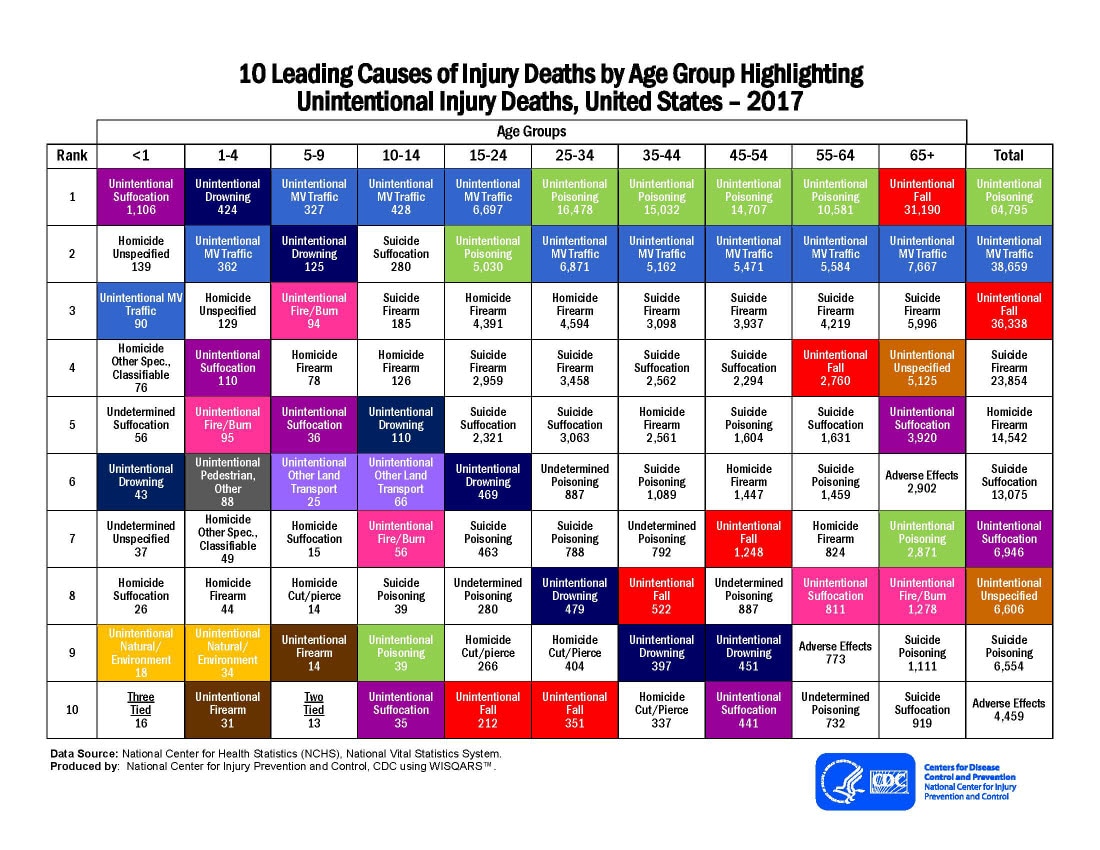
Loss of life impacts the dollar amount.
Unintentional injury is the leading cause of death for young people. Of which, motor vehicle accident is the leading cause. It takes second place after age 25 due to overdoses. Young people have the most life left to live.
https://www.cdc.gov/injury/images/lc-charts/leading_causes_o...
Re:Kansas City is first major city in U.S. to offer no-cost ...
by weberc2 on Monday December 16, 2019 @09:10PM
(#21809802)
The cost per passenger per mile is two orders of magnitude lower for roads than for public transit; I can’t imagine parking space accounting for that.
Re:Kansas City is first major city in U.S. to offer no-cost ...
by greglindahl on Monday December 16, 2019 @09:43PM
(#21810028)
What is the cost on the road when the road is full and can’t be expanded? Lots of urban areas in the US have this problem.
Re:Kansas City is first major city in U.S. to offer no-cost ...
by kasey_junk on Monday December 16, 2019 @09:12PM
(#21809814)
Parking space and the tracks/roads/right of ways themselves?
I don’t expect it brings them to parity but I expect it’s non-trivial.
That’s completely untrue. Yes we spend more on vehicles than transit. But way more people drive than use transit. There is not even a comparison.
In 2016 federal and state spending on road, transit, and water infrastructure was $416 billion: https://www.bidnet.com/resources/business-insights/us-govern.... Water is about 1/3 of that, leaving $276 billion for transportation. Spending on transit was $65 billion, or 1/4 the transportation spend.
Transit, however, accounts for just 5% of commutes: https://www.bts.gov/content/commute-mode-share-2015. 85% is driving alone or in a car pool. So we spend 3x as much on road infrastructure, but 17x as many people drive to work as take transit.
If you run the numbers on a cents of subsidy per passenger mile basis, busses and subway trains come out to $0.50+ per passenger mile. Roads are just $0.02 per passenger mile. Even adding in CO2 footprint and pollution (assuming that cars are all ICE) puts you at about $0.25.
Transit is incredibly expensive.