Monopolies of what, exactly? I admit to sometimes looking at entertaining videos on youtube. About an hour or maximum two hours a week worth. I'm not sure what you're suggesting that facebook and twitter are monopolizing. I haven't used the former in years and the latter just about ever -- aside from maybe five tweets over the course of twitter's existence.
Monopolies of online discourse? Attention? Entertainment? Clearly we're not using any of those platforms now.
Monopoly on platform reach. The reach of facebook, or the reach of youtube, twitter etc, is so high, that if you want to disseminate a message, those _must_ be the platforms you use. It's as if they own the radio spectrum, and you have to acquiesce to what they demand to use said spectrum.
Of course, i am free to use smoke signals to send my message, but who will receive it?
Even though they are competing for attention, they each use different mediums. As an analogy, it's like only having one radio station, one TV station, and one magazine. There needs to be dozens of each for there to be a true marketplace of ideas.
Can you define a market each of them has a monopoly over? There are many popular video apps and many popular social media apps. Exactly what does each of them have a monopoly on? A network effect is not a monopoly. Being the exclusive provider of convenience for some specific group of people is not a monopoly.
For example, in some religious town, it's possible that the only way to reach a certain group of people on a Sunday afternoon is to go to the church. This does not mean the church has a monopoly on reach. Likewise, it's possible that where you live, the only place you can get a meal at 2AM is Aunt Ann's Diner. This doesn't make them a monopoly. Nor is the only sushi restaurant in town a monopoly. We live in a world of differentiation - every service provider that has a reason to exist provides something that others don't. This doesn't make everyone a monopoly.
Also, on none of these platforms is it trivial to build a large audience. And it's certainly possible to build a large audience through other means. For any given platform to have a monopoly on reach, people must be spending so little time outside of this platform that it's impossible to reach them otherwise. That's not a world any of us lives in. Even Youtube accounts for a very small fraction of time spent on watching videos and Facebook and Twitter are two of a large number of popular social networks. Snapchat, WeChat, iMessage, Weibo, TikTok, QQ, VK, Reddit, LinkedIn and Line to name a few.
Because more people choose to eat McDonalds burgers than the local dive bar burgers, does this mean McDonalds has a monopoly on burgers?
My local dive bar can serve me burgers whether it has a customer base of 1.000 or 1.000.000. A social network, however, cannot function without hundreds of millions of users. Otherwise it's an anti-social network.
As a result I can post my video to DailyMotion instead of YouTube but how am I going to build a following without engaging with Facebook, Instagram, or Twitter?
These networks require mass user engagement to be effective which precludes a myriad of competition. I don't think breaking these companies up as Elizabeth Warren suggested is the correct solution because it fundamentally handicaps their ability to function. But I think there does need to be regulation around how they do business which sadly does not exist.
I think the point is yes there are alternatives however given the size/reach of FB, YT, and twitter even those alternatives really aren't competing with them. They own the market share for what do and even many of those alternatives (ie mastodon) post on twitter or FB news or service updates. I'd say the alternatives don't even make up 5% use over FB, YT, or twitter.
Is it a monopoly in the normal sense of the word probably not, but the issue remains that alternatives are niche and truly don't directly compete. I think though as things like people being banned, creators being demonetized or the numerous other things that have happened in the last year to show users of these platforms the problems; we might see these alternatives pick up ground as these people with followings and clout get kicked off or decide to find alternatives. They get too big for their own good and in the process they will end up fragmenting their communities causing some to take alternatives serious.
What Facebook IS a monopoly of is getting your content to go viral. I argue this service is not speech. Which is why I oppose web hosts and cloudflare censoring content, but support social networks banning users. When web hosts do it, users who WANT that content can't get it anymore. When social networks ban people, they merely can't find new eyeballs that never specifically requested that content.
This isn't true though. Alex Jones can disseminate his message through countless other websites, which have their own users. This is really just advocating for equal exposure of opinions, which isn't a free speech issue.
i can post a comment on FB and get 0 likes, that doesn't give me equal exposure to the latest nike video on their page.
denying opportunity for exposure is giving that platform the ultimate authority on what shouldn't be able to be exposed in society, if society is reliant on that platform.
i don't want alex jones to have exposure, but i don't want an exec deciding what's next on the chopping block. a page suggesting publicly available employee salaries? they shouldn't have that power
If we're talking about internet providers, that's a different issue, since they are a user's conduit to the entire web. Those absolutely should not be able to choose which accounts to favor.
These networks have been curated from the get-go, for no reason other than to control spam. Then, to keep people hooked, they emphasized virality and controversy. These aspects make them quite unlike a town square.
Our situation is even better than this, the entire internet is our town square, anyone can spin our own metaphorical soap box online and say whatever we want, and the entire worlds internet connected public can hear us if they choose to do so.
Even worse.
So this is different from walking past a demonstration or assembly in the city, it is more of an Inception movie-like warping of the entire city to bring everyone closer to these peoples voices.
Actually, a city square does exactly that, amplify your voice to all those that pass. The difference is that there are many city squares to stand in, whereas there are only a handful of social media companies. The problem here is Facebook's monopoly power, not the medium of communication.
I’m just not sure this holds up to any kind of scrutiny. There are tens if not hundreds of thousands of forums online where people can speak.
It’s a problematic analogy anyway, Facebook is not a public space, if we’re going insist on applying a real world physical analogue, they would be much closer to a city’s incredibly popular nightclub with a stage, which of course would never be required to give extremists or provocateurs free-reign of their equipment or stage. But even this analogy has problems.
I think the real argument is whether or not a company is free to associate its brand with whatever it likes.
In many smaller countries Facebook is nearly synonymous with the internet itself.
I. Where the monopolist lies not the exclusive power of production but only certain exclusive facilities as a producer, and can increase, with imdimimished or even increased facility, the amount of his produce....
II. A second kind of monopoly is in the opposite extreme. It exists where price is checked neither by the hopes nor by the fears of the producer, where no competition is dreaded, and no increased supply can be effected. The owners of some vinyards have such a monopoly....
III. A third and more frequent kind of monopoly lies between these two extremes, and is neither so strict as the last, nor so comparatively open as the first. This comprises those cases in which the monopolist is the only producer, but, by the application of additional labow and abstinence, can indefinitely increase his production. The book trade affords an illustration....
IV. The fourth and last class of monopolies exists where production must be assisted by natural agents, limited in number, and varying in power, and repaying with less and less relative assistance every increase in the amount of the labour and abstinence bestowed on them.
-- Nassau William Senior, An Outline Of The Science Of Political Economy, (1836, 1872) pp. 103-106.
https://archive.org/details/in.ernet.dli.2015.59405/page/n11...
Arguably, FB are a monopoly of all four types.
In the USA, just because we have the first amendment doesn't mean you're not responsible for your words. Fighting words is a thing (it's actually a term), verbal harassment is a thing, etc...
Alex Jones from InfoWar sic his followers to harass the Sandy Hook victims' parents. He was free to say what he wants and then he got ban for inciting unsavory actions.
To be real fair here, I'm pretty dang sure in Facebook's ToS, they have something like no porn allow. Nobody blink an eye on that because that make sense and it's probably some where in the ToS (terms of service). Yet here we got a guy that's advocating his listeners to harass people and a vocal minority of Americans are all up in arm about it. He most likely violated some rules in the ToS.
Thats a skewed depiction of what happened. What happened was the biggest conspiracy theorist on the internet ran a few articles about the hottest conspiracies on the internet (crisis actors, etc) just asking questions. Alex Jones notably believes just about everything is a conspiracy. This naturally led to people deciding to "find the truth theirselves".
Alex Jones really hurt those families but I don't believe he had intent. I think he just didn't quite realise what the consequences of his actions would be.
Ironically the people criticizing Jones for spreading this conspiracy have popularized the conspiracy more than Jones himself. while critizing Jones for spreading this conspiracy. Media coverage is thought to be one of the primary drivers of schhol shootings.
I just don't see a great deal of consistency in the excommunication of Jones. Which isn't to say he shouldn't be banned. He's the epitome of fake news. Yet I notice how facebook itself gets away with providing a service that helps mass murder go Viral. Jones at least doesn't have blood on his hands like Facebook does.
I think the reason we don't is simply because we want to allow speech that result in "bad" people getting harassed but not "good" people, and since different political sides define good and bad differently, what we get is platforms making the decision for us. Personally I would prefer a law instead.
Of course people make mistakes, and as adults, they should know that there are consequences to making mistakes. A stock trader that bets on the wrong stock has to deal with the consequences of losing money. A murderer who shows remorse must still serve their sentence.
Similarly, a conspiracy theory peddler who popularizes false accusations needs to own up to the harm they caused. Alex Jones has harmed a lot of people in very serious ways.
"I'm sorry" is not enough.
The consequences was that he was ban from several services. There is also a defamation lawsuit against him. That is how it work in a lawful society.
And whatever happen, yes mistake happen, and yes you can apologies. But nobody is obligated to forgive you.
He made the claims in September 2014. He's being banned in May 2019. Such a gaping delay means this doesn't really qualify as a consequence.
I'm sure everyone make mistakes.
I'm not entirely sure if people have made mistake where they stated the the death of children were just a plot to take away guns, that those where child actors and then before I continue I would like to briefly talk about my InforWar products. Buy this rape whistle to support InfoWar. Oh where was I? Right, making money off of the dead kids.
And you're saying this as if this is the only outrageous incidents he have done.
I want you to say it with your real name instead of a pseudo name.
Like how I'm stating my belief on this subject with my real name. Because I'm sure as hell you wouldn't be defending Alex Jones' actions.
> Like how I'm stating my belief on this subject with my real name. Because I'm sure as hell you wouldn't be defending Alex Jones' actions.
Of course they wouldn't, but I don't see why this is a point you would like to make. They would face the potential for real-life backlash if any of many mobs prowling the internet noticed their comment. You can post safely because you're voicing a majority-held opinion.
I'm not seeing the link between "there are people actively seeking to ruin the lives of those holding thoughts like yours" and "what you're saying is incorrect". The mob is always right?
The best possible way of doing this would be if the person is basing this argument from the basis of good intention and good will and that they know the subject is of good. But if you can't do that perhaps deep down in side you know there is something wrong with your position. If you still believe in it you ought to have a solid argument.
Not this every people make mistakes as if all mistakes are the same argument. A distracted mother caused a car accident that kill someone. A drunken driver killed someone in a car accident. Both are mistakes but they're not equal, if they were then one of them wouldn't be likely to have a harsher punishment.
Having a real name forces at person to be honest, civil and actually put real effort into the discussion.
I like to think the people who hides behind these fake names are more like those Klanmen hiding behind those white hooded costumes. I'm not alluding to racism but it is either because deep down inside they know they're wrong or they're not brave enough to stand on their own feet or unwilling to put effort into making a solid argument.
Or you believe you have a solid argument, but realize it's an unpopular one, and have seen others with unpopular arguments be harassed and fired for them. (How ironic that you raise this argument in a thread literally about people suffering for their unpopular arguments!)
> Having a real name forces at person to be honest
People can only be truly honest when anonymous, and assured safety from consequences.
You seem to think that it is courageous to echo the dominant opinion that a majority of talking heads and blue checkmarks on Twitter agree with...try doing something radical like criticizing the U.S. war machine, or Israel, or endless neoliberal regime change and see how that works out for you...you'll find out you can criticize these things using your real name, but they'll be concrete consequences
Other thread have pointed out unpopular opinions will have get mob that's why they hide.
Well let see three unpopular opinions.
1. The earth is flat.
2. A religious person going to a university with signs saying, "Gays are going to hell."
3. Bunch of people with Tiki torches chanting, "Jews will not replace us."
Which one do you think will get a mob? All 3 of them.
Which one is more likely to get into confrontations? The 3rd one and it's because it's coming from hate. It's the degree of hatred in the unpopular opinion that will get a rowdy mob.
What exactly do these people that take these hateful stances expect?
> try doing something radical like criticizing the U.S. war machine, or Israel, or endless neoliberal regime change and see how that works out for you...
I have no idea what you're definition of these subjects are.
But okay I'll go for it.
I don't support USA being involve with the current conflict in Yemen. I know I'm a begger that's choosing, but I've recently have tried my best to not apply to companies that are directly involved in war.
Israel occupation of the West Bank is wrong. UN have recognized it and it hinder the process of peace between Israel and Palestine.
I have no idea what this neoliberal regime is. But it seems like you're trying to get me to spit out some radical unpopular opinion.
If these things I've stated aren't unpopular to you. Then perhaps the reason unpopular opinions being unpopular is because, well, the majority of the people don't support it or hold radical views.
You must be pretty young because here's what I know: It doesn't matter how your politics swing, eventually the other side comes to power and seeks to punish it's opposite. So your candor, while refreshing, won't protect you. The only protection is anonymity, as much as you can get.
We live in an unprecedented era of technology destroying the very fabric of civilization. I don't know that we're going to survive this. We aren't going to survive it with any semblance of "freedom" in the Western legal sense of the word where law rules, where oligarchs don't get away with crimes while the "little people" suffer, and where there is room for individuals apart from the state. From my perspective, technology is quickly enabling despotism and it is happening faster in some places than others.
The worst part is, you won't know that you were judged by something you said online ten years ago when you were a goofball college student. You won't know because they won't tell you that. They just won't hire you for the job or whatever the situation happens to be.
Right now, the left is trying to blackball conservatives in the US mainly because their arguments are weak and they know the things they want to do are dastardly if they can get away with them. Like all communist revolutions, the perpetrators will stoop to murder and mayhem if they can get away with it. They have already left reasonableness and open debate far in the past and now they are seeking to consolidate power by force as necessary. This is all being done with the cooperation of big tech--Google, Facebook, Twitter, Apple. These companies have all been taken over by the far left, it seems. No clue how that all happened because last I looked, SV was a bunch of anarcho-capitalists trying to upset the status quo of the world. Next time I turn around, there's a bunch of typical commies in there cozying up to China! That can't end well.
I'm no fan of Alex Jones, btw. Alex Jones is controlled opposition. He is exists to get people to "look over here" to the safe distraction while the real evil plays out somewhere else.
Read about how the Spanish American War got started and what role the media played in it.
Read about Puerto Rico.
None of this is new. What is new is how far the media elite have tried to take it this time. They dropped all semblance of objectivity out of fear that Trump would become some kind of despot. Or was the real fear that unconscionable crimes would be exposed? What would the people do if they found out their elites enjoyed having sex with children, for example?
Translating into English: "your words incur a great debt that you will pay dearly for." Being responsible for the consequences is just a euphemism for debt collection.
In addition, the US federal government only exists to protect the innumerable rights of US citizens. Some of these rights are enumerated in the constitution. It is therefore well within the scope of the federal government to protect citizens against bully companies like Facebook who are infringing on these rights.
The shareholders of Facebook are entitled to run their company as they see fit. Because they own it. Like you can paint the walls of your house whatever colour you like, and if visitors don't like it, then that's their problem.
If we think that Facebook has grown too powerful and intrusive into society to be governed by its shareholders, then nationalisation is completely the correct way to go.
Of course, which nation gets to buy Facebook is another concern... given its global reach, is it really appropriate for the US government to own it? Should the UN "globalise" it instead of the US "nationalising" it?
The analogy also doesn’t work because it’s impossible to have 4 billion people in your house.
That isn't entirely true when we are talking about "customer discrimination"...we'd be having a completely different conversation if Facebook came out and said "we're going to ban Filipinos" or "we're banning those who express anti-war sentiments"...it's a lot easier when the people being persecuted are right-wing nationalists, anti-Israel, or conspiracy nuts...
Semantically it's not a question of "who can use their product" it's a question of in what fashion are users permitted to use their product, what behaviors are/n't allowed on that platform. Facebook didn't institute or enforce a "no Louis Farrakhans" policy. They set boundaries on what kind of behavior is or isn't acceptable for continued membership and participation on their platform, e.g. no anti-semitism.
Even a free-speech shithole like 4chan has a distinct moderation policy for each individual board. There have to be rules for a social/discussion platform to serve an intended purpose, otherwise the platform becomes repurposed by its users or ceases to have any purpose to anyone. If Facebook can't dictate its policies they can't dictate what shape the platform takes.
But the fact that it has dictated its own form is why it's Facebook. That is to say, perhaps Facebook couldn't be the platform on which people wanted to post anti-semitic content, if it didn't actively purge such content from its platform. If Facebook can't dictate what kinds of content are healthy for their platform then there could very well not be a Facebook at all.
By acceding to public pressure, doesn't that demonstrate that these "market leaders" don't actually get to decide what content they host? FB/YT/Twitter/Reddit have consistently dragged their feet on removing extremist content. I think the last couple years have been proof that a laissez-faire model of governing the online public sphere has been a spectacular failure.
This is a strange way to frame what businesses do every single day. If a business believes a certain product is unethical or that the product wont sell very well, they choose not to peddle that product. This is a determination just about every business deals with on a regular basis.
If people think we should have digital public spaces, then we should be paying for it as a public. We have parks and plazas where people can congregate, so why not government funded servers for hosting chat?
If their followers were truly that in love with them, surely they can find a way to fund their own website.
What's stopping them from ending up like the daily stormer, being "deplatformed" from cloudflare, or ending up like the pirate bay, being blocked by a lot of ISPs world wide?
Or maybe they just deserve it if they can garner enough attention and infamy to get themselves blocked from a hosting company.
FB/YT/Twitter are not fundamental to modern life.
They aren't even fundamental to gaining an audience. Lots of businesses[1] manage to turn handsome profits without advertising on those platforms.
[1] And that's what infowars/milo are -- businesses looking for make a profit by producing social commentary and then selling ad space / books / videos / merch for more than it costs to produce the commentary.
Neither are cakes. But people on left celebrating Facebook for doing what they want on their platform - seem quite similar to the people on the left also trying to get a baker forced to make a cake.
Can't have it both ways.
(edited for clarity)
Your position is a bit like saying "Some people claim they're OK with the US/UK having nuclear weapons, but not North Korea. Can't have it both ways." or "Some people want charities to be tax exempt but not businesses. Can't have it both ways." or "Some people want gun control for civilians but not for the military. Can't have it both ways." Yes, many policies apply differently to different people for different reasons! That's a good thing.
All your examples ultimately boil down to force and have little to do with what ought to be.
Do you have any data on this question? Or is this just a blind assumption that "people who disagree with me on X probably also disagree with me about Y"?
And, yet, content creators must upload their content to YouTube or someone else will--even if they host it somewhere else.
Therefore, YouTube is either a monopoly or a bad-faith actor--your choice--and we will, unfortunately, need laws to bring YouTube to heel.
And no part of this statement strikes you as a problem?
That's just doing business in the current economy. You either have to ignore it or actively deal with it. Neither option will totally eliminate it.
Considering the Patreon fuss and now Mastercard's "human rights committee", it's not only "build your own website", it's rapidly moving towards "build your own bank". It's not realistic.
What concerns me isn't censorship, it's that LEGITIMATE speech is being censored. I'm not sure where Alex Jones falls on that spectrum, but labeling him as a hate monger is just an easy way to quell that speech and make it unavailable. I don't see that man as a neo-Nazi, although I don't think neo-Nazis are any big threat versus neo-communists or whatever the actually violent groups who have large numbers of followers are out there. One thing is certain, far right violence is not a problem in the US, despite what the media wants us to think. The truly violent mob behavior is on the left and it has the approval of the media and many large city councils and mayors. How else could ANTIFA have such free rein across the Western US?
Can you explain what you mean by this?
My point being, why should what you say be of any concern to the seller? Unless, of course, they're trying to control the conversation.
If they were, well, that would be really sinister.
Traditional monopolies "control supply of a good or service, and where the entry of new producers is prevented or highly restricted."
In this case, the supply of a good or service (social networking, webpage indexing and searching) are not controlled by Facebook and Google because they aren't finite resources. Anyone can index the web and anyone can build a social network and Google/Facebook aren't going to crush you with lawsuits or some other nefarious tactic to maintain their position (AFAIK).
Entry of new producers of these services is not prevented or highly restricted. New social networks and search engines pop up all the time.
What Facebook and Google have is massive, large scale user loyalty. Despite alternatives existing (Bing, Mastadon, DuckDuckGo, Myspace, etc.), users are voluntarily choosing to use Google and Facebook. This is not a monopoly.
I think we may need a new term for this situation.
Small or limited government is usually the given position, vague as that may be, not zero government.
If someone is telling you that they support free markets and they also support government regulation, they don't understand what they're saying.
For example, Paul Joseph Watson in this tweet[1] says he's for free markets, limited government, and against monopolies. I'm pretty sure a quick search will show similar results for the others.
[1] https://twitter.com/PrisonPlanet/status/1012108095286317058
That doesn't contradict my original point.
>says he's for free markets, limited government, and against monopolies.
Yes, free market advocates are against monopolies, but believe that they're caused by government regulation. Moreover, when libertarians and free market advocates support limited government, they typically mean a government which only provides a few very basic services, such as military, police, etc. It has nothing to do with regulation.
These free market advocates don't believe that, clearly. I'm wondering why you get to draw these lines rather than the people themselves.
>I'm wondering why you get to draw these lines rather than the people themselves.
Yes, let's both agree to follow the guidelines and not be snarky.
Yours was snarky because it's personal, mine's a rebuttal in the form of a question. Quite different.
I believe it's best if we leave it there but feel free to respond, I will read it.
If you're offended by my standard usage of the term "free market", then you can change my statement to "People who oppose government intervention..." I'm not interested in what you think the term "free market" means, because it's entirely irrelevant to my point.
Please keep in mind the guidelines[1].
> Don't be snarky.
The tighter the rules get for these traditional platforms, the more push there is towards distributed platforms.
Do you want to earn your livelihood from a platform that can kick you out at any time with any rule they want?
The new EU rules of Article 13 will make the push even stronger. Because it's not only up to the platforms anymore. You want to serve EU citizens? You need to make damn sure to put in filters that lean towards false-negatives.
Interesting times up ahead.
https://humanevents.com/2019/05/03/platform-access-is-a-civi...
They're not monopolies, they're just expedient ways to reach larger audiences. There's a difference.
A lot of clones do exist. They would just leave it the content creator to bring their audience.
If anything, there's now a danger that the platforms that cater to the fringe now start to gain traction, as some of these figures do bring with them a sizable audience of their own.
Name three.
I don't NEED Facebook for modern life, neither do you. There's PLENTY of competition for online social networks. Go use one of those. Or go outside, FFS.
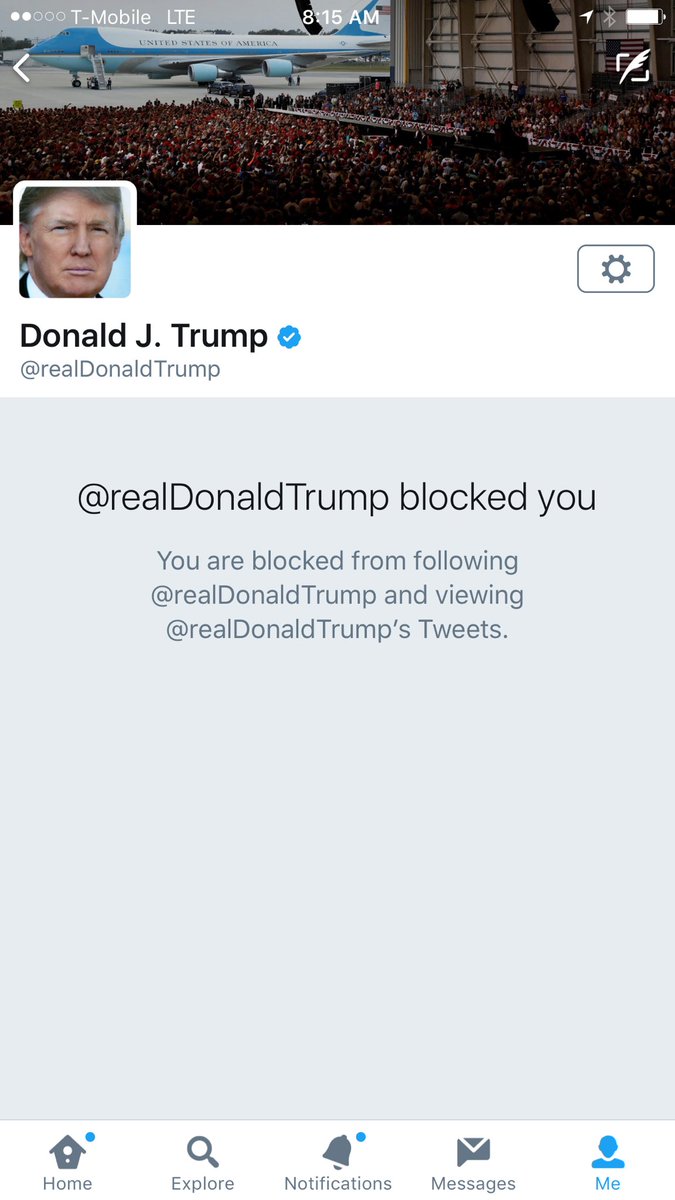
The press room in the Whitehouse is an official communications platform of the White House. With that ruling as precedent, can I barge in there? I can even behave better than Jim Acosta.
For this reason, I see Facebook's blocking of specific voices as a potentially positive trend. There used to be a credible hypothesis that social media platforms could be neutral, many hoped this would be the case. However, it's now becoming clear that the hypothesis is wrong.
Social media platforms are not neutral, nor should they be. If Fox News can cater to pro-Trump voices, and NY Times can cater to pro-democrat voices, Facebook and other social media companies should also be allowed to regulate the content on their platform.
The fact that Facebook is now taking an editorial stand, and rejects the premise of being the platform for everyone, will allow other companies to fill the remaining space. I look forward to the day when Facebook chooses to focus on sharing family photos and inconsequential personal minutiae, and delegates all politics and news to other services.
You describe something a shade worse than facism.
Platforms like Facebook, YouTube, and Twitter are basically monopolies. They are the only services in their class to take seriously if you're looking to gain a following. If they didn't exist, alternative services would spring up. But alternative services know they can't compete with FB/YouTube/Twitter, so none exist. When people say "if you don't like FB's rules, use another service" it ignores that Facebook is the reason there isn't another service and thus has some responsibility to uphold values we've collectively decided as a society are important.
The issue is not whether Facebook is breaking the law but whether philosophically the market leader in a category should get to decide who can use their product when their product category is fundamental to modern life. Saying "no one is owed a platform" brings us no closer to an answer.