Because I have. And I'll tell you right now that I've never seen one work. Someone is always unhappy deep down (and usually everyone is). They'll tell people its great and that they're just squares for not joining in, but if you know the parties involved you'll see they're unhappy with their partner and looking for something elsewhere (but the source unhappiness persists) or they're doing it because they're afraid of losing someone (in which case they're secretly jealous and afraid). Not things that make for a happy relationship.
Now, I don't have a horse in this race. I've always been a 1 person kind of guy, and my interest in this has always been as an outsider that just wants my friends to be happy (and if that was an open/many sided relationship that is 100% not an issue). If these relationships had solved their problems or even made them one iota happier than they had been I'd be as encouraging as anyone.
My experience is the same.
For married couples that became polyamorous after getting married, in every case I know of (3), the person initiating the polyamorous relationship was able to find outside relationships easily. The person's spouse wasn't able to. After a few years of that arrangement they've all gotten divorced.
It’s absolutely not for everyone, and anyone who says folks are “too square” are needlessly self-righteous. There’s nothing inherently good or bad about polyamory. It’s frankly playing relationships on hard, and you need to be extra committed to working things out early and often. With the right personalities, it can force better relationship health because of the high risk, high reward nature of the lifestyle. I credit poly with giving me and my wife the skills to have hard conversations early and work through problems in good faith, and we do our best to conduct ourselves the same way in all our relationships in order to practice polyamory ethically.
I also take issue with you saying it can “never” work. It absolutely can, but as I said, it’s not for everyone. It also doesn’t mean every relationship lasts forever. Looking at any relationship in isolation, it’s just dating; people fall in and out of love naturally, and there’s very normal feelings of pain and loss sometimes. Those same feelings don’t stop monogamous folks from dating, and it’s the same in poly. But when that fallout does occur, there’s a wider safety net of people who are close to you and care about you and have more intimate understanding of you than having them as a friends alone, so there are definitely advantages if you put in the effort.
Because it does involve very different configurations of relationships when there’s more than one, poly requires rethinking what relationships mean generally, and it allows for a wider variety of relationship types, and I don’t just mean a linear friends with benefits to committed marriage. I mean accepting a broader range of human interactions and expectations as part of a valid relationship.
The result, if you’re willing to do the work and if it’s something you WANT to do, is a very rich set of experiences and deep relationships you might not have if you were monogamous.
So in short: it can work, it’s not for everyone and requires way more work than monogamy, and it is also inherently no better or worse than monogamy.
It is my perception that a large fraction of marriages that end in divorce, do so because one or both people aren't willing to put in the work that is needed to maintain the relationship. Requiring more work... at least for the large majority of people, that's a fatal flaw.
A monogamous relationship where everyone isn’t having their needs met can continue in perpetuity, for one reason or another. Such a polyamorous relationship is more unstable and likely to end more swiftly and decisively. It’s possible to see that as a good thing.
(If you buy this reading, “open relationships hurt marriages” isn’t a story about failing poly relationships, it’s a story about monogomous relationships that already failed without anyone noticing.)
In my experience, poly relationships fail faster, when one doesn’t do the work, than monogamous relationships, which can linger longer with dysfunction that doesn’t get addressed. But I think it’s also important to acknowledge that these aren’t ever hard and fast characterizations—these have been my views from first- or second-hand experiences with poly, but human relationships vary considerably, and my experiences (and insights) certainly won’t match everyone’s.
Well it kinda makes sense. If you have other options, or even already have another intimate partner, that makes it a lot easier to just bail out of a relationship that isn't working out, instead of sticking around hoping things change.
Most people are barely able to put in any work in a relationship, so it's not surprising they won't be able to put in even MORE work to make a polyamorous relationship work (really work, and not just pretend they have one)
To my mind, it’s just reality.
Relationships take work. Intimate relationships take more work. Having a greater quantity of relationships takes more work.
Now, as it happens, I tend to believe that human relationships are the reason to be alive, so I think it’s good for humans to put lots of work into relationships and community (of any sort, regardless of levels of physical intimacy).
Relationships are, by human nature, not permanent either way - we all die in the end, so IMO it's unreasonable to expect them to last 'forever' anyway.
If you found your niche in polyamory - good for you!
I do find it interesting, because women actually stand to benefit more from relationships like this: resource sharing, being able to take extended time away from work for child-raising, having more adults in the house to cooperate on raising children together, etc. Raising kids in a modern dual-income 2-person family is extremely difficult and stressful (and costly, with day care); I honestly don't know how people do it.
*edit
Now I've seen a few open couples that had the exact issue you described. One side gets jealous because the other found someone to bang that night but they didn't / couldn't. It seems like they forget they're in a relationship and leave it up to the partner to fend for themselves.
If one partner is frequently spending the night elsewhere and the other partner is sleeping alone all these times, that seems obviously a recipe for disaster.
I would basically say that every relationship I know of that started with both parties happy to be polyamorous had a happy story arc, whether it ended eventually or not (N=~8). Sometimes a non-primary partner would be unsatisfied and move on, and occasionally primary relationships evolve to something less than primary, but that’s “working as intended”, by my book.
Now, I will agree that trying to fix a broken monogamous relationship by opening it up is a recipe for disaster. Perhaps all the polyamorous relationships you’ve observed started out monogamous?
It’s also true that polyamory is gargantuan amount of work, it’s in many ways a bigger commitment than monogamy. You have way more dyads needing active and thoughtful communication, and so people whose motivation for polyamory is not wanting commitment are terrible at polyamory.
But once you get past those two hurdles (doing polyamory under duress, thinking polyamory is less work, when it’s more), it works great for people who are into it.
I will admit that what I said before is all theory, not experience from practice. When I see poly people on the dating sites, they're way too "out there" for me to have any interest in them.
I have read though that there are successful poly relationships, and that relationship counselors generally agree that the successful ones have the best communication skills of all their clients. All the stuff I've read from them highly emphasizes communication skills.
1: You learn a lot about yourself and unpack all the stuff you've buried over a lifetime, figure out what you want, and are forever changed for the better. Maybe this means you decide poly isn't for you. This is how it went down for me.
2: You double down on all your insecurities, ruin everything, and blame polyamory for it. Most of the negative stories you hear come from this. All polyamory does is amplify what's already inside. It's like getting superpowers. A jackass with laser vision was already a jackass without it.
I think you're onto something here: standard monogamous relationships make it easier to hide problems or ignore them, and you can't do that with polyamory.
I don't think it would work for most people, though. You need to be effective communicators and good at understanding your own emotions. That's not true for the majority of the population.
Well, back to my original comment that spawned this mega-thread, where I opined that we'd be better off if poly were much more mainstream, maybe if that were the case, people would be forced to become more effective communicators in order to stay in relationships.
They met at a strip club, and right off the bat they both said what they were and that was that. Now they're one of the more happier couples I've seen. Been married for 12 years and still doing the open thing.
But I have seen many many more open relationships come crashing down over night.
Unfortunately, jealously is wired deep into our lizard brains by evolution because it has enormous survival value for both sexes, though for different reasons. Men wan women to be monogamous so that they bear only their children, and women want men to be monogamous so that they support only their children.
[Addendum, since this comment seems to be getting a lot of attention]: When I was in college I had a long-distance relationship. Because we were 2000 miles apart it seemed silly to maintain exclusivity. People have needs. But when I found out one day that my girlfriend was out with another man I found myself overcome with jealousy. The intensity of the feeling took me completely by surprise. I was literally paralyzed by it for several hours, as in I sat in the hallway of my dorm room and could not move. This is not something I chose for myself. The intellectual part of me realizes that everyone would be better off if we didn't feel jealousy. But we do. It's not something we can simply choose to put aside.
Not actually the case, given what we know of the incredible variety of sexual/reproductive practices in pre-modern societies.
Its unfortunate that we make the mistake of observing current cultural behaviour and transhistoricising it onto all previous societies, presuming that their social relations must have been just the same as ours. EvoPsych in particular seems to be littered with this kind of fallacy.
Reference?
I don't think these one-size-fits-all approaches work regardless of the approach. Social acceptance of ... whatever people are comfortable with should be the aim.
How many people are miserable in monogamous relationships?
If this is what one wishes, and you don't already live in the Bay Area, then you should come here. I feel that this is what most people around me wish for.
That being said:
Poly has severe complications that most people in it don't really advertise. High status, attractive men are much more likely to get partners. This can lead to a dynamic where an average looking male partner is theoretically allowed to date other people, but if he's honest with potential partners about being in an existing open relationship then the pool of women willing to date him evaporates. Meanwhile, his female partner ends up dating men that in a normal monogamous context would be difficult for her to attain, potentially destabilizing the relationship.
Then you throw sex into the whole equation. Reasonably good chance that you're not going be the best sex your partner has ever had forever. Or even if everything is great, you could be someone else's best sex ever, and it could destabilize their primary relationship and it could cause real hurt to both of them.
Meanwhile, less than average looking or low status men date even less than they used to. The whole incel movement will just get worse if the whole world goes poly because men are generally less picky than women and are happier with lots of casual partners.
This isn't always the case, of course. Some people can handle jealousy. Some people can compartmentalize different sexual experiences, but most humans struggle with it. Monogamy has a stability that I don't see as frequently with poly relationships. Though many people cheat, of course.
I believe already having one or more lovers makes you much more attractive since the fact that those people chose you (among others) means you are probably a good choice.
Also, it helps you be outcome-independent (i.e. you don't care as much about whether a girl you are talking to wants to have sex with you, since you already have other girls for that), which is thought to be at least part of what makes males attractive.
Of course you won't be able to have fulfilling and honest relationships with people that insist on monogamy, but the opposite is true as well.
> I believe already having one or more lovers makes you much more attractive since the fact that those people chose you (among others) means you are probably a good choice.
Attractive to steal or attractive to share? That's an important and relevant difference.
So you and the person you were responding to can both be right. You're made "more attractive" but the "pool of women willing to date [you still] evaporates.
This seems to be saying that women should be required to "settle" for lousy men, instead of going for better men and accepting that they have to share them.
If a woman has a choice between being a co-wife for a guy who's reasonably attractive and well-employed and treats his partners really well, or a guy who's a drunk bum but will be monogamous with her, which is the more sensible choice?
Also, another factor I think is being ignored is the fact that, over the age of 30, there's more women than men (and this gets progressively worse as the age increases). Monogamy necessarily leads to a lot of unpartnered women.
Though in some respects you're setting up a bit of a false dichotomy. It isn't that women can get these great guys now with no downside. The reality on the ground looks a lot more like women that want a single, longterm partner who is fully faithful to them find that the very attractive poly men that they date never want to settle down. They want to continue to be open to other relationships. I'm not sure if women really win in this hypothetical future. Most of the high status poly men I know end up with a hot young girlfriend and an appropriately aged wife and tension builds as time goes on.
I want to make it clear that none of what I'm saying is firmly grounded in a clear understanding of the truth. I'm trying to express the muddy way I understand things without assuming too much. I'm sure I'm missing part of this, though I'm not sure which part.
But my point is this: saying that polyamorous relationships "work out great if you are a high status male" implies that they invariably do not work out great if you are a female, and the Marsten family is a data point that refutes that (implied) part of the claim. It might be the case that polyamory generally works out better for high-status males than anyone else, but so what? Playing football generally works out better for men than for women too, but that's no reason not to let anyone who wants to try to play football.
Also, remember that, over the age of 30, women outnumber men. By the age of 50 or so, there's a clear majority. Older women would be better off if they shared mates.
Finally, remember that polyamory is not the same as polygamy. It could also benefit men who want more space in a relationship, or have had failed relationships because of this, since with polyamory your partner doesn't have to be upset that you don't spend so much time together, as they can spend time with their other partner(s).
Part of my argument is that in the right circumstances the partially sexually mediated drive for status in males turns violent. It seems like things like marriage and monogamy restrain this impulse and we all benefit from it.
Notice that I really don’t see marriage or monogamy as centrally enforced but rather as an emergent pattern of behavior that has been adopted by most societies and then codified into law. I presume it was this widely adopted because the individuals doing the marrying believed it was the best option at the time. Overall I would say that although the institution has to evolve to accomodate women’s control over their reproduction and the vast economic potential women have to offer, we are probably not so special and different now that we ought do away with it.
Regarding your point about aging, I actually think that should take a back seat to the wellbeing of children. It still seems to me like monogamy and marriage are the best vehicles we have today for raising them. Even if polyamory could potentially provide some benefits to the parents, I think those are the type of sacrifices that people gladly do for the well-being of their children.
The way I see it, the reason our society seems to be falling apart now is that women now have power and wealth, and aren't forced to settle for lifelong marriages to shitty, abusive men and being relegated to being full-time mothers whether they want that life path or not.
Personally, I’m mid-30s. I’ve been in a long term relationship that, had I lived decades prior, would have been a marriage and ultimately a divorce. She wasn’t right for me, but it was hard to discern at first. Now, if/when I get married, it’s for life - divorce isn’t on the table, and I need to find someone that I’m comfortable marrying with that constraint.
Either it will work out and you'll be happy and you'll recommend it to everyone.
Or it will destroy your life.
If marriage was "cheap" to establish and break up people could do it naturally and peacefully, eventually and successfully move to stable ones if the first attempt doesn't work out.
When the risk taking a particular action gets high enough it's completely understandable why many rational people would avoid testing their luck.
... because people aren't getting married for the wrong reasons. Previously, if you weren't married by 30 there would clearly be something wrong with you. It is generally becoming more acceptable to either have no interest in relationships, or to hold out for the right person. This is a healthier outlook on long-term relationships. At least with most of my friends.
If you don't ever want to get married, then don't.
If you never meet the right person, then don't get married.
It seems like I'm paraphrasing your first paragraph; but I'm not: both the decrease in marriage rates and the decrease in marriage failures are caused by this healthier perspective. The causation isn't the decline in marriage rates (because it has its own causation).
Poly is another matter entirely. I strongly believe that mono and poly are sexual identities just like any other (straight, homosexual, trans, etc.). Pairing a poly and mono together in a marriage is a great way to see things end in tears. You should be able to openly and unashamedly share what you are, so that everyone involved can make a mature decision based on this crucial factor in compatibility. Poly marriages should be legal (and should be legally documented as such). Mono marriages should also be legal (and continue to be documented as they are today).
Cheating on a partner in a committed relationship is not polyamory. Polyamory is a relationship predicated on communication about boundaries and desires across the relationship chain.
We’re not socialized to communicate about relationships very well, and especially about intimate relationships, so this is sometimes hard for people to imagine.
It may be hard to know two generations removed, but I’m curious: Are you saying your grandfather’s potential paramour broached the subject with her husband, without first being emotionally or physically unfaithful, and the husband went after your grandfather?
Or are you saying the husband was actively supportive of a change in the commitment at one point, then changed his mind?
If it’s either of those two, then OK, I take your point, people can be violent, and opening Pandora’s box can bring out that violence.
But if there was cheating, even if only emotional, without getting buy-in from an existing partner, than I don’t see that as a ding against polyamory (anecdotal or otherwise).
To be clear, I haven’t been involved in a polyamorous relationship myself in decades, so I don’t really have a dog in a fight here. But I have seen polyamory work well for many of my friends.
I read the book "Sperm Wars" a long time ago, but I still remember their argument that humans are mostly monogamous by nature, and that all the social factors we attach to monogamy and marriage are just rationalizing what we tend to do anyway. They also point to other species that do this, since it's a common misconception that animals aren't monogamous.
FWIW, I'm not against polyamory per-se, but I personally reject the idea that it's the solution to having unrealistic expectations. In my mind, thinking that you have to be satisfied in every way is the problem, not thinking your partner has to be the one do to it.
I think there's a reason societies haven't adopted them en masse, and resorted to the more traditional model all over the world and all around history, with few (and insignificant) exceptions.
Sure it is. They argue that the commonly held claim that the divorce rate is 50% is no longer accurate. Sure, one of the factors affecting this decline may be fewer marriages, but that doesn't change whatever the divorce rate actually is. I get your point that there are more nuances to the bigger picture, but when looking at one isolated statistic, citing the wrong number because there are fewer marriages is simply not accurate.
The argue by obscuring the larger picture meant by those making the claim.
There is a big difference between a specific statistic (divorce rate) and the larger picture (in this case, each of us is probably interpreting this differently). A specific statistic is purposely isolated, and then can be used as one piece of data among many to analyze whatever one might view the larger picture as.
For the divorce rate specifically, if there are fewer divorces because there are fewer people entering into poorly chosen marriages, wouldn't the resulting decline in the divorce rate still hold some significance to you?
There is the concept of PACS in France, which is a legal association between two people, that doesn't have any predicate on sentimental relationships.
Of course it is mostly used as a lighter version of marriage, and ersatz for people who can't marry in the first place, but on the legal framework it's open to any pair of two people.
I'm bringing it up because the main issue with open relationships is who gets legal standing for anything official (even trivial stuff as legal representation, inheritance, shared resources etc.). A system like PACS lets you have open relationships while setting a pair of strongly binded people for when the proverbial shit hits the fan.
And if you're not ready for polyamory, maintaining a few good friendships can help with this and lot. Arguing politics may be super fun for you but maybe your partner hates it. So scratch that itch with a Sunday coffee group.
> Personally, I think we'd all be a lot better
Soon, only the wealthiest will be able to find partners.
One way would be to raise kids in commune, but even then a super rich commune will beat any other. They would have access to best medical care, the best trainers, the best pretty much everything.
The whole idea of polyamory is that you can have deep, committed relationships with multiple people, but since your time is limited, you can only practically have 2, maybe 3 partners like this.
It's still plausible that the recent trend is an improvement (and that we're therefore closer to the broader goal of general welfare, if not high marriage rates). There's less cultural pressure to marry, and so people abstain from marriage whose marriages likely would have ended unhappily, in divorce. A happy marriage is probably better than being single, but being single is probably better than an unhappy marriage.
How is this different from being single? And what indication do you have that this would be a good idea?
Anecdotal I guess, but people who label their relationships this way have been without exception some of the most dysfunctional people I’ve ever met living in extremely unstable living conditions and breaking up and moving constantly.
single is a lot closer to "relationship anarchy". there are all sorts of variations of "poly" though, some of which people have tried to put some hierarchical factors in place.
as a civilization, I don't think we have nearly enough data to suggest that it's a "good" idea... but it's certainly something I'm open to trying (p*unintentional).
I agree entirely with this, but just as civil rights and legalizing recreational drugs took forever (and is still ongoing), it's going to be decades of effort to dismantle the societal expectations of marriage while still enabling the benefits that come/came along with traditional marriage (legal, financial rights).
Relationships are hard enough with just two people, adding more people doesn't make it easier, so you have to provide resources to help cultivate that stability society wants to express (insert diatribe about lacking mental health funding here).
EDIT: Regarding raising kids in a poly family, "it takes a village" [+].
It starts to break down for child custody as well as medical directives, end-of-life decisions, hospital visitation. You also don’t get marriage related tax benefits or the ability to hold title to real estate or financial accounts as “tenants in the entirety” (which is permitted only in some states, solely for married couples, that protects joint assets when only one person has claims against them), which is important depending on the creditor laws of your state and how they handle claims against a member of a multi member LLC.
People can use different terms to distinguish between different things, but that doesn't necessarily make any of those things "second class," full stop.
All label the upper/dominant class uses to show they are giving those below them everything they are entitled to, except actual equality, while firmly keeping them where they belong.
Rather, this reads as a dehumanizing portrait of women as fickle pursuers of status.
How I actually observe it working is that men who are open, thoughtful, emotionally vulnerable, and communicate without animosity can have lots of intimate partners.
Possibly not the specific partners they had their sights set on, though, which is where the “dehumanizing” part comes in.
https://blogs.sas.com/content/sastraining/2014/10/16/how-do-...
Observations like that have been rotating in that market for awhile, including with big players like OKCupid. Women are picky, men are not, but with contraception women can afford to share, resulting in skew.
What you're observing is the criterion for attraction looks like they're grounded in compassion, but that doesn't serve as an explanation against the distribution and is instead subservient to it. For example, it could potentially reflect to what extent men are compassionate is somehow on a Pareto distribution, which isn't out of the question. But considering that this trend holds on websites such as Tinder as well as OKCupid, it seems to be general to all female preference regardless if they're going for carnal or intimate pleasures.
I’ll happily concede that if you restrict yourself to the intersection of men looking for casual encounters with similar aged women looking for casual encounters, you’ll find winner-takes-all effects.
But there are lots of women not looking for casual encounters, and I don’t accept the proposition that polyamorous women are removing themselves from the dating pool for less than perfect men. It appears to be very much the opposite.
It’s just that casual encounters are really, really different from polyamory. “Willing to have casual sex with multiple partners” != “Interested in a polyamorous relationship”.
There is one unique alternative here and that's the landscape of emotional needs is somehow much more diverse than the landscape of physical needs. Then it would make sense to maximize among many partners as it's unlikely that a single individual can have all the skills necessary to satisfy a long list of independent needs.
Although even then I'm skeptical, the polyamorous couples I've seen don't seem to last long (~5 years) and eventually the male chooses or vice versa.
Doing so is going to require a LOT of trial & error. Open/poly relationships introduce all sorts of emotional factors which (I think) most people aren't prepared for, even if they could be.
Our political institutions are wholly unprepared for a reality like that. Can you imagine the difficulty a parent might have instructing their child's preschool: "on of the moms or dads will pick Kiddo up at 3 every day" ?
Certainly it's possible that different institutions are possible, or even better. But it's not the case that our society has any historical examples of successful, publicly polyamorous (and especially, non-hierarchical) role-models.
It definitely follows from situations where women are expected to have one partner and men have many.
why would that be the goal?
That's not to say you have to get married.
If the new norm were flexible open relationships however, that wouldn't necessarily correlate with worse outcomes for children. I think we just don't know.
Okay, so I’m being a bit hyperbolic. But still — in a world which is increasingly isolated and people are more atomized and mentally ill than ever, is it really a good idea to abandon “the family” as it currently exists?
>But still — in a world which is increasingly isolated and people are more atomized and mentally ill than ever, is it really a good idea to abandon “the family” as it currently exists?
Given the fact that more children than ever are growing up in broken homes or with single parents, I'd say the traditional monogamous family unit is failing, and unless you're willing to go back to the days when women weren't allowed to have real jobs, it's not coming back. Having two parents both work and try to raise kids with no help whatsoever is incredibly stressful, so it's no surprise to me that this whole arrangement is falling apart.
To me, if polyamory were more widely adopted, it would actually be better for a stable society and raising children, because you could have larger family units (I mean with more adults), where the adults would be able to share parenting burdens and finances better, somewhat like the "old days" where extended families resided together and grandparents helped with child-raising.
Of course, the big problem I see here is that it's hard enough to find one compatible person, and trying to put together 3, 4, or 5 people in such an arrangement would be really difficult, but it is my belief that if poly were widely accepted, this might not be quite so difficult because people might have lower expectations of any one partner, and be more willing to compromise and work together. Of course, I could be completely wrong...
But again, it's clear to me that what we're doing now isn't working. And we can't go backwards.
I'm not saying there's merit to it, but it has certainly bolstered the "importance" of marriage and children.
>So sure, the divorce rate has fallen(...)
Personally I think re-establishing the importance of family values and monogamy will make our future a lot better off. Not only for the children but for society as a whole.
It seems far more likely that women just have more options than they did in our parents and grandparents time. Reversing that might improve the figures but it would also come with some undesirable side effects such as extending abusive relationships.
Which is why the declaration of human rights recognises the family as the fundamental unit of society and requires the state and society to protect it. (Article 16.3). Sadly this article seems to have been forgotten.
That's unhelpful hyperbole.
You serious? Just to point out a few of the glaring problems with your position:
1) you're essentially offering up a straw man to over-broadly condemn a wide range of social practices (which you haven't demonstrated much understanding of);
2) your general assertion that married women (globally, I assume) were generally not allowed to "hold a job" is questionable on many levels (for instance, on a family farm, do you think the husband had a "job" but the wife did not?);
3) if you weren't aware: slaves are legally property that can be bought, sold, and killed if it suited their master, serfs weren't slaves and neither were wives.
which values?
The traditional family has (and always will) be the strongest institution for children.
Not only that but the #1 source of violence and terror in the world are single males, marriage overwhelmingly acts as the cornerstone of the civilizing process for both men and women.
What you suggest seems to go again the Universal Declaration of Human rights (Article 16.3) which states that:
"The family is the natural and fundamental group unit of society and is entitled to protection by society and the State."
However, how do you define a family? Polyamorous families exist, families with parents in open relationships exist, and they are just as much families as monogamous families.
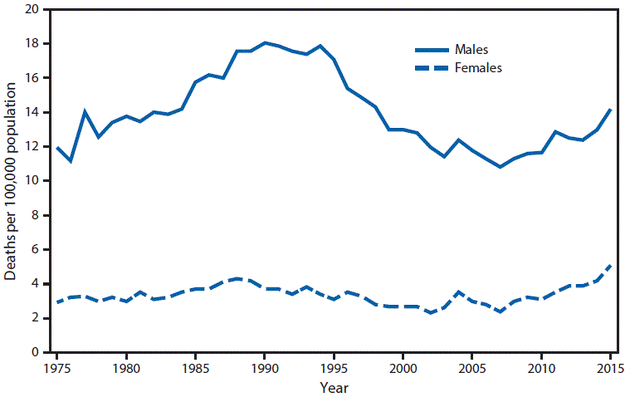
You can see that suicide rates peaked a few years after the change in divorce laws, but it is ticking up again. Highest ever for females.
So we now have kids who don't do much besides social media and are depressed/suicidal. My theory as to why female suicide has ticked up: their self esteem has cratered due to the tits-and-ass parade on social media.
Nevertheless, the youth is not still overall better behaved then previous generations, for all the complaining about social media.
Frankly, it just seems that you hate women so much, that you don't see man standing next to her who clearly need more help.
So sure, the divorce rate has fallen, but if your goal is a society where people are in stable marriages, we're farther from that goal than ever. Traditional marriage is slowly dying as an institution.
Personally, I think we'd all be a lot better off if we adopted open and polyamorous relationships in a large way. They're better for resource-sharing and avoid the problem with thinking that your partner has to satisfy you in every way.