News for hackers. Stuff that matters.
Re:Seven earth-sized planets discovered circling a star 39 l... by bcaulfield on Wednesday February 22, 2017 @01:20PM (#13707709)
So, basically, this is cooler than just about any world that's been depicted in sci-fi.
Re:Seven earth-sized planets discovered circling a star 39 l... by dmreedy on Wednesday February 22, 2017 @01:38PM (#13707909)
I guess J.J. Abrams is somewhat forgiven for this, then:

http://vignette4.wikia.nocookie.net/startrek/images/2/29/Vul... [edited for direct .jpg]
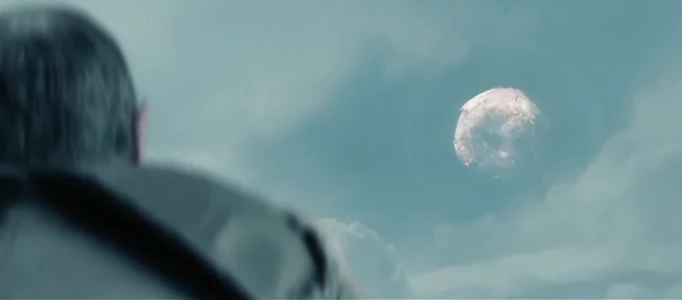
Re:Seven earth-sized planets discovered circling a star 39 l... by DougWebb on Wednesday February 22, 2017 @02:38PM (#13708502)
I always thought that Firefly's scenario of a bunch of Earth-like worlds in close enough proximity to have regular trading ships flying between them was unrealistic. Now, not so much. This system even fits in with the "Abandon Earth en-mass, move to new set of worlds" backstory.

So, what did J.J. know, and when did he know it? And for that matter, how did he know?

Re:Seven earth-sized planets discovered circling a star 39 l... by roninb on Wednesday February 22, 2017 @03:45PM (#13708979)
Just making sure, but I hope you know that JJ Abrams had literally absolutely nothing to do with Firefly and wasn't even tangentially related to its creation nor production.

Also, I'm relatively positive that JJ (in the sci-fi works he actually, well, worked on), himself, knew nothing (see Armageddon for sources) and that his script supervisors dealt with any discrepancies with reality JJ had.

Re:Seven earth-sized planets discovered circling a star 39 l... by DougWebb on Tuesday February 28, 2017 @10:34AM (#13754441)
Man, I feel dumb. Yeah I meant Joss Whedon. Too many J's in sci-fi I like, I guess.
Re:Seven earth-sized planets discovered circling a star 39 l... by shawn-furyan on Wednesday February 22, 2017 @06:33PM (#13710288)
Corrections aside, it is an interesting observation that Firefly is less outlandish with this discovery (not a criticism, Firefly is optimized for fun, not scientific plausibility). Still, assuming light speed travel, Firefly's inhabited planets are still a heck of a lot closer, since the crew doesn't seem to noticeably age between the half dozen or so star systems that they visit, and don't appear to have any kind of tech to reversibly[1] halt their metabolisms.

[1] the reversibility it the hard part. Tech for halting metabolic processes irreversibly has been around for quite some time ;)

Re:Seven earth-sized planets discovered circling a star 39 l... by Dylan16807 on Wednesday February 22, 2017 @07:29PM (#13710590)
> Still, assuming light speed travel, Firefly's inhabited planets are still a heck of a lot closer, since the crew doesn't seem to noticeably age between the half dozen or so star systems that they visit, and don't appear to have any kind of tech to reversibly[1] halt their metabolisms.

Closer than what? This system is significantly smaller than Firefly's. Or do you mean closer than this system is to Earth? Don't worry about that, since in Firefly it's one super-system with five main stars. http://i.picresize.com/images/2013/02/06/BMhCv.jpg It's about 55 light hours across.

Re:Seven earth-sized planets discovered circling a star 39 l... by npunt on Thursday February 23, 2017 @12:59AM (#13711951)
I never realized Firefly was in a super-system. Gravity would rip that thing apart in an instant.
Re:Seven earth-sized planets discovered circling a star 39 l... by kuschku on Thursday February 23, 2017 @08:45AM (#13713769)
They actually did numeric simulations of that system, and it seems to be stable for several millenia at least (their entire simulation time).
Re:Seven earth-sized planets discovered circling a star 39 l... by cgriswald on Wednesday February 22, 2017 @10:24PM (#13711378)
> Firefly's inhabited planets are still a heck of a lot closer, since the crew doesn't seem to noticeably age between the half dozen or so star systems that they visit

The 'systems' in Firefly are really all one star system. The system includes a central star orbited by planets, four other stars, and a host of "protostars" (they really mean brown dwarves). I've tried, and can't imagine a scenario where, even if such a system could form, that it could be configured in this way. The barycenter of the masses of this system can't possibly remain in the central star indefinitely, for starters. And the whole thing sounds hostile to planets - I imagine them being thrown out of the system constantly. But if you accept that, and you accept travel at some fraction of c, then you wouldn't expect them to age much like they would traveling between systems.

Re:Seven earth-sized planets discovered circling a star 39 l... by Zardoz84 on Thursday February 23, 2017 @03:55AM (#13712564)
Proxima Centauri have a earth mass planet : https://en.wikipedia.org/wiki/Proxima_Centauri_b
Re:Seven earth-sized planets discovered circling a star 39 l... by cgriswald on Thursday February 23, 2017 @10:55AM (#13714874)
The Firefly system is one in which stars are orbiting stars are orbiting stars, and among these stars are many many planets and moons. Presumably the distances involved here can be traveled in a matter of days or weeks at some fraction of c. So, they're fairly close.

In contrast, Proxima Centauri orbits from a distance of about a quarter lightyear, and we've found a single planet orbiting very tightly. We've also found a single planet around Alpha Centauri B, also orbiting very closely. There may be more we haven't found, but probably not nearly as many as in the Firefly system. Firefly seems to use the idea that more stars mean more planets, but more stars and planets during formation means more chaos, more things to swallow up or rip apart planets, and more mass to throw them out of the system.

I don't think the Firefly system is necessarily impossible. You can even construct models such that the white star is at the focus of all other orbits (you know, if you're the Alliance and you need to do that for political reasons). (An Earth-centric model of our solar system needn't necessarily be wrong in terms of its ability to predict the position of bodies in the solar system - It's just needlessly difficult and convoluted.) I just think the Firefly system is highly improbable.

Re:Seven earth-sized planets discovered circling a star 39 l... by kybernetikos on Thursday February 23, 2017 @02:17AM (#13712251)
> assuming light speed travel, Firefly's inhabited planets are still a heck of a lot closer, since the crew doesn't seem to noticeably age between the half dozen or so star systems

If you travel at light speed from your own point of view you arrive instantly due to time dilation, so even if it takes years according to an outside observer (because the distance you're travelling is light years) you wouldn't age at all.

From a photons point of view, it is emitted and absorbed by its destination instantly.

Re:Seven earth-sized planets discovered circling a star 39 l... by shawn-furyan on Thursday February 23, 2017 @09:21AM (#13714018)
Ah, yes. Forgot all about time dilation effects. In my defense, it was a pretty off the cuff response. Also, I would assume they aren't meant to be literally traveling at exactly light speed, but I don't know the relevant equations to figure out how that impacts my comment. Clearly, in this area, I'm a dilettante at best.
Re:Seven earth-sized planets discovered circling a star 39 l... by Arizhel on Thursday February 23, 2017 @06:02PM (#13718728)
>Still, assuming light speed travel, Firefly's inhabited planets are still a heck of a lot closer, since the crew doesn't seem to noticeably age between the half dozen or so star systems that they visit

My understanding is that Firefly does not have FTL travel at all, in fact that makes it rather unique among spaceship sci-fi. Also, they're in a single (though very large with multiple stars) system. They get around quickly because their ships are a lot faster than our slow-ass chemical rockets, but they're still traveling at sublight speeds, which is why it takes days or weeks to get places, instead of mere minutes (for example, at lightspeed, it would take less than 6 hours to get to Pluto). Notice that, in the show, they took paying passengers, and it took a fair amount of time to get between the "outer worlds". It was a lot like cargo ships of yesteryear, rather than modern airplanes, as far as travel time. They don't have tech to halt their metabolisms for the same reason we don't: they haven't invented it yet.

Re:Seven earth-sized planets discovered circling a star 39 l... by Kluny on Wednesday February 22, 2017 @05:52PM (#13710020)
Joss Whedon is the name you're looking for, not JJ Abrams.
Re:Seven earth-sized planets discovered circling a star 39 l... by sn9 on Wednesday February 22, 2017 @07:19PM (#13710535)
The worlds in Firefly were explicitly described as having been terraformed to be Earth-like (masses aside).
Re:Seven earth-sized planets discovered circling a star 39 l... by rasz_pl on Thursday February 23, 2017 @01:37AM (#13712101)
Re:Seven earth-sized planets discovered circling a star 39 l... by bcaulfield on Wednesday February 22, 2017 @03:46PM (#13708990)
Except bigger, with multiple planets in the sky at once.
Re:Seven earth-sized planets discovered circling a star 39 l... by dagurp on Wednesday February 22, 2017 @01:58PM (#13708147)
Firefox tries to download this file
Re:Seven earth-sized planets discovered circling a star 39 l... by dmreedy on Wednesday February 22, 2017 @02:11PM (#13708276)
Apologies, sloppy link-copying. Should be pointing to the .jpg now.
Re:Seven earth-sized planets discovered circling a star 39 l... by throwanem on Wednesday February 22, 2017 @02:01PM (#13708171)
It's a webp. Firefox doesn't support those.
Re:Seven earth-sized planets discovered circling a star 39 l... by kakarot on Wednesday February 22, 2017 @02:13PM (#13708287)
What? Worked just fine for me.
Re:Seven earth-sized planets discovered circling a star 39 l... by throwanem on Wednesday February 22, 2017 @02:15PM (#13708305)
In which Firefox version?
Re:Seven earth-sized planets discovered circling a star 39 l... by kakarot on Wednesday February 22, 2017 @11:34PM (#13711660)
51.0.1 32bit. Don't ask me why I'm running 32bit FF, this is news to me as well.
Re:Seven earth-sized planets discovered circling a star 39 l... by throwanem on Thursday February 23, 2017 @08:19PM (#13719930)
I'd be more inclined to ask why it worked for you in that exact version, but not for me in the very same one. (Mine might be 64-bit, but I can't see that making a difference here.)
Re:Seven earth-sized planets discovered circling a star 39 l... by kakarot on Saturday February 25, 2017 @11:00AM (#13732075)
I went to investigate for curiosity's sake but OP changed the link on us!
Re:Seven earth-sized planets discovered circling a star 39 l... by yellowapple on Wednesday February 22, 2017 @03:04PM (#13708700)
Worked for me in Firefox for Android (53, Aurora build).
Re:Seven earth-sized planets discovered circling a star 39 l... by throwanem on Wednesday February 22, 2017 @05:40PM (#13709939)
Maybe it's a prerelease feature, or maybe Firefox is falling back on a capability that at least some desktop OSes don't have.
Re:Seven earth-sized planets discovered circling a star 39 l... by SSLy on Wednesday February 22, 2017 @02:08PM (#13708242)
works on Arch Linux FF
Re:Seven earth-sized planets discovered circling a star 39 l... by pshposh on Wednesday February 22, 2017 @02:05PM (#13708219)
It doesn't work in Microsoft Edge either (yup I use it).
Re:Seven earth-sized planets discovered circling a star 39 l... by capote on Wednesday February 22, 2017 @02:10PM (#13708254)
Is this taboo? I also use Edge and find it great.
Re:Seven earth-sized planets discovered circling a star 39 l... by pshposh on Wednesday February 22, 2017 @02:37PM (#13708492)
I don't see many people using Edge. I mostly don't have any problems now that it has extensions for ad block and lastpass. Sometimes opening a new tab just mysteriously doesn't work (it sits with the tab open doing nothing) or the website barely works without Edge freezing up (CarMax.com).

The battery life is really good though.

Re:Seven earth-sized planets discovered circling a star 39 l... by nxc18 on Wednesday February 22, 2017 @02:07PM (#13708232)
Doesn't work on IOS either (chrome specifically).
Re:Seven earth-sized planets discovered circling a star 39 l... by mysterydip on Wednesday February 22, 2017 @04:07PM (#13709161)
One of the games I'm working on (a sci-fi mech and space combat action rpg) actually is set in a solar system like this. Cool to see one in reality relatively close by! I think it provides a lot of interesting situations allowing for basically a "space opera in a solar system".
Re:Seven earth-sized planets discovered circling a star 39 l... by arkh on Thursday February 23, 2017 @03:33AM (#13712505)
*Hollywood sci-fi

You get a lot more crazy worlds in written sci-fi. You can start with the Culture orbitals, some of the Commonwealth Saga worlds or Alastair Reynolds' inhibitors. If you count a neutron star with life on it, you get dragon's egg which is a must-read.

Re:Seven earth-sized planets discovered circling a star 39 l... by Sir_Cmpwn on Wednesday February 22, 2017 @11:11PM (#13711568)
Sounds like you haven't read The Three Body Problem (which is a shame, you should totally check it out).
Re:Seven earth-sized planets discovered circling a star 39 l... by chrisabrams on Wednesday February 22, 2017 @01:26PM (#13707783)
I was essentially thinking the same thing. I wonder if an elevator could be built between all of them?
Re:Seven earth-sized planets discovered circling a star 39 l... by Sharlin on Wednesday February 22, 2017 @01:33PM (#13707842)
They are still in separate orbits so the straight line between any two varies greatly in length... not to mention intersecting the star regularly.
Re:Seven earth-sized planets discovered circling a star 39 l... by longerthoughts on Wednesday February 22, 2017 @01:54PM (#13708096)
Regular shuttles for interplanetary travel timed with periodically favorable orbital positions?
Re:Seven earth-sized planets discovered circling a star 39 l... by tajen on Wednesday February 22, 2017 @03:06PM (#13708714)
At that distance, gravity must be really fun. Tides are not only for water, such tides can also change the height of mountains, the balance of high-rise buildings, infer on volleyball rules, make you fart because of changes in atmospheric pressure, or... be leveraged to generate electricity. Those guys have simili-infinite energy at human scale.
Re:Seven earth-sized planets discovered circling a star 39 l... by gydfi on Wednesday February 22, 2017 @04:26PM (#13709305)
Would they? I mean, we can see geological features on our moon, and our tides are orders of magnitude away from being rock-tearing events. I mean, the moon is small, but... how close do these planets approach, anyway?
Re:Seven earth-sized planets discovered circling a star 39 l... by scardine on Wednesday February 22, 2017 @05:10PM (#13709694)
The moon is not that small, it is 27% of earth's size. Any other satellite in the solar system is way smaller compared to the planet they orbit. I dare to say that earth and moon are twin planets instead of a planet and a satellite.
Re:Seven earth-sized planets discovered circling a star 39 l... by angry_octet on Wednesday February 22, 2017 @05:38PM (#13709923)
Re:Seven earth-sized planets discovered circling a star 39 l... by bergoid on Thursday February 23, 2017 @07:10AM (#13713259)
Unless you are excluding Pluto deliberately for not being "a planet", its moon Charon has half the diameter of Pluto. They are even both orbiting a common center of gravity outside Pluto.

https://en.wikipedia.org/wiki/Charon_(moon)

Re:Seven earth-sized planets discovered circling a star 39 l... by Mtinie on Wednesday February 22, 2017 @05:33PM (#13709884)
@ConceptJunkie

> The Moon is about 2% of Earth's mass, not 27%.

2% of mass, yes, but also 27% of the diameter.

You are both right.

Re:Seven earth-sized planets discovered circling a star 39 l... by mirimir on Wednesday February 22, 2017 @06:55PM (#13710405)
My first reaction was WTF?

Then 0.27^3 = 0.0197

And then, only 60% as dense (no core) so 0.0119 :)

Re:Seven earth-sized planets discovered circling a star 39 l... by saalweachter on Wednesday February 22, 2017 @11:42PM (#13711706)
One of my scale numbers is, everything between Jupiter and the Sun masses less than 2 Earths -- Venus, Mars, Mercury, the Moon, and all the asteroids mass less than the Earth.

And only just barely! You get to around 99% of the Earth's mass with the rest of the inner solar system.

All of the other rocky bodies in the solar system give you another 10% of Earth's mass out to Pluto and another 10% beyond.

Re:Seven earth-sized planets discovered circling a star 39 l... by Arizhel on Thursday February 23, 2017 @06:05PM (#13718756)
>One of my scale numbers is, everything between Jupiter and the Sun masses less than 2 Earths -- Venus, Mars, Mercury, the Moon, and all the asteroids mass less than the Earth.

Is that correct? Venus alone is about 90% the size of Earth, and Mars roughly 33%. It really seems like all those bodies put together should be greater than 1 Earth mass (but less than 2 Earth masses).

Re:Seven earth-sized planets discovered circling a star 39 l... by saalweachter on Thursday February 23, 2017 @06:58PM (#13719211)
That's size, not mass.

Venus is about 81% Earth's mass, and Mars is only a little over 10%. Mercury gets you another 5.5%, the Moon (as above) another 1.2%, and the asteroids are negligible.

In the outer solar system, it's basically all the Galilean Moons + Titan.

ETA: Hmm, or maybe those are surface gravity numbers you're thinking of?

Re:Seven earth-sized planets discovered circling a star 39 l... by Arizhel on Saturday February 25, 2017 @05:30PM (#13734242)
Yep, I was roughly equating mass with surface gravity, which I see now is incorrect.

I do find it really interesting and a little mind-boggling that the Moon, as huge as it is, with a good 1/6 of Earth's gravity, only has 1.2% of Earth's mass. Same with Mars: a good 1/3 of Earth's gravity, but a mere 10% of its mass. I really thought there'd be more direct correlation between mass and gravity than that. Of course, surface gravity is related to mass with both density and radius, but still, I would have assumed that the densities of these bodies would have been rather similar, as they're all small, rocky worlds.

Re:Seven earth-sized planets discovered circling a star 39 l... by saalweachter on Tuesday February 28, 2017 @08:29AM (#13753551)
The densities do vary by almost a factor of 2 (~3 g/cc for the Moon, 5.5 g/cc for the Earth), but the larger problem is that surface gravity is a linear function of the radius, and mass is the cube of the radius.

Consequently, the mass of an object with a given surface gravity is inversely proportional to the square of the density. If the Moon were the same density as the Earth, and had the same surface gravity as it does now, it'd actually mass less than it does now -- and Uranus, despite have 15x the mass of Earth, has a lower surface gravity, because its density is so low.

The rule of thumb for space is "any way your intuition can be wrong, it will be wrong". :-)

Re:Seven earth-sized planets discovered circling a star 39 l... by mirimir on Thursday February 23, 2017 @12:28AM (#13711854)
You just blew my mind ;)

What do we know about the gas giants' cores?

Re:Seven earth-sized planets discovered circling a star 39 l... by saalweachter on Thursday February 23, 2017 @07:25AM (#13713341)
Gas giant cores are weird. Based on models of solar system formation, we're like, pretty sure they started with rocky (or icy) cores that were dozens of times bigger than Earth. But we're not sure they're still there.

Due to the intense conditions inside a gas giant, we're not sure if they still have a rocky core, or if the cores have liquified or even convected away to mix with the gasses.

So the answer could be "there are dozens of times the Earth's mass worth of rocky material inside gas giants" or "there is no rocky material inside gas giants", or anywhere in-between. We need more detailed study of the gas giants before we can answer that question.

Models of solar system formation also suggest the Kuiper belt started with dozens of times Earth's mass, but we only see about 10% there now, and we only have pretty good guesses about what happened. (I mean, it almost certainly got ejected, but the "why" is harder.)

Re:Seven earth-sized planets discovered circling a star 39 l... by mirimir on Thursday February 23, 2017 @03:07PM (#13717258)
Thanks. I asked because searching seemed to be telling me that we have only theoretical arguments about gas giants' cores. That surprised me at first, but then I realized how little data we probably have. Basically, mass and its distribution, plus spectroscopic data about surface composition, right?
Re:Seven earth-sized planets discovered circling a star 39 l... by Sharlin on Thursday February 23, 2017 @04:00PM (#13717738)
Juno is hopefully going to tell us more :)

https://en.wikipedia.org/wiki/Juno_(spacecraft)#Scientific_o...

Re:Seven earth-sized planets discovered circling a star 39 l... by rosser on Wednesday February 22, 2017 @04:39PM (#13709410)
Close enough that the perturbations these planets induced in one another's orbits allowed the team to estimate their masses at between 0.4 and 1.4 Earth-masses. In astronomical terms, that's very close.
Re:Seven earth-sized planets discovered circling a star 39 l... by ccozan on Wednesday February 22, 2017 @04:52PM (#13709526)
So it possible to see Avatar like suspended rocks ? Somewhat orbiting some lagrangian point, which is very close to surface.
Re:Seven earth-sized planets discovered circling a star 39 l... by ConceptJunkie on Wednesday February 22, 2017 @05:26PM (#13709819)
The Moon is about 2% of Earth's mass, not 27%.
Re:Seven earth-sized planets discovered circling a star 39 l... by noobermin on Wednesday February 22, 2017 @01:50PM (#13708060)
One of the callers (a biologist, so not a crackpot) on TV suggested that given how close the planets were, he wondered if it were possible for there to be cross contamination between the planets given how close they are to each other. He referred to them being part of the same "ecosystem." I'm not sure how feasible that is as a non-astrobiologist, but it is an interesting idea.
Re:Seven earth-sized planets discovered circling a star 39 l... by walkingolof on Wednesday February 22, 2017 @01:52PM (#13708081)
Very likely, since this happens between Mars and Earth:

https://en.wikipedia.org/wiki/Martian_meteorite

Re:Seven earth-sized planets discovered circling a star 39 l... by flexie on Wednesday February 22, 2017 @02:11PM (#13708269)
Fascinating! Would vira or bacteria beable to survive travelling from Earth to Mars in or on a rock or vice versa?
Re:Seven earth-sized planets discovered circling a star 39 l... by rzzzt on Wednesday February 22, 2017 @02:49PM (#13708600)
Tardigrades do survive in space: https://en.wikipedia.org/wiki/Tardigrade
Re:Seven earth-sized planets discovered circling a star 39 l... by fsloth on Wednesday February 22, 2017 @04:39PM (#13709413)
Roughly quoting Neal de Grasse Tyson: Since so many bacteria survive outer space there is a good chance it's because of - yes - survivor bias. If only because early earth was bombarded so often that fragments of the planet with microbes took of in a meteor strike and returned home after a while in space.
Re:Seven earth-sized planets discovered circling a star 39 l... by dekhn on Wednesday February 22, 2017 @02:43PM (#13708540)
Short answer: almost certainly yes, although i presume this is an improbable event.
Re:Seven earth-sized planets discovered circling a star 39 l... by ConceptJunkie on Wednesday February 22, 2017 @05:27PM (#13709828)
It's not that improbable. They've found meteorites on Earth that have been identified as having come from Mars based on their mineral contents.
Re:Seven earth-sized planets discovered circling a star 39 l... by dekhn on Wednesday February 22, 2017 @06:00PM (#13710075)
Sure, I was referring to the part where the microbe survives the initial blast, the passage through space, reentry, and landing, and happens to land in a spot where it can survive.
Re:Seven earth-sized planets discovered circling a star 39 l... by sheeshkebab on Thursday February 23, 2017 @01:01AM (#13711957)
According to some research, microbes survival in meteorites is very likely (if they exist)

https://www.ncbi.nlm.nih.gov/m/pubmed/11543506/

Re:Seven earth-sized planets discovered circling a star 39 l... by dekhn on Thursday February 23, 2017 @09:42AM (#13714181)
I know enough biology to be skeptical of papers like that (although, I admit I was skeptical when papers from the 50s predicted interplanetary mass transport, and didn't change my mind until we found Martian meteorites). I'd like to see actual evidence of this.

I actually think the rock getting into space with the microbe embedded in it is not that unlikely (many rocks in the earth are laced with bacteria), nor the space transport. I think the excessive heat of rentry, the force of impact, and the difference in target ecosystems are what are going to kill the microbes.

Re:Seven earth-sized planets discovered circling a star 39 l... by eanzenberg on Wednesday February 22, 2017 @02:24PM (#13708382)
Possible, but cross-section for collision is way way smaller in the Earth-Mars system. Cross-section goes as r^-2 so the closer the bodies, the 'way better' it is.
Re:Seven earth-sized planets discovered circling a star 39 l... by hackuser on Wednesday February 22, 2017 @03:39PM (#13708945)
IIRC, that is a serious hypothesis for how life began on earth, seeded from elsewhere (maybe not Mars).

But certainly someone here knows more than I do about it ...

Re:Seven earth-sized planets discovered circling a star 39 l... by bradyd on Wednesday February 22, 2017 @03:59PM (#13709098)
The theory is called Panspermia

https://en.wikipedia.org/wiki/Panspermia

Re:Seven earth-sized planets discovered circling a star 39 l... by IndianAstronaut on Thursday February 23, 2017 @03:56PM (#13717699)
Considering the time scales involved, it wouldn't surprise me if multiple planets around nearby stars happened to be seeded with earth based bacterial/archaea life.
Re:Seven earth-sized planets discovered circling a star 39 l... by CWuestefeld on Wednesday February 22, 2017 @02:37PM (#13708487)
One of the presenters is an old friend from college. Folks were offering him money to mention "Zod, our Galactic Overlord" on the air. I guess that didn't happen?
Re:Seven earth-sized planets discovered circling a star 39 l... by noobermin on Wednesday February 22, 2017 @04:52PM (#13709524)
No unfortunately, I don't think they did. That would have been hilarious.
Re:Seven earth-sized planets discovered circling a star 39 l... by fsloth on Wednesday February 22, 2017 @04:41PM (#13709421)
The survivability of several organisms has been actually tested https://en.wikipedia.org/wiki/List_of_microorganisms_tested_...
Re:Seven earth-sized planets discovered circling a star 39 l... by nickff on Wednesday February 22, 2017 @01:54PM (#13708092)
There has been and continues to be cross-contamination between Venus, Earth, and Mars, so it seems likely that planets much closer together, and passing each other more frequently would have more 'communication' of materials.
Re:Seven earth-sized planets discovered circling a star 39 l... by RangerScience on Wednesday February 22, 2017 @02:02PM (#13708180)
Continues to be...? Outside of human action, what's the vector?
Re:Seven earth-sized planets discovered circling a star 39 l... by nickff on Wednesday February 22, 2017 @02:05PM (#13708215)
My understanding is that it is mostly due to solar wind, meteorite impacts, and various other infrequent events.
Re:Seven earth-sized planets discovered circling a star 39 l... by dekhn on Wednesday February 22, 2017 @02:47PM (#13708586)
Re:Seven earth-sized planets discovered circling a star 39 l... by colordrops on Wednesday February 22, 2017 @02:05PM (#13708218)
powerful meteor strikes spreading debris out of orbit.
Re:Seven earth-sized planets discovered circling a star 39 l... by Symmetry on Wednesday February 22, 2017 @03:48PM (#13709003)
And the debris isn't heated enough to be sterilized.
Re:Seven earth-sized planets discovered circling a star 39 l... by ilamont on Wednesday February 22, 2017 @02:14PM (#13708293)
Gene Wolfe mined this idea for some of his science fiction works, except it was alien life making the jump ... Fifth Head of Cerberus & Blue's Waters/Green's Jungles.
Re:Seven earth-sized planets discovered circling a star 39 l... by dTal on Thursday February 23, 2017 @10:29AM (#13714623)
Even if bacterial material were being transferred all the time, I think it'd be a stretch to call them the same "ecosystem" unless they were actually reliant on each other. But I'm not an biologist either.
Re:Seven earth-sized planets discovered circling a star 39 l... by OscarCunningham on Wednesday February 22, 2017 @02:41PM (#13708526)
Re:Seven earth-sized planets discovered circling a star 39 l... by cletusw on Wednesday February 22, 2017 @01:29PM (#13707800)
I imagine their relative distances change frequently, so probably not.
Re:Seven earth-sized planets discovered circling a star 39 l... by VikingCoder on Wednesday February 22, 2017 @01:40PM (#13707930)
Check out "Rocheworld."
Re:Seven earth-sized planets discovered circling a star 39 l... by Keyframe on Wednesday February 22, 2017 @02:12PM (#13708283)
Uh, Mongo when it flew by Earth?

edit: Mongo from Flash Gordon

Re:Seven earth-sized planets discovered circling a star 39 l... by the_watcher on Wednesday February 22, 2017 @06:40PM (#13710324)
Anyone else immediately think that we'd discovered Krypton when they read "red sun?"