I think this is a great comment, but I disagree a bit with the reasoning in this tiny bit of your comment.
I think that it is important that they show exactly how much they "cheat" with photoshop because they only "cheat a little". If you're critical of McDonalds, you will assume that they photoshop and that they photoshop a lot. To combat such a misconception it is important to show how little you need to photoshop by showing "all of it".
But other than that, I agree with you. Well done, McDonalds. I don't like your food, but I appreciate your honesty.
Viewers probably find themselves saying "That makes sense. I can see why they'd want to clean up the photo and missing seeds"
The get the benefits of being honest with none of the cost. It's a total win.
I used to be from the school of thought that this marketing was "bad" or misleading the consumer. I think quite the contrary now. I've found that most buying behavior is ridiculously irrational and that marketing is effectively just exposing that human weakness.
BMW ad that shows a smart middle aged man with a beautiful women? That actually can be true. You don't buy a BMW for it's utility (getting from A to B), you buy it for the potential experience (getting from A to B with a hot blonde). Otherwise you go with the Smartcar. BMW marketing is just giving you ideas of what that potential experience can be. It's up to you to use the tool to create the experience.
I totally agree about advertising exposing a human's weakness.
Regarding BMW, I know someone who purchased a BMW just to go to auto club meets and meet new people. So far, he says the car has landed him opportunities he would have missed by not driving the car and surprisingly, it has impressed some ladies. I'm not one to comment on the quality of his new 'contacts' but it is what it is.
I have to admit, that is a new one. Did he purchase an M5 or other super expensive/powerful BMW to go to auto club meets? Or other model? In some areas of the USA, a 3/5/7 series BMW is a run of the mill luxury car.
In San Francisco, every 10th car is a 3 series. I wish I was joking.
Like he said, most people think it's a much more expensive car than it is.
Plus for me its fun to see it.
1) She uses a BlackBerry PlayBook in the video. :-D
2) This video is part of a much larger social marketing effort by McDonald's Canada.
http://yourquestions.mcdonalds.ca/
Personally, I think it's brilliant, and masterfully executed. Sounds like someone there "gets" social media.
Why does the ad burger patty appear thicker and larger?
Edit: So many answers talking about how they might make a quarter pound patty look larger. Anyone can do that. I was addressing the fact that the video in no way covers why they look larger in advertisements. Sidestepping the important question (selling false images, a product made differently) is what makes this merely a good marketing piece, and not any sort of honest explanation from McDonalds.
1) they stack up all pickles/onions/etc in the front for ads.
2) the real burger goes in a box and the steam makes the bun shrink a little
Also, they didn't say it but they showed it:
The burger is cooked differently for the ad. I got the impression they were just grilling it to make it look good but with minimal cooking (I wonder if it's even safe to eat the ad one). If you've ever cooked a burger, you'll know they shrink when you cook them.
IIRC, in the Burger King ads they heat thin metal strips and use them to sear lines into the patty, giving the "flame-grilled" illusion without having to cook and shrink the patty.
I would point to the scene where they're rolling the patty on the skillet to flatten the edges. That, combined with possibly less squishing by the press and less cooking overall would give you thicker edges in particular, making the patty look bigger in the ad. We only see the edge and overall width, after all, not the whole patty.
I aggree that if it shrunk uniformly, then it would make the contents look proportionally bigger.
In the Metafilter thread, someone mentioned that on a styling shoot they'd been on, it appeared to be common practice the butterfly the back of the burger and manipulate it such that the patty appears thicker. I assume by front-loading the bulk of the patty toward the camera.
That may or may not have been done, but it's an example of a trick that abides by the "must be the same stuff as is sold" rule but would still result in a larger-looking patty. I think we can assume that not every little trick made it into the few-minute edit of the few-hour styling process, and likely the tricks selected for the final edit were the least deceptive.
I'm not actually sure the meat does look smaller if you lined up the photos to take the optical illusion out of it.
    Q: Why does the ad burger patty appear thicker and larger?
    A: Because we made it *this* way [show process].
    A: Because we wanted to show off all the ingredients in the
       best possible light, to encourage you to buy it.
    A: Because we made it *this* way.
    Q: Why?
    A: Because it makes the burger look good and it shows
       you what's in it.
    Q: Why?
    A: Because if the burger looks good and you know what's
       in it, you'd be more likely to buy it.
    Q: ???
    A: Profit!!!
3:05 – 3:12
Again a good explanation, but it doesn't make it any less of a lie to show a larger patty.
Why does the ad burger patty appear thicker and larger?
Which to mst people would be a question of appearance, not intent.
They built an elaborate marketing video on "how our advertising tricks you".
http://en.wikipedia.org/wiki/McDonalds_urban_legends
My favourite fact about most of these is that they allege that McDonald's is using a disgusting ingredient which would almost certainly wind up more expensive than the real thing. Hamburger-grade beef sells for, what, four dollars a pound? Probably a lot less if you have McDonalds' buying power. What do you think worm meat costs?
But make no mistake that McDonalds is a business that is, if not as harmful as Philip Morris, gradable on the same scale. For the most part it's a company whose core business model is "leverage unfathomably vast marketing resources to coerce large numbers of people into making the least healthful dietary choice available to them at any given moment".
Let nobody suggest that I am a foe of the french fry or the well-constructed burger, but there's a difference between an occasional indulgence --- or even between the ambient availability of that indulgence and any group of people's poor decision making [oh, hi, me!] --- and the business model that depends utterly on persuading the most persuadable people to harm themselves, for no other reason that they were persuadable.
And so it's in that light that I think cynicism towards new "honest" attempts at persuading people is fair game.
Also their burgers are pretty gross.
> "but there's a difference between an occasional indulgence"
Indeed...
> "and the business model that depends utterly on persuading the most persuadable people to harm themselves, for no other reason that they were persuadable"
You've lost me. You compare McDonald's to Philip Morris - even though one produces a highly addictive substance and the other produces (crappy) hamburgers. Last I checked, burgers are non-addictive.
In what way is McDonald's core business model dependent on something more than "occasional indulgence"? If we are to play the game that a business can only succeed if people are mindlessly, constantly, repetitively consuming its products, then we should be beating down the doors of, say, Redbox. After all, their business model works best if everyone sat on their asses all day doing nothing but watch movies.
I do not see the argument at all that McDonald's business hinges on the abusively high consumption of their foods. They are in no way worse than any number of peddlers of less-than-healthy foods. Where is the outrage for Ben & Jerry's? Frito Lay? Campbell's?
"A growing body of medical research at leading universities and government laboratories suggests that processed foods and sugary drinks made by the likes of PepsiCo Inc. and Kraft Foods Inc. aren’t simply unhealthy. They can hijack the brain in ways that resemble addictions to cocaine, nicotine and other drugs.
“The data is so overwhelming the field has to accept it,” said Nora Volkow, director of the National Institute on Drug Abuse. “We are finding tremendous overlap between drugs in the brain and food in the brain.”"
http://www.businessweek.com/news/2011-11-11/fatty-foods-addi...
Not saying the science is done, but there's a strong possibility that burgers are addictive.
Surprisingly, Sweet Tea (otherwise known as would-you-like-some-water-with-your-sugar in the south) has about 15 grams less carbs in the large than a Coke. I think I might never order another coke again.
Frito Lay is possibly even more morally fraught than McDonalds, since a large part of their business involves marketing themselves into kids lunches.
I'm not sure where Campbells comes into this. It's not great soup, but it's soup.
Obviously, there are people who think there's nothing wrong with a particularly successful marketing campaign for an unhealthful product. There are plenty of people who think there's nothing immoral about selling cigarettes.
I don't think less of those people, but I strongly disagree with them.
This is the same thing as pointing to the banks for selling CDOs. Risky for the banks? No. Risky for the whole system to collapse? Yes. Since systematic risks are largely not direct risks they never get counted as risks to begin with, and therefore do not impact decision making.
Well fats are addictive. Not in the you will die from withdrawl like heroin or alcohol way, but in the way that gamblings and sex is.
And like the other guy said - it's backed up by science too. The insane amounts of fat, salt, and sugar spike the reward processors in the brain WAY past what they're built for. They are hacking you.
Some people must think they taste "good enough", given their popularity. Convenience and price obviously play big roles here, but they are also likely choosing McDonalds over other options on at least some basis of taste.
> But make no mistake that McDonalds is a business that is, if not as harmful as Philip Morris, gradable on the same scale. For the most part it's a company whose core business model is "leverage unfathomably vast marketing resources to coerce large numbers of people into making the least healthful dietary choice available to them at any given moment".
In Australia, they actually [no doubt due to social pressures] a large range of "healthy options" that are actually half-decent. I'm not sure whether they offer this stuff in the US, but compared to the numerous fried chicken, roast chicken and Burger King restaurants here, they are leagues ahead.
Note that I'm not defending their past behaviour-which I think we can agree was abysmal-but they have at least tried to reform and for a business of their size and brand, is no easy feat.
Can't comment about US ones.
UPDATE: And I didn't like it in the US either.
This was surprising to me. You can make a much better burger than McDonalds in 10 minutes with standard equipment. Just take some minced meat, form it into a flat cylinder, rub some olive oil salt and pepper, cook it in a frying pan, after you turned it around add (real) cheese on top and cook the other side, slice a bread in two and roast it a little in the same pan, and stack up the burger with some lettuce, tomato and some mustard and/or ketchup. Why can't a company whose primary purpose is to make burgers not make a burger half as good? It's not like the ingredients here are more expensive. Or do people really prefer McD's burgers?
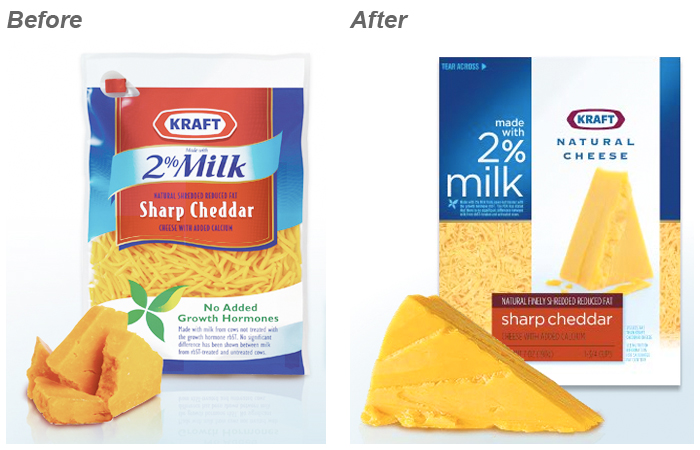
Don't get me started on restaurants that use canned peppers and mushrooms that make the whole pizza wet and acidic. Also: http://popsop.com/wp-content/uploads/kraft_cheese_snack_befo... WTF? "Natural cheese made with 2% milk no added growth hormones"
They don't coerce anyone to eat their food. What a ridiculous hyperbole.
Or are you seriously going to argue that McDonalds has ads that are considerably more emotionally manipulative than other typical advertisers?
- Respond to customer feedback in a friendly and highly transparent manner.
- Don't sugarcoat things that "everyone knows but no one admits"; they could have avoided showing the graphic artist photoshopping the burger, but everyone knows that they use photoshop, so why bother? Show everything and customers will trust you more.
- Use social stuff like Twitter to encourage customer feedback. It will create a positive loop that encourages others to follow and interact with their main corporate account.
- Respond before something is actually important. This one isn't showcased so strongly - this isn't a pressing issue by any measure - but they still took the time to respond to it and make a brief, informative, and actually engaging video about it, without some external "we screwed up, sorry" event. Interacting with customers like this before problems arise is simply awesome.
Well done, McDonalds.