News for hackers. Stuff that matters.
Re:Lithium-free sodium batteries exit the lab and enter US p... by alemanek on Friday May 03, 2024 @01:26PM (#40250065)
From the article it claims charge speed 10x that of lithium and 50,000 cycle lifetime. I don’t know about you but a EV that can go 150 miles and charge to 80% again in 2min would be super compelling to me.

Solid commuter car but not too annoying on the rare roadtrip.

But, I am guessing grid frequency regulation use cases are going to make these too expensive for a car for a long time.

Re:Lithium-free sodium batteries exit the lab and enter US p... by UniverseHacker on Friday May 03, 2024 @01:30PM (#40250123)
I missed the 10x charge speed- that is a killer feature that more than makes up for the reduced range.
Re:Lithium-free sodium batteries exit the lab and enter US p... by jseutter on Friday May 03, 2024 @03:00PM (#40251057)
Agreed, I just learned that the next formula for Formula E will eventually have charging stops. The spec will allow 5kwh of charge in 30 seconds, which is 10% SoC in their case. Pretty cool.
Re:Lithium-free sodium batteries exit the lab and enter US p... by LargeWu on Friday May 03, 2024 @03:15PM (#40251212)
Sounds like their current strategy is stationary-only, i.e. not for use in vehicles, owing to the lower power density of sodium batteries. But that does not mean it's a problem that won't be solved in the future.
Re:Lithium-free sodium batteries exit the lab and enter US p... by xaellison on Friday May 03, 2024 @01:55PM (#40250382)
I wonder what that will mean for charging infrastructure that suddenly has to deliver 10x power to enable that. Not sure that sort of charging could be as ubiquitously placed as gas stations
Re:Lithium-free sodium batteries exit the lab and enter US p... by gpm on Friday May 03, 2024 @01:57PM (#40250413)
Just have the same batteries in the charging station to smooth out power usage? Seems a lot cheaper and operationally less complex than a gas station.
Re:Lithium-free sodium batteries exit the lab and enter US p... by adverbly on Friday May 03, 2024 @03:42PM (#40251514)
Those would need to get cycled a lot(many times per day). You might want one for your house if you wanted to charge quickly at home, but for charging stations, I think more realistically they'd have 10x less charging spots if each person was only there 1/10th the time.

So the peak would be the same, but if there were too many customers then sort of like at a busy gas station people would be waiting for a spot rather than waiting for charging to complete.

Re:Lithium-free sodium batteries exit the lab and enter US p... by happyopossum on Friday May 03, 2024 @05:04PM (#40252375)
> Those would need to get cycled a lot(many times per day).

Fortunately these batteries have "an estimated lifespan of 50,000 cycles". Also, since there aren't super-dangerous elements in them, they should be much easier and cleaner to recycle/renew - especially with the giant recharge-station-scale ones' we're talking about, which could be designed specifically for that.

Re:Lithium-free sodium batteries exit the lab and enter US p... by chabons on Friday May 03, 2024 @02:20PM (#40250653)
This assumes that the same number of vehicles use the charging station. Lower charge times means potentially higher steady-state throughput.
Re:Lithium-free sodium batteries exit the lab and enter US p... by Dylan16807 on Friday May 03, 2024 @03:02PM (#40251081)
Higher steady-state is mostly a good thing. You need to bulk up the power lines, but you're making good use of them and have lots of money to spend on them.
Re:Lithium-free sodium batteries exit the lab and enter US p... by LoganDark on Friday May 03, 2024 @03:17PM (#40251230)
Having lots of money doesn't mean spending lots of money. Budgets often get cut for no good reason.
Re:Lithium-free sodium batteries exit the lab and enter US p... by Dylan16807 on Friday May 03, 2024 @04:20PM (#40251950)
Okay, I mean I'm aware of that perfectly generic information but "sometimes management sucks" doesn't impact a feasibility analysis much. And this hypothetical station was already willing to spend on a lot on batteries.
Re:Lithium-free sodium batteries exit the lab and enter US p... by LoganDark on Saturday May 04, 2024 @05:18PM (#40260357)
Just because they want to spend on batteries doesn't necessarily mean they can spend on power lines. Most of the time you can't just pay the power company to bulk up your lines, just like you can't always pay an ISP to install a faster connection, even if they provide that service to another area.
Re:Lithium-free sodium batteries exit the lab and enter US p... by Dylan16807 on Saturday May 04, 2024 @05:52PM (#40260583)
Okay but that's a completely different objection from the one in your previous comment.

And yes it's not always possible but it'll be available in enough places.

If a particular station can't get better lines, then as someone else said they could have fewer charging spots. High load per spot still works out well for them, because they can save space.

Re:Lithium-free sodium batteries exit the lab and enter US p... by mech987876 on Friday May 03, 2024 @02:25PM (#40250702)
I had an engineering colleague who previously worked at a company that reconditioned Prius batteries. It involved cycling powe in and out of the battery several times. Where did all that power come from? Another battery.
Re:Lithium-free sodium batteries exit the lab and enter US p... by EasyMark on Friday May 03, 2024 @03:22PM (#40251285)
i doubt if the batteries can handle the type of surge output as the superchargers require.
Re:Lithium-free sodium batteries exit the lab and enter US p... by pornel on Friday May 03, 2024 @04:30PM (#40252034)
They easily do. Discharge rates are typically higher than charge rates. For stationary batteries it's all easier due to being able to have larger, more parallel batteries, and better cooling when weight is not a concern.

Battery-backed charging stations are already common, because it allows use of cheaper grid interconnection, and use of cheaper off-peak or renewable energy.

Re:Lithium-free sodium batteries exit the lab and enter US p... by Dylan16807 on Friday May 03, 2024 @04:23PM (#40251972)
If the car batteries can handle some amount of power, batteries on the other side can handle the same amount.

Especially because the station would want to have multiple cars worth of energy stored, which means the load is divided among more cells and they don't have to work nearly as hard.

Re:Lithium-free sodium batteries exit the lab and enter US p... by ItCouldBeWorse on Friday May 03, 2024 @02:03PM (#40250485)
It just means the infrastructure gets the same cheap batteries as buffer.
Re:Lithium-free sodium batteries exit the lab and enter US p... by mschuster91 on Friday May 03, 2024 @04:10PM (#40251836)
Not that much, grids can and do deal with highly variable loads all the time, as all the heavy machinery involved in traditional power generation (=generators, gearboxes, axles, turbines) has a lot of inertia that buffers sudden changes.

However, as more and more generation capacity shifts to renewable sources that by design have very small (wind) to zero (solar) inertia, there will be a requirement to build out frequency stabilizer units like the Tesla unit in Hornsdale, Australia [1].

[1] https://en.wikipedia.org/wiki/Hornsdale_Power_Reserve

Re:Lithium-free sodium batteries exit the lab and enter US p... by crote on Friday May 03, 2024 @04:33PM (#40252072)
Aren't batteries quite limited in their ability to provide synthetic inertia? Sure, they can respond on a second or tenth-of-second scale, but they don't provide the kind of instantaneous inertia you get from spinning rust. Inverters aren't exactly designed to just eat power surges, they'll instantly disconnect instead.

That's why the UK grid has been building some "high-inertia synchronous compensators", and a 2019 outage showed that it's urgently needed.

Re:Lithium-free sodium batteries exit the lab and enter US p... by CorrectHorseBat on Friday May 03, 2024 @05:11PM (#40252446)
Can't you make them behave however you want with sub millisecond reaction time?
Re:Lithium-free sodium batteries exit the lab and enter US p... by Dylan16807 on Friday May 03, 2024 @04:29PM (#40252028)
Advanced solar and wind inverters can also push back on grid changes to mimic inertia.

Also I'd say the inertia in a normal wind turbine doesn't count because it's not tied into the grid frequency.

Re:Lithium-free sodium batteries exit the lab and enter US p... by jacob019 on Friday May 03, 2024 @02:00PM (#40250457)
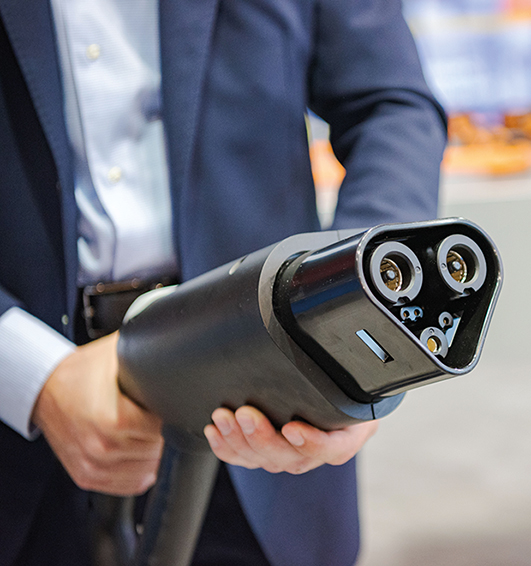
Indeed the charging cables are already massive. Just need some superconducting cables.
Re:Lithium-free sodium batteries exit the lab and enter US p... by Dylan16807 on Friday May 03, 2024 @03:10PM (#40251155)
Liquid cooled cables aren't too bad.

Megawatt charging system is big but doesn't seem unreasonable, and that gives you 5x the amps. In two minutes it can add 80kWh to an 800 volt battery, and the max voltage is 1250.

https://resources.news.e.abb.com/images/2023/5/12/0/Next_gen...

https://www.engineerlive.com/sites/engineerlive/files/ITM.11...
Re:Lithium-free sodium batteries exit the lab and enter US p... by LoganDark on Friday May 03, 2024 @03:16PM (#40251221)
Even today's charging can be severely lacking, imho
Re:Lithium-free sodium batteries exit the lab and enter US p... by creativeSlumber on Saturday May 04, 2024 @01:57AM (#40255250)
Unless they also use these batteries to store the charge. The batteries an be charged slowly like a capacitor.
Re:Lithium-free sodium batteries exit the lab and enter US p... by ClassyJacket on Friday May 03, 2024 @05:55PM (#40252845)
My Model 3 already charges at 180kw. Are they saying cars built with these batteries will charge at 1.8Mw? How are they going to build charging infrastructure at that level?
Re:Lithium-free sodium batteries exit the lab and enter US p... by TaylorAlexander on Friday May 03, 2024 @06:05PM (#40252917)
Re:Lithium-free sodium batteries exit the lab and enter US p... by donny2018 on Friday May 03, 2024 @11:54PM (#40254669)
To take advantage of that charging speed, you have to supply 10x of charging power though.

10x of charging speed of Li-ion would be in megawatts per single charging device.

Re:Lithium-free sodium batteries exit the lab and enter US p... by silisili on Friday May 03, 2024 @02:51PM (#40250949)
Compelling to me also, as a person who has shied away from EVs because of charging time annoyances. I'd gladly trade the mileage for charging speed every time. Getting excited for what's to come.
Re:Lithium-free sodium batteries exit the lab and enter US p... by jtriangle on Friday May 03, 2024 @04:30PM (#40252033)
It's very likely that we'll end up with tiered batteries in EV's before long. Some amount of the capacity will be fast charge/discharge, some amount of it will be capacity with slower charge/discharge with a higher density available.

Think of it like modern SLC backed QLC flash storage. As long as the usage profile fits inside of the cache, it runs as though the entire system is cache.

Re:Lithium-free sodium batteries exit the lab and enter US p... by jdewerd on Friday May 03, 2024 @03:23PM (#40251296)
Is charge time important because you can't install a L2 charger at home / apartment to keep it "always charged" or because your usage pattern is too heavy duty for a 30 minute break every 200-300mi?

If it's just the former, the slow steady march of EV mindshare might solve your needs before the "L4" super-fast-charging battery. I am starting to see L2 chargers pop up in apartment parking lots, for example. IMO, "always charged" is significantly more convenient than short stops at a station, so it would still be desirable in a world where "L4" batteries and stations were common.

Re:Lithium-free sodium batteries exit the lab and enter US p... by silisili on Friday May 03, 2024 @03:41PM (#40251506)
The latter, actually. I'd much prefer to stop for five minutes every 2 hours than 30 minutes every 4 hours.
Re:Lithium-free sodium batteries exit the lab and enter US p... by rootusrootus on Friday May 03, 2024 @04:33PM (#40252078)
I'd prefer shorter times on road trip charging, too. But I still ended up buying an EV because I only need road trip fast charging a few times a year, and now I don't have to carve out 20 minutes every couple weeks to go find a gas station and fill up. The overall time savings for me is significant.
Re:Lithium-free sodium batteries exit the lab and enter US p... by pornel on Friday May 03, 2024 @04:32PM (#40252063)
The current state of the art is somewhere in between with 18 minutes per ~3 hours. It even helps to split charging into shorter sessions (2x 9 minutes), because batteries charge fastest when they're about 25% full.

Keep in mind that EVs charge unattended, so you only spend a minute plugging in, and can leave to get a coffee, etc.

Re:Lithium-free sodium batteries exit the lab and enter US p... by silisili on Friday May 03, 2024 @05:36PM (#40252659)
How 'guaranteed' is that rate? I don't keep up with it like I probably should, but seem to often read that some chargers are outdated, and sometimes you have to 'share' if somebody else is charging nearby?
Re:Lithium-free sodium batteries exit the lab and enter US p... by pornel on Friday May 03, 2024 @08:17PM (#40253732)
In the EU, there are Ionity and Fastned networks that can guarantee their chargers will be fast enough for this (>=250kW), and together they have a pretty decent coverage along major highways.

There are setups that have their max rated power per dispenser (“pump”), and halve it if two cars are plugged in to the same dispenser at the same time. Good chargers can do 300kW. If that splits to 150kW it’s not too bad - maybe 5 min slower, rather than double. That’s because the max speed the car can take is a curve, and that only flattens the peak.

However, for the 18-min charging the biggest gotcha is the temperature. In Hyundai/Kia it requires the battery to be at 20-25°C. That’s easy in the summer. In the winter the charging speed can drop as low as 80kW.

Re:Lithium-free sodium batteries exit the lab and enter US p... by r00fus on Friday May 03, 2024 @09:42PM (#40254147)
Last time we had to fast charge on the way to Yosemite, we had lunch at a strategically parked taco truck in the same lot (they even had a picnic table).

We would have walked to a nearby restaurant if needed.

Re:Lithium-free sodium batteries exit the lab and enter US p... by jml78 on Friday May 03, 2024 @06:06PM (#40252919)
I also think the roadtrip inconvenience is vastly overblown. Had an EV since 2018. It is our roadtrip car. It turns 12 hour roadtrips to 14 hour trips but if you plan around eating, it doesn’t extend any trip by much.

I still have a gas vehicle but I never want to use it for long trips.

Re:Lithium-free sodium batteries exit the lab and enter US p... by DangitBobby on Friday May 03, 2024 @06:22PM (#40253026)
In my only attempted road trip with my EV, the only charger available within any reasonable distance of our destination failed to charge the car due to a "firmware issue" that they had been aware of for quite some time but did not bother to fix. We were unable to charge there. Luckily, we had enough juice to make it back to the charging station at our halfway point by turning off the climate control.

So on a road trip that I only wanted to charge twice for, one of the stops didn't work. Oh, and on the way back we had to wait for access to the faster charger. Maybe not so overblown.

Re:Lithium-free sodium batteries exit the lab and enter US p... by zardo on Friday May 03, 2024 @06:40PM (#40253147)
Yeah my concern with charging is more time and effort to get it to an open working charger than it is charge time.
Re:Lithium-free sodium batteries exit the lab and enter US p... by UncleOxidant on Friday May 03, 2024 @01:51PM (#40250341)
> But, I am guessing grid frequency regulation use cases are going to make these too expensive for a car for a long time.

Not sure I follow here. Can you elaborate?

Are you saying the the demand for sodium batteries for power grid backup is going to be high vs supply such that they're not going to make it into cars anytime soon? Isn't one of the Chinese EV makers starting to use sodium batteries?

Re:Lithium-free sodium batteries exit the lab and enter US p... by alemanek on Friday May 03, 2024 @01:56PM (#40250402)
Yeah I am thinking grid applications will take up most of the available supply for the next few years. That charge/discharge speed makes it perfect for helping to stabilize the grid, frequency regulation, as well as for replacing peaker plants. Lithium batteries are already being used for these two applications but I think these sodium batteries would be better.
Re:Lithium-free sodium batteries exit the lab and enter US p... by jacob019 on Friday May 03, 2024 @02:03PM (#40250493)
Depends on the production economics, how fast they scale, and what issues are discovered in real world use. There is some risk for everyone with new tech.
Re:Lithium-free sodium batteries exit the lab and enter US p... by xbmcuser on Friday May 03, 2024 @11:34PM (#40254587)
Large scale grid project are planned years in advance so unlikely to eat up all the production as factories will need a constant demand source to clear inventory and have regular cash flow so I think home batteries like Tesla powerwall are going to have big boom soon specially as people getting paid less and less for their home solar output from the grid. If I am not wrong chinese largest battery manufacturers have started looking at home batteries as some car manufacturers were complaining about not enough demand for ev.
Re:Lithium-free sodium batteries exit the lab and enter US p... by kolinko on Friday May 03, 2024 @02:30PM (#40250751)
The main blocker with ev charge speeds now is the charging station capacity though, no?

Having said that - if we can get cheap and safe batteries installed within the charging stations, this would make for an awesome improvement

Re:Lithium-free sodium batteries exit the lab and enter US p... by ggreer on Friday May 03, 2024 @03:41PM (#40251505)
Most charging stations already have lithium batteries installed as a buffer for the grid, and those batteries tend to be safer designs since there's no weight/density penalty for fixed infrastructure. Sodium batteries would just make charging stations cheaper to build.

A lot of people tend to think of the ideal charging station as a gas station, where lots of cars go to quickly add range. But gas stations have large capacity because of their disadvantages. Ideally if they were safe, cheap, and compact, wouldn't you want gas stations everywhere? I'd love to have a gas station at home, in every parking garage, and at every scenic viewpoint on the road. The reason we don't have that is because gas stations emit toxic vapors and have giant tanks of combustible liquid. They need tanker trucks to regularly refuel them. Charging stations don't have those problems, which is why you can make them much smaller and put them almost anywhere. You don't even need a grid connection. Solar + batteries works in places where land is cheap.

Re:Lithium-free sodium batteries exit the lab and enter US p... by supercheetah on Friday May 03, 2024 @02:47PM (#40250910)
Two minutes is about the amount of time it takes to fill my ICE car, so yeah, that'd be nice.
Re:Lithium-free sodium batteries exit the lab and enter US p... by jdewerd on Friday May 03, 2024 @03:24PM (#40251310)
Yeah but do you have a gas station at home so it's "always full"? That's really nice ;)
Re:Lithium-free sodium batteries exit the lab and enter US p... by jtriangle on Friday May 03, 2024 @04:38PM (#40252131)
You certainly can, provided you have a truck, and a DOT certified fuel trailer, and a transfer pump.

That system also allows you to participate in oil futures as an end user, not to mention it lets you keep your generator up and running for a very long time.

Downside is, modern e10 gasoline tends to adsorb water from the air over time, so fuel isn't stable long term. Most guys doing this are running diesel cars/gensets for that reason.

The model is, go to a truck depot with a 300 gallon trailer, fill up trailer and truck, park the trailer at home. Then fuel the truck off the trailer until it needs to be filled again, repeat. Do understand that, you can get a larger tank, but anything over 1000 gallons requires a placard/permit to haul around. That's in a single tank, so, in theory, a legal length 5th wheel trailer could have multiple tanks under that and be compliant. If you want the tanks attached to a vehicle itself, the maximum size is 150 gallons, hence why semi trucks have multiple fuel tanks that are smaller than that.

Really the only difficulty is finding a place nearby that is willing to sell that much fuel to an individual.

Re:Lithium-free sodium batteries exit the lab and enter US p... by eternityforest on Friday May 03, 2024 @07:50PM (#40253571)
Is running a generator for long periods cost effective? If someone lived where the grid wasn't reliable, and could make the initial investment for all this fuel storage stuff, why not do solar?
Re:Lithium-free sodium batteries exit the lab and enter US p... by jtriangle on Friday May 03, 2024 @08:28PM (#40253802)
Usually it's a backup thing, not a 24/7 thing. If you're really out in the sticks, solar/battery/genset is a very likely complete system. I know of a couple places way up north in Saskatchewan that have what amounts to a mining village running off a big portable genset backed up with batteries, and one of them I know was just on a very big genset, and they were able to pay for a battery bank by downsizing their generator significantly due to the disparity between peak load and average load. I'd share the article I read about it, but, in spite of my normally excellent google-fu, I've been unable to find it.

Either way, people forget about this, because if you have any sort of power generation, doesn't matter the method, if you go over capacity, you have brownouts/blackouts/grid failure/etc. What is deployed now, for the most part, is sufficient genset capacity to ramp into peak load, and most of it is under-utilized the majority of the time. Batteries eventually pay for themselves because of this, as they allow for peak load handling in addition to allowing generating capacity to stay online and remain profitable outside of peak load events. It really is revolutionary.

More or less, gridscale batteries are what dams/reservoirs were to water systems, and if you consider the impact of us as a species being able to save water for later use at-will, the promise we're looking at is going to really change the way we live.

Re:Lithium-free sodium batteries exit the lab and enter US p... by skjoldr on Sunday May 05, 2024 @10:40PM (#40270657)
Here in Ukraine, the grid is no longer 100% reliable for obvious (and highly intentional) reasons. Solar is somewhat inconvenient to use in large cities, and cloudy days are common. A variety of generator types and sizes can be seen instead. Living in an apartment, I have an Ecoflow Delta 2 Max as my first line and a 3.5kW gasoline/natgas generator as my second line. Most of the time, there is some power at some hours of the day, so the Ecoflow can store it. If it runs out, I can run an extension power cord down from my balcony, lug the generator down into the yard, and use it to charge the Ecoflow. I do have plans to buy a solar panel and put it on the building roof with a Starlink, but it would require negotiating with the neighbors and stuff. Gasoline storage really is an issue, though. Currently I just hope I'll have enough money to buy it as needed.
Re:Lithium-free sodium batteries exit the lab and enter US p... by rossjudson on Friday May 03, 2024 @04:37PM (#40252123)
"You mean I can't just drive the car? I need to think about how to find fuel for it every couple of days? And then I have to drive there and hope nothing explodes?"
Re:Lithium-free sodium batteries exit the lab and enter US p... by imtringued on Saturday May 04, 2024 @06:09PM (#40260683)
It takes me significantly longer than that. The pumps aren't infinitely fast. The cashier is serving other clients. I have to drive to the gas station and back. All of that adds up to more like 15 minutes.
Re:Lithium-free sodium batteries exit the lab and enter US p... by IshKebab on Friday May 03, 2024 @04:27PM (#40252009)
2 mins to charge a 40 kWh battery is 1.2 MW. I can't see that happening any time soon.
Re:Lithium-free sodium batteries exit the lab and enter US p... by cogman10 on Friday May 03, 2024 @04:43PM (#40252172)
And I just don't think it's needed.

You are almost certainly not charging from 0->100%. It's probably more like 10%->90% which gives you 32kW to charge. We currently have 350kW chargers on the market, they'd do that in ~6 minutes.

At some point trying to get 2 minutes vs 6 minutes is just silly nit picking.

Re:Lithium-free sodium batteries exit the lab and enter US p... by chx on Friday May 03, 2024 @05:36PM (#40252663)
Just install an SMR at every gas station. Problem solved! :P
Re:Lithium-free sodium batteries exit the lab and enter US p... by elihu on Friday May 03, 2024 @05:46PM (#40252758)
Fast charge speeds make electrified highways a more viable option. There are some projects in Europe using overhead lines (for trucks) or power rails embedded in slots in the road surface (usable by cars or trucks) so that vehicles can recharge while moving. Building a network of electrified highways is expensive though.

One way to reduce initial costs is not to electrify the whole length but to have, say, one mile of electrified road per every ten miles of highway. To get unlimited range from that 1:10 ratio, you need the vehicles to have batteries capable of absorbing power 9x faster than the vehicle uses it to maintain highway speeds.

I could see EVs having a large lithium ion pack and, if this technology is really that good, a smaller sodium ion battery to act sort of like a capacitor to smooth out intermittent charging.

I could also see low-capacity-high-power-density batteries being used in hybrids, though those need to be able to sustain high discharge rates as well as high charge rates, and I don't think the article mentioned discharge rates.

Re:Lithium-free sodium batteries exit the lab and enter US p... by dieortin on Friday May 03, 2024 @06:23PM (#40253034)
Charging private vehicles while they move sounds very complicated
Re:Lithium-free sodium batteries exit the lab and enter US p... by elihu on Friday May 03, 2024 @08:02PM (#40253645)
This is one way to do it:

https://www.theguardian.com/environment/2018/apr/12/worlds-f...

Overhead cables are simpler and cheaper, but not easily compatible with cars (which would need a comically tall pantograph to connect to the cables).

(Induction is a third option, but it's not really viable except in certain special cases because it's way more expensive, can't deliver as much power, and tends to be less energy efficient.)

Electrifying highways may sound expensive or complicated, but consider what the alternatives are. We could stick with fossil fuels. The U.S. burns about 4 million barrels of gasoline and about 4 million barrels of diesel a day, most of which is used to push cars and trucks around. That's not simple or cheap, we're just accustomed to the cost.

Another option is we switch to EVs and rely on big batteries for range. That kind of works, but battery manufacturing scale isn't there. It's also kind of wasteful to have a substantial portion of the vehicle weight being batteries. It means cars and trucks are heavier than they need to be, and they can haul less cargo.

If we could get to the point where, say, someone could drive coast-to-coast without ever having to stop to charge with only 30 or 40 kwh battery, that would be huge. It would reduce EV costs dramatically, it would reduce average vehicle weight, and you might even get better performance.

(This wouldn't completely eliminate the need for some long-range vehicles for areas not served by electrified highways, but for most uses it should be fine.)

Re:Lithium-free sodium batteries exit the lab and enter US p... by bufferoverflow on Friday May 03, 2024 @10:54PM (#40254443)
Trolleybus is a technology from over 100 year ago.
Re:Lithium-free sodium batteries exit the lab and enter US p... by kube-system on Saturday May 04, 2024 @01:22AM (#40255099)
Yes, but a primary advantage to private transportation is the ability to drive it in locations other than predefined routes in dense city centers.
Re:Lithium-free sodium batteries exit the lab and enter US p... by elihu on Saturday May 04, 2024 @06:17AM (#40256410)
I think the point they were making is that a suitable technology to deliver power to a moving vehicle has been around a long time, not that everyone should get rid of their cars and use trolleys.

If we combine a modern EV with 100 year old tram technology, you get the ability for a car to charge itself when travelling on roads that have a compatible system of overhead power lines. Having a huge pantograph on top of the car is kind of impractical, but powering cars from underneath via power rails embedded in slots in the road, like a full-sized version of those toy slot cars that used to be popular, is another option that's been tried on some roads in Sweden.

Re:Lithium-free sodium batteries exit the lab and enter US p... by kube-system on Saturday May 04, 2024 @08:51AM (#40257291)
My point is that those solutions are impractical for any sort of widespread use.
Re:Lithium-free sodium batteries exit the lab and enter US p... by elihu on Sunday May 05, 2024 @07:58PM (#40269759)
Impractical compared to what? The U.S. burns about 4 million barrels of gasoline and about the same amount of diesel per day, mostly just pushing ground vehicles around. That sort of works, but I wouldn't call it practical in the long run.

Converting to EVs is the obvious alternative, but batteries are expensive and we haven't scaled up battery manufacturing yet to the degree necessary to replace ICE vehicles. We can get more EVs on the road though if the average EV can get by with a much smaller battery.

On some level it's an optimization problem: using the U.S. as an example, there are about 280 million cars/trucks currently registered. Is it cheaper/better to build about 280 million EVs with about 60kwh of batteries each on average, or build 280 million EVs with about 30kwh of batteries each and electrify our major highways?

If batteries cost $100/kwh, then 280 million * $100 * 30 = 840 billion dollars. If electrifying the major highways can be done for under $840 billion dollars, then it makes sense to do.

The interstate highway system is about 50,000 miles.

Sweden spent about a million euros per kilometer to electrify a section of road using the slot-embedded-in-the-road system. That's about $1.7 million per mile, or $86.5 billion.

You'd probably need to do more than just the interstates, but then at the same time you don't need to electrify 100% of the length of those highways. Maybe just 10% or 20%, as long as electrified section come at regular intervals.

This is all kind of simplistic and hand-wavey, but it seems like it passes the threshold of "we should at least consider doing this."

Re:Lithium-free sodium batteries exit the lab and enter US p... by kube-system on Sunday May 05, 2024 @08:45PM (#40270028)
> Impractical compared to what? The U.S. burns about 4 million barrels of gasoline and about the same amount of diesel per day, mostly just pushing ground vehicles around. That sort of works, but I wouldn't call it practical in the long run.

Maybe you mean it isn't 'sustainable'? ICE vehicles are the epitome of practical, they are used in practice all around the world.

> You'd probably need to do more than just the interstates, but then at the same time you don't need to electrify 100% of the length of those highways. Maybe just 10% or 20%,

The people who developed that project estimated they'd need to implement it on 25% of all roads. Also the project is just in a technical demonstrator phase. It is literally just a tech demo, and there are still major concerns about adoption, implementation, and maintenance.

> This is all kind of simplistic and hand-wavey, but it seems like it passes the threshold of "we should at least consider doing this."

I agree it should be tested further, but there are likely significant barriers that will prevent it from being useful, particularly in less dense areas.

Re:Lithium-free sodium batteries exit the lab and enter US p... by skjoldr on Sunday May 05, 2024 @10:25PM (#40270574)
The focus of the effort to make overhead charging viable is on large trucks that already drive mostly, but not completely, predefined routes on highways and in cities, which are often too lengthy to only rely on battery packs.
Re:Lithium-free sodium batteries exit the lab and enter US p... by kube-system on Sunday May 05, 2024 @10:45PM (#40270680)
Others up above were discussing passenger vehicles.

For trucks on the highway, it is a much better idea, but for many of those cases, you'd be significantly better off investing in more rail.

Re:Lithium-free sodium batteries exit the lab and enter US p... by skjoldr on Wednesday May 08, 2024 @05:05PM (#40302702)
Transporting refrigerated goods over moderate distances and last-mile delivery from the train yards are where trucks using overhead cables can shine. I also read that there existed trolleybus lines that went several miles/kilometers between towns that weren't connected by rail. It's especially useful in mountainous terrain.
Re:Lithium-free sodium batteries exit the lab and enter US p... by theendisney on Friday May 03, 2024 @08:48PM (#40253885)
imagine this!

Have short charging strips at traffic lights then prioritize lanes with cars that dont need much charge.

Re:Lithium-free sodium batteries exit the lab and enter US p... by elihu on Saturday May 04, 2024 @06:26AM (#40256464)
That's an option, though I think the amount of time cars spend at stop lights is so highly variable that it'd be hard to make that practical. Also, in-town driving is usually short range anyways. For that, having a 100 mile or even a 50 mile battery is plenty, and people can charge overnight at home. (And yes, ideally apartments ought to have EV charging stations.)

Where people are more likely to need the extra charge is on the long country roads between major cities. Probably a high priority could be on the major highways going into and out of cities, as those are the roads people are likely to use for long daily commutes.

Re:Lithium-free sodium batteries exit the lab and enter US p... by theendisney on Saturday May 04, 2024 @07:55PM (#40261274)
There are so many options. Things will just have to be tried until the best marketing formula wins.

I really have dozens of strange ideas. If the charging stations need to be equiped with similar batteries we might as well make all cars into charging stations. You can charge your much to large 3x per year road trip battery with your much to large solar array. Park it some place (preferably in need), flag the car in the app as wont move for x hours and has y kwh availble then charge your 40km range coworker premium tarif while you work.

A rail with a towing cable could also charge batteries while also usable for ic engines.

Re:Lithium-free sodium batteries exit the lab and enter US p... by robocat on Friday May 03, 2024 @06:25PM (#40253049)
> to 80% again in 2min

Needs say 720kW delivery for those two minutes (need higher if counting inefficiency losses).

Note that Tesla 's V3 Superchargers provide a maximum of 250kW. I've assumed a 30kWh battery charged to 24kWh (80%), because the spec for a new Nissan Leaf is 59kWh battery for 385km driving range.

Re:Lithium-free sodium batteries exit the lab and enter US p... by alemanek on Friday May 03, 2024 @06:30PM (#40253080)
Yeah we are for sure talking about the future here. There are already vehicles capable of handling 350kW chargers. Probably not too crazy to think that could double in the next decade.

But I am definitely not expert on this.