Also my gaming PC in the winter. It feels like free compute given I’m heating anyways.
So there is plenty of waste heat to go around. Some diesels got so efficient though that they needed an extra in-line heater to have enough heat for the cabin in specific operating domains (low power engine, low revs).
It is effectively co-generation: you get two different kinds of energy (motive and heat) and you use them for different purposes.
Maybe it's like how I spend so much time reading random Wikipedia articles on topics because I need to know how everything works.
And that list is only getting longer, I think I'll pass it on to my kids.
Right now (and for the past couple of years) it has been mostly music but also still some more interesting tools to play with. Currently making a set of super realistic traffic lights for my youngest including pedestrian crossing and automatic cycle influencing (road coil pickup to detect car presence in front of the lights) for his model cars. Green wave, the works.
I've mostly stopped writing up the projects, but still have a bunch of posts pickled that I probably should finish. Most recent software bit: ear training module for pianojacq.com is work in progress (press low 'A' on an 88 key keyboard to enable the secret menu that will enable the ear trainer, it is not quite ready for mass consumption yet but it is getting there).
Thank you for that link!
So I see people with diverse interests and kids and I just wonder: how!
I'm also an insomniac (it's 7:20 am here and I'm still awake...) so I have a ton of time when everybody is asleep (that's when I do most of my coding and reading), and when everybody is off to school I catch up on sleep. Not ideal but it mostly works. Another nice-to-have is that I can make ends meet with a relatively small fraction of the year spent on work (and that simply means I'm not reducing my savings, if I want to grow my savings I'd have to work more than that).
I live on the top of a hill, so the first seven minutes or so of me driving anywhere is coasting at minimum engine power. Once air temp gets below 10C it's a long, slow painful wait for the vents to start blowing warm air. Especially unfortunate when you're waiting for the defroster to start doing something. I've considered installing a block heater, even though it wouldn't be needed to start the engine at all, just to warm the coolant up!
Most diesel cars equipped with EGR also detect its (frequent in older cars) failures, but I suppose it's possible to have a fault without it being detected.
EGR is responsible for recirculating exhaust gases back into the intake primarily to increase efficiency, but a nice side effect is that it heats up the engine a lot quicker.
Also, many diesel cars sold around here since 2000 or so are equipped with a resistance heater that kicks in when the engine is cold. Perhaps that's different in other markets.
Efficiency does not need EGR. EGR only helps to keep NOX down when running efficiently. In some (many) vehicles EGR is disabled at cold temperatures.
You may want to look into oil that flows better at low temps in winter based on what temperature your engine eventually reaches when it is fully warmed up. There is a good chance that your engine will work better with different oils for winter and summer, also if you have an older car you may get some mileage out of blocking off a piece of the radiator.
The number on the right is in the manual and you only change it when you go to the track.
Atm you're running a lighter oil than your car is designed to use and it's very likely to be a bad idea.
In the video you linked the only oils you can compare in the way he is comparing them are the 0w-20 and the 5w-20.
Later edit: I've watched that and since the tests the oils only at cold temperature it is entirely inconclusive wrt protection at operating temperature.
And cooking test is just dumb. Your oil rarely above operating spec. The only oil exposure to above spec temps is the oil in the top side while the engine is cooking after being stopped, and the oil in the burn chamber which burns and is then filtered out.
If you want to know how your oil is doing collect it after a service interval and send it to be tested.
The latter is also useful to check for impending headgasket doom (or cracks) before it is otherwise visible.
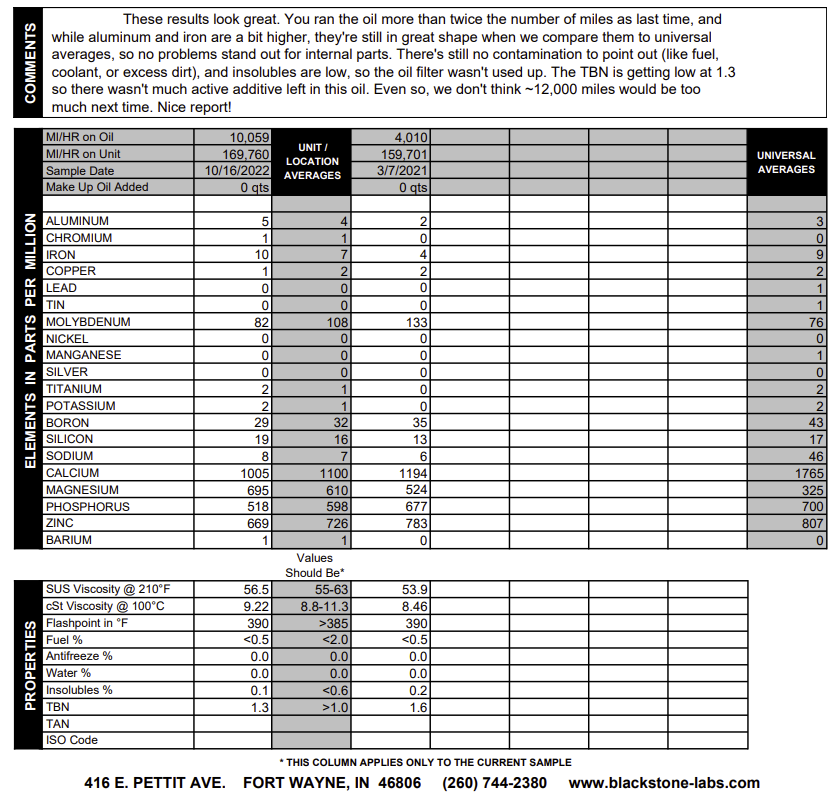
The cold starts aren't great for driver comfort, but don't seem to have a big effect on engine internals.
On my car even with the 0W30 in it in winter the oil pressure starts almost at the top of the scale and as the oil warms up it drops, by the time it is warm enough at idle it sits at the lowest point on the scale + 1 unit. If I use the more sluggish summer oil for too long in winter I'll see it peg the needle on the oil pressure meter, and I have no idea how high it really is. So there is a substantial difference between the two, running temp is more or less the same when the engine is well and truly warmed up.
Sure.. but try running that same engine when it gets too cold, which is why "block heaters" exist and get used in certain parts of the world. The operating temperature of the engine _is_ part of the design criteria.
Totally. If it's cold and you have an idle rig, you might as well use it to run a crypto miner before reaching for an actual heater.
In terms of heating systems though, it’s normal for fuel based systems to be <100% because you need to vent exhaust, and a lot of your heat your fuel produced can be rejected away from where you want it with that. For example, older gas boilers might only be 80% efficient or so, and even the much more efficient condensing boilers are still only in the low 90s.
https://en.wikipedia.org/wiki/Heat_pump#Principle_of_operati...
A pure resistive heater is also less than 100% efficient, but it's very very close.
But by this construction, are all systems which take energy as input (and do not convert it to another form for storage) de facto 100% efficient?
When we talk about a (very old) furnace being 75% efficient at turning the chemical energy of a fossil fuel into heat energy, is the 25% loss purely combustion byproducts with some inherent chemical energy plus some non-combusted fuel?
So for a resistive electric heater, you're dissipating all of the energy as heat (minor quibbles about electromagnetic radiation or status LEDs aside). The same is true for your computer.
Burning hydrocarbons have two main sources of energy loss: incomplete combustion, and energy carried away by exhaust gases. Obviously furnace design influences both of these - the US federal minimum is 78%, but high-end furnaces with all the tricks can get over 90% per https://www.energy.gov/energysaver/furnaces-and-boilers
Heat pumps are the third major category, and they are more than 100% efficient because they are using their energy to steal a larger amount of thermal energy from the outdoors air and move it to inside your home (and much of the electric energy they consume is eventually discharged as heat inside your home as well).
But this is really just conservation of energy or the first law of thermodynamics, and those predate Planck.
The majority does go to heat but you'll never hit the 100% threshold like other methods of heating can meet (or exceed)
They kinda work like a reverse refrigerator. A fridge takes heat out from the inside and moves it to the outside. A heat pump does the opposite.
> Actual heating systems can be better than 100% efficient, while crypto mining or cinebench or whatever is <100%.
The intricacies of why a crypto minor is less than 100% efficient when working as a heater are easily deduced, unless you’re precisely the sort of midwit that likes to leave replies such as the one you left.
Since I live in the southeast, that's more than good enough to skip installing any auxillary heat source in the first place.
0F ? That can't be right?
My Mitsubishi gives heat to around -31F (MSZ-RW Sumo)
However, they simplify their system design a little (fewer contactors, fewer wires, fewer components to buy/test)
Note however that both fans will typically be ~150 watts - which means that when heating they can't produce orders of magnitude more heat than that. So heat produced by the fan motor, even when run to generate as much heat as possible, probably won't be a very significant contributor to overall system heat output.
Don’t know if this is considered during installation?
The compressor is usually in the outdoor unit, because of noise, size, and proximity to the controls. It also is the item that consumes most of the power, so for minisplits, the outdoor unit is the part wired for high currents. It usually is wrapped in a nice insulating blanket (for sound as well), and vapor injection techniques used in cold climate pumps means the heat wasted is minimal.
Sounds like an excellent survival strategy - saves you, but leaves discomfort so you have an incentive to get somewhere safer.
If "current" is higher than "target", the body invokes several mechanisms to bring the temperature down, such as turning up sweat production and making you feel hot; if "current" is lower than "target", it does the same to raise the temperature e.g. by shivering and making you feel cold.
(Fever also works by changing the target temperature of that regulation system, which is why you feel cold at the beginning when the target was raised to the fever temperature and hot at the end when it was lowered back to the normal body temperature)
So it makes sense to me that shivering doesn't make you feel warm, because both, the feeling and the shivering are efforts by the body to raise the temperature.
[1] https://en.m.wikipedia.org/wiki/Thermoregulation_in_humans
I think there’s something else mentioned on that page that is a major contributor to feeling cold: redirecting blood flow away from the skin and in to the muscles (/organs)
Basically it's cool how cars do things largely on their own sometimes to stay within certain parameters.
20 years ago was 2003, which is practically yesterday [in my mind...].
-turbocharger overheats
-oil overheats And the things you stated and much more …
Better to let the motor run while standing is to run it the last kilometers in low rpm
If it happens a lot (when turned off) I'd think about having an inspection done. Worst case scenario, engine ends up overheating, warps or explodes, and you need a new one. Coolant system is one of those "oh shit" systems that you need to pay close attention to.
For those curious, the coolant around the engine block can boil and flow upwards after the engine is off, and the coolant circulation system is designed to handle this pattern. You can observe this yourself if you overfill your coolant and take it out on a hot day, the excess hot coolant will bubble up and run out for a good while after the engine is off.
I second the advice that if the engine isn’t overheating while running, everything is likely working as intended.
If I was a car manufacturer, I would wire the fan into the ignition circuit so it can never run with the ignition off - it's fairly useless to have a fan blowing on a radiator when the coolant isn't flowing anyway.
> Thats done to save a couple of cents on the ignition switch (no need for a large high current fan to be powered through it).
The fan must be powered by a relay in most cases so this is utter bullshit.
In most any modern car the fan is controlled by the ECM (a computer). Furthermore this fan relay will come on in anticipation of high heat load such as when the AC is turned on as well in cars without dual fans.
There is so much more complexity here than just wiring through the ignition circuit (which wouldn’t cost any more anyway as noted) that thinking this is a cost saving issue is utterly clueless.
And the temperature sensor that controls it is invariably located in the engine block, not the radiator hose. Modern cars may have multiple sensors but they need one in the block.
Cooling fans in most cars don’t draw 20 amps while running normally (they should be closer to 10), and while anything can fail the cooling fan in these setups should only run for a few minutes. Draining the battery like you claim is not a “common” cause of breakdowns.
You clearly don’t know much about modern (last >30 years) cars to be commenting on them so authoritatively, tone down your arrogance.
https://acurazine.com/forums/3g-tl-2004-2008-93/wiring-diagr...
This is a typical setup (and it’s 20 years ago). Debunking two of your claims. First note that the condenser fan is wired through the ignition, debunking the notion that it would be costly to do so and that running the main fan bypassed isn’t intentional. Also note that the actual fan control is the lower right black box PCM/ECM (engine computer)
A further reason is no movement = no wind speed. I used to have an old Pontiac grand am with the ram air. I had overheating issues sometimes that were literally solved by going faster.
Cars are like people. Sometimes a quirk is normal, and sometimes it means your bottom end is gonna fall out. Gotta get regular checkups and hope you catch it in time.
With carburettor fed engines it is sometimes advised by the manufacturer to allow the engine to idle for some time after running it at high RPM. This is because the effect of heat soak can be significant enough to boil all the fuel off in the carb, making the engine hard to restart when hot.
Before I looked up what it was, I kept hearing a gentle noise coming from the garage in the late evening. Figured it was noise from outside... Then one day I was out there and heard it start, realized it was the car, and looked it up.
Super Mario Wonder from Nintendo recently uses the vibration motors in your controller to play sound effects in some places which I thought was an incredibly neat trick.
Maybe this is what you're referring to. There are similar examples where people do this with old disk drives and printers too.
The floppotron
> Motors are multi-purpose devices!
In WALL-E, one of the robots following the title character, lacking any audio output, spins its motors at different rates to play the tune from Hello, Dolly! that it had learned from WALL-E.
See also the Floppotron: https://www.youtube.com/watch?v=oGfkPCZYfFw
> Motor Humming or Whirring when Navigating to a Supercharger
…
> In some circumstances (such as cold weather), it is normal for the motor(s) and components to make noise, such as humming or whirring as it generates heat to warm the Battery.
Super cool that the motors can be used for things other than moving the vehicle. It reminds me of how ESCs for RC vehicles use the motors to generate audible chirp tones to indicate status.
Motors are multi-purpose devices!