That won't necessarily solve this problem.
[edit] One more source. There are tons though. https://www.oecd-ilibrary.org/sites/4a4dc6ca-en/index.html?i...
So. It depends. It's sometimes slightly better, sometimes slightly worse. But it doesn't really solve the issue.
The true change we need to make is drastically reduce car use, to a tiny fraction of its current use. This is a hard social problem, however, particularly for the older generations who tend to wield power in most governments. Younger folks seem pretty excited to allow more biking and walking and rolling, though.
Government leaders in the states can't imagine this reality or, if so, can't imagine it changing sufficiently in their lifetimes to invest the political capital in. The US will never change.
And honestly, I take it back, there are nearly as many older folks punching for changes to city design to allow waking and bikes as young people. But in genera the older generations have the time and money needed for local political involvement in a way that younger generations do not, so we tend to get a future shaped by those who do not want change from the status quo (which is a radical departure from the eta of urban growth focused on cars).
Anyway. Cautiously in agreement with you, but it depends a lot on where you live. Western Europe, at least at present, is blessed with a fairly mild climate. Less so than North America which seems to alternate between harsh winters and hot and humid summers. And it's a bit much to ask everyone to move somewhere nice. We probably need to figure out how to make braking systems and wheels less polluting.
Quoted this Douglas Adams once on New York when this came up... "In the summer it's too darn hot. It's one thing to be the sort of life form that thrives on heat and finds, as the Frastrans do, that the temperature range between 40,000 and 40,004 is very equable, but it's quite another to be the sort of animal that has to wrap itself up in lots of other animals at one point in your planet's orbit, and then find, half an orbit later, that your skin's bubbling." [edit] (aside, my theory is the Frastrans live on an aging neutron star like in "Dragon's Egg" ;) )
And really the situation gets worse a few states down. :) To say nothing of Texas or Arizona.
(rider mass / vehicle mass is a lovely shorthand for vehicle efficiency, as it says a lot about how much acceleration you're 'wasting' on the vehicle. Braking, of course, produces a negative acceleration, so lower mass ratio ~> better efficiency. Aim for a ratio of < 1.0...)
https://www.oecd-ilibrary.org/sites/4a4dc6ca-en/1/3/2/index....
Only tangentially related, but I'd assume that most of the emissions from ebikes would be related to brakes, as stopping from higher velocity would wear down brake pads faster.
One interesting thing that hybrid and electric vehicles do is that they do regenerative braking, which ends up with less wear on brake pads (and emissions) from slowing down. Justin from Grin Technologies (an ebike part shop focusing on DIYers) has done a presentation on how that works on ebikes, and mentions that he's barely using brake pads now that he's using regenerative braking: https://www.youtube.com/watch?v=gYCj4asp9pE&t=970s
The difference may not be age; it may be having kids and dealing with the practicalities of that.
Cars and kids are an absolute terrible combo.
I'm not sure if you've seen the huge rise of cargo bikes that I have seen, but they are nearly all parents with kid seating on the back in my town. We are trying to make do with terrible infrastructure and city planning, but it wouldn't take much change to make it all very much better.
- it's desirable, so property prices in places that enable this are higher, if there is even a location that could fulfill this
- expensive bikes aren't affordable by most people who also need a car
- there's a large window where kids are too big for a cargo bike, and still too young to go off freely
We do all sorts of things that increase property value, why is it suddenly only a problem when bikes are involved? And the problem is only because we do a little amount of transition and not a lot? This is a completely fabricated concern in my estimation, the type of thing that people come up with instead of simply saying "I don't like this and don't want it."
Similarly, the concern about the cost of bikes is completely invalid, as bikes are always cheaper than a car, even brand new cargo e-bikes are only a few months of car expenses at most.
And I haven't seen that window where kids can't bike on their own or ride with another parent, and I know families that bike with kids of all sizes and ages.
> And sorry if it comes across as as a strong critique, I don't mean any of it personally, but have heard people say these same things but never from people that actually bicycle with their family.
As I already said, we have built cycling into our lives. Our kids (4 and 6) cycle to school with one of us. I cycle to work. And I am saying this.
> We do all sorts of things that increase property value, why is it suddenly only a problem when bikes are involved?
That is nothing to do with what I was saying. Property is finite; schools, clubs, and employers are too. A car is one of the few levellers that allows people to live somewhere cheaper and access places they need to get to. Places that are close enough to schools to cycle them to school and then cycle to work are expensive.
> Similarly, the concern about the cost of bikes is completely invalid, as bikes are always cheaper than a car,
That only works if you don't need a car. If you need both, which, see previous point, is extremely likely, then it's an extra expense, not an alternative one.
> even brand new cargo e-bikes are only a few months of car expenses at most.
An admittedly quick Google and I'm not seeing any for less than £2.5k. That's years' worth of car services, tax and MOT. On top of the cost of the car they almost certainly need.
> And I haven't seen that window where kids can't bike on their own or ride with another parent, and I know families that bike with kids of all sizes and ages.
Here's an example of what I mean: nursery is in one direction; school is another. How do we get our 4 year old to nursery and 8 year old to school? Should the 8 year old cycle on his own? Or is he in the window where he can't cycle far enough by himself, but too heavy to be safely steered on a cargo bike?
Broadly: if Facebook's taught us anything, it's the power of being in a social circle and thinking that must generalise to everyone, or even most people. Having a job where we can work from home, or rock up 20 minutes late, where we can afford to live in a nice location that has good access, and where we can afford expensive secondary transport, is all great. Wonderful, even. But having grown up in a reasonably deprived area, I believe that's not most people's experience.
My wife cycled me around in her cargo bike, and a couple of other adults (not at the same time). I'm not a light chap, fairly sure I'd outweigh both your kids together. Steering on those things is pretty good, they're not light in and of themselves.
edit: we actually cycled both our kids to school in the cargo bike when they were 8 and 5. I'd forgotten, it was a few years ago.
On the cargo bikes, I have thought about it but I'd probably steer clear til they have some safety standards attached (I think there's a German standard, but nothing else I've seen).
Other drivers assume max regen settings will bring max benefits and end up taking more out of the battery to accelerate only to get far less back (regen braking is ~70% efficient in any EV) when the car regen-brakes, when braking was not really required. Many times coasting is far more efficient than regenerating regardless of what pedals you're using.
Last but not least, all regenerative braking systems are combined with hydraulic braking at low speeds because the torque applied to decelerate is not enough in any of them. So at low speeds the car will actually combine it with friction braking and eventually not regen at all. Take the Zoe where there's no regen at all below 15km/h (9 mph). Emergency braking from high speed is the same. City driving will see a lot of those situations.
So whether you realize it or not, when you are coming to a standstill you use the hydraulic brakes. There may be options to break at low speed with no friction at all but they will not be called regenerative because they will inevitably use energy to do it.
They obviously are not and cruising through stop signs (and sometimes killing children!) is the norm. If EVs encourage this driving style that is another strong point in favor of "electric cars can't solve the problem of cars."
You reap what you sow. A grid of 4-way stops where the traffic flow is not appropriate for them is a textbook perfect way to train drivers to habitually roll stop signs.
I swear sometimes it seems like urban planners are hellbent on re-learning everything they learned in the 1920s.
Also, it is a stretch to call some of that planning “learning” or “science.” As a general example, parking regulations for uses tend to be arbitrary, oversized and wildly out of date; most US retail parking lots are not full even on major shopping days like Black Friday before the advent of online, and now online is making all that space even more wasted.
The civil engineers also like absurdly wide turn radii to accommodate 53 feet trailers and large fire trucks even in residential streets, so you end up with comically wide roads even for dead end suburban streets. https://thumbs.dreamstime.com/b/suburban-street-2779407.jpg
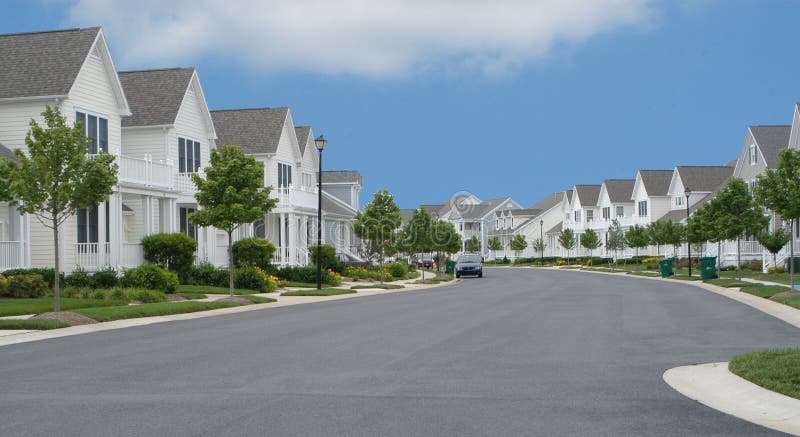
The only time a Tesla needs to use brake pads are for emergency stops and for the parking brake.
For some reason I can't understand, they tried to imitate ICE automatics that don't stand still if you don't have your foot on the brake pedal.
Even more annoying, as an owner of a Nissan Leaf that does this, is that the behavior is what I consider to be a bug in automatic transmissions. Manual transmissions don't do that, and there's no good reason for automatics to do that (and a hundred really good reasons for them not to). It's an artifact of the viscosity of the fluid it turns in, and it annoys me that my EV is bug-for-bug compatible with a device the car doesn't even have (a transmission).
If you have trouble reading or understanding english then I apologize and of course please continue to get the information this way if that is best for you. I mean this seriously and not as an insult. I had a TBI once and had a hard time parsing information like this for a couple years after.
This might be underselling it. I hardly use the brakes on our EV at all. In a journey yesterday of 180km, I only touched the brakes at the end, when pulling into a car park.
NOx emissions kick in as the main pollutant much earlier in such places.