Other drivers assume max regen settings will bring max benefits and end up taking more out of the battery to accelerate only to get far less back (regen braking is ~70% efficient in any EV) when the car regen-brakes, when braking was not really required. Many times coasting is far more efficient than regenerating regardless of what pedals you're using.
Last but not least, all regenerative braking systems are combined with hydraulic braking at low speeds because the torque applied to decelerate is not enough in any of them. So at low speeds the car will actually combine it with friction braking and eventually not regen at all. Take the Zoe where there's no regen at all below 15km/h (9 mph). Emergency braking from high speed is the same. City driving will see a lot of those situations.
So whether you realize it or not, when you are coming to a standstill you use the hydraulic brakes. There may be options to break at low speed with no friction at all but they will not be called regenerative because they will inevitably use energy to do it.
They obviously are not and cruising through stop signs (and sometimes killing children!) is the norm. If EVs encourage this driving style that is another strong point in favor of "electric cars can't solve the problem of cars."
You reap what you sow. A grid of 4-way stops where the traffic flow is not appropriate for them is a textbook perfect way to train drivers to habitually roll stop signs.
I swear sometimes it seems like urban planners are hellbent on re-learning everything they learned in the 1920s.
Also, it is a stretch to call some of that planning “learning” or “science.” As a general example, parking regulations for uses tend to be arbitrary, oversized and wildly out of date; most US retail parking lots are not full even on major shopping days like Black Friday before the advent of online, and now online is making all that space even more wasted.
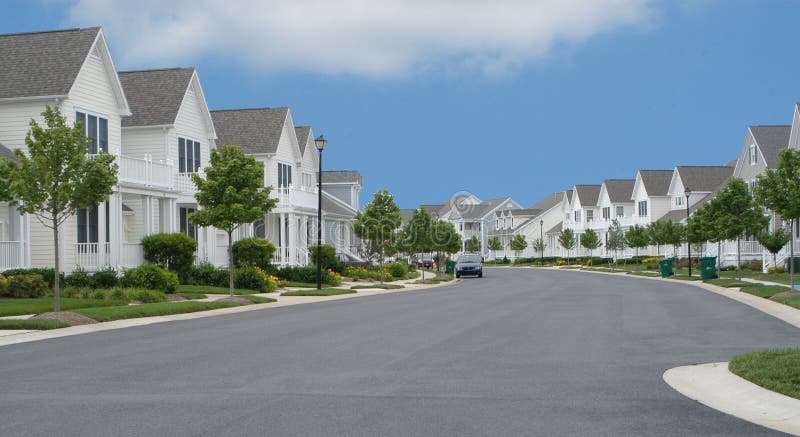
The civil engineers also like absurdly wide turn radii to accommodate 53 feet trailers and large fire trucks even in residential streets, so you end up with comically wide roads even for dead end suburban streets. https://thumbs.dreamstime.com/b/suburban-street-2779407.jpg
The only time a Tesla needs to use brake pads are for emergency stops and for the parking brake.
For some reason I can't understand, they tried to imitate ICE automatics that don't stand still if you don't have your foot on the brake pedal.
Even more annoying, as an owner of a Nissan Leaf that does this, is that the behavior is what I consider to be a bug in automatic transmissions. Manual transmissions don't do that, and there's no good reason for automatics to do that (and a hundred really good reasons for them not to). It's an artifact of the viscosity of the fluid it turns in, and it annoys me that my EV is bug-for-bug compatible with a device the car doesn't even have (a transmission).