News for hackers. Stuff that matters.
Re:Krugman on BitCoin by maratd on Wednesday September 07, 2011 @01:08PM (#2970342)
> Perhaps when Bitcoin reaches supply maturity the value will stabilize

I absolutely hate Krugman, but this is Econ 101 and even he gets it right. Bitcoin was a flawed experiment from the start because it has an absolute supply limit. Reaching that limit won't help. It'll make things worse. The money supply needs to expand for healthy economic activity and growth. If it doesn't, weird shit starts to happen.

Here's an example. In a normal economy, the population is constantly expanding. That means you need more $$$ in the system for each new person. If more money doesn't enter the system, the value of money goes up because of increasing demand and you start experiencing deflation.

Deflation is really really bad. Imagine you're a store owner. All of a sudden, people stop buying your stuff. Not because they don't want to, they love your stuff ... they just don't have enough money. So you lower your prices. Things go back to normal. Your own expenses go down as well, after all, everybody experienced deflation.

No big deal, right? This is what happens when a computer scientist creates a currency. Just adjust to the new price level, right? WRONG. It IS a big deal.

Think of the psychological effect of having to CONSTANTLY lower your prices on your goods. At some point, you'll hang yourself. You want to charge more, not less. It is absolutely depressing and has a real effect. Deflation is absolutely horrible.

Re:Krugman on BitCoin by johnthedebs on Wednesday September 07, 2011 @01:41PM (#2970523)
The problem isn't the psychological effects of needing to constantly lower prices – this happens all the time in the tech industry, and everyone in that industry is doing just fine psychologically.

Rather, it has to do with the fact that constantly down-shifting prices cause people not to buy nearly as often as they would if prices were stable or slightly inflationary. As a result of that, the economy slows down (sometimes dramatically).

Re:Krugman on BitCoin by ajross on Wednesday September 07, 2011 @02:46PM (#2970832)
Exactly. In the bitcoin world, you make more money by not investing the money you have and instead holding onto it in the hopes that you'll be able eventually convert it to a stable currency in the future. That's a disaster. Who, for example, is going lend their precious bitcoins to a risky startup when they can just sit on them and watch them appreciate?
Re:Krugman on BitCoin by stevenwagner on Wednesday September 07, 2011 @04:14PM (#2971212)
Finance 101, its called hedging. You can invest in dollars, euros, bitcoins, google, gold, food or whatever. They all have relative leverage and are all investments. Purchasing bitcoins means to investing in a share of the bitcoin economy. Its a startup currency which has never happened before. The increase in trading value has created an enormous amount of funding for bitcoin startups.
Re:Krugman on BitCoin by brown9-2 on Wednesday September 07, 2011 @07:07PM (#2971917)
But what about the people that want to use it as a currency, to buy things? If everyone views it as an investment, and not a vehicle for trade, it will fail as a currency / never take off as a currency.

A lot of this logic is circular - the value will continue to rise because people will keep investing because the value will keep rising, etc.

Re:Krugman on BitCoin by Amincd on Thursday September 08, 2011 @12:54AM (#2972681)
People are not all going to hold on to it and not spend. Some people are going to feel that due to hoarding, it won't become a currency, and hence it's not a good investment, and will be more likely to spend.
Re:Krugman on BitCoin by jonnathanson on Thursday September 08, 2011 @06:55AM (#2973360)
"...due to hoarding, it won't become a currency, and hence it's not a good investment..."

Not necessarily.

The prospect that it's not a currency is what makes it attractive to hoarders. Hoarders/investors don't want Bitcoin to be a viable currency; they want it to be an investment commodity. And that's the crucial problem with Bitcoin: its use as a currency, and its use as an investment, are fundamentally at odds with one another. At any given time, it makes sense to be either buying/selling (hoarding) or buying/spending (transacting); at no point in time does it make sense to be doing both.

Transactors essentially believe that the value of Bitcoins will converge around a stable mean, thereby facilitating the currency's use for transactions. Hoarders believe the opposite: that the value will either be totally volatile (with lots of peaks and valleys against which to speculate), or that it will steadily climb.

Finally, we should distinguish between "selling" and "spending." A hoarder who wants out of the market will not spend his hoard; he'll sell it. A transactor also buys and "sells" Bitcoins, but in his case, "selling" involves spending them on goods or services -- not converting them back to dollars. This is a subtle, but crucial distinction. Both users buy into the market, but they exit the market differently and with different outcomes. And both will only be able to exit the market if there's liquidity in the form of willing new buyers or willing acceptors of BTC in exchange for goods and services. Each of those two outlets has a different liquidity dynamic, too.

(Sorry for the tl;dr)

Re:Krugman on BitCoin by Amincd on Thursday September 08, 2011 @06:55PM (#2976014)
"The prospect that it's not a currency is what makes it attractive to hoarders. Hoarders/investors don't want Bitcoin to be a viable currency; they want it to be an investment commodity. "

Bitcoin will not be a good investment unless it's a currency. It has no other uses besides as currency. It's not a precious metal with industrial or ornamental uses for example. It's an abstract piece of data that could be useful in trade.

" Both users buy into the market, but they exit the market differently and with different outcomes. And both will only be able to exit the market if there's liquidity in the form of willing new buyers or willing acceptors of BTC in exchange for goods and services. Each of those two outlets has a different liquidity dynamic, too."

An investor who believes bitcoins will drop in value has the option of selling it or trading it for a good/service. Both accomplish the goal of getting out of a depreciating asset.

Re:Krugman on BitCoin by brown9-2 on Thursday September 08, 2011 @10:05AM (#2973941)
Some people are going to feel that due to hoarding, it won't become a currency, and hence it's not a good investment, and will be more likely to spend.

But if I as an individual consumer feel that bitcoin won't become a currency, why would I even be converting my money into bitcoin in the first place?

Re:Krugman on BitCoin by scott_s on Wednesday September 07, 2011 @04:50PM (#2971377)
He's talking about the situation where you already have bitcoins. If their value is deflating fast enough, then the most sound "investment" is to just hold onto them.
Re:Krugman on BitCoin by danielsoneg on Wednesday September 07, 2011 @02:35PM (#2970777)
The other big problem is that debt loads don't drop along with prices - which effectively makes them rise. Falling prices (which lead to falling wages) + stable debt loads make it far harder for debtors to pay off their debts, which puts even further drag on the economy.
Re:Krugman on BitCoin by euroclydon on Wednesday September 07, 2011 @05:06PM (#2971451)
Wow, for all I've read about Austrian Economics, I've never heard that simple yet devastating argument.
Re:Krugman on BitCoin by kragen on Thursday September 08, 2011 @02:00AM (#2972798)
Adam Smith talks about this phenomenon in Chapter IV (The Origin and Use of Money) in The Wealth of Nations:

“By means of those operations [inflating the coinage], the princes and sovereign states which performed them were enabled, in appearance, to pay their debts and fulfil their engagements with a smaller quantity of silver than would otherwise have been requisite. It was indeed in appearance only; for their creditors were really defrauded of a part of what was due to them. All other debtors in the state were allowed the same privilege, and might pay with the same nominal sum of the new and debased coin whatever they had borrowed in the old. Such operations, therefore, have always proved favourable to the debtor, and ruinous to the creditor, and have sometimes produced a greater and more universal revolution in the fortunes of private persons, than could have been occasioned by a very great public calamity.”

It follows, of course, that deflating the currency is favorable to the creditor and ruinous to the debtor; although I can't find where Smith says that, I think he does. In a sense it's worse: the creditor's losses in inflation are limited to the amount she originally lent.

Re:Krugman on BitCoin by michaeldhopkins on Wednesday September 07, 2011 @05:34PM (#2971560)
Just to be clear, it's an argument against fiat currency as deflationary and inflationary shocks occur in those systems. The effects of deflation and inflation over time are countered with market-set interest rates -- higher savings and loan rates in an inflationary period and low-to-negative rates in a deflationary period. Yes, in a deflationary economy a (for example) -5.00% interest rate might be fair and would happen were it allowed.
Re:Krugman on BitCoin by caf on Wednesday September 07, 2011 @08:16PM (#2972083)
Why would you ever lend money at a negative interest rate? You can always get 0.00% with virtually no risk just by socking the money away in a secure location. This is the heart of the problem with deflation (and deflationary currencies like bitcoin) - there's a 0.00% floor on the time cost of money.
Re:Krugman on BitCoin by michaeldhopkins on Wednesday September 07, 2011 @09:56PM (#2972300)
Yes, you are right of course. The interest rate could not rationally go down below zero, but there would still be demand for loans during the deflationary period, so there would be other compensation (like equity in a business) in exchange for the load so that the risk/return would be proportionate to the risk-free rate of holding cash.
Re:Krugman on BitCoin by caf on Wednesday September 07, 2011 @11:57PM (#2972577)
There will certainly be demand for loans, but the supply and demand curves for loans may not intersect anymore, meaning that no loans are made (because given a deflation rate of 5%, a nominal interest rate of, say, 1.5% (only a very small premium over the minimum risk-free rate of 0.00%) is still a real interest rate of 6.5%, which may be more than many of the loan customers are willing to pay.

In other words, deflation makes financing any risky enterprise much harder, so only the mostly highly profitable projects succeed. This makes sense, because in a deflationary environment just holding a pile of cash is a profitable endeavour.

Re:Krugman on BitCoin by TruthElixirX on Thursday September 08, 2011 @01:55AM (#2972787)
Austrians don't advocate for a deflationary currency, they advocate for competing currencies. Rothbard, one of the "pillars" of Austrian Economics, even stated that The Great Depression was due to deflation not inflation.

Lots of people that scratch the surface of Austrian Economics immediately start shouting the ills of inflation and such.

Most "hardcore" Austrians I know would like a currency that's supply grew with economic growth. Economy grows by x measure then so does the currency, to keep it stable.

Re:Krugman on BitCoin by euroclydon on Thursday September 08, 2011 @10:39AM (#2974058)
Thanks. I knew this was wrong as soon as it left my keyboard.

I guess the problem we're having is that the Fed's mandate is to keep unemployment low, not to expand the currency as the population expands.

I really don't understand how a currency supply is supposed to track growth, when one of the means of controlling currency expansion, the discount rate, can actually stimulate growth sometimes, right?

Re:Krugman on BitCoin by iradik on Thursday September 08, 2011 @04:23AM (#2973095)
Yes, instead of taking on debt people would be incentivized to save money before spending it.

With inflation you get the reverse effect: people are incentivized to take on debt to spend.

Re:Krugman on BitCoin by stevenwagner on Wednesday September 07, 2011 @04:35PM (#2971308)
I would not short gold or Apple either, the risk would be huge! So are you agreeing that bitcoins will become worth more then? So I shouldnt take a bitcoin loan out, I should take a dollar loan out and buy bitcoins with it. Or you are saying bitcoins are bad so they will go down in value ... and I should... whaaat?
Re:Krugman on BitCoin by msbarnett on Wednesday September 07, 2011 @04:51PM (#2971385)
He's saying that the characteristics of bitcoins make it a lousy currency (people have little incentive to spend or loan it).

Whether or not it's an asset worthy of investing in is a separate question. (I'd argue that it isn't, but that's a separate issue from the characteristics that make it a bad currency).

Re:Krugman on BitCoin by jarek on Wednesday September 07, 2011 @10:08PM (#2972328)
As an investment, it's like gold but without the intrinsic value part and the "historically used as an investment for the past couple of millenia" part.
Re:Krugman on BitCoin by guelo on Thursday September 08, 2011 @12:40AM (#2972655)
The intrinsic value of bitcoin is as an uncensorable way to transfer money, for example to donate to Wikileaks when Visa and Paypal won't let you. It becomes more valuable the more governments try to stop transactions. This is why I'm bullish on it.
Re:Krugman on BitCoin by jarek on Thursday September 08, 2011 @08:07AM (#2973533)
Oh, uncensorable? You mean as long as the government permits both parties to be connected to the internet. When they block either of you, it's about as good as a hundred dollar bill.
Re:Krugman on BitCoin by caf on Thursday September 08, 2011 @12:01AM (#2972586)
The intrinsic value of gold is quite a bit less than its market value, though - it's very hard to separate that from the "historically desired" aspect.

If you want intrinsic value, you're probably better off investing in good quality rifles.

Re:Krugman on BitCoin by jarek on Thursday September 08, 2011 @08:08AM (#2973535)
Well, of course. But bitcoin doesn't have even that.

Though I would suggest that you would have to time your entry into the quality rifle investment market well to avoid getting hit by a speculative markup caused by people's expectations of their future intrinsic value.

Re:Krugman on BitCoin by Amincd on Thursday September 08, 2011 @12:56AM (#2972687)
But this contradicts itself. If it makes it a lousy currency, then people wouldn't expect its value to rise, and hence would have an incentive to spend it, hence it would be a good currency and its value would rise.
Re:Krugman on BitCoin by DennisP on Wednesday September 07, 2011 @03:39PM (#2971053)
Rationally, people should wait as long as possible to buy tech because they'll get more later. Instead, they buy it at a furious rate. Why is that?
Re:Krugman on BitCoin by khafra on Wednesday September 07, 2011 @04:24PM (#2971263)
stevenwagner shows by example why this isn't so, but to spell it out: If you were buying a CPU as an investment like a share of a mutual fund, to buy, hold, and sell, you'd want to wait as long as possible. In fact, you'd never buy one; we pretty much always expect the price of a given CPU to go down in the future.

But if you're going to use it to generate value, you should buy it as soon as your expectation for the marginal value it will generate is greater than the price of the CPU.

Re:Krugman on BitCoin by DennisP on Wednesday September 07, 2011 @09:57PM (#2972302)
That makes sense, but what I'm wondering is: why doesn't the same argument apply to all products in the presence of deflation?

It seems to me the real problem of deflation is that debts get harder to pay off, not that people put off their purchases. But the "deflationary spiral" of delayed purchases is what people keep talking about, and I haven't heard a good reason why the tech industry is uniquely exempt from that.

Re:Krugman on BitCoin by sethg on Wednesday September 07, 2011 @11:53PM (#2972567)
Deflationary spirals happen when the average price of everything, economy-wide, is going down. It’s perfectly normal for some things in the economy to get cheaper while other things get more expensive. Consumer technology is conspicuous and the way it gets cheap is conspicuous, but it accounts for a small proportion of what the average American spends money on. (The average American spends a small proportion of his/her income on consumer electronics because they’re so cheap.)
Re:Krugman on BitCoin by DennisP on Thursday September 08, 2011 @10:34AM (#2974036)
Sure, but why does that make the difference? Why doesn't that incentive work the same way when it's one class of products, as when it's all products?

Also, there are several periods in American history when we had modest deflation and a booming economy. The Roaring Twenties was one. How did that happen?

Re:Krugman on BitCoin by sethg on Thursday September 08, 2011 @01:20PM (#2974776)
Consider the effect on wages.

If computers get cheaper while the average consumer’s disposable income stays constant, then people will just buy fancier computers, or spend less on computers and use their savings to buy more of other things, or be grateful that the cheaper computers make up for rising prices in other things they want (e.g., health care).

If the average price of everything goes down, then the average consumer’s disposable income must eventually decrease; to make up for the lost income, employers will have to either cut wages or lay off workers.

PS: The Roaring Twenties were not always so roaring. There was a depression in 1920–21, and according to the helpful St. Louis Fed graphs, there were two other recessions between 1921 and 1929.

Re:Krugman on BitCoin by DennisP on Thursday September 08, 2011 @05:10PM (#2975686)
First explanation I've seen that makes some sense.
Re:Krugman on BitCoin by stevenwagner on Wednesday September 07, 2011 @04:02PM (#2971165)
I know! The iPad is going to be so much cheaper in 10 years. Im waiting.
Re:Krugman on BitCoin by aschoen on Wednesday September 07, 2011 @03:34PM (#2971041)
The total number of bitcoins in circulation is capped, even though the total quantity of wealth in the world continues to increase. If bitcoins were the only currency used, then yes, this would cause hoarding problems. Does this mean bitcoins are flawed? No. It just means that there is a cap on how much wealth can be purchased with bitcoins.
Re:Krugman on BitCoin by stevenwagner on Wednesday September 07, 2011 @04:39PM (#2971325)
It is 21.00000000 million-- or 2.1 quadrillion of the smallest-possible-unit.
Re:Krugman on BitCoin by Raphael on Thursday September 08, 2011 @02:10AM (#2972818)
So every person on earth only gets 300,000 of the smallest possible unit?
Re:Krugman on BitCoin by stevenwagner on Thursday September 08, 2011 @04:51AM (#2973145)
With the current software yes. It could always be expanded if need though.
Re:Krugman on BitCoin by aschoen on Wednesday September 07, 2011 @04:39PM (#2971321)
In other words, prices of goods (in bitcoins) will (eventually) stop deflating, even though there is a fixed quantity of bitcoins, because other cryptocurrencies will be introduced.
Re:Krugman on BitCoin by SkyMarshal on Wednesday September 07, 2011 @09:36PM (#2972256)
>Bitcoin was a flawed experiment from the start because it has an absolute supply limit. Reaching that limit won't help. It'll make things worse. The money supply needs to expand for healthy economic activity and growth. If it doesn't, weird shit starts to happen.

Everyone has an opinion about BTC's deflationary nature, but few people seem to consider the possibility that BTC might be the first currency that works substantially differently in this regard to all other past currencies.

BTC is the first currency that is infinitely subdivisible. Ostensibly only 21 million BTC will be created, but since it is subdivisible to 8 decimal places, there will be [21 million / .00000001] = 2.1 quadrillion atomic units.

And that is only an artifact of the data structure used to implement it in code, not an inviolable requirement of the protocol. The precision, and hence the quantity of BTC, can be increased in the future if necessary.

This aspect of BTC, along with the fact that is not a debt-backed interest-bearing fiat currency might require a rethinking of the Quantity Theory of Money as it applies to Bitcoin-like currencies.

Additionally, only ~7 million Bitcoins have currently been created, only ~33% of the eventual total. The BTC economy is so new you can't buy much with it besides other currencies, computer parts from Newegg etc., and perhaps illegal drugs. Finally, forks like Solidcoin are appearing based on perceptions of consequential flaws in the BTC technology (absolute dependence on miners to extend the blockchain, etc.).

Imho it's worth withholding judgement for a few years at least and just observing how it develops. It's something potentially new, to which the old rules may not apply.

Re:Krugman on BitCoin by gamble on Wednesday September 07, 2011 @10:01PM (#2972314)
> The precision, and hence the quantity of BTC, can be increased in the future if necessary.

The ability to subdivide BTC is irrelevant to the question of depreciation. If 1 BTC goes from $10 USD to $20 USD, then 0.5 BTC goes from $5 USD to $10 USD. It doesn't change the money supply any more than slicing up a gold nugget creates more gold. Bitcoin is still inherently deflationary. All subdivision does is avoid imposing a minimum transaction size.

Bitcoin is also unique in that a substantial portion of the total BTC that will ever exist have already been destroyed, as many early adopters abandoned or lost their wallets.

Re:Krugman on BitCoin by sesqu on Wednesday September 07, 2011 @03:46PM (#2971100)
> In a normal economy, the population is constantly expanding.

That may be, but the western world is then abnormal. US population is projected to peak at 2030, and a number of countries already have negative population growth. Exponential growth assumptions should not be made for long periods ahead.

http://en.wikipedia.org/wiki/List_of_countries_by_population...

Re:Krugman on BitCoin by maratd on Wednesday September 07, 2011 @04:45PM (#2971356)
Our economies, culture, the whole of our civilization is based on the assumption of population growth. Because, quite simply, that's how it's always been.

We have never before experienced a reduction in the human population for any extended period of time.

I wouldn't count the US out yet, it can easily augment its population with immigration. So can all the other developed countries.

Anyway, regardless, making a currency with a fixed supply doesn't work under any scenario. With a constant or increasing population, you want to increase the money supply. With a decreasing population, you want to decrease it.

Re:Krugman on BitCoin by stevenwagner on Wednesday September 07, 2011 @04:48PM (#2971368)
Most people don't seem to realize that when your currency inflates, there are people who get the new money. Inflation=wealth redistribution
Re:Krugman on BitCoin by nhaehnle on Friday September 09, 2011 @04:56AM (#2977422)
Inflation does not mean creation of new money. This usage of inflation has become obsolete with the end of the gold standard.

Inflation is by definition a rise in price levels, usually measured by the CPI (whose definition is sometimes subject to debate, but no measure of price levels is perfect; the important thing is to choose one that's reasonable and then stick to it).

Inflation, i.e. a rise in price levels, can then cause an increase of money supply measures, as producing firms take on larger amounts of credit to finance their operations, and this leads to a (rather weak, and only valid over the long run) correlation of inflation and growth of money supply. There are also tertiary effects that can cause both inflation and growth of money supply (such as excessive government deficits). But it's important not to confuse those things.

Re:Krugman on BitCoin by maratd on Wednesday September 07, 2011 @06:04PM (#2971706)
You're assuming the government turns on the printing press and then spends some money on some social programs? That really doesn't happen anymore (if it ever did).

Various operations by the Treasury and Fed affect the banks. Then you get a shiny new credit card in the mail. I wouldn't call that wealth redistribution.

Re:Krugman on BitCoin by nazgulnarsil on Wednesday September 07, 2011 @06:52PM (#2971881)
I've never seen anyone, including keynesians try to claim that newly created money goes directly to consumers. wow. read more.
Re:Krugman on BitCoin by api on Wednesday September 07, 2011 @06:53PM (#2971887)
It is. It's upward wealth redistribution.
Re:Krugman on BitCoin by guelo on Thursday September 08, 2011 @12:44AM (#2972662)
Unless the person at the top is loaning his money, then inflation is distributing downwards.
Re:Krugman on BitCoin by notahacker on Thursday September 08, 2011 @12:04AM (#2972593)
In addition to population growth the need for an increase in money supply is also driven by increases in productivity per worker, which is enabled by technological progress. If, on the same fixed income, technological progress leads to the people of the 2030s expecting to have pet androids, HIV vaccinations and flying cars (we've been waiting a while for those) in addition to all the stuff they'd need to have to keep up with the Jones', the prices of the stuff we have now have to deflate.

I don't think we'll reach a peak of technological progress in the 2030s.

Unless, of course, economic stagnation is encouraged by discouraging the inherently risky process of investment by making the average return zero.

Re:Krugman on BitCoin by euroclydon on Wednesday September 07, 2011 @01:24PM (#2970433)
How is it any better when prices keep going up? Imagine you're, gasp, a saver, and one day you decide to buy that hamburger, but now you need five or ten times the money to make the purchase as you did, when you stashed it away twenty years ago.
Re:Krugman on BitCoin by rabidsnail on Wednesday September 07, 2011 @01:37PM (#2970494)
Inflation encourages the savers to put their money to work (by investing in the stock market, for example) so that the amount of money that they have increases in proportion to the growth of the overall economy. This is a benefit.
Re:Krugman on BitCoin by 3pt14159 on Wednesday September 07, 2011 @02:30PM (#2970760)
You can't have it both ways. Either consumption is encouraged via inflation or investment is encouraged. For example, say that prices were slightly deflationary, as they are with computer equipment, across the board.*

I could easily make the case that saving goes up! Why? Well if I took my goldbucks and lent them to you at 1% interest we would both be happy. My total return would be something like 3% per year (2% deflation + 1% interest) non-risk adjusted. You would be happy because there are plenty of people that are willing to lend money to you. Because you have access to lending capital, you hire more decreasing unemployment. You can try to make the case that you wouldn't hire because there would be no demand for your goods, but in practice there are A. Other countries, and B. A precedent that people do continue to buy, even during deflationary pressures.

The reason people buy computers and cars despite the fact that they are becoming better and cheaper as time goes on is that they expect that cars and computers are going to continue to get better and cheaper as time goes on. They know that they will face the same "save or spend" decision 2 year later, and they really do need a computer and a car.

The problem with inflation is that "encouraging spending" practically only happens to the poor or middle lower class. I can afford to research gold, silver, lithium, cesium, grain futures, bitcoins, etc. and protect my assets from long term depreciation, but they can't. So you end up with a class of people that have a negative net worth, that is totally unprepared for long term retirement.

* I know that money velocity starts to make a difference, but it is in effect the same as printing more money.

Re:Krugman on BitCoin by alenlpeacock on Wednesday September 07, 2011 @02:56PM (#2970886)
Inflation/deflation has very little impact on the poor; the poor spend almost 100% of their income within a short window of receiving it just to survive. From the view of poverty, saving money is a rich man's luxury, and worries about inflation/deflation rates goes along with it.

For those with excess money, inflation does encourage investment. Under a steady inflationary pressure, it is irrational to hoard your excess money under a mattress or put it in the bank and earn interest, because interest won't keep up with inflation. Your money evaporates away under that scenario. Instead, if you want to act rationally, you would look for other places to put your money where it could outperform inflation. That's the only way you have a chance of holding onto the value it represents.

Deflation discourages spending, but it also discourages investment. Sure, you could justify rolling the dice on some investments to try to outperform the constant bump in value you get every day from deflation, but why bother with that extra risk? If you just sit on your money, trying not to spend it, you'll have way more value in the future than you could ever hope to get out of it today.

This isn't about saving vs. spending, it's about using money for what money is meant for -- exchange of value for value, not as a durable permanent store of value.

Re:Krugman on BitCoin by 3pt14159 on Wednesday September 07, 2011 @03:03PM (#2970920)
The poor and lower middle class do not spend 100% of their money 100% of the time. But nearly 100% of any saved money a poor person has is in the form of raw cash, or non-interest paying bank accounts.

The rich can afford to move their money to more stable currencies and commodities in an inflationary environment. They are more likely to have insights and are way less likely to spend a large portion of their wealth year-to-year.

I disagree that deflation discourages investment. Given a stable deflationary rate rational actors will look at the returns their fellow citizens are getting (from say a mutual fund, or even government bonds) and will conclude that their purchasing power can be furthered.

Furthermore, the United States had a (quazi) gold standard for years, as did most of the world, and investment continued.

Re:Krugman on BitCoin by alenlpeacock on Wednesday September 07, 2011 @03:14PM (#2970952)
Deflation removes some of the incentives for investment, but I agree -- not all of them.

And in practice, to most rational actors a mild deflation is almost indistinguishable from a mild inflation. It's when either of those swing wildly that we have issues. Bitcoin increased in value 11x in the six months from Sep'10 to Feb'11. That would be a major problem if we were all using bitcoins instead of dollars.

Re:Krugman on BitCoin by notahacker on Thursday September 08, 2011 @12:52AM (#2972675)
It's not just the wild swings; it's the systematic tendency towards deflation [mild or otherwise] inherent in Bitcoin: a closed Bitcoin economy reaches zero deflation only where population and productivity growth is zero.

Mild deflation is indistinguishable from mild inflation to a rational investor only where he expects said mild deflation to be temporary, offering him positive average returns on long term investments.

Re:Krugman on BitCoin by stevedekorte on Wednesday September 07, 2011 @04:48PM (#2971370)
"For those with excess money, inflation does encourage investment." If they have their savings in a bank account, it's invested anyways via lending so inflation doesn't change the amount invested. What it can change is how wealth is invested, e.g. high inflation causes people to abandon the currency as a store of wealth - you get people buying and "hoarding", say, appliances they don't need as a store of wealth whose nominal ROI is higher than bank interest on savings accounts.
Re:Krugman on BitCoin by alenlpeacock on Wednesday September 07, 2011 @07:18PM (#2971944)
It is undoubtedly true that high inflation is bad. Very bad.

What you want, ideally, is a currency whose value doesn't fluctuate much at all in the short term, and which has a long term trend towards slight inflation.

Re:Krugman on BitCoin by notahacker on Thursday September 08, 2011 @12:31AM (#2972636)
Actually you can have it both ways. In an inflationary economy there are essentially two viable alternatives: consumption or saving. Holding cash above and beyond the amount needed for liquidity is an irrational preference.

In a deflationary economy, it becomes a very valid option which will serve to drive down the other two, particularly investment in productive assets

In a deflationary economy, holding cash offers a net return equivalent to the average investment return, without the associated risks or loss of liquidity. Essentially investment would become equivalent to spread betting (the costs of running an investment operation being analogous to the bookmaker's spread which makes it certain the average investment returns a loss); you'd only consider it if you thought you were a lot smarter than the rest of the market.

Given falling prices, it would also be more appealing to delay consumption than it is now, though people would still need and want things.

The economy won't come to a complete standstill - people people would continue to buy what they need and some investors would be tempted to gamble. But it would certainly slow down.

Re:Krugman on BitCoin by bji on Thursday September 08, 2011 @04:38PM (#2975567)
Do any desirable economic conditions come out of a deflationary system? What I mean is, is there any economic outcome desired by any world view that is best served by continuous monetary deflation?

If someone wanted the social trend to be towards historic lifestyles, would deflation accomplish that? It's hard to phrase what I am trying to ask so I hope I am being clear. Imagine that someone wanted everyone to live like the Amish. Would persistent deflation accomplish that? Would persistent deflation produce a world where people spend less of their time feverishly trying to make more money and more of their time enjoying what they already have? Would persistent deflation reduce the rate at which we destroy the environment around us?

If inflationary economic systems reward those with money to leverage into investment returns, do deflationary systems reward those who do not? If inflationary systems encourage people to lend out the product of their labor to others to use to create their own wealth, do deflationary systems discourage this, and if so, would the result be that it would be harder for people who are at an economic disadvantage to better their situation? Conversely, would it be harder for people who are at an economically advantageous position to increase their wealth because investment vehicles are less numerous and more risky?

I get the feeling that some people believe that economic growth is an objectively desirable outcome; but must it always be? I do not know exactly how I feel about it, but I feel that it doesn't seem like it should be the given that others seem to believe that it is.

Re:Krugman on BitCoin by Eliezer on Thursday September 08, 2011 @01:56AM (#2972789)
> Either consumption is encouraged via inflation or investment is encouraged

That's not true except in an economy already operating at maximum capacity. The argument for a depreciating currency is that it encourages people to spend or invest it, while if you have an appreciating currency, people just hold onto the bank account numbers instead of generating any economic transactions or activity.

Mind you, there are counterarguments and other problems you get from a depreciating currency, but that's the argument.

Re:Krugman on BitCoin by ohashi on Wednesday September 07, 2011 @02:56PM (#2970888)
Why can't investment and consumption be encouraged? The more money that is invested into companies leads to more salaries being paid, which leads to more consumption. That is the basic theory at least. The details of course can be debated such as 'trickle down economics.'
Re:Krugman on BitCoin by mrb on Wednesday September 07, 2011 @06:10PM (#2971728)
> Inflation encourages the savers to put their money to work.

And deflation encourages the sellers to sell today.

So, in theory, don't deflation and inflation both encourage economic activity?

Re:Krugman on BitCoin by mcantelon on Wednesday September 07, 2011 @02:53PM (#2970866)
It doesn't ecourage you, it forces you. Yet currency is misleadingly sold to society as a legitimate store of value.
Re:Krugman on BitCoin by tptacek on Wednesday September 07, 2011 @03:56PM (#2971131)
Please cite one credible source of mainstream financial planning advice that suggests parking savings in US Dollars.
Re:Krugman on BitCoin by sesqu on Wednesday September 07, 2011 @04:22PM (#2971246)
Anyone offering you salary in US dollars instead of a share of the product is implying that the dollar is a better store of the value you provided them with than the actual thing you produced.
Re:Krugman on BitCoin by msbarnett on Wednesday September 07, 2011 @05:03PM (#2971442)
No, it implies that US dollars are a better means of transferring value for time, because they're for example, highly liquid and fungible.

Properties that they posses at least in part because of the fact that currency is not a good long-term value storage proposition, and so they are not hoarded.

Re:Krugman on BitCoin by sesqu on Wednesday September 07, 2011 @08:55PM (#2972167)
Are you suggesting that goods that retain value are intrinsically illiquid? Certainly, liquidity is not important for investment targets, but I don't think that relationship necessarily goes the other way.

Yes, currency is used (where available) for transfer of value because it is highly liquid, but I would not say that liquidity alone disqualifies a potential good from consideration as value storage. Quite to the contrary. And since currency circulates rather than being reformed as tissue paper at the end of every transfer, it effectively stores a constant amount of value until such a time as it is retired.

Re:Krugman on BitCoin by tptacek on Wednesday September 07, 2011 @09:45PM (#2972280)
You are using these words but putting them together in an order I don't understand. Liquidity isn't important for investments? "Quite the contrary" that liquidity doesn't "disqualify" a good as a store of value? Are you saying suitability as a store of value varies inversely with liquidity? Do you park your money in antiques and artwork? Currency "stores a constant amount of value"? It doesn't inflate and deflate?
Re:Krugman on BitCoin by sesqu on Thursday September 08, 2011 @02:02AM (#2972801)
Okay. I'm a poor communicator, so let's see if I can explain those better.

No, liquidity isn't important for investments. Liquidity is important for trade, and investment is not trade. It's perfectly acceptable for the transfer of long-term investments to take minutes, days, even months.

msbarnett suggested that currency is liquid partly because it cannot store value. I asserted that value stores do not need to be liquid, but it's a nice property for them to have. This is not strictly contrary to non-storing implying liquidity, so that was poor wording.

By currency storing a constant amount of value, I was referring to the fact that the money base is a concrete amount. It comes into existence in exchange for some value, and represents a debt equal to that value. Money is, in very real terms, a store of that predetermined value (convolved with the plausibility of collecting that debt), same as any debt marker.

Re:Krugman on BitCoin by sandee on Wednesday September 07, 2011 @07:58PM (#2972047)
Why treasuries and bonds are purchased ?
Re:Krugman on BitCoin by tptacek on Wednesday September 07, 2011 @09:42PM (#2972273)
Because they pay a (small) risk premium.
Re:Krugman on BitCoin by stevenwagner on Wednesday September 07, 2011 @04:46PM (#2971360)
Whats financial planning?
Re:Krugman on BitCoin by Amincd on Thursday September 08, 2011 @12:51AM (#2972672)
"Think of the psychological effect of having to CONSTANTLY lower your prices on your goods. At some point, you'll hang yourself. You want to charge more, not less. It is absolutely depressing and has a real effect."

This is not a big deal and people adapt to what provides the maximum real profit. You're only going to get depressed if you're used to the old trend of ever increasing prices.

Re:Krugman on BitCoin by api on Wednesday September 07, 2011 @06:50PM (#2971875)
"In a normal economy, the population is constantly expanding."

Exponential growth can never continue forever. We are probably at or near the practical limits to growth on this planet.

I think inflationary currency is an ugly hack to cope with the era of exponential growth.

Re:Krugman on BitCoin by anon5 on Thursday September 08, 2011 @07:56AM (#2973510)
> I absolutely hate Krugman....

Why? ... Perhaps your views are different. Can you please point to a few good writers which you like with contrasting views than his.

(Asking a serious question. Since I, for one, like his views a lot)

Re:Krugman on BitCoin by maratd on Thursday September 08, 2011 @08:09AM (#2973540)
> Why?

He has a tendency of twisting basic economic theory to fit his political agenda. It makes me nauseous.

> Can you please point to a few good writers which you like with contrasting views than his.

Just read the Wall Street Journal. They actually specialize in this sort of thing. You'll get a far more accurate picture of what's going on. NYT is good for regional and national news, not for business and economic commentary.

Re:Krugman on BitCoin by stevenwagner on Wednesday September 07, 2011 @04:01PM (#2971157)
Thats it? Your big punch on deflation is the "psychological effect"? You seem to fundamentally not understanding math and have an emotional attachment to a particular scale of measurement.
Re:Krugman on BitCoin by Duff on Wednesday September 07, 2011 @04:57PM (#2971411)
Bitcoin is not a flawed experiment -- it made the mysterious early adopters quite a bit of money.
Re:Krugman on BitCoin by padmanabhan01 on Wednesday September 07, 2011 @03:27PM (#2971007)
But isn't one rule of money that it should at least hold it's value? Isn't that the main reason gold was used before? What is the point of using something as money if it keeps decreasing in value?
Re:Krugman on BitCoin by 2arrs2ells on Wednesday September 07, 2011 @03:39PM (#2971058)
If money is decreasing in value, it gives people a huge incentive to do something with it - buy something or invest. As long as the decrease to the value is small (1-3%) and predictable, this is a good thing.
Re:Krugman on BitCoin by tptacek on Wednesday September 07, 2011 @03:43PM (#2971078)
Since deflation is an obvious tax on investment and purchasing, arguments that increases in the value of a currency are "obviously" a good thing serve as a sort of litmus test for why people are interested in things like Bitcoin.

The subtextual motivation for Bitcoin advocacy has always been "it's a speculative asset and I hold a position in it". Everything else is just rhetorical cover.

The unfortunate reality is that even by reasoning through Bitcoin's programmed-in deflation, we're dignifying Bitcoin. Bitcoin itself is a sham. The original paper may have been a good-faith contribution to the state of the art in cryptocurrencies, but the "economy" is a trap; a realistic-looking distributed transaction clearing system built on a deliberately volatile wholly synthetic "asset" that exists for the purpose of creating pump-and-dump scams.

Re:Krugman on BitCoin by JoachimSchipper on Wednesday September 07, 2011 @03:55PM (#2971129)
I wouldn't be so sure that the (original) Bitcoin people are running a pump-and-dump scam - there is very little evidence either way. And there are plenty of people who genuinely seem to believe that Twitter causes and/or wins revolutions: love of technology, libertarianism and something we'll call optimism do occur together, and cypherpunks are not the least vulnerable.
Re:Krugman on BitCoin by tptacek on Wednesday September 07, 2011 @03:57PM (#2971136)
To be clear: I'm not saying the original design was a scam. Only its realization as a real system people can interact with and spend money on.

This whole system is morally no different than Zynga tomorrow setting up a system to trade options on Farmville tomatoes.

Re:Krugman on BitCoin by JoachimSchipper on Wednesday September 07, 2011 @04:12PM (#2971201)
To be clear: I think that some people really do believe that Bitcoin is going to overthrow the monetary system and free us all from the evil government. I also think that quite a few more people believe that Bitcoin can only go up (designed for deflation, right?)

"Bitcoin is a scam" is simply not enough to explain stuff from the Bitcoin bulletin to open source GPU mining software - hard work by obviously capable people, and not even remotely the most effective way to become rich.

Mind you, I think the "true believers" are incorrect, sometimes naive and occasionally downright stupid; but declaring them "evil" leaves quite a few unanswered questions. [EDIT: Even if the speculators are probably in the majority.]

(Also, I wouldn't be surprised if EVE had a foostone contract future market...)

EDIT: also, there was nothing wrong with the system design. A bit uninspired, maybe; current research involves zero-knowledge exchanges and the like.

Re:Krugman on BitCoin by Steko on Wednesday September 07, 2011 @05:51PM (#2971646)
The people that recommended Madoff's fund to their family and friends were probably well intentioned too. And the fund probably wasn't a Ponzi scheme from the beginning either but in the end a scam is a scam.
Re:Krugman on BitCoin by Amincd on Thursday September 08, 2011 @07:01PM (#2976033)
People trading goods and services cannot be a sham. Your definition of a sham is "something I believe will depreciate".
Re:Krugman on BitCoin by sesqu on Wednesday September 07, 2011 @04:07PM (#2971179)
I don't really buy this argument. People invest to increase their capital, not to stop it from decreasing. When inflationary pressure is actually tangible, money becomes a hot potato that no one wants, and poof, there goes the economy in a blaze of hyperinflation.

Arguing that inflation is good is tantamount to arguing that illiquidity is good. If I were to argue for inflation, I would go with some other angle, like that capital should evaporate after a lifetime.
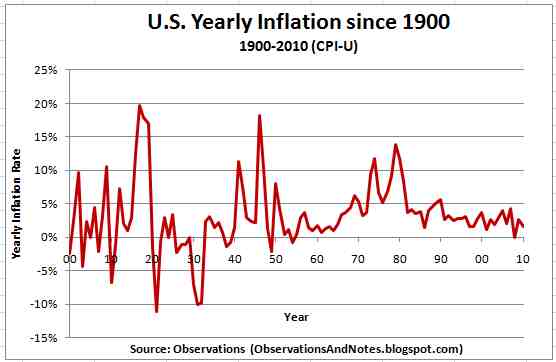
Re:Krugman on BitCoin by caf on Thursday September 08, 2011 @01:10AM (#2972714)
In between "hot potato that nobody wants to hold" and "gold brick that nobody wants to relinquish from their grasp" lies the happy medium that we need.
Re:Krugman on BitCoin by SkyMarshal on Wednesday September 07, 2011 @09:18PM (#2972218)
Inflation != hyperinflation. You're conflating the two in your argument.
Re:Krugman on BitCoin by sesqu on Thursday September 08, 2011 @02:05AM (#2972809)
Yes. When the argument for inflation is that rational actors should not want to hold on to money, I will conflate it with the scenario where rational actors should not want to receive money.
Re:Krugman on BitCoin by tptacek on Wednesday September 07, 2011 @03:38PM (#2971050)
http://3.bp.blogspot.com/-_KuUh8iKx_c/TX_URc8gLpI/AAAAAAAAA6...

Please cite a source on this "one rule of money" you're thinking of?

Re:Krugman on BitCoin by padmanabhan01 on Wednesday September 07, 2011 @04:18PM (#2971231)
http://wiki.answers.com/Q/What_are_the_four_properties_of_mo...

says one of the properties of money is that it has to be a 'store of value'.

Re:Krugman on BitCoin by tptacek on Wednesday September 07, 2011 @04:36PM (#2971310)
Logic that suggests that roads aren't a medium for transportation because they have friction.
Re:Krugman on BitCoin by rmc on Wednesday September 07, 2011 @03:52PM (#2971119)
Just because something was widely held to be true in the past doesn't mean it's widely held to be true now. Some examples: "Gold is a good thing to base our money on", "Black people are mentally inferior to white people", "Homosexuality is unhealthy", "The economy requires slavery".
Re:Krugman on BitCoin by guelo on Thursday September 08, 2011 @12:49AM (#2972668)
The goal of an economy should be to produce as much as possible given the available resources. The goal of money should be to facilitate this happening. Money in itself is not a resource of an economy, it is a tool used to lubricate transactions.