Smaller apartments in dense, walkable neighborhoods have been pretty miserable places to live for over a year now.
The bargain was that you don’t need a house with a yard when you can have an apartment surrounded by parks, restaurants, and bars; that you don’t need a car when you have transit; that you don’t need a home office…
Then all of that was taken away in a heartbeat with little regard to its effectiveness. Suddenly owning a house and a car were critically important again. It’s going to take a long time for people to come back.
* There is no bike parking available, so 2 bikes occupy a large portion of my living space * The sidewalks outside my apartment are small and in a state of disrepair * Intersections are cyclist and pedestrian hostile making it hard to go anywhere without it being a stressful experience * The landlord refuses to fix my A/C when it's 118 degrees farenheit outside, meaning it is often 92F inside the apartment (And no, citing the municipal code that says this illegal does nothing and nobody has the energy to hire a lawyer right now) * The bus stop has been in disrepair to the point where it was recently just removed altogether meaning I have to walk a mile to get to the next one. * The next nearest bus stop has no shade or place to sit * I can't mount my TV to the wall or make any changes to make the small space more comfortable (like hanging shelves or mounting hooks)
I want nothing more than effective urban living, but I have yet to see it. So from my perspective, I'm not sure what was really "lost" during the pandemic that wasn't already broken.
Also, since I see some replies mentioning it, I would rather my parents ad grandparents be alive than have any of the above be fixed. So I'd be careful to judge too harshly and gain some perspective about "strict" measures to curb the spread of the pandemic.
Unanchored furniture is extremely risky and kills infants every year.
Yeah, there's a risk that you might drill into a pipe. In the last 20 years that happened to me once, and it was annoying, since it cost 200€ to have the pipe fixed, but it's not really a big deal.
For what it’s worth, I’ve done this every place I lived and never had a problem. I always make sure to patch the holes and paint the entire wall when I move out though.
Living in a rainforest-like climate in Vancouver, I couldn't be happier. Ya, I could use a little more space than my studio. Ya, it sucked so bad when the pandemic hit, but much much less so than in suburban areas. I still only walk 2 mins to a bar or where I buy groceries. Transit is the same. Mountains aren't far etc.. To say urbanites have been set back decades is ridiculous.
That said, idk about living right downtown, but I've always hated it anyway because it's a boring landscape with boring people.
Beyond that, rural and suburban services are very heavily subsidized by federal and state grants, most of which comes from urban areas.
I would say that urban living in North America has two fatal flaws:
1. Housing prices (and other cost of living)
2. Incorrect city design based on cars.
High prices, especially for housing, increase the number of homeless and desperate people. This increases crime by a lot.
Car-centric design makes moving about a dense area very tedious for everyone, including car drivers. Urban design ought to be more centered on people throughout, which means pedestrians, bicyclists, and public transit are treated with more priority than cars. Every city in North America is designed the complete opposite. Not only that, but cars are very noisy and dirty compared to other modes, making the urban area even worse.
At least the city design portion can have a huge benefit. A counterexample to your point is likely most cities in the Netherlands, like Amsterdam, which reportedly have very happy citizens and very people-centric design.
Plus, 83% of Americans choose (or need) to live in an urban area despite the flaws.
For more info on the financial aspect, this video and the others in the series are great: https://youtu.be/XfQUOHlAocY
This is simply false. Maintaining roads takes typically less than 10% of the budget of the municipality. Additionally, road construction and maintenance is significantly more time consuming and expensive in dense urban areas.
> On top of that, neighborhoods that are spread out require more people to drive cars, which not only increases the maintenance burden, but also requires loads of parking lots at grocery stores. And none of that grocery store parking lot is going to generate the tax income required to pay for the infrastructure needed to travel there.
Huh? The grocery store’s parking is part of grocery store, which generates tax income.
[1] https://usa.streetsblog.org/2015/03/05/sprawl-costs-the-publ...
Yes, ~80% of Americans live in "urban" areas, but the majority of those living in "urban" are living in "suburban" areas if you actually look closely. For most classifications its simply either urban or rural, not urban/suburban/rural.
City urbanism might be the most resource-efficient in many ways, but animal well-being isn’t measured solely in terms of how efficiently we can feed and house you.
If it were, factory farms would be the ideal.
For my goddaughter, killing ants is the top of all evils. Ecology should be able protecting cute things. For me, terraforming kilometers of arable land to build her colonies on Earth, that was the real crime. Cities bring the illusion that humans are legitimate in unfathomable numbers. Cities hide away nature’s constraints.
Care to elaborate?
Outside of the current pandemic, those problems range from the rent-seeking consolidation of housing ownership into very few hands, to the elimination of forms of self-reliance that create healthy community — instead shifting those responsibilities to government and large institutions.
Scale also requires more top-down centralized control and regulation in order to function at all.
Now that is a spectrum and we are all dependent on others but they are at the high end. The low end is "compound in the middle of the wilderness which is dependent indirectly for there to be wilderness unused for them to DYI everything".
The issue will hopefully wind up rare but there is no great certainty in these matters.
Oh yeah, and we completely f’d over our kids. Like, shamefully so.
History will harshly judge the people who pushed these public policies.
As a thought experiment, what if the pandemic mostly hurt 20-somethings? Would our old leaders stop everything to prevent transmission of that disease? Or would young people be told to suck it up? Or would they have asked 20-somethings to just stay home while everyone else went about their business? I'm not sure...
(AIDS was originally attributed to only gays and sexually promiscuous people. Best case, leadership simply ignored it. Worst case, innocent victims were attacked [read the Wikipedia article for "Ryan Wayne White"].)
There's also some clips of him warning people not to have casual contact with gays (he says people with AIDS).
This happened [1]. They told young people to go ** themselves. People had school, people went to eat, people carried on with jobs, NO government checks sent out. Deaths: 50 million worldwide with about 675,000 occurring in the United States.
"Mortality was high in people younger than 5 years old, 20-40 years old"
https://www.cdc.gov/flu/pandemic-resources/1918-pandemic-h1n...
Because I don’t think that such a thing promotes healthy, much needed dialog. The idea that any criticism or skepticism of the core tenants of the last year and a half of public policy is misinformed ramblings of crazy people…
[0] https://www.dailynews.com/2020/04/28/california-doctors-with...
Whereas you're asserting that it's impossible for smart people to spread disinformation?
The media does its very best to blow everything out of proportion for ratings. COVID is no exception. What a win for big pharma. 640,000,000 doses of a drug they can't be sued for. It's absolutely fantastic for them.
Now look at who they bribe.
It's been an incredibly good couple of years for our oligarchy.
You had no idea about the preventable medical errors killing 400K people a year did you?
You can see effectiveness of response based on various states and regions that responded differently.
https://www.covidchartsquiz.com/
Nope, the restrictions really didn’t do anything at all.
Just two basic things the charts don't consider:
1. If people followed mask mandates in states (e.g. Alabama vs Florida)
2. Population density and disease spread models (e.g. comparing Montana and Idaho felt like a reach, California vs Nevada doesn't consider spread in major cities vs how many major cities there are in each)
We absolutely should study this later, but some of these restrictions were little to no cost. Let's not lump them all together. Wearing a mask indoors vs if your kid can go to school or not are two very different value equations that may merit different answers of "if a restriction is worth it"
In other words, by my estimation the urban ideal continued to be advantageous for different reasons during the pandemic, though I can certainly picture other urban centers that would have been a much worse experience, in particular those with stricter mandates and poor weather (which is a truly isolating scenario).
In my neck of the woods (SE Florida) urbanism didn't lose a beat. Rental apartments in my neighborhood are leasing at above asking. There were a few months where the city felt abandoned, property values were down, and leases were offering signing bonuses.
It's done a 180, or 360 now, city property values are climbing. New construction is way up, even with the high cost of labor and material, and shops and bars are working with the new normal. My city has taken advantage of decreased traffic to institute popular pedestrian projects that were unpopular to commuters.
Anyone living near those areas had an improved walkable neighborhood.
Also I don’t think anyone living near a park lost use of those parks.
The numbers don't really bear this out. Rents are as high as ever and inventory is largely back to pre-covid in the major cities where the life you're describing exists.
Now, post pandemic, the small grocery store downstairs closed, as did the cafe, and the restaurant is take-out only. The neighbourhood also suffered, with many lovely small businesses closing and crime becoming as rampant as it was a decade ago. The city also raised the bus fare ~20%. This was basically the perfect storm to drive me into a house rental, buy a cheap used car, and otherwise turn me into what I resented just a few years ago.
I think this is going to be a trend for many late-twenty-somethings in north america, the regression of optimistic urbanists to begrudged suburbanites.
You want bleak? Look at projections of what the planet will look like in 100 years if current trends continue.
Everyone should not own a car, it’s unsustainable both for the planet and for the road system.
The fact that so many people pay that cost and the inconveniences of maintenance and searching for parking space should motivate you to think about the utility of car ownership.
Where I live, public transportation is great. I don't think it can get much better, practically. Yet, I have several modes of transportation where I cannot use it: Traveling out of the big city or to orthogonally to the main public transportation routes, or with small kids, or with large luggage, with a week worth of shopping bags, or when I have to get rid of garbage...
What a big city needs is threefold:
* Slow, respectful, traffic (30kph should work) -except for some big roads- shared between all vehicles (bikes included)
* Zero-emission vehicles
* Enough parking spaces (that should cost money) for all vehicles.
In order to get there, we will have to reduce the amount of apartments per sqkm and even more so the amount of office space and shops. This will work in two ways: It will naturally reduce traffic and free space for car parks.
Car ownership has a Prisoners' Dilemma payoff structure to its utility. It's very useful to the car owners, very harmful to society at large. As more and more people have cars, the population of car owners and society at large overlap a lot, meaning everyone is paying the costs.
Do you ever wonder why it's so hard to get around without a car? A lot of it is that the need for wide roads for cars, and the need for lots of parking force all of your built infrastructure to be physically spread out. Which means you no longer can get around without a car, which means you need more car infrastructure, which makes it harder to get around without a car...
Most things we take for granted like being able to get a week's worth of groceries home in one trip or going to enjoy a restaurant that specializes in a niche style, or buying cheap goods at a warehouse store, or being able to get to a hospital within half an hour all require automobile infrastructure. But once you have roads all over the place and parking lots at important destinations, and lots of people owning cars for these necessities, the damage is done, and car travel is the sensible mode for virtually all transportation.
The fact is taking a leisurely stroll on a nice spring morning when you want to is very different from being forced to walk for miles through freezing rain in November after a long day of hard work. You want the option to drive. There are lots of good ideas about how to make towns and cities both drivable and walkable. Anyone telling you that the simple existence of car infrastructure is the problem has not thought through what elimination of that infrastructure really means.
It's possible to do these things without a car if your city has prioritized making that a reality. The exact mode depends on the city. Some examples:
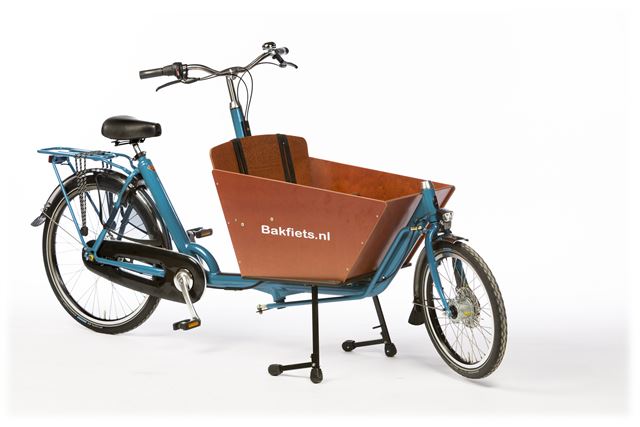
* In the Netherlands, cycling infrastructure is strong enough that you can bike to a big box store outside the city and load up your bike with what you need [0]. You can fit a week's worth of goods in a cargo bike [1] if that's your style. There is also an argument to be made that you don't need to buy groceries weekly if your city is dense and you have a store nearby.
* In Pittsburgh, there are flyer (fast track) busses that will take you to malls in the northern car-oriented suburbs as well as light rail to the southern suburbs. So you can reach most niche stores in the metro area by bus/light rail. Although it's pedestrian hostile in the northern burbs. In the city proper, bus coverage is good enough to get basically anywhere including all the niche restaurants. Though light rail is more frequent and pleasant. Bus frequency and reliability is just OK, not great. Could be improved by changing priorities. My point here is that Pittsburgh's urban form is not great but they still came up with transit solutions that work for average people.
* In Toronto, busses run every 10 minutes on an enormous number of routes. This reduces transfer times so much that travel time is nearly on parity with cars, even though the city is very car-oriented.
I don't understand your note about hospitals because ambulances get the right of way and can travel in bus lanes.
> The fact is taking a leisurely stroll on a nice spring morning when you want to is very different from being forced to walk for miles through freezing rain in November after a long day of hard work.
I agree, but it's not so bad in a dense urban area with adequate bus shelters, sidewalk clearing and bus lines scattered everywhere.
> Anyone telling you that the simple existence of car infrastructure is the problem has not thought through what elimination of that infrastructure really means.
The simple existence of car infrastructure is the problem because it causes sprawl and exacerbates our climate emergency. Cities have already come up with the solution and that is good transit, active transit included.
[0]: https://www.youtube.com/watch?v=M8F5hXqS-Ac
[1] https://www.bakfiets.nl/bestanden/afbeelding/2019/374-cargo-...
Sure, folks use cars mostly to move just their body around. But on the occasions its more than that, a bus or bike is a very different proposition, an order of magnitude more onerous than a car.
And btw using the Netherlands as a bicycle-nirvana doesn't translate. That's about the flattest nation on earth. Anywhere else, and hauling 200lbs of cargo is not the same joyful experience.
You can purchase the TV set off the internet and have it delivered to your door by post. Or you can apply for a "no parking" permit on the front of your building and have the big box store deliver it. The delivery charge is less than a monthly car insurance payment.
> or six bags of groceries
Like I said in the post you are replying to, you can buy groceries more frequently if you live in a dense city with stores nearby. Also in Pittsburgh you are totally allowed to bring six bags of groceries onto the bus, it is quite normal. You put them on the seat next you. There are corner cases where the bus is full and you can't but in the average case it works well.
> And they add an hour to the trip. That ice cream is going to be wasted.
I buy my groceries by bus or bike. I don't know how I'd run into this problem. Everywhere in my city there is a grocery store within a 1 to 1.5 mile (1.6 to 2.4 km) radius with bus access that takes up to 20 minutes to get there. If I ever had my ice cream melt, I would buy one of those thermal bags with the shiny inside to keep it cool. It is true that busses often have longer travel times due to stopping frequently. This delay can be reduced by giving signal priority to busses and by building bus lanes (right-of-way).
> Sure, folks use cars mostly to move just their body around. But on the occasions its more than that, a bus or bike is a very different proposition, an order of magnitude more onerous than a car.
Yeah, but cases where one truly can't use transport to accomplish the given task are infrequent enough that the average person can work around it using the solutions I mentioned and some extra planning.
> And btw using the Netherlands as a bicycle-nirvana doesn't translate. That's about the flattest nation on earth. Anywhere else, and hauling 200lbs of cargo is not the same joyful experience.
Yeah, cargo bikes are just one tool in the transportation toolbox. Bikes are still surprisingly useful even in a really hilly city. But for hauling stuff up hills, one could use a cargo e-bike. Like these: https://www.bicycling.com/bikes-gear/a25054215/best-cargo-bi...
I think you are describing lots of places where walkability has been achieved while maintaining perfectly functional road networks.
> So what are these busses and ambulances driving on, exactly?
Roads. I never proposed getting rid of those! I want to get rid of parking which again, is a different discussion. But it is surely one informed by our original topic which was whether cars are required for daily life.
> I think you are describing lots of places where walkability has been achieved while maintaining perfectly functional road networks.
Of the three I listed, only The Netherlands fits that description. There are disincentives to owning a car there, like limits on parking spaces. I believe true walkability and livability is only achieved when we modify traffic signaling and road infrastructure to prefer pedestrians, transit, and bikes over personal vehicles. Or if space allows, provide completely separate road networks for the modes so there are no conflicts, with more direct routes given to transit, peds and bikes. We also need to remove parking. The Netherlands has done these things.
Pittsburgh and Toronto are not there yet. They are car-oriented cities with a transit system grafted on top. I'd be happy to go into more detail but we've outgrown the original topic of our discussion.
I understand you plan to include bikes on the roads themselves. But making a city less dense and filling it with parking spaces for automobiles makes the city hostile to all except automobiles.
> * Zero-emission vehicles
Zero tailpipe emissions. EVs still emit 1/2 as much lifetime GHG as a combustion engine personal vehicle [0]. Your plan would make your theoretical town less walkable and bikeable and force former cyclists and pedestrians to drive EVs. This results in net higher emissions since more motor vehicles would be on the road.
> Traveling out of the big city or to orthogonally to the main public transportation routes, or with small kids, or with large luggage, with a week worth of shopping bags, or when I have to get rid of garbage...
These are valid use cases but they do not justify increasing a town's emissions in the middle of a climate crisis.
> In order to get there, we will have to reduce the amount of apartments per sqkm and even more so the amount of office space and shops. This will work in two ways: It will naturally reduce traffic and free space for car parks.
This would make the city less economically productive per sq km. Compare the tax revenue from 10 parking spaces in a parking lot versus mixed use row houses & businesses in the same lot. Plus people can actually live in the latter. Is there a housing shortage in your city? There sure is one in mine. And it has tons of tax subsidized parking :)
[0] point #4 in https://www.epa.gov/greenvehicles/electric-vehicle-myths
That's simply not true. I saw that working extremely well in downtown Vancouver nearly a decade ago. Parking can easily coexist with apartments and shopping and it can get the cars off the streets, increasing space for everyone.
> Zero tailpipe emissions.
Yes, because that's what a city needs to care about. Everything else is not city politics.
> Your plan would make your theoretical town less walkable and bikeable and force former cyclists and pedestrians to drive EVs.
That's simply not true. Offering enough parking decks (and, e.g., garages in apartment buildings) will remove parked cars from the streets. This gives space for slow bikes and pedestrians. Reducing the default speed will make live much better for fast bikes (I consider myself part of the latter group, btw. I speak out of experience).
> This would make the city less economically productive per sq km.
Since when is that suddenly an argument? First of all, taxes mostly go to the country, where I live. Second, the most economical mode if living would mean to move into some barracks close to the office, and third, transportation already plays a bigger role for local economy than density of living.
> Plus people can actually live in the latter. Is there a housing shortage in your city? There sure is one in mine.
I bet you are one of these people that buy the argument that building more roads leads to more congestion. Did it ever occur to you that building apartments could actually worsen the housing crisis?
Your proposal, to make cities walkable, inevitably increases the housing shortage and yields extremely dense quarters - something I would not consider livable at all. A city should have an upper limit of people per sqkm as it should have a minimum level of green and parks.
This sounds like prioritizing cars over people. What's the point?
The cars are used by people. If you prioritize for cars, you are prioritizing for those people.
Assuming gas prices were 10x (32.9$/gal), they'd be paying 200$ an hour just for gas.
Alright, this has gotten ridiculous. Anyway, higher gas prices would just drive alternative adoption, and that's good. I was just selfishly thinking of me having to drive my car with those prices ;)
Taking a BEV on a road trip vacation is more tricky and requires more planning, but it's very doable. We've taken our 2017 340 mile (when new, current max range is about 327 miles) Tesla on a number of moderately long road trips. It's a bit slower and there are some places we could not have gone, but it definitely works.
Keep in mind that you can charge 3-5 miles per hour on nearly any standard 120 VAC outlet. With one of our trips to the mountains, we ran a 100 foot extension cord from our cabin and had little trouble keeping up with mileage demands.
More concretely, last year we moved from California to Washington state, a little more than 800 miles. Since it was in the middle of C19, we didn't want to stop over anywhere, so we had to do the drive in one day.
It took us about 16 hours to drive about 820 miles, an average of more than 50 miles per hour, including charge stops. 15-20 years ago we'd do 800 mile days in about 13 hours, or an average of 61 miles per hour.
The Tesla supercharger network is pretty extensive, extremely reliable and constantly growing. I don't have a sense of how widespread/reliable the other fast charging networks are, beyond various problematic stories I've come across.
PS: I've seen youtube videos of people doing 12-15 amp 120 VAC charging (gaining 3-5 mile per hour) in Teslas using portable solar panels too.
I imagine the impact depends heavily on localized lockdown measures, and they apparently aren't nearly as strong in Dallas as wherever you live.
I'm guessing the EV is electric vehicle, but what's the B?
Which is really a poorly coined term because it's not as if plug-in hybrids, many of which can do people's daily commute back and forth without ever kicking the internal combustion engine on, where finding their energy from something else than an EV battery.
Are you expecting to want a road trip in the next year that badly? Otherwise just rent, right?
Uber and Lyft still sucking so hard into this year was the catalyst.
I wonder if shared rides through those apps will ever return.
I still hate car ownership: the parking fees, maintenance, shocking price of gas, insurance, etc. It's costing me $20/day to sit mostly in a garage. I was saving up for a BEV. But realized air travel is out of commission and a BEV might not be practical for road trip vacations, at least not right now.