Most things we take for granted like being able to get a week's worth of groceries home in one trip or going to enjoy a restaurant that specializes in a niche style, or buying cheap goods at a warehouse store, or being able to get to a hospital within half an hour all require automobile infrastructure. But once you have roads all over the place and parking lots at important destinations, and lots of people owning cars for these necessities, the damage is done, and car travel is the sensible mode for virtually all transportation.
The fact is taking a leisurely stroll on a nice spring morning when you want to is very different from being forced to walk for miles through freezing rain in November after a long day of hard work. You want the option to drive. There are lots of good ideas about how to make towns and cities both drivable and walkable. Anyone telling you that the simple existence of car infrastructure is the problem has not thought through what elimination of that infrastructure really means.
It's possible to do these things without a car if your city has prioritized making that a reality. The exact mode depends on the city. Some examples:
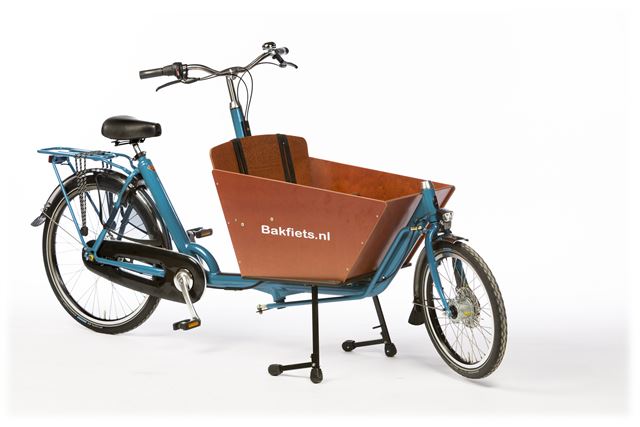
* In the Netherlands, cycling infrastructure is strong enough that you can bike to a big box store outside the city and load up your bike with what you need [0]. You can fit a week's worth of goods in a cargo bike [1] if that's your style. There is also an argument to be made that you don't need to buy groceries weekly if your city is dense and you have a store nearby.
* In Pittsburgh, there are flyer (fast track) busses that will take you to malls in the northern car-oriented suburbs as well as light rail to the southern suburbs. So you can reach most niche stores in the metro area by bus/light rail. Although it's pedestrian hostile in the northern burbs. In the city proper, bus coverage is good enough to get basically anywhere including all the niche restaurants. Though light rail is more frequent and pleasant. Bus frequency and reliability is just OK, not great. Could be improved by changing priorities. My point here is that Pittsburgh's urban form is not great but they still came up with transit solutions that work for average people.
* In Toronto, busses run every 10 minutes on an enormous number of routes. This reduces transfer times so much that travel time is nearly on parity with cars, even though the city is very car-oriented.
I don't understand your note about hospitals because ambulances get the right of way and can travel in bus lanes.
> The fact is taking a leisurely stroll on a nice spring morning when you want to is very different from being forced to walk for miles through freezing rain in November after a long day of hard work.
I agree, but it's not so bad in a dense urban area with adequate bus shelters, sidewalk clearing and bus lines scattered everywhere.
> Anyone telling you that the simple existence of car infrastructure is the problem has not thought through what elimination of that infrastructure really means.
The simple existence of car infrastructure is the problem because it causes sprawl and exacerbates our climate emergency. Cities have already come up with the solution and that is good transit, active transit included.
[0]: https://www.youtube.com/watch?v=M8F5hXqS-Ac
[1] https://www.bakfiets.nl/bestanden/afbeelding/2019/374-cargo-...
Sure, folks use cars mostly to move just their body around. But on the occasions its more than that, a bus or bike is a very different proposition, an order of magnitude more onerous than a car.
And btw using the Netherlands as a bicycle-nirvana doesn't translate. That's about the flattest nation on earth. Anywhere else, and hauling 200lbs of cargo is not the same joyful experience.
You can purchase the TV set off the internet and have it delivered to your door by post. Or you can apply for a "no parking" permit on the front of your building and have the big box store deliver it. The delivery charge is less than a monthly car insurance payment.
> or six bags of groceries
Like I said in the post you are replying to, you can buy groceries more frequently if you live in a dense city with stores nearby. Also in Pittsburgh you are totally allowed to bring six bags of groceries onto the bus, it is quite normal. You put them on the seat next you. There are corner cases where the bus is full and you can't but in the average case it works well.
> And they add an hour to the trip. That ice cream is going to be wasted.
I buy my groceries by bus or bike. I don't know how I'd run into this problem. Everywhere in my city there is a grocery store within a 1 to 1.5 mile (1.6 to 2.4 km) radius with bus access that takes up to 20 minutes to get there. If I ever had my ice cream melt, I would buy one of those thermal bags with the shiny inside to keep it cool. It is true that busses often have longer travel times due to stopping frequently. This delay can be reduced by giving signal priority to busses and by building bus lanes (right-of-way).
> Sure, folks use cars mostly to move just their body around. But on the occasions its more than that, a bus or bike is a very different proposition, an order of magnitude more onerous than a car.
Yeah, but cases where one truly can't use transport to accomplish the given task are infrequent enough that the average person can work around it using the solutions I mentioned and some extra planning.
> And btw using the Netherlands as a bicycle-nirvana doesn't translate. That's about the flattest nation on earth. Anywhere else, and hauling 200lbs of cargo is not the same joyful experience.
Yeah, cargo bikes are just one tool in the transportation toolbox. Bikes are still surprisingly useful even in a really hilly city. But for hauling stuff up hills, one could use a cargo e-bike. Like these: https://www.bicycling.com/bikes-gear/a25054215/best-cargo-bi...
I think you are describing lots of places where walkability has been achieved while maintaining perfectly functional road networks.
> So what are these busses and ambulances driving on, exactly?
Roads. I never proposed getting rid of those! I want to get rid of parking which again, is a different discussion. But it is surely one informed by our original topic which was whether cars are required for daily life.
> I think you are describing lots of places where walkability has been achieved while maintaining perfectly functional road networks.
Of the three I listed, only The Netherlands fits that description. There are disincentives to owning a car there, like limits on parking spaces. I believe true walkability and livability is only achieved when we modify traffic signaling and road infrastructure to prefer pedestrians, transit, and bikes over personal vehicles. Or if space allows, provide completely separate road networks for the modes so there are no conflicts, with more direct routes given to transit, peds and bikes. We also need to remove parking. The Netherlands has done these things.
Pittsburgh and Toronto are not there yet. They are car-oriented cities with a transit system grafted on top. I'd be happy to go into more detail but we've outgrown the original topic of our discussion.
Car ownership has a Prisoners' Dilemma payoff structure to its utility. It's very useful to the car owners, very harmful to society at large. As more and more people have cars, the population of car owners and society at large overlap a lot, meaning everyone is paying the costs.
Do you ever wonder why it's so hard to get around without a car? A lot of it is that the need for wide roads for cars, and the need for lots of parking force all of your built infrastructure to be physically spread out. Which means you no longer can get around without a car, which means you need more car infrastructure, which makes it harder to get around without a car...