Apple does not need to dominate the PC market to make money. What they deliver pushes other competitors to improve.
I, like the commenter I've replied to, can't believe that we're even able to frame a processor power shift like this in a bad light. It shows companies they can build something big without x86 - that's good for hardware in the long run, irrelevant of whether it's Apples variant or not.
It's our responsibility, as enthusiasts, to make sure legacy lives on. Plenty of people are building emulators, making home networks with old hardware.
It would be much easier if Copyright/Patents expired shorter after the big money has been made. Things should become open source to let everyone in after the inventor has reaped the benefits of their creation.
You say that as if it's about ARM. Plenty of ARM chips on mobile side - none of them come close to Apple mobile performance. Maybe I'm missing something but it looks like Apple has a good chip design department and I don't see how this translates to other ARM devices - Microsoft had their surface with Snapdragon and AFAIK the performance/usability was nowhere close.
That sucks for Intel but is fantastic for everyone else.
Other vendors using ARM chips means virtualization becomes easier between platforms. Linux servers are going to be running ARM soon with Amazon etc designing their own chips so web devs will want to be ARM native.
AMD can essentially take the high end x86 market and dominate gaming alongside Nvidia GPU's and others can experiment elsewhere!
Nothing good comes from one company owning the entire pie. You create conformance with apple's chips you're subjugating software to apples monopaly whims.
I realize that just having a lot of RISC-V hardware options available isn't a guarantee that they're particularly good in terms of their price-power consumption-performance tradeoffs, especially in comparison to ARM (the "whole universe of high-quality hardware designs" that you mention). That may well have more of a delay.
microsoft and x86 have entered the chat...
in all seriousness, there is a legitimate tradeoff to be made here. the accumulated legacy cruft can make it quite annoying to write code targeting windows. but once you get it done, you can be confident that it will work for a long time. on macOS, the APIs tend to be a lot cleaner, but you pay for that with features that are routinely deprecated, triggering major rewrites. as a developer, I do prefer microsoft's stance. I don't use macOS enough to have a real opinion as a user, but it is nice that I can run pretty much any windows software from the last twenty years without spinning up a VM or booting an older machine.
Sidenote - it's funny that Microsoft is so stable for their customer base while just constantly churning their frameworks and APIs. I worked in an MS shop, and boy, it seemed like they were introducing a new GUI or Web framework every six months, while of course slowing down or deprecating the older ones.
imagine a word processor that made breaking changes to its file format every year. there's no new feature that could be worth that amount of hassle in 2020. in markets that are still changing rapidly, it's okay to be more aggressive with phasing out support for older versions. from my perspective, the desktop OS is already mature. more than anything else, I just want it to not break things that already work.
Developing emulators is a much easier solution than preserving compatibility at the hardware or even the OS level. The fact that 20-year old windows games work fine is a product of Microsoft spending insane resources to maintain vendor lock-in.
Emulators themselves tend to be highly portable, for example I suspect that zsnes and dosbox will "just work" on arm64 macs or even RISC-V.
And x86/x86-64 supporting legacy instructions smh.
(At the end of the day you shouldn't be running ZSNES anyway. In terms of accuracy, compatibility, even security: way better SNES emulators out there.)
Except it’s really not though? OP loves technology, saying it revolutionized several industries and really appreciates the power and innovation desktop publishing specifically brought. All they’re asking for is a stronger ecosystem for porting older applications, not for Apple to go back to x86. OP is even way more open than most (surely than I would be) to all the steps it takes to convert between the various proprietary file formats over the years.
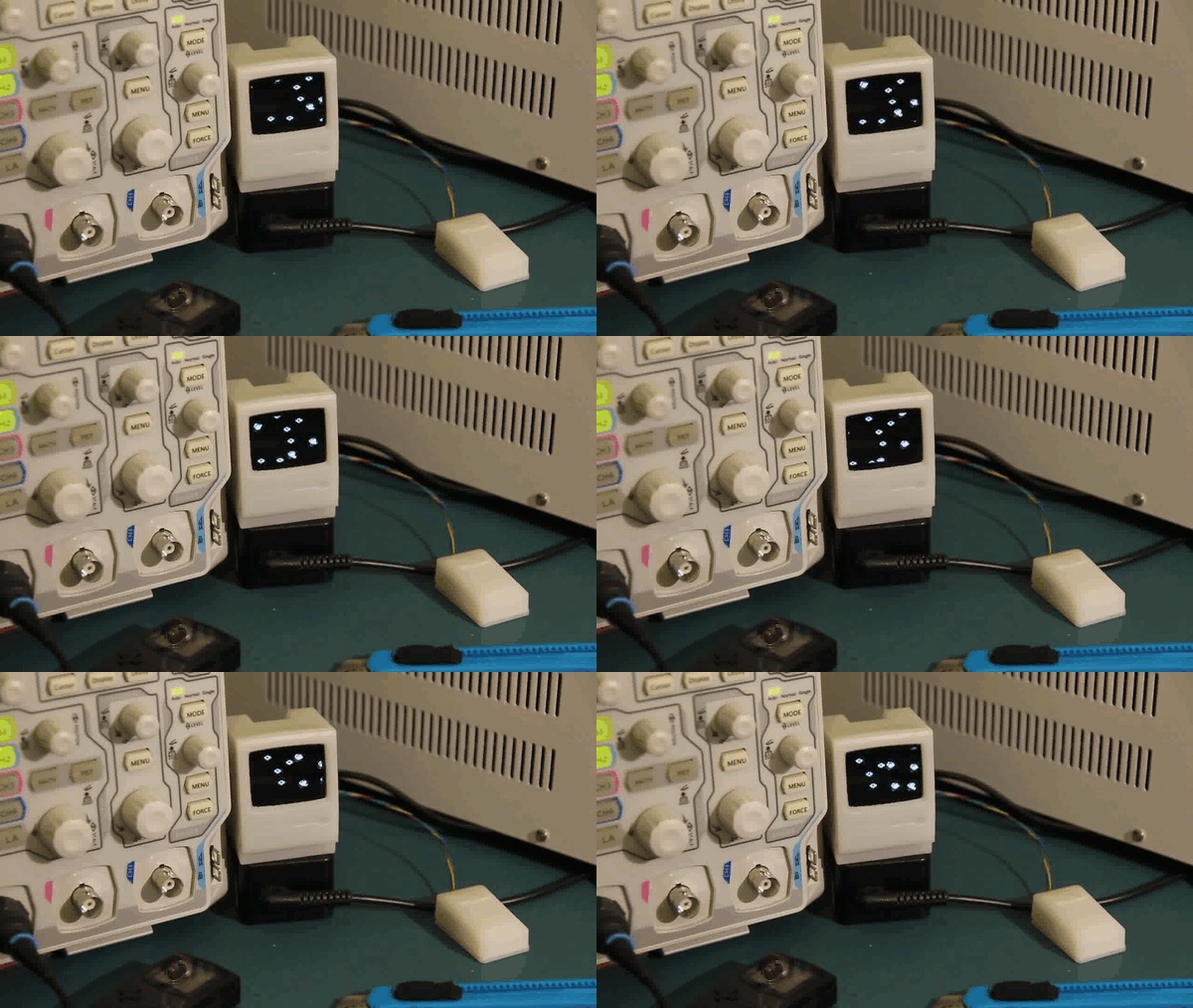
- https://www.youtube.com/watch?v=mBiQgLlgcnA
- http://spritesmods.com/?art=minimacplus, http://spritesmods.com/minimacplus/mac_full2_tmb.jpg,
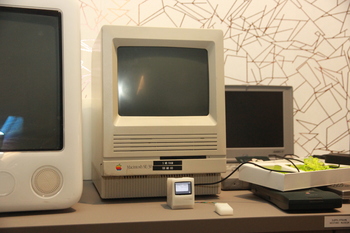
Tell that to people running DOS programs: https://blog.storagecraft.com/dos-quite-dead/
It's a choice that Apple gets to make. And that consumers, who buy or don't buy from Apple, get to make too.
Yet I can run statically compiled Linux binaries from 20 years ago just fine, and play Windows games that were released over 20 years ago, too.
My last experience trying to deal with ancient Linux binaries on an ARMv5 device running linux 2.4 was pretty abysmal. There were some breaking changes in the mid 2000s, I believe regarding threading? Old executables wanted LinuxThreads while modern linux uses NPTL. Not sure though. Might have just been a userland/libc problem.
Sometimes, even Linux breaks backwards compat to progress.
Apple works hard to break backwards compatibility every few years, while other operating systems will happily run software from decades ago as they care and invest in not breaking userspace.
I agree to some extent, but at some point we (as in society) need to come up with some sort of standard for file formats and for user interfaces that will last for decades. Part of what makes technology useful is that when a tool is invented, it's function and our interface to it don't significantly change for sometimes thousands of years.
Take a hammer as an example. Even though there have been advancements in design and durability, any human who has ever used one can use another. That's why so much of the actually important stuff still runs inside the Windows ecosystem. Until the ribbon redesign, you could take anyone who knew excel, sit them in front of any newer or older version, and they could get to work.
What I don't understand is why the technology industry can't deliver one UI paradigm per decade, loosely couple the UI to the services that manipulate the state, and then allow the user to stick with one interface to get their work done for as long as their career. Then every 30 years you could break the oldest UI -- not sure why you would need to, but whatever -- and then the whole world could save trillions of hours of lost productivity instead of dragging themselves through redesigns that only exist because they give VPs a line in their resume.
(In this fever dream we all work four days a week. Programmers have time to produce immaculate, well documented, and bug free code. The hacker gods are now roboticists putting the finishing touches on fully automated luxury space communism.)
Really well put comment! People padding CVs / resumes are a huge problem in our area and everybody is suffering -- programmers, IT/sysadmins, and the users. I really can't understand why is this tolerated. I mean, I can... but it's a figure of speech.
I dream of the day when programming and UIs will be much more strictly regulated (yes, actually regulated) but I am 40 now and I am not sure I'll live to see the day.
… Yeah that's not really relevant anymore. Turns out a lot of people like their old cruft to keep working.
There is a huge amount of problems to solve before a new architecture is usable. This may be not viable at all.
It didn't actually fail, at least not yet. But it's not clear it can succeed either.
That got them started but Apple has written a ton of frameworks since 2000 when the first version of MacOS X shipped.
The point being made was that Apple didn't attempt to be backwards compatible with classic Mac OS.
The Mac didn't try to be backwards compatible with the Apple II that came before it.
The iPhone wasn't compatible with any of the phone platforms and standards in 2007.
This seems like the truly anti-technology opinion, to claim that technology lacks the ability to progress into the future without losing sight of the past.
Technology can't simultaneously progress while still remaining backwards-compatible for years or decades. As another commenter here says: just use an old computer to run your old software. When your old computer breaks, buy another on ebay. Ebay won't run out anytime soon.