> Contrast this with a condo in Minneapolis that I own wherein heat and AC are central in the building and individual units can set their temperature to whatever they like - all run with tremendously higher efficiency.
This needs some real data.
There are a few central technologies that might be used. A condensing gas-fired boiler might exceed 95% efficiency if you imagine that losses in the hydronic pipes are minimal. An evaporative cooling tower has awkward-to-define efficiency because it consumes water, but I doubt it works very well in Miami. A giant air-source central heat pump might be reasonably efficient (COP around 4?).
But little modern heat pumps with variable-speed drives (often marketed as "inverters") can be very efficient indeed. Fujitsu will sell you a unit right here in the USA with SEER 29 or better, and the general trend is that the smaller units are more efficient than the larger units. (Yes, SEER uses ridiculous units.)
Additionally, in most markets, a reasonably efficient heat pump is both less expensive to operate than even a 100% efficient boiler and has lower greenhouse gas emissions.
I agree and I, admittedly, have none.
I will say, however, that a deeper dive into these efficiencies would also have to take into account the production, distribution and installation costs (embedded pollution, not dollars) of several hundred little devices vs. a single plant that is integrated into each unit during building construction.
Even considering room by room optimization (turning off AC in living room while you sleep, etc.) it's hard to imagine this penciling out vs. operating + embedded costs ...
(and I still suspect that just the operating costs are higher, but your point is well taken ...)
Although I do wonder how that works with something like district heating/cooling systems, which seem to rely on centralized boilers and chillers to move thermal energy between buildings.
Particularly if the building is older.
Also, I am curious why there are multiple single condensor units in lieu of multizone units...I guess it is financially easier to purchase one unit at a time.
BTW they have low profile indoor units that can be embedded flush with the ceiling or wall, so the bulkiness indoors is not even required anymore.
The cassette, that would fit into a drop ceiling, and there is also a mini-ducted unit, installed in the ceiling with small-run ducted ports.
My favorite are the ones that look like picture frames.
> This needs some real data.
Minnesota Heating Degree Days[1]: ~ 500
Minnesota Cooling Degree Days[2]: ~ 8,000-10,000
I suspect heat pumps might reach practical limits with cold temperatures.
[1] https://upload.wikimedia.org/wikipedia/commons/d/da/United_S...

[2] https://upload.wikimedia.org/wikipedia/commons/6/6c/United_S...

Alternatively, ground source heat pumps work decently well even in very cold places, but the installation costs can be high.
I think a lot of (utility scale) generators do all kinds of fancy things like waste heat recovery.
https://upload.wikimedia.org/wikipedia/commons/thumb/9/96/IG...
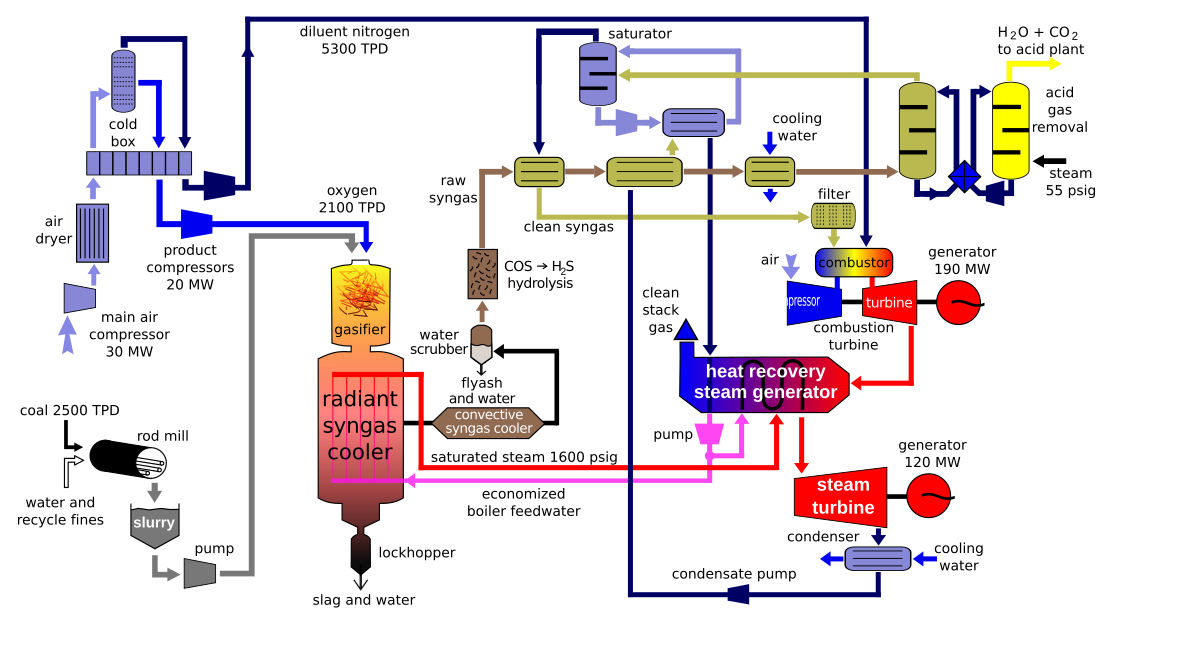
It would be kind of cool to see the same thing trickle down to your home.
Tesla kind of does this in reverse with the model y - it spends electricity parsimoniously, and uses a fancy heat pump to capture or dump heat.
With split units the maximum efficiency attained is in the hands of the customer. Great for customer freedom, but not so great for the environment if the lowest of the low in AC units are available.
Semi-related question: How is fresh air turnover handled in apartments with split AC units?
Many models let you run the condensate drain on your choice of right or left side. The unused side is often only supplied with a friction-fit drain plug. Over a period of many years, some of these plugs can shrink, not quite fall out, and then you get a real mess.
Make sure the drain pipe is dry. Clean it with denatured alcohol, then let dry again.
Buy a silicone sealant that carries a 20-year warranty. Buy a roll of "cork tape" [1]. Fill about 2.5 cm / 1 inch of the drain pipe with the silicone sealant. Stretch wrap the drain plug with the cork tape, so the tape thins out while sticking to the plug. Pinch/squeeze/roll the part of the tape that hangs out beyond the end of the plug so it is slightly smaller than the stem of the plug. Push the plug into the drain pipe, and try to push it all the way up to the head of the plug. The cork tape will fill out and adhere to the walls of the pipe. Finally, stretch wrap more cork tape (or self-fusing silicone waterproof tape if you don't like the stickiness on both sides of the cork tape) around the entire drain pipe and drain plug assembly, including wrapping the end, and seal up the assembly to the pipe.
Mount a very slightly tilted metal shelf underneath the mini-split air handler (the part that mounts on your wall inside your building), and install an AC-mains-powered moisture sensor that cuts off power to the mini-split when triggered, at the lowest end of the shelf. Mini-splits usually use a zero-capacity drain pan to stay as slim as possible, and if they clog up at the condensate drain pipe, they overflow rapidly (within minutes).
Learn how to take the plastic cowling off the unit before you mount it, document it by video or photographs, and stash it with your product manuals. Mini-split manuals usually don't show how to take them apart enough to get at the condensate drain, and most models I've seen have lots of plastic catches all over that are hard to see when you're standing on a ladder peering between the ceiling and the cowling. If you ever get biogrowth in it, you'll want to know how to take it apart.
Or, if you don't want to take it apart to get at the drain, you can codge together a way to run your wet/dry shop vac to mount to the condensate drain and pull stuff out. I used a shop vac mini kit [2]. I also got a venturi-based device to try to develop more vacuum [3] with the CO2 tank I normally use to make fizzy water.
[1] https://smile.amazon.com/DiversiTech-6-330-Cork-Insulation-B...
[2] https://smile.amazon.com/Wet-Dry-Accessories-VT1215-Attachme...
What kind of pipe is this ? If it is standard dimension copper pipe, or schedule 40 PVC, etc., why not just cap it with a sharkbite endcap ?
Bonus: cap it with a sharkbite ball valve ...
I and others have had inconsistent results with SharkBite fittings for long-duration uses, for example see [1]. I suspect their O-ring is a potential weak link over a decades-span. YMMV. I like them for temporary (a few weeks to a few months) scenarios, but I haven't seen enough field experience like with PEX to know its design limits. I might use BoatLIFE Life Seal sealant in the future for the silicone if I run into another already-installed mini-split because I've seen it stand up very well to a massive amount of marine abuse in the short-term (3-5 years), but they don't warranty the sealant for longer than a year because of how much abuse it is normally put through, so I'd just be an n=1 experiment.
Personally, the next time I will install a new mini-split or similar that has such a alternate drain arrangement, I'm going to do the following before the installer arrives. Flip the unit upside down so the pipe points up, drop some JB Weld putty into the bottom of the pipe, then fill the rest of the pipe with West System Epoxy to make it truly permanent and out-of-sight-out-of-mind for any possible extreme lifecycle of the unit.
A friction-fit drain plug pointing out with the pull of gravity in a thermally-variant environment is just asking for trouble. If I had the right tools I'd probably fab up a replacement drain pipe out of stainless steel with threading to accept a silicone plug, and West System epoxy the pipe to the body of the unit, and see how that works.
[1] https://www.contractortalk.com/f9/sharkbite-fittings-do-they...
In Russia and Czech Republic we have district heating, you just get billed for the amount of hot water consumed. Some of that heat comes from industrial sources or nuclear power-plants.
Even where it's coming from a giant gas boiler, they can be efficient combined heat and power units. Ofcourse, some of that infrastructure is old, but a rich western country should be able to do even better.
We'd only have a boiler in rural areas, to have them in apartments is just madness.
I am from Ukraine. While in theory district heating is awesome there are some problems in implementation:
* every summer there is a three weeks period without hot water, a lot of people have electric boiler as backup, it is even bigger than gas boiler
* no hot water in off peak time on upper floors of old buildings, have to flush some away, fixed with loop in new buildings
* old buildings vertical heating pipes makes it impossible to bill apartment, no incentives for heat insulation (wall and windows) or reducing temperature, 25°C in winter is a norm, fixed with per apartment pipes in new buildings
* a lot of heat escapes pipes, melted snow patches in winter
* fixing broken pipe is messy, change of the pipes even worse, seen both
* requires high level of participation - at least some small towns have no district water for 20 years, some even without district heating
* modern gas boilers are 90+% efficient [1]
Some new buildings have heating plants, looks like a better idea. But heating is a big part of CO₂ emissions, stored hydrogen heating plant is a future. Even better if it is a power plant too.
[1] https://www.theheatinghub.co.uk/boiler-efficiency-guide-and-...
My family lives in a relatively small town in Ukraine, got fed up with that and installed a gas-powered heater that serves both heating and hot water. This setup is 15+ years old already, never looked back. When the rest of the building is freezing cold, it just works.
This exists in some cities in the United States, but it's usually older cities like New York and Chicago.
The plus side, is that often if you have a building with district heating, you will also have district cooling.
On a somewhat related note, some of the buildings in Chicago heat and cool themselves with water pumped directly from the Chicago River. Lake Michigan acts as a giant thermal reservoir. ("Cooler by the lake," as the TV weathermen say.)
http://buildipedia.com/aec-pros/engineering-news/torontos-de...
It's also interesting that it's also part of the city's drinking water supply:
> The Energy Transfer Station includes large arrays of heat exchangers that allow the heat from the downtown chilled water loop to be rejected into the city’s drinking water supply before distribution to the public. The heat removed from the downtown chilled water loop is therefore never transferred to Lake Ontario and the slight temperature increase is insignificant for water utility consumers.
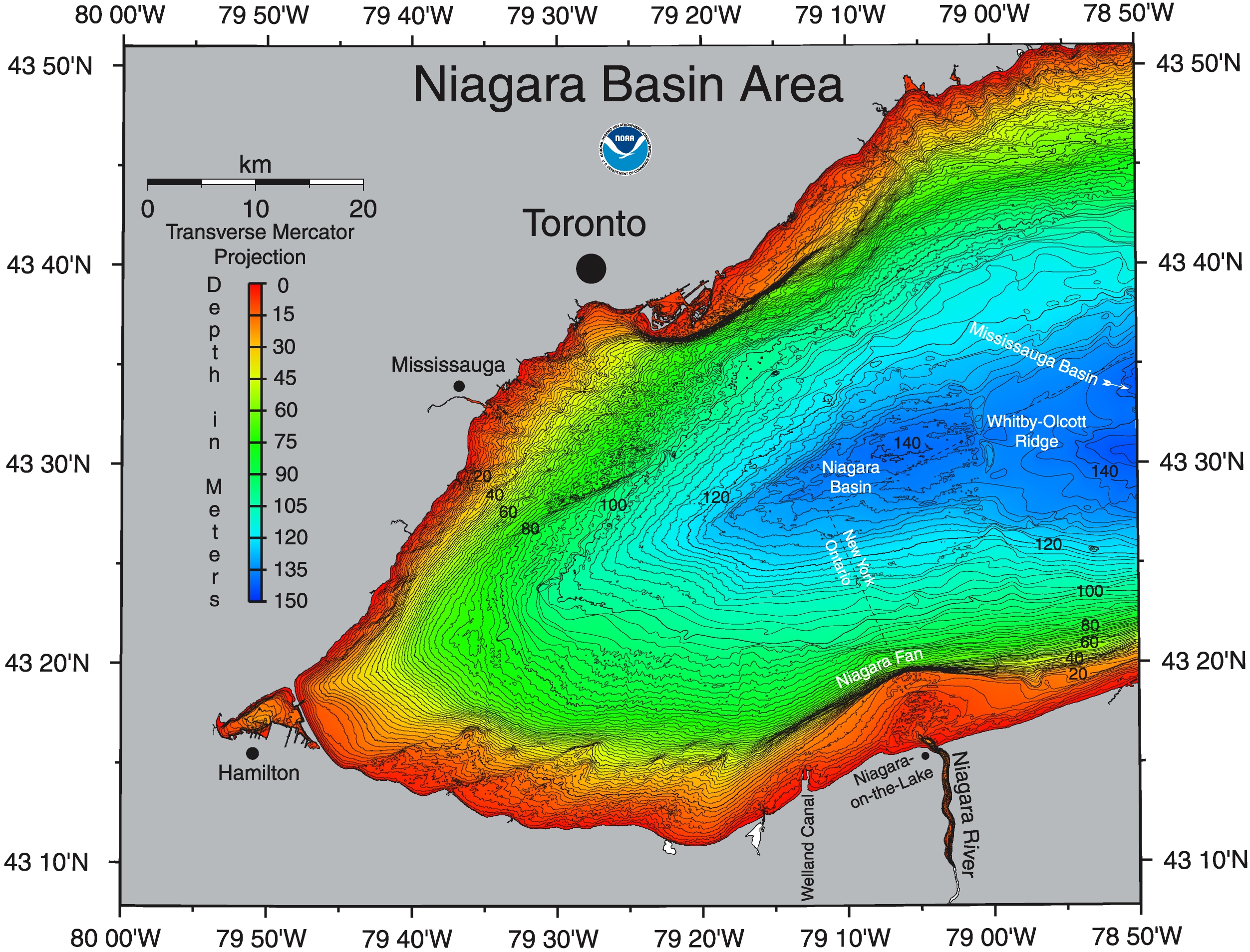
> Three intake pipes run up to 83 m (272') deep and out to 5 km (3 miles) from the shore. The physics of cold water are factored into the design. Water is most dense at 4 degrees Celsius (39.2 degrees Fahrenheit), ensuring that the cooling water removed from the lake bottom will have a consistent year-round temperature at the system’s intake points. The cooling water to be used by the Deep Lake Water Cooling system first goes through Toronto’s standard water treatment process to become regular drinking water.
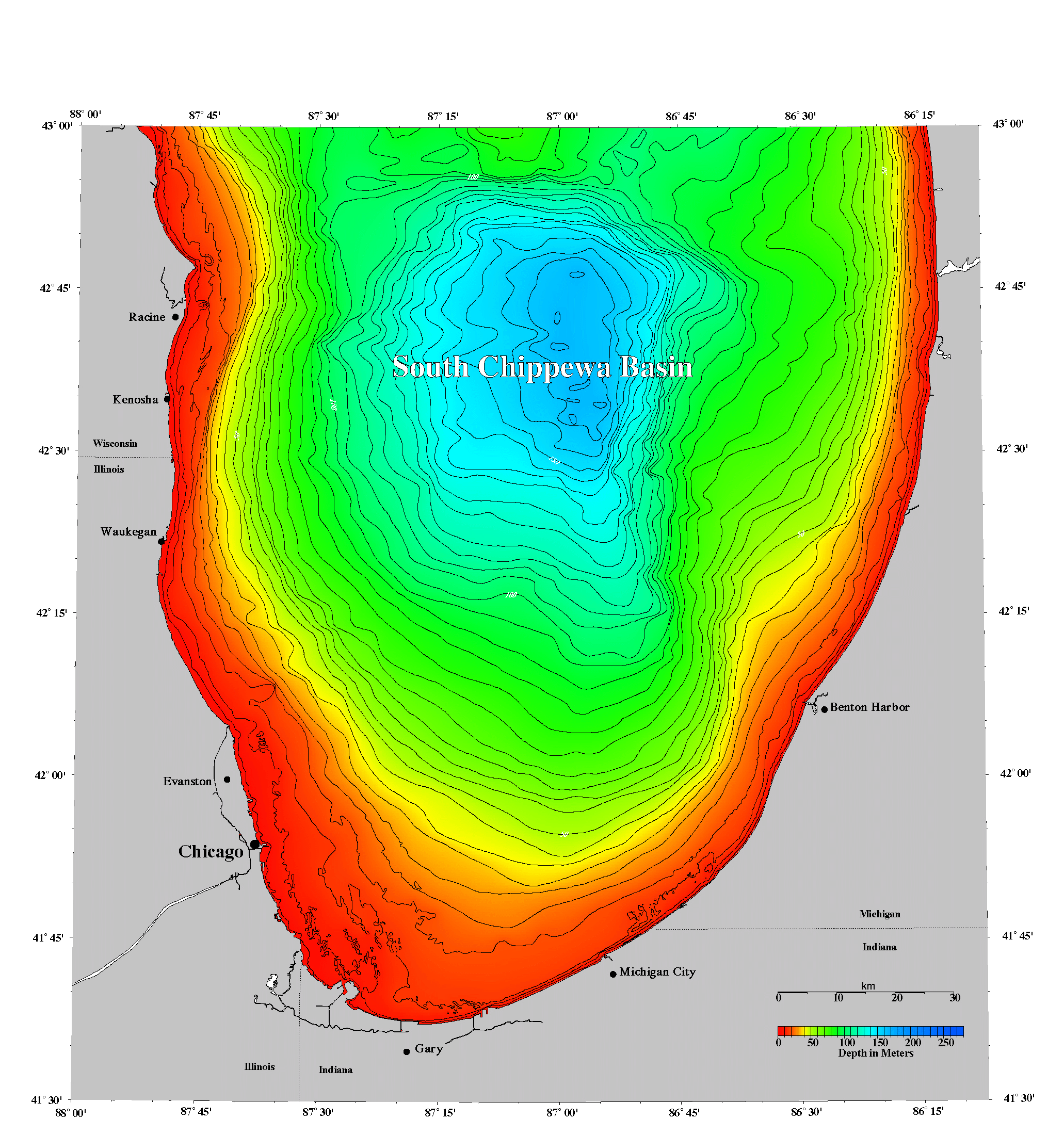
I'm not sure that there is any other large city in the world that has deep enough fresh water so close that this would work. Such a system would be welcome here in Chicago, but it isn't feasible. You'd need to go 30-40 km into the lake before it got deep enough [2].
[1] https://www.ngdc.noaa.gov/mgg/greatlakes/lakeontario_cdrom/i...
[2] https://www.ngdc.noaa.gov/mgg/greatlakes/lakemich_cdrom/imag...
Individual gas/electric boilers are a pretty good solution. Maintenance isn't that hard, though legally you need a Gas Safe certified technician to do everything, and they're smug, expensive, slow, and not all that smart tbh. But because there's no competition you have to put up with that :D
That was the most frustrating thing for me - I could do everything myself, but wasn't allowed to.
UK housing stock is in desperate need of upgrades, most houses are literally bleeding money through the walls because of poor insulation, and because heatpumps are much more efficient that boilers.
Consider that they are more economical when supplying several houses, pay for themselves over time and that interest rates are zero. It becomes obvious that we need a large-scale program of energy efficiency upgrades, it would create jobs during a recession and help address climate change.
Firstly, it's incredibly expensive. There's no regulation on the price you can charge for heat, and there's no competition for supply like gas and electric. So the apartment freehold owners charge eye watering fees for it. I could save probably 50-75% a month even paying for the cost on a new boiler, plus a service package.
Secondly, there are a lot of outages. Much more than I've ever experienced with standard boilers.
The outages are quite literally out of your control, unlike a gas/electric boiler where you can get someone to fix it out of hours. One particularly bad outage was nearly 48 hours in winter over a weekend, caused by incompetent building management and a seeming inability to get highly specialised parts from Germany to the UK to fix it on a weekend.
I've obviously had normal boilers break down but usually they can be fixed in a couple of hours, at least temporarily enough to get a proper fix sorted.
In addition to hot water since 1927:
https://fr.wikipedia.org/wiki/Compagnie_parisienne_de_chauff...
If your house is well insulated it doesn't make much difference as the cooling needed for when you are in the room (assuming you use all rooms every day) is most of the cooling needed for the entire day. Thus you may as well temperature control everything at once and call it good. The loss of energy is more than worth it considering the comfort.
If you have poor insulation the above doesn't apply.
In extreem climates there is another consideration:you need to keep the entire building warm enough to keep the pipes from freezing. Here you keep everything warm because if the heater fails in one room there is a risk you won't enter that room until it is too late and you have done major damage. By having one central unit it is much more likely someone will notice before there is a problem. Extreme climates also tend to have better insulation which makes the central system more convenient.
Sounds somewhat similar to the opinion some americans have against free healtcare
And you don’t have to have one indoor unit per outside unit. Systems that can have one outdoor unit with up to four inside units are readily available.
What’s really wild is Mitsubishi’s City system - designed for commercial spaces (or really large homes) you can have dozens of internal units. And more impressively, it can move heat around inside the building. If you were having a party in the middle of winter and all the body heat was heating up the room where everyone was you could “AC” that room and then dump the heat elsewhere in the building.
The key is the per-room zoning. Minisplits are by far the easiest and most efficient way to micro-zone. Also the elimination of loss from ductwork should not be discounted either; it’s often very significant. Especially if you can eliminate ductwork from unconditioned space!
I don't know how true it is either, but I can provide some mild support.
Several years ago a vicious heat wave hit Shanghai, and the subway stations filled with people taking advantage of the air conditioning. I asked a friend about this -- I don't see the subway station as a particularly nice place to hang out, since it's loud -- and the response was "they all have air conditioning at home, but they don't want to pay for it".
Movie theaters in the US were very popular prior to prevalent home AC for much the same reason.
Huge subway station e.g. A station with a lot of interchange might be huge enough with stores and food courts close to a mall.
I’m looking for a mini split currently and I found condensers with up to three separate coolant lines (although with the shape of my place. I might only be able to use 2 at once, and have to use a window unit on the other end).
Unit size (especially width) goes up much slower than BTUs, so the main value of two seems to be cooling your house in installments, which he isn’t doing.
My issue is that any place I've lived with central AC (or a condo with a fan coil unit) is that when it's actually hot, the central units don't have enough capacity to cool my unit down enough and don't provide enough control. It's like the old cable modem congestion problem where the whole neighbourhood slows down during peak times.
Heat is even worse; when buildings are heated centrally they're usually much too warm in the winter and I end up with my balcony door opened to let the heat escape. Vastly less efficient than letting me heat my own unit.
By forcing people to heat and cool only their units as required, people either get the exact temperature they want, or will accept a non-ideal temperature and supplement with fans to save money.
Is it more efficient? There is going to be loss as things get pumped across hundreds of feet even with insulation. The central system needs to run even if few units or not units are using it just in case. In Asia heating and cooling is done per room to the minimum as I understand it so "per unit temperature" wouldn't fly. And an in-room gas heater is going to be 100% efficient with no losses due to transmission.
HVAC needs to run constantly in these buildings as they’re sealed and need airflow for air exchange.
Air isn’t heated and then sent thru the ducts in a high-rise building.
There also indoor unvented space heaters. They work and are very efficient. However they put all the combustion byproducts into the air, and thus really only useful in rooms that have a lot natural ventilation (tents for example)
For heat, yes, but not AC. For example, the Mitsubishi MY-GL12NA is a very efficient mini-split with an EER of 13, but a random modern window or through-wall unit (ex: https://amazon.com/dp/B07D8R2V8H/) will have an EER of ~12.
Are there any concrete examples of existing systems where people choose to pay more when the alternatives are significantly cheaper but pricing is shared?
Hypothetical example scenario: Someone would choose to pay $10 for their own water instead of $2.50 (on average, with minor fluctuations), in order to avoid subsidizing other tenants' water usage. The difference in cost could be attributed to the maintenance burden of many monitoring devices. I have a hard time believing anyone would choose the more expensive option.
American healthcare? :-p
All in all, a stupid system in practice. Only benefit of it all is that you don’t have to wait for the building to change between heating or cooling mode.
At least we tend to still have central hot water and don’t meter water yet. Metering can make a lot of sense, but not when your account fee is $15-$20/month. Any reduction in use just means some rich dude goes on more jet vacations.
We largely use ceiling fans in Singapore. The difference in electricity bill between the couple of months with horrific heat where we use a lot of air conditioning and the rest of the months where we don't is pretty steep. A few people may want to use air conditioning all the time - so it's fair to give others a choice.
Heating on the other hand in cold countries is pretty non negotiable from what I've experienced - so centralized may work better.
EDIT: The unit installed by the article's writer is an AC only, which is probably because the AC is cheaper than a heat pump. But a heat pump can both heat and cool, and are quite efficient.
The Google term of use is "Heat Pump Mini-Split"
Much of this is related to air conditioning attitudes as well; Do you need to have comfortable temperatures in the entire house or just a living room with comfort when working, watching tv, eating dinner.
tldr; air conditiong views vary from necessary to an accessory; where they're an accessory, one of units are most common
Other than "it doesn't exist yet" there's nothing fundamental about central air that precludes being able to bill individual units separately based on their usage. The fairest way for a group to pay for something isn't always diving the total cost equally among the group. Can you imagine if we did that for taxes?
This implies they can turn on/off their usage. So you can install one electric meter per unit, which equally distribute the current load on the A/C, and turn the meters off (increasing load on other meters) when that unit is not consuming A/C.
HVAC systems unfortunately don't work as nicely as you describe. You can't run the HVAC for just one unit, typically buildings are broken down into floors and either the system for the floor is on or off. This is how you see multi-tenant offices designed -- each floor is submetered and the cost is divided proportionally among the tenants on that floor based on square footage. The zoning works by controlling airflow in the ducts. So while your billing system is clever it would be absolute murder if you were the only one running AC/Heat and you would be much better off with a smaller individual unit.
The article is about Japan. I would expect Korea has a different climate which means different considerations. (but I'm not an expert in climate)
I'm not sure that's true. Hot air can hold a lot of moisture, the extreme example being steam.
Hot air can hold a lot more moisture than cold air. (what you said). However when you take cold air and heat it the amount of water in the air doesn't change, while the amount of water than the air can hold did. When talking about water in the air the important part is how much it can hold relative to how much it does hold, not how much it actually is holding.
Most comfortable place I ever lived in, heating wise, was an old house that had been converted into apartments. It still had steam heat. I loved that.
Steam heat is radiant which feels very good. Nothing to do with moisture added, steam heat is almost always a closed loop so no water is put into the air.
I travel in Asia fairly regularly so this isn't new to me, but even after all of these years I can't believe I continue to see shiny, brand new "high end" condo buildings in Hong Kong, Shanghai, Tokyo, Seoul, etc., with individual AC units hanging out the window.
Contrast this with a condo in Minneapolis that I own wherein heat and AC are central in the building and individual units can set their temperature to whatever they like - all run with tremendously higher efficiency.
It was explained to me once that there are Asian (specifically, Chinese) attitudes towards thrift that make it inconceivable/impossible to pay for AC that someone else might be using (or misusing). I don't know how true that is.
What I do know is, my building in MPLS looks very nice without several hundred crappy boxes hanging out the windows.