I agree and I, admittedly, have none.
I will say, however, that a deeper dive into these efficiencies would also have to take into account the production, distribution and installation costs (embedded pollution, not dollars) of several hundred little devices vs. a single plant that is integrated into each unit during building construction.
Even considering room by room optimization (turning off AC in living room while you sleep, etc.) it's hard to imagine this penciling out vs. operating + embedded costs ...
(and I still suspect that just the operating costs are higher, but your point is well taken ...)
Although I do wonder how that works with something like district heating/cooling systems, which seem to rely on centralized boilers and chillers to move thermal energy between buildings.
Particularly if the building is older.
Also, I am curious why there are multiple single condensor units in lieu of multizone units...I guess it is financially easier to purchase one unit at a time.
BTW they have low profile indoor units that can be embedded flush with the ceiling or wall, so the bulkiness indoors is not even required anymore.
The cassette, that would fit into a drop ceiling, and there is also a mini-ducted unit, installed in the ceiling with small-run ducted ports.
My favorite are the ones that look like picture frames.
> This needs some real data.
Minnesota Heating Degree Days[1]: ~ 500
Minnesota Cooling Degree Days[2]: ~ 8,000-10,000
I suspect heat pumps might reach practical limits with cold temperatures.
[1] https://upload.wikimedia.org/wikipedia/commons/d/da/United_S...

[2] https://upload.wikimedia.org/wikipedia/commons/6/6c/United_S...

Alternatively, ground source heat pumps work decently well even in very cold places, but the installation costs can be high.
I think a lot of (utility scale) generators do all kinds of fancy things like waste heat recovery.
https://upload.wikimedia.org/wikipedia/commons/thumb/9/96/IG...
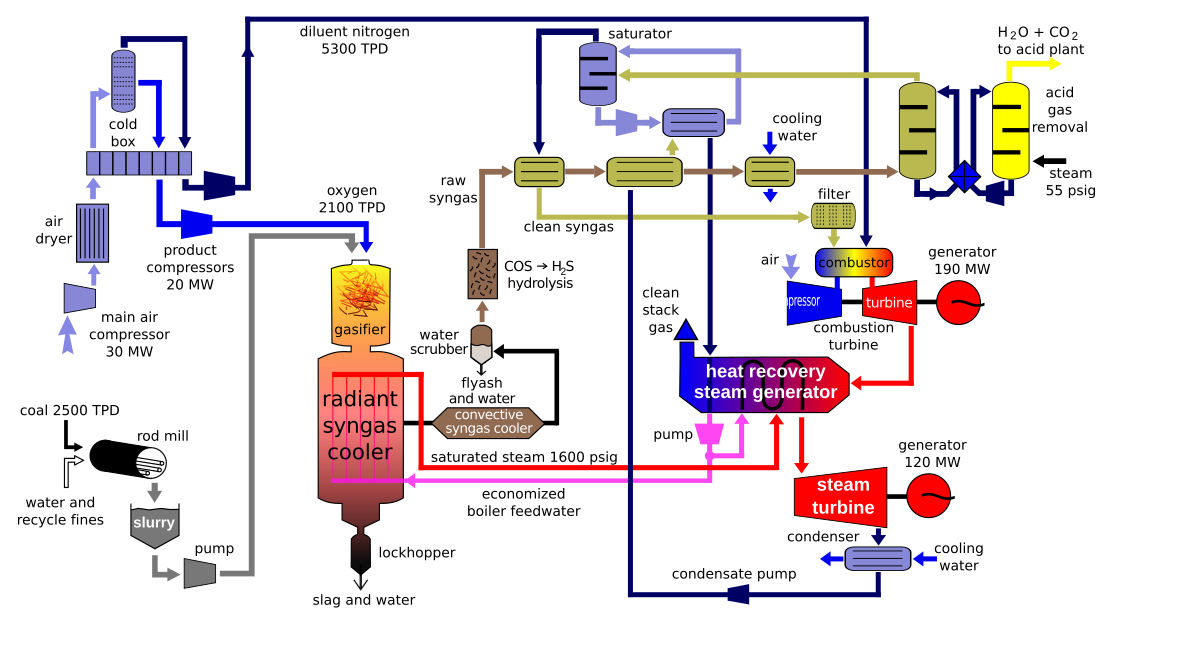
It would be kind of cool to see the same thing trickle down to your home.
Tesla kind of does this in reverse with the model y - it spends electricity parsimoniously, and uses a fancy heat pump to capture or dump heat.
With split units the maximum efficiency attained is in the hands of the customer. Great for customer freedom, but not so great for the environment if the lowest of the low in AC units are available.
Semi-related question: How is fresh air turnover handled in apartments with split AC units?
Many models let you run the condensate drain on your choice of right or left side. The unused side is often only supplied with a friction-fit drain plug. Over a period of many years, some of these plugs can shrink, not quite fall out, and then you get a real mess.
Make sure the drain pipe is dry. Clean it with denatured alcohol, then let dry again.
Buy a silicone sealant that carries a 20-year warranty. Buy a roll of "cork tape" [1]. Fill about 2.5 cm / 1 inch of the drain pipe with the silicone sealant. Stretch wrap the drain plug with the cork tape, so the tape thins out while sticking to the plug. Pinch/squeeze/roll the part of the tape that hangs out beyond the end of the plug so it is slightly smaller than the stem of the plug. Push the plug into the drain pipe, and try to push it all the way up to the head of the plug. The cork tape will fill out and adhere to the walls of the pipe. Finally, stretch wrap more cork tape (or self-fusing silicone waterproof tape if you don't like the stickiness on both sides of the cork tape) around the entire drain pipe and drain plug assembly, including wrapping the end, and seal up the assembly to the pipe.
Mount a very slightly tilted metal shelf underneath the mini-split air handler (the part that mounts on your wall inside your building), and install an AC-mains-powered moisture sensor that cuts off power to the mini-split when triggered, at the lowest end of the shelf. Mini-splits usually use a zero-capacity drain pan to stay as slim as possible, and if they clog up at the condensate drain pipe, they overflow rapidly (within minutes).
Learn how to take the plastic cowling off the unit before you mount it, document it by video or photographs, and stash it with your product manuals. Mini-split manuals usually don't show how to take them apart enough to get at the condensate drain, and most models I've seen have lots of plastic catches all over that are hard to see when you're standing on a ladder peering between the ceiling and the cowling. If you ever get biogrowth in it, you'll want to know how to take it apart.
Or, if you don't want to take it apart to get at the drain, you can codge together a way to run your wet/dry shop vac to mount to the condensate drain and pull stuff out. I used a shop vac mini kit [2]. I also got a venturi-based device to try to develop more vacuum [3] with the CO2 tank I normally use to make fizzy water.
[1] https://smile.amazon.com/DiversiTech-6-330-Cork-Insulation-B...
[2] https://smile.amazon.com/Wet-Dry-Accessories-VT1215-Attachme...
What kind of pipe is this ? If it is standard dimension copper pipe, or schedule 40 PVC, etc., why not just cap it with a sharkbite endcap ?
Bonus: cap it with a sharkbite ball valve ...
I and others have had inconsistent results with SharkBite fittings for long-duration uses, for example see [1]. I suspect their O-ring is a potential weak link over a decades-span. YMMV. I like them for temporary (a few weeks to a few months) scenarios, but I haven't seen enough field experience like with PEX to know its design limits. I might use BoatLIFE Life Seal sealant in the future for the silicone if I run into another already-installed mini-split because I've seen it stand up very well to a massive amount of marine abuse in the short-term (3-5 years), but they don't warranty the sealant for longer than a year because of how much abuse it is normally put through, so I'd just be an n=1 experiment.
Personally, the next time I will install a new mini-split or similar that has such a alternate drain arrangement, I'm going to do the following before the installer arrives. Flip the unit upside down so the pipe points up, drop some JB Weld putty into the bottom of the pipe, then fill the rest of the pipe with West System Epoxy to make it truly permanent and out-of-sight-out-of-mind for any possible extreme lifecycle of the unit.
A friction-fit drain plug pointing out with the pull of gravity in a thermally-variant environment is just asking for trouble. If I had the right tools I'd probably fab up a replacement drain pipe out of stainless steel with threading to accept a silicone plug, and West System epoxy the pipe to the body of the unit, and see how that works.
[1] https://www.contractortalk.com/f9/sharkbite-fittings-do-they...
> Contrast this with a condo in Minneapolis that I own wherein heat and AC are central in the building and individual units can set their temperature to whatever they like - all run with tremendously higher efficiency.
This needs some real data.
There are a few central technologies that might be used. A condensing gas-fired boiler might exceed 95% efficiency if you imagine that losses in the hydronic pipes are minimal. An evaporative cooling tower has awkward-to-define efficiency because it consumes water, but I doubt it works very well in Miami. A giant air-source central heat pump might be reasonably efficient (COP around 4?).
But little modern heat pumps with variable-speed drives (often marketed as "inverters") can be very efficient indeed. Fujitsu will sell you a unit right here in the USA with SEER 29 or better, and the general trend is that the smaller units are more efficient than the larger units. (Yes, SEER uses ridiculous units.)
Additionally, in most markets, a reasonably efficient heat pump is both less expensive to operate than even a 100% efficient boiler and has lower greenhouse gas emissions.